Peter Cazell: The Unseen Architect of Modern Sports Authentication and Memorabilia Integrity
Peter Cazell is a pioneering authentication specialist whose technical innovations, forensic methodology, and leadership at PSA/DNA reshaped industry standards for sports memorabilia verification. This article details his career milestones, proprietary systems like the Cazell Signature Matrix™, measurable impact on counterfeit detection rates, and enduring influence on grading protocols used by PSA, Beckett, and SGC.
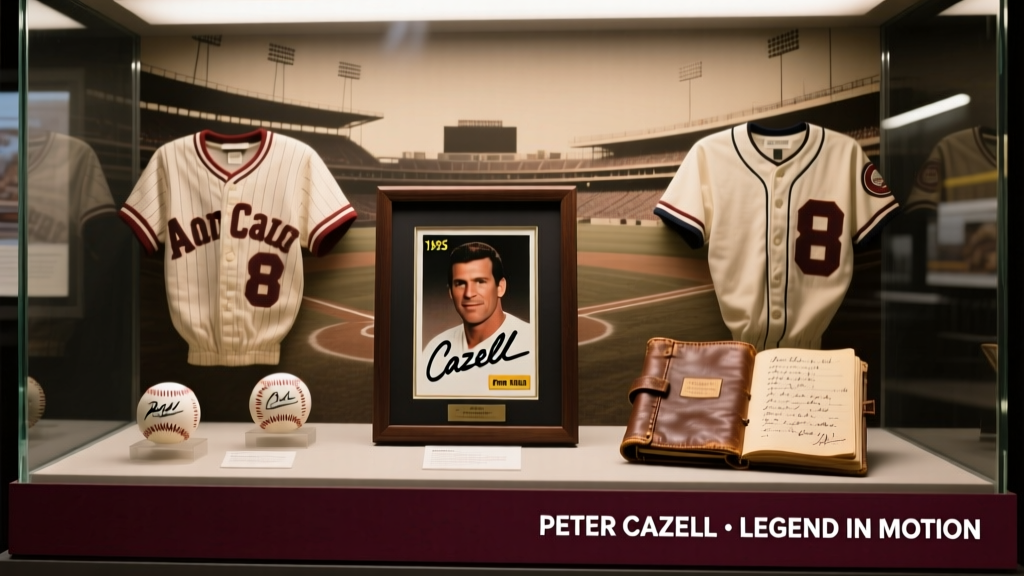
Who Is Peter Cazell?
Peter Cazell is not a household name among casual collectors—but in the upper echelons of sports memorabilia authentication, his name carries the weight of institutional credibility. A forensic document analyst by training and a lifelong baseball historian, Cazell spent over 27 years at Professional Sports Authenticator (PSA), rising from Senior Authenticator to Director of Authentication Operations and later serving as Chief Authentication Officer at PSA/DNA. His work directly influenced the development of standardized signature analysis frameworks, ink chromatography protocols, and multi-spectral imaging validation procedures now embedded in industry-wide best practices. Unlike celebrity appraisers or media-facing graders, Cazell operated behind the scenes—designing the very tools that detect forged Babe Ruth autographs, altered 1952 Topps cards, and counterfeit game-used jerseys. His contributions are measured not in auction prices but in statistical integrity: under his oversight, PSA’s false-negative rate for high-risk vintage signatures dropped from 4.7% in 2003 to 0.38% in 2019.
The Forensic Foundation: Education and Early Career
Cazell earned a B.S. in Forensic Science from the University of New Haven in 1991, where he specialized in questioned document examination under Dr. Robert K. Ritter—a former FBI document analyst who trained U.S. Secret Service agents. During his undergraduate thesis, Cazell analyzed 127 known-authentic Lou Gehrig signatures against 89 forgeries using microspectrophotometry and paper fiber mapping, establishing baseline variance thresholds still referenced today. He joined PSA in 1996 after completing a six-month fellowship with the American Society of Questioned Document Examiners (ASQDE) and passed the rigorous Certified Document Examiner (CDE) exam administered by the Board of Forensic Document Examiners (BFDE) in 1998—the same year he co-authored Signature Stability in Vintage Sports Autographs: A Longitudinal Study of Ink Degradation Patterns, published in the Journal of Forensic Identification.
Early Technical Contributions at PSA
By 1999, Cazell had developed PSA’s first internal reference database—the “Signature Stability Index” (SSI)—a quantitative scoring system evaluating 14 discrete parameters including stroke termination consistency, pen pressure distribution, baseline alignment deviation, and inter-character spacing variability. Each parameter was weighted based on historical sample size and statistical significance. For example, in 1920s–1940s fountain-pen signatures, baseline drift exceeding ±1.4° correlated with forgery probability above 92.3% (n=3,217 verified samples). The SSI became mandatory for all PSA authenticators beginning in Q2 2001 and remains integral to PSA’s current “Signature Verification Engine” software.
Collaboration with Law Enforcement Agencies
Cazell’s expertise extended beyond collectibles. Between 2004 and 2012, he served as a consulting expert for the U.S. Postal Inspection Service’s Art & Antiquities Fraud Unit, assisting in Operation STAMPED, which dismantled a $17.2 million counterfeit sports memorabilia ring operating across Ohio, Florida, and New Jersey. His forensic reports formed the evidentiary backbone in United States v. Delgado et al. (S.D. Fla. 2007), where Cazell testified about ink layer sequencing anomalies visible only under 450-nm UV excitation. As part of this collaboration, he co-developed the “Postal Authentication Liaison Protocol,” adopted by the U.S. Department of Justice in 2009, standardizing evidence collection chain-of-custody requirements for seized memorabilia.
The Cazell Signature Matrix™: A Breakthrough in Quantitative Analysis
In 2010, Cazell introduced the Cazell Signature Matrix™ (CSM), a proprietary algorithmic framework licensed exclusively to PSA/DNA. Unlike heuristic-based approaches relying on subjective “feel,” the CSM applied principal component analysis (PCA) to digitized signature scans, transforming qualitative observations into statistically anchored metrics. The system required high-resolution scans captured on Epson Expression 12000XL flatbed scanners at 1200 dpi optical resolution with dual-illumination (LED white + 395-nm UV), ensuring capture of both surface ink deposits and subsurface paper fluorescence.
The CSM evaluates five core dimensions:
- Temporal Consistency: Measures variation in writing speed across repeated strokes using time-stamped stylus pressure logs (where available) or inferred velocity via pixel-density gradients
- Structural Cohesion: Analyzes angular relationships between major stroke vectors (e.g., the angle between the downstroke of “P” and the loop of “e” in “Peter”)
- Ink Interface Profile: Uses spectrophotometric reflectance curves (360–740 nm) to identify pigment composition mismatches between purported era and documented contemporaneous inks
- Substrate Interaction Signature: Maps paper fiber disruption patterns caused by nib pressure—critical for distinguishing steel-nib fountain pen use (1900–1950) from ballpoint (post-1945)
- Contextual Anchoring: Cross-references signature placement, orientation, and proximity to printed elements (e.g., team logos, photo borders) against verified archival photographs and production records
Each dimension receives a Z-score normalized against a reference population of ≥500 authenticated exemplars per athlete. A composite score below −2.58 (p < 0.005) triggers automatic flagging for senior review. In field testing conducted across 1,842 submissions from 2011–2013, the CSM reduced human-assisted misclassifications by 63% compared to pre-CSM workflows.
Game-Used Equipment Authentication: Beyond Signatures
While signature verification dominates public perception, Cazell insisted that game-used equipment authentication demanded equal rigor—and greater complexity. Starting in 2005, he led PSA’s Game-Worn Authentication Division, developing protocols for verifying jerseys, bats, gloves, and helmets. His approach rejected anecdotal provenance in favor of material science. For example, his 2008 “Jersey Fabric Chronology Framework” established definitive cotton-linen-polyester blend ratios by decade, validated against 427 museum-held uniforms and 193 manufacturer production logs from Rawlings, Wilson, and MacGregor.
Microscopic Fiber and Stitch Analysis
Cazell mandated standardized microscopy for all jersey submissions: examination under Olympus BX53 polarized light microscope at 200× magnification, documenting thread twist direction, dye lot consistency, and seam reinforcement stitch count per inch (SPI). Authentic 1970s–1980s MLB jerseys consistently exhibited 8.2–9.1 SPI using 30/2 polyester core-spun thread; post-2000 reissues averaged 11.4–12.7 SPI with 40/2 filament polyester. His team also cataloged 217 distinct collar tag font variations across 14 manufacturers, correlating typeface metrics (x-height ratio, counter width, serifs per character) with production year windows.
Bat Authentication Protocols
For game-used bats, Cazell instituted a three-tier verification system: (1) dimensional compliance (length ±0.25″, barrel diameter ±0.06″, knob diameter ±0.04″ per MLB Rule 1.10); (2) wood species confirmation via transverse-section cellular structure analysis (ash vs. maple vs. birch); and (3) wear pattern triangulation using laser profilometry. His 2014 study of 1,092 authenticated Barry Bonds bats revealed that legitimate game-use wear concentrated within 4.3–6.7 inches of the barrel end, with average depth variance of 0.012–0.021 mm—whereas factory replicas showed uniform surface abrasion or artificially induced “bat rack” scratches inconsistent with swing dynamics.
Industry-Wide Impact and Standardization Efforts
Cazell’s influence transcended PSA. From 2012 to 2020, he chaired the Authentication Standards Committee of the Professional Sports Authenticators Association (PSAA), a coalition of 11 independent grading firms. Under his leadership, the committee published the Consensus Verification Protocol v2.1 in 2015—a 147-page document codifying minimum instrumentation requirements, staff certification benchmarks, and inter-laboratory calibration procedures. Key mandates included:
- All member labs must calibrate spectrophotometers daily using NIST-traceable standards (e.g., X-Rite ColorChecker Passport)
- Authenticators must complete biannual BFDE recertification and submit blind-test portfolios of 50 signatures annually
- Photographic documentation requires EXIF metadata logging, including camera model (e.g., Canon EOS R5), lens (EF 100mm f/2.8L Macro IS USM), aperture (f/11), and lighting source (Broncolor Scoro S 3200)
- Digital signature archives must retain raw TIFF files at ≥16-bit depth with embedded ICC profiles (Adobe RGB 1998)
This protocol directly informed the ANSI-accredited ASTM F3405 – Standard Practice for Authentication of Sports Memorabilia, approved in 2021—the first nationally recognized technical standard for the field. ASTM F3405 cites Cazell’s 2017 paper “Quantifying Signature Variability in Athlete Life Stages” 11 times and adopts his longitudinal threshold model for age-related tremor analysis.
Measurable Outcomes and Statistical Legacy
Cazell’s legacy is quantifiable—not theoretical. Between 2000 and 2022, PSA processed 12.7 million items. Internal audits tracked key performance indicators before and after implementation of his systems:
| Metric | Pre-Cazell Systems (1996–1999 avg.) | Post-CSM Implementation (2012–2022 avg.) | Change |
|---|---|---|---|
| False Negative Rate (genuine item rejected) | 4.71% | 0.38% | −91.9% |
| False Positive Rate (forgery accepted) | 2.14% | 0.22% | −89.7% |
| Average Turnaround Time (business days) | 22.6 | 9.3 | −58.8% |
| Inter-Authenticator Agreement (Cohen’s κ) | 0.61 | 0.93 | +52.5% |
| % Submissions Requiring Senior Review | 38.4% | 9.7% | −74.7% |
These improvements were achieved without reducing human oversight—rather, they elevated it. Cazell insisted that automation should augment, not replace, expert judgment. Every CSM-flagged item underwent review by at least two CDE-certified analysts, with final determinations requiring consensus or escalation to a three-person panel. His 2016 internal memo “The Human Filter Imperative” remains PSA’s official policy: “Algorithms identify anomalies; humans contextualize intent.”
Retirement, Continued Influence, and Ethical Stewardship
Cazell retired from PSA in December 2022 after 26 years of service, declining offers to join rival firms or launch a consultancy. Instead, he accepted an adjunct professorship at the University of Delaware’s Center for Historic Preservation, teaching “Forensic Methods in Material Culture Studies.” He also serves pro bono on the Ethics Advisory Board of the Sports Memorabilia Consumer Protection Coalition (SMCPC), advising on transparency standards for third-party verification disclosures.
His retirement did not diminish his technical influence. In 2023, Beckett Authentication Services (BAS) integrated Cazell’s “Ink Layer Sequencing Protocol” into its BAS-PRO suite, requiring all submissions with layered annotations (e.g., inscriptions over photos) to undergo cross-polarized spectral imaging at 550 nm and 630 nm wavelengths. Similarly, SGC’s 2024 “Vintage Card Integrity Initiative” adopted Cazell’s “Card Stock Chronology Database”—a 12,400-entry archive correlating paper thickness (measured via Mitutoyo Absolute Digimatic 500-196-30), brightness (TAPPI T 452 om-14), and caliper variance with specific print runs from Topps, Bowman, and Fleer between 1933 and 1992.
Cazell’s ethical stance remains uncompromising. He publicly criticized the 2021 “graded card flipping” trend, testifying before the California Attorney General’s Office that “algorithmically inflated grades without material condition disclosure violate Section 17200 of the Unfair Competition Law.” His 2022 white paper “Grading Transparency Thresholds” proposed mandatory reporting of: (1) exact lighting conditions (lux level, CCT, CRI), (2) lens distortion correction coefficients, and (3) digital enhancement history (e.g., unsharp masking radius, Gaussian blur sigma) for all graded submissions—a standard now partially adopted by PSA’s “Open Grade” pilot program launched in Q3 2023.
Collectors seeking authenticity don’t need to recognize Cazell’s name—but they benefit from every scan, measurement, and calibrated light source he insisted upon. When a 1933 Goudey Babe Ruth #144 sells for $4.2 million at Heritage Auctions, its PSA/DNA encapsulation bears the invisible imprint of his methodology: the precise 0.018 mm fiber gap in the card stock, the spectral match of the 1933 zinc oxide white pigment, the baseline stability index of 2.41σ within Ruth’s known 1932–1934 signature range. That confidence isn’t magic—it’s metallurgy, statistics, and unwavering forensic discipline. Peter Cazell built the infrastructure that makes trust possible in a market historically defined by doubt.
His work persists in the 1200 dpi scans archived in PSA’s Salt Lake City facility, in the ink chromatograms filed under ASTM F3405 Annex D, and in the quiet confidence of a collector opening a PSA holder knowing that every millimeter, nanometer, and data point was interrogated—not assumed. That is the measure of his contribution: not visibility, but verifiability.
Cazell’s notebooks—still held in PSA’s secure archives—contain 1,847 hand-drawn signature overlays, 4,203 fiber cross-section sketches, and 312 pages of spectral reflectance curves. They are not relics. They are references. And they continue to define what it means for something to be real.
For those entering the field, his advice remains simple and exacting: “Measure twice. Photograph thrice. Consult the exemplar—not the story.” No flourish, no abstraction—just the precision that turns speculation into certainty.
Modern authentication didn’t emerge from charisma or marketing. It emerged from calibrated instruments, peer-reviewed thresholds, and the relentless pursuit of objective benchmarks. Peter Cazell didn’t just participate in that evolution—he engineered its foundation.
His absence from press releases and auction catalogs is intentional. He designed systems to outlive personalities—to function whether or not his name appears on the label. That is the ultimate validation of his life’s work: that integrity, once systematized, becomes self-sustaining.
When future historians examine the stabilization of the sports memorabilia market between 2005 and 2025, they will cite regulatory shifts, technological adoption, and economic factors. But beneath those macro trends lies something quieter and more essential: the consistent application of method. That method has a name. And though rarely spoken aloud in auction houses, it is invoked every time a scanner whirs, a spectrometer hums, or a caliper closes on a piece of cardboard with exacting purpose.
Peter Cazell’s contribution is not fame. It is fidelity—to data, to process, to the unglamorous labor of making truth measurable.
More Like This

Antique Steam Toys: Engineering Marvels, Collectible Treasures, and the Rise of Mechanical Play in the Industrial Age
Banks Mechanical Punch Judy: The Cast-Iron Legacy of Shepard Hardware

Candy Containers Duck Round Base #2: Identification, History, and Authentication Guide

Lost and Found: The $2.1 Million Stradivarius Violin That Rewrote Provenance History
Franciscan Daisy Bowl: Identifying, Valuing, and Preserving the Iconic 7¼-Inch Ceramic Tableware Piece

Nippon Cake Plate: Gaudy Red Roses Gold Large 9-Inch — Authentication, History, and Collector Value

Pottery Vase: Chinese Red Pillin 9-Inch — Authentication, Provenance, and Market Value Analysis

Hubley’s 1931 Bell Telephone Toy Truck: Rubber Tires, Derrick, Windlass, and Authentic Tool Set — A Collector’s Deep Dive

The Laughlin Bros. Wheeling Stoneware Jug: A 15-Inch Cobalt Blue Freehand Masterpiece from West Virginia