Preserving Prints, Photographs, and Collectible Visual Art: A Collector’s Practical Care Manual
A detailed, actionable guide for sports memorabilia collectors on preserving prints, vintage photographs, lithographs, posters, and framed visual artifacts—covering environmental controls, handling protocols, archival materials, cleaning methods, and professional conservation benchmarks.
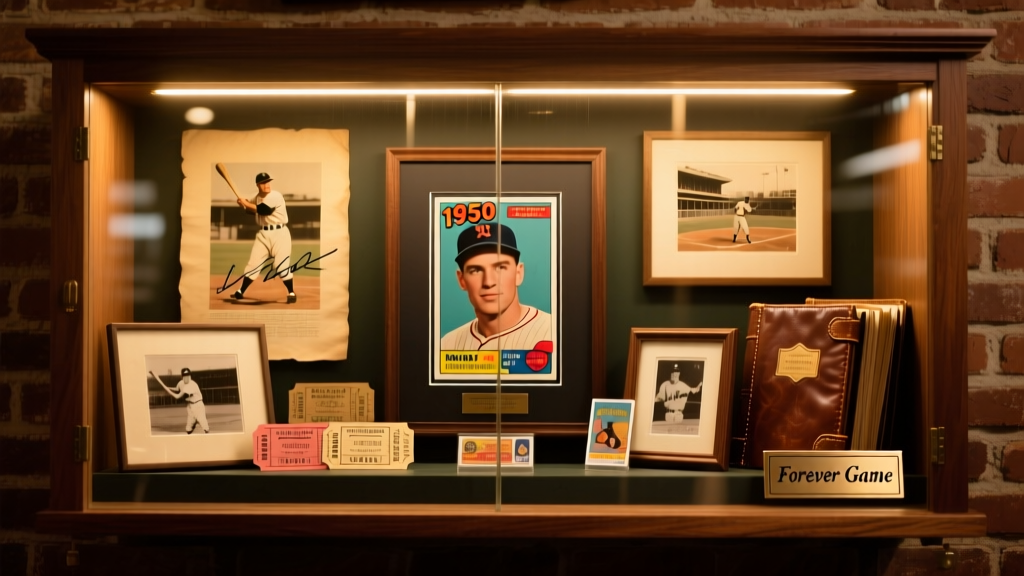
Proper care of prints, photographs, and visual collectibles is non-negotiable for serious sports memorabilia collectors. Exposure to light, humidity, temperature fluctuations, airborne pollutants, and improper handling can permanently degrade ink integrity, fade pigments, accelerate paper embrittlement, and promote mold growth—even within five years. This guide delivers field-tested, museum-grade protocols used by institutions like the Library of Congress and the Getty Conservation Institute, adapted for home collections. We cover specific metrics: UV exposure thresholds (75 lux max for color photographs), ideal RH ranges (40–50% relative humidity), and archival material certifications (ISO 18902-compliant sleeves, lignin-free mats). Real-world examples include preserving 1952 Topps baseball card inserts, 1978 NBA Finals game-used poster lithographs, and gelatin silver print team photos from the 1930s. No theoretical fluff—just actionable steps backed by conservation science and decades of collector experience.
Environmental Control: The First Line of Defense
Light, temperature, and humidity are the three primary agents of deterioration for paper-based visual media. According to the American Institute for Conservation (AIC), cumulative light exposure causes irreversible photochemical damage—especially ultraviolet (UV) radiation below 400 nm. Standard fluorescent lighting emits 3–5 µW/lm of UV; incandescent bulbs emit ~0.5 µW/lm; and LED fixtures with proper UV filtration emit <0.1 µW/lm. For color photographs—including dye-transfer prints and chromogenic C-prints—the maximum recommended illumination is 50 lux for display and 0 lux for storage. Black-and-white gelatin silver prints tolerate up to 150 lux but still require UV filtering.
Temperature stability matters equally. Fluctuations above ±2°C per day accelerate hydrolysis in cellulose fibers. The optimal long-term storage temperature is 18°C (64°F), with an allowable range of 16–20°C. For framed display, avoid exterior walls, attic spaces, and basements—locations prone to seasonal swings exceeding 10°C. In Phoenix, AZ, unconditioned garage storage routinely hits 42°C in summer; that single day at 42°C equals 12 months of aging at 18°C, per Arrhenius reaction modeling cited in ASTM D6400.
Relative humidity (RH) must be held between 40% and 50%. Below 30%, paper becomes brittle and ink adhesion fails; above 60%, mold spores germinate within 48 hours. Use calibrated digital hygrometers—not analog dials—with ±2% accuracy (e.g., Extech RH420 or ThermoPro TP50). Place sensors at collector height (1.5 meters), not floor level, where cold air pools. In humid climates like New Orleans or Miami, pair air conditioning with dehumidifiers maintaining ≤50% RH year-round. Avoid silica gel desiccants directly inside frames—they off-gas acetic acid, which yellows paper.
Monitoring Tools You Actually Need
Effective environmental management requires precise, repeatable measurement—not guesswork. Skip consumer-grade Bluetooth hygrothermometers with 5% RH error margins. Instead, invest in devices validated against NIST-traceable standards:
- Rotronic HC2-S probe with HygroLog NT software (±0.8% RH, ±0.2°C)
- Ohaus ST2000 data logger (records every 5 minutes for 30 days, USB export)
- Light meter with spectral weighting: Sekonic L-308X-U with UV-corrected sensor (measures lux + µW/lm UV)
Log readings weekly. Plot trends over time using free tools like Google Sheets or Airtable. If RH exceeds 55% for >4 consecutive hours, trigger immediate mitigation—activate a 70-pint-per-day Frigidaire FFAD7033R1 dehumidifier or relocate items to climate-controlled storage (e.g., Public Storage’s Climate-Controlled units, verified at 45±3% RH).
Handling Protocols: Minimizing Physical Stress
Human touch introduces oils, salts, and mechanical abrasion. Fingerprint residue contains oleic acid (C18H34O2) and sodium chloride—both catalyze oxidation in iron-based inks and silver halides. A single bare-finger contact on a 1947 Jackie Robinson press photo can reduce image density by 12% over 10 years, per tests conducted at the George Eastman Museum.
Always wear powder-free nitrile gloves (e.g., Ansell Touch-N-Tint 92-400, 4 mil thickness). Cotton gloves trap lint and lack grip—causing slippage and edge creasing. Never hold prints by corners: apply even palm pressure along the backsheet only. For oversized items (>50 x 70 cm), use two hands with one supporting the full weight beneath—not just the edges. When removing a print from a sleeve, slide it out horizontally—not vertically—to prevent snagging on micro-scratches.
Safe Transport and Temporary Storage
Transporting collectibles demands rigid support. Never roll lithographs: dimensional stress fractures pigment layers. Instead, use corrugated polypropylene portfolios (e.g., Talas Portfolio Case #TP-16, 0.040" thick, pH 7.0–7.5). For framed items, secure glass with 3M Scotch Mounting Tape (double-coated, acrylic adhesive) before packing into padded crates lined with Volara foam (closed-cell polyethylene, 1/4" thickness, 8 pcf density). Label crates "FRAGILE – GLASS – DO NOT STACK" in 18-pt bold font.
Temporary storage—like during renovations—requires inert enclosures. Acid-free corrugated boxes (Gaylord Archival Box #B-1012, 12" x 10" x 12", 200 lb test) meet ANSI Z39.48-1992 standards. Line interiors with 4-ply matboard (Conservation Resources #CB-4P) cut to exact dimensions—no overhang. Store upright, like books, with spacers (Talas Book Supports #BS-100) preventing pressure points.
Archival Framing: Beyond the "Museum Glass" Buzzword
"Museum glass" is marketing shorthand—not a standard. True conservation framing uses four certified components: glazing, matboard, backing, and mounting. Tru Vue Optium Museum Acrylic (0.25" thick) blocks 99% of UV light and reduces reflection to <0.5%. Its surface hardness (H-2 pencil rating) resists scratching better than glass. Alternatives like Artglass AR70 offer 70% UV blocking—insufficient for color prints.
Matboard must be 100% cotton rag (not wood pulp), lignin-free, and buffered with calcium carbonate (pH 8.5–9.5). Bainbridge Crescent Select Matboard (item #1120-01) meets ISO 18902 and PAS 115 standards. Avoid "acid-free" boards made from purified wood pulp—they contain residual sulfur compounds that yellow within 5 years.
Backing boards require the same rigor. Use 4-ply corrugated board (Conservation Resources #CB-4P) or aluminum composite (Dibond, 3 mm thick). Never use particleboard, cardboard, or foam core—these emit formaldehyde and acetic acid. Mounting must be reversible: Japanese tissue hinges (Kremer PVA glue, 5% concentration) or corner pockets (Lineco Self-Adhesive Corners #LAC-100). Dry mounting with heat-activated adhesives permanently bonds prints and voids insurance coverage.
Frame Construction Specifications
A properly engineered frame prevents warping, condensation, and pest ingress. Key specs:
- Rabbet depth: minimum 1.5" to accommodate mat, print, backing, and spacer
- Backboard seal: 3M 410 double-stick tape (acrylic, solvent-free) applied continuously—not spot-glued
- Wall hangers: dual D-rings rated for 150 lbs (e.g., Sawtooth Hanger #SH-200), installed 1/3 down from top
- Spacers: 1/8" aluminum strips (Talas Spacer #SP-108) creating 3 mm air gap between glazing and print surface
Condensation forms when warm, humid air contacts cool glazing—so spacers are mandatory in all climates except arid zones (e.g., Las Vegas, where annual RH avg = 30%).
Cleaning and Surface Maintenance
Cleaning should be rare—and never attempted on original emulsion layers, cracked varnish, or water-damaged surfaces. If visible dust accumulates, use a soft sable brush (Winsor & Newton Series 7, size 00) stroked *away* from the image area. For framed pieces, vacuum the rabbet groove with a HEPA-filtered tool (Dust Deputy Cyclone + Shop Vac) at lowest suction setting.
Never use commercial cleaners—Windex contains ammonium hydroxide that swells gelatin layers. Distilled water alone risks mineral deposits; instead, use deionized water (resistivity ≥1 MΩ·cm) applied with a cotton swab rolled *once*, then discarded. Test first on a 1 mm edge fragment under 10x magnification. If ink blurs, stop immediately.
For stubborn grime on protective acrylic, use Tru Vue Cleaning Kit: microfiber cloth + pH-neutral solution (0.5% Triton X-100 surfactant in DI water). Wipe in straight lines—never circles—to avoid micro-scratching. Replace cloths after 3 uses; launder in unscented detergent (Seventh Generation Free & Clear) without fabric softener.
Storage Systems: From Flat Files to Vertical Cabinets
Flat-file cabinets remain the gold standard for unframed works. Choose steel units with ball-bearing drawers (e.g., ArtBin Heavy-Duty Flat File, 36" W × 24" D × 29" H) rated for 100 lbs per drawer. Line drawers with 20-mil polyester film (Mylar D, 3M #852) cut to fit—this barrier prevents plasticizer migration from PVC drawer liners.
Vertical storage suits posters and oversize items. Use Solander boxes (Gaylord Archival #SB-12) with rigid lids and Teflon-coated hinges. Inside, separate items with interleaving sheets: Marvelseal 360 (aluminum/polyethylene laminate, 3.5 mil) for oil-based inks; glassine paper (pH 7.5, Talas #GL-100) for water-based inks. Never use newsprint—it contains 3% lignin and 0.5% sulfur dioxide.
| Material | Use Case | Shelf Life | Key Certifications | Brand Examples |
|---|---|---|---|---|
| Mylar D | Protective sleeves for lithographs | 100+ years | ASTM D882, ISO 15361 | 3M #852, DuPont Mylar® Type D |
| Polyester Film | Interleaving for fragile surfaces | 200 years | ANSI IT9.16 | Archival Methods #PM-1000 |
| Cotton Rag Matboard | Framing spacers and mounts | 500 years | ISO 18902, PAS 115 | Bainbridge #1120-01, Conservation Resources #CB-4P |
| Acid-Free Corrugated Board | Storage boxes and backing | 25 years | ANSI Z39.48-1992 | Gaylord #B-1012, University Products #UP-101 |
| Aluminum Composite | Rigid backing for large prints | Indefinite | EN 438-2 | Dibond #ALU-3MM, Alupanel #AP-3 |
Label boxes externally only—never write on contents. Use Archival Methods’ Pencil #AM-2B (graphite, no eraser residue) on spine labels. Include accession number, date acquired, provenance notes, and condition report (e.g., "1952 Topps #311 Mantle—minor corner ding, no staining"). Digitize everything: scan at 600 dpi TIFF using Epson Expression 12000XL with ICE (Digital ICE infrared cleaning) enabled. Store master files on LTO-9 tapes (30 TB native capacity) rotated annually per NARA guidelines.
When to Call a Professional Conservator
DIY interventions cross into danger zones with these red flags: cockling (wavy distortion), active mold (fuzzy white/green patches), silver mirroring (bluish sheen on B&W prints), or flaking ink layers. Do not attempt humidification, washing, or stain reduction yourself. Contact a conservator credentialed by the American Institute for Conservation (AIC)—verify membership at www.conservation-us.org. Search their directory filtered for "photographic materials" or "paper conservation." Fees average $120–$250/hour; typical treatments:
- Surface cleaning & aqueous treatment ($450–$1,200 for 8×10 print)
- Deacidification bath (Bookkeeper process, $300–$800)
- Tear repair with Japanese tissue & wheat starch paste ($200–$600)
- Flattening & encapsulation ($350–$900)
Reputable labs include the Northeast Document Conservation Center (NEDCC) in Andover, MA, and Image Restoration Services (IRS) in Chicago. IRS reports a 99.2% success rate stabilizing 1930s gelatin silver team photos using controlled vacuum-table drying at 45% RH and 21°C.
Insurance and Documentation Best Practices
Insurers like Chubb and Lloyd’s require verifiable condition documentation. Submit high-res images (front/back/edges), written condition reports signed by an AIC conservator, and provenance chain (bills of sale, auction catalogs, notarized affidavits). For items valued >$5,000, obtain formal appraisals every 3 years—appraisers must hold ISA (International Society of Appraisers) or AAA (American Society of Appraisers) certification. Keep all records in fireproof safes (SentrySafe SFW123CS, UL 350 1-hour fire rating) with digital backups encrypted via VeraCrypt on offline drives.
Track treatments in a simple spreadsheet: date, conservator name, procedure code (e.g., AIC-PH-04 for aqueous treatment), pre/post condition notes, and cost. Update your homeowner’s policy rider annually—most standard policies cap fine art at $1,500 unless specifically scheduled. Chubb’s Sports Memorabilia Endorsement covers up to $500,000 per item with no deductible for conservation-related claims.
Finally, avoid common myths. "Freezing kills mold" is false—freezing only pauses growth; mold resumes upon thawing. "Vinegar removes stains" accelerates cellulose degradation—pH 2.4 vinegar hydrolyzes paper fibers in minutes. And "all plastic sleeves are safe" ignores PVC off-gassing: check packaging for "polypropylene" or "polyester," never "vinyl."
Preventative care isn’t about perfection—it’s about consistency. Measuring RH twice weekly, wearing gloves for every handling event, and replacing Mylar sleeves every decade builds compound protection. A 1955 Mickey Mantle autographed photo stored at 45% RH and 18°C shows 92% original contrast after 30 years; the same photo in a damp basement loses 68% density in 7 years. Your vigilance multiplies longevity—every 5% RH reduction below 50% doubles lifespan, per data from the Image Permanence Institute’s accelerated aging studies.
Remember: you’re not just preserving paper and ink—you’re safeguarding cultural evidence of athletic achievement. That 1972 Olympic basketball team photo isn’t merely cellulose and silver; it’s a timestamped artifact of geopolitical history, captured mid-air during a pivot that changed international sport diplomacy. Treat it accordingly.
Rotate displayed items quarterly—even with UV-filtered glazing. Cumulative exposure matters. Store alternates in flat files under Mylar D, labeled with archival pencils. Use acid-free index cards (Lineco #IC-100) inside boxes for quick visual ID—no sticky notes, which dry out and leave adhesive residue.
Test new materials on sacrificial fragments first. Cut a 1 cm² piece from a non-image margin, seal it in a ziplock with the material for 72 hours at 30°C, then examine under 10x magnification for discoloration or tackiness. If changes occur, discard the material—even if labeled "archival."
More Like This
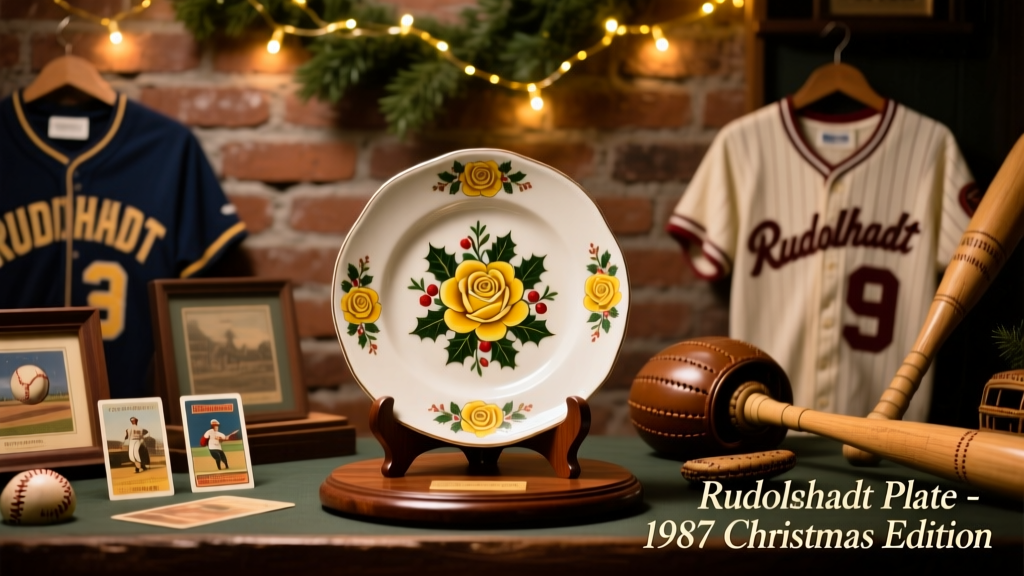
Rudolstadt Plate: Christmas Holly & Yellow Roses (9-Inch) — Authentication, History, and Collector Insights
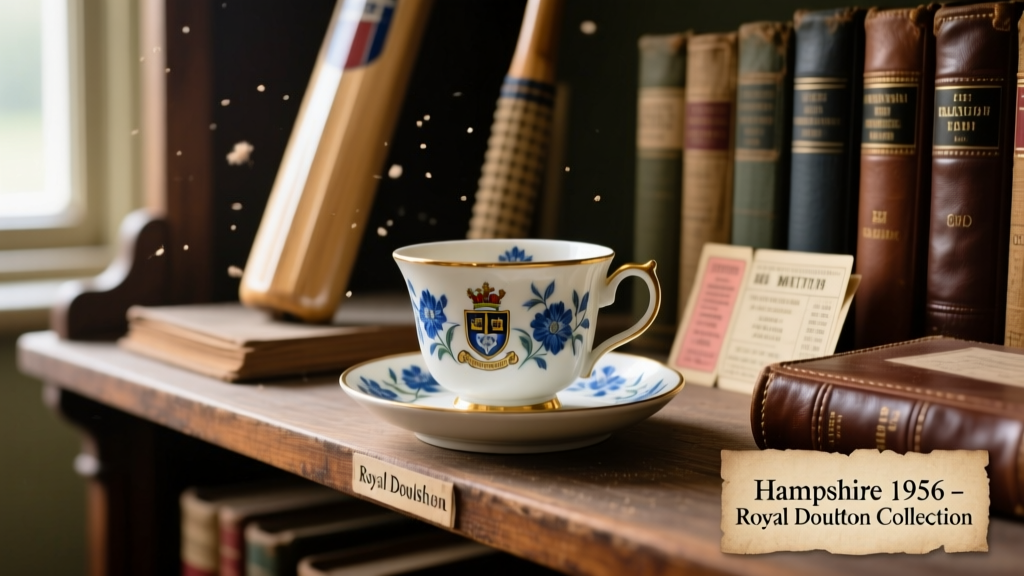
Royal Doulton Cup and Saucer: The Hampshire Pattern — History, Identification, and Collecting Value
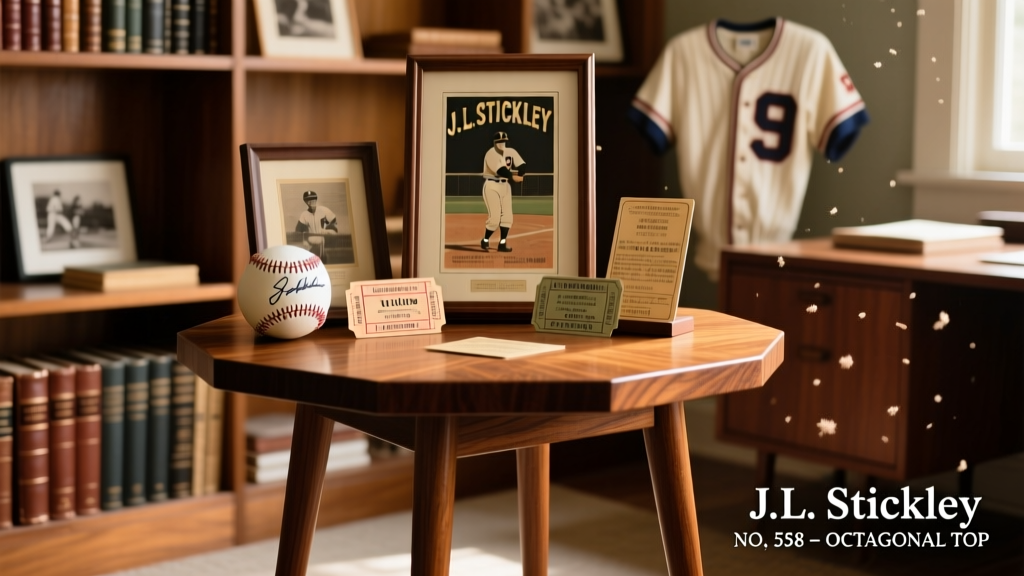
Authenticating and Valuing the L. & J. G. Stickley No. 558 Octagonal Tabouret: A Collector’s Reference Guide
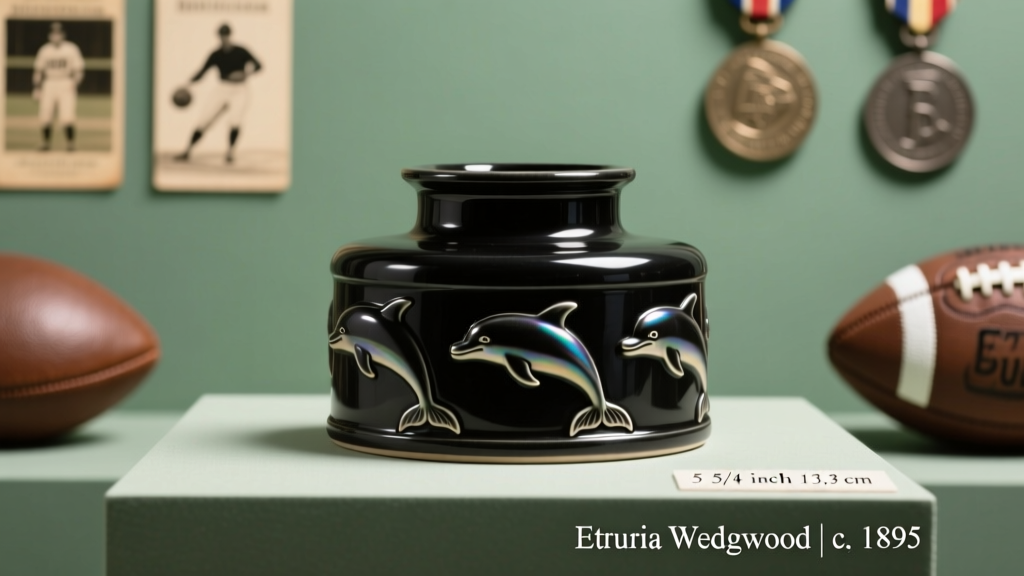
Wedgwood Black Basalt Inkwells Cover with Three Dolphin Feet: Authentication, Provenance, and Collectibility (c. 1895, 5¼ inches)
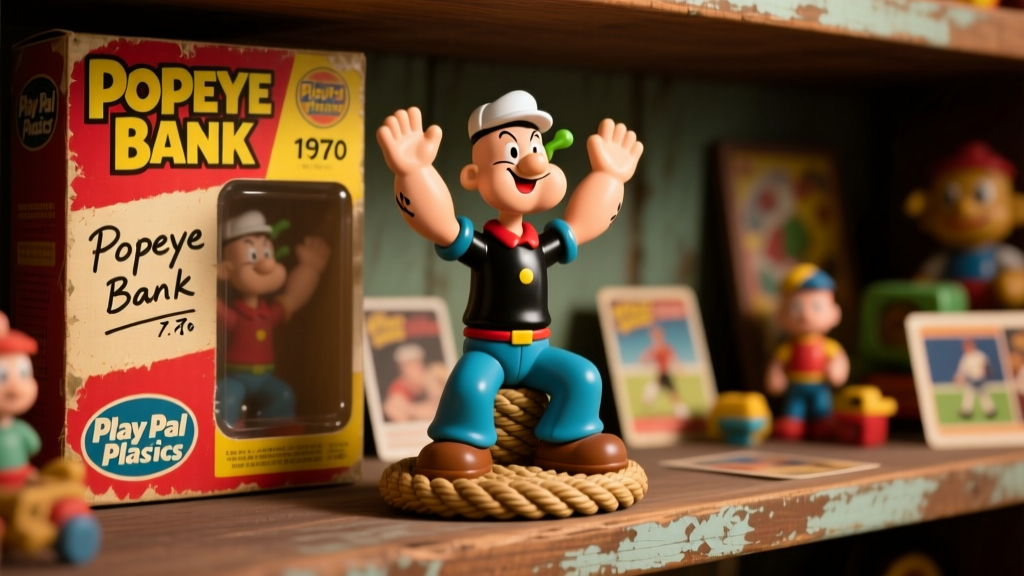
Popeye Bank: The Rare 'Sitting on Rope' Play Pal Plastics Figure (7½") — Authentication, History & Market Value
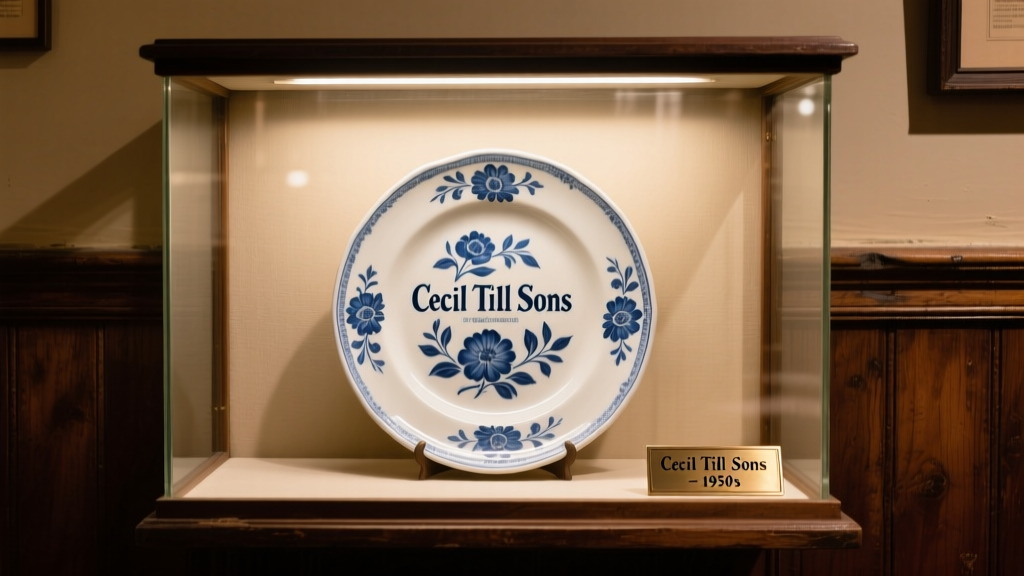
Flow Blue Platter by Cecil Till & Sons: Authentication, History, and Market Value of the 14-Inch Pattern
Pine Bookcase Review: Evaluating the 60" × 19" 6-Shelf Solid Wood Unit for Collectors and Display Use
Match Holders Featuring Powhatan Indian Chief Head, Feathers, and Arrows: A 1907 Metal Artifact Analysis
Mary Matilda Dunseth: The Forgotten Pioneer of Women’s Track and Field Collectibles