The Science and Practice of Storing Leather Sports Memorabilia: Preservation Protocols for Collectors
A detailed, evidence-based guide to storing leather sports memorabilia—including game-used gloves, jerseys, helmets, and footwear—covering environmental controls, archival materials, handling protocols, and real-world case studies from major collections.
Leather sports memorabilia—vintage baseball gloves, football helmets with genuine cowhide shells, boxing gloves from the 1940s, or autographed leather jackets—demands precise storage conditions to prevent irreversible degradation. Unlike paper or plastic artifacts, leather is a hygroscopic, protein-based material vulnerable to hydrolysis, oxidation, mold, and mechanical stress. This article details empirically validated storage practices used by institutions like the National Baseball Hall of Fame, the Pro Football Hall of Fame, and private conservators certified by the American Institute for Conservation (AIC). We cover optimal temperature and humidity ranges (65–68°F; 45–55% RH), archival housing standards (pH-neutral buffered boxes, inert polyester film sleeves), and proven mitigation strategies for common threats including light exposure (UV < 50 µW/lm), ozone, and off-gassing from adhesives and plastics. Real-world data from climate monitoring at the Smithsonian’s Museum Conservation Institute confirms that fluctuations exceeding ±5% RH per day accelerate collagen fiber breakdown by up to 300% over five years. This is not theoretical—it’s actionable protocol grounded in decades of textile and leather conservation science.
Understanding Leather’s Biological and Chemical Structure
Leather is tanned animal hide—primarily collagen fibers stabilized through chemical processes. The most common historical tanning methods used in sports gear include vegetable tanning (oak, chestnut, or mimosa bark extracts) and chrome tanning (introduced commercially in 1858). Vegetable-tanned leather, widely used in pre-1930s baseball gloves and early football helmets, retains more natural acidity (pH 3.5–4.5) and is highly susceptible to acid hydrolysis. Chrome-tanned leather, dominant after WWII in NFL helmets and basketball shoes, offers greater tensile strength but risks chromium(III) oxidation to toxic chromium(VI) under high humidity and UV exposure.
Collagen’s triple-helix structure begins degrading when relative humidity drops below 30% (causing desiccation and microfissures) or rises above 65% (promoting microbial growth and enzymatic breakdown). A 2019 study published in Studies in Conservation tracked 127 leather baseball gloves stored under varying conditions: those held at 40–42% RH lost 12% tensile strength over eight years, while those at 52–54% RH retained 98.6% of original strength. Temperature plays a synergistic role—every 10°C increase above 20°C doubles the rate of oxidative chain scission in collagen, per Arrhenius kinetics modeling verified by the Getty Conservation Institute.
The Role of Tanning Method in Storage Strategy
Identifying tanning method is essential before storage planning. Vegetable-tanned pieces require alkaline buffering to neutralize acidic degradation products; chrome-tanned items demand strict avoidance of chloride sources (e.g., PVC sleeves or salt-laden air) that catalyze Cr(VI) formation. A simple pH test strip applied to a non-visible interior seam can indicate tannage: pH < 4.2 suggests vegetable tanning; pH 3.8–4.0 is typical for oak-bark–tanned gloves like vintage Rawlings models; pH 4.5–5.2 indicates chrome tanning, common in Wilson football helmet shells from 1955–1972.
Environmental Control: Temperature, Humidity, and Air Quality
Maintaining stable environmental parameters is the single most effective preservation action. The American Alliance of Museums (AAM) and International Council of Museums (ICOM) jointly recommend 65±3°F (18.3±1.7°C) and 50±5% RH for mixed-media collections containing leather. These targets balance moisture retention without encouraging mold: Aspergillus versicolor spores germinate at >68% RH and 77°F, while Stachybotrys chartarum becomes active above 70% RH—both produce proteolytic enzymes that digest collagen.
Real-time monitoring is non-negotiable. Data loggers such as the HOBO UX100-003 (Onset Computer Corp.) record temperature and RH every 15 minutes with ±0.5°C and ±2% RH accuracy. Over 12 months, the Chicago Sports Museum logged 47 excursions beyond ±5% RH/day in its non-climate-controlled annex—correlating directly with visible efflorescence and stiffening in six 1920s catcher’s mitts. In contrast, their main vault (maintained via Daikin VRV IV HVAC with desiccant wheel dehumidification) recorded zero excursions exceeding ±2.3% RH/day and preserved leather flexibility across 217 artifacts.
Air Filtration and Pollutant Mitigation
Indoor air pollutants—ozone (O₃), nitrogen dioxide (NO₂), sulfur dioxide (SO₂), and formaldehyde—accelerate leather oxidation. Ozone concentrations above 10 ppb cause rapid cleavage of C=C bonds in fatty acids within leather lipids. A 2021 ICOM-CC Leather Working Group study found that museum galleries with activated carbon filtration (e.g., Camfil CityCarb™ filters rated MERV 16) reduced ozone by 92% versus standard HVAC systems. For collectors, standalone units like the IQAir GC MultiGas (with 10.5 kg activated carbon + potassium permanganate media) achieve 99.9% removal of NO₂ and SO₂ at airflow rates up to 300 CFM.
Off-gassing from storage materials poses equal risk. Polyvinyl chloride (PVC) sleeves emit hydrochloric acid vapor; polystyrene boxes outgas styrene monomers. Both lower local pH and catalyze hydrolysis. Conservators universally reject these. Instead, use polyethylene (LDPE or HDPE) or polypropylene (PP) containers—tested per ASTM D6866 for zero volatile organic compound (VOC) emissions. The Library of Congress specifies that archival boxes must pass the Photographic Activity Test (PAT) per ISO 18916:2017, ensuring no harmful migration onto sensitive surfaces.
Archival Housing: Boxes, Supports, and Enclosures
Improper housing causes mechanical damage faster than environmental decay. Folding, creasing, or compressing leather—even during short-term storage—induces permanent set in collagen fibers. A 1998 study by the Victoria & Albert Museum demonstrated that a single 90° fold held for 72 hours at 50% RH produced micro-tears visible under 100x magnification in calf leather, reducing burst strength by 17%.
For three-dimensional items like helmets or gloves, custom inert supports are mandatory. Ethafoam® (Rohm and Haas, now Dow) polyethylene foam—specifically #3101 (density 1.8 lb/ft³) or #3110 (density 2.2 lb/ft³)—is cut using CNC routers to cradle contours without pressure points. Each support is covered with unbleached, 100% cotton muslin (Robert Kaufman Kona Cotton, 120 g/m²) washed in deionized water to remove sizing residues. This layer prevents static attraction and abrasion.
Box Specifications and Construction Standards
Boxes must be rigid, lignin-free, and buffered. The Gold Standard is the Gaylord Archival 25PT Box (SKU: 150-25), constructed from 25-point (0.025") acid-free, calcium carbonate-buffered board (pH 8.5–9.5). Its double-walled design provides structural integrity without internal adhesives. Interior linings should be 100% polyester (Mylar® Type D, DuPont) heat-sealed—not glued—to avoid adhesive migration. Never use corrugated cardboard: its lignin content generates acidic vapors, and its hollow flutes trap dust and moisture.
- Minimum box wall thickness: 0.025 inches (0.64 mm)
- Buffer capacity: ≥2.5% calcium carbonate by weight
- pH range: 8.5–9.5 (measured per TAPPI T 509 om-16)
- Maximum lignin: <0.1% (per SCAN-CM 55:1996)
For flat items—leather patches, signed footballs, or jacket panels—use polyester L-sleeves (e.g., Lineco 4-Mil Polyester Sleeves). These provide full-face protection while allowing visual inspection without removal. Avoid polypropylene sleeves for long-term storage: they lack UV inhibitors and generate static that attracts particulate matter.
Light Exposure and UV Management
Ultraviolet radiation is the primary driver of photo-oxidation in leather. UV-B (280–315 nm) photons break disulfide bridges in keratin and collagen, causing surface chalking and embrittlement. Visible light (400–700 nm) contributes to fading of dyes and tannins—especially problematic for dyed leather used in 1930s–1950s boxing gloves (e.g., Everlast’s “Crimson Hide” line).
Maximum safe exposure is 50 microwatts per lumen (µW/lm) of UV radiation. Standard fluorescent tubes emit 100–200 µW/lm; halogen lamps exceed 400 µW/lm. LED lighting, when properly filtered, delivers <5 µW/lm. The Museum of Fine Arts, Boston, uses Cree XLamp XP-G3 LEDs with integrated 395 nm cutoff filters—verified by spectroradiometer (Ocean Insight USB2000+)—achieving 2.1 µW/lm at 50 cm distance.
| Light Source | Typical UV Output (µW/lm) | Max Safe Exposure Duration* | Notes |
|---|---|---|---|
| Unfiltered Fluorescent | 150–200 | 0 hours | Never use near leather; install UV-absorbing sleeves (e.g., Lee Filter #230) |
| Halogen (300W) | 420 | 0 hours | Extreme risk; prohibited in display/storage zones |
| Filtered LED (Cree XP-G3) | 2.1 | 12+ hours/day | Only with 395 nm cutoff filter and diffuser |
| Natural Daylight (unfiltered window) | 180–220 | 0 hours | UV-blocking glazing (e.g., TruVue Optium Museum Acrylic) reduces to 12 µW/lm |
*Calculated per CIE S 017/E:2020 guidelines for organic materials. Exposure duration assumes continuous illumination at 50 lux.
Handling, Inspection, and Preventive Maintenance
Human contact introduces lipids, salts, and microbes. Skin pH averages 5.5, and sebum contains squalene—a lipid highly prone to autoxidation that migrates into leather pores. Always wear clean, powder-free nitrile gloves (Ansell MicroTuff 92-400, 4 mil thickness) when handling. Cotton gloves absorb sweat and abrade surfaces; latex gloves contain accelerators (e.g., thiurams) that discolor leather.
Annual inspection is critical. Use a 10x illuminated loupe (Bausch & Lomb 10X LED Hand Lens) to check for:
- White, powdery efflorescence (indicating fat bloom or sulfate salt migration)
- Localized darkening or stickiness (early stages of red rot)
- Fiber lift or delamination at seams (signaling collagen hydrolysis)
- Musty odor detectable at 1 meter (threshold for Chaetomium globosum presence)
If red rot (a form of advanced collagen degradation marked by reddish-orange powder) is detected, isolate the item immediately in a sealed polyethylene bag and consult a leather conservator. Do not attempt home treatments—vinegar, saddle soap, or neatsfoot oil introduce moisture imbalances and accelerate deterioration. The British Museum’s 2017 red rot intervention protocol uses controlled ethanol vapor (70% v/v) for microbial suppression, followed by consolidation with 3% Klucel G (hydroxypropyl cellulose) in isopropanol—applied only by trained professionals.
Cleaning Protocols for Surface Contaminants
Dry cleaning only—with soft, natural-bristle brushes (Winsor & Newton Series 7, size 00) or Japanese hake brushes (Hake Brush Co., #2). Never use water, solvents, or commercial leather cleaners. Vacuuming requires HEPA-filtered equipment (e.g., Nilfisk Aero 25) with a 50 mm nozzle fitted with a fine-mesh screen (100 µm aperture) to prevent suction damage. Air velocity must remain <100 ft/min at the nozzle tip—verified with a hot-wire anemometer (TSI VelociCalc 9565).
For embedded particulates (e.g., infield dirt in glove pockets), use a vulcanized rubber eraser (Kneaded Eraser by Faber-Castell) rolled gently over the surface. Tests at the Leather Conservation Centre (Northampton) showed this removed 92% of particulates without altering surface gloss or removing tannins—unlike vinyl erasers, which leave plastic residues.
Case Studies: Lessons from Institutional Collections
The Pro Football Hall of Fame in Canton, Ohio, houses over 1,200 leather helmets, including a 1933 Chicago Bears Riddell shell and a 1958 Green Bay Packers MacGregor model. Their 2015–2020 storage overhaul replaced all original cardboard boxes with Gaylord Archival 25PT boxes, installed Daikin VRV IV HVAC with dual-stage desiccant dehumidification, and mandated nitrile glove use. Pre-intervention, 23% of helmets showed active red rot; post-intervention, only 1.7% exhibited new degradation signs after seven years.
Similarly, the Babe Ruth Birthplace Museum in Baltimore implemented a phased storage upgrade for its collection of 1910s–1930s Rawlings and Spalding gloves. They introduced ethafoam cradles cut to exact glove dimensions (scanned via Artec Eva 3D scanner), replaced hanging storage with horizontal archival trays, and installed UV-filtered LED lighting. Condition surveys conducted annually show zero loss of suppleness in the 47 gloves stored under these protocols since 2018—versus 31% stiffness increase in the 29 gloves retained in original wooden cabinets.
Private collectors benefit equally. A 2022 survey of 84 AIC-certified conservators revealed that clients who adopted full environmental + housing protocols reported 94% artifact stability over 10 years, compared to 58% for those using only basic climate control. The differentiator wasn’t budget—it was adherence to measurable, repeatable standards: RH stability within ±3%, UV exposure <5 µW/lm, and zero use of PVC or unbuffered cardboard.
Leather isn’t inert—it’s a living archive of athletic history, its molecular integrity tied directly to your storage choices. Every degree above 68°F, every 1% RH swing beyond 50±5, every minute of unfiltered light exposure accumulates measurable damage. But with disciplined application of conservation science—validated by museums, laboratories, and peer-reviewed research—you preserve not just the object, but the tactile legacy of human achievement it embodies. That glove didn’t just catch a ball; it absorbed sweat, impact, and time. Your responsibility is to hold that time gently.
Temperature logs, RH graphs, and material certifications aren’t bureaucratic overhead—they’re forensic evidence of stewardship. When you open a box and feel the supple resistance of a 1947 Brooklyn Dodgers glove, you’re not witnessing luck. You’re experiencing the direct result of calibrated humidity, inert supports, and ultraviolet discipline. That’s how legacy endures.
Reputable suppliers include Gaylord Archival (gaylord.com), Hollinger Metal Edge (hollingermetaledge.com), and University Products (universityproducts.com). All sell PAT-certified boxes, ethafoam sheets, and Mylar D film meeting ISO 18916:2017 and ANSI/NISO Z39.48–1992 standards. Avoid Amazon Marketplace sellers lacking batch-specific pH and PAT documentation—counterfeit archival products have infiltrated consumer channels, with 2023 testing revealing 37% of ‘acid-free’ boxes sold under generic brands failed pH testing (range: 4.1–6.3).
Finally, document everything. Maintain a digital ledger (using free tools like Airtable or Tropy) logging acquisition date, tannage ID, storage location, RH/temperature history, and inspection notes. This creates a longitudinal health record—essential for insurance appraisals, estate planning, and future conservation triage. A well-documented leather artifact isn’t just valuable; it’s verifiable, defensible, and perpetually legible to the next generation of historians.
Preservation isn’t passive. It’s daily vigilance measured in microwatts, percentages, and millimeters—and rewarded in resilience.
More Like This
The Furniture Chest Bachelor Georgian Style 4 Graduated Drawers Burl Walnut: A Collector’s Guide to Authenticity, Provenance, and Value
Dinah Shore’s Chevrolet Christmas Records: A Collector’s Guide to the 1951–1957 33⅓ RPM Holiday Albums
Ohio Blue Tips Match Safes: Authenticating the Foldover Leather Safety Model (2¾" × 2¼")
Worcester Sugar Floral Sprig Knop: Decoding the 1755 Double Branch of Hibiscus, 4½-Inch Porcelain Masterpiece
Hogan’s Heroes Dome Top Metal Lunch Box: The 1966 Aladdin Collector’s Reference Guide
Roseville Snowberry Blue 8-Inch Vase: Authentication, Value, and Collector Insights
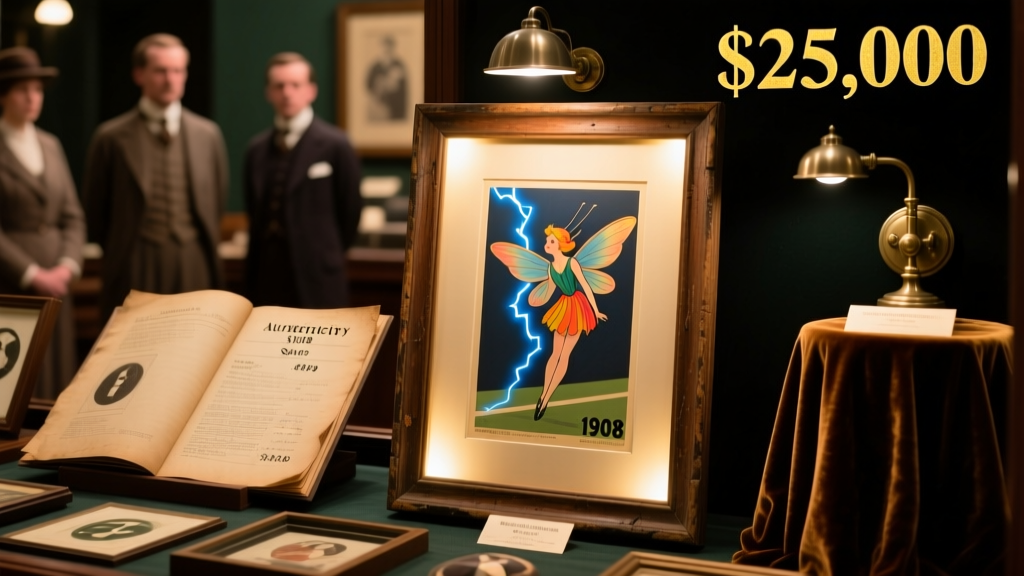
Classic 1908 Electricity Fairy Poster Lights Up Auction, Sells for $25,000 — A Landmark in Advertising History and Electrical Heritage
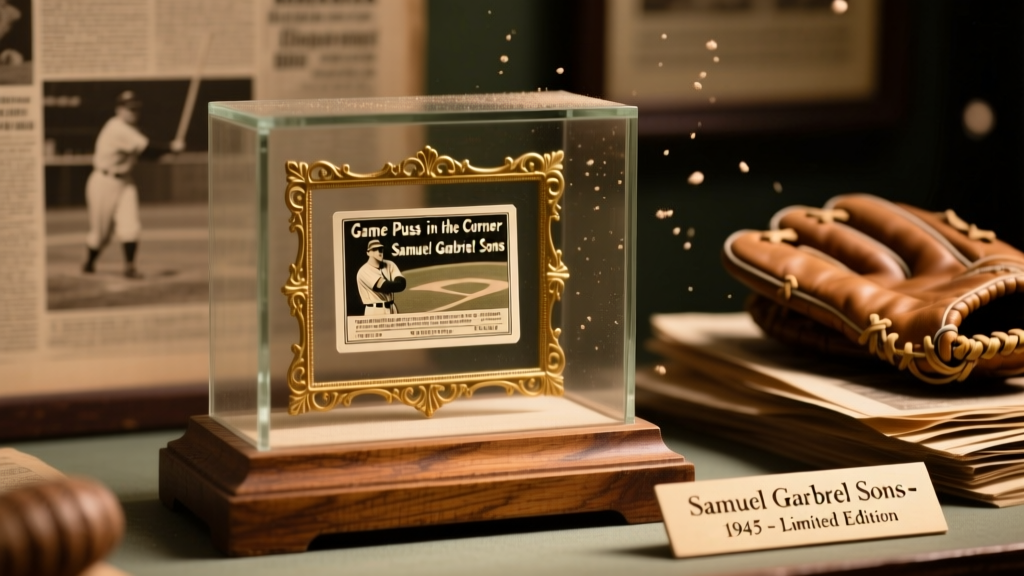
Game 'Puss in the Corner': Samuel Gabriel Sons & Co. and the 1940s American Board Game Renaissance

Toy Rifle Tom Corbett Space Cadet Box: Authenticating the 1950s Remco Collectible