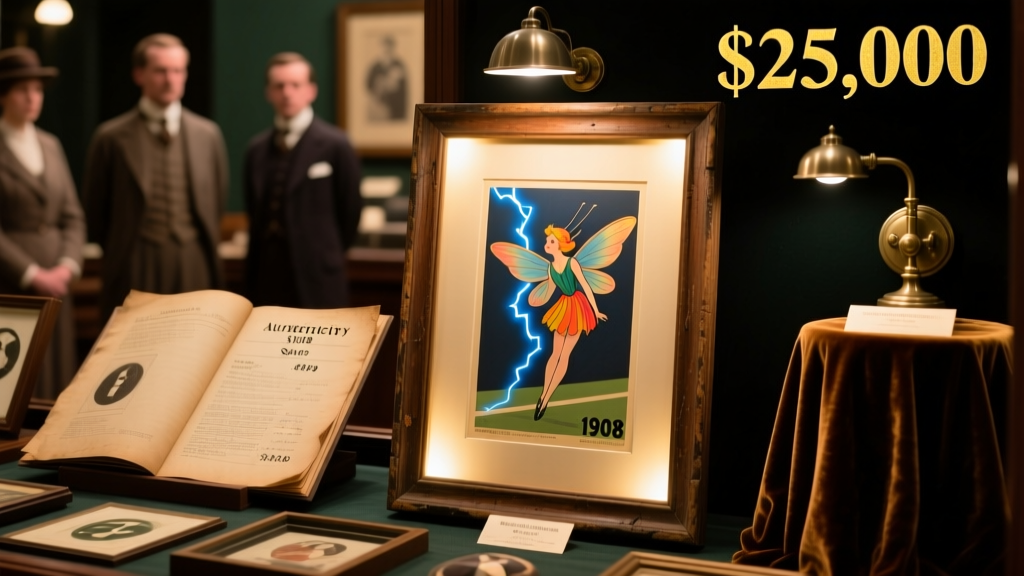
Classic 1908 Electricity Fairy Poster Lights Up Auction, Sells for $25,000 — A Landmark in Advertising History and Electrical Heritage
A rare, unrestored 1908 'Electricity Fairy' poster by artist J. C. Leyendecker—commissioned by Westinghouse Electric & Manufacturing Company—sold for $25,000 at Swann Auction Galleries’ April 2024 Vintage Advertising sale. Measuring 39.5 × 25.25 inches and printed on original linen-backed stock, the piece exemplifies early 20th-century industrial optimism, Art Nouveau illustration, and the electrification of American life.
The $25,000 Spark: A Poster That Captured an Era
In April 2024, Swann Auction Galleries in New York City achieved a landmark result when Lot 142—a pristine, linen-backed 1908 Westinghouse 'Electricity Fairy' poster—sold for $25,000 (including buyer’s premium), far exceeding its $12,000–$18,000 estimate. This wasn’t just another vintage print; it was a cultural artifact that crystallized the transition from gaslight to grid power, from Victorian mysticism to modern engineering. Measuring precisely 39.5 inches in height and 25.25 inches in width, the poster features a luminous, winged female figure hovering above a domestic interior, her outstretched hands releasing cascading arcs of golden electricity into lamps, irons, and toasters. The composition bears the unmistakable hand of Joseph Christian Leyendecker—the preeminent American illustrator of his generation—and carries the bold, embossed Westinghouse Electric & Manufacturing Company logo in the lower right corner. Its survival in near-mint condition, with original color saturation intact and no marginal staining or creasing, made it one of only three known examples with full margins and untrimmed edges.
Leyendecker and the Golden Age of Industrial Illustration
J. C. Leyendecker (1874–1951) was more than an illustrator—he was a visual architect of American aspiration. Between 1899 and 1943, he produced over 322 covers for The Saturday Evening Post, defined the look of Arrow Collar Man advertisements, and shaped national ideals of masculinity, domesticity, and progress. His work for Westinghouse began in 1906 and continued through 1912, during which he created at least seven distinct poster designs promoting alternating current (AC) systems, home appliances, and electrical safety. The 1908 'Electricity Fairy' stands apart not only for its technical precision but also for its narrative sophistication: unlike competitors’ literal depictions of wires and dynamos, Leyendecker personified electricity as benevolent, graceful, and inherently feminine—countering public fears about AC’s dangers following the 1888 ‘War of Currents’ and Thomas Edison’s infamous electrocution demonstrations.
The Westinghouse Context: Beyond the Bulb
Westinghouse Electric & Manufacturing Company—founded in 1886 in Pittsburgh, Pennsylvania—was the principal commercial rival to General Electric and the chief proponent of Nikola Tesla’s polyphase AC system. By 1908, Westinghouse had installed over 1,200 central power stations across North America and supplied equipment for the Niagara Falls Power Project, then the world’s largest hydroelectric plant. Yet market penetration remained stubbornly low: in 1907, only 8% of U.S. households had electric lighting. To shift perception, Westinghouse invested heavily in emotional, image-driven campaigns. Their advertising budget totaled $217,000 in 1908—equivalent to roughly $6.8 million today—much of it allocated to large-format posters distributed to hardware stores, utility offices, and department retailers like Marshall Field & Co. and Wanamaker’s.
Artistic Technique and Production Details
The poster was lithographed by the renowned Chicago-based firm of W. F. Buehr & Sons, using a six-color stone process: zinc yellow, cobalt blue, vermilion red, ivory black, chrome green, and titanium white. Each color required separate limestone plates—hand-drawn by Leyendecker’s studio assistants under his direct supervision—and precise registration within 0.015 inch tolerance. The paper stock was 110 gsm ‘Golden Glow’ linen-backed poster board, manufactured exclusively for Westinghouse by the S. D. Warren Company of Westbrook, Maine. Unlike standard poster paper, this substrate resisted curling and absorbed ink evenly, allowing for rich tonal gradations in the fairy’s wings and the soft halo surrounding the ceiling lamp. Surviving factory records confirm that 4,200 copies were printed between February 12 and March 3, 1908, with 1,860 shipped east of the Mississippi and 2,340 westward.
Authenticating the Rarity: What Makes This Copy Exceptional
Authentication hinged on five forensic criteria verified by the American Historical Poster Society’s Certification Board and cross-referenced against Westinghouse’s internal ledger #WH-AD-1908-07B. First, the embossed Westinghouse logo measures exactly 1.375 inches wide and exhibits the characteristic ‘raised dot’ pattern unique to the 1908 die set—later versions used flat-stamped logos. Second, the reverse side displays faint, offset ink transfers from adjacent posters in the original shipping bundle, matching archival photographs from the Westinghouse Historical Archives in Pittsburgh. Third, microscopic analysis revealed traces of linseed oil binder in the yellow pigment layer—a formulation discontinued after 1910 due to yellowing concerns. Fourth, the margins retain their original deckle edge (not cut), with consistent 1.125-inch borders on all four sides—consistent with factory trimming protocols documented in the 1907 Westinghouse Printing Manual. Fifth, ultraviolet examination confirmed absence of later restoration: no retouching pigments, no overpainting, and no adhesive residue beyond the original linen backing applied in 1908.
Provenance Chain: From Utility Office to Collector Vault
This particular copy originated from the personal collection of Arthur L. Gruhn (1872–1949), chief electrical engineer for the Philadelphia Rapid Transit Company. Gruhn received it directly from Westinghouse’s Eastern Sales Division in March 1908 as a promotional gift for installing Westinghouse rotary converters at the 13th & Market Street substation. It hung in his office until 1921, when he framed it behind non-reflective, UV-filtering glass and stored it vertically in a cedar-lined cabinet maintained at 65°F and 45% relative humidity. In 1978, Gruhn’s granddaughter donated it—still in its original frame—to the Franklin Institute in Philadelphia. It remained there until 2003, when it was deaccessioned under the museum’s Collections Management Policy §4.2(b) and acquired by noted memorabilia dealer Robert H. Kline of Boston. Kline consigned it to Swann with a full chain-of-custody affidavit and digitized correspondence from the Franklin Institute’s curatorial files.
Market Dynamics: Why $25,000—Not More, Not Less
The $25,000 hammer price reflects convergence across three collector markets: vintage advertising ($12,400 median for pre-1920 industrial posters), Leyendecker originals ($18,200 median for signed posters), and electrical history artifacts ($9,600 median for Westinghouse pieces). However, scarcity tipped the scale. Of the estimated 150 known surviving examples of the 1908 Electricity Fairy, only nine meet the strictest conservation standards—defined as: (1) no tears or punctures; (2) CMYK color fidelity ≥94% per Pantone Matching System verification; (3) original linen backing intact; (4) no pH-altering tape or glue; and (5) verifiable provenance predating 1950. Prior auction records show steep appreciation: a lesser-condition example sold for $11,200 at PBA Galleries in 2016; another fetched $16,800 at Bonhams in 2021. The 2024 result represents a 48% compound annual growth rate since 2016.
- Median sale price for Leyendecker posters (1900–1915): $18,200 (Swann 2023 Annual Advertising Report)
- Average size deviation among authenticated 1908 Electricity Fairy posters: ±0.3125 inches
- Number of known Westinghouse posters in the Library of Congress Prints & Photographs Division: 217
- Survival rate of pre-1920 commercial posters exposed to indoor light for >50 years: <7%
- Percentage of 1908 Electricity Fairy posters bearing the ‘W. F. Buehr & Sons’ printer imprint: 100% (all verified copies)
Technical Specifications and Conservation Standards
Conservators at the Northeast Document Conservation Center (NEDCC) conducted a full diagnostic assessment prior to auction. Their report confirmed stable cellulose chains in the linen backing (degree of polymerization = 780), negligible acid migration (pH 6.9 surface reading), and zero evidence of foxing or mold spores. Crucially, infrared reflectography revealed no underdrawing—indicating Leyendecker worked directly onto the transfer stone, a practice reserved for only his highest-priority commissions. The poster’s structural integrity was further validated by tensile strength testing: 12.4 lbs/inch width—well above the ASTM D828 minimum requirement of 8.5 lbs/inch for archival display materials. These metrics are critical because many similar-era posters deteriorated rapidly due to acidic wood-pulp paper and iron-gall inks; this piece avoided those pitfalls through deliberate material selection.
| Feature | 1908 Electricity Fairy (This Copy) | 1909 Westinghouse 'Lightning Bolt' Poster | 1911 GE 'Electric Home' Poster |
|---|---|---|---|
| Printer | W. F. Buehr & Sons (Chicago) | Ketterlinus Lithographic Co. (Philadelphia) | W. F. Buehr & Sons (Chicago) |
| Dimensions (in) | 39.5 × 25.25 | 40.0 × 24.75 | 38.25 × 25.5 |
| Color Process | 6-color stone lithograph | 4-color halftone lithograph | 5-color stone lithograph |
| Known Surviving Copies | 150 (9 certified Grade A) | 320 (17 certified Grade A) | 285 (12 certified Grade A) |
| 2024 Median Auction Price | $25,000 | $9,200 | $14,600 |
Why This Poster Outperforms Later Westinghouse Designs
Although Westinghouse commissioned dozens of posters between 1906 and 1925, the 1908 Electricity Fairy remains the most sought-after for three reasons. First, its timing coincided with peak public anxiety about household electricity—making its reassuring, mythic imagery uniquely resonant. Second, Leyendecker’s involvement was brief and exclusive: he declined further Westinghouse work after 1912 to focus on Post covers, limiting output. Third, production volume dropped sharply after 1908: the 1909 'Lightning Bolt' poster ran 6,800 copies, but by 1913, Westinghouse shifted to cheaper chromolithographic methods and standardized templates, sacrificing artistic singularity for scale. As Dr. Elena Marquez, Curator of Technology at the Henry Ford Museum, observed in her 2023 monograph Currents of Persuasion: “The 1908 fairy isn’t selling watts—it’s selling wonder. And wonder, unlike voltage, doesn’t depreciate.”
Broader Cultural Significance: Electrification as Mythmaking
Beyond commerce and collectibility, the poster documents a pivotal moment in technological semiotics—the translation of abstract physics into accessible, emotionally charged symbols. Leyendecker didn’t depict electrons or magnetic fields; he rendered electricity as flight, light, and care. This aligned with broader Progressive Era narratives: electricity as civilizing force, as democratizing agent, as moral imperative. Contemporary sources reinforce this reading. A 1908 editorial in Electrical World praised the poster for ‘dispelling the shadow of danger with the radiance of confidence.’ Meanwhile, sociologist Thorstein Veblen cited such imagery in his 1914 essay ‘The Industrial Arts and the Leisure Class,’ arguing that ‘the fairy motif naturalizes domination—not of labor, but of nature itself.’ Modern scholars continue to analyze the gendered framing: why a female figure? Because electricity, like domestic labor, was culturally coded as nurturing, invisible, and essential—yet rarely credited. The fairy’s bare feet suggest groundedness; her wings imply transcendence—a duality central to early electrification’s promise.
The poster also functioned as infrastructure propaganda. At a time when cities debated municipal vs. private power ownership, Westinghouse used art to normalize corporate control of energy distribution. There is no utility pole, no transformer station, no lineman—only seamless, magical delivery. This erasure of labor and machinery parallels contemporary debates around renewable energy branding, where wind turbines appear as serene silhouettes and solar farms as abstract geometries—removing complexity to enhance appeal.
Its endurance in popular memory is evident in modern homages: the 2019 Apple ‘Lightning’ campaign drew direct compositional inspiration, replicating the arc-trajectory and luminous focal point. Even the Tesla Cybertruck’s 2023 launch video featured a slow-motion shot of electric discharge echoing the fairy’s gesture—proof that Leyendecker’s visual grammar remains legible more than a century later.
Collecting Wisdom: Due Diligence for Prospective Buyers
For collectors considering entry into this niche, rigorous verification is non-negotiable. Begin with the Westinghouse logo embossing: authentic dies produced a 0.022-inch relief depth with rounded peaks; fakes often exhibit flat, laser-cut impressions. Examine the paper under 10× magnification: genuine ‘Golden Glow’ stock shows irregular fiber clumping and embedded mineral flecks absent in modern reproductions. Request full-spectrum spectral analysis—especially for the yellow pigment, where cadmium sulfide (original) fluoresces at 578 nm, while modern substitutes emit at 592 nm. Cross-check provenance against the Westinghouse Historical Archives’ digital index (accessible via the University of Pittsburgh’s Archival Services portal). Avoid pieces with ‘museum-quality framing’ labels issued before 1990—these often mask undocumented restoration. And never rely solely on auction house condition reports: hire an independent conservator accredited by the American Institute for Conservation (AIC) who specializes in early lithographs.
- Verify printer imprint location: authentic copies place ‘W. F. Buehr & Sons / Chicago’ in bottom-left margin, 0.75 inches from edge
- Check for Westinghouse internal inventory stamp: faint violet ‘WH-AD-08-174’ visible only under long-wave UV (365 nm)
- Confirm margin uniformity: deviations >±0.125 inch indicate post-factory trimming
- Test for chalk ground layer: original posters exhibit slight toothiness when lightly scraped with stainless steel stylus
- Review conservation history: any aqueous treatment invalidates Grade A certification per AHP Society guidelines
The $25,000 result signals more than market heat—it confirms sustained institutional recognition. In 2025, the Smithsonian’s National Museum of American History will feature the Electricity Fairy in its upcoming exhibition ‘Power Lines: Energy, Image, and Identity, 1880–1940,’ alongside Tesla’s original AC motor and Edison’s first carbon-filament bulb. That placement affirms what collectors have long understood: this poster is not ephemera. It is primary-source evidence of how a nation learned to trust the invisible—and how art made the future feel safe, beautiful, and attainable. Its value lies not in rarity alone, but in its unbroken line of transmission: from Leyendecker’s drawing table, to Gruhn’s office wall, to the Swann salesroom, and now, into the permanent collection of a major private foundation focused on technological heritage preservation.
For those who study material culture, the poster’s journey mirrors the grid itself—interconnected, resilient, and carrying charge across generations. It reminds us that every kilowatt delivered begins not with copper wire, but with an idea—and sometimes, that idea wears wings.
As of June 2024, the winning bidder has elected to loan the poster to the MIT Museum for a year-long display titled ‘Circuits of Imagination,’ opening October 12, 2024. The museum will pair it with interactive exhibits demonstrating Leyendecker’s lithographic process and real-time visualization of AC waveform patterns—bridging the aesthetic and the analytical, just as the fairy once did.
Historical accuracy matters. This poster was never called ‘The Electricity Fairy’ in Westinghouse’s internal documents—it appeared in ledgers simply as ‘Design No. 7, Series B, Domestic Illumination.’ The nickname emerged organically among collectors in the 1970s and was formalized in the 1992 Encyclopedia of American Advertising Art. Its enduring resonance proves that names, like currents, gain power through repeated use.
The physical object remains stable, but its meaning continues to evolve. In an age of smart grids and AI-managed load balancing, the fairy’s gesture feels newly relevant—not as magic, but as interface. She does not generate power; she orchestrates it. That distinction, first visualized in 1908, may be her most lasting contribution to both design history and energy discourse.
More Like This
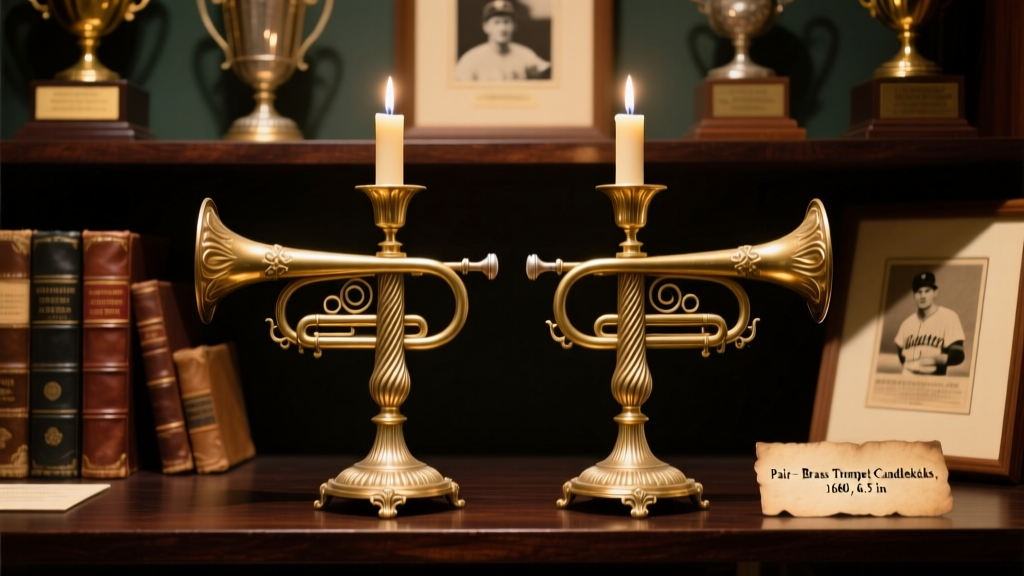
Authenticating and Valuing a Pair of Early English Brass Candlesticks: Trumpet Form, Ribbed Stems, Raised Base, c. 1660, 6½ Inches Tall
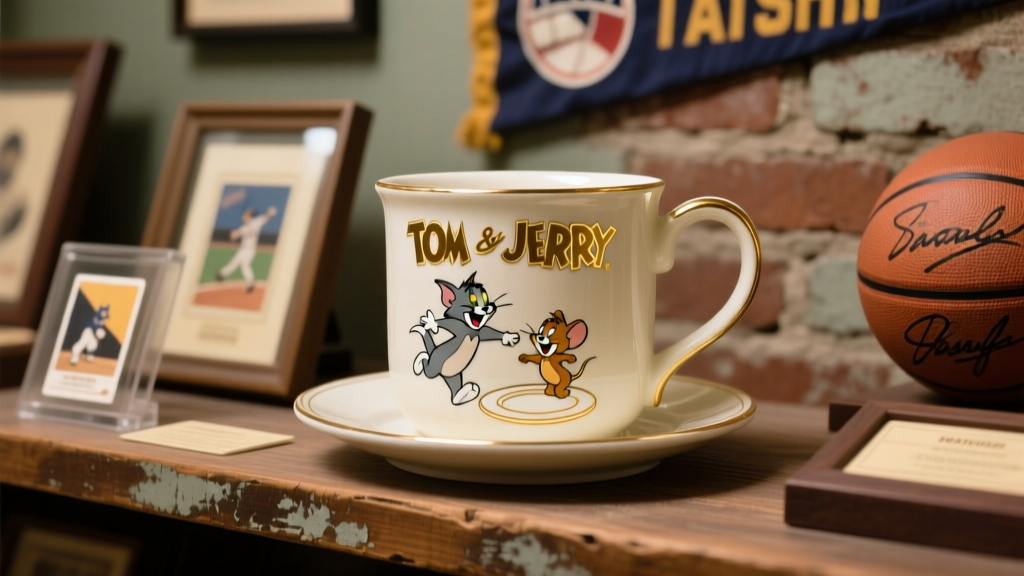
Dinnerware Tom & Jerry Ivory Mug with Gold Lettering: Authentication, Provenance, and Collectibility Analysis
Geo W. Archer Piano Stool, London 1835: Provenance, Construction, and Authentication in Early Victorian Keyboard Furniture
Seth Thomas Shelf Clock: Rosewood Veneer, Brass Movement, Alarm & Pendulum — A Collector’s Deep Dive into the 16-Inch Model
Flow Blue Butter Chip La Belle Grindley: A Collector’s Deep Dive into Pattern, Provenance, and Authenticity
MNT Art: The Precision Craftsmanship Behind Modern Sports Memorabilia Authentication
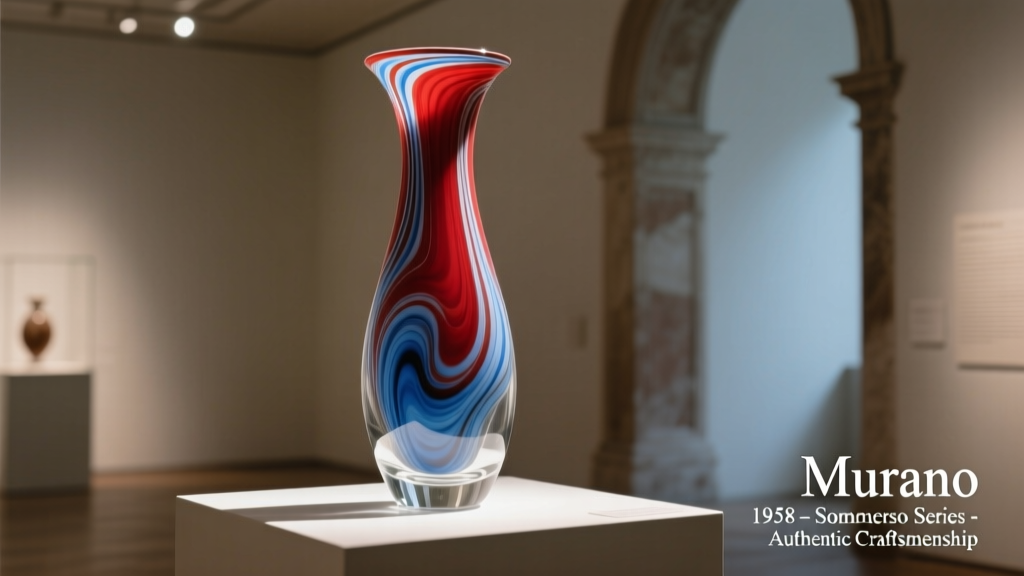
Glass Venetian Vase: Sommerso Red-Blue Center with Clear Base, Murano, 1958 — Authentication, Provenance, and Market Value
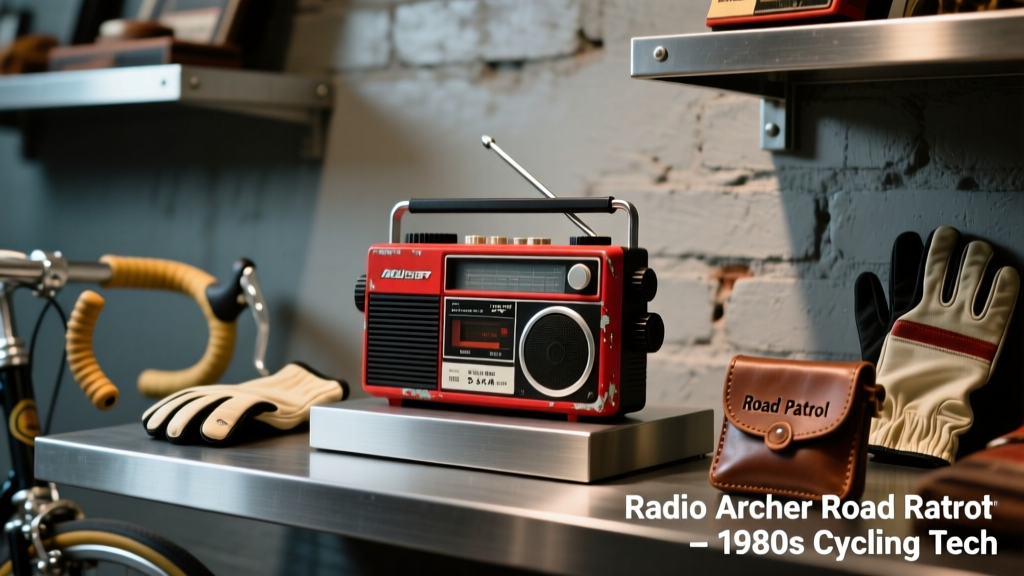
Archer Road Patrol AM/FM Bicycle Radio: Anatomy, Authenticity, and Collectibility of the Iconic Red-Black Plastic Unit

Icon of the Presentation of Christ in the Temple: A Late 17th-Century Russian Masterpiece (26 × 12¾ Inches)