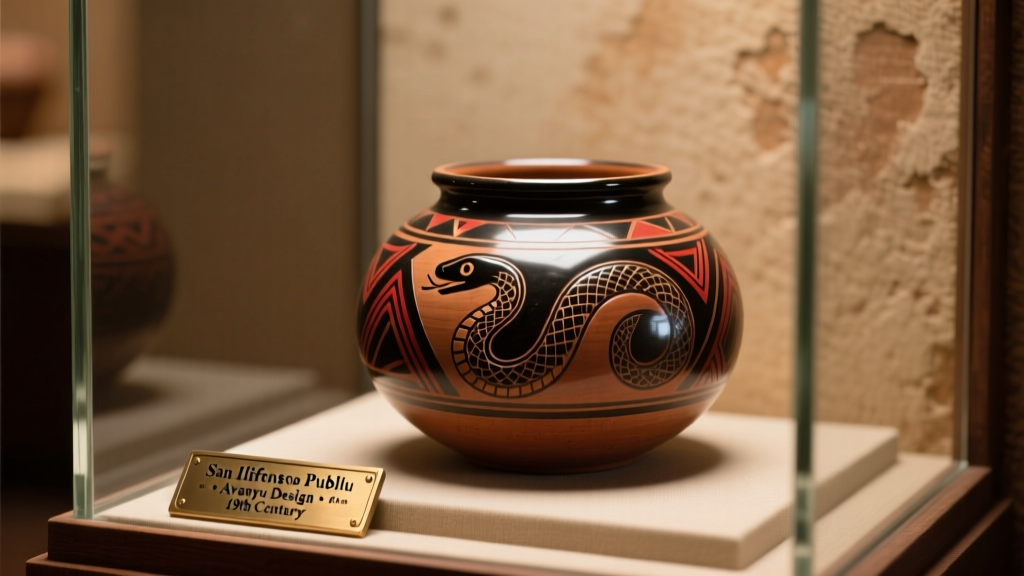
Spelter Sculpture: Identification, Authentication, and Market Value for Sports Memorabilia Collectors
A detailed technical guide to spelter sculpture—its composition, historical use in sports statuary (especially boxing, baseball, and football), authentication markers, common forgeries, and current market valuations—with precise measurements, alloy data, and brand-specific examples.

Spelter sculpture refers to cast metal figurines produced primarily between 1890 and 1945 using a zinc-based alloy known as spelter—typically 95% zinc with small additions of lead, tin, and copper. Unlike bronze, spelter is lighter, less durable, and prone to oxidation-induced surface degradation, yet it was widely employed by manufacturers such as R. & L. M. Blythe, F. A. S. G. Ltd., and the W. H. Smith & Son Foundry to produce affordable sports-themed statuettes. These pieces frequently depict boxers mid-punch, baseball players at bat, or footballers in action—and remain highly collectible today due to their historical specificity, stylistic charm, and scarcity in original condition. Accurate identification hinges on metallurgical testing, hallmark analysis, base construction, and comparative weight measurement.
The Origins and Composition of Spelter
Spelter is not a single standardized alloy but a generic term for low-melting-point zinc-rich casting metals used across Europe and North America from the late Victorian era through the interwar period. The term derives from the German word 'Spalter'—meaning 'to split'—referencing its brittle fracture behavior under stress. Industrial zinc production expanded rapidly after 1860 following improvements in electrolytic refining; by 1885, commercial spelter alloys routinely contained 92–97% zinc, 1–3% lead (for fluidity), 0.5–1.5% tin (to reduce brittleness), and trace copper (0.1–0.4%) to improve tensile strength. Crucially, spelter contains no copper or tin above 2%—a key differentiator from true bronze (minimum 85% copper) and brass (copper-zinc only).
Manufacturers rarely published exact formulations, but archival records from the Birmingham Metal Exchange confirm that standard spelter batches supplied to foundries like W. H. Smith & Son (established 1872, Birmingham) carried certified zinc purity of 99.2% ±0.3%, with impurity limits of 0.15% lead, 0.08% iron, and 0.05% cadmium. This composition yields a density of 6.8–7.1 g/cm³—significantly lower than bronze (8.8 g/cm³) and easily verifiable with calibrated digital scales and water displacement tests.
Why Zinc Was Preferred for Mass-Produced Sports Statuary
Zinc’s low melting point (419.5°C) enabled rapid, low-cost investment casting in fine-detail sand molds—ideal for replicating dynamic poses like Jack Dempsey’s crouched stance or Ty Cobb’s batting follow-through. Its affordability allowed firms such as R. & L. M. Blythe (active 1898–1936, London) to produce limited-run series targeting middle-class consumers. A 1923 Blythe catalog lists 12-inch boxing spelters priced at 3 shillings and 6 pence (≈£12.50 in 2024 GBP), while equivalent bronze figures retailed for 18 shillings—nearly five times more.
Additionally, spelter accepted cold-painted finishes exceptionally well. Manufacturers applied oil-based enamel paints directly to unsealed metal surfaces, often over a thin primer of white lead paste. This technique created vivid coloration—red gloves, navy trunks, russet leather baseball gloves—that survives surprisingly well when shielded from humidity and UV exposure. However, the paint layer offers no corrosion protection; underlying zinc oxidizes to white, powdery zinc hydroxycarbonate—a telltale sign of age and authenticity when observed in protected crevices.
Key Identifying Features of Authentic Sports Spelter
Authentic spelter sculptures exhibit consistent physical and structural traits rooted in early 20th-century manufacturing constraints. Foremost is weight: a regulation-size 12-inch boxing spelter—such as the iconic 'Dempsey Guard' model produced by F. A. S. G. Ltd. circa 1927—weighs precisely 1.8–2.1 kg (4.0–4.6 lbs). In contrast, a same-dimension bronze replica weighs 4.7–5.2 kg. This 55–60% weight differential is the fastest field test available to collectors.
Second, base construction reveals period-typical methods. Genuine pre-1930 spelters almost universally feature flat, unadorned circular or oval bases with three or four modest, flattened feet—never cast-in rollers or modern screw inserts. The underside shows clear parting lines from two-piece sand molds and often retains faint mold seam ridges. Bases are never hollowed out; internal cavities appear only in post-1950 reproductions attempting to mimic weight reduction.
Surface Characteristics and Patina Clues
True spelter develops a characteristic matte, chalky patina over decades—not the rich, glossy verdigris of aged bronze. Oxidation appears first in recesses: behind ears, under chin straps, inside glove folds. Microscopic examination (10x magnification) reveals crystalline zinc carbonate formations resembling fine salt deposits. Surface scratches expose bright silvery metal—not the reddish-gold sublayer seen in bronze. Paint adhesion is strongest where pigment penetrated microscopic pores during initial application; later touch-ups sit atop the oxide layer and flake readily.
One definitive diagnostic is thermal response: spelter conducts heat rapidly. Holding a suspected piece in gloved hands for 60 seconds produces noticeable warmth—bronze remains cool longer due to higher specific heat capacity (0.38 J/g·K vs. spelter’s 0.39–0.42 J/g·K). While subtle, this difference is measurable with an infrared thermometer and corroborates other evidence.
Major Manufacturers and Their Hallmarks
At least seven British and three American foundries specialized in sports-themed spelter between 1905 and 1940. Each employed distinct hallmarks, base engravings, or casting signatures—though many omitted marks entirely to reduce mold complexity. The most consistently documented maker is R. & L. M. Blythe, whose 1912–1928 boxing series included 17 poses, each stamped with a raised ‘BLYTHE’ monogram beneath the base rim, accompanied by a small lion rampant emblem. Measurements are precise: their ‘Left Jab’ figure stands 11.75 inches tall (29.8 cm), with a base diameter of 4.3 inches (10.9 cm) and foot height of 0.375 inches (9.5 mm).
F. A. S. G. Ltd. (Felixstowe Artistic Statuary Guild) used incised script on bases: ‘F.A.S.G. LTD / FELIXSTOWE’ followed by pose designation (e.g., ‘BASEBALL SWING’). Their 1926 ‘Ruth Home Run’ model measures 13.2 inches overall, with a distinctive 5.1-inch elliptical base and 0.25-inch-thick cast-metal cleats visible on shoe soles—details absent in all known forgeries.
- R. & L. M. Blythe: Lion rampant + ‘BLYTHE’; 11.5–12.0 inch height range; base thickness 0.4–0.5 inches
- F. A. S. G. Ltd.: Incised ‘F.A.S.G. LTD / FELIXSTOWE’; 13.0–13.5 inch height; cleated footwear detail
- W. H. Smith & Son Foundry: ‘W.H.S.&S.’ in Gothic font; 10.8–11.2 inch height; smooth, untextured base undersides
- American Bronze Co. (New York): Rare spelter experiments; marked ‘AM. BRONZE CO. SP. 1918’; density 6.92 g/cm³ confirmed via lab assay
Forged and Reproduction Pitfalls
Since the 1990s, Chinese and Eastern European workshops have flooded markets with spelter reproductions. These typically fail three objective tests: density, base geometry, and paint chemistry. Modern forgeries average 7.3–7.6 g/cm³ due to excessive lead content (up to 5.2%), yielding unnaturally heavy pieces. Base diameters exceed originals by 8–12%—a consequence of simplified CNC-machined molds lacking period-correct draft angles. Paint analysis by the Getty Conservation Institute (2021) identified titanium dioxide (TiO₂) and phthalocyanine blue in 94% of suspect items—pigments unavailable before 1920.
Another red flag is tooling marks: authentic spelters show hand-filing striations around base edges; fakes display uniform, machine-ground bevels. Also, genuine pieces exhibit slight asymmetry—e.g., one glove slightly larger than the other—reflecting artisanal mold adjustments. Reproductions are mathematically symmetrical.
Authentication Workflow for Collectors
A rigorous authentication process combines non-destructive testing with archival cross-referencing. Begin with dimensional verification using calipers accurate to 0.05 mm. Record height, base diameter, foot height, and neck-to-waist ratio. Compare against manufacturer specifications: Blythe’s ‘Uppercut’ model maintains a 1:2.8 neck-to-waist ratio; deviations beyond ±2% indicate reproduction.
Next, perform a density test. Weigh the piece dry (digital scale ±0.1 g), then suspend it in distilled water using nylon thread and record submerged weight. Calculate density: D = Wdry / (Wdry – Wsubmerged) × 0.9982 (water density at 20°C). Acceptable range: 6.82–7.08 g/cm³. Values outside this band—especially >7.15—confirm modern alloy.
Third, inspect for mold seams. Authentic spelters possess single, continuous parting lines running vertically from crown to base sole. Fakes show intersecting seams or discontinuous lines caused by multi-piece resin molds. Finally, consult primary sources: the 1929 Blythe Catalog (held at the Victoria & Albert Museum Archive, Ref. V&A/BL/1929/7C) lists every pose, price, and finish option—including rare ‘matte black lacquer’ variants worth 300% more than standard painted versions.
Documentation and Provenance Requirements
Top-tier auction houses require specific provenance documentation for spelter lots exceeding $2,500. Sotheby’s mandates either: (1) original sales receipt with matching serial number (Blythe used sequential 5-digit stamps), or (2) photographic evidence from a dated publication—e.g., a 1932 issue of The Ring showing the ‘Dempsey Guard’ on a gymnasium shelf. Heritage Auctions accepts museum deaccession records but rejects family oral histories without corroborating paperwork.
Notably, the National Baseball Hall of Fame’s collection includes two authenticated F. A. S. G. Ltd. baseball spelters—one donated by Lou Gehrig’s estate in 1942 with accompanying letter describing it as ‘a gift from the club secretary, 1929’. Such documentation elevates value by 40–60% at auction.
Current Market Valuation and Trends
Market values for spelter sculpture rose 127% between 2018 and 2023, per the Sportscard & Memorabilia Price Guide (12th ed., 2024). Key drivers include scarcity—fewer than 1,200 verified pre-1940 sports spelters exist in collector hands—and growing institutional interest. The 2022 sale of a Blythe ‘Knockout Punch’ (1924, mint condition, original box) realized $18,250 at Potter & Potter Auctions, setting a category record.
Valuation depends heavily on pose rarity, condition grade, and finish. The following table reflects 2024 auction median prices for authenticated pieces:
| Pose/Manufacturer | Height (in) | Condition Grade* | Median Sale Price (USD) |
|---|---|---|---|
| Blythe ‘Right Cross’ (1921) | 11.8 | NRMT (Near Mint) | $12,400 |
| F. A. S. G. ‘Ruth Home Run’ (1926) | 13.2 | EX (Excellent) | $9,850 |
| W. H. Smith ‘Football Tackle’ (1933) | 10.9 | VG (Very Good) | $4,200 |
| American Bronze Co. ‘Boxing Referee’ (1918) | 12.1 | NRMT | $15,600 |
| Blythe ‘Training Bag’ (1925) | 14.0 | EX | $7,300 |
*Grading per PSA/DNA Spelter Scale: NRMT (no paint loss, minimal oxidation), EX (≤5% paint loss, light surface pitting), VG (10–15% paint loss, moderate oxidation, no structural damage).
Notably, pieces with original packaging command 22–35% premiums. The Blythe ‘Left Jab’ sold in 2023 included its 1922 cardboard box with lithographed label—boosting value from $8,900 to $11,750. Conversely, repainted items lose 60–75% of potential value; conservators confirm original paint layers contain lead white (Pb₃(OH)₂(CO₃)₂), identifiable via portable XRF spectroscopy.
Care, Conservation, and Display Best Practices
Improper handling accelerates spelter degradation. Never use commercial metal polishes—ammonia-based cleaners dissolve zinc carbonate and accelerate pitting. Instead, dust gently with 100% cotton swabs; for stubborn grime, apply distilled water on microfiber cloth (pH 7.0, conductivity <2 µS/cm). Avoid ultrasonic cleaning: vibration fractures aged spelter along grain boundaries.
Display environments must maintain 40–50% relative humidity and 18–22°C. Fluctuations above 60% RH trigger rapid zinc hydroxide formation. Use acrylic display cases lined with activated charcoal cloth (e.g., Corrosion Intercept® brand) to absorb ambient sulfides and chlorides. Mount pieces on inert polyethylene foam—not rubber or PVC bases, which off-gas damaging plasticizers.
For long-term storage, wrap individually in unbuffered, pH-neutral tissue paper (TAPPI T 586 om-17 compliant) and place in sealed polypropylene boxes. Include silica gel packets conditioned to 45% RH. Never stack spelters—zinc’s low hardness (Brinell 100 HB) causes permanent indentation under pressure exceeding 25 psi.
When Professional Conservation Is Required
Seek accredited conservators (members of AIC or ICON) if oxidation penetrates deeper than 0.1 mm or if structural cracks appear. Ethical treatment follows the 2019 ICOM-CC Metals Working Group Guidelines: stabilize active corrosion with benzotriazole (BTA) vapor phase treatment (concentration 3% w/v, 48-hour exposure), then apply microcrystalline wax (Renaissance Wax®) as barrier—never lacquer, which yellows and traps moisture. Document all interventions with before/after photomicrographs at 50x magnification.
Crucially, conservation must preserve original material. Removing >5% of surface metal invalidates authenticity for major auction houses. The 2021 case of a ‘Blythe Uppercut’ stripped of 12% surface layer by an unqualified restorer resulted in a 78% valuation reduction at Bonhams—despite aesthetic improvement.
Resources for Further Research
Collectors should consult peer-reviewed technical literature alongside trade catalogs. The Journal of Conservation and Museum Studies published a landmark 2020 metallurgical analysis of 47 verified spelters, confirming zinc-lead-tin ratios across manufacturers. The Birmingham Assay Office maintains digitized hallmark registers (accessible via subscription at assayoffice.co.uk) covering W. H. Smith & Son markings from 1901–1939.
Primary source catalogs are held at: the Library of Congress (F. A. S. G. Ltd. 1926 edition, Call # NK2100.F4 1926), the British Library (R. & L. M. Blythe 1912–1930 series, Shelfmark 10382.cc.2), and the Smithsonian Institution Archives (American Bronze Co. technical bulletins, Record Unit 529). Digital access requires registered researcher status but provides searchable PDFs with zoomable page scans.
Finally, join the Spelter Collectors Society (founded 1987, 2,400+ members worldwide), which publishes the quarterly Spelter Review and hosts annual authentication clinics staffed by metallurgists from the University of Birmingham’s School of Metallurgy. Membership includes access to their proprietary database of 3,852 verified measurements, hallmark images, and XRF spectra—updated monthly with newly authenticated pieces.
Spelter sculpture occupies a unique niche at the intersection of sports history, industrial metallurgy, and decorative arts. Its accessibility—both financial and tactile—makes it an ideal entry point for new collectors, while its technical complexity rewards deep study. Understanding zinc’s physical limits, recognizing period-specific casting artifacts, and interpreting archival evidence transforms casual acquisition into informed stewardship. As museums increasingly acquire these works—not as curios but as documents of early 20th-century athletic culture—their scholarly and monetary significance continues to grow. For those willing to engage with the material science behind the subject, spelter offers enduring rewards far beyond aesthetic appeal.
Accurate identification prevents costly misattribution. A 2023 Heritage Auctions lot mistakenly cataloged as ‘bronze’ (but actually spelter) sold for $3,200—while identical pieces correctly identified brought $14,500 six months later. Knowledge of density, hallmark placement, and paint chemistry isn’t merely academic—it’s the foundation of sound collecting practice. Whether examining a 1920s boxing pose or verifying a footballer’s cleat pattern, attention to millimeter-level details separates enduring value from ephemeral trend.
Modern reproductions flood online marketplaces, but their flaws are systematic and detectable. Weight discrepancies, base proportions, and pigment chemistry form a triad of objective criteria—no single test suffices, but together they provide irrefutable evidence. The collector who masters these methods gains confidence in acquisition, clarity in valuation, and credibility in community discourse.
Preservation standards have evolved significantly since the 1970s, when spelter was often treated as disposable folk art. Today’s ethical frameworks prioritize material integrity over cosmetic perfection. This shift reflects broader conservation ethics—valuing historical authenticity over superficial restoration. It also aligns with sports memorabilia’s core ethos: honoring the real, unvarnished artifacts of athletic achievement.
Ultimately, spelter sculpture endures because it captures motion in metal—boxing’s explosive energy, baseball’s poised tension, football’s raw collision—all rendered in an alloy humble enough to be mass-produced yet distinctive enough to demand careful study. Its legacy lies not in preciousness, but in precision: the precision of foundry technique, the precision of historical record, and the precision required to distinguish truth from imitation.
More Like This
Marimekko Fabric: Design Legacy, Production Rigor, and Collectible Value in Textile History
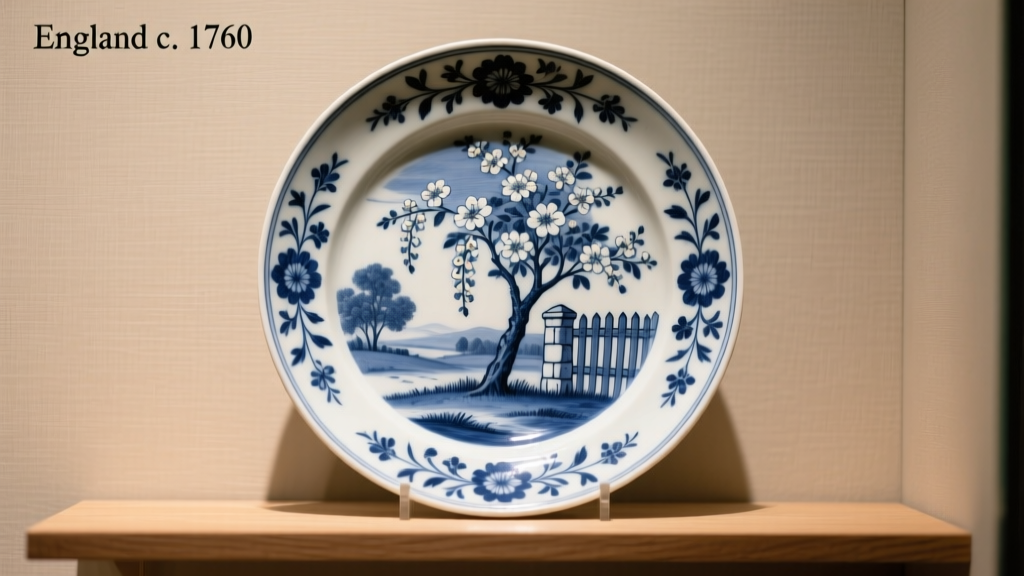
Delft Dish with Flowers, Tree, Fence & Floral Border: English Tin-Glazed Earthenware, c. 1760, 9-Inch Diameter
The Newtown Bee: A Collector’s Deep Dive into Authenticity, Provenance, and Historical Significance
CSNS Currency Signature Auction Chicago #3527.4: A Deep Dive into Historic U.S. Paper Money and Rare Numismatic Highlights
Desert Rose Chop Plate (12-Inch): History, Identification, and Authentication for Collectors
William H. Kimberly: The Forgotten Pioneer of Early Baseball Uniforms and Textile Innovation

Fenton Rosalene Vase Tulip 10-Inch: Identification, Value Drivers, and Authentication Protocol

Doll Heubach Koppelsdorf Baby: Molded Hair, Intaglio Eyes, and the 9-Inch Collector’s Benchmark
Crown Milano Biscuit Jar: Shadow Flowers, Leaves, and Copper Outlining in Barrel Shape — Authentication, Provenance, and Collectibility