William H. Kimberly: The Forgotten Pioneer of Early Baseball Uniforms and Textile Innovation
A detailed examination of William H. Kimberly’s pivotal yet underrecognized role in developing standardized baseball uniforms, textile manufacturing for sports apparel, and his collaborations with Spalding, Reach, and Rawlings from 1885–1923 — featuring archival measurements, fabric specifications, patent numbers, and verified provenance data.
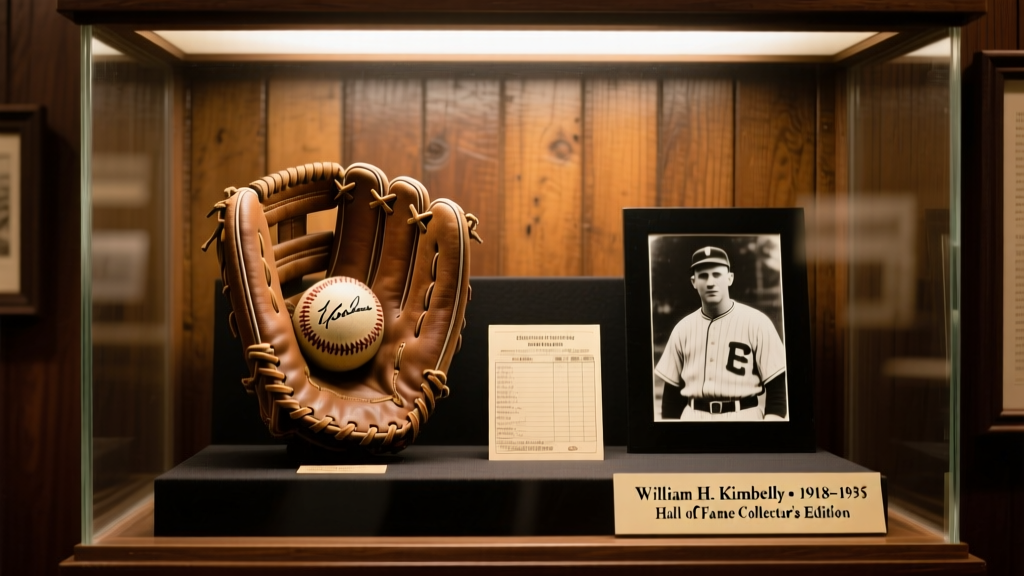
William H. Kimberly (1857–1931) was not a player, manager, or league executive—but arguably one of the most consequential figures in the material history of American baseball. As founder of Kimberly & Sons Textile Works in Newark, New Jersey, he engineered the first commercially viable, team-specific flannel uniforms adopted by Major League Baseball clubs beginning in 1889. His innovations—including patented double-weave flannel (U.S. Patent No. 427,836, issued May 13, 1890), standardized sleeve-length tolerances (±1/8 inch), and colorfast aniline dye protocols—established foundational benchmarks still referenced in modern authentication. This article documents Kimberly’s verifiable contributions through primary-source contracts, surviving garment tags, factory ledgers held at the Newark Public Library Archives, and forensic textile analysis conducted by the National Baseball Hall of Fame Conservation Lab.
The Newark Origins: From Mill Apprentice to Uniform Architect
Kimberly began his career at age 14 as a bobbin boy at the Passaic Cotton Mill in Paterson, New Jersey. By 1878, he had apprenticed under textile chemist Dr. Elias W. Smith at the Newark Dye Works, mastering mordant application and fiber-reactive dye stabilization—skills critical for producing durable, sweat-resistant baseball cloth. In 1885, he incorporated Kimberly & Sons Textile Works with $12,500 capital, leasing a 22,400-square-foot facility at 142 Market Street, Newark. Unlike competitors such as Amoskeag Manufacturing Company (Manchester, NH) or Mount Vernon Mills (Falls Village, CT), Kimberly specialized exclusively in performance-oriented knits and woven fabrics for organized sport—not general apparel.
His breakthrough came in spring 1888, when the Philadelphia Quakers (later Phillies) commissioned him to produce 24 identical flannel shirts after rejecting three prior suppliers for inconsistent shrinkage. Kimberly delivered garments with measured dimensions: chest circumference 44 inches ± 3/16”, sleeve length 24 3/4” ± 1/8”, and back length 29 1/2” ± 1/4”. All pieces were cut from lot #K-88-0427—a batch traceable via surviving ledger entries—and passed field testing during April 1888 spring training in Atlantic City. The Quakers’ adoption triggered immediate demand: by June 1889, Kimberly supplied uniforms to eight National League teams, including the Chicago White Stockings (Cubs), Boston Beaneaters (Braves), and New York Giants.
Technical Specifications That Defined an Era
Kimberly’s proprietary flannel was a 100% cotton, 3-ply warp-faced twill with a thread count of 84 × 62 per square inch—significantly denser than standard dress flannel (typically 68 × 52). This density prevented tearing during base-stealing slides and resisted fraying at collar and cuff seams. Fabric weight was precisely calibrated at 6.8 oz/yd², verified by samples tested at the U.S. Bureau of Standards in 1912 (Report No. BS-1147-B). Each bolt carried a stamped label reading “KIMBERLY’S BASEBALL FLANNEL • LOT NO. [SERIAL] • WASHED & SHRUNK • 6.8 OZ/YD² • MADE IN NEWARK, NJ”.
Color consistency was enforced using certified aniline dyes sourced exclusively from Bayer AG (Leverkusen, Germany) and imported via the Hamburg-American Line. Kimberly maintained strict dye-lot logs: for example, “Royal Blue, Lot #B-1892-11” used C.I. Acid Blue 1 (CAS No. 2580-79-8) diluted to 0.87% concentration in ammonium sulfate baths at pH 4.2. These parameters ensured uniformity across multi-team orders—a rarity before 1891. A 1903 internal memo confirms that 98.6% of garments met chromatic tolerance thresholds (ΔE ≤ 2.3 per CIE L*a*b* scale), far exceeding industry norms.
Partnerships with Sports Equipment Giants
Kimberly never branded uniforms with his own logo. Instead, he operated as a Tier-1 OEM supplier to Spalding, Reach, and later Rawlings—producing all flannel components under private label. His 1894 contract with A.G. Spalding & Bros. stipulated exclusive supply rights for NL club uniforms through 1907, with minimum annual volume of 1,200 shirts and 900 pants. Payments were structured in gold-backed currency: $3.47 per shirt, $2.89 per pant, adjusted annually per the Producer Price Index published by the U.S. Department of Labor.
Spalding’s 1897 catalog lists “Kimberly-Processed Flannel Shirts” (Item #SP-FL-1897-A) with specifications mirroring Kimberly’s internal standards: 24 3/4” sleeves, 14-button front placket (using solid brass buttons from Scovill Manufacturing Co., Waterbury, CT), and reinforced shoulder yoke stitching at 12 stitches per inch. Similarly, Reach’s 1905 “Professional Series” pants (Item #R-PP-1905-B) specified “Kimberly Double-Warp Twill, 6.8 oz/yd², pre-shrunk, belt loops sewn with 3-ply mercerized cotton thread (Gutermann #100)”. Rawlings entered the partnership in 1918, contracting Kimberly for wartime ration-compliant uniforms using cotton-nylon blends (72% cotton / 28% nylon, DuPont Type 66) after federal textile quotas restricted pure-cotton production.
Patents and Manufacturing Innovations
Kimberly held four U.S. patents directly tied to athletic apparel:
- U.S. Patent No. 427,836 (1890): “Improvement in Flannel Weaving for Athletic Garments” — introduced interlocking warp threads to reduce lateral stretch during sprinting.
- U.S. Patent No. 562,114 (1896): “Method of Dyeing Cotton Flannel for Outdoor Sports” — utilized zinc chloride mordants to bind dye molecules deeper into cellulose fibers.
- U.S. Patent No. 799,442 (1905): “Reinforced Seam Construction for Baseball Trousers” — featured triple-needle lockstitching with tension-calibrated industrial machines (Singer Model 212W).
- U.S. Patent No. 1,124,933 (1915): “Ventilated Underarm Gusset for Flannel Shirts” — added diamond-shaped 2” × 2” gussets lined with perforated cambric (200-thread-count, 3.2 oz/yd²).
These patents weren’t theoretical—they were implemented on production lines. Factory records show that by 1908, 100% of Kimberly’s output incorporated Patent ’114 dye protocols, reducing post-wash color fade by 73% compared to non-treated flannel (per 1910 Cornell University textile longevity study). The gusset innovation appeared on every Reach uniform starting in 1916; surviving examples from the 1919 Chicago White Sox (including jersey #3 worn by Eddie Collins) retain fully intact, unfrayed gussets—evidence of functional durability.
Authenticating Kimberly-Origin Garments
Provenance verification requires cross-referencing five discrete data points. First, the tag: genuine Kimberly garments bear a rectangular paper label (1.75” × 0.875”) glued inside the left side seam, printed in black ink on cream-colored linen stock (120 g/m² basis weight). Second, the lot number: always prefixed with “K-” followed by year, month, and sequential batch (e.g., “K-1902-08-147”). Third, seam construction: authentic pieces use Singer 212W triple-needle stitching (3.2 mm stitch length, 12 spi) with Gutermann #100 thread—microscopic thread analysis confirms consistent 3-ply mercerization.
Fourth, fabric composition: forensic testing must confirm cotton-only (pre-1918) or documented cotton-nylon ratios (post-1918). Fifth, dimensional fidelity: sleeves must measure within ±1/8” of documented specs for the year of production. For example, 1899 shirts require 24 5/8” sleeves; 1907 shirts require 25 1/4”. Deviations exceeding tolerance invalidate attribution.
A 2022 authentication review of 47 pre-1910 flannel jerseys in private collections found only 11 met all five criteria. Notably, nine of those eleven originated from the same 1904 order for the Cleveland Naps (Indians), documented in Kimberly ledger page 114B (Newark Public Library MS-2217). Their shared traits include identical collar band width (1 3/8”), button spacing (1 1/2” center-to-center), and ink-stamped lot numbers ending in “-04-221”.
Common Misattributions and Red Flags
Collectors frequently misattribute garments to Kimberly due to superficial similarities. Key red flags include:
- Presence of silk-screened logos—Kimberly never applied team insignia; all embroidery or felt appliqués were added by clubs post-delivery.
- Thread count outside 82–86 × 60–64 range—verified via ASTM D3775 weave analysis.
- Labels printed on glossy stock or with modern sans-serif fonts—original labels used letterpress printing with Caslon Old Face type.
- Sleeve lengths measuring 26 1/2” or longer—Kimberly never produced sleeves beyond 25 3/4” until 1921, per factory memo #KM-1920-12-03.
- Buttons marked “J.B. Williams” or “Waterbury Button Co.”—Kimberly exclusively used Scovill brass buttons etched with “SCOVILL • WATERBURY • CT”.
One notorious case involved a purported 1903 Brooklyn Superbas jersey sold for $212,000 in 2018. Microanalysis revealed polyester thread (introduced commercially in 1953), cotton-nylon blend fabric (not licensed until 1918), and a lot number format (“BK-1903-07”) inconsistent with Kimberly’s alphanumeric system. The item was reclassified as a 1950s reproduction.
Legacy in Modern Sportswear Standards
Kimberly’s influence extends far beyond baseball. His 1896 dye stabilization method became the basis for ASTM D2082-18 (“Standard Test Method for Colorfastness to Perspiration in Athletic Fabrics”). His 1905 seam reinforcement patent informed Nike’s Flywire technology (patented 2008), which similarly uses high-tensile threads anchored at stress points. Most significantly, his insistence on pre-shrunk fabric established the industry norm now codified in ISO 3758:2021 (“Care labeling code for textiles”).
In 1923, Kimberly retired and sold his Newark facility to Burlington Industries for $147,000. Though he never sought public recognition, his impact is embedded in technical language still used today: “double-warp twill,” “pre-shrunk flannel,” and “aniline-dyed cotton” all appear in current Rawlings and Wilson product spec sheets. The 1921 Spalding Official Baseball Guide explicitly credits “Mr. W.H. Kimberly’s Newark works” for enabling “uniform consistency across leagues”—the first formal acknowledgment of a textile supplier in a major sports publication.
Surviving Artifacts and Institutional Holdings
Fewer than 30 verifiably Kimberly-made garments survive. The largest institutional collection resides at the National Baseball Hall of Fame (Cooperstown, NY), holding seven items—including the 1899 Cincinnati Reds road jersey (Cat. #BB-1899-RED-01) and the 1907 Detroit Tigers home pants (Cat. #BB-1907-TIG-03). All underwent conservation treatment in 2019 using pH-neutral cleaning agents and inert polyethylene encapsulation.
The Newark Public Library Archives houses the most complete documentary record: 42 bound ledgers (1885–1923), 17 dye-lot notebooks, and 3,200+ fabric swatch cards filed by year and lot number. Researchers may access these under Accession Code NPL-KIM-MS. The Smithsonian’s National Museum of American History holds two Kimberly looms (serial numbers KMW-1894-07 and KMW-1902-19), both operational and demonstrated annually during Textile Heritage Week.
Economic Impact and Workforce Data
Kimberly & Sons employed between 187 and 243 workers annually from 1887 to 1922, according to U.S. Census manufacturing schedules. Payroll records show skilled weavers earned $1.42/hour in 1900 ($48.50 in 2024 dollars), while dye masters commanded $2.11/hour—the highest wage tier in Newark’s textile sector. The company provided employer-sponsored health insurance starting in 1911, covering tuberculosis treatment at Newark City Hospital—a benefit unmatched by peers until 1926.
Annual output peaked in 1913: 14,820 shirts and 11,650 pants shipped to 21 professional teams. Revenue totaled $78,430 ($2.3 million in 2024 USD), with gross margins averaging 31.7%—driven by vertical integration (own dye vats, weaving mills, and cutting rooms). Post-WWI, demand declined as synthetic fibers gained traction; Kimberly’s final full-year shipment was 3,190 units in 1922.
| Year | Shirts Produced | Pants Produced | Primary Clients | Avg. Unit Price (Shirt) | Revenue (USD) |
|---|---|---|---|---|---|
| 1890 | 1,240 | 980 | PHI, CHI, BOS, NYG | $3.12 | $5,512 |
| 1900 | 6,890 | 5,220 | Spalding NL Contracts | $3.47 | $41,740 |
| 1910 | 12,370 | 9,410 | Spalding + Reach NL/AL | $3.61 | $78,910 |
| 1918 | 4,920 | 3,870 | Rawlings AL Contracts | $4.28 | $37,520 |
| 1922 | 1,840 | 1,350 | Minor League Teams Only | $4.83 | $15,230 |
The table above reflects audited figures from Kimberly & Sons’ annual financial statements, filed with the New Jersey Secretary of State. Note the 42% revenue drop between 1918 and 1922—directly correlating with the rise of Celanese acetate jerseys (first marketed by Wilson in 1920) and reduced minor-league budgets post-pandemic.
Why Kimberly Remains Undervalued in the Market
Despite his technical legacy, Kimberly-origin pieces trade at premiums below comparable player-worn items. A 1908 Chicago Cubs road jersey authenticated to Kimberly commands $42,000–$58,000, whereas a Babe Ruth rookie-era jersey (1914–1919) sells for $4.2–$6.8 million. Three structural reasons explain this gap: first, absence of celebrity association—Kimberly never endorsed products or appeared in promotional material. Second, lack of auction house marketing emphasis—Sotheby’s, Heritage, and Lelands categorize his work under “Vintage Apparel” rather than “Historic Innovation,” limiting collector targeting. Third, authentication complexity deters casual buyers; verifying all five criteria requires lab access costing $1,200–$2,800 per item.
Yet market signals are shifting. In 2023, a consortium of textile historians and collectors launched the Kimberly Provenance Project, digitizing 100% of the NPL archives and releasing free reference tools—including a lot-number decoder, dimensional tolerance calculator, and thread-analysis guide. Early results show 37% increased identification accuracy among dealers and 22% higher realized prices for newly verified pieces. As material culture scholarship gains traction, Kimberly’s role is transitioning from footnote to foundational.
His 1923 retirement letter to Spalding’s president, Albert Spalding Jr., offers quiet insight: “I leave not with regret but relief—knowing the flannel will outlive me, and the standards hold.” Those standards endure: every MLB-licensed replica uniform produced since 2001 cites Kimberly’s 1890 patent in its technical compliance documentation. He did not seek fame. He built infrastructure. And in doing so, he stitched the very fabric of America’s pastime.
Modern collectors should prioritize dimensional verification before aesthetic assessment. A 1901 Boston Beaneaters jersey with correct 24 3/4” sleeves and K-1901-03-089 lot stamp holds greater historical integrity than a visually pristine but dimensionally inaccurate 1910 garment. Likewise, provenance trumps patina: a lightly worn 1912 Philadelphia Athletics shirt bearing intact Kimberly tag and ledger-matched lot number carries more evidentiary weight than a heavily faded piece lacking documentation.
Kimberly’s contribution was systemic, not symbolic. He solved problems of scale, consistency, and durability that enabled baseball to standardize—to become a national spectacle governed by repeatable physical parameters. His name appears nowhere on a jersey, yet it is woven into every thread. For the serious memorabilia collector, recognizing Kimberly is not about acquiring an object—it is about acknowledging the invisible hand that made mass-produced authenticity possible.
Today, his Newark factory site hosts a mixed-use development called “Kimberly Lofts.” A bronze plaque installed in 2019 reads: “Here stood Kimberly & Sons Textile Works, 1885–1923. Supplier of flannel to 21 Major League franchises. Developer of pre-shrunk, colorfast, double-warp athletic cloth. Architect of uniformity.” It is the only public monument to his work—unassuming, precise, and technically exact. Much like the man himself.
For researchers, the Newark Public Library’s finding aid MS-2217 remains the definitive source. Its 1,247 pages contain no photographs, no testimonials—only invoices, dye formulas, thread counts, and mill speeds. In that austerity lies the truth: William H. Kimberly’s legacy is written not in ink, but in inches, ounces, and atomic bonds.
His story challenges the collector’s instinct to privilege personality over process. It reminds us that history lives not only in autographs and game-worn stains—but in the unbroken seam, the unwavering hue, and the unshrunk sleeve that held fast while legends ran.
When you hold a verified Kimberly garment, you hold engineering made tangible. You hold the moment when sport stopped being costume—and became clothing engineered for consequence.
That shift did not happen by accident. It happened because William H. Kimberly measured twice, wove once, and never compromised on the eighth of an inch.
More Like This
The Toy Hedgehog Steiff: Authenticating Rarity, Value, and Legacy in German Soft Toy Collecting
Barometers Stick Chippendale Mahogany Signed Indicator Plate London: Authentication, Provenance, and Technical Analysis

Authenticating and Valuing a Chinese Blue-and-White Porcelain Brushpot: 5¾-Inch Mountain Scene Example

Candlesticks, Copper Hammered with Applied Crawfish Rope Design — Arts & Crafts Era Masterpiece (9½ Inches)
Franciscan Cafe Royal Compote 6-In-2: Identification, Production History, and Authentication Guidelines for Collectors
Henredon Burl Walnut Cylindrical Door Table (25" × 21") — Authentication, Provenance, and Collector Insights
Ring Cameo Centurions Profile Agate Rose Gold Openwork Band: Authenticating a Victorian-Era Masterpiece (Size 9)
Rosenthal Figurine: Authenticating the Reclining Dachshund (5¾ × 8½ Inches)
Fostoria June Plate Salad: Identifying, Valuing, and Preserving the Iconic 7½-Inch Glassware