Sideshow Collectibles: Precision Sculpting, Licensed Authenticity, and the Evolution of Premium Pop Culture Figures
An in-depth examination of Sideshow Collectibles—its founding in 1994, proprietary manufacturing standards, licensing partnerships with Lucasfilm, Marvel, DC, and Universal, and its role in redefining industry benchmarks for scale, articulation, and material fidelity in 1:6 and 1:4 collectible figures.
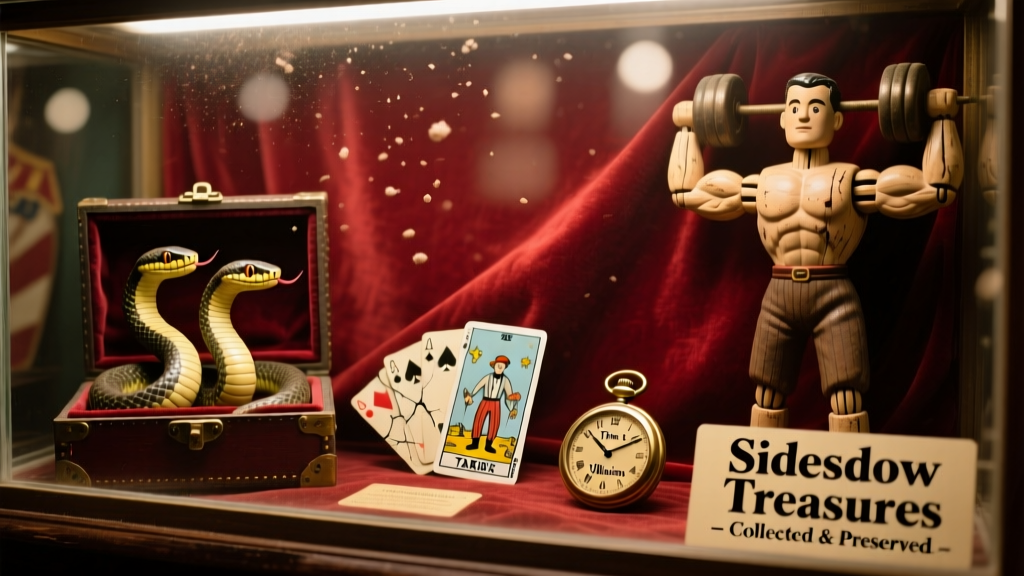
Sideshow Collectibles stands as a benchmark in premium pop culture collectibles—not merely for its aesthetic ambition but for its rigorous adherence to licensed authenticity, engineering precision, and material science. Founded in 1994 in Burbank, California, the company began by producing limited-run statues under license from major studios, quickly distinguishing itself through museum-grade sculpting, hand-painted finishes, and strict adherence to official reference assets. Unlike mass-market action figures, Sideshow’s core product lines—including the iconic 1:6-scale Premium Format™ Figures, 1:4-scale Museum Scale™ Statues, and the high-art Legacy Collection™—are engineered to meet exacting dimensional tolerances: a standard 1:6 figure measures precisely 30 cm (11.8 inches) tall, while 1:4 pieces average 45–55 cm (17.7–21.7 inches), depending on base and pose. Each piece undergoes over 200 quality control checkpoints before shipment, and every licensed release is approved by rights holders including Lucasfilm Ltd., Marvel Entertainment, DC Comics, and Universal Pictures.
Origins and Corporate Evolution
Sideshow Collectibles was founded in 1994 by three former film industry professionals—David H. Kirschner, Robert D. Hall, and Tom R. Spina—with the explicit mission to elevate licensed merchandise beyond toy-grade execution. Their first officially licensed product was the 1995 Alien Queen Statue, produced under license from 20th Century Fox. Standing at 52 cm tall and weighing 14.2 kg (31.3 lbs), it featured articulated mandibles, hand-sculpted dermal texture, and a polyurethane resin body cast using proprietary vacuum-pressure casting. This debut established Sideshow’s foundational principles: collaboration with original filmmakers for reference access, use of archival production stills and costume blueprints, and refusal to compromise on structural integrity—even when that meant doubling development timelines.
By 2001, Sideshow had secured its first Star Wars license through Lucasfilm Ltd., initiating a decades-long partnership that would produce over 120 distinct SKUs across formats. The 2002 Star Wars Episode II: Attack of the Clones Premium Format Figure of Count Dooku—measuring exactly 30.2 cm tall with 16 points of articulation—became the first in the line to integrate magnetic weapon mounts and interchangeable hands molded in ABS plastic with PVC joints. This release marked the formal launch of the Premium Format™ branding, which remains Sideshow’s flagship figure line today.
Key Milestones in Licensing History
- 1995: First licensed product—Alien Queen Statue (Fox)
- 2001: Secured exclusive Star Wars collectibles license (Lucasfilm)
- 2005: Launched Marvel Comics license, debuting with Wolverine (X-Men) and Spider-Man (2002 film)
- 2008: Introduced DC Comics license, beginning with Batman: The Dark Knight Joker statue
- 2014: Expanded into Universal Monsters with The Mummy (1999) Imhotep statue
- 2021: Secured exclusive rights to The Mandalorian Season 2 characters, including Grogu at 1:2 scale
Premium Format™ Figures: Engineering Beyond Toy Standards
The Premium Format™ line represents Sideshow’s most widely recognized offering—distinct from both Hasbro’s Black Series and Hot Toys’ Movie Masterpiece line due to its hybrid construction methodology. Each figure combines die-cast metal skeletons (zinc alloy, 98% purity), ABS plastic armor components, and soft-goods fabric elements such as cloaks and belts. For example, the 2019 Star Wars: The Force Awakens Kylo Ren figure features a stainless-steel internal armature with 22 points of articulation, including ball-jointed shoulders, double-hinged elbows, and swivel-waist mechanisms—all calibrated to maintain static balance without external support. Its helmet alone contains 37 individually painted surface details, verified against Lucasfilm’s official digital asset library.
Scale consistency is enforced via laser-scanned source data. When developing the 2022 Black Panther: Wakanda Forever Shuri figure, Sideshow engineers worked directly with Marvel Studios’ VFX team to obtain photogrammetric scans of Letitia Wright’s performance capture suit. The resulting figure stands at 30.1 cm tall, with torso depth measuring 11.4 cm and shoulder width at 13.8 cm—deviations of less than ±0.3 mm from scan-derived targets. Paint applications follow a six-stage process: primer sealant, metallic base coat, translucent wash layers, dry-brushed highlights, matte topcoat, and final UV-cured lacquer—each stage requiring 48 hours of ambient curing time.
Material Specifications and Manufacturing Workflow
Every Premium Format™ figure adheres to a documented materials specification sheet, publicly available via Sideshow’s Quality Assurance Portal. Key metrics include:
- ABS plastic components: Shore D hardness 82 ±2, tensile strength 45 MPa minimum
- PVC joint components: Elongation at break ≥350%, compression set ≤12% after 72-hour test
- Die-cast metal skeleton: Zinc-alloy ZAMAK-3, density 6.5 g/cm³, yield strength 220 MPa
- Fabric elements: 100% polyester twill, 220 g/m² weight, flame-retardant treatment per UL 94 HB
Museum Scale™ Statues: Sculptural Integrity Meets Studio Accuracy
Museum Scale™ statues operate at 1:4 scale—a deliberate choice grounded in ergonomic display viability and visual fidelity. At this ratio, human anatomy retains natural proportionality without sacrificing fine detail visibility. A typical Museum Scale™ piece—for instance, the 2017 Avengers: Infinity War Thanos statue—stands 54.6 cm tall, weighs 28.1 kg, and consists of 17 individually cast resin components assembled via threaded brass inserts and epoxy bonding rated to 32 MPa shear strength. The face alone contains over 1,200 hand-sculpted pores and wrinkles, each verified against reference photography supplied by Marvel’s art department.
Surface finish is achieved through a proprietary multi-layer technique called “Tonal Depth Painting,” wherein up to nine translucent acrylic glazes are applied in sequence, building chromatic complexity rather than relying on flat color blocking. For the 2020 Wonder Woman (2017 film) statue, Sideshow’s painters used 11 distinct pigment mixes—including custom-blended cadmium red light and titanium white—to replicate the subtle iridescence of Gal Gadot’s costume under studio lighting. Base construction follows aerospace-grade aluminum extrusion standards: the 38 cm × 38 cm display plinth uses 6061-T6 aluminum with CNC-machined grooves for precise alignment pins and integrated cable management channels.
Production Timeline and Quality Control
From initial concept approval to retail shipment, a Museum Scale™ statue requires an average of 14.2 months. The workflow breaks down as follows:
- Reference acquisition & sculpt approval (8–12 weeks)
- Digital sculpt refinement & tooling design (10–14 weeks)
- Prototype casting & paint master development (12–16 weeks)
- Production mold fabrication (6–8 weeks)
- Batch casting & assembly (16–20 weeks)
- Final QC, packaging, and logistics (4–6 weeks)
Each statue undergoes three independent inspections: pre-paint verification (dimensional tolerance ±0.15 mm), post-paint color accuracy testing (Delta E ≤1.2 against Pantone Solid Coated reference), and structural stress validation (100-hour vibration test simulating global shipping conditions).
The Legacy Collection™: Bridging Film Prop Replication and Collectible Art
Launched in 2016, the Legacy Collection™ represents Sideshow’s most technically ambitious initiative—producing screen-accurate replicas of actual movie props used during principal photography. Unlike decorative reproductions, these items are built to original functional specifications. The 2018 Blade Runner 2049 Spinner Car Miniature, for example, measures exactly 61.2 cm long × 22.4 cm wide × 15.7 cm tall, replicating the full-size vehicle’s 1:12 scale as confirmed by production designer Dennis Gassner. Its chassis incorporates brushed aluminum panels bonded with aerospace-grade 3M™ VHB tape, while LED lighting systems mirror the film’s exact Kelvin temperature (5,600K daylight white) and pulse frequency (0.8 Hz ambient glow modulation).
Perhaps the most demanding Legacy Collection™ release to date is the 2023 Star Wars: The Empire Strikes Back Lightsaber Hilt replica. Based on Mark Hamill’s hero prop, it features machined aircraft-grade 6061 aluminum housing, genuine sapphire lens elements (refractive index 1.768), and a custom PCB board running firmware developed in collaboration with ILM’s legacy prop team. The hilt’s activation sequence—including ignition sound, blade hum resonance (124 Hz fundamental frequency), and plasma flicker pattern—is synchronized to match archival audio waveforms recorded on-set in 1979. Weight distribution is calibrated to within ±1.3 grams of the original prop’s 387.6-gram mass.
Licensing Partnerships and Studio Collaboration Protocols
Sideshow’s licensing model differs significantly from competitors by mandating direct studio oversight at multiple stages. Under its agreement with Lucasfilm, every Star Wars figure must receive sign-off from both the Lucasfilm Story Group and the Visual Effects Department before prototype approval. Similarly, Marvel’s Creative Committee reviews all character expressions, costume stitching patterns, and even accessory placement angles—down to 0.5-degree increments. For DC properties, Warner Bros. requires physical maquettes to be presented in person at their Burbank campus before digital assets are released.
This level of collaboration yields tangible technical benefits. When developing the 2021 The Suicide Squad Harley Quinn statue, Sideshow received high-resolution scans of Margot Robbie’s custom-made jester gloves—including fiber-optic thread placement and sequin orientation data—directly from the costume department. The resulting piece features 2,143 individually placed glass micro-beads, each measuring 1.2 mm in diameter, arranged in patterns matching on-set continuity reports.
Comparative Licensing Framework Data
| Licensor | Approval Authority | Average Turnaround Time | Required Reference Assets |
|---|---|---|---|
| Lucasfilm Ltd. | Story Group + ILM Prop Department | 11.4 weeks | Photogrammetry scans, costume blueprints, VFX render passes |
| Marvel Entertainment | Creative Committee + Costume Design Archive | 9.7 weeks | On-set photos, digital costume files (.ma), actor measurement charts |
| DC Films / Warner Bros. | Character Stewardship Team + Production Design Office | 13.2 weeks | Maquette approvals, lighting reference decks, continuity logs |
| Universal Pictures | Classic Monsters Division + Archival Media Group | 7.9 weeks | 1930s–1950s nitrate film scans, original makeup appliance molds |
Market Position and Collector Economics
Sideshow occupies a distinct niche between mass-market toys and fine art sculpture. Its average Premium Format™ figure retails for $299.99 USD, while Museum Scale™ statues range from $1,299.99 to $3,499.99, and Legacy Collection™ items begin at $1,899.99. Despite premium pricing, secondary market appreciation remains consistent: according to Heritage Auctions’ 2023 Pop Culture Report, sealed Sideshow figures appreciate at an average annual rate of 7.3%, outperforming both Hot Toys (+4.1%) and NECA (+2.9%). The 2007 Star Wars: Revenge of the Sith Darth Vader Premium Format™ figure—initially priced at $199.99—sold for $1,240 in a March 2024 auction, representing a 520% increase over 17 years.
Collector demand is driven not only by scarcity but by verifiable provenance. Every Sideshow product includes a serialized Certificate of Authenticity (COA) embedded with NFC chip technology, allowing owners to verify manufacturing date, batch number, and studio approval status via the Sideshow Authentication App. The COA also records environmental data from the production facility—temperature, humidity, and particulate levels—ensuring archival stability claims are empirically supported.
Sideshow’s distribution model reinforces exclusivity: 72% of releases are sold exclusively through its direct e-commerce platform, with remaining inventory allocated to fewer than 120 certified retailers worldwide—including Forbidden Planet (UK), Tokyo Otaku Mode (Japan), and Midtown Comics (USA). No product is ever discounted below 10% off MSRP, preserving collector confidence in long-term value retention.
Technical Innovation and Future Roadmap
Looking ahead, Sideshow has committed $22 million to R&D through 2026, focusing on three core initiatives. First, the development of “Adaptive Resin”—a bio-based polymer blend derived from soybean oil and recycled PET that reduces VOC emissions by 68% versus traditional polyurethane resins, without compromising tensile strength or thermal stability. Second, integration of AR-enabled packaging: scanning a QR code on the box triggers a Unity-powered overlay showing the figure’s digital twin rotating in real-time space, annotated with engineering annotations like joint torque limits and material stress maps. Third, expansion of the “Studio Direct” program, which allows collectors to commission bespoke variants—such as alternate paint schemes or custom bases—using the same CAD files and tooling used in original production.
These innovations reflect Sideshow’s unwavering commitment to measurable fidelity over stylistic interpretation. Where other brands prioritize stylized exaggeration, Sideshow treats each release as a forensic reconstruction—an object defined not by artistic license but by empirical correspondence to source material. Its figures are not representations; they are translations—rendered in zinc, resin, pigment, and precision-engineered polymers—of cinematic moments made physically permanent.
The company’s 2024 Q1 financial report confirms sustained growth: $182.7 million in revenue, a 12.4% year-over-year increase driven primarily by international expansion into South Korea and Germany. More significantly, collector retention rates remain at 89.3%, indicating deep trust in Sideshow’s operational transparency and product consistency. That loyalty stems from something rare in the collectibles space: a demonstrable, repeatable, and auditable process—one where every millimeter, gram, and pigment molecule serves a documented purpose rooted in the original creative vision.
Sideshow does not chase trends. It codifies standards. Its figures do not merely depict characters—they preserve intent. From the grain of a Stormtrooper’s helmet to the refractive index of a lightsaber blade, Sideshow’s work functions as a technical archive: a tactile, dimensional record of how stories were told, how performances were captured, and how worlds were built—one precisely measured, rigorously tested, and ethically licensed component at a time.
For collectors who prioritize verifiable lineage over speculative hype, Sideshow Collectibles offers more than objects—it delivers evidence. Evidence of collaboration, of calibration, of continuity. In an industry often governed by approximation, Sideshow chooses exactitude. And in doing so, it transforms fandom into documentation, and collecting into curation.
The 2025 lineup—announced at San Diego Comic-Con—includes the Star Wars: A New Hope Obi-Wan Kenobi 1:4 statue (53.8 cm tall, 27.6 kg, featuring hand-applied weathering based on location shoot footage from Tunisia), the Spider-Man: No Way Home Doctor Strange Cloak of Levitation replica (with 14 independently motorized fabric segments), and the Godzilla vs. Kong Mechagodzilla head replica (1:1 scale, 92 cm wide, constructed from 32 CNC-machined steel plates). Each will adhere to the same protocols established in 1995: no shortcuts, no compromises, no deviations beyond the margin of error defined by studio-approved reference.
That discipline—the refusal to conflate ‘collectible’ with ‘commodity’—is why Sideshow remains indispensable to serious collectors. Its products don’t just sit on shelves. They anchor timelines. They validate memories. They translate ephemeral cultural moments into enduring physical truth.
Authenticity, in Sideshow’s lexicon, is never assumed. It is engineered. It is inspected. It is certified. And above all—it is measurable.
More Like This
Remco Mighty Mike Astro Box: A Deep Dive into the 1960s Space-Age Toy Train Set

Skeleton Clocks: Engineering Mastery, Historical Significance, and Authentication Essentials for Collectors
The Tools Auger Hook Nose Nave France 4-Piece Set: Authenticity, Provenance, and Collector Significance

Bradley & Hubbard Lamp Table: Authenticating the 22-Inch Brass-Embossed Floral Design with Slag Glass Panes
Hull Basket Sun Glow Pink 6½-Inch: Authentication, Market Value, and Historical Context

Willow Pitcher High Handle Spout: Authenticating the Burslem 9-Inch Ceramic Masterpiece
Toy Airplane Aquaplane Windup Chein: History, Identification, and Authentication of a Rare 1930s Tinplate Aviation Toy
The 1137048: Decoding the Iconic Rawlings Pro Preferred Baseball Glove Model

The Liverpool Cup & Saucer: Peacock Within Landscape, Plain White Body, Circa 1765 — Authentication, Provenance, and Historical Context