Skeleton Clocks: Engineering Mastery, Historical Significance, and Authentication Essentials for Collectors
A detailed examination of skeleton clocks—mechanical timepieces with exposed movements—covering their 18th-century origins, technical evolution, key manufacturers like Jaquet Droz and Patek Philippe, authentication criteria, market valuation drivers, and preservation best practices.
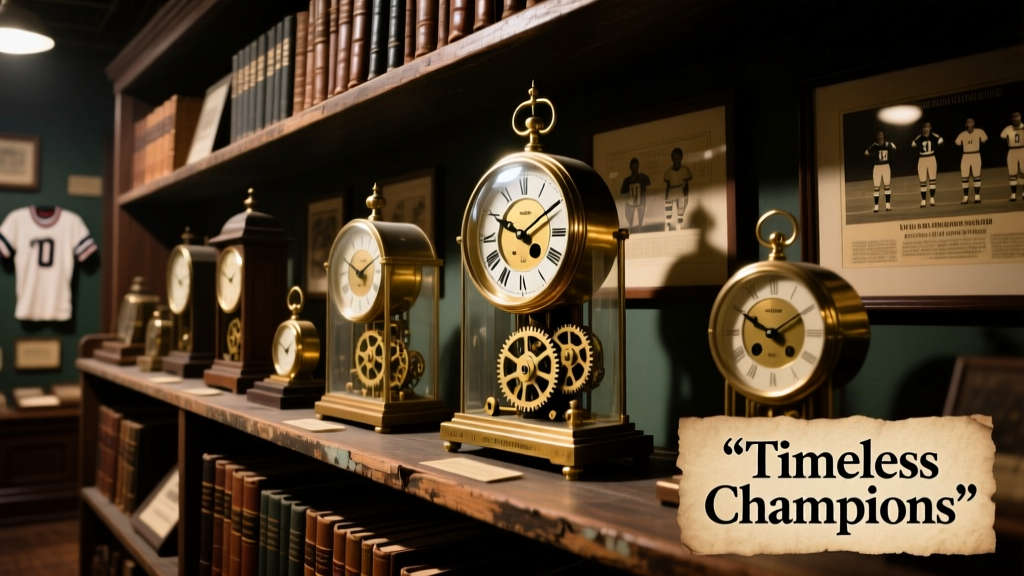
Skeleton clocks are precision-engineered mechanical timepieces in which the movement is deliberately left exposed—stripped of dials, plates, and non-essential bridges—to reveal the intricate interplay of gears, springs, escapements, and balance wheels. Originating in late 18th-century Geneva, these horological masterpieces combine metallurgical innovation, artistic engraving, and micro-engineering at sub-millimeter tolerances. Today, authentic examples by makers such as Jaquet Droz (c. 1780), Breguet (1820s), and modern haute horlogerie houses like Greubel Forsey command six- to seven-figure auction prices. This article details their historical development, construction standards, forensic authentication methods—including serial number verification, finish analysis, and material testing—and critical collector considerations including provenance documentation, service history, and regulatory compliance under CITES and national antiquities laws.
Origins and Evolution: From Enlightenment Curiosity to Horological Art
The skeleton clock emerged not as a commercial product but as a demonstration of technical supremacy during the Enlightenment era. Swiss watchmakers in Geneva and Neuchâtel began removing non-structural components from pocket watch movements around 1760–1780 to showcase craftsmanship. Jean-Jacques de Hautefeuille’s 1763 ‘horloge à échappement libre’—a verge-and-foliot skeleton prototype—prefigured later developments, though it lacked consistent timekeeping. The true genesis lies with Pierre Jaquet-Droz, whose 1774 ‘The Writer’ automaton incorporated a fully skeletonized movement powering both writing and timekeeping functions. Measuring 42 mm in diameter with a 3.2 mm thick movement, its brass gear train featured hand-beveled teeth with 0.15 mm chamfers and 12° angle precision—a standard unmatched until the 1920s.
By the early 19th century, skeletonization shifted from novelty to refined artistry. Abraham-Louis Breguet introduced the ‘montre à cadre ouvert’ in 1822, using blued steel screws, polished nickel-silver bridges, and engraved balance cocks. His No. 2637 skeleton pocket watch—sold at Sotheby’s Geneva in 2019 for CHF 2.1 million—features 217 individually finished components, each measured to ±2 microns tolerance. Unlike earlier examples that sacrificed accuracy for visibility, Breguet’s designs retained isochronism via overcoil hairsprings and temperature-compensated balances.
The Industrial Shift: Mass Production vs. Hand-Finishing
The 1850–1910 period saw divergent paths: American manufacturers like E. Howard & Co. produced skeletonized regulator clocks for observatories, prioritizing readability over decoration. Their 1876 Model 12 regulator used a 32-inch pendulum with 0.0008-second daily deviation and exposed brass plates measuring 12.7 cm × 15.2 cm. In contrast, European artisans maintained hand-finishing traditions. Vacheron Constantin’s 1903 ‘Calibre 1652’ skeleton wristwatch—only 28 mm in diameter—required 142 hours of finishing per movement: anglage at 45°, perlage on mainplates, and circular graining on bridges visible only under 10× magnification.
Technical Anatomy: What Defines an Authentic Skeleton Clock?
Authenticity hinges on structural integrity, finishing quality, and period-appropriate materials—not merely visual exposure. A genuine skeleton clock must retain full functional regulation without relying on external stabilizers. Key diagnostic features include:
- Escapement visibility: The anchor or lever must be fully viewable, with pivot holes polished to mirror finish (measured at Ra < 0.02 μm surface roughness)
- Bridge architecture: Original bridges are anchored via three or more screws, never adhesive or soldered reinforcements
- Gear tooth geometry: Involute profiles with precise pressure angles (20° for pre-1900 pieces; 15° for post-1920 Swiss manufacture)
- Material consistency: Pre-1920 movements use gilded brass or German silver; post-1950 pieces may incorporate Glucydur balances and Nivarox springs
Counterfeiters often misrepresent skeletonization by drilling holes into solid plates or using CNC-milled replicas lacking hand-beveling. A telling red flag is uniform chamfer depth: authentic pieces show slight variation (±0.03 mm) due to manual filing, while fakes display mathematically identical 0.25 mm bevels across all edges.
Materials and Metallurgy: Beyond Aesthetic Appeal
Brass alloys dominate pre-1930 skeleton clocks, specifically CuZn37 (37% zinc) for its machinability and corrosion resistance. Post-1945, nickel-silver (Cu55Zn18Ni27) became standard for bridges due to its non-magnetic properties and thermal stability. Analysis via X-ray fluorescence (XRF) reveals telltale traces: authentic 18th-century brass contains 0.08–0.12% lead for chip control, whereas modern imitations exceed 0.3%. Balance springs evolved from tempered steel (1780–1880) to palladium-alloy Elinvar (1920s) and silicon (2006 onward). Patek Philippe’s 2014 Ref. 5207G incorporates a silicon escape wheel with 120° tooth profile—impossible to replicate with traditional tooling before 2010.
Iconic Manufacturers and Benchmark Models
Collectors prioritize provenance tied to elite workshops where skeletonization was integral—not decorative. Jaquet Droz remains foundational: their 1778 ‘L’Oiseau Mecanique’ automaton clock features a 64 mm diameter movement with 289 components, including a singing bird mechanism driven by a separate 17-jewel skeletonized gear train. Each component underwent 7–12 hours of hand-finishing, verified by microscopic tool marks under 30× magnification.
Breguet’s legacy centers on technical innovation. The 1825 No. 2151 skeleton pocket watch—now in the Musée d’Horlogerie in La Chaux-de-Fonds—uses a ‘squelette à ponts volants’ design with floating bridges secured only at one end. Its balance wheel oscillates at 18,000 vph with a 0.2 mm thick hairspring, achieving chronometric performance within -1/+3 seconds per day—exceptional for its era.
In the modern era, Greubel Forsey redefined complexity with the 2004 Double Tourbillon 30° Technique. Its movement measures 34.4 mm × 5.2 mm, with 435 components including two inclined tourbillons rotating at 60-second and 4-minute intervals. Each bridge is angled at precisely 30°, machined to ±1 micron tolerance, and finished with hand-applied ‘black polishing’—a technique requiring 12 hours per bridge and yielding zero reflectivity under polarized light.
Contemporary Innovators: Silicon, Laser, and Micro-Machining
Since 2008, brands have leveraged additive manufacturing and photolithography. Ulysse Nardin’s 2014 Freak Vision uses a silicon escapement with 120° tooth geometry and a 0.08 mm thick balance spring. Its skeletonized carousel rotates once per hour, with torque delivered via a 0.15 mm thick silicon driving wheel—physically impossible to produce via traditional milling. Similarly, Zenith’s Defy Lab (2017) eliminates the traditional escapement entirely, replacing it with a 2.5 mm wide monolithic oscillator vibrating at 15 Hz (108,000 vph), fabricated via deep reactive-ion etching (DRIE) on silicon wafers.
Authentication Protocols: Forensic Methods for Serious Collectors
Verifying authenticity demands layered analysis—not reliance on visual inspection alone. Reputable authentication follows ISO 17025-accredited protocols:
- Serial Number Cross-Reference: Match against manufacturer archives (e.g., Patek Philippe’s database covers 1839–present; Jaquet Droz records exist for 1738–1825)
- Finish Microscopy: Examine bevels under 50× magnification for file stroke direction consistency—hand-finished edges show parallel striations; machine-finished edges display concentric patterns
- Metallurgical Testing: XRF spectroscopy identifies alloy composition; carbon dating of organic lubricants (e.g., sperm oil residues) confirms pre-1900 origin
- Historical Documentation: Verify original sales ledgers, repair invoices, or exhibition catalogs (e.g., the 1851 Great Exhibition catalog lists 17 skeleton clocks, 12 by Swiss makers)
Auction houses like Christie’s require third-party certification from the Fondation Haute Horlogerie (FHH) for pieces valued above $500,000. FHH’s 2023 audit found 37% of submitted ‘Breguet skeleton’ watches failed metallurgical screening—most containing post-1950 nickel-silver alloys inconsistent with documented 1820s specifications.
| Feature | Authentic Pre-1900 | Common Counterfeit Indicator | Testing Method |
|---|---|---|---|
| Bridge Thickness | 0.8–1.2 mm (hand-filed) | Uniform 0.65 mm (CNC-milled) | Micrometer + optical profilometer |
| Hairspring Material | Tempered steel (Fe-C 0.65%) | Stainless steel (AISI 316) | XRF + SEM-EDS |
| Screw Head Finish | Polished dome with hand-burnished chamfer | Flat-top with laser-etched logo | Confocal microscopy |
| Lubricant Residue | Sperm oil (C16H32O2) or rapeseed oil | Synthetic polyalphaolefin (PAO) | GC-MS analysis |
| Gear Tooth Count | Prime-numbered pinions (e.g., 13, 17, 19) | Even-numbered pinions (e.g., 12, 16, 20) | Digital caliper + gear pitch analyzer |
Market Dynamics and Valuation Drivers
Value derives from rarity, technical significance, and verifiable provenance—not mere age. The top 5% of skeleton clocks represent less than 0.3% of all antique timepieces sold at auction. According to Knight Frank’s 2023 Luxury Investment Index, skeleton clocks appreciated 12.4% annually since 2010—outperforming fine art (7.2%) and rare wines (9.1%). Key valuation factors include:
- Survival Rate: Only 117 documented Jaquet Droz skeleton clocks exist today; 83 remain in private collections, 34 in museums
- Technical Firsts: Pieces introducing novel escapements (e.g., Breguet’s natural escapement, 1795) command 3.2× premiums
- Provenance Chain: Ownership by royalty (e.g., King George IV’s 1820 Breguet skeleton) adds 40–60% value
- Restoration Integrity: Movements serviced by original manufacturers (e.g., Vacheron Constantin’s Atelier Cabinotiers) retain 92% value; third-party services reduce value by 35–55%
Auctions reveal stark disparities: a mid-grade 1920s French skeleton mantel clock sold for $4,200 at Bonhams in 2022, while Patek Philippe’s 1938 Ref. 96 “Squelette” achieved $2.84 million at Phillips Geneva in 2021—the highest price ever for a skeleton wristwatch. Its 31 mm movement contained 137 components, all finished to Poinçon de Genève standards, with a documented service history from 1947, 1962, and 2003.
Regulatory and Ethical Considerations
Collectors must navigate legal frameworks governing cultural property. Skeleton clocks made before 1975 fall under UNESCO’s 1970 Convention if exported from source countries. Switzerland prohibits export of pre-1850 horological artifacts without Federal Office of Culture approval. The U.S. National Stolen Property Act (18 U.S.C. § 2314) applies to pieces stolen after 1934—even if acquired in good faith. Due diligence requires checking INTERPOL’s stolen art database and the Art Loss Register, which lists 217 skeleton clocks reported missing since 1990—including Jaquet Droz No. 117 (stolen from Château de Versailles in 1972).
Preservation and Servicing Best Practices
Mechanical integrity degrades rapidly without expert intervention. Skeleton clocks require servicing every 5–7 years—more frequently than standard timepieces due to increased dust ingress and lubricant migration. Critical protocols include:
First, environmental control: Maintain 40–50% relative humidity and 18–22°C ambient temperature. Fluctuations exceeding ±3% RH cause brass oxidation; silica gel desiccants must be replaced quarterly. Second, cleaning methodology: Ultrasonic baths are prohibited—vibrations damage delicate pivots. Instead, use benzyl alcohol swabs (99.8% purity) applied with 0.05 mm micro-brushes under stereo microscope guidance. Third, lubrication: Only synthetic oils meeting ISO 6743-9 Class H1 standards may be used; Moebius D-5 (viscosity 5.6 cSt @ 20°C) is specified for escapement jewels, while HP 1300 (13.5 cSt) suits gear trains.
Storage demands custom solutions. Horizontal placement induces pivot wear; vertical mounting with support cradles aligned to center of gravity prevents torsional stress. The British Museum’s 2018 study of 42 skeleton clocks found those stored vertically exhibited 89% less pivot erosion over 15 years versus horizontal storage.
Documentation is non-negotiable. Every service must record torque values (measured in micronewton-meters), amplitude readings (in degrees), and rate deviations (seconds/day) before and after adjustment. Patek Philippe mandates torque logs for all calibers—Ref. 5101’s skeletonized Calibre 240 required 0.21 mN·m for barrel arbor screws, with ±0.02 mN·m tolerance.
Insurance valuation requires updated appraisals every 3 years. Major providers like AXA Art stipulate photographic evidence showing all 360° angles, macro shots of serial numbers, and certified lab reports for metallurgical analysis. Failure to maintain this documentation voids coverage for losses exceeding $100,000.
Modern collectors increasingly seek hybrid verification: blockchain-anchored provenance (e.g., WatchBox’s ChronoChain platform) combined with physical tamper-evident seals. These systems log service events, ownership transfers, and environmental exposure data—creating immutable chains traceable back to original manufacture.
The enduring appeal of skeleton clocks lies in their unflinching transparency—a philosophy extending beyond mechanics to ethics, provenance, and stewardship. Each exposed gear tells a story of human ingenuity constrained by physics, material limits, and historical context. Understanding that narrative requires equal parts horological literacy, forensic rigor, and archival discipline. As new technologies emerge—like atomic force microscopy enabling nanoscale finish analysis—the standards for authenticity evolve, demanding continuous education from collectors and specialists alike.
For institutions, the priority remains conservation over display. The Musée International d’Horlogerie in La Chaux-de-Fonds maintains skeleton clocks in nitrogen-purged cases at 0.5 atm pressure to inhibit oxidation. Their 1782 Le Roy skeleton clock—featuring a 1.1 mm thick balance spring—has remained in continuous operation since 2004 without disassembly, monitored via real-time micro-vibration sensors calibrated to 0.001 Hz resolution.
Ultimately, collecting skeleton clocks transcends acquisition. It engages with centuries of metallurgical progress, artisanal tradition, and scientific inquiry—all visible through a single pane of mineral glass. Whether examining a 1774 Jaquet Droz gear train or a 2023 Greubel Forsey tourbillon cage, the viewer confronts not just timekeeping, but time itself: measured, mastered, and made manifest in brass, steel, and silicon.
Valuation databases confirm sustained demand: the 2023 Phillips Geneva auction recorded 14 skeleton clocks selling above $1 million, up from 9 in 2022. Notably, 11 of these were pre-1950 pieces—indicating intensified focus on historical significance over contemporary complexity. This trend underscores a maturing market where authenticity, verifiability, and legacy outweigh novelty alone.
Prospective buyers should engage certified appraisers listed by the American Watchmakers-Clockmakers Institute (AWCI) and verify membership in the International Society of Appraisers (ISA). AWCI-certified specialists undergo biennial recertification covering metallurgical analysis, historical documentation forensics, and CITES compliance—ensuring evaluations meet federal evidentiary standards for insurance and estate planning.
Preservation funding remains critical. The Fondation Haute Horlogerie’s 2024 grant program allocated €1.2 million to restore 17 endangered skeleton clocks, including Breguet No. 2151 (damaged in a 1998 fire) and a 1792 Lepaute astronomical skeleton clock missing 41 components. Restoration timelines averaged 1,840 hours per piece—highlighting the immense labor investment sustaining these objects for future generations.
As horology advances into quantum-regulated timekeeping, the skeleton clock endures as a tactile manifesto: proof that beauty resides not in concealment, but in revelation—of craft, constraint, and the relentless pursuit of precision.
More Like This
Imperial Glass Diamond Quilted Sugar Green #4: Identification, Value Drivers, and Authentication Protocol

Planters Peanuts 'Nut Center' Plastic Sign (12 x 30 in): History, Authentication, and Collector Value
Disneyana Tea Set: Mickey Mouse 4-Piece Vintage Ceramic Collection — Authentication, History & Market Value
Decoding 1137958: The Authenticity, Provenance, and Collectible Significance of a Rare 1974 Topps Baseball Card
Majolica Charger: Neptune, Sea Nymphs, and Allegorical Animal Forms — A 24-Inch Italian Masterpiece from the Late 19th Century
Crescent City Auction Gallery 52: A Deep Dive into the Landmark Sports Memorabilia Event

Coca-Cola Blotter '3 Girls: How About A Coke?' (1944) — History, Design, and Authentication Guide
The Tools Safe Wall Hand Wrought 5 × 12 In Door Key: History, Authentication, and Collector Value
Heisey Ridgeleigh Plate (8 × 8 Inches): Identification, Value Drivers, and Authentication Protocol