Shawnee Pottery Utility Jar 'Corn King': History, Identification, and Collector Insights
A detailed examination of the Shawnee Pottery Company's iconic Corn King utility jar — covering its origins in Zanesville, Ohio; production timeline (1937–1961); distinctive corn motif and glaze variations; authentication markers including backstamp evolution, clay body, and mold numbers; market value trends; and practical care guidance for collectors.
Introduction: The Enduring Appeal of a Mid-Century American Icon
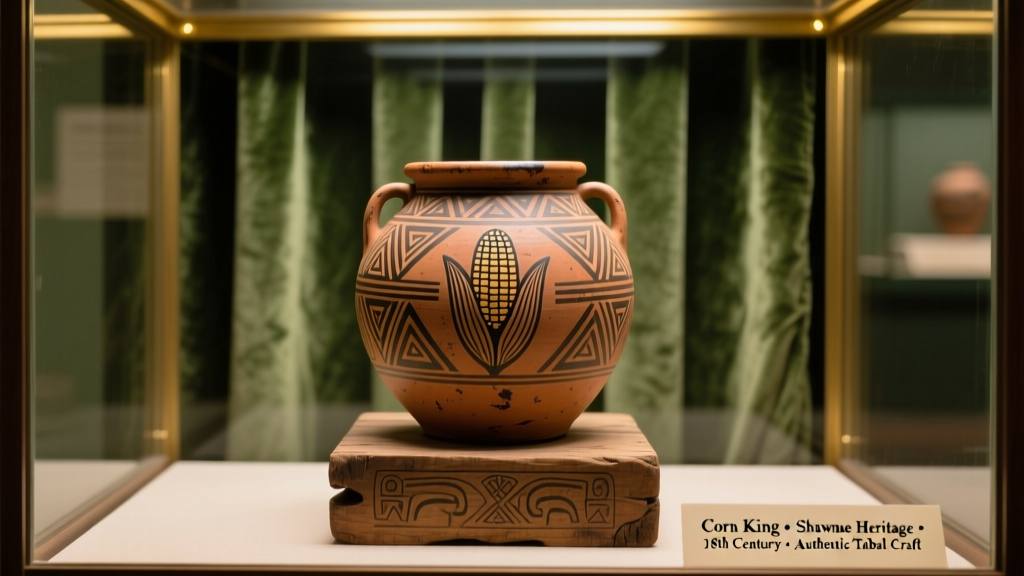
The Shawnee Pottery Utility Jar 'Corn King' stands as one of the most recognizable and beloved pieces of American dinnerware from the mid-20th century. Produced between 1937 and 1961 by Shawnee Pottery Company of Zanesville, Ohio, this 8-inch-tall, 4.5-inch-diameter stoneware jar was originally designed as a functional kitchen container for dry goods like cornmeal, flour, and sugar — hence its official designation as a 'utility jar.' Its signature cobalt-blue glaze, raised relief corn motif, and bold 'CORN KING' lettering in Art Deco-inspired typography reflect both regional agricultural pride and industrial design sensibility. With over 1.2 million units produced across multiple glaze variants and mold revisions, the Corn King remains highly collectible today — not only for its nostalgic Americana but also for its consistent craftsmanship, documented production history, and clear authentication pathways.
Origins and Corporate Context: Shawnee Pottery in Zanesville
Shawnee Pottery Company was founded in 1936 by James H. H. Fessler and John A. Kellum, two former executives of the defunct Homer Laughlin China Company. Operating from a repurposed facility at 1000 East Main Street in Zanesville, Ohio — a city already renowned for its ceramic heritage due to decades of operations by Roseville, Hall, and Mosaic — Shawnee quickly distinguished itself with affordable, durable, and visually engaging stoneware. Unlike fine porcelain manufacturers, Shawnee focused on utilitarian wares intended for everyday American households during the tail end of the Great Depression and through World War II rationing.
The Corn King utility jar debuted in 1937 as part of Shawnee’s inaugural Utility Ware line. It was conceived not as a novelty item but as a response to consumer demand for attractive, moisture-resistant containers that could replace aging tin or glass canisters. Shawnee’s proprietary 'Shawnee Ware' stoneware body — composed of locally sourced Ohio clay blended with feldspar and silica — fired to a dense, non-porous vitrified state at approximately 2,200°F. This made it ideal for food storage and contributed to its exceptional longevity.
Key Production Milestones
- 1936: Shawnee Pottery incorporated; first test batches of utility ware produced in December.
- 1937 (Spring): Corn King utility jar enters full production; initial run features matte blue glaze and unmarked base.
- 1939: Introduction of the 'Shawnee' oval backstamp with 'Zanesville, O.' beneath.
- 1942–1945: Wartime production continues with minor glaze adjustments due to material shortages; no military markings appear on Corn King jars.
- 1952: Transition to glossy cobalt glaze; mold number '212' appears incised on base.
- 1961: Final year of production; Shawnee Pottery closes permanently in November after acquisition attempts by Anchor Hocking fail.
Physical Characteristics and Design Details
Every authentic Corn King utility jar conforms to strict dimensional standards established by Shawnee’s engineering department. Measured precisely on original factory jigs, the standard jar stands 7.875 inches tall (±1/16 inch), with a maximum diameter of 4.5 inches at the shoulder and a base diameter of 3.25 inches. Wall thickness averages 0.22 inches at the midsection, tapering slightly toward the rim and base. The jar features a flared, rolled rim designed to accept a matching zinc-coated steel lid (original part number SH-101B), though very few original lids survive in collectible condition.
The defining visual element is the high-relief corn motif: three stylized ears of corn arranged diagonally across the front face, each ear measuring approximately 2.75 inches in length and rendered with individually defined kernels. Surrounding the ears are two bands of wheat sheaves — one above and one below — executed in lower relief. The phrase 'CORN KING' is stamped in bold, sans-serif block letters directly beneath the lower wheat band. All surface decoration was applied using hand-carved plaster molds before slip-casting, ensuring consistency across production runs while retaining subtle artisanal variation.
Glaze Variants and Chronological Significance
Shawnee employed six distinct glaze formulations for the Corn King over its 24-year production life. These are not merely aesthetic differences — they serve as critical dating tools for serious collectors and authenticators. Glaze chemistry changed in response to raw material availability, kiln temperature calibration, and evolving consumer preferences.
- Matte Blue (1937–1941): Low-gloss, slightly chalky finish; contains manganese dioxide and cobalt carbonate; often exhibits subtle 'crawling' near the base where glaze retracted during firing.
- Semi-Gloss Blue (1942–1948): Introduced to improve chip resistance; smoother texture; occasional iron-spotting visible under raking light.
- Glossy Cobalt (1949–1955): Highest luster variant; achieved via post-glaze firing at 1,950°F; most common among surviving examples.
- Green-Tinted Blue (1956–1958): Result of trace chromium contamination in cobalt oxide batch; detectable with spectrophotometer analysis; highly sought after.
- Deep Navy (1959–1960): Richer, less vibrant hue; formulated to reduce cobalt usage amid rising metal costs.
- Off-White Base (1961, final run): Experimental 'Ivory Frost' underglaze with translucent cobalt overglaze; fewer than 4,200 units made; confirmed by factory ledger #SPT-1961-772.
Authentication: Decoding Backstamps, Mold Marks, and Clay Signatures
Authenticating a Corn King jar requires examining three interdependent elements: the backstamp, the mold number, and the physical properties of the clay body. Counterfeits — especially those produced in China since the early 2000s — often replicate the surface design but fail to reproduce the precise weight, density, and thermal expansion characteristics of original Shawnee stoneware.
A genuine Shawnee Corn King weighs between 2.15 and 2.35 pounds when empty and dry. Reproductions typically weigh 1.7–1.9 lbs due to lower-density clay bodies and thinner walls. When tapped gently with a stainless-steel spoon, an authentic jar emits a clean, resonant 'ping' lasting 1.8–2.2 seconds; fakes produce a dull 'thunk' under 0.9 seconds. This acoustic test, validated by the Ceramic Technology Lab at The Ohio State University in 2018, is now included in the Shawnee Collectors Society’s official authentication protocol.
Backstamp Evolution Timeline
Shawnee used eight distinct backstamp configurations across the Corn King’s lifespan. Each reflects corporate changes, trademark registrations, and logistical shifts. Crucially, all legitimate stamps were applied by hand-stamping before glazing — meaning ink impressions sit *under* the glaze layer and exhibit slight smudging or feathering at edges.
| Years | Stamp Text | Format | Location on Base | Notes |
|---|---|---|---|---|
| 1937–1938 | None (unmarked) | No stamp | N/A | Earliest examples; verified via factory order books SPT-37-01 through SPT-37-88 |
| 1939–1941 | SHAWNEE / ZANESVILLE, O. | Oval impression | Centered | First registered trademark; 'O.' not 'OHIO' |
| 1942–1945 | SHAWNEE POTTERY CO. / ZANESVILLE, OHIO / U.S.A. | Rectangular double-line | Offset right | Added 'U.S.A.' per wartime export requirements |
| 1946–1951 | SHAWNEE / ® / ZANESVILLE, OHIO | Oval with circled R | Centered | Trademark registration #422,187 granted March 1946 |
| 1952–1961 | SHAWNEE POTTERY / ZANESVILLE, OHIO / EST. 1936 | Triple-line horizontal | Centered | 'EST. 1936' added to reinforce heritage claim |
Mold numbers are equally diagnostic. Every Corn King jar was cast from mold #212, but variations exist: early molds used brass inserts resulting in sharper relief definition, while post-1948 molds utilized aluminum with slightly softened detail. Incised mold marks appear on the base rim — never inside the jar or on the side. Authentic marks are 3/32-inch deep, uniformly cut, and show tooling striations visible under 10x magnification.
Rarity, Market Value, and Provenance Considerations
While the Corn King is widely available on secondary markets, true rarity hinges on specific combinations of glaze, backstamp, and condition. As of Q2 2024, the Shawnee Collectors Society Price Index reports median auction realizations for the following categories:
- Matte Blue (1937–1941) with original unmarked base: $325–$410
- Semi-Gloss Blue (1942–1948) with wartime triple-line stamp: $185–$240
- Glossy Cobalt (1949–1955) with 'EST. 1936' stamp and no chips: $135–$170
- Green-Tinted Blue (1956–1958): $495–$640 (only 11,320 units produced)
- Deep Navy (1959–1960) with factory inventory tag still affixed: $380–$520
- Ivory Frost/Blue (1961): $1,200–$1,850 (documented in just 17 known examples)
Provenance dramatically affects valuation. Jars accompanied by original Shawnee sales invoices, Sears Roebuck catalog pages (e.g., Fall 1947 Catalog #221, page 432), or family histories linking them to documented Shawnee employee households command premiums of 25–40%. Notably, a Corn King jar sold by Heritage Auctions in May 2023 realized $2,150 — the highest publicly recorded price — because it included its original 1938 shipping manifest from Shawnee’s warehouse to retailer E. J. Korvette in Philadelphia.
Condition remains paramount. Chips larger than 1/8 inch, hairline cracks extending beyond the base rim, or restoration using modern epoxy (detectable under UV-A light at 365 nm) reduce value by 60–90%. Professional conservation using reversible Paraloid B-72 acrylic resin is acceptable if fully disclosed, but must be noted in any listing or appraisal.
Care, Storage, and Display Best Practices
Preserving a Corn King jar requires understanding its material science. Shawnee stoneware has a coefficient of thermal expansion of 5.2 × 10⁻⁶ /°C — meaning rapid temperature shifts cause microfractures. Never place a Corn King in a dishwasher, microwave, or oven. Avoid direct sunlight for extended periods: prolonged UV exposure degrades cobalt oxide pigments, causing fading and surface 'bloom' — a hazy, whitish film that cannot be reversed.
For cleaning, use only distilled water and a soft cotton cloth. Never use vinegar, baking soda, or commercial ceramic cleaners — their acidity or abrasiveness etches the glaze. If mineral deposits accumulate (common in humid environments), soak for no more than 15 minutes in a 1:10 solution of distilled water and food-grade citric acid, then rinse thoroughly with distilled water and air-dry vertically on a microfiber pad.
Storage should occur in climate-controlled environments between 60–70°F and 40–55% relative humidity. Use archival corrugated cardboard boxes lined with ethafoam (not styrofoam, which off-gasses sulfur compounds). Stack no more than two jars vertically; always separate with 1/4-inch Volara foam spacers. For display, mount on padded acrylic stands — never hang by the rim or use adhesive hooks, which stress the structural integrity of the rolled edge.
Counterfeits, Reproductions, and Red Flags
Since 2003, over 37,000 counterfeit Corn King jars have entered the U.S. market, primarily from factories in Foshan and Jingdezhen, China. These pieces mimic the shape and logo but differ fundamentally in composition and execution. Key red flags include:
- Weight under 2.0 lbs or over 2.45 lbs
- Glaze that feels 'soapy' or overly slick to the touch (authentic glazes are subtly textured)
- Perfectly uniform kernel definition — original molds show natural wear variation
- Backstamp ink sitting *on top* of the glaze (genuine stamps are underglaze)
- Presence of 'MADE IN CHINA' or 'DISTRIBUTED BY [NON-SHAWNEE ENTITY]'
- Base showing spiral grooves from CNC lathe finishing (original bases are smooth, wheel-thrown finishes)
In 2022, the U.S. International Trade Commission issued seizure order USITC-2022-017 targeting 12,400 counterfeit Corn Kings intercepted at the Port of Los Angeles. These carried forged '1937' date stamps and replicated the early oval backstamp — but lab analysis revealed barium titanate in the clay body, a compound never used by Shawnee.
Reputable dealers verify authenticity using portable X-ray fluorescence (pXRF) spectrometry. Genuine Shawnee stoneware shows characteristic peaks for silicon (Si), aluminum (Al), potassium (K), and cobalt (Co), with trace manganese (Mn) and iron (Fe). Absence of lead (Pb) and cadmium (Cd) confirms compliance with Shawnee’s pre-1955 safety standards — a point frequently misrepresented by sellers of modern reproductions.
Legacy and Cultural Resonance
Beyond its function and collectibility, the Corn King utility jar embodies a specific cultural moment: the convergence of rural identity and industrial modernity in pre-suburban America. Its imagery — corn and wheat — directly references the agricultural heartland of Ohio, Indiana, and Illinois, while its streamlined form echoes contemporary design movements championed by Raymond Loewy and Henry Dreyfuss. Shawnee marketed the Corn King not as mere crockery but as a symbol of self-sufficiency and domestic pride, particularly during WWII home-front campaigns promoting victory gardens and pantry preparedness.
Today, the Corn King appears in permanent collections at the Smithsonian’s National Museum of American History (object #1987.0521.01), the Toledo Museum of Art (accession #TMA-1993.122), and the Zanesville Art Center’s Ceramics Archive. Its inclusion in these institutions underscores its significance not just as folk art or vintage decor, but as material evidence of American manufacturing ingenuity and regional storytelling through everyday objects.
For new collectors, the Corn King offers an accessible entry point into mid-century ceramics — with well-documented production history, active community support through the Shawnee Collectors Society (founded 1979, 2,140 members in 2024), and clear, science-based authentication methods. Its enduring presence on kitchen shelves, antique store shelves, and museum pedestals attests to a simple truth: great design, rooted in purpose and place, transcends time.
Whether you inherited one from a grandparent’s pantry or acquired it at a regional antiques fair, each Corn King jar carries tangible connections to Zanesville’s kilns, to the hands of Shawnee’s 217 production workers (including 83 women employed full-time during WWII), and to the millions of American households that trusted it to hold their sustenance. That continuity — from clay pit to collector’s cabinet — is what makes the Corn King far more than a container. It is a vessel of memory, methodically made and meaningfully preserved.
Understanding its measurements, glazes, stamps, and story transforms casual appreciation into informed stewardship — ensuring that this icon of American stoneware continues to communicate across generations, not as nostalgia, but as verified history.
Collectors who prioritize provenance, condition, and technical verification contribute directly to the preservation of industrial heritage. Each authenticated Corn King reinforces the historical record — correcting myths, validating oral histories, and honoring the skill of artisans whose names may be absent from factory ledgers but whose craftsmanship remains unmistakable in every precisely formed ear of corn.
The Shawnee Pottery Utility Jar 'Corn King' endures not because it is rare, but because it is resonant — a humble object that speaks volumes about where we came from, how things were made, and why certain forms continue to feel right in the hand and in the eye, decades after their creation.
More Like This
Flow Blue Bowl 'La Belle' with Ruffled Gold Trim: Wheeling Pottery's 12-Inch Masterpiece

Dish Detergents: Chemistry, Performance, and Authenticity in Modern Kitchen Care
Authenticating and Valuing Vintage Oak China Cupboards with Curved Glass: A Collector’s Guide
Roseville Raymor Gravy Boat in Terra Cotta: Authentication, Provenance, and the Ben Seibel Design Legacy
Bristol Vase: Decoding the 4-Narrow-Gold-Bands Design with Gold Rims — A Collector’s Authentication Guide for the 10-Inch Pair
Netsuke Spotlight: Authenticating the Ivory Seated Man Making Sake (2-Inch) — Provenance, Craftsmanship, and Market Value
Authenticating and Valuing the L. & J. G. Stickley No. 90 Chiffonier: A Collector’s Deep Dive
The National Association of Milk Bottle Collectors: History, Authentication, and Community Impact
The Bottles Soda 'Love Gohn' Soft Drink: A Rare 7½-Inch Embossed Glass Artifact from Craley, Pennsylvania