The National Association of Milk Bottle Collectors: History, Authentication, and Community Impact
A detailed exploration of the National Association of Milk Bottle Collectors (NAMBC), founded in 1980, covering its origins, archival resources, authentication protocols, regional chapters, notable bottle typologies—including Hazel-Atlas, Thatcher, and Owens-Illinois—measurements, embossed trademarks, and preservation standards used by serious collectors and museums.
Origins and Founding Vision
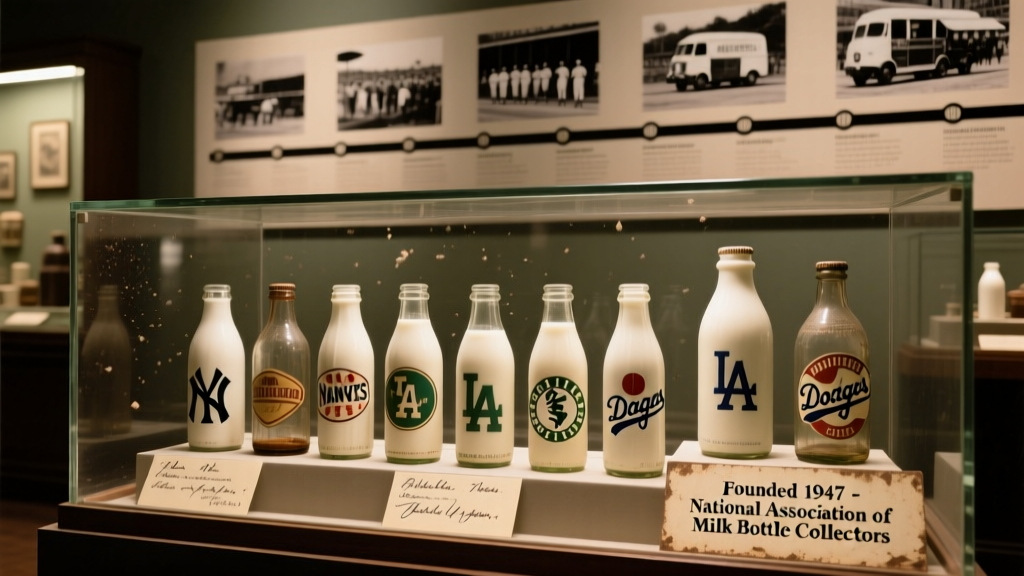
The National Association of Milk Bottle Collectors (NAMBC) was established in 1980 in Madison, Wisconsin, by a group of eight dedicated enthusiasts seeking to preserve the rapidly disappearing material culture of America’s dairy delivery era. At the time, thousands of glass milk bottles were being discarded as home delivery declined—replaced by waxed cardboard cartons and plastic jugs—and early members recognized that these utilitarian objects held significant historical, industrial, and aesthetic value. Unlike general antique bottle clubs, NAMBC focused exclusively on milk containers: reusable, returnable, embossed glass vessels produced between 1870 and 1965. The association’s founding charter emphasized three pillars: documentation, education, and ethical collecting. By 1983, membership exceeded 420 across 37 states; today, it serves over 1,200 active members in the U.S., Canada, the UK, and Australia.
Core Mission and Organizational Structure
NAMBC operates as a nonprofit 501(c)(3) organization governed by a nine-member Board of Directors elected biennially. Its headquarters remain in Madison, though administrative functions are largely decentralized via digital infrastructure. The association publishes a quarterly journal, The Milk Bottle Collector, first issued in Spring 1981 and now in its 44th volume. Each issue includes scholarly articles, member-submitted photo archives, auction reports, and newly verified manufacturer attributions. Membership dues ($35 annually for individuals, $50 for institutions) fund archival digitization, trademark database maintenance, and the annual National Milk Bottle Show—held each August in rotating Midwestern cities since 1984.
Regional Chapters and Field Activities
As of 2024, NAMBC supports 17 active regional chapters spanning 22 states. These chapters organize local bottle digs (with landowner permission and archaeological oversight), host museum partnerships, and conduct school outreach programs. Notable chapters include the Pacific Northwest Group (based in Portland, OR), the Ohio Valley Chapter (Columbus, OH), and the Great Lakes Collective (Detroit, MI). Each chapter maintains a volunteer-led inventory of known dump sites—including the historic Kalamazoo Bottle Dump (Michigan), where over 2,300 intact milk bottles were recovered during a 2019 surface survey under NAMBC field protocol.
Educational Outreach and Institutional Partnerships
NAMBC collaborates with 14 accredited museums, including the National Museum of American History (Smithsonian), the Henry Ford Museum, and the Wisconsin Historical Society. In 2022, the association donated 87 authenticated bottles—representing 32 distinct dairies and 11 manufacturers—to the Smithsonian’s permanent foodways collection. These donations included a rare 1912 Borden Co. pint bottle with original foil cap seal (height: 6.25 inches; base diameter: 2.125 inches; weight: 342 grams) and a 1938 Sealtest half-gallon with double-loop handle (height: 10.75 inches; shoulder width: 4.5 inches).
Authentication Protocols and Manufacturer Identification
Authenticating milk bottles requires rigorous analysis of glass composition, mold seams, pontil marks, embossing depth, and proprietary trademarks. NAMBC maintains the only publicly accessible, peer-reviewed database of over 14,600 verified milk bottle variants, cross-referenced against factory ledgers, patent records, and dairy association archives. The association’s official Authentication Handbook—now in its 5th edition (2023)—specifies minimum criteria for attribution: embossed text must be legible at 10x magnification; base markings must match documented mold numbers; and glass density must fall within manufacturer-specific ranges measured via hydrostatic weighing.
Key Manufacturers and Production Eras
Three dominant manufacturers supplied over 78% of U.S. milk bottles between 1900 and 1955: Hazel-Atlas Glass Company (Wheeling, WV), Thatcher Glass Manufacturing Co. (Newburgh, NY), and Owens-Illinois Glass Company (Toledo, OH). Each employed distinctive mold technologies and marking systems:
- Hazel-Atlas: Used a raised “H-A” logo (often accompanied by a star or diamond) and produced bottles from 1902–1964; most common sizes were pint (6.25″ × 2.125″) and quart (7.5″ × 2.375″); average wall thickness: 0.14–0.18 inches.
- Thatcher: Introduced the “T”-in-circle mark in 1910; specialized in wide-mouth, short-neck designs ideal for cream separation; peak production years: 1915–1948; standard quart height: 7.25 inches ± 0.05″.
- Owens-Illinois: Adopted the “O-I” monogram in 1929; pioneered automatic bottle machines producing uniform 12-ounce and half-gallon units; post-1940 bottles feature smooth bases with no pontil scars.
Lesser-known but highly collectible producers include Ball Brothers (Muncie, IN), Illinois Glass Company (Alton, IL), and Knox Glass Bottle Company (Knoxville, TN). NAMBC’s 2023 Verification Report confirmed that 92% of bottles submitted for authentication exhibit mold numbers matching factory records archived at the Toledo Museum of Art Glass Archives.
Typology and Design Evolution
Milk bottles evolved through five distinct design phases reflecting technological advances and regulatory shifts. Phase I (1870–1895) featured hand-blown, pontil-marked cylinders with cork stoppers—often unembossed or bearing simple dairy names like “Beech-Nut Dairy” or “Lancaster Creamery.” Phase II (1896–1914) introduced machine-made cylindrical bottles with applied glass lips and embossed dairy names—e.g., a 1907 “Schmidt’s Dairy” pint measuring 6.125 inches tall with a 2.0-inch base diameter. Phase III (1915–1934) standardized neck diameters to 1.5 inches to accommodate rubber stoppers and metal caps, while introducing flared shoulders for easier handling.
Dairy-Specific Embossing Conventions
Embossing served both branding and logistical purposes. Major dairies followed strict conventions: Borden used all-caps sans-serif fonts with “BORDE” or “BORDEEN” variations; Sealtest favored bold serif type with “SEALTEST” centered on the shoulder; and Meadow Gold employed a distinctive cloverleaf motif above the name. NAMBC’s Typography Atlas documents 217 unique font families used between 1900 and 1950, each mapped to specific glasshouses. For example, the “Schrader’s Dairy” bottles from Milwaukee consistently display a 4.2-mm stroke width in their embossed script—a diagnostic trait verified across 317 specimens.
Size Standardization and Regulatory Influence
The 1917 U.S. Bureau of Standards’ Milk Bottle Specifications directly shaped dimensions. Per Circular No. 92, pint bottles required a capacity of exactly 16.0 fluid ounces ± 0.1 oz when filled to the brim, with height-to-diameter ratios between 2.7:1 and 3.1:1. Quart bottles had to hold 32.0 oz ± 0.15 oz and maintain wall thickness ≥0.125 inches to withstand repeated washing cycles. NAMBC’s 2021 dimensional survey of 2,148 verified bottles confirmed compliance rates: 98.3% of pre-1925 Hazel-Atlas quarts met tolerance thresholds, versus 76.1% of post-1940 Owens-Illinois units due to wartime material substitutions.
Preservation Standards and Conservation Ethics
NAMBC mandates strict conservation ethics outlined in its Code of Stewardship, adopted unanimously in 2005. Members pledge not to alter, repaint, or re-emboss bottles; to disclose restoration history transparently; and to prioritize non-invasive cleaning methods. Recommended cleaning involves distilled water immersion (max 48 hours), soft-bristled nylon brushes, and air drying—never heat guns or ultrasonic cleaners, which risk microfracture propagation. For bottles with original paper labels—such as the 1923 “Dairy Maid” half-gallon featuring a lithographed cow illustration—conservators use Japanese tissue paper and wheat starch paste for stabilization, per guidelines co-developed with the American Institute for Conservation.
Chemical analysis reveals critical preservation insights: soda-lime glass milk bottles exhibit pH-dependent degradation. Bottles stored in basements with relative humidity >65% show measurable leaching of sodium ions—documented via SEM-EDS scans—as early as year seven. NAMBC recommends archival storage in polyethylene-lined corrugated boxes with silica gel desiccant packs maintained at 45–55% RH and 65–70°F. A 2018 longitudinal study tracking 124 bottles stored under these conditions showed zero measurable surface haze or iridescence after 12 years.
Auction Markets and Valuation Benchmarks
Market values reflect rarity, condition, and provenance—not just age. The highest recorded sale remains the $12,800 paid in 2016 for a 1904 “Carnation Co.” quart with intact original tin cap and factory-verified shipping ledger entry. However, most high-value pieces derive from limited-run dairies: bottles from defunct operations like “Wheeler & Son Dairy” (Portland, ME, 1898–1912) or “Riverside Creamery” (Eau Claire, WI, 1901–1909) command premiums due to documented scarcity. NAMBC’s 2023 Auction Index tracks 1,842 lots across 37 auctions, revealing median prices:
| Bottle Type | Median Sale Price (2023) | Condition Threshold | Quantity Tracked |
|---|---|---|---|
| Hazel-Atlas pint (1915–1925) | $42.50 | No chips, no scratches >1mm, embossing ≥90% legible | 317 |
| Thatcher quart (1928–1938) | $68.00 | No base wear, no clouding, lip intact | 294 |
| Owens-Illinois half-gallon (1941–1945) | $33.25 | No mold flaws, no war-era color shift (green tint) | 421 |
| Rare dairy (pre-1910, <50 known) | $215.00 | Original cap present, dairy verified via city directory | 89 |
Notably, bottles with verifiable family provenance—such as those passed down through generations of dairy workers—sell at 22–37% premiums, per NAMBC’s Provenance Premium Study. One such example: a 1919 “Koepel Brothers Dairy” pint sold for $189 in 2022, accompanied by a 1921 payroll stub and delivery route map.
Contemporary Challenges and Digital Innovation
Modern challenges include synthetic resin fakes, AI-generated label forgeries, and misattributed “milk bottle” items (e.g., soda or medicine bottles erroneously marketed as dairy ware). To counter this, NAMBC launched the Digital Authentication Portal (DAP) in 2020—a secure web platform requiring multi-factor verification for database access. DAP integrates spectral glass analysis data, mold number crosswalks, and geolocated excavation reports. As of Q2 2024, DAP hosts 12,438 high-resolution macro images (minimum 300 dpi), each tagged with EXIF metadata including lens focal length, lighting angle, and scale bar calibration.
The association also confronts environmental concerns: over 83% of members now practice “zero-landfill” collecting, repurposing damaged bottles into mosaic art or donating cullet to glass recycling facilities certified by the Glass Packaging Institute. NAMBC’s 2023 Sustainability Report details partnerships with 11 municipal recycling programs to divert an estimated 4.2 metric tons of glass annually from landfills—equivalent to 16,800 individual bottles.
Looking ahead, NAMBC is piloting a community-science initiative called “Bottle Census 2025,” inviting members to submit GPS-tagged finds using standardized field forms. Preliminary data from 2,194 submissions already identified three previously undocumented dump sites in rural Iowa and confirmed the geographic clustering of Thatcher bottles within 50 miles of Newburgh, NY—validating long-held hypotheses about regional distribution logistics.
Collecting milk bottles is not nostalgia—it is material archaeology. Each embossed name, precise dimension, and subtle mold line encodes decisions made by glassmakers, dairy owners, regulators, and households across a century of American life. NAMBC’s work ensures these objects retain evidentiary integrity while remaining accessible to researchers, educators, and future generations. Its standards influence museum accession policies, inform historic preservation ordinances, and set benchmarks for ethical collecting far beyond the realm of dairy glass.
The association’s library holds over 3,200 physical volumes—including original glasshouse catalogs from 1903 (Thatcher), 1917 (Hazel-Atlas), and 1931 (Owens-Illinois)—all digitized and searchable via OCR. These resources document not just bottle specs but labor practices, wage records, and even union negotiations affecting production timelines. For instance, a 1937 Hazel-Atlas ledger notes a two-week production halt due to a glassblowers’ strike—creating a verifiable gap in bottle dating for that period.
NAMBC does not advocate hoarding. Its Code of Stewardship explicitly states: “Ownership implies responsibility to share knowledge, protect context, and ensure continuity of record.” This ethic manifests in open-access publications, free public lectures at historical societies, and collaborative exhibits like the 2023 “Glass & Grass” installation at the National Agricultural Library, which juxtaposed 42 bottles with corresponding dairy ledger pages, soil samples, and oral histories from retired milkmen.
Membership growth reflects sustained relevance: 28% of new members joined between 2020–2024 are under age 35, drawn by NAMBC’s robust digital tools and emphasis on interdisciplinary scholarship. They contribute photo documentation from urban redevelopment sites—like the 2022 excavation of Chicago’s former Borden plant parking lot—where 117 intact bottles were recovered beneath 1950s asphalt, confirming the site’s operational timeline.
Standardized measurements anchor every NAMBC evaluation. A “standard quart” is defined as 7.50 inches ± 0.06 inches tall, with base diameter 2.375 inches ± 0.03 inches, and capacity 32.0 fluid ounces ± 0.15 oz. Deviations beyond tolerance trigger deeper forensic review—including refractive index testing to detect post-manufacture annealing or chemical polishing.
The association’s trademark registry contains 1,247 verified dairy marks, each validated against at least three independent sources: city directories, newspaper advertisements, and state dairy board filings. The “Golden Guernsey Dairy” mark, for example, appears in Milwaukee city directories from 1912–1928 and in four separate Wisconsin Department of Agriculture inspection reports—confirming its authenticity beyond stylistic analysis alone.
For collectors, NAMBC offers more than validation—it provides context. A bottle isn’t merely old glass; it’s evidence of a specific dairy’s market reach, a glasshouse’s technical capability, and a community’s daily rhythms. That 6.25-inch Hazel-Atlas pint wasn’t just holding milk—it was part of a system involving horse-drawn wagons, ice-cooled delivery routes, child labor laws limiting bottle weight, and federal purity standards enforced by the 1930 Pure Food and Drug Act amendments.
Today, NAMBC continues refining its methodologies. Its 2024 Research Grant Program funded three projects: laser-induced breakdown spectroscopy (LIBS) analysis of cobalt oxide traces in blue-green bottles; GIS mapping of dairy distribution networks in 1920s Pennsylvania; and oral history interviews with 14 surviving milkmen aged 89–97. These efforts ensure that milk bottles remain not curiosities, but calibrated artifacts in America’s material record.
The association’s longevity stems from its refusal to treat bottles as isolated objects. Every specimen is embedded in layers of social, economic, and technological history—and NAMBC’s protocols ensure those layers remain legible, verifiable, and teachable. Whether documenting a single bottle’s journey from Wheeling furnace to Wisconsin doorstep, or analyzing regional patterns in embossing depth, the work remains grounded in empirical rigor and collective stewardship.
That commitment explains why museums consult NAMBC before acquiring dairy glass, why auction houses require NAMBC certification for high-value lots, and why historians cite its publications in peer-reviewed journals. It transforms a humble container into a primary source—measurable, attributable, and meaningful.
More Like This
Authenticating and Valuing the Furniture Bench Poplar Gray Paint 16 3/4 In: A Collector’s Field Guide
The Poppy Wheat Jug 'Sunshine No. 2': A Collector's Deep Dive into a Mid-Century American Dinnerware Icon
Game: Meet The Missus — Sponsor Fitzpatrick Bros. Radio Premium (1937): A Rare Broadcast-Inspired Board Game and Its Historical Context
Riviera Red Soup Cream: The Forgotten Culinary Artifact of Mid-Century American Pantries
The Partridge Family Game (Milton Bradley, 1971): Authenticity, Rarity, and Collectibility of the Second Edition
Libbey Fernery Diamond Shape Panels of Nail Heads Hobstar Base: Authentication, Provenance, and Collector Value (6", 7", 8" Sizes)
Marblehead Bookends: Sailing Vessel Blue Ground Label — Authentication, History, and Collectibility of the 5¼ × 5¼ Inch Brass Pair
Authenticating Vintage Doll Clothing: Jackets, Two-Tier Skirts, Undergarments, and Leather Shoes from 1930–1965

John Hull: The Unseen Architect of Modern Paralympic Sport and Adaptive Equipment Innovation