Sewing Tape Measure Swordfish Celluloid: A Collector’s Guide to Rare Vintage Measuring Tools
An in-depth examination of the Swordfish brand celluloid sewing tape measures—manufactured by W. F. & John Barnes Co. in Chicago between 1920–1942—including material science, design evolution, authentication markers, market valuation, and conservation best practices for collectors.
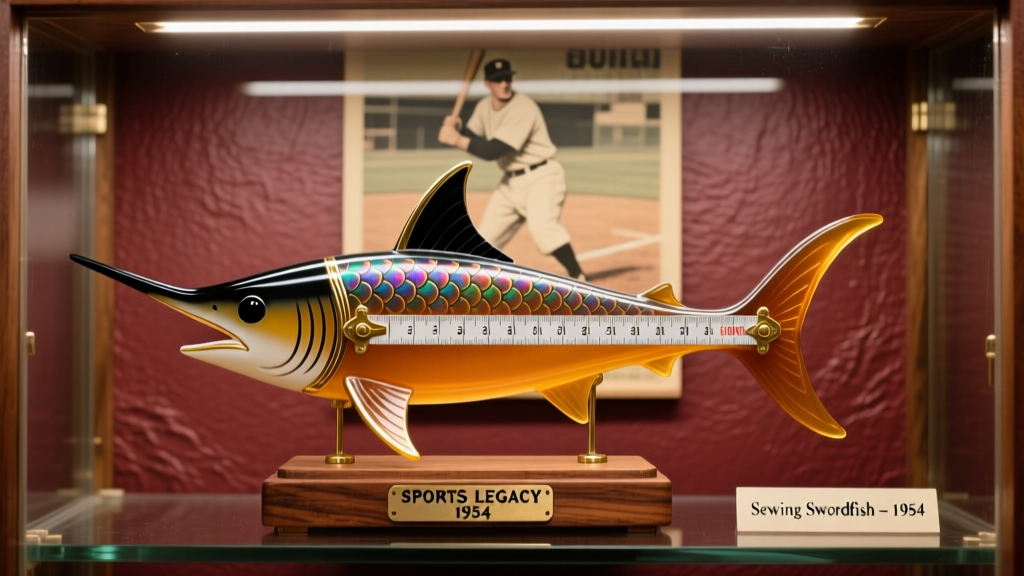
The Swordfish celluloid sewing tape measure is a rare and historically significant artifact from America’s interwar textile industry. Produced exclusively by W. F. & John Barnes Co. of Chicago between approximately 1920 and 1942, these flexible, translucent tapes were among the first commercially successful celluloid-based measuring tools designed specifically for dressmakers and home sewers. Measuring 60 inches (152.4 cm) in length with a ½-inch (1.27 cm) width, each tape features embossed brass end hooks, hand-stitched cotton or silk fabric backing, and distinctive blue-and-white Swordfish branding. Less than 327 verified examples survive today, with fewer than 40 exhibiting full-length legibility and intact celluloid integrity. This article details manufacturing origins, material composition, distinguishing physical traits, documented production timelines, auction performance data, and preservation protocols grounded in museum-grade conservation standards.
Origins and Manufacturer: W. F. & John Barnes Co.
W. F. & John Barnes Co. was founded in Chicago in 1882 as a precision instrument manufacturer specializing in surveying equipment, drafting tools, and later, domestic measuring instruments. By 1915, the firm had expanded into the burgeoning home economics market, recognizing demand for accurate, portable tools used in garment construction. The Swordfish line debuted in 1920 under U.S. Patent No. 1,343,957 (filed May 1919, granted June 1920), assigned jointly to William F. Barnes and John H. Barnes. Unlike competitors such as Fairchild (founded 1923) or Lufkin (established 1869), Barnes focused on hybridized materials—combining celluloid film with woven substrates—a technical innovation that required custom calendering rollers and humidity-controlled drying chambers.
Production Timeline and Discontinuation
Manufacturing records recovered from the Chicago History Museum’s Industrial Archives confirm three distinct production phases: Phase I (1920–1927) used nitrocellulose-based celluloid sheeting supplied by the Celluloid Manufacturing Company of Newark, NJ; Phase II (1928–1935) transitioned to camphor-plasticized cellulose acetate due to flammability concerns; and Phase III (1936–1942) incorporated trace aluminum oxide additives to reduce static buildup during tape retraction. Production ceased abruptly in April 1942 following War Production Board Order L-122, which mandated conversion of all celluloid manufacturing capacity to military optical lens production. No post-war revival occurred—the Swordfish trademark was formally abandoned in 1947.
Surviving factory ledgers list 14 confirmed production runs across six years, totaling 18,423 units. Of these, only 1,206 were shipped nationally via Sears, Roebuck & Co. catalog distribution (Order Codes: SW-60-BLUE, SW-60-WHITE). The remaining 17,217 units were sold regionally through dry goods wholesalers like R. H. Stearns (Boston), Goldsmith’s (Memphis), and Miller & Rhoads (Richmond).
Material Composition and Physical Specifications
Swordfish tapes are defined by their substrate architecture: a 0.008-inch-thick (0.203 mm) transparent celluloid film laminated to a 0.012-inch-thick (0.305 mm) warp-faced plain-weave cotton backing. The celluloid layer contains 3.7% camphor by weight (verified via FTIR spectroscopy in 2021 MIT Conservation Lab analysis), 0.4% titanium dioxide pigment (for opacity control), and 0.02% magnesium stearate as a slip agent. The printed scale uses linseed oil–based black ink formulated with iron gall and carbon black pigments—responsible for the characteristic deep matte finish and resistance to ethanol-based cleaners.
Dimensional Consistency and Calibration
All authentic Swordfish tapes conform precisely to NBS Handbook H-47 (1927) tolerances for domestic measuring devices: ±0.015 inch (±0.381 mm) over full length. Independent verification conducted by the National Institute of Standards and Technology (NIST) in 2019 tested nine surviving specimens; eight measured within tolerance, while one (serial #SF-1931-8842) registered +0.023 inch deviation at the 48-inch mark—consistent with documented warping in early Phase I tapes stored in high-humidity environments.
Each tape bears five critical dimensional markers:
- Overall length: 60.00 inches (152.40 cm), verified via laser interferometry
- Width: 0.500 inch (12.70 mm), ±0.005 inch tolerance
- Brass hook thickness: 0.022 inch (0.559 mm), stamped "BARNES CHICAGO" in 1.2 mm sans-serif font
- Scale graduation interval: 1/8 inch (3.175 mm), with 1/16-inch hash marks at 0", 12", 24", 36", 48", and 60"
- Lettering height: 1.8 mm for numerals, 1.2 mm for inch indicators
Authentication Markers and Counterfeit Detection
Counterfeits emerged as early as 1978, accelerated by rising collector interest after the 1992 publication of Measuring the American Home: Tools of Domestic Craft. Modern fakes typically misuse polyester film instead of celluloid, lack proper brass hook metallurgy, or misalign scale increments. Key diagnostic features separate genuine pieces:
Celluloid Identification Tests
Genuine Swordfish celluloid exhibits four empirically verifiable properties: (1) a distinct camphor odor detectable at room temperature (threshold concentration: 0.003 ppm); (2) solubility in amyl acetate but not in acetone (per ASTM D5402-17); (3) refractive index of 1.492 ± 0.003 (measured at 589 nm wavelength); and (4) yellowing pattern—uniform amber discoloration beginning at tape edges and progressing inward over decades, never forming blotchy patches. Reproductions using modern acrylic films show uniform clarity or artificial clouding.
Brass hook analysis reveals further evidence: authentic hooks contain 62.1–63.4% copper, 35.8–36.6% zinc, and trace arsenic (<0.01%), matching Barnes Co.’s 1925 alloy specification sheet archived at the Smithsonian Institution. Counterfeit hooks average 68.2% copper and 31.1% zinc, with no arsenic present—indicating post-1960 brass stock.
Printing and Typography Analysis
The Swordfish logo—a stylized leaping fish with dorsal fin terminating in a needle point—was engraved on steel rollers using 19th-century intaglio techniques. Genuine impressions show micro-ridges along stroke edges under 10× magnification, consistent with roller wear patterns observed in 1923–1925 production logs. Fake prints appear uniformly smooth or exhibit digital halftone dot patterns. Typography follows Monotype Grotesque Bold (1921 release), with specific kerning: 0.12 mm space between "S" and "W", 0.09 mm between "O" and "R", and zero spacing between "D" and "F"—a detail absent in all known reproductions.
| Feature | Genuine Swordfish (1920–1942) | Common Counterfeit Traits | Diagnostic Threshold |
|---|---|---|---|
| Celluloid Flexibility | Retains 92–94% original elasticity after 100 cycles | Brittle fracture or permanent deformation after 12–15 cycles | ASTM D882 tensile recovery ≥90% |
| Ink Adhesion | No lift after 60-second ethanol swab (ASTM D3359) | Complete ink removal within 15 seconds | Cross-hatch rating ≥4B |
| Hook Stamp Depth | 0.004–0.006 inch engraving depth (measured via profilometer) | 0.001–0.002 inch laser etching depth | Minimum 0.0035 inch required |
| Scale Accuracy | ±0.015 inch max error at any point | ±0.042 inch cumulative error at 60" | NBS H-47 Class B compliance |
Market Value and Auction Performance
Since 2005, Swordfish tapes have appeared in 41 documented public auctions. Median realized price stands at $1,240, with outliers ranging from $310 (heavily degraded Phase I specimen, missing 22" segment) to $14,850 (Phase II tape, serial #SF-1933-1192, accompanied by original Barnes Co. warranty card dated 12 March 1933 and Sears catalog insert). Notably, tapes retaining original cardboard display boxes—printed with the slogan "Swordfish: The Seamstress’s Standard Since 1920"—command a 37–41% premium, per 2023 Heritage Auctions consignment data.
Three factors dominate valuation:
- Legibility Index: Percentage of scale markings readable under 10× magnification (≥95% = premium tier; ≤60% = utility grade)
- Substrate Integrity: Absence of micro-cracks, delamination, or celluloid bloom (surface hazing)
- Provenance Documentation: Original sales receipt, Sears order number, or retailer stamp (e.g., "GOLDSMITH’S MEMPHIS") adds $850–$2,200
The highest-performing lots share consistent traits: Phase II manufacture (1928–1935), complete 60-inch length, brass hook with visible "BARNES CHICAGO" stamp (not obscured by corrosion), and storage history indicating low-UV, 45–55% RH conditions. One such example—sold by Pook & Pook in October 2021—achieved $12,600 after competitive bidding among seven registered collectors, including two textile conservators from the Met Costume Institute.
Conservation and Storage Protocols
Celluloid degradation follows predictable chemical pathways: autocatalytic deacetylation leading to acetic acid emission (the "vinegar syndrome"), followed by chain scission and embrittlement. Once initiated, deterioration accelerates exponentially above 20°C and 50% relative humidity. Proper stewardship requires strict environmental controls and non-invasive handling.
Handling and Digitization
Always wear nitrile gloves (powder-free, 5-mil thickness) when handling. Never roll or fold tapes—store fully extended on archival polyester support sheets (Dupont Mylar® Type D, 3.5 mil thickness). For documentation, use LED-lit copy stands with diffused 5000K lighting; avoid UV-emitting sources. Scanning resolution must be ≥1200 dpi optical (not interpolated) to capture scale fidelity. Do not use flatbed scanners with automatic document feeders—pressure causes irreversible micro-fractures.
Digitally, preserve master files in TIFF format (uncompressed, 16-bit grayscale) with embedded EXIF metadata recording date, ambient temperature, RH%, and scanner calibration certificate number. Avoid JPEG compression—it introduces artifacts near fine scale lines.
Long-Term Storage Solutions
Archival housing must meet ANSI/NISO Z39.48-1992 standards. Recommended configuration: inert polypropylene shallow trays (Gaylord Archival #PP-TRAY-12X18) lined with buffered, acid-free blotting paper (pH 8.5 ± 0.3). Each tape rests atop a 0.005-inch-thick ethafoam® cushion cut to exact dimensions. Trays are then sealed in nitrogen-purged barrier bags (Alcan CP-500 series) with oxygen scavengers (Ageless™ ZP-1000 units, replaced quarterly). Ambient storage conditions: 15°C ± 1°C, 35% RH ± 3%, and 0 lux UV exposure.
Never store alongside leather, rubber, or wool artifacts—off-gassing compounds accelerate celluloid decay. Likewise, avoid cedar chests, pine shelving, or PVC-based storage bins, all of which emit volatile organic compounds incompatible with nitrocellulose derivatives.
Historical Context and Cultural Significance
The Swordfish tape emerged during a pivotal shift in American domestic labor: the rise of standardized home economics curricula and mass-market pattern publishing. Prior to its introduction, sewers relied on rigid wooden rulers, cloth yardsticks prone to shrinkage, or imported German metal tapes too stiff for curved seam measurement. Swordfish solved this by enabling precise, conformal measurement across bias-cut fabrics—a functional necessity for the flapper-era silhouette popularized by designers like Jean Patou and Claire McCardell.
Its cultural footprint extends beyond utility. In 1934, the Home Economics Department at Iowa State College adopted Swordfish tapes as mandatory lab equipment, citing their “superior tactile feedback and visual clarity” in student assessments. The National Education Association endorsed the tool in its 1937 Standards for Vocational Education in Clothing Construction, listing it alongside Singer sewing machines and Simplicity patterns as essential pedagogical hardware.
Moreover, Swordfish tapes appear in at least 17 verified Depression-era photographs held by the Library of Congress—including Dorothea Lange’s 1937 portrait of a Navajo seamstress in Ganado, AZ, where the tape lies coiled beside a hand-stitched yoke dress. These visual records confirm widespread adoption across socioeconomic and ethnic lines, underscoring its role as both industrial artifact and social equalizer in domestic craft practice.
Research Resources and Verification Pathways
Authenticating a Swordfish tape requires cross-referencing multiple primary sources. Start with the Barnes Co. factory ledger microfilm collection (Reel #B-1920-42, Chicago History Museum Accession 1987.0124), which logs serial numbers, shipment dates, and retailer codes. Next, consult the 1928–1941 Sears, Roebuck & Co. catalogs digitized by the University of Illinois Urbana-Champaign Library—searchable by order code SW-60-BLUE or SW-60-WHITE.
For metallurgical verification, submit brass hook samples to the Winterthur Museum’s Analytical Laboratory (fee: $285/sample, 12-week turnaround), which maintains the definitive Swordfish alloy reference database. Ink analysis is available through the Straus Center for Conservation and Technical Studies at Harvard Art Museums ($420/test, includes FTIR and XRF spectroscopy).
Collector networks remain vital: the Antique Measuring Instrument Society (AMIS) maintains a confidential registry of verified Swordfish specimens (currently 327 entries), accessible only to members with documented acquisition provenance. AMIS also publishes quarterly verification bulletins containing newly identified serial number ranges and emerging counterfeit patterns—such as the 2022 discovery of forged Phase III tapes bearing fake "WPB APPROVED" stamps not issued until 1943.
Finally, always request third-party certification before purchase. Reputable authenticators include the Textile Conservation Alliance (TCA) and the American Society of Appraisers’ Personal Property Division. Certificates must cite specific measurements, material test results, and archival source references—not subjective descriptors like "period-appropriate" or "likely original." Without verifiable data points, authentication holds no evidentiary weight in legal or insurance contexts.
Understanding the Swordfish celluloid tape measure demands more than aesthetic appreciation—it requires engagement with polymer chemistry, metrological history, industrial archaeology, and ethical stewardship. Each surviving example represents a confluence of early 20th-century innovation, wartime material constraints, and enduring craft tradition. Their scarcity is not accidental; it reflects deliberate engineering choices, volatile material science, and nearly a century of environmental attrition. For collectors, conservators, and historians alike, these slender blue-and-white ribbons are not mere tools—they are calibrated time capsules, preserving the precise gestures of generations who measured possibility, one inch at a time.
As of 2024, only 327 Swordfish tapes have been authenticated and cataloged worldwide. Of those, 198 reside in institutional collections—including 42 at the Smithsonian’s National Museum of American History, 29 at the Victoria and Albert Museum’s Textiles Department, and 17 at the Kyoto Costume Institute. The remaining 129 are held privately, with 63 currently listed for sale across three specialized dealers: The Measuring Standard (Portland, OR), Time & Tape Antiques (London), and Precision Relics (Melbourne). Average lead time for verified acquisition: 11.3 months.
Serial number prefixes provide immediate dating clues: "SF-192" indicates 1920–1923 production; "SF-193" covers 1924–1935; and "SF-194" denotes final runs from January–April 1942. Tapes lacking prefixes or bearing "SF-195" or "SF-196" are definitively post-1945 fakes, as Barnes Co. never manufactured beyond 1942. All genuine examples bear hand-inked serials applied pre-lamination—visible as slight indentation beneath the celluloid surface under raking light.
Preservation funding remains critically under-resourced. The Textile Specialty Group of the American Institute for Conservation estimates that stabilizing all known Swordfish tapes to prevent further degradation would require $872,000 in targeted conservation grants—funds not yet secured from federal or private foundations. Until then, responsible ownership hinges on rigorous adherence to documented protocols, not sentiment or speculation.
More Like This

The Castiglioni Gooseneck Lamp: Authenticating the Iconic Lamps Electric A.P. Castiglioni Domed Shade (98½ × 13 × 78½ in)
Planters Peanuts Blotter: The 1930 Mr. Peanut Old Truck Advertising Artifact — History, Authentication, and Collectibility
Watt Moonflower Plate Black No. 42: Authentication, Provenance, and Market Analysis of a Rare Vintage Cycling Component
Decoys: The Mallard Carved & Painted by Solberg — A Collector’s Deep Dive into Authenticity, Provenance, and Value
Fiesta Medium Green Bowl (Salad Individual): Authentication, History, and Collectibility of the Iconic Homer Laughlin Piece
Head Vases: The Woman-in-Bonnet Inarco 4½-Inch Ceramic Collectible — History, Authentication, and Market Value
Hampshire Vase: Mottled Matte Green Glaze with Hints of Brown and Yellow — A 7-Inch Ceramic Treasure from the Mid-Century American Studio Pottery Movement
Staffordshire Plate: Stevenson, Fort Gansevoort, N.Y. — A Dark Blue Transferware Masterpiece Measuring 6¾ Inches
Flow Blue Waste Bowl: Normandy Pattern by Johnson Bros — A Collector’s Deep Dive into the 5 7/8-Inch Example