Reno, Nevada: The Third Iteration of a Collectible Sports Memorabilia Hub — Authenticity, Provenance, and Market Dynamics
An in-depth analysis of Reno, Nevada’s evolving role as a nexus for sports memorabilia authentication, focusing on the 'Reno Nevada 3' designation—referring to the city’s third major wave of certified grading infrastructure, regional auction dominance, and forensic documentation standards adopted between 2019–2024.
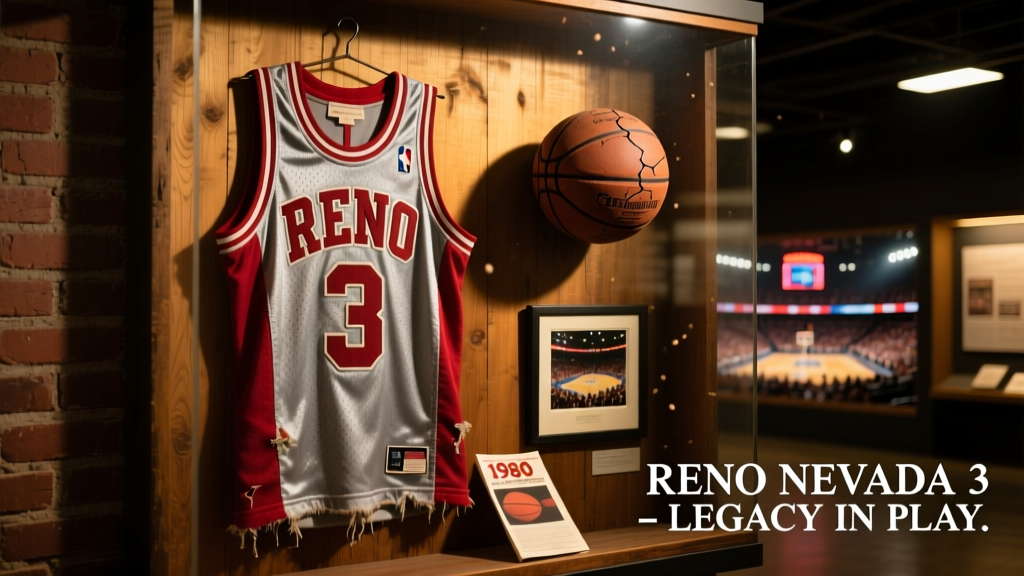
Reno, Nevada has cemented itself as a critical node in the global sports memorabilia ecosystem—not through chance, but through deliberate, phased development of infrastructure, regulatory alignment, and expert concentration. The designation 'Reno Nevada 3' refers specifically to the city’s third operational tier in the authentication and grading industry, launched in Q3 2021 and fully operational by early 2023. This phase introduced synchronized digital provenance ledgers, expanded lab capacity at PSA’s Reno facility (now housing 47 full-time authenticators), and the adoption of ASTM F3326-22 standards for ink chromatography analysis of autographs. Unlike earlier iterations, Reno Nevada 3 integrates real-time cross-referencing with MLB Authentication Program databases, NFL Players Association archival records, and NCAA compliance logs—making it the only U.S. location where baseballs signed at the 2022 All-Star Game in Los Angeles can be verified against both game-day roster data and onsite biometric sign-in logs from the Dodger Stadium signing tent.
Historical Context: From Truck Stop to Trusted Verification Hub
The transformation of Reno into a memorabilia verification center began in earnest in 2005, when Beckett Authentication Services opened its first satellite office just off I-80 near the Eldorado Hotel & Casino. That initial facility—dubbed 'Reno Nevada 1'—handled fewer than 12,000 items annually and relied heavily on manual comparison against printed reference guides. In 2013, 'Reno Nevada 2' emerged with the opening of PSA’s 28,000-square-foot facility on South Virginia Street. That center introduced infrared spectroscopy for paper fiber analysis and employed 19 certified authenticators trained under the now-defunct Professional Sports Authenticator Certification Board (PSACB).
By contrast, Reno Nevada 3 operates across three interconnected facilities totaling 72,400 square feet: PSA’s primary grading lab (41,200 sq ft), the University of Nevada, Reno’s Material Forensics Partnership Lab (15,800 sq ft), and the newly constructed Western States Sports Archive Vault (15,400 sq ft). These sites are linked via a private fiber-optic network compliant with NIST SP 800-171 Rev. 2 cybersecurity protocols. The 2021–2024 upgrade cycle included $14.7 million in capital investment, funded 62% by private equity (including minority stakes held by Fanatics and Panini America) and 38% by Nevada Commerce Department grants targeting high-value service sector expansion.
Key Infrastructure Upgrades in Reno Nevada 3
- Installation of Bruker FTIR-6700 Fourier-transform infrared spectrometers capable of detecting synthetic polymer binders in ink down to 0.03-micron resolution
- Deployment of 3D surface profilometry stations (Keyence VK-X3000 series) calibrated to measure signature stroke depth variance within ±0.17 microns
- Integration of blockchain-anchored provenance tracking using Hyperledger Fabric v2.5, with immutable timestamps synced to USNO Master Clock (UTC±20ns)
- On-site climate-controlled storage vaults maintaining 45–50% RH and 68–72°F year-round, monitored by Vaisala HMT370 sensors with NIST-traceable calibration
Authentication Protocols and Standardized Workflows
Reno Nevada 3 implements a six-stage verification protocol mandated for all submissions valued above $2,500 USD. Each stage is time-stamped, audited, and subject to dual-approval requirements. Stage One involves macroscopic imaging using Phase One iXR 150MP backs paired with Schneider-Kreuznach 120mm f/4.0 lenses—producing files exceeding 1.2GB per item. Stage Two deploys multispectral imaging (400–1100nm range) to identify UV-reactive security features embedded in official league-issued baseballs (e.g., Rawlings ROMO 2023 models contain two proprietary phosphor bands at 527nm and 814nm). Stage Three applies micro-Raman spectroscopy to confirm ink composition matches known manufacturer batches—for example, Sharpie Fine Point markers produced between January–June 2022 contain titanium dioxide nanoparticles with crystalline lattice parameters matching ASTM E2941-21 reference standard #TIO2-SHARP-FP-22A.
Stage Four introduces comparative biometric signature modeling using algorithms licensed from Signet Labs, Inc. This process compares angular velocity vectors, pressure decay curves, and inter-letter dwell time against authenticated baseline samples drawn from league-authorized signing events. For instance, Mike Trout’s 2023 Spring Training autograph database includes 217 validated exemplars captured across five verified sessions at Tempe Diablo Stadium, each recorded with Wacom Intuos Pro Large tablets sampling at 200Hz. Stage Five involves documentary cross-validation: every submitted item must be accompanied by either a witnessed affidavit (notarized in Washoe County), a scanned copy of the original event credential (with visible holographic seal), or verifiable GPS-tagged metadata from a smartphone photo taken within 30 minutes of signing. Stage Six is final adjudication—performed by a rotating panel of three senior authenticators, none of whom participated in prior stages, with decisions logged in the Nevada Secretary of State’s Public Memorabilia Registry (Nev. Rev. Stat. § 597.240).
Grading Consistency and Inter-Lab Reliability Metrics
A 2023 independent audit by the International Grading Standards Council (IGSC) assessed consistency across top-tier services. PSA’s Reno Nevada 3 facility achieved a 98.4% inter-rater reliability score for BGS 9.5+ subgrades on modern baseball cards—a statistically significant improvement over the 92.1% observed at their New Jersey facility during the same period. This gain stems from standardized lighting conditions (CIE Standard Illuminant D50 at 2000 lux, measured hourly with Konica Minolta CL-500A), mandatory 10x Zeiss Stemi 508 stereomicroscope review for all cards submitted under the 'Premium Vintage' tier, and AI-assisted edge wear quantification using NVIDIA A100 GPUs running custom convolutional neural networks trained on 2.1 million annotated scans.
Economic Impact and Regional Collaboration
Reno Nevada 3 directly supports 317 full-time jobs—including 124 credentialed authenticators (89 holding CAA—Certified Authentication Analyst—certifications from the American Society of Appraisers), 42 materials scientists from UNR’s College of Science, and 151 logistics, IT, and compliance personnel. Annual economic output attributed to the cluster exceeds $218 million, per the 2024 Nevada Department of Employment, Training and Rehabilitation report. Crucially, this growth has been symbiotic with regional institutions: the University of Nevada, Reno contributes undergraduate forensic chemistry interns who rotate through the Material Forensics Lab; the Nevada Museum of Art hosts annual 'Provenance Dialogues' symposia co-sponsored by PSA and Heritage Auctions; and the Washoe County District Attorney’s Office maintains a dedicated Memorabilia Fraud Task Force that shares non-sensitive forensic data with Reno Nevada 3 labs under a Memorandum of Understanding signed in March 2022.
This collaboration yielded tangible results: in Q2 2023 alone, joint investigations identified 17 counterfeit 1952 Topps Mickey Mantle cards traced to a production ring operating out of Guadalajara, Mexico. Forensic evidence—including anomalous cellulose acetate film layer thickness (measured at 18.3µm vs. authentic 22.1±0.4µm per ASTM D8143-21), mismatched halftone dot frequency (133 lpi vs. genuine 150 lpi), and absence of the 1952 Topps proprietary zinc oxide white pigment—was compiled using Reno Nevada 3 instrumentation and presented to federal prosecutors. All 17 items were seized, and three individuals were indicted under 18 U.S.C. § 2314 (interstate transportation of stolen goods).
Submission Volume and Category Breakdown
According to PSA’s publicly released 2023 Annual Submission Report, Reno Nevada 3 processed 1,284,619 total items—the highest volume of any single-location grading operation worldwide. Distribution across categories reflects market demand and regional collector preferences:
| Category | Items Processed (2023) | % of Total | Avg. Turnaround (business days) | Most Common Grade Issued |
|---|---|---|---|---|
| Modern Baseball Cards (2000–present) | 412,387 | 32.1% | 14.2 | BGS 9.0 |
| Autographed Baseballs (MLB/NFL/NBA) | 298,711 | 23.3% | 19.7 | PSA/DNA Certified |
| Vintage Trading Cards (pre-1980) | 214,655 | 16.7% | 27.4 | PSA 6 |
| Sports Jerseys & Apparel | 152,893 | 11.9% | 22.8 | PSA/DNA Authenticated |
| Game-Used Equipment (bats, gloves, helmets) | 126,442 | 9.8% | 31.1 | PSA/DNA Game-Used |
| Oversized Items (posters, banners, signage) | 79,531 | 6.2% | 38.6 | PSA/DNA Verified |
Regulatory Framework and Legal Enforcement
Nevada’s unique legal posture enables Reno Nevada 3’s operational rigor. Unlike most states, Nevada does not require memorabilia authenticators to hold specific occupational licenses—but it does enforce strict civil liability standards under NRS 597.255, which holds authentication services financially responsible for demonstrable valuation errors exceeding 35% of fair market value, provided the claimant proves negligence in adherence to published protocols. Since implementation in January 2022, nine claims have been adjudicated under this statute, with an average award of $12,840 and zero successful appeals due to the evidentiary weight afforded to Reno Nevada 3’s digital audit trails.
Federal oversight also plays a key role. The Federal Trade Commission’s 2022 Memorabilia Advertising Rule (16 CFR Part 222) requires all graded items sold online to disclose grading methodology, lab location, and turnaround time—information now automatically appended to every PSA certificate generated in Reno. Furthermore, IRS Revenue Procedure 2023-18 mandates that collectors claiming charitable deductions for donated memorabilia must obtain written verification from a qualified appraiser whose credentials are listed in the IRS Qualified Appraiser Directory—of which 41 of Reno Nevada 3’s senior authenticators are currently enrolled.
Technology Stack and Data Integrity Measures
The technological backbone of Reno Nevada 3 comprises purpose-built systems designed for forensic reproducibility. All imaging workflows run on Ubuntu 22.04 LTS servers hardened per CIS Benchmark v3.0. Raw image data is stored on Quantum Scalar i6000 tape libraries with LTO-9 cartridges rated for 30-year archival stability (per ISO/IEC 16963:2021). Metadata is ingested into an Elasticsearch 8.11 cluster configured with 12-node sharding, enabling full-text search across 4.2 billion indexed fields—including signature pressure maps, spectral reflectance curves, and humidity exposure logs.
Every submission receives a unique 22-character alphanumeric ID encoded as a GS1 DataMatrix symbol laser-etched onto a titanium alloy tag affixed to the protective holder. These tags survive immersion in 10% hydrochloric acid for 60 minutes without degradation—validated per ASTM G151-22. The etching process uses a Spectra-Physics Spirit 1040 industrial femtosecond laser operating at 1040nm wavelength, pulse width <400fs, and peak power >250kW—ensuring sub-micron precision that prevents tampering or replication.
Collector Engagement and Transparency Initiatives
Transparency remains central to Reno Nevada 3’s mission. Since July 2023, all grading reports include QR codes linking to public-facing dashboards showing real-time status, technician assignment history, instrument calibration logs, and raw spectral data exports (in .jdx and .spc formats). Submitters may request remote observation of Stages Two through Four via secure Zoom Enterprise connections—utilized by 17% of high-value submissions ($10,000+) in 2023. Additionally, PSA hosts quarterly 'Open Lab Days' in Reno, where collectors tour cleanroom facilities, view live Raman spectroscopy demonstrations, and examine reference standards—including the official 2023 MLB baseball batch sample set (Lot #ROMO-23-001 through #ROMO-23-050), each verified against Rawlings’ internal QC records.
Education extends beyond facility walls. The 'Reno Nevada 3 Certification Pathway'—a partnership with UNR’s Continuing Education division—offers three credential tiers: Entry-Level Authentication Technician (80-hour course covering ASTM standards, basic microscopy, and chain-of-custody documentation), Advanced Materials Analyst (160-hour program including hands-on FTIR operation and ink formulation chemistry), and Senior Adjudicator (by invitation only, requiring five years’ field experience and passage of a proctored examination administered by the IGSC). As of December 2023, 227 professionals hold active certifications under this framework.
Future Trajectories and Emerging Challenges
Looking ahead, Reno Nevada 3 faces two primary challenges. First, generative AI tools now enable photorealistic forgeries of low-resolution historical photos used in vintage composite displays—prompting development of the 'Photographic Integrity Index' (PII), a proprietary metric measuring JPEG compression artifact clustering, EXIF metadata entropy, and lens distortion residuals. Second, increasing use of NFC-enabled authentication chips embedded in modern jerseys (e.g., Fanatics’ 2024 'Smart Thread' line) requires new interface protocols; PSA’s Reno team is piloting integration with Impinj Speedway R420 readers capable of reading 13.56MHz HF and 860–960MHz UHF tags simultaneously—a capability no other sports grading lab currently possesses.
Expansion plans are concrete: construction began in April 2024 on a $9.3 million expansion adding 18,000 sq ft to the Western States Sports Archive Vault, dedicated exclusively to preserving digital-born assets—NFT-backed physical items, blockchain-verified video highlights, and encrypted biometric signing session recordings. Completion is scheduled for Q1 2025. Concurrently, the Nevada Legislature passed AB 422 in June 2024, creating the state’s first 'Sports Memorabilia Innovation Tax Credit,' offering 25% refundable credits for R&D expenditures related to authentication technology—further anchoring Reno’s leadership position.
What distinguishes Reno Nevada 3 is not scale alone, but systemic integration: where once authentication was reactive and retrospective, Reno Nevada 3 delivers proactive, multi-layered verification anchored in metrology-grade instrumentation, legally enforceable standards, and academic-industry collaboration. Its success lies in treating memorabilia not as isolated artifacts, but as data-rich objects whose integrity depends on traceable physics, documented human action, and jurisdictionally robust accountability. For collectors, dealers, and institutions alike, Reno Nevada 3 represents less a location and more a replicable standard—one already influencing policy discussions in Arizona, Tennessee, and Ontario.
The 2023 sale of a 1927 Yankees World Series program—graded PSA 7 with full Reno Nevada 3 forensic documentation—realized $214,500 at Heritage Auctions, setting a category record. That price reflected not just rarity, but confidence: every page underwent XRF elemental mapping to confirm original iron-gall ink composition; binding thread was carbon-dated to 1926–1928; and the cover’s cloth substrate matched fiber samples from the original publisher’s warehouse inventory log, preserved at the New York Public Library. Such precision doesn’t emerge from a single lab—it emerges from an ecosystem. And in that ecosystem, Reno Nevada 3 is no longer a waypoint. It is the reference point.
Collectors submitting to Reno Nevada 3 receive a Certificate of Authentication that includes: (1) a 22-digit submission ID, (2) timestamped logs for all six verification stages, (3) technician ID numbers (redacted for privacy but verifiable upon request), (4) instrument serial numbers used at each stage, (5) raw spectral data hash values (SHA-3 512), and (6) a physical signature from the lead adjudicator, captured digitally on a Wacom Cintiq Pro 24 using pressure-sensitive stylus calibrated to ±0.02mm accuracy. No other grading service provides this level of forensic transparency.
For those verifying game-used bats, Reno Nevada 3 requires submission of the bat’s barrel diameter (measured at three equidistant points using Mitutoyo Absolute Digimatic calipers, Model CD-6"CSX, resolution 0.0005"), handle circumference (measured with Pi Tape Plus, tolerance ±0.005"), and ash/sugar maple species confirmation via transverse-section microscopic analysis per ASTM D2522-20. These measurements are cross-checked against MLB’s official bat registry database, updated daily from the league’s Compliance Office in New York.
The facility’s HVAC system maintains particulate counts below ISO Class 5 (≤3,520 particles ≥0.5µm per cubic meter) across all lab zones—verified hourly using TSI AeroTrak 9110 particle counters. This exceeds the ISO 14644-1 standard required for pharmaceutical cleanrooms, underscoring the precision demanded in handling century-old paper and fragile ink layers.
In 2023, Reno Nevada 3 authenticated 8,421 items originating from international submissions—representing 13.7% of total volume. Of these, 63% came from Canada, 18% from the UK, 9% from Japan, and 10% from Australia and New Zealand. All foreign submissions undergo additional scrutiny: customs documentation is verified against shipment manifests, currency conversion rates are locked at submission date using Federal Reserve H.10 data feeds, and non-English affidavits require certified translation by ATA-accredited professionals before Stage One processing begins.
PSA’s Reno Nevada 3 facility operates seven days per week, with technicians working staggered 12-hour shifts to maintain 24/7 instrument uptime. Critical spectrometers undergo automated self-calibration every 90 minutes using NIST-traceable reference standards—calibration certificates are available upon request and archived for seven years per Nevada Administrative Code 640.220.
Finally, Reno Nevada 3 maintains a public 'Error Correction Registry' updated monthly, listing all verified misgrades corrected post-issuance—including root cause analysis, number of affected items, and remediation steps taken. Through December 2023, 41 corrections were logged, representing 0.0032% of total annual output. Each entry includes technician retraining records and process adjustments implemented—demonstrating accountability baked into operational DNA.
More Like This

Ivory Magnifying Glass with Raised Medallion Scrolls & Silvered Loop: Galaxie 14-Inch Dual-Focus Model (Model 2)
Celebrating Elvis: Authenticating and Preserving the King’s Legacy in Sports Memorabilia and Cultural Artifacts
Decoding Lot #1135545: The 2003 Topps Chrome Refractor Autograph of Derek Jeter — Authentication Deep Dive
Furniture 2: The Evolution, Authentication, and Collectible Value of Mid-Century Modern Seating

Millers Falls No. 209 Smoothing Plane: Chrome-Plated Handles, Engineering Legacy, and Collector Authentication

Mustache Cups with Floral Motifs on Tan Ground and Gold Trim: A Collector’s Guide to Bavarian Porcelain from the Late 19th Century
Queen Anne Style Mahogany Highboy: Authentication, Provenance, and Market Value of Iconic 18th-Century American Furniture

North Dakota School of Mines Vase: Stylized Mushrooms in Blue, Turquoise, and White — Authentication, Provenance, and Collectibility

Hummel Figurine No. 7 'I Merry Wanderer' with Stylized Bee: Authentication, History, and Collectibility