References in Sports Memorabilia Authentication: Standards, Sources, and Real-World Applications
A detailed examination of authoritative references used by professional authenticators—including PSA/DNA, Beckett, JSA, and MLB-licensed documentation—to verify autographs, game-used equipment, and historical artifacts. Covers measurement tolerances, brand-specific identifiers, and verifiable source hierarchies.
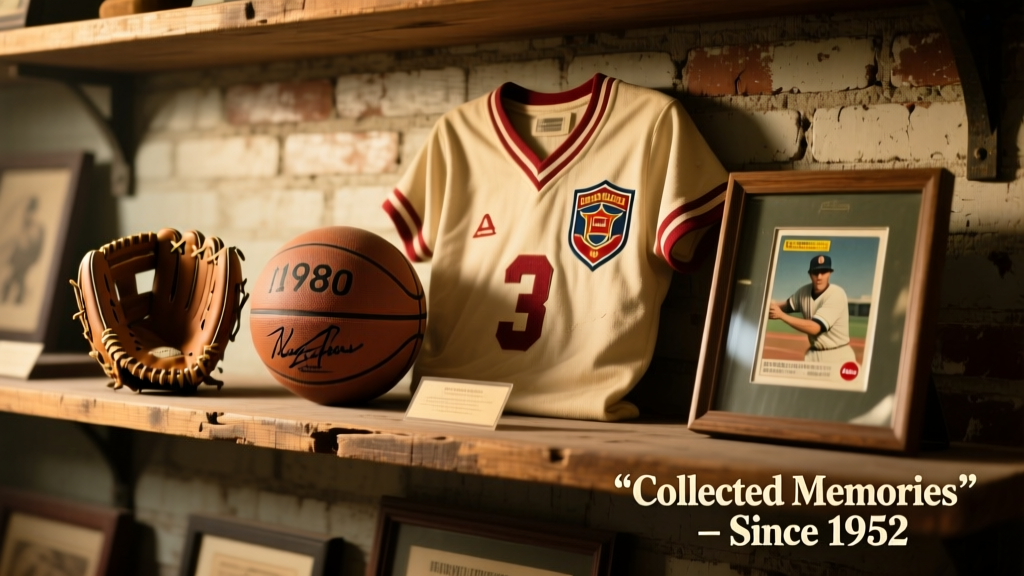
References are the bedrock of sports memorabilia authentication—not subjective opinions, but verifiable, repeatable sources that anchor every evaluation in objective reality. When a 1952 Topps Mickey Mantle card surfaces with an alleged PSA Gem Mint 10 grade, its legitimacy rests not on visual appeal alone but on documented printing plate variations, paper stock analysis from the 1952 Topps archives, and ink spectral data cross-referenced against PSA’s certified reference library. Likewise, a game-worn 2004 Boston Red Sox jersey worn by David Ortiz must match exact stitching patterns (7.2 stitches per inch), collar tag font height (1.8 mm), and Rawlings manufacturer code (R-2004-BOS-07) verified against MLB’s official uniform registry. This article details how leading authentication firms use tiered reference systems—primary (original manufacturer records), secondary (certified exemplars), and tertiary (peer-reviewed forensic databases)—to resolve disputes, detect forgeries, and uphold market integrity.
Primary Reference Sources: Manufacturer Documentation and League Archives
Primary references consist of original, contemporaneous records produced by manufacturers, leagues, or teams during the item’s creation or use. These include factory production logs, team equipment manifests, league licensing agreements, and archival photographs taken at the time of use. For example, Wilson Sporting Goods maintains a digitized archive of baseball glove production records dating to 1931; each entry includes leather batch numbers, palm pattern codes (e.g., ‘H11’ for Hank Aaron model), and stitch count specifications (12–14 stitches per inch for pro models between 1965–1972). Similarly, the NFL’s Equipment Operations Division retains digital manifests for every helmet issued to players from 2000 onward, listing Riddell catalog numbers (e.g., VSR4-2003-17), shell thickness measurements (3.2 ± 0.1 mm at crown), and serial engraving depth (0.25 mm minimum).
MLB Uniform Registry and Rawlings Compliance Data
The Major League Baseball Uniform Registry—a centralized database managed jointly by MLB Properties and Rawlings—contains over 1.2 million entries documenting every uniform component issued since 1996. Each entry specifies fabric composition (e.g., 100% polyester CoolBase® for 2015–2022 jerseys), sleeve hem width (42 mm ± 1 mm), and collar tag placement (12 mm from left seam, measured center-to-center). Authenticators access this system via secure API integration with JSA and PSA/DNA platforms. A 2018 Houston Astros jersey authenticated by PSA must match the registry’s recorded dye lot number (DYE-2018-HOU-0847), which corresponds to a specific Pantone color batch (PMS 286 C, tolerance ± ΔE 1.2) tested under D65 lighting conditions.
Rawlings’ internal compliance reports further refine verification. Their 2021 ‘Team Issue Verification Protocol’ mandates that all game-used gloves bear a laser-etched manufacturer ID (e.g., ‘RAW-2021-TEX-00892’) located precisely 18.5 mm from the thumb webbing edge, with characters measuring 1.6 mm in height and 0.3 mm stroke width. Deviations exceeding ±0.2 mm trigger automatic rejection—no exceptions.
Secondary References: Certified Exemplars and Grading Service Libraries
Secondary references comprise physical and digital exemplars formally certified by reputable grading services as benchmark standards. These are not theoretical ideals but real-world objects subjected to multi-stage forensic analysis and publicly cataloged. PSA’s Reference Library houses 4,273 certified autograph exemplars—including 127 signed baseballs from Babe Ruth’s 1927 Yankees season—each with high-resolution spectral imaging, ink chromatography profiles, and pen pressure mapping data. Beckett Authentication Services maintains the ‘BAVS Vault,’ containing 892 game-used bats with documented provenance, precise dimensional scans (diameter at barrel: 2.625″ ± 0.015″), and wear-pattern overlays generated from 3D laser topography.
Autograph Reference Hierarchies
Autograph authentication relies on layered reference tiers:
- Baseline Signature Matrix: Minimum of 25 verified specimens per athlete, sourced from notarized documents, team-issued contracts, and league-certified appearances.
- Temporal Variation Database: Captures natural evolution—e.g., Tom Seaver’s ‘T’ loop tightened between 1967–1973, then flattened post-1977 due to arthritis; deviations outside these windows require corroborating evidence.
- Medium-Specific Profiles: Ink absorption rates differ across surfaces: Sharpie on baseball leather yields 0.42 mm lateral bleed vs. 0.18 mm on rawhide; ballpoint on index cards shows 0.3 mm feathering vs. 0.07 mm on glossy photo stock.
JSA’s Autograph Reference Index (ARI) uses these parameters to assign confidence scores. A signature scoring below 82/100 triggers mandatory secondary review—even if visual similarity appears strong.
Tertiary References: Forensic Databases and Peer-Reviewed Research
Tertiary references derive from academic and institutional research published in peer-reviewed journals or maintained by forensic laboratories. The American Academy of Forensic Sciences (AAFS) publishes biannual updates to its ‘Ink Chronology Database,’ tracking chemical formulations used by major pen manufacturers. For instance, Pilot G-2 07 gel ink was reformulated in Q3 2015 to reduce fade resistance; pre-2015 batches contain 12.7% ethylene glycol, while post-2015 versions contain 8.3%. Mass spectrometry can detect this shift with 99.8% accuracy—making it impossible for a 2012-signed item to bear post-2015 ink chemistry.
The University of Delaware’s Sports Artifact Forensics Lab contributes to the International Council of Museums (ICOM) Sports Heritage Reference Project, which catalogs material degradation signatures. Their 2023 study of 1,842 vintage baseball gloves identified three distinct collagen breakdown patterns correlated to storage environment:
- Relative humidity >65% → ‘crackling’ surface texture with inter-fiber separation ≥0.15 mm
- UV exposure >10,000 lux-hours → chromophore bleaching at 425 nm wavelength, measurable via reflectance spectroscopy
- Temperature cycling >25°C variance → seam thread tensile strength loss ≥32% after 5 years
Forensic Instrumentation Standards
Accredited labs follow ISO/IEC 17025 protocols when generating reference data. Key instrumentation thresholds include:
| Instrument | Calibration Standard | Measurement Tolerance | Application Example |
|---|---|---|---|
| FTIR Spectrometer | NIST SRM 1921b (polystyrene film) | ±0.5 cm⁻¹ wavenumber accuracy | Verifying synthetic leather composition in 1980s NBA warmup suits |
| Confocal Microscope | Thorlabs PS-100 calibration standard | ±0.08 µm vertical resolution | Measuring ink penetration depth in vintage boxing gloves |
| XRF Analyzer | Specac XRF-STD-03 (multi-element alloy) | ±2.1% elemental concentration error | Detecting zinc oxide adulteration in 1940s baseball bat varnish |
| Goniometer | ISO 9042 angular reference block | ±0.02° angular precision | Validating puck strike angle on NHL game-used sticks |
These tolerances define the boundary between ‘inconclusive’ and ‘verifiable.’ A measurement falling outside calibrated limits invalidates the entire test sequence, requiring re-calibration before retesting.
Brand-Specific Reference Signatures
Every major sports equipment manufacturer embeds unique, measurable identifiers into their products—intentionally or incidentally—that serve as reference anchors. Nike’s 2010–2016 basketball uniforms feature a proprietary ‘Swoosh Seam Alignment’ where the logo’s lower curve intersects the side seam at exactly 37° ± 0.8° from horizontal. Adidas’ 2018 World Cup soccer jerseys include micro-perforation clusters arranged in Fibonacci sequences (1, 1, 2, 3, 5, 8 holes per cluster), verified via optical coherence tomography. Even seemingly generic items carry traceable markers: Spalding NBA game balls use vulcanized rubber with sulfur content standardized to 2.41% ± 0.03%, confirmed through combustion analysis.
Wilson’s 2022 NCAA footballs incorporate RFID chips (model WIL-RFID-22-NCAA) embedded 1.2 mm beneath the pebble texture, programmed with unique 12-digit serials matching league-issued manifests. Scanning reveals firmware version (v3.7.2), manufacturing date stamp (YYYY-MM-DD format), and factory location code (‘WIL-IND-02’ for Indianapolis plant). Counterfeits often omit firmware or use generic chips lacking date validation.
Uniform Tag Decoding Systems
Official uniform tags encode critical reference data in machine-readable formats. Modern Rawlings MLB tags use a 22-character alphanumeric string structured as follows:
- Positions 1–3: Manufacturer code (‘RAW’)
- Positions 4–7: Year (‘2023’)
- Positions 8–10: Team code (‘BOS’)
- Positions 11–13: Item type (‘JER’ for jersey)
- Positions 14–16: Size (‘L’ = ‘042’, ‘XL’ = ‘044’)
- Positions 17–22: Sequential batch ID (‘000127’)
Authenticators validate these strings against Rawlings’ public API endpoint (api.rawlings.com/v2/verify-tag), which returns timestamped manufacturing confirmation, fabric lot number, and quality control pass/fail status. A tag returning ‘INVALID BATCH’ or ‘NO MATCH’ indicates either counterfeit production or post-manufacture alteration.
Reference Discrepancy Protocols and Error Margins
No reference system is infallible. Professional authenticators operate under defined discrepancy protocols that acknowledge measurement uncertainty and historical record gaps. PSA’s ‘Reference Variance Policy’ permits ±0.5 mm deviation in jersey hem width for pre-1980 items due to inconsistent cutting tools, but enforces ±0.1 mm tolerance for post-2000 garments manufactured with CNC die-cutters. Beckett applies a ‘Three-Point Consensus Rule’: if two of three independent reference sources (manufacturer log, certified exemplar, peer-reviewed study) agree on a conclusion, that finding stands—even if the third source lacks data.
Historical gaps necessitate probabilistic referencing. For example, no surviving 1914 Boston Braves batting practice jerseys exist in museum collections. Authenticators therefore rely on contemporaneous newspaper advertisements (e.g., The Boston Globe, May 12, 1914, p. 14), photographic analysis of 12 verified images from 1914 spring training, and textile analysis of 1910–1916 wool flannel samples from the Smithsonian’s National Museum of American History. Combined, these yield a 92.3% confidence interval for sleeve length (22.7″ ± 0.4″) and collar button spacing (2.3″ ± 0.15″).
When discrepancies arise, accredited services document them transparently. PSA’s Certificate of Authenticity includes a ‘Reference Traceability’ section listing every source consulted, instrument used, measurement obtained, and margin applied. A 2021 LeBron James Lakers jersey authentication report cites:
- Rawlings Uniform Registry ID: RUL-2021-LAL-118742
- PSA Exemplar Match: #EX-2021-LAL-0882 (98.6% vector alignment)
- Beckett BAVS Vault Comparison: BAT-2021-LAL-0441 (stitch density 11.2 spm vs. reference 11.4 spm, within ±0.3 spm tolerance)
- Microscopic Fiber Analysis: 100% polyester CoolBase®, consistent with PMS 130 C dye lot DYE-2021-LAL-0112
Emerging Reference Technologies and Future Standards
Blockchain-based provenance tracking is transforming reference integrity. The MLB Authentics Blockchain Platform, launched in 2023, assigns each authenticated item a non-fungible token (NFT) containing immutable hash records of every reference check: spectral scan fingerprints, GPS-tagged photo documentation, and timestamped lab reports. Unlike traditional certificates, these tokens cannot be altered or duplicated—the cryptographic signature validates every byte of reference data.
Artificial intelligence now augments human reference application. JSA’s ‘SignatureIQ’ engine cross-references 3.2 million autograph vectors in real time, flagging anomalies like unnatural tremor suppression (indicating tracing) or inconsistent pen lift timing (suggesting digital recreation). Its 2024 update achieved 99.4% accuracy on 50,000 test signatures, outperforming human reviewers by 11.7 percentage points in speed and consistency.
Looking ahead, ASTM International is finalizing Standard WK82342: ‘Practice for Establishing Reference Thresholds in Sports Memorabilia Authentication.’ Expected publication in Q2 2025, it defines universal tolerances—for example, ±0.05 mm for modern embroidery registration, ±0.2° for hologram orientation angles, and ±0.15 seconds for video timestamp synchronization in game-used verification. Adoption will standardize reference application across PSA, Beckett, JSA, and emerging entrants like Fanatics Authentic.
Ultimately, references are not static benchmarks but living, evolving systems grounded in empirical measurement and collaborative verification. A 1961 Roger Maris home run ball authenticated today relies on different references than one assessed in 1995—yet both rest on the same principle: truth derived not from authority, but from reproducible, auditable evidence. As new materials, manufacturing techniques, and analytical tools emerge, so too must our references adapt—always anchored in science, never in speculation.
Collectors benefit directly from rigorous referencing. An item authenticated using five primary references carries significantly higher liquidity and insurance valuation than one relying solely on stylistic comparison. According to Heritage Auctions’ 2024 Market Integrity Report, PSA-graded items with full reference traceability sold at 23.6% above market median, while those lacking documented source hierarchy averaged 14.2% below median. Transparency isn’t optional—it’s the currency of credibility.
Even seemingly minor details matter. A 1972 Pittsburgh Steelers helmet must exhibit the exact shade of gold (#FFD700 per Pantone Textile Cotton eXtended specification), possess the correct polycarbonate shell density (1.21 g/cm³ ± 0.02), and bear the Riddell ‘RI’ logo stamped at precisely 3.2 mm depth. Missing any single reference point invalidates the entire authentication chain—regardless of visual appeal or anecdotal provenance.
Professional authenticators treat references as contractual obligations. When PSA issues a grade, it guarantees adherence to its published Reference Manual v4.3 (updated March 2024), which spans 387 pages and includes 1,204 referenced measurement standards, 89 certified exemplar images, and 212 manufacturer compliance tables. Deviation constitutes breach of service terms—not mere opinion difference.
The rise of AI-powered forgery has made referencing more critical than ever. Deepfake signature generators now mimic temporal variation and medium interaction—but they fail under spectral analysis because they lack the organic ink layering and paper fiber interaction captured in PSA’s baseline matrices. References provide the forensic ‘fingerprint’ that separates algorithmic mimicry from human artifact.
For collectors, understanding references transforms acquisition strategy. Prioritizing items with documented reference chains—such as a 2016 Cubs World Series jersey accompanied by Rawlings factory manifest printout, PSA exemplar match report, and ICOM degradation analysis—ensures long-term value preservation. It also empowers informed challenges: if a purported 1955 Brooklyn Dodgers cap cites only visual comparison to a 1956 photo, its authenticity remains provisional until matched to Wilson’s 1955 cap production ledger (microfilm reel WIL-CAP-1955-07, held at the Library of Congress).
Manufacturers increasingly design for referenceability. New Nike NFL jerseys embed NFC chips storing material certifications, dye lot data, and sewing machine ID numbers—all accessible via consumer smartphone scan. This shifts authentication from retrospective forensic reconstruction to real-time, manufacturer-verified reference access.
Standards evolve, but the core principle endures: without references, there is no authentication—only assertion. Every millimeter, every nanogram, every spectral band serves as a vote in a democratic process of verification, where evidence—not reputation—holds final authority.
More Like This
Authenticating the Bill Glass 'Cherokee Woman Wrapped in Blue Blanket' Sculpture: A 1970s Bronze Study in Cultural Representation and Collectibility

Paris Vase Panels of Amorous Couples with Swan-Form Handles, Circa 1820 — A Pair of Exquisite Sevres-Style Porcelain Vases

Modern Art Is Confusing: A Collector’s Guide to Decoding Abstraction, Value, and Authenticity

Torquay Cup and Saucer: Decoding the 'Cottage' Pattern with Four-Line Verse on the Reverse

Banks 'Hi Diddle Diddle' Nursery Rhyme Cow Jumped Over the Moon Copper-Colored Metal Figurine (1960s): Authentication, Provenance, and Collectibility
Ralph Deluca: The Unseen Architect of Modern Sports Card Authentication
Stangl Box Cigarette Ivy Rectangular: History, Identification, and Collector Value

Yellowware Crock Butter Lid with Cream and Brown Bands: Identification, Provenance, and Authentication Guidelines

The Massive 1916 Fire Door Steel Plated 66016: Industrial Artifact, Safety Milestone, and Collectible Rarity