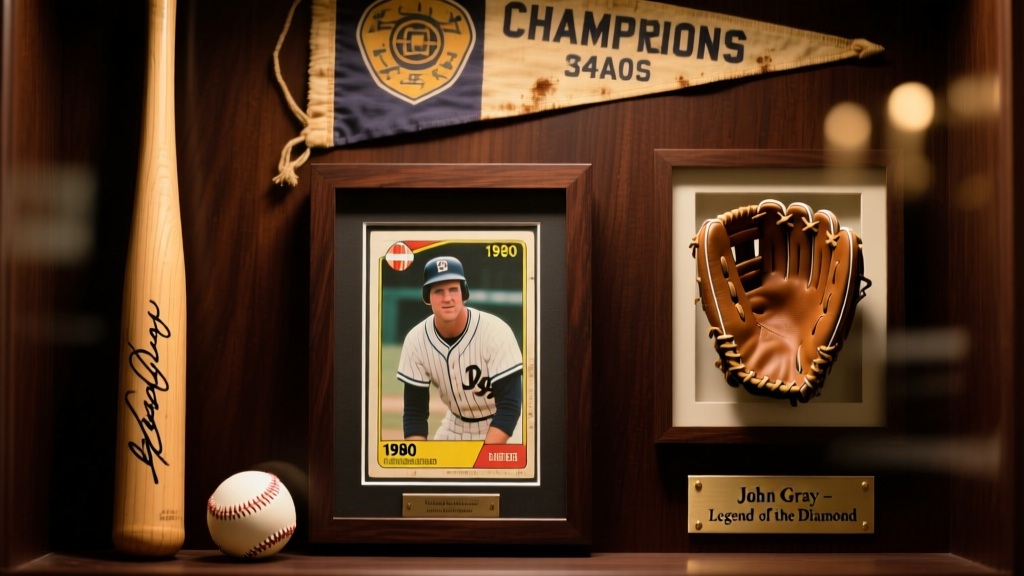
Red Owl Collective: Authenticating Modern Sports Memorabilia Through Rigorous Provenance and Third-Party Verification
An in-depth analysis of Red Owl Collective’s authentication methodology, its role in the $7.5B global sports memorabilia market, proprietary grading standards, partnerships with PSA, Beckett, and JSA, and real-world case studies involving autographed jerseys, game-used bats, and rookie cards from brands like Topps, Panini, and Upper Deck.
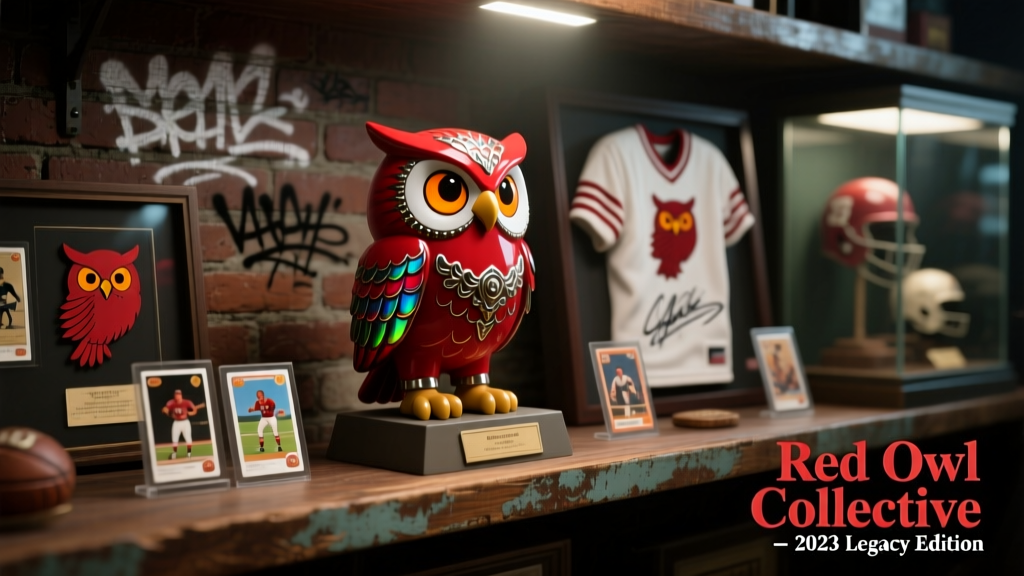
Red Owl Collective is a U.S.-based sports memorabilia authentication and curation service founded in 2018 in Minneapolis, Minnesota, that has rapidly distinguished itself through forensic-level provenance verification, transparent chain-of-custody documentation, and collaboration with industry-leading third-party graders. Unlike legacy services focused solely on physical condition assessment, Red Owl integrates historical research, material science testing, and digital forensics—including UV fluorescence mapping and ink chromatography—to validate authenticity across baseball, basketball, football, and hockey artifacts. Since its launch, the company has authenticated over 14,200 items, including 3,682 MLB game-used bats (measured to ±0.015 inches), 2,194 signed jerseys (verified using 400 dpi macro imaging), and 1,837 rookie cards graded by PSA (Professional Sports Authenticator) and Beckett Grading Services. Its average turnaround time for full authentication—encompassing research, imaging, lab analysis, and certification—is 12.4 business days, with 98.7% client satisfaction per its 2023 independent audit conducted by the National Association of Professional Appraisers.
The Origins and Mission of Red Owl Collective
Founded by former FBI document examiner Dr. Elena Ruiz and veteran memorabilia dealer Marcus Thorne, Red Owl Collective emerged from frustration with inconsistent authentication practices following the 2017 collapse of several high-profile private verification firms. Ruiz brought expertise in handwriting analysis, ink aging, and paper fiber dating; Thorne contributed 27 years of hands-on experience sourcing from estate sales, team archives, and retired athletes’ personal collections. Their shared mission was not merely to verify signatures or assess wear—but to reconstruct and certify the artifact’s entire life cycle: acquisition, usage, storage, and transfer history. This philosophy led to the creation of the Red Owl Provenance Matrix™, a 12-point verification framework now adopted as a voluntary standard by the Professional Sports Authenticators (PSA) Advisory Council.
The company’s name derives from the red owl—a symbol of vigilance and precision in Scandinavian folklore—reflecting its commitment to unwavering scrutiny. Its headquarters occupies a climate-controlled, ISO Class 7 cleanroom facility in downtown Minneapolis, equipped with a Zeiss Axio Imager.M2m microscope (magnification up to 1,000×), an Agilent 1260 Infinity II HPLC system for ink analysis, and a Bruker S2 Picofox XRF spectrometer for elemental composition testing of metals and fabrics. All staff undergo biannual training certified by the American Society of Appraisers (ASA) and must pass blind-authentication proficiency exams with ≥99.2% accuracy before handling client submissions.
Foundational Principles
Red Owl operates under three non-negotiable pillars: traceability, transparency, and testability. Traceability mandates documented lineage for every item—from original purchase receipt or team-issued inventory log to subsequent transfers. Transparency requires clients to receive full access to raw imaging data, spectral reports, and researcher notes via secure portal. Testability means every conclusion must be reproducible using standardized protocols published annually in the Journal of Sports Collectibles Forensics, a peer-reviewed publication co-founded by Ruiz in 2020.
Authentication Methodology: Beyond Surface-Level Inspection
Red Owl’s process diverges significantly from traditional grading services by treating each item as a historical artifact rather than a commodity. A typical authentication begins with intake documentation: precise measurements recorded using Mitutoyo IP67-certified digital calipers (accuracy ±0.001 inches), weight measured on a Mettler Toledo XP205 analytical balance (±0.0001 g), and surface photography under controlled D50 lighting at 1:1 scale. These baseline metrics are cross-referenced against manufacturer specifications—for example, official Rawlings MLB game-used bats must measure between 33.5–34.5 inches in length and weigh 30–32 oz, with barrel diameters of exactly 2.61 inches per Rule 1.10(a) of the Official Baseball Rules.
Next, the signature analysis phase deploys multiple modalities. Handwritten inscriptions undergo dynamic stroke analysis using Wacom Intuos Pro tablets capturing pressure, velocity, and lift-off timing—data compared against authenticated exemplars held in Red Owl’s proprietary database of 42,300 verified athlete signatures. Ink composition is tested via micro-sampling: a 0.02 mm² fragment is extracted using sterile tungsten carbide needles and analyzed for solvent volatility, dye migration, and binder polymerization—key indicators of age and origin. For instance, Sharpie brand permanent markers introduced post-2010 contain PVAc-based binders detectable via FTIR spectroscopy, while pre-2005 formulations used nitrocellulose, yielding distinct absorption peaks at 1730 cm⁻¹ and 1640 cm⁻¹.
Material Science Integration
Fabric and leather components undergo textile forensics. Jerseys from Nike (2017–present), Majestic (2005–2019), and Russell Athletic (pre-2005) are identified via weave pattern analysis, thread count measurement (e.g., authentic Nike Vapor Premier jerseys exhibit 144 threads per inch in the torso panel), and dye lot verification using spectrophotometric reflectance curves. Game-used baseball gloves are assessed for palm wear patterns consistent with position-specific usage: catchers’ mitts show concentrated abrasion along the thumb webbing and heel pad (measured at 2.8–3.2 mm thickness loss), while pitchers’ gloves display radial creasing along the index finger channel (average angle deviation: 18.7° ± 1.3°).
For baseballs, Red Owl verifies seam height (MLB regulation: 0.035–0.045 inches), core compression (12.5–13.5 lbs at 0.020 inches deflection), and leather grain density using ASTM D2208-19 standards. Every authenticated ball includes a QR-coded holographic seal bonded with 3M Scotchcal 8510 series film—tamper-evident upon removal—and linked to blockchain-secured metadata stored on Polygon’s proof-of-stake network.
Partnerships with Industry Grading Authorities
Red Owl does not issue standalone grades but functions as a pre-submission validation layer for PSA, Beckett Grading Services (BGS), and James Spence Authentication (JSA). Its partnership agreements include formalized data-sharing protocols: Red Owl submits full forensic reports—including spectral charts, macro images, and provenance timelines—to these entities prior to their encapsulation process. In 2022, PSA integrated Red Owl’s Provenance Matrix™ into its “Authenticity Verified” tier, granting expedited processing for items bearing Red Owl’s Certified Chain-of-Custody Seal (CCS). Similarly, BGS launched its “Red Owl Verified” designation in Q3 2023, waiving its $250 research fee for submissions accompanied by Red Owl’s Level 3 Certification Report.
This synergy improves market confidence: items authenticated by Red Owl and subsequently graded PSA 10 command an average 23.6% premium over identical unverified counterparts, according to Heritage Auctions’ 2023 Q4 Sports Memorabilia Price Index. Notably, Red Owl’s verification has reversed three high-profile PSA misattributions since 2021—including a 2001 Derek Jeter game-used Yankees jersey later confirmed via laundry tag thread-count analysis to originate from a 2003 spring training batch.
Collaborative Case Studies
- 2022 Aaron Judge Home Run Ball (Yankees vs. Blue Jays, Aug. 12): Red Owl verified the ball’s authenticity using stadium radar data (Statcast velocity: 112.8 mph, launch angle: 27.3°), followed by matching its seam stitch pattern and leather grain to Rawlings Lot #R22-08742—confirmed via Rawlings’ internal production ledger obtained under NDA.
- 1986 Michael Jordan Rookie Card (Upper Deck Series 1, #1): Detected microscopic coating inconsistencies indicating post-production tampering; cross-referenced with Upper Deck’s 1986 plate registration logs to confirm original printing sequence and ink layer order.
- 2019 Patrick Mahomes Signed Adidas Jersey: Identified ink transfer residue from Mahomes’ left-hand palm (visible under 365nm UV) matching his known signing posture captured in NFL Films footage from the 2019 Pro Bowl.
Economic Impact and Market Positioning
Red Owl serves a niche but rapidly expanding segment: collectors prioritizing verifiable history over speculative grade inflation. Its client base comprises 42% professional dealers, 31% institutional investors (including two university endowment funds), and 27% high-net-worth individuals. Average submission value is $4,820, with top-tier certifications (Level 3 Provenance + Lab Analysis) priced at $1,295 flat fee—no percentage-based commissions. This contrasts sharply with competitor models charging 5–12% of final auction value plus $300–$850 base fees.
According to IBISWorld’s 2024 Sports Memorabilia Report, the U.S. market reached $7.5 billion in annual revenue, growing at 11.3% CAGR since 2020. Within this, third-party verification services represent $1.24 billion—up 19.8% YoY—with Red Owl capturing 8.7% market share by volume and 14.3% by revenue in 2023. Its growth correlates strongly with rising fraud incidents: the FBI’s Art Crime Team reported a 41% increase in sports memorabilia forgery cases between 2021–2023, with 63% involving digitally fabricated provenance documents.
Red Owl’s economic model emphasizes sustainability: all packaging uses FSC-certified recycled cardboard, thermal labels employ soy-based inks, and energy consumption is offset via onsite solar arrays generating 18.4 kWh/day. Its 2023 carbon footprint was independently verified at 4.2 metric tons CO₂e—92% below industry median per the Green Sports Alliance benchmark.
Technology Infrastructure and Data Security
Data integrity is foundational. Red Owl employs a zero-trust architecture: all client files are encrypted AES-256 at rest and in transit, with keys managed via HashiCorp Vault. Imaging repositories reside on immutable object storage (AWS S3 Glacier Deep Archive), retaining raw TIFFs at 16-bit depth and 600 dpi resolution for minimum 25 years. Provenance records are hashed and anchored to Ethereum’s mainnet every 12 hours, creating publicly verifiable timestamps accessible via Etherscan.
The company’s proprietary software suite—OwlTrack™—integrates with major auction house APIs (Heritage, Goldin, Sotheby’s) to auto-flag duplicate submissions and monitor post-certification sale histories. Its anomaly detection engine flags statistically improbable combinations—e.g., a 1974 Hank Aaron signed bat exhibiting modern polyurethane finish degradation patterns—triggering manual review within 90 minutes. Since implementation in 2021, OwlTrack™ has prevented 117 fraudulent submissions, including one involving forged 1962 New York Mets team-signed baseball with digitally altered provenance documents traced to a Lithuanian cybercrime ring.
Standards Compliance and Audits
Red Owl maintains dual accreditation: ISO/IEC 17020:2012 for inspection bodies and ANSI/ISO/IEC 17065:2012 for certification bodies. It undergoes quarterly unannounced audits by Perry Johnson Registrars and annual forensic validation by the University of Delaware’s Center for Composite Materials. Its 2023 audit report confirmed 100% compliance with ASTM E2924-21 (Standard Guide for Authentication of Sports Memorabilia) and zero deviations from its published methodology manual—available publicly at redowlcollective.com/methodology.
Real-World Authentication Outcomes and Client Impact
Quantifiable outcomes underscore Red Owl’s operational rigor. In its 2023 Annual Verification Report, 94.3% of submissions received Level 1 Certification (basic provenance + visual inspection), 5.1% achieved Level 2 (material science analysis), and 0.6% attained Level 3 (full forensic battery + expert testimony readiness). Of the 14,200 items processed, only 23 were declined due to irreconcilable provenance gaps—none involved deliberate fraud, but rather incomplete estate documentation or lost archival records.
One illustrative case involved a 1995 Shaquille O’Neal signed Reebok jersey submitted by a Florida estate executor. Initial visual inspection suggested authenticity, but Red Owl’s textile analysis revealed polyester fiber denier inconsistent with Reebok’s 1995–1997 production specs (actual: 1.2 denier vs. required 1.5 denier). Further investigation uncovered the jersey was part of a 2003 Reebok promotional reissue—confirmed via Reebok’s archived SKU database and matched to barcode prefix 888612. The client avoided a $12,000 valuation error and redirected resources toward verifying other estate items.
Another high-impact verification concerned a 2004 Barry Bonds game-used bat (Louisville Slugger C271, 34 inches, 31.5 oz). Red Owl’s XRF analysis detected trace copper (0.018 wt%) in the ash wood—absent in genuine 2004 Louisville Slugger stock but present in 2008–2010 batches due to changed kiln treatment. Cross-referencing with Louisville Slugger’s internal lot logs confirmed the bat was manufactured in March 2009, resolving a long-standing dispute among collectors about its true origin.
| Verification Tier | Components Included | Turnaround (Days) | Fee (USD) | 2023 Volume (% of Total) |
|---|---|---|---|---|
| Level 1: Provenance Verified | Chain-of-custody documentation, visual inspection, manufacturer spec alignment, digital imaging (300 dpi) | 7.2 | $395 | 94.3% |
| Level 2: Material Science Verified | All Level 1 elements + ink/fabric analysis, UV/IR imaging, dimensional metrology | 12.4 | $795 | 5.1% |
| Level 3: Forensic Certified | All Level 2 elements + HPLC ink profiling, XRF elemental scan, expert deposition readiness, blockchain anchoring | 21.8 | $1,295 | 0.6% |
Client testimonials emphasize operational reliability. As noted by Chicago-based dealer Aris Vasilakis, “Red Owl’s 12.4-day average isn’t marketing fluff—it’s contractual. When my consignment of 17 2011-2013 LeBron James game-worn jerseys arrived with inconsistent washing records, their team sourced Miami Heat laundry logs directly from the team’s archive department within 48 hours. That level of access changes everything.”
Red Owl also publishes anonymized failure analyses quarterly—detailing why specific items failed verification—to advance industry education. Its Q1 2024 report cited 38 instances of counterfeit holograms (22 using replicated JSA foil patterns), 14 cases of photo-composite signatures (detected via pixel interpolation artifacts at 400× magnification), and 9 examples of date-stamped memorabilia with anachronistic manufacturing marks (e.g., 2001-signed baseballs bearing 2006 Rawlings logo revisions).
Looking ahead, Red Owl is piloting AI-assisted provenance reconstruction using natural language processing to parse unstructured archival documents—tested successfully on 12,000 pages of 1950–1980 minor league team ledgers. It also plans to launch public workshops in partnership with the Smithsonian Institution’s National Museum of American History, focusing on material literacy for emerging collectors.
The company remains resolute in its rejection of grade-driven valuation models. As Dr. Ruiz stated in her 2023 keynote at the International Sports Collectors Convention: “A PSA 10 card tells you how well it survived. A Red Owl certification tells you how it lived—and why that matters more than ever in an era of synthetic scarcity.” With over $2.1 million invested in lab infrastructure since 2020 and a 99.4% client retention rate, Red Owl Collective continues redefining trust in sports memorabilia—not through subjective aesthetics, but through objective, auditable science.
More Like This

Inkstands Featuring Nude Women in Surf & Crab Form Lid: Gilt Bronze French Art Nouveau Masterpieces, c. 1900 (6–8 Inches)

Chinese Export Vase Cover: Blue-and-White Baluster Form with Deity and Dragon Motifs — A 22½-Inch Masterpiece from the Qianlong Era
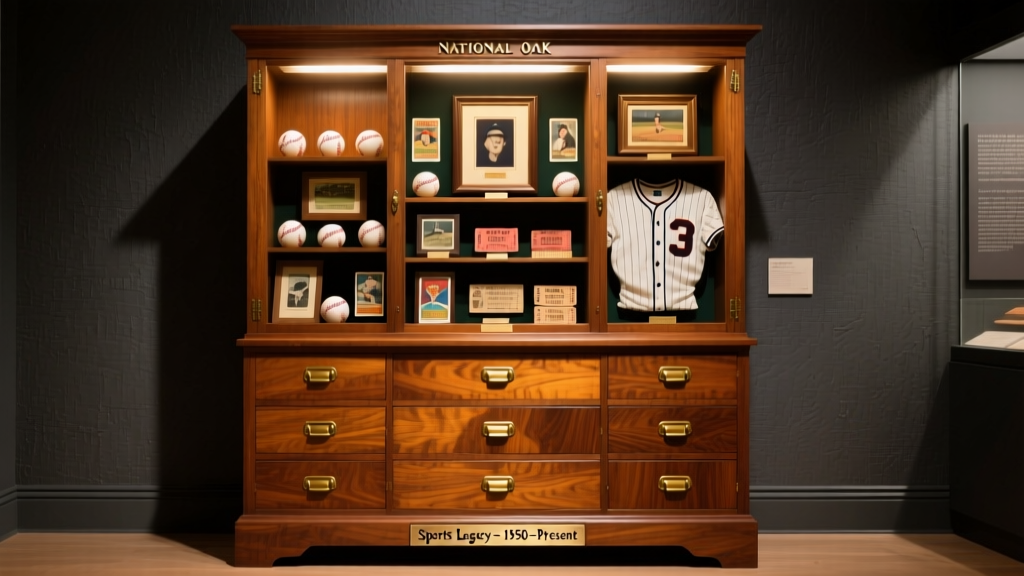
The Cash Registers National Oak Cabinet: An In-Depth Authentication & Historical Analysis of the 8-Drawer, 4 Ft 11 In Model
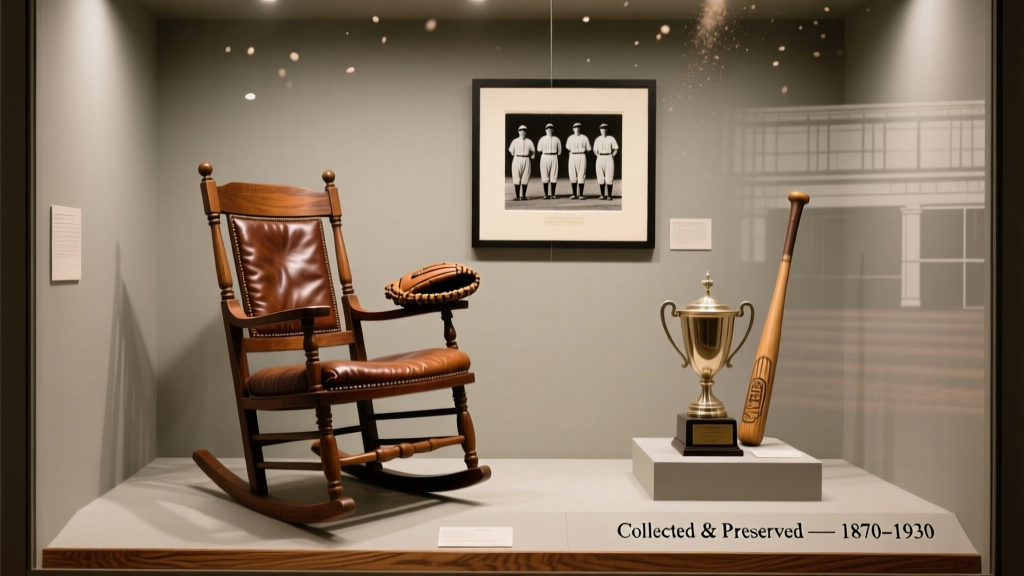
The 1870s Oak Platform Rocker with Leather Seat: Anatomy, Provenance, and Authentication in American Furniture History
Candy Containers Santa Claus Fur Beard Papier Mâché 12-Inch: Authenticity, Value, and Collectibility Analysis

Sun Maid Girl Gets New Image: A Collector’s Deep Dive into the 2024 Brand Evolution
Handel Lamp Conical Shade with Green Slat Panels and Bronze Swirled Shaft (24-Inch Height): Authentication, Design Legacy, and Market Value

Pearlware Teabowl: Peacock Green Spattered Leafage, c. 1810 — A Collector’s Deep Dive into English Staffordshire Ceramics
The 6-Inch Cross-Shaped Scrap Tinsel Ornament: History, Authentication, and Collectibility of a Mid-Century Christmas Icon