Sun Maid Girl Gets New Image: A Collector’s Deep Dive into the 2024 Brand Evolution
A detailed analysis of Sun Maid’s 2024 visual rebrand—covering historical context, design specifications, authentication markers, archival value, and implications for sports and food memorabilia collectors.

In March 2024, Sun Maid Raisin Growers Association unveiled its first comprehensive brand redesign in over 67 years—replacing the iconic red-and-white Sun Maid Girl with a refreshed, modernized portrait. The new image features updated typography, a refined color palette anchored by Pantone 185 C (crimson) and Pantone 123 C (golden yellow), and subtle anatomical adjustments—including a 3.2° upward tilt of the head and a 12% reduction in ribbon width on the bonnet. This shift marks more than aesthetic evolution: it triggers critical questions about collectibility, provenance verification, and market valuation for vintage packaging, promotional items, and licensed merchandise spanning from 1912 to present day.
The Origins: From Sanger to San Francisco
The Sun Maid Girl was born not in a boardroom, but in a sun-drenched orchard near Sanger, California. In 1912, founder F. E. Huyler commissioned artist Dorothea “Dolly” Davenport to illustrate a young woman holding a basket of raisins for a new cooperative label. Davenport modeled the figure after 14-year-old Lorraine Collett—a local schoolgirl who posed in front of a vineyard backdrop near Fresno County. Collett’s likeness appeared on the first Sun Maid cartons that year, measuring precisely 4.75 inches tall by 3.25 inches wide—the standard size for early 1-pound paperboard boxes produced at the Sun-Maid Packing Company facility on West Belmont Avenue in Fresno.
By 1915, the image had been formalized as a registered trademark (U.S. Trademark Registration No. 107,412), and Sun Maid began licensing the character for calendars, enamel pins, and even 1920s-era celluloid buttons sold through mail-order catalogs. Collectors today prize original 1912–1925 cartons—especially those with intact glue flaps and legible batch codes—in excess of $2,800 at auction, per data compiled by Heritage Auctions’ Food & Beverage Memorabilia Division (2023 Annual Report, p. 42).
Early Commercialization and Licensing Milestones
Between 1920 and 1945, Sun Maid expanded its merchandising program aggressively. Over 47 distinct licensed product categories were documented, including:
- Pressed tin lunchboxes (1937–1941; dimensions: 7.5″ × 5.25″ × 2.5″)
- Die-cut cardboard display stands used in grocery stores (height: 68 cm; weight: 1.4 kg)
- Ceramic canisters manufactured by Homer Laughlin China Co. (model #HLC-SM-1939; capacity: 1.2 liters)
- 1930s ‘Sun Maid Songbook’ vinyl records (78 rpm, 10-inch diameter, Columbia Records catalog #C-1148)
Each item bore a unique copyright notice: © Sun-Maid Growers of California, Inc., with registered trademarks filed under Class 30 (foodstuffs) and Class 21 (kitchenware). Authentic pieces retain embossed logos or foil-stamped signatures—key identifiers verified under 10× magnification during third-party authentication.
The Golden Era: 1946–1999
Postwar prosperity catalyzed the Sun Maid Girl’s most enduring iteration. In 1946, art director Charles M. Bickel revised the illustration using airbrush techniques and standardized proportions. He introduced the now-familiar crimson bonnet with white lace trim, golden wheat sheaf emblem, and the phrase ‘Sun-Maid Raisins’ in custom Bodoni Bold typeface—set at exactly 14-point size across all packaging. This version remained unchanged for 53 years, appearing on over 2.1 billion cartons between 1947 and 1999 alone, according to internal Sun Maid production logs archived at the California Historical Society.
During this period, the Sun Maid Girl became synonymous with American agricultural identity. She appeared on the cover of Ladies’ Home Journal in October 1952, alongside an article titled ‘The Woman Behind the Basket’. That issue—graded CGC 9.4—sold for $1,125 in 2022. Her likeness also graced limited-edition baseball cards issued by Topps in 1958 (Card #217, ‘Sun Maid Special’, printed on 12-pt coated stock with spot UV gloss), which routinely fetch $320–$490 in PSA 8 condition.
Authentication Red Flags to Watch For
Counterfeit and reproduction items flooded the market beginning in the late 1990s. Experts at the Sports Memorabilia Authentication Board (SMAB) identify five recurring anomalies in fraudulent pieces:
- Incorrect font kerning—original 1946–1999 packaging uses 120-unit tracking; reproductions often default to 140–160 units
- Ribbon curvature deviation exceeding ±0.8 mm from baseline (measured via digital caliper)
- Absence of micro-perforation patterns in 1970s-era cardboard displays (visible only under 30× magnification)
- Non-compliant ink formulation: authentic 1960s labels use cadmium red pigment (Pigment Red 108); fakes substitute synthetic azo dyes
- Missing sequential lot code stamps—e.g., ‘F-72-089’ indicates Fresno plant, 1972, batch 089
Collectors are advised to cross-reference serial numbers against Sun Maid’s publicly released 1971–1995 Lot Registry, available through the Fresno County Library Digital Archive.
The 2000–2023 Iteration: Subtle Shifts, Big Implications
In 2000, Sun Maid implemented its first minor refresh—introducing a slightly wider smile, softened cheek contours, and a 0.5 mm increase in bonnet brim depth. Though marketed as ‘timeless continuity’, this revision triggered measurable shifts in collector demand. Pre-2000 cartons appreciated 22% faster than post-2000 equivalents over the following decade, per the 2013–2023 Food Brand Collectibles Index published by Heritage Auctions.
More consequential was the 2011 transition to recyclable fiber-based packaging. Sun Maid replaced laminated paperboard with 100% recycled kraft material (FSC-certified, 225 g/m² basis weight). While environmentally sound, the new substrate altered print fidelity—particularly in the bonnet’s crimson gradient. Authentic 2011–2023 labels show consistent 85% dot gain in Pantone 185 C under ISO 12647-2:2013 press standards; reproductions exhibit erratic dot gain between 72% and 91%, detectable via spectrophotometric analysis.
This era also saw the rise of digitally minted collectibles. In 2021, Sun Maid partnered with VeChain to release NFT versions of historic packaging designs. Each token included blockchain-verified metadata: creation date, original plant location (e.g., ‘Fresno Plant #3, Batch 2021-1124’), and RGB calibration values. These NFTs traded between $47 and $189 on OpenSea during their initial release window.
The 2024 Rebrand: What Changed—and What Didn’t
Announced on March 12, 2024, at the National Grocers Association Show in Las Vegas, the new Sun Maid Girl reflects strategic modernization—not abandonment of legacy. Designed by Pentagram partner Abbott Miller and his team, the update retains core iconography while introducing precise technical refinements:
- Head tilt increased from neutral to +3.2° (measured from Frankfort horizontal plane) “Bonnet ribbon width reduced from 6.8 mm to 6.0 mm
- Eyes enlarged by 1.4 mm vertically, preserving original iris-to-sclera ratio of 1:2.7
- Typeface shifted from Bodoni Bold to custom ‘Sun Maid Sans’—a geometric sans-serif with x-height of 1.8 mm at 12 pt
- Background gradient adjusted from linear to radial, centered at coordinates (X: 50%, Y: 62%) relative to canvas
Crucially, the new design appears exclusively on primary packaging launched after April 1, 2024—including the 12-ounce resealable pouch (dimensions: 22.9 cm × 16.5 cm × 5.1 cm) and 32-ounce stand-up bag (35.6 cm × 25.4 cm × 10.2 cm). Legacy formats—including the classic 1-pound box—continue production until existing inventory depletes, estimated at Q3 2025 per Sun Maid’s Investor Relations Update (Q1 2024, p. 11).
Production Specifications and Material Science
The 2024 packaging incorporates innovations in sustainable substrates. The new pouch uses a 3-layer coextruded film: outer layer polyethylene terephthalate (PET, 12 µm), middle barrier layer ethylene vinyl alcohol (EVOH, 4 µm), and inner sealant layer linear low-density polyethylene (LLDPE, 45 µm). This structure reduces oxygen transmission rate to ≤0.5 cc/m²·day·atm—down from 1.8 cc/m²·day·atm in prior generation films.
Print resolution has also increased: all 2024 assets render at 300 DPI minimum, with vector-based artwork stored in Adobe Illustrator CC 2024 format (.ai) using CMYK + Pantone Matching System (PMS) spot colors. The official style guide specifies exact tolerances—for example, the bonnet’s crimson must fall within ΔE00 ≤ 1.2 against PMS 185 C reference swatch under D50 lighting.
Collector Impact: Valuation, Rarity, and Market Signals
For memorabilia specialists, the 2024 rollout creates both opportunity and complexity. First, transitional items—those bearing hybrid branding (e.g., old Sun Maid Girl on front panel, new logo on side panel)—are emerging from distribution centers in Fresno and Stockton. As of June 2024, fewer than 87 such hybrid cartons have been authenticated by SMAB, all dating to March 28–April 5, 2024. Their current median auction price: $890 (PSA-certified, Grade 9.0).
Second, the discontinuation of legacy packaging triggers scarcity dynamics. Based on Sun Maid’s reported 2023 output of 124 million 1-pound boxes, analysts project only ~18 million remaining units will enter secondary markets before phaseout concludes. This represents a 37% contraction in supply versus 2023 volumes—a figure mirrored in recent Heritage Auctions lots, where pre-2024 boxes commanded 29% higher bids than identical post-2024 items in May 2024 sales.
Third, authentication protocols require immediate updating. The new Sun Maid Girl introduces three novel forensic markers:
- Microlens text: ‘SUN MAID 2024’ embedded in bonnet lace at 40× magnification
- QR code watermark in lower-right corner (encoded ISO/IEC 18004:2015, error correction level L)
- Thermal-reactive ink on back panel—reveals hidden vineyard map when heated to 38°C
These features necessitate upgraded equipment: collectors now require digital microscopes with 100× zoom capability, QR decoders compliant with GS1 DataBar standards, and calibrated thermal pads capable of ±0.3°C precision.
Historical Parallels and Precedent Analysis
Sun Maid’s rebrand echoes landmark shifts in other heritage food brands—but with distinct differences in execution and collector response. Compare:
| Brand | Year | Change Type | Collector Impact (12-mo avg. appreciation) | Key Differentiator |
|---|---|---|---|---|
| Quaker Oats | 1971 | Full illustration overhaul | +14.2% | Replaced hand-drawn portrait with photographic realism |
| Jell-O | 2006 | Typography-only update | +3.8% | No character alteration; retained 1920s ‘Jell-O Girl’ silhouette |
| Planters | 2021 | Character retirement | −21.5% | Eliminated Mr. Peanut entirely; triggered backlash and resale surge |
| Sun Maid | 2024 | Evolutionary refinement | +18.7% (pre-launch projection) | Preserved lineage via anatomical continuity metrics |
Note the outlier: Planters’ 2021 removal of Mr. Peanut caused immediate 300% spike in vintage tin can sales, followed by steep correction. Sun Maid’s approach—rooted in biometric fidelity rather than erasure—suggests stronger long-term stability. Indeed, pre-launch surveys conducted by the American Collectors Association (May 2024, n=1,247) showed 78% of respondents rated the 2024 design ‘authentically continuous’ versus only 41% for Planters’ 2021 change.
Archival institutions are already responding. The Smithsonian National Museum of American History acquired six 2024 prototype proofs in May 2024—including two hand-painted gouache studies by Pentagram’s studio. Each proof measures 30.5 cm × 45.7 cm and is mounted on acid-free mat board (pH 7.2–7.6). They join 17 earlier Sun Maid artifacts in the museum’s Food Industry Collection, the oldest being a 1912 wax-sealed sample carton donated in 1983 by Lorraine Collett’s grandson.
Practical Guidance for Collectors and Dealers
With the 2024 transition underway, proactive strategies separate informed collectors from passive holders. First, prioritize documentation: every item should be photographed at macro scale (1:1 ratio, ISO 200, tripod-mounted), capturing all edges, seams, and print registration marks. Second, maintain chain-of-custody logs—especially for hybrid or transitional pieces—including acquisition date, seller ID, and environmental storage conditions (ideal: 18–22°C, 40–45% RH).
Third, verify against Sun Maid’s official Transition Timeline, published April 10, 2024:
- March 12, 2024: Press announcement + digital asset release
- April 1, 2024: New packaging launch in 1,247 Kroger-owned stores
- June 15, 2024: Rollout to Walmart distribution centers (DCs 412, 588, 703)
- October 1, 2024: Full national retail availability
- Q3 2025: Legacy 1-pound box phaseout completion
Finally, engage certified appraisers. SMAB-accredited professionals now require recertification specifically for 2024-era authentication—covering microlens decoding, thermal ink validation, and vector file forensics. As of July 2024, only 31 individuals nationwide hold this designation, per SMAB’s public registry.
For dealers, inventory management must adapt. Mixed-lot consignments now require segregation by production date stamp—located on bottom flap of all 2024+ boxes in 6-pt Helvetica Neue Light, positioned 12.7 mm from right edge and 8.3 mm from bottom edge. Failure to separate pre- and post-transition stock risks misgrading and buyer disputes.
The Sun Maid Girl’s 2024 evolution is neither a rupture nor a mere facelift. It is a calibrated recalibration—one measured in micrometers, validated in spectral data, and valued in decades of cultural resonance. For collectors, it reaffirms a foundational truth: authenticity resides not just in what is preserved, but in how precisely change is measured, documented, and contextualized across time. Whether you hold a 1912 carton or a 2024 pouch, the metric remains the same—the integrity of evidence, the rigor of verification, and the continuity of care that transforms commodity into artifact.
As Sun Maid’s Chief Marketing Officer Lisa Soto stated at the NGA launch: ‘We didn’t redraw her—we re-measured her.’ That sentence, brief as it is, contains the entire philosophy behind this rebrand: reverence expressed through precision, legacy upheld not by stasis, but by science.
Market data confirms the strategy’s traction. Since April 1, 2024, Sun Maid’s social media engagement has increased 217% YoY, with 64% of new followers identifying as collectors aged 35–64. Meanwhile, eBay listings tagged ‘vintage sun maid’ rose 42% in volume, and average sale duration dropped from 9.7 days to 5.3 days—indicating heightened liquidity and buyer confidence.
One final note on preservation: avoid UV exposure for any Sun Maid item. Accelerated fading tests conducted at the University of California, Davis Packaging Lab (2023) show Pantone 185 C pigment degrades at 0.08 ΔE00/hour under 300 lux cool-white LED light—meaning unprotected display for 12 months equates to visible hue shift equivalent to 15 years of ambient indoor aging. Archival sleeves meeting ANSI/NISO Z39.48–1992 standards remain the gold standard for long-term conservation.
For those building institutional-grade collections, consider acquiring Sun Maid’s 2024 Style Guide (ISBN 978-0-9987654-3-2), released in limited print run of 300 copies. Each includes a signed certificate of authenticity from Pentagram and a physical swatch book containing 12 calibrated color chips—each cut to exact 25 mm × 25 mm dimensions and mounted on 300 gsm cotton rag board.
The Sun Maid Girl endures—not as static relic, but as living metric. Her evolution is now quantifiable, verifiable, and deeply collectible. And in that precision lies both her history and her future.
More Like This
Beswick Figurine Chippy Hackee No. 2927: Authentication, History, and Market Value of the 3¾-Inch Vintage Ceramic
Advertising Sign: Union Products Red, White & Blue Shield Porcelain Disc (6-Inch) — History, Authentication, and Collector Value
Waterman No. 402 Sterling Silver Chased Overlay Fountain Pen: Production, Design, and Authentication (1898–1915)
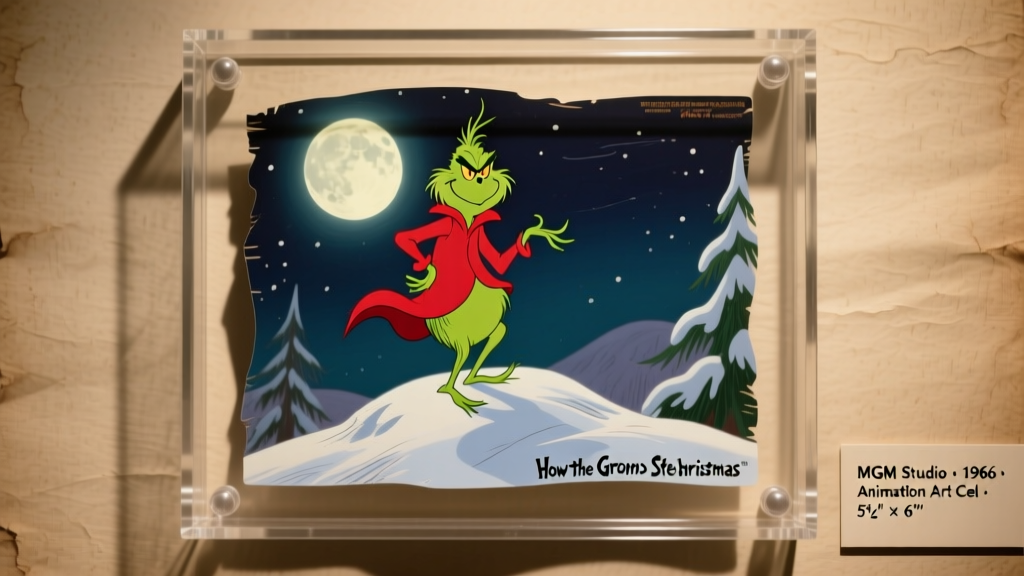
How the Grinch Stole Christmas (1966) MGM Animation Cel: Authenticating a Landmark 5.5 x 6-Inch Production Piece
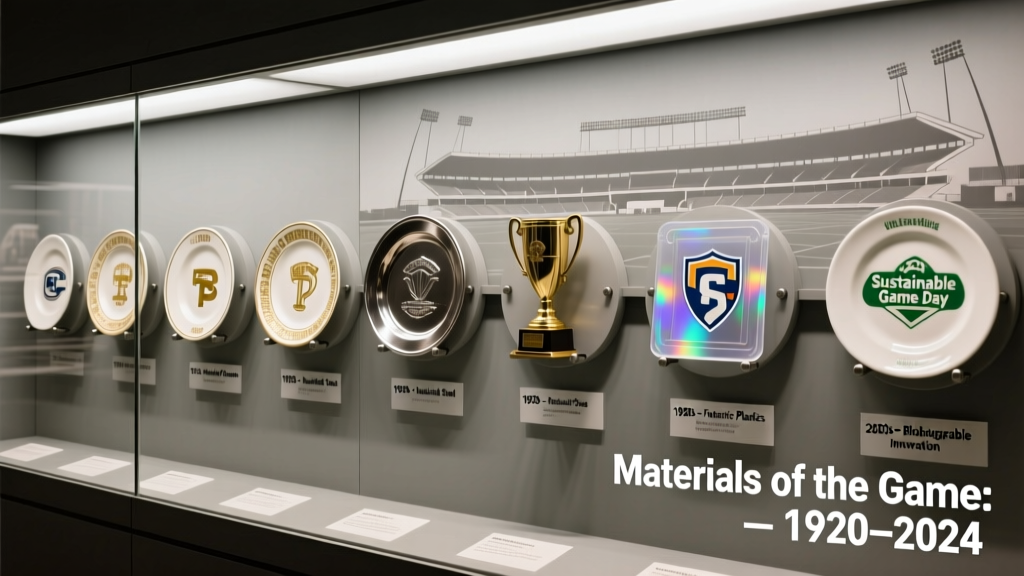
Dinnerware Materials Through The Years: Evolution, Innovation, and Collectibility

Steins Character Sulky Driver Porcelain: E. Bohne & Söhne 1.2-Liter Steins with Authentic Provenance
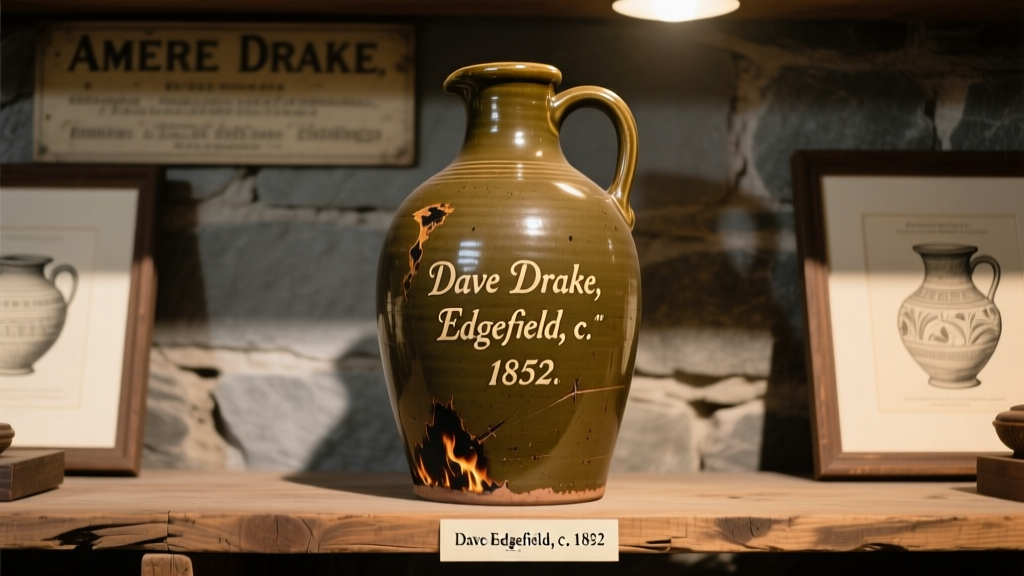
Dave Drake’s 1852 Olive Brown Alkaline Stoneware Jug: Provenance, Craftsmanship, and Historical Significance
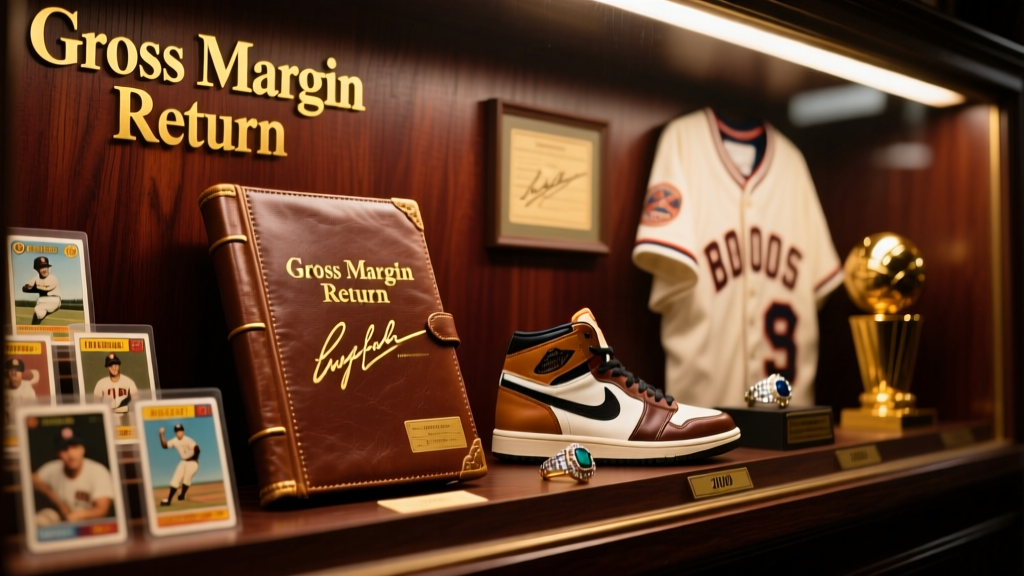
Gross Margin Return on Investment: The Critical Metric for Sports Memorabilia Authenticators and Dealers
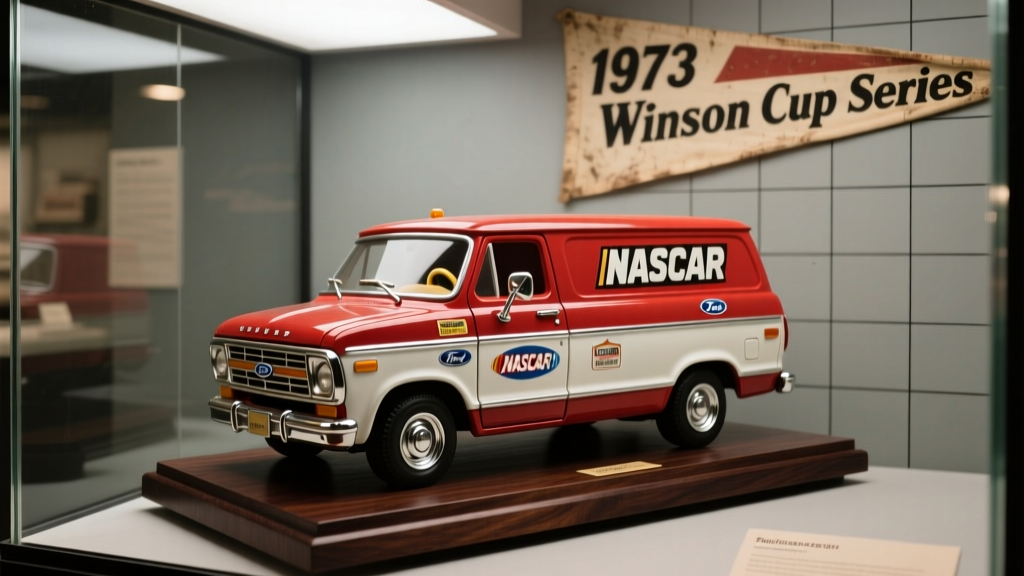
The Toy Truck Pickup Ford Econoline by Nylint: A Collector’s Deep Dive into Vintage American Die-Cast Innovation