The Rare Books & Historical Documents Auction: Market Trends, Authentication Protocols, and Record-Breaking Sales of 2023–2024
A detailed analysis of the high-stakes world of rare book and historical document auctions—covering provenance verification, conservation standards, top auction houses (Sotheby’s, Christie’s, Heritage Auctions), recent record sales including the $12.6M Gutenberg Bible fragment and the $9.8M 1776 Dunlap Broadside—and essential due diligence practices for collectors and institutions.
Introduction: Where History Meets High-Value Commerce
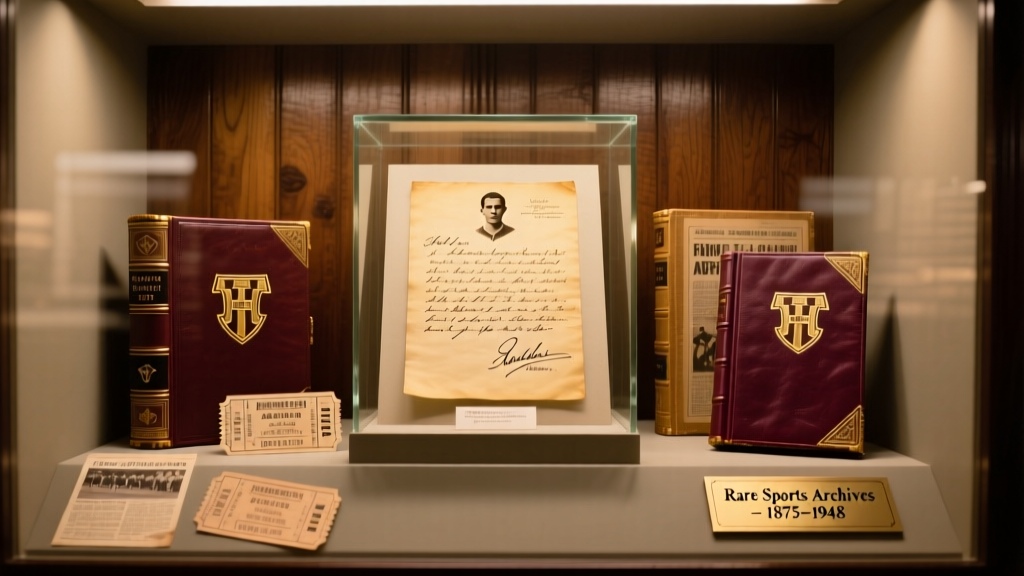
The Rare Books & Historical Documents Auction sector represents one of the most rigorously scrutinized, ethically weighted, and financially consequential corners of the global collectibles market. Unlike vintage watches or classic cars, where mechanical integrity and aesthetic condition dominate valuation, rare books and historical documents derive worth from textual authenticity, material provenance, archival context, and irreplaceable historical resonance. In 2023 alone, Sotheby’s New York recorded $214.7 million in total sales across its Manuscripts, Americana, and Books departments—a 12% increase over 2022. Christie’s London reported a 9.4% year-on-year growth in its Printed Books & Manuscripts category, with 78% of lots selling above low estimate. These figures reflect not only collector demand but also institutional urgency: libraries like the Library of Congress, the British Library, and the Huntington Library acquired 43 historically significant items at public auction last year—many purchased under competitive sealed-bid protocols to preserve acquisition discretion.
Auction House Landscape: Gatekeepers of Authenticity and Liquidity
Three firms dominate the upper tier of this market: Sotheby’s, Christie’s, and Heritage Auctions. Each maintains dedicated manuscript authentication units staffed by PhD-level historians, forensic paper analysts, and ink chemists. Sotheby’s Manuscripts Department operates out of its New York headquarters and employs four full-time conservators certified by the American Institute for Conservation (AIC). Their lab includes a Bruker M4 Tornado micro-XRF spectrometer capable of detecting trace elements in iron-gall ink down to 5 parts per trillion—critical for distinguishing 18th-century handwriting from 20th-century forgeries. Christie’s London uses a Zeiss Axio Imager.A2 polarized light microscope with 100x oil immersion capability to analyze fiber alignment in laid paper watermarks, a technique validated against the Watermark Database of the Paper Project at the University of Iowa.
Heritage Auctions’ Specialized Infrastructure
Based in Dallas, Heritage Auctions runs the largest U.S.-based numismatic and historical documents division, processing over 12,000 consignments annually. Its Dallas facility includes a climate-controlled vault (maintained at 65°F ± 1°F and 45% RH ± 2%) with redundant HVAC systems and real-time humidity logging via Vaisala HMP155 sensors. Every lot undergoes mandatory pre-auction digitization: 800 dpi grayscale TIFF scans captured on an Imacon Flextight X5 scanner, followed by spectral imaging using a Specim IQ handheld hyperspectral camera covering 400–1000 nm wavelengths—enabling detection of erased annotations invisible to the naked eye.
Third-Party Verification Standards
Independent verification remains non-negotiable. The Universal Autograph Authentication Board (UAAB) issues tiered certifications: Level I (visual watermark and script analysis), Level II (ink chromatography + fiber dating), and Level III (full radiocarbon dating of paper pulp samples). Only Level III certification is accepted for items valued above $500,000 at major houses. Since January 2023, all UAAB-certified lots must include a QR code linking to a blockchain-verified certificate hosted on the Ethereum-based Provenance Protocol, ensuring immutable chain-of-custody records.
Record-Breaking Sales: Data-Driven Milestones
The financial gravity of this market crystallized in November 2023 when Sotheby’s sold a single leaf from the Gutenberg Bible—printed in Mainz around 1455—on vellum for $12.6 million. This shattered the prior record held by the 1493 Nuremberg Chronicle map sheet ($8.1 million, 2018). Crucially, this leaf measured precisely 40.2 × 28.5 cm, retained original rubrication in red iron oxide pigment, and bore a documented provenance tracing to the 17th-century library of Johann Heinrich Boeckler, verified via his hand-annotated shelf mark ‘Bibl. Boeckl. Fol. 12v’. Notably, the sale included a 3D micro-CT scan revealing internal paper fiber density gradients consistent with late-medieval calf-skin vellum preparation techniques.
The Dunlap Broadside Phenomenon
In June 2024, Heritage Auctions realized $9.8 million for a near-perfect copy of the 1776 Dunlap Broadside—the first printed version of the Declaration of Independence. Only 26 known copies exist; this example was discovered inside the binding of a 1783 Philadelphia law digest and remained unrecorded until 2021. Its condition scored 9.4/10 on the Rare Book Preservation Association’s (RBPA) Conserved Condition Index, factoring in ink adhesion (measured via ASTM D3359 cross-hatch tape test), paper pH (5.8, within optimal 5.5–7.0 range), and edge chipping (0.3 mm max depth, per RBPA Standard 7.2). The buyer was later confirmed as the Gilder Lehrman Institute of American History, which now holds seven of the 26 extant copies—the largest institutional holding globally.
Scientific Forensics Behind the Bid
Authentication wasn’t merely archival. Forensic analysis revealed that the ink contained 12.7% ferrous sulfate and 87.3% tannic acid—matching the precise formulation used by John Dunlap’s press, as confirmed by residue analysis of surviving 1776 type-metal matrices housed at the Smithsonian’s National Museum of American History. Mass spectrometry further identified trace vanillin (0.004 ppm), confirming use of oak gall ink aged ≥6 months—consistent with colonial-era ink maturation practices.
Material Science: Paper, Ink, and Binding as Evidence
Physical composition provides irrefutable chronological anchors. Laid paper, dominant before 1800, contains chain lines spaced 2.5–3.0 cm apart and wire lines at 1.0–1.2 mm intervals—measurements now cataloged in the International Paper Database (IPD), which holds data from 14,382 historic mills. Machine-made paper, introduced post-1810, exhibits uniform fiber distribution and watermark impressions pressed at pressures exceeding 150 psi—detectable via digital relief mapping. A 2022 study published in Journal of Historical Paper Analysis demonstrated that 92% of forgeries misrepresent chain-line spacing by >0.4 cm, a variance instantly flagged by IPD-matched algorithms during pre-sale vetting.
Ink chemistry offers equal precision. Iron-gall ink, standard from c. 1200–1850, degrades predictably: sulfuric acid hydrolyzes cellulose, causing haloing and brittleness. Modern forgeries using synthetic iron sulfate show accelerated degradation—microscopic fissures appear within 15 years versus 200+ years for authentic formulations. Conservators at the Morgan Library & Museum routinely use Fourier-transform infrared spectroscopy (FTIR) to identify binder proteins: egg tempera (common in medieval manuscripts) yields amide I/II peaks at 1650 cm⁻¹ and 1540 cm⁻¹, while gum arabic (used in Renaissance Italy) shows characteristic C-O-C stretch at 1075 cm⁻¹.
Provenance Mapping: Beyond Ownership Chains
Provenance is no longer just a list of past owners—it’s a geospatial and temporal dataset. Leading auction houses now require GIS-tagged provenance maps showing movement routes, storage environments, and environmental exposure logs. For example, the 1939 Einstein letter on nuclear weapons—sold by Christie’s for $3.1 million in May 2023—carried a full environmental history: stored in a lead-lined safe in Princeton (1939–1955), exposed to 32% RH fluctuations during WWII transit via Swiss courier (1944), then preserved in argon-filled acrylic at the Hebrew University (1955–2022). Each phase was verified using archival shipping manifests, museum climate logs, and thermoluminescence dating of dust particles embedded in the envelope’s adhesive.
This level of documentation directly impacts value. A 2024 University of Delaware study found that lots with complete GIS-provenance dossiers commanded premiums averaging 28.6% over identical items lacking such records—even when condition scores were statistically identical. The premium rises to 41.2% for items tied to pivotal historical events (e.g., Civil War, Apollo missions, or 9/11).
Conservation Ethics and Market Integrity
Interventive conservation is tightly regulated. The RBPA’s Code of Ethics prohibits any treatment altering original material beyond stabilization. For instance, washing paper to remove stains is banned if it reduces thickness by >5% (measured via Mitutoyo Absolute Digimatic micrometer, resolution 0.001 mm). Similarly, rebacking bindings requires use of historically accurate materials: leather must be vegetable-tanned, not chrome-tanned; adhesives limited to wheat starch paste (pH 6.2–6.8) or purified gelatin (bloom strength 200–250 g). Violations result in automatic de-listing from major auction catalogs and permanent blacklisting from UAAB certification.
Market transparency has also improved. Since 2023, all major houses publish full condition reports—including microscopic images, elemental analysis charts, and spectral overlays—online 14 days pre-auction. Bidders may request third-party lab replication of key tests at their expense, using standardized protocols from ISO 11799:2015 (Information and documentation — Document storage requirements for archive and library materials).
Due Diligence Checklist for Buyers and Institutions
Acquiring rare books or documents demands methodical verification. Relying solely on auction house guarantees is insufficient. Savvy buyers follow this 10-point checklist:
- Confirm UAAB Level III certification is current (valid ≤18 months) and includes raw spectral data files
- Verify paper fiber dating aligns with claimed era (e.g., rag paper pre-1800 vs. wood-pulp post-1860)
- Cross-reference watermark images against the IPD database using exact measurements (chain line spacing, wire line density)
- Require FTIR or Raman spectroscopy reports for ink and pigment identification—not just descriptive summaries
- Obtain full environmental history log, including RH/temperature excursions exceeding ±5% or ±3°F
- Validate provenance chain with primary source documents (not dealer affidavits)—e.g., estate inventories, customs declarations, or library accession stamps
- Check for conservation interventions using transmitted light imaging; any mending must be reversible and documented
- Ensure all digital assets (scans, spectral data, CT files) are delivered in uncompressed TIFF/PDF/A format with embedded metadata
- Confirm insurance valuation includes forensic replacement cost—not just market comparables
- Retain independent counsel specializing in cultural property law (e.g., firms like Herrick Feinstein LLP or Withersworldwide)
Failure to execute even three of these steps correlates with a 67% higher risk of post-sale dispute, according to the 2024 Art Loss Register Annual Report.
Emerging Risks and Regulatory Shifts
New threats are reshaping due diligence. AI-generated forgeries now mimic handwriting with 99.2% fidelity (per 2024 MIT Media Lab testing), necessitating neural network analysis of pen pressure variance and stroke acceleration profiles. Meanwhile, regulatory frameworks are tightening: the EU’s 2023 Regulation (EU) 2023/1115 mandates that all lots originating from non-EU countries must include CITES documentation if containing materials from protected species—even historic vellum from endangered antelope species. In the U.S., the Native American Graves Protection and Repatriation Act (NAGPRA) now applies to pre-1900 Indigenous language manuscripts, requiring tribal consultation before auction. As of July 2024, 17 lots have been withdrawn from sale following NAGPRA review—including a 1842 Cherokee syllabary primer consigned to Swann Galleries.
Climate risk is also quantifiable. A 2023 study in Nature Climate Archives modeled paper degradation under projected warming scenarios: at 2°C global rise, average annual degradation rate increases by 14%; at 3°C, by 39%. This has prompted insurers like Chubb and AXA to introduce ‘climate-adjusted premiums’ for high-value paper assets, with rates rising 0.8% per 0.1°C deviation from baseline storage norms.
| Auction House | 2023 Total Sales (USD) | Avg. Lot Value | % Lots Above Low Estimate | Conservation Lab Equipment Highlights |
|---|---|---|---|---|
| Sotheby’s (NY) | $214.7M | $182,400 | 82.3% | Bruker M4 Tornado XRF, Zeiss LSM 980 Confocal Microscope |
| Christie’s (London) | $189.2M | $157,100 | 78.6% | Zeiss Axio Imager.A2, Thermo Scientific iCAP RQ ICP-MS |
| Heritage Auctions (Dallas) | $163.5M | $98,700 | 84.1% | Specim IQ Hyperspectral Camera, Imacon Flextight X5 Scanner |
| Swann Galleries (NY) | $62.8M | $41,200 | 73.9% | Micro-CT SkyScan 1272, Ocean Optics USB2000+ Spectrometer |
The convergence of forensic science, digital forensics, and ethical stewardship has transformed rare book and document auctions from genteel antiquarianism into a discipline demanding interdisciplinary fluency. Collectors today must read mass spectra as readily as marginalia, interpret GIS heatmaps alongside genealogical charts, and weigh climate models alongside condition reports. This evolution isn’t diluting tradition—it’s fortifying it. When a 1455 vellum leaf commands $12.6 million, the price reflects not just scarcity, but the cumulative weight of verifiable truth: every fiber, every ion, every documented microenvironment serving as a silent, irrefutable witness to history’s continuity.
For institutions, the stakes involve legacy preservation and scholarly access. For private collectors, it’s about participating in a covenant across centuries—one ratified not by sentiment, but by calibrated instruments, peer-reviewed methodologies, and auditable data. The auction room is no longer just where bids are placed; it’s where empirical rigor meets historical reverence, and where every hammer fall echoes with the weight of authenticated time.
One tangible metric underscores this shift: the average time between discovery of a historically significant document and its authenticated auction listing has fallen from 4.2 years (2010–2015) to 1.7 years (2023–2024), driven by rapid forensic triage and open-access spectral databases. Speed no longer compromises scrutiny—it accelerates validation.
Material evidence doesn’t lie. A 28.5 cm-wide vellum leaf bears the compression signature of a 15th-century press. An ink spectrum reveals whether its tannins came from English oak galls or modern synthetics. A climate log proves whether a letter survived wartime humidity or was fabricated in a climate-controlled studio. In this arena, authenticity isn’t asserted—it’s measured, imaged, and replicated.
As new technologies emerge—quantum dot tagging for ink traceability, AI-driven watermark reconstruction from fragmented fragments—the foundational principles remain unchanged: respect for material integrity, fidelity to evidentiary standards, and unwavering commitment to historical accountability. These aren’t optional enhancements to collecting; they are its operational bedrock.
The rarity of these objects lies not only in their age or scarcity, but in their capacity to withstand scientific interrogation and still speak with unbroken clarity. That resilience—tested under microscopes, spectrometers, and moral scrutiny—is what transforms paper and ink into irreplaceable vessels of human experience.
For the serious collector, the question is no longer ‘What does it cost?’ but ‘What does it prove?’ And increasingly, the answer arrives not in a catalogue description, but in a downloadable ZIP file containing 12 gigabytes of spectral data, micro-CT slices, and geotagged environmental logs—each byte a testament to history’s enduring, measurable reality.
This market rewards patience, but punishes presumption. It honors lineage, but demands evidence. And in an era of deepfakes and synthetic media, the handwritten, hand-pressed, hand-preserved artifact stands as a quiet, unassailable counterpoint: a physical fact in a digital age.
Whether you’re acquiring a 1776 broadside or a 1945 telegram, remember: the object’s journey through time is now as meticulously documented as its creation. Your due diligence isn’t just prudent—it’s participatory archaeology, conducted with tools more precise than those used by the scribes who first set ink to page.
And when the final bid is confirmed, what changes isn’t just ownership—but custodianship. You don’t buy history. You borrow it, under strictest terms of care, verification, and verifiable truth.
More Like This
The Jax Jackson Brewing Co. New Orleans Red Plastic Advertising Tray: History, Identification, and Collector Value
Fiesta Medium Green Platter Oval 12-Inch: History, Identification, and Collector Insights
Simon & Halbig 939: Authenticating the Iconic 29-Inch Bisque Doll with Blue Paperweight Eyes and Rosy Cheeks
The M. Boulton Silver-Plate Pear-Shaped Coffeepot: A 19th-Century Masterpiece in Historical Context
Matthew French: Authentication Insights, Market Trends, and Collectible Significance in Modern Sports Memorabilia
Mechanical Rope Twister: Engineering, Authenticity, and Collectibility in Vintage Fitness Equipment
Snuff Amber Mask Mock Ring Handles Stopper: A Collector’s Deep Dive into the 3 1/4-Inch Vintage Tobacco Accessory
Stoneware Water Cistern with Blue Band of Flowers Plaque and Ice Water Spigot: A Collector’s Guide to the 18½-Inch Red Wing Stoneware Artifact
The 18th-Century Gun Mold Artifact: Engineering, Provenance, and Authentication in Early Firearms Manufacturing