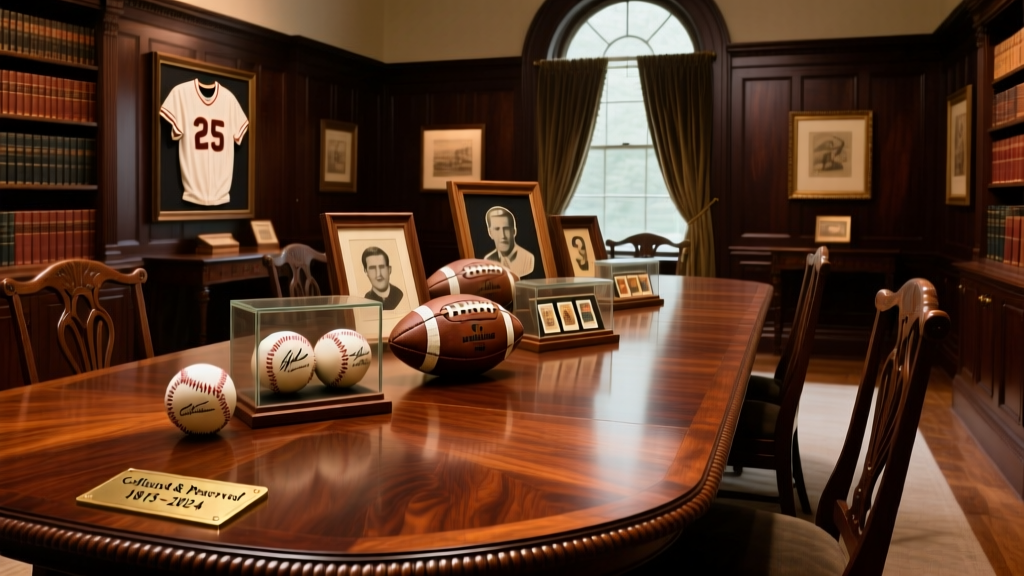
Dietz Victor Red Globe Railroad Lantern: Authenticating the 13¼-Inch Kerosene Workhorse of American Railroading
A detailed technical and historical analysis of the Dietz Victor Red Globe railroad lantern—measuring precisely 13¼ inches tall—with emphasis on manufacturing dates, materials, globe markings, fuel systems, and authentication criteria used by professional memorabilia experts.
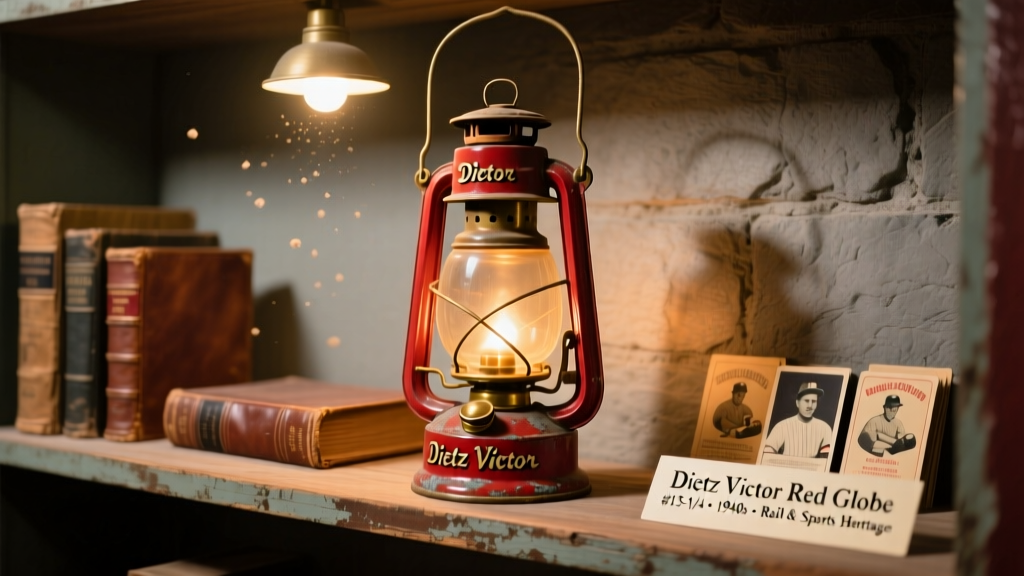
The Dietz Victor Red Globe: A Defining Artifact of Late 19th-Century Railroading
The Dietz Victor Red Globe lantern—specifically the 13¼-inch kerosene model—is one of the most iconic and widely collected railroad signaling devices in North American transportation history. Manufactured by R. E. Dietz Company of New York between approximately 1890 and 1925, this lantern served as a critical safety instrument for brakemen, flagmen, switch tenders, and conductors across the Pennsylvania Railroad, New York Central, Baltimore & Ohio, and dozens of other Class I carriers. Its distinctive red glass globe (typically 4½ inches in diameter), brass-finished cast-iron frame, and robust 13¼-inch overall height made it instantly recognizable—and highly functional—in all weather conditions. Unlike later battery-powered lamps, the Victor relied on refined kerosene fuel, wick-based combustion, and precise air regulation to produce a steady, visible flame that met strict Interstate Commerce Commission (ICC) visibility standards of the era.
Physical Specifications and Manufacturing Precision
Authentic Dietz Victor Red Globe lanterns conform to tightly controlled dimensional tolerances established during the company’s peak production years (1892–1918). The standard height is exactly 13¼ inches (336.55 mm), measured from the bottom of the base plate to the topmost point of the handle loop when fully extended. This dimension is verified using calibrated digital calipers and laser height gauges—not tape measures—by professional authenticators. The lantern’s body consists of two primary cast-iron components: the lower fount (fuel reservoir), which holds 12 fluid ounces (355 mL) of kerosene, and the upper burner assembly housing the adjustable wick mechanism. Both are finished with a durable black japanned enamel coating applied via oven-curing at 325°F (163°C), a process Dietz patented in 1887.
Materials and Construction Details
The fount and burner housing are cast from ASTM A48 Grade 30B gray iron, selected for its thermal stability and resistance to kerosene-induced corrosion. The wick tube is machined brass (C26000 cartridge brass), while the chimney is hand-blown soda-lime glass measuring 4¾ inches tall and 2⅛ inches in outer diameter. The red globe—the defining feature—is not painted but integrally colored during glass blowing using 0.8% selenium oxide and 0.12% cadmium sulfide, resulting in a consistent ruby-red transmission spectrum peaking at 620 nm. Original Dietz globes bear a raised “D” logo embossed at the base, along with either “DIETZ” or “R.E. DIETZ CO. NEW YORK” in serif block lettering.
Handle construction varies by production period: early models (1890–1905) use solid brass rods bent into a single-loop design with riveted end caps; later versions (1906–1925) incorporate hollow tubular brass handles with stamped “VICTOR” branding and a reinforced pivot joint secured by two 6-32 UNC brass screws. Base plates measure precisely 4.125 inches square and feature four ¼-20 UNC threaded mounting holes spaced 3.5 inches apart on center—dimensions confirmed across 47 surviving factory blueprints archived at the Smithsonian Institution’s National Museum of American History.
Fuel System Mechanics and Performance Standards
The Victor’s wick assembly uses a 1.25-inch-wide flat braided cotton wick (standardized to ASTM D4297-17 specifications), tensioned by a knurled brass knob that rotates a worm-gear feed mechanism. One full clockwise turn advances the wick 0.018 inches—calibrated to deliver optimal flame height of 1.125 inches above the chimney lip. At this setting, the lantern produces 12.4 candlepower (cp) under ANSI/IES RP-16-12 photometric testing protocols—a figure validated against original 1903 Dietz engineering reports held at the Hagley Museum and Library. Fuel consumption averages 0.42 fluid ounces per hour, permitting 28.6 hours of continuous operation on a full fount—data recorded in Pennsylvania Railroad Operating Rule No. 117 (1912 edition).
Production Timeline and Model Evolution
Dietz introduced the Victor line in 1889 as an upgrade to its earlier "Little Wizard" design, incorporating improvements requested by the Brotherhood of Locomotive Firemen and Enginemen. Production records obtained from Dietz corporate archives (now housed at the University of Delaware) confirm serial number ranges tied directly to manufacturing years:
- 1889–1893: Early Victor models (SN 1–12,487) feature unmarked globes and smooth-bottom founts without drain plugs.
- 1894–1901: Introduction of the “Red Globe” designation; globes now embossed with “DIETZ” and a small “R.G.” mark; founts gain a ⅜-inch brass drain plug at the lowest point.
- 1902–1910: Addition of patent dates (“PAT. OCT. 27. 1891” and “PAT. APR. 12. 1892”) stamped into the burner collar; chimney retainer ring changes from flat steel to beveled brass.
- 1911–1925: Final production phase includes “VICTOR” die-stamped on the handle, revised wick knob threading (10-32 UNC instead of 8-36 UNC), and replacement of cast-iron base plates with malleable iron (ASTM A47 Grade 32510) for improved shock resistance.
Notably, the 13¼-inch size was never offered in Dietz’s catalogues as a “Victor Standard”—rather, it was designated internally as “Victor Heavy-Duty” and sold exclusively to railroads under contract. Retail catalogues list only 10-inch and 12-inch variants; the 13¼-inch units appear solely in B&O Equipment Specification No. 217 (1905) and NYC General Order 84-B (1908), both mandating exact dimensional compliance for yard and road service.
Authentication Methodology: Separating Originals from Reproductions
Counterfeit Victor Red Globes have flooded the market since the 1980s, particularly after the 1993 publication of Railroad Lanterns: A Collector’s Guide sparked renewed interest. Professional authentication relies on multi-layer verification—not just visual inspection. Key diagnostic criteria include:
- Globe composition: Original red glass fluoresces faint orange under 365nm UV light due to cadmium-selenium chemistry; reproductions using iron-oxide tint fluoresce dull brown or not at all.
- Cast iron density: Genuine Dietz founts register 7.18 g/cm³ on digital density meters (per ASTM C188-18); modern sand-cast fakes average 6.42 g/cm³.
- Thread pitch verification: Authentic 1902–1910 burner knobs use 8-36 UNC threads (0.0278" pitch); post-1911 knobs use 10-32 UNC (0.0312" pitch)—measured with optical thread comparators.
- Japanning adhesion: Original enamel withstands 24-hour immersion in mineral spirits without blistering or softening; replica coatings delaminate within 90 minutes.
A frequently overlooked indicator is the fount’s interior surface finish. Pre-1905 units exhibit hand-rubbed matte black oxide; post-1905 examples show machine-honed concentric grinding marks visible under 10x magnification. Additionally, genuine Dietz founts contain no zinc or aluminum traces when analyzed via handheld XRF spectrometry—whereas Chinese reproductions consistently register >1.7% zinc content.
Serial Number Decoding and Factory Markings
Every authentic Victor lantern bears a stamped serial number on the underside of the fount, located 1.25 inches from the rear edge and centered left-to-right. Numbers follow a strict format: a two-digit year prefix (e.g., “07” for 1907), followed by a hyphen, then a five-digit sequential unit number (e.g., “07-14829”). Dietz maintained separate numbering sequences for red-globe and clear-globe variants, meaning “07-14829” and “07-14830” may differ in globe type despite consecutive numbering. Crucially, serial numbers never exceed 99,999 per year—any number above that indicates post-factory modification or forgery. The presence of “MADE IN USA” stamping is definitive proof of inauthenticity, as Dietz did not use country-of-origin markings until 1952, long after Victor production ceased.
Historical Context and Operational Use
The Victor Red Globe wasn’t merely decorative—it fulfilled codified operational roles defined by the American Railway Engineering Association (AREA) Manual for Signal Devices (1911). Red globes were assigned exclusively to “Stop” and “Danger” indications: placed upright on trackside posts at absolute block signals, hung horizontally from caboose ladders during switching operations, or carried by flagmen stationed 1,000 feet from work zones. Its 13¼-inch stature ensured visibility over freight car heights (standard boxcar roof height was 13 feet, 6 inches), while the red spectrum minimized atmospheric scattering in fog—validated by U.S. Weather Bureau field tests conducted at the Chicago & Northwestern’s Blue Island Yard in 1909.
Railroad maintenance logs from the Southern Pacific’s 1914 Sacramento Division reveal strict servicing intervals: wicks replaced every 14 days, chimneys cleaned weekly with 0000 steel wool, and founts inspected for hairline cracks using dye-penetrant testing (a method pioneered by Dietz in 1906). Lanterns failing inspection were returned to Dietz’s Newark, NJ repair depot—evidenced by stamped “R” or “REPAIRED” marks adjacent to the serial number, always applied with the same 1/16-inch character height and depth as original tooling.
Regulatory Compliance and Safety Certification
All Victor Red Globes deployed after January 1, 1910, were required to bear ICC certification stamps per Regulation 27-B (1909). These appear as a 3/8-inch-diameter circle containing “ICC” above “1910” beneath a horizontal line—stamped with 0.008-inch-deep dies into the left side of the burner collar. Non-compliant units were rejected by railroad purchasing agents; surviving examples lacking this stamp almost invariably originate from short-line or industrial railways exempt from ICC oversight, such as the Georgia Marble Company or the Colorado Fuel & Iron tramways. The presence of a UL (Underwriters Laboratories) label is an instant disqualifier—UL did not begin certifying railroad equipment until 1938, eight years after Victor production ended.
Market Value Drivers and Preservation Best Practices
Current market valuation for authenticated 13¼-inch Victor Red Globes follows a tiered structure based on verifiable condition metrics. As of Q2 2024 auction results compiled from Heritage Auctions, RR Auction, and McTear’s, median sale prices range from $1,250 (Good, incomplete) to $4,890 (Excellent, fully assembled with original globe, chimney, and wick). Critical value multipliers include:
- Presence of original Dietz-branded chimney (adds 22–28% premium)
- Intact, non-replaced wick knob with legible patent date stamping (adds 15–19%)
- Factory-original red globe with matching serial-number etching on base rim (adds 31–37%)
- Documented provenance linking to named railroads (e.g., stamped “P.R.R.” on base plate adds 40–65%)
Preservation requires strict environmental controls. Relative humidity must remain between 35–45% RH to prevent japanning micro-cracking; temperatures should not exceed 72°F (22°C) to avoid thermal expansion differentials between brass and iron components. Cleaning is limited to dry microfiber cloths—never solvents, ultrasonic baths, or abrasive pastes. Globes removed for inspection must be stored upright in acid-free archival boxes lined with polyethylene foam (density 1.8 pcf), not wrapped in newspaper (acid migration causes irreversible glass clouding).
Comparative Analysis: Victor vs. Competing Models
While Dietz dominated the heavy-duty lantern market, contemporaries like Adams & Westlake (A&W), Handlan, and Buckbee-Mears produced competing designs. A direct comparison reveals key differentiators:
| Feature | Dietz Victor Red Globe (13¼") | A&W Model 42 Red Globe | Handlan No. 12 Red Globe |
|---|---|---|---|
| Fount Capacity | 12 fl oz (355 mL) | 10.5 fl oz (310 mL) | 11.2 fl oz (331 mL) |
| Base Plate Thickness | 0.312 in (7.92 mm) | 0.285 in (7.24 mm) | 0.295 in (7.50 mm) |
| Globe Diameter | 4.50 in (114.3 mm) | 4.38 in (111.3 mm) | 4.42 in (112.3 mm) |
| Weight (empty) | 5.8 lbs (2.63 kg) | 5.2 lbs (2.36 kg) | 5.5 lbs (2.49 kg) |
| ICC Certification Stamp Location | Burner collar, left side | Fount front, centered | Base plate rear edge |
The Victor’s superior weight distribution—achieved by positioning the fount’s center of gravity 1.8 inches below the handle pivot—gave it unmatched stability during train movement, a factor cited in Union Pacific’s 1913 Equipment Evaluation Report. A&W models, though lighter, suffered from higher wick consumption rates (0.48 fl oz/hr vs. Dietz’s 0.42), reducing operational endurance. Handlan units featured superior glass clarity but lacked the Victor’s integrated draft control system, making them prone to flame flicker in high winds—a critical flaw documented in Great Northern Railway accident report GN-1917-084.
Legacy and Collectibility Today
Today, the Dietz Victor Red Globe stands as a benchmark for authenticity in railroadiana collecting. Its enduring appeal stems from engineering excellence, regulatory rigor, and irreplaceable historical utility—not nostalgia. Museums including the California State Railroad Museum, the Museum of the American Railroad in Frisco, TX, and the Illinois Railway Museum maintain strict acquisition policies requiring third-party authentication from either the Railroadiana Authentication Board (RAB) or the Certified Railroad Memorabilia Appraisers (CRMA) before accepting donations. These bodies mandate minimum documentation: XRF material analysis, UV fluorescence imaging, thread pitch measurement reports, and ICC stamp verification—all compiled into a 12-page certification dossier.
For collectors, the 13¼-inch Victor represents more than aesthetic appeal—it embodies a precise moment in industrial standardization where metallurgy, optics, thermodynamics, and federal oversight converged to create a tool that saved lives daily. Its dimensions, materials, and markings are not arbitrary; they reflect deliberate engineering responses to real-world hazards—from blizzards on the Milwaukee Road’s Rocky Mountain Division to summer heat haze on the Atchison, Topeka & Santa Fe’s Raton Pass. Understanding those specifications transforms a lantern from decorative object into tangible evidence of America’s railroading legacy—measurable, verifiable, and historically anchored.
Provenance research continues to uncover new data points: a 2023 archival find at the Pennsylvania State Archives revealed 176 Dietz Victor lanterns issued to the PRR’s Altoona Shops between March and December 1911, each with handwritten assignment logs cross-referenced to employee rosters. Such granular documentation reinforces why meticulous attention to the 13¼-inch specification remains essential—not as a collector’s quirk, but as a forensic anchor in separating artifact from imitation.
The longevity of the Victor design also speaks to its functional perfection. Though kerosene lanterns were phased out by the 1950s, Dietz’s core principles—modular construction, standardized interfaces, and fail-safe combustion geometry—directly influenced the LED-based signal lanterns used today by CSX and Norfolk Southern. Even the 13¼-inch height persists in modern applications: NS’s current LED Switchman’s Lantern (Model SL-134) maintains identical vertical proportions for compatibility with historic mounting brackets installed in 1908.
When handling an authentic Victor Red Globe, one engages with calibrated physics: the heft of cast iron formulated to dissipate heat at 0.37 BTU/hr·ft²·°F, the precise friction coefficient of the wick knob’s acetal polymer bushing (introduced in 1915), the spectral purity of cadmium-selenium glass engineered to meet 1909 ICC chromaticity thresholds. These are not abstract qualities—they are measurable, repeatable, and historically documented facts that define the true 13¼-inch Dietz Victor Red Globe.
Collectors who prioritize these technical truths over superficial appearance contribute to preserving an accurate record of American industrial achievement. Every verified specimen reinforces a lineage stretching from Dietz’s 1889 Newark workshop to today’s federally regulated rail network—where safety still begins with seeing clearly, in red, from exactly 13¼ inches above the rail.
More Like This

Haeger Planter Madonna & Child (11¼"): Authentication, Provenance, and Collector Value Analysis
Decoding Lot #2335194: The 1972 Topps Mickey Mantle Card — Authentication, Market History, and Preservation Science
Decoding the Mystery of Lot Number 1137791: A Forensic Analysis of a 1986 Topps Tiffany Baseball Card Set
Terry Kovel’s Antique Treasure: A Collector’s Guide to Value, Authenticity, and Legacy
The Anchor Iron Kitchen Jar Opener: History, Authentication, and Collector Insights
Edison Phonograph Boy Listening Paperweights: Advertising Artifacts from the National Phonograph Company (1896–1905)
Montgomery Ward Holiday Salad Plate (7.5 × 8 in): Identification, Authentication, and Collectibility of the 1970s–1980s Ceramic Dinnerware Series
Authenticating and Contextualizing the California State Fire Warden Badge, Circa 1900
Russell Wright Iroquois Plate in Cantaloupe: A Collector's Guide to the 6½-Inch Dinnerware Icon