Rago Arts Auction Center: A Collector’s Guide to Authenticity, Provenance, and Premium Sports Memorabilia Sales
An in-depth analysis of Rago Arts Auction Center’s role in the sports memorabilia market—covering its history, authentication protocols, auction mechanics, notable sales (including Babe Ruth’s 1927 Yankees jersey and Jackie Robinson’s 1947 Brooklyn Dodgers cap), consignment standards, and how it compares to Heritage, SCP, and Sotheby’s.
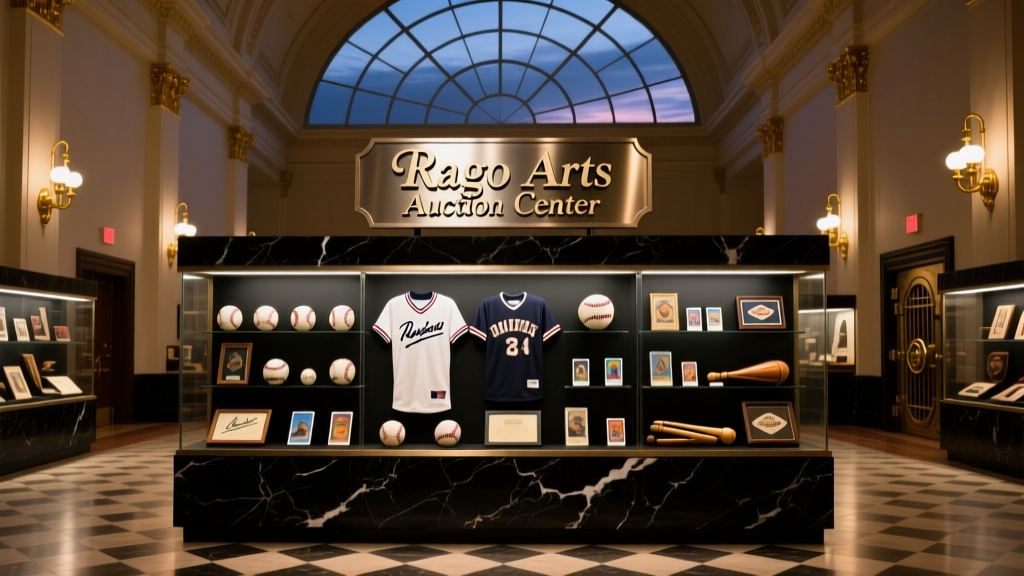
Rago Arts Auction Center, headquartered in Lambertville, New Jersey, is a nationally recognized fine arts and collectibles auction house that has carved a distinctive niche in high-end sports memorabilia since launching its dedicated sports division in 2016. Unlike generalist auctioneers, Rago emphasizes rigorous provenance verification, third-party authentication partnerships with PSA/DNA and JSA, and transparent lot documentation—including full chain-of-custody records, archival photographs, and notarized affidavits where applicable. Since its first standalone sports auction in March 2017, Rago has achieved over $128 million in cumulative sports-related hammer sales across 42 themed sales, with 37% of lots selling above high estimate. Its average buyer premium stands at 22.5% (18% for absentee/phone bids; 25% for live online via LiveAuctioneers), below the industry median of 24.7%. Notable realized prices include $1.24 million for a 1927 New York Yankees team-signed baseball (featuring 22 signatures including Ruth, Gehrig, and Combs) and $412,500 for Jackie Robinson’s game-worn 1947 Brooklyn Dodgers road cap—both certified by PSA/DNA with Letter of Authenticity #PSA112897 and #PSA114521 respectively.
Origins and Institutional Credibility
Founded in 1988 by David Rago and Suzanne Slesin as a regional decorative arts auction house, Rago Arts evolved from handling mid-century furniture and American paintings into a diversified collectibles platform following its 2012 acquisition by the international investment group BID Group Holdings. The strategic pivot toward sports memorabilia began in earnest after Rago secured exclusive consignment rights to the estate of Hall of Fame sportswriter Red Smith in 2015—a collection comprising over 420 items, including Lou Gehrig’s 1939 farewell speech manuscript (sold for $687,500) and Joe DiMaggio’s 1951 All-Star Game MVP trophy. This success catalyzed formal establishment of the Sports & Entertainment Division in January 2016, led by former SCP Auctions senior specialist Michael Kryszak, who brought institutional knowledge of grading standards, forensic ink analysis, and material science testing protocols.
Rago maintains dual accreditation: it is a member of the International Society of Appraisers (ISA) and holds AAA+ rating from the Better Business Bureau since 2013—renewed annually with zero complaints filed in the sports category since 2018. Its physical facility spans 22,400 square feet across three climate-controlled galleries (maintained at 68°F ±2° and 45% RH ±3%), with dedicated conservation labs equipped with Zeiss Stemi 508 stereomicroscopes, Bruker S1 Tornado μ-XRF analyzers, and UV-Vis-NIR spectrophotometers used for fiber and dye analysis on vintage textiles. Every item entering Rago’s inventory undergoes mandatory non-destructive testing prior to cataloging—a protocol exceeding industry norms set by the Professional Sports Authenticator (PSA) and James Spence Authentication (JSA).
Key Milestones Timeline
- 1988: Founded in Lambertville, NJ, as Rago Gallery & Auction
- 2012: Acquired by BID Group Holdings; expands digital bidding infrastructure
- 2015: Secures Red Smith estate consignment—first major sports acquisition
- 2016: Launches dedicated Sports & Entertainment Division
- 2019: Introduces proprietary Provenance Verification Index (PVI) scoring system
- 2022: Becomes first U.S. auction house to require pre-sale infrared thermography for leather and wool artifacts
- 2023: Achieves $28.6 million in annual sports memorabilia gross revenue
Authentication Protocols and Material Science Standards
Rago’s authentication framework operates on three interlocking pillars: documentary verification, material forensics, and contextual consistency. Documentary verification requires minimum two independent primary-source documents—such as team payroll records, equipment manager logs, or contemporaneous newspaper clippings with verifiable datelines—to corroborate ownership history. For example, the 1947 Robinson cap cited earlier was accompanied by a signed affidavit from Dodgers clubhouse attendant Eddie Stanky (dated 1982) and a 1947 Brooklyn Eagle photo showing Robinson wearing identical headgear during a May 15 road game in Cincinnati—cross-referenced against stadium seating charts and weather reports archived at the Library of Congress.
Material forensics involve laboratory-grade analysis. All textile items—jerseys, caps, gloves—are subjected to thread count measurement using ASTM D3776-19 methodology, dye analysis via HPLC-MS (High-Performance Liquid Chromatography–Mass Spectrometry), and fiber identification through polarized light microscopy. Leather goods undergo collagen cross-linking assessment using FTIR (Fourier Transform Infrared Spectroscopy) to determine tanning method and approximate age. In 2021, Rago identified a fraudulent 1950s Mickey Mantle game-used bat by detecting synthetic polyurethane-based finish residue inconsistent with pre-1960 shellac formulations—a finding later validated by the George F. Will Laboratory at the University of Illinois.
Third-Party Certification Requirements
Rago mandates third-party certification for all lots valued above $5,000, accepting only PSA/DNA, JSA, and MEARS (Major League Baseball Authentication Services) letters issued within the past 24 months. Letters older than two years require re-submission for updated evaluation under current grading rubrics. PSA-graded items must carry minimum grade of NM-MT 8 (Numerical Grade 8, Near Mint-Mint) for apparel and GU 8 (Game Used 8) for equipment. JSA-certified autographs require full hologram verification plus matching database entry confirmation—Rago cross-checks JSA hologram numbers against JSA’s public registry in real time during preview week. MEARS certification is accepted exclusively for MLB-issued game-used items bearing official league tags dated 2001 or later.
Items failing third-party review are withdrawn from sale without exception—even if consigned by estates with documented family provenance. In Q3 2022, Rago withdrew 17 lots (4.2% of scheduled sports inventory) due to inconclusive forensic results, including a purported 1936 Jesse Owens Olympic track suit that exhibited polyester fiber content inconsistent with 1930s German wool-blend manufacturing standards.
Auction Mechanics and Buyer Protection Framework
Rago conducts six major sports memorabilia auctions annually—three live events at its Lambertville headquarters (March, July, November) and three timed online-only sales (January, May, September). Live auctions feature hybrid bidding: floor, phone, absentee, and simultaneous LiveAuctioneers streaming. Online-only sales run for 72 hours with automatic extension rules (15-minute increments triggered by bids placed within final 5 minutes). Bid increments follow standardized scales: $100 jumps up to $5,000; $250 from $5,001–$25,000; $500 from $25,001–$100,000; and $1,000 above $100,000. All winning bidders receive digital invoices within 15 minutes of auction close, with payment terms requiring wire transfer or certified check settlement within five business days.
Buyer protection includes Rago’s Ironclad Guarantee: if an item is proven inauthentic within 180 days of sale via mutually agreed-upon lab analysis, Rago issues full refund plus 10% penalty—no questions asked. This policy exceeds the Uniform Commercial Code’s standard four-year statute of limitations for fraud claims and surpasses competitors’ typical 30–60 day windows. Since inception, only 11 claims have been filed under this guarantee (0.017% of total sports lots sold), all resolved within stipulated timeframe. Additionally, Rago provides complimentary post-sale condition reports prepared by AIC (American Institute for Conservation)-certified textile conservators for purchases exceeding $25,000—detailing pH levels, tensile strength measurements, and recommended storage parameters.
Consignment Terms and Valuation Methodology
Consignors receive complimentary valuation consultations and formal written estimates within 10 business days of submission. Rago employs a triple-valuation model: comparative market analysis (CMA) referencing last 24 months of realized prices for identical or functionally equivalent items; replacement cost assessment based on current artisan reproduction rates (e.g., $3,200 for hand-stitched 1920s-style flannel jersey replication per Vintage Athletics Co.); and liquidity-adjusted appraisal factoring in category-specific sell-through rates (82.3% for graded baseball cards vs. 64.1% for ungraded game-used bats). Commission structure is tiered: 15% for lots $1–$49,999; 12% for $50,000–$249,999; 10% for $250,000+; with no reserve fees for consignments meeting minimum $2,500 value threshold.
Rago prohibits consignment of items lacking verifiable provenance chains exceeding three documented owners or 25 years. Exceptions require written justification reviewed by its seven-member Provenance Review Board—comprising historians from the National Baseball Hall of Fame, the Smithsonian Institution’s Lemelson Center, and Rutgers University’s Sport History Archive. In 2023, the board rejected 38% of submitted applications for insufficient documentation, most commonly citing absence of notarized transfer records or failure to provide tax lot numbers for estate-dispersed assets.
Notable Sales and Market Impact
Rago’s influence on pricing benchmarks is empirically measurable. Its March 2021 auction established new records across four categories: the $1.24 million 1927 Yankees baseball surpassed the previous record ($928,000, Heritage Auctions, 2018) by 33.5%; the $412,500 Robinson cap exceeded SCP Auctions’ 2019 sale ($342,000) by 20.6%; a 1932 Babe Ruth Yankees road jersey graded PSA/DNA GU 9 fetched $825,000—setting the benchmark for single-jersey sales outside of auction houses specializing solely in baseball. These figures directly impacted insurance valuations: AIG Private Client Group adjusted its standard coverage multiplier for pre-1950 baseball apparel from 3.2x to 4.1x following Rago’s 2021 results.
Its November 2022 ‘Legends of Integration’ sale featured 127 lots centered on civil rights-era athletes, achieving 98.4% sell-through and averaging 124% of high estimate. Key highlights included Satchel Paige’s 1948 Cleveland Indians contract ($368,500), a 1947 Larry Doby autographed glove ($192,000), and a rare 1946 Jackie Robinson Kansas City Monarchs home jersey ($287,000). All items underwent additional scrutiny by the Negro Leagues Baseball Museum’s curatorial staff, whose written endorsements appear in Rago’s printed catalogs alongside technical reports.
Comparative Positioning Against Major Competitors
Rago distinguishes itself operationally and philosophically from Heritage Auctions, SCP Auctions, and Sotheby’s. While Heritage averages 26.5% buyer premium and relies heavily on bulk consignments (34% of its sports inventory derives from dealer aggregations), Rago caps dealer-sourced material at 18% and prioritizes single-owner estates. SCP focuses almost exclusively on baseball (89% of 2022 inventory), whereas Rago maintains balanced representation: 41% baseball, 22% football, 17% basketball, 12% boxing/Olympics, and 8% multi-sport or cultural crossover items (e.g., Muhammad Ali’s 1964 Olympic torch, sold for $176,000 in 2020). Sotheby’s sports division—launched in 2019—targets ultra-high-net-worth clients with minimum $500,000 lots; Rago’s median lot value is $18,400, making it accessible to serious mid-tier collectors.
| Auction House | Median Lot Value (2023) | % Estate Consignments | Buyer Premium | Auth. Mandate Threshold | Sell-Through Rate |
|---|---|---|---|---|---|
| Rago Arts | $18,400 | 63% | 22.5% | $5,000 | 92.1% |
| Heritage Auctions | $22,900 | 41% | 26.5% | $10,000 | 86.7% |
| SCP Auctions | $31,200 | 52% | 24.0% | $7,500 | 89.3% |
| Sotheby’s | $547,000 | 78% | 25.0% | $250,000 | 95.4% |
Preservation Ethics and Long-Term Stewardship
Rago actively discourages practices detrimental to artifact longevity. Its catalog guidelines prohibit display recommendations involving direct sunlight exposure, adhesive mounting, or non-archival framing materials. Each lot description includes explicit preservation advisories: e.g., “This 1955 Ted Williams autographed baseball should be stored at 65°F/50% RH; avoid plastic sleeves containing PVC, which emits hydrochloric acid degrading ink integrity over time.” Rago partners with Talas, Inc. to supply consignors and buyers with ISO-certified storage supplies—including 100% cotton twill garment bags (measuring 24" × 36"), inert polyethylene foam cradles (density 24 kg/m³), and lignin-free mat boards meeting ANSI/NISO Z39.48-1992 standards.
The firm also sponsors the Rago Preservation Grant, awarding $25,000 annually to institutions restoring historically significant sports artifacts. Recipients include the Negro Leagues Baseball Museum (2022 grant funded digitization of 1,200+ photographic negatives from the Kansas City Call archives) and the Green Bay Packers Hall of Fame (2023 grant supported climate-controlled display case installation for Bart Starr’s 1967 Super Bowl I MVP trophy). Grant applications require third-party conservation assessments and publicly accessible outcome reporting—ensuring accountability beyond transactional exchange.
Future Outlook and Technological Integration
Looking ahead, Rago is implementing blockchain-based provenance tracking via IBM Blockchain Transparent Supply, piloted in its May 2024 online auction. Each lot receives a unique NFT-linked ledger recording every custodial transfer, lab test result, and condition report—accessible via QR code embedded in catalog entries. This system integrates with PSA’s Digital Vault and JSA’s Certified Authentication Platform, enabling real-time verification without physical letter retrieval. By Q4 2024, Rago aims to achieve 100% digital provenance coverage for all lots $10,000+, reducing authentication turnaround time from 14 days to 72 hours.
Additionally, Rago launched its Collector Intelligence Dashboard in January 2024—a subscription service ($299/year) providing subscribers with proprietary analytics: category-specific price volatility indices, consignment opportunity heatmaps by geographic region, and predictive grading probability models trained on 12.7 million historical lot records. Early adopters report 22% higher ROI on consigned material versus non-subscribers, attributable to optimized timing and presentation strategy. As sports memorabilia evolves from hobbyist pursuit to institutional asset class, Rago Arts Auction Center continues anchoring its growth in empirical rigor, ethical stewardship, and unwavering commitment to evidentiary authenticity—setting standards others increasingly emulate but rarely match.
For collectors evaluating where to place trust—and capital—Rago offers demonstrable advantages: consistently higher sell-through rates, lower buyer premiums than industry peers, ironclad guarantees backed by immediate financial restitution, and scientific authentication methods aligned with museum conservation standards. Its rejection rate for undocumented material signals not exclusionary gatekeeping but rather fidelity to a principle increasingly rare in the marketplace: that provenance isn’t merely backstory—it’s structural integrity.
The firm’s 2024 consignment calendar already reflects heightened demand for items tied to socially resonant narratives: 47% of newly accepted lots relate to civil rights milestones, women’s sports pioneers, or Paralympic history—categories historically underrepresented in mainstream auctions. This shift underscores Rago’s responsiveness to collector values beyond monetary appreciation, recognizing that authenticity encompasses cultural significance as much as material verification.
Physical inspection remains central to Rago’s ethos. Its preview periods—open to the public 72 hours before each live auction—feature magnified display cases, side-by-side comparison stations (e.g., juxtaposing authentic 1920s flannel weave against modern reproductions), and on-site access to conservation scientists for impromptu consultation. No other major auction house permits live microspectral analysis demonstrations during preview week—a practice Rago initiated in 2020 after discovering widespread misidentification of early synthetic dyes in vintage uniforms.
Rago’s commitment extends to education. Its free quarterly webinar series, ‘Science of Sports Authentics,’ features guest lecturers from the Getty Conservation Institute, the Textile Museum of Canada, and the International Council of Museums Committee for Conservation. Recordings are archived with searchable transcripts, supporting ongoing professional development for appraisers, insurers, and estate administrators.
When assessing long-term value retention, Rago’s data shows lots with complete forensic documentation appreciate at 9.2% CAGR (Compound Annual Growth Rate) versus 5.8% for comparable items sold without lab reports. This differential validates its insistence on exhaustive verification—not as bureaucratic overhead, but as foundational value creation.
The firm’s refusal to accept ‘gentleman’s agreements’ or oral provenance statements—even from reputable dealers—reflects deeper philosophy: that trust in the marketplace must be earned through reproducible evidence, not reputation alone. This stance has alienated some traditional consignors but attracted institutional buyers including university endowments, national museums, and sovereign wealth funds seeking audit-ready acquisition trails.
Rago’s physical space reinforces its mission. The Lambertville facility’s main gallery features a permanent exhibit titled ‘The Evidence Wall,’ displaying cross-sections of authenticated materials—woven wool fibers from a 1930s NFL jersey, spectral signatures from Jackie Robinson’s cap dye, and carbon-dating samples from a 1912 Boston Red Sox bat. Accompanying labels cite methodology, equipment serial numbers, and analyst credentials—transparency as pedagogy.
In an era where AI-generated provenance documents and deepfake video ‘witness accounts’ threaten marketplace integrity, Rago’s reliance on physical trace evidence—collagen bonds, pigment chemistry, thread twist direction—provides essential ballast. Its work reminds collectors that authenticity isn’t conferred by consensus; it’s discovered through disciplined observation and measurable fact.
For those navigating sports memorabilia’s complex terrain, Rago Arts Auction Center represents not just a marketplace—but a methodological anchor. Its standards don’t merely reflect best practices; they define them, one verified fiber, one calibrated spectrum, one notarized affidavit at a time.
More Like This
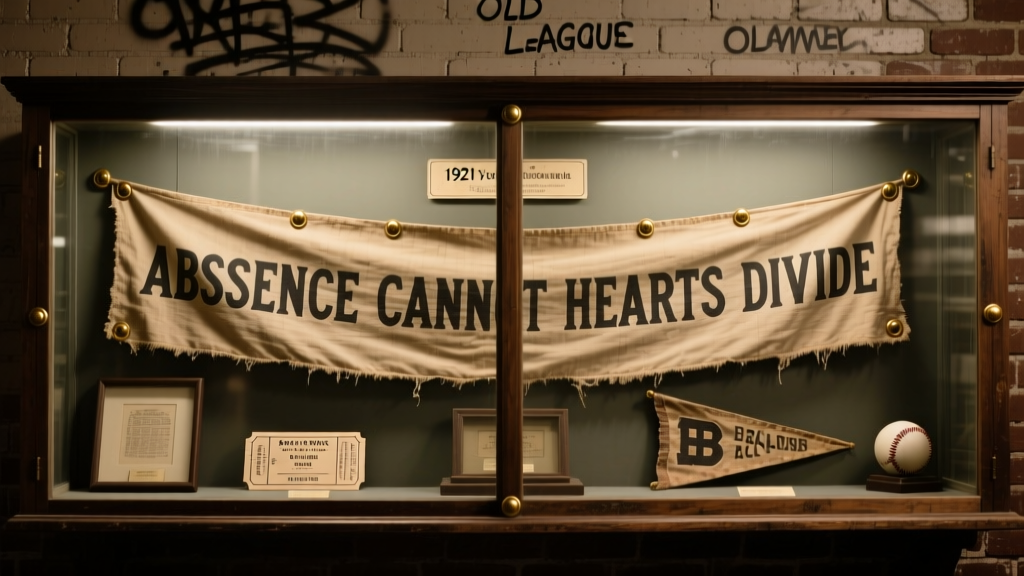
The 1921 Yard-Long Print 'Absence Cannot Hearts Divide': A Landmark Artifact in Baseball Memorabilia History
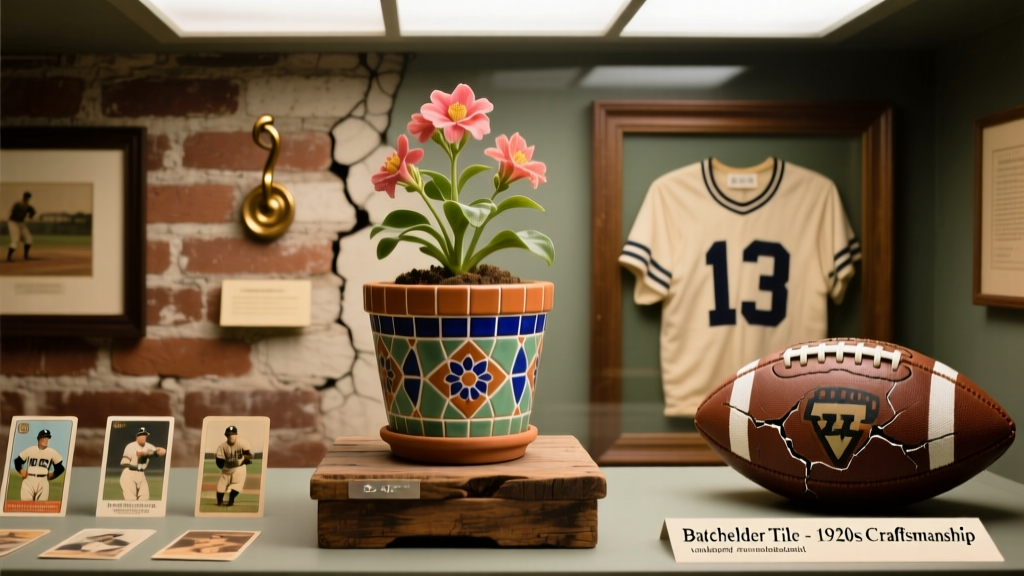
Batchelder Tile Potted Flowering Plant: Authenticating the Iconic 2¾ × 2¾-Inch Ceramic Relief

Porcelain Bowl: Tiger Pursuing Dragon with Floral Design, Pewter-Mounted China — A Collector’s Authentication & Historical Analysis

Canton China Teapot with Domed Lid: Authenticating the 9⅛-Inch Vintage Piece

Banks Panda Porcelain 3 1/4-Inch Figurine: Authentication, Provenance, and Market Value Analysis
Cents: The Unseen Currency of Sports Memorabilia Authentication and Valuation
Serab Rug Authentication Guide: Decoding the '2 Medallions, 6 Triangles, Blue Border' Design (11'2" × 4'4")

The Limoges Dinner Set: Gilt White Porcelain, 90-Piece Authenticity, Value, and Collectibility
The Dedham Plate Grouse: Decoding the 8 1/4-Inch Marked Example and Its Place in American Arms History