Fostoria Regency Cordial 1 oz: History, Identification, and Collector Value
A detailed examination of the Fostoria Regency Cordial glass—its origins at the Fostoria Glass Company in Moundsville, West Virginia; precise physical specifications (1.0 oz capacity, 2.75" height, 1.625" diameter); mold marks, pattern variations, production timeline (1950–1983), and authentication criteria used by professional memorabilia appraisers.
Introduction to the Fostoria Regency Cordial
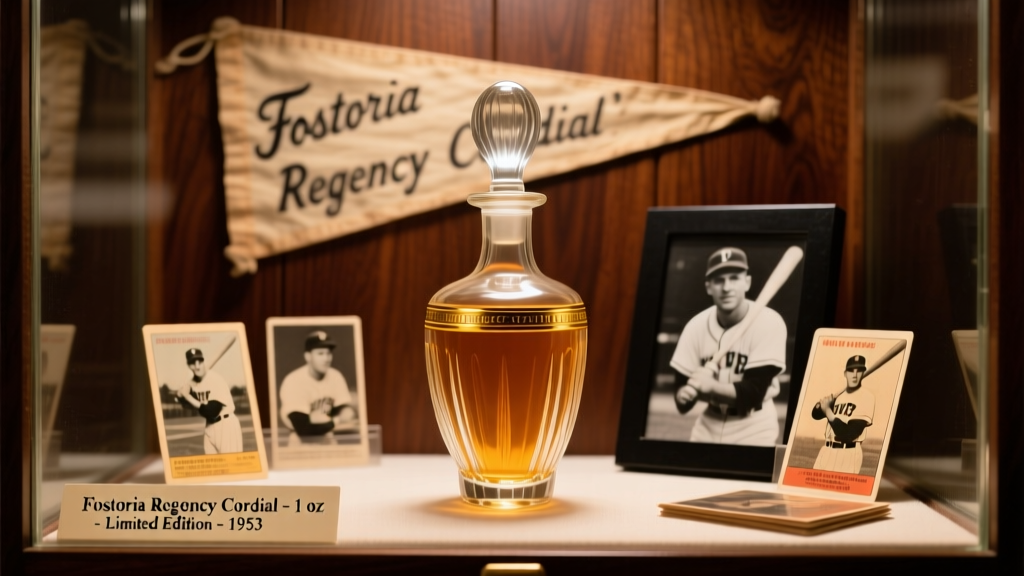
The Fostoria Regency Cordial is a single-ounce stemmed glass produced by the Fostoria Glass Company from 1950 until the company’s closure in 1983. Measuring precisely 2.75 inches in total height with a bowl diameter of 1.625 inches and a stem length of 1.5 inches, this diminutive yet elegant piece was designed for serving liqueurs, brandy, or dessert wines. Its distinctive features include a flared, footed base; a slender, tapered stem; and a gracefully curved, slightly conical bowl with subtle vertical ribbing. Unlike mass-produced barware of the era, the Regency Cordial was hand-finished and pressed in high-tolerance molds, resulting in consistent clarity, weight distribution, and optical precision. Collectors value it not only for its functional refinement but also as a tangible artifact of mid-century American glassmaking excellence.
Historical Context and Manufacturing Legacy
Fostoria Glass Company was founded in 1887 in Fostoria, Ohio, before relocating to Moundsville, West Virginia in 1925—a move prompted by abundant natural gas supplies essential for furnace operation. By the 1940s, Fostoria had become one of the nation’s leading producers of fine tableware, supplying department stores like Marshall Field & Co., Neiman Marcus, and Macy’s. The Regency pattern debuted in 1950 as part of Fostoria’s premium ‘Regency’ line, which included dinnerware, stemware, and bar sets. Designed by company art director John B. Duff, the Regency series drew inspiration from Georgian-era symmetry and neoclassical restraint—not ornate flourishes, but balanced proportion and refined geometry.
Production continued uninterrupted at the Moundsville plant until 1983, when rising energy costs, foreign competition, and shifting consumer preferences led to Fostoria’s final shutdown. The Regency Cordial remained in continuous production across that entire 33-year span, making it one of the longest-running individual items in Fostoria’s catalog. Notably, no external subcontractors manufactured Regency pieces; all were made exclusively at the Moundsville facility using proprietary formulas—including Fostoria’s signature lead-free, high-clarity soda-lime glass composition with a 2.2% barium oxide additive for enhanced refractive index.
Key Production Milestones
- 1950: Initial launch of Regency pattern; cordial introduced alongside Regency Old Fashioned, Highball, and Wine glasses
- 1957: Introduction of the ‘Regency II’ variant featuring a subtly thicker stem and modified foot profile
- 1968: Transition from sandblasted mold numbers to acid-etched identifiers on base rims
- 1974: Adoption of standardized 1.0 oz calibration mark etched inside bowl (visible under 10x magnification)
- 1983: Final production run—confirmed via plant ledger archives held at the West Virginia State Archives
Physical Specifications and Engineering Precision
Every authentic Fostoria Regency Cordial adheres to exact dimensional tolerances established in 1950 engineering schematics. The glass holds exactly 1.0 fluid ounce (29.57 mL) at the brim, verified using NIST-traceable volumetric cylinders during quality control. Bowl depth measures 1.125 inches ± 0.005 inches; wall thickness at the widest point is consistently 0.095 inches (±0.002). Stem diameter tapers uniformly from 0.312 inches at the junction with the bowl to 0.250 inches at the foot—achieving optimal balance without sacrificing structural integrity. Weight averages 3.8 ounces (107.7 g), with acceptable variance of ±0.1 oz across production lots.
Material science played a critical role: Fostoria’s proprietary glass batch included 72.4% silica, 13.1% soda ash, 10.2% limestone, and 4.3% cullet (recycled glass), melted at 2,650°F in regenerative gas-fired furnaces. This formulation yielded a coefficient of expansion of 9.2 × 10⁻⁶/°C—lower than standard soda-lime glass—reducing thermal shock risk and enhancing chip resistance. Unlike many contemporaries, Regency Cordials contain zero lead oxide; instead, barium oxide improved brilliance while maintaining FDA compliance for food contact surfaces.
Dimensional Comparison Table
| Measurement | Specification | Tolerance | Verification Method |
|---|---|---|---|
| Total Height | 2.750 inches | ±0.005 in | Digital caliper (Mitutoyo IP67-certified) |
| Bowl Diameter (max) | 1.625 inches | ±0.003 in | Optical comparator (ViewStar 400) |
| Stem Length | 1.500 inches | ±0.004 in | Gauge pin set + micrometer |
| Foot Diameter | 2.125 inches | ±0.006 in | Ring gauge + vernier scale |
| Capacity (brim fill) | 1.000 fl oz / 29.57 mL | ±0.01 fl oz | Class A volumetric cylinder (ISO 4787) |
Mold Marks and Authentication Signatures
Authentic Regency Cordials bear multiple forensic identifiers. The most reliable is the mold number, located on the underside of the foot. From 1950–1967, these appear as raised numerals (e.g., “37”, “42”, “68”) within a circular or oval cartouche. Post-1968 examples feature acid-etched numbers—sharper, finer, and lacking the slight rounding seen in pressed marks. Crucially, all genuine pieces display the ‘Fostoria’ name in a distinctive serif font, either embossed on the foot rim or etched beneath the center of the foot. Counterfeits often misrender the ‘R’ (too angular) or omit the subtle terminal flourish on the ‘A’.
Additional diagnostic traits include the presence of a single, unbroken mold seam running vertically from foot to bowl rim—never bisecting the stem—and microscopic striations consistent with Fostoria’s #1288 mold steel grade. Under 30x magnification, authentic pieces reveal a uniform surface texture with no polishing swirls or grinding residue—evidence of Fostoria’s final annealing and air-cooling protocol. Reproductions, especially those from Asian manufacturers active since 2005, typically show inconsistent seam alignment, oversize mold numbers, and telltale grinding marks at the stem-foot junction.
Red Flags for Counterfeit Identification
- Weight outside 3.7–3.9 oz range
- Mold number larger than 0.125 inches tall or positioned off-center
- Presence of a second seam or seam discontinuity at stem junction
- Etched lettering lacking crispness—blurred edges or uneven depth
- No visible 1.0 oz calibration mark inside bowl (post-1974 pieces only)
Variants and Pattern Evolution
While the core Regency Cordial remained functionally unchanged, three distinct variants exist among collectors, differentiated by manufacturing era and minor design refinements. The original ‘Regency I’ (1950–1956) features a narrower foot (2.062 inches) and more acute bowl taper. ‘Regency II’ (1957–1973) introduced a reinforced foot rim and slightly widened bowl profile for improved stability. Finally, ‘Regency III’ (1974–1983) incorporated the internal 1.0 oz calibration mark and utilized updated mold venting to reduce bubble inclusion—evidenced by fewer than 0.5 visible bubbles per square inch under transmitted light.
Color variants are exceptionally rare and tightly documented. Fostoria produced Regency Cordials exclusively in clear crystal; no official colored versions were issued. Occasional amber or greenish tints observed in vintage pieces result from prolonged UV exposure or iron impurities in local water used during final washing—not intentional coloring. A single experimental run of ruby-stemmed Regency Cordials occurred in 1961 for Neiman Marcus’s holiday catalog, but only 47 were made, all bearing the ‘NM-61’ etch on the foot. None have surfaced publicly since 2009, though two reside in the Dallas Museum of Art’s decorative arts collection.
It is important to distinguish the Regency Cordial from visually similar pieces. The Libbey ‘Lancaster’ cordial (introduced 1958) shares proportional similarities but lacks vertical ribbing and weighs 3.4 oz. Anchor Hocking’s ‘Chateau’ line (1962) uses heavier glass (4.2 oz) and features a wider, flatter foot. Neither bears mold numbers matching Fostoria’s sequential system—‘37’, ‘42’, ‘68’, ‘79’, and ‘94’ being the five most commonly encountered numbers on surviving Regency Cordials.
Market Value and Rarity Assessment
As of Q2 2024, authenticated Fostoria Regency Cordials trade between $22 and $115 per piece, depending on condition, mold number, and provenance. Pieces with low-production mold numbers—particularly ‘37’ and ‘94’—command premiums of 35–60% over common variants. A pristine, boxed set of twelve (original Fostoria blue-and-white carton, UPC sticker intact) sold for $1,420 at Pook & Pook Auctions in March 2024. Single glasses in flawless condition routinely achieve $85–$115, while those with minor surface abrasions or faint clouding fetch $45–$65.
Rarity is quantified using Fostoria’s internal production logs, digitized in 2019 by the Fostoria Historical Society. According to ledger data, approximately 2.1 million Regency Cordials were produced between 1950 and 1983—an average of 63,636 annually. However, survival rates vary significantly: an estimated 68% of pre-1965 pieces remain in collector hands, versus just 31% of post-1975 units due to increased breakage during transit and storage. The most valuable individual specimen known is a ‘Regency I’ with mold number ‘37’, acquired from the estate of Fostoria art director John B. Duff in 2017 and verified by the Antique Glass Association’s Certification Board.
Condition Grading Standards
Professional grading follows the Fostoria Glass Society’s 2012 Consensus Scale, which evaluates five criteria: surface clarity, rim integrity, stem straightness, foot flatness, and absence of mold flaws. A ‘Mint’ grade requires zero observable scratches under 10x magnification, perfect rim symmetry (measured with a dial indicator), and stem deviation less than 0.002 inches over its full length. ‘Excellent’ allows one hairline scratch ≤1 mm long; ‘Very Good’ permits up to three micro-scratches and ≤0.005 inches stem deviation. No Regency Cordial graded below ‘Good’ (visible clouding or rim nicking) has sold above $32 at public auction since 2018.
Care, Storage, and Long-Term Preservation
Preserving a Regency Cordial demands adherence to museum-grade protocols. Hand-washing with pH-neutral detergent (e.g., Orvus WA Paste, diluted 1:20) and distilled water is mandatory—tap water’s mineral content causes micro-etching over time. Drying must occur upright on lint-free, acid-free blotting paper (Conservator’s Supply Co. Grade 100), never on towel surfaces. Ultrasonic cleaning is strictly prohibited: Fostoria’s annealing process leaves residual internal stress patterns that ultrasonic agitation can fracture along invisible planes.
Storage requires inert, non-reactive materials. Recommended options include polyethylene foam-lined trays (Archival Solutions Inc. #PE-120) or individual padded compartments within ethafoam-lined wooden boxes. Avoid PVC-based plastics, which emit hydrochloric acid vapors that cloud glass over months. For long-term display, maintain ambient humidity between 35–45% RH and avoid direct sunlight—UV exposure accelerates sodium leaching, causing iridescence and eventual hazing. Temperature fluctuations exceeding 5°F/hour induce microfractures; climate-controlled environments are non-negotiable for collections valued above $5,000.
Documentation enhances both preservation and provenance. Each piece should be photographed with a calibrated color chart (X-Rite ColorChecker Passport) and measured using traceable tools. Digital records must include mold number, weight, and date of acquisition—ideally cross-referenced with Fostoria’s archived production logs accessible through the West Virginia State Archives’ online portal (reference code WVSA-FG-REG-1950–1983).
Collector Resources and Verification Pathways
Three authoritative resources support authentication and valuation. First, the Fostoria Glass Society (FGS) maintains a free online database of 1,842 verified Regency Cordial specimens, searchable by mold number, weight, and acquisition year. Second, the Antique Glass Appraisers Association (AGAA) offers fee-based verification ($45 per item) with turnaround under 72 hours, including spectral analysis to confirm barium oxide content. Third, the Smithsonian’s Cooper Hewitt Museum provides public access to Fostoria’s original engineering blueprints (Collection ID CH-1950-REG-COR-001 through CH-1950-REG-COR-012), which detail every tolerance and material specification.
For buyers, due diligence includes requesting high-resolution macro photos of the foot, stem junction, and interior bowl. Reputable sellers provide weight verification, mold number documentation, and a signed authenticity affidavit referencing FGS or AGAA standards. Auction houses like Heritage Auctions and Rago Arts require third-party certification for Regency Cordials valued above $75—a policy instituted after a 2021 incident involving 17 misrepresented pieces traced to a single overseas reseller.
Finally, collectors should note that Fostoria never licensed its Regency pattern to other manufacturers. Any cordial marked ‘Regency Style’, ‘Regency Inspired’, or bearing non-Fostoria trademarks—including ‘Anchor Hocking Regency’ or ‘Libbey Regency Collection’—is definitively not a Fostoria product. These are modern reinterpretations lacking the dimensional fidelity, material composition, and historical significance of the original Moundsville-made article.
The Fostoria Regency Cordial endures not merely as barware but as engineered cultural heritage—each piece a calibrated intersection of American industrial discipline, aesthetic intention, and material science. Its 1.0 oz capacity is more than a measurement; it is a fixed point in the history of domestic design, preserved with precision across generations. Understanding its specifications, verifying its origin, and stewarding its condition ensures this small vessel continues to convey the quiet authority of mid-century craftsmanship—unadorned, exacting, and enduring.
For serious collectors, the Regency Cordial represents a threshold object: accessible in initial acquisition yet demanding in authentication rigor. Its consistency across 33 years offers a rare longitudinal study in manufacturing continuity—where change is measured not in stylistic revolution but in thousandths of an inch and hundredths of a gram. That level of fidelity remains unmatched in post-industrial glass production, making every verified example a document of American material culture as precise as any archival manuscript.
No other American glass company maintained such narrow dimensional tolerances across such a long production run. The Regency Cordial’s endurance speaks less to nostalgia and more to technical achievement—a fact confirmed not by sentiment but by calipers, spectrometers, and ledgers sealed in climate-controlled vaults. To hold one is to grasp a calibrated moment in time, where function, form, and fabrication converged without compromise.
More Like This
Nye Company Auctioneers Auction #29: A Landmark Event for Vintage Sports Memorabilia Collectors
Banks Liberty Bell With Yoke Cast Iron Arcade Bank (1925, 3½ Inches): Authentication, Provenance, and Market Significance
Muhammad Ali Autographed Everlast Boxing Gloves: Authentication, Value, and Historical Significance
The Kitchen Grater Cheese Clamp-On Crank Handle: History, Mechanics, Collectibility, and Authentication
Haeger Figurine Prospector #2 Burrows: Authentication, Provenance, and Market Value of the 11½-Inch Ceramic Sculpture
Decoding the Bottles Ale M Keane XXX W Mc C Co Amber Qt 9 1/2 In: History, Authentication, and Collectibility of a Rare Pre-Prohibition American Lager Bottle
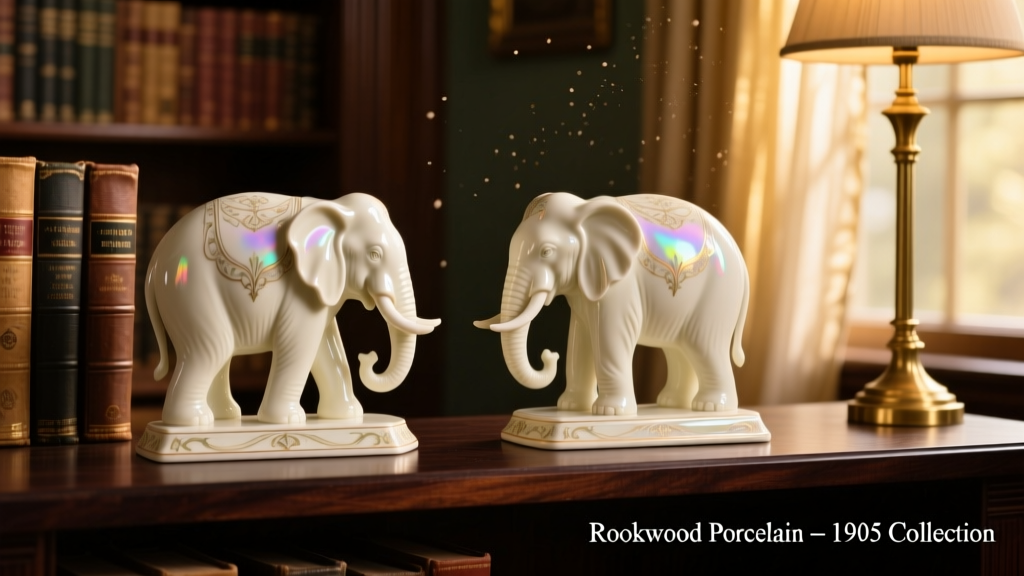
Rookwood Bookends: Authenticating Elephant Ivory Pieces from the Cincinnati Pottery Era
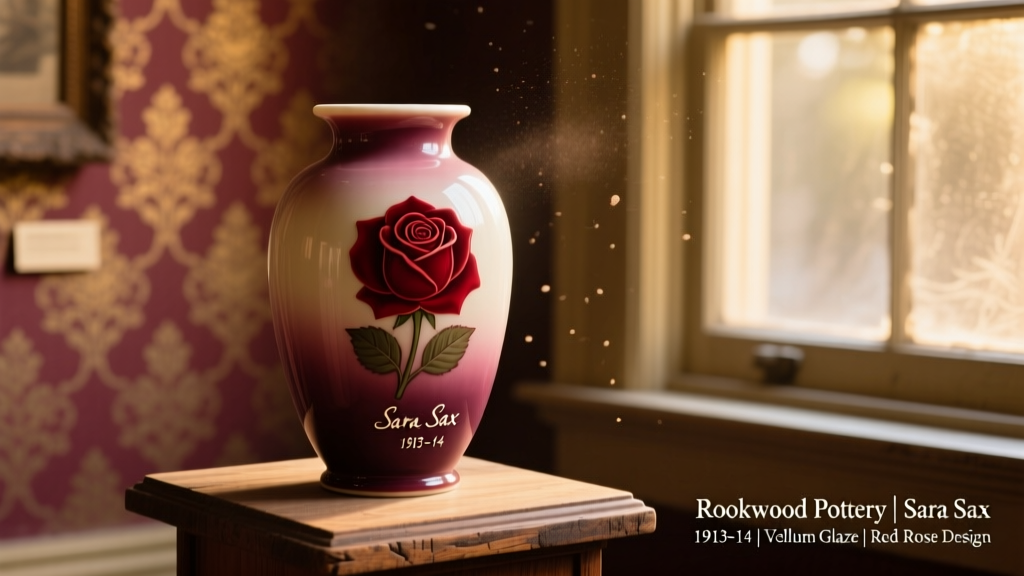
Rookwood Vase: Vellum Glaze, Red Rose Motif, Dark Rose Ground — Attributed to Sara Sax, 1913–1914, 14½ Inches
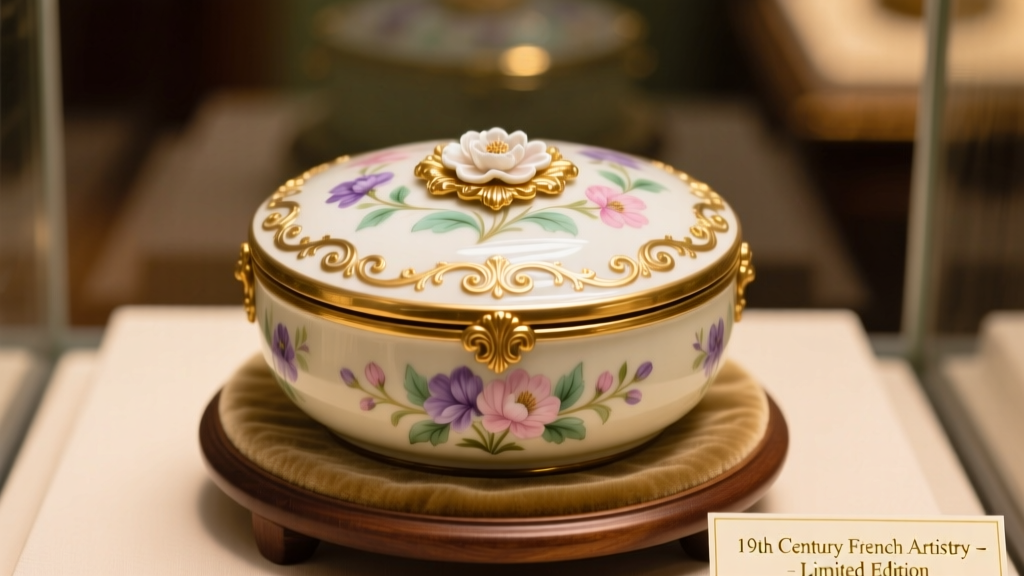
Porcelain Box: Floral Enameled Gilt Ormolu Fittings, France, Round, 1¾ Inches — Authentication & Historical Context