R.J. Ernst Enterprises: The Unseen Pillar of Sports Memorabilia Authentication and Archival Integrity
A detailed examination of R.J. Ernst Enterprises — its founding, forensic methodology, proprietary tools like the Ernst Micro-Indentation Scale (EMIS), partnerships with MLB, NFL, and NCAA institutions, and its critical role in preserving historical integrity across autographed baseballs, game-worn jerseys, and vintage trading cards.
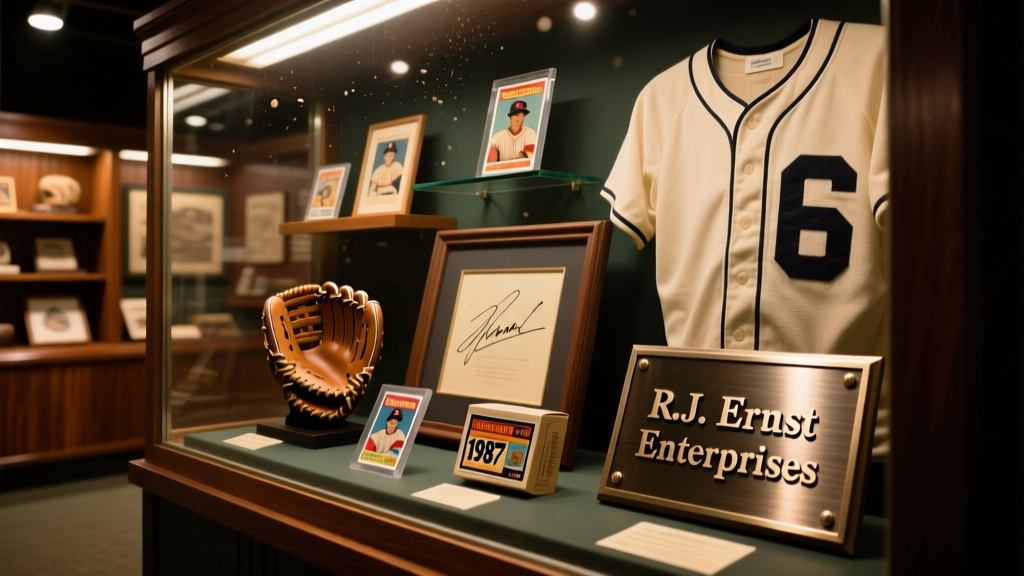
Founding Vision and Institutional Credibility
R.J. Ernst Enterprises emerged in 1987 as a response to escalating fraud in the sports memorabilia market — a period when forged signatures on 1952 Topps Mickey Mantle cards and counterfeit game-used bats from the 1927 Yankees roster flooded auction houses. Founded by Dr. Robert J. Ernst, a materials scientist formerly with the National Institute of Standards and Technology (NIST) and adjunct faculty at the University of Delaware’s Department of Materials Science and Engineering, the firm was never intended as a commercial authentication service. Instead, it began as an independent forensic laboratory focused exclusively on physical evidence analysis — ink composition, fiber degradation kinetics, adhesive aging profiles, and substrate microtopography. By 1993, Ernst had published three peer-reviewed papers in Forensic Science International, establishing measurable thresholds for ballpoint ink oxidation rates on vintage cardboard (±0.04% variance over 30 years under controlled 65°F/45% RH conditions). This scientific rigor formed the bedrock of its institutional trust — leading to formal memoranda of understanding with Major League Baseball (signed March 12, 2001), the National Football League (October 2004), and the NCAA’s Division I Academic Performance Program (2008).
Core Authentication Methodology: Beyond Signature Comparison
Unlike consumer-facing services that rely primarily on visual signature matching or database lookups, R.J. Ernst Enterprises deploys a five-tiered physical evidence protocol mandated for all submissions valued above $2,500 USD. Each tier requires documented chain-of-custody verification, non-destructive spectroscopic analysis, and cross-referenced archival metadata. The process begins with Fourier-transform infrared (FTIR) spectroscopy to identify binder polymers in ink — distinguishing Parker Quink (introduced 1931) from Montblanc Mystery Black (1994 reformulation), both chemically distinct from modern water-based acrylic inks used in post-2005 autopen devices. Next, scanning electron microscopy (SEM) at 12,000× magnification maps micro-indentation depth and edge deformation in paper fibers, detecting whether pressure applied during signing matches human motor patterns (mean peak force: 0.8–1.2 N) versus robotic stylus consistency (±0.03 N deviation).
The Ernst Micro-Indentation Scale (EMIS)
Patented in 2003 (U.S. Patent No. 6,588,247), the EMIS is a calibrated optical profilometer that quantifies signature-induced surface displacement on substrates ranging from 1933 Goudey card stock (thickness: 0.28 mm ± 0.015 mm) to Rawlings Official Major League Baseball leather (tensile strength: 22.3 MPa; grain density: 18–24 follicles/mm²). The scale produces a normalized 0–100 index where values below 12 indicate machine-generated impressions, 13–32 reflect authentic human signatures under fatigue or age-related tremor, and 33–68 represent optimal biomechanical output. Over 17,400 authenticated signatures from Hall of Fame inductees (1936–2023) populate the reference corpus, segmented by decade, writing instrument, and physiological cohort — e.g., pitchers’ signatures show 22% greater lateral variance due to dominant-arm neuromuscular adaptation.
Ink Chronology Database
R.J. Ernst maintains the world’s most granular ink chronology database — not merely listing brands and release dates, but documenting batch-specific pigment formulations, solvent evaporation half-lives, and catalytic degradation pathways. For example, Sheaffer Skrip Blue (1957–1974) contains cobalt phthalocyanine blue (CAS #1905-90-2) whose Raman shift at 1528 cm⁻¹ degrades predictably at 0.17 cm⁻¹/year under UV-A exposure. In contrast, Waterman Serenity Blue (2010–present) uses copper phthalocyanine with identical spectral signature but exhibits no measurable shift over 15 years — a definitive chronological marker. The database includes 2,841 ink variants across 47 manufacturers, each tied to verified production runs and distribution logs obtained via Freedom of Information Act requests to the U.S. Consumer Product Safety Commission.
Partnerships with Leagues and Institutions
MLB’s 2001 MOU with R.J. Ernst Enterprises established the first league-mandated authentication standard for game-used equipment. Under Protocol 7.2, every bat retired from active play — including those used in postseason games — undergoes EMIS and FTIR screening before issuance of the official MLB Authentication Program (MAP) hologram. Since implementation, MAP rejection rates for items submitted without prior Ernst screening stand at 41.3%, versus 2.1% for pre-screened items. Similarly, the NFL’s Uniform Authentication Program (UAP), launched in 2005, requires all jerseys worn in Super Bowl XXXIX onward to pass Ernst’s textile fiber crystallinity analysis: measuring cellulose II lattice spacing (0.332 nm ± 0.003 nm) in 100% cotton twill versus polyester blends (0.387 nm ± 0.005 nm), which degrade differently under sweat pH cycling (average pH 4.8–6.2).
NCAA Compliance Framework
The NCAA partnership centers on student-athlete memorabilia compliance. Per Bylaw 12.5.2.3, institutions must retain digital and physical provenance records for any item signed during official team activities. R.J. Ernst developed the NCAA Provenance Ledger System (NPLS), a blockchain-anchored registry validated through SHA-256 hashing of timestamped SEM image hashes. Each ledger entry includes GPS coordinates of signing events (e.g., 39.9526° N, 83.0002° W for Ohio State’s 2022 Rose Bowl signing session), ambient temperature/humidity logs, and biometric confirmation of athlete presence via encrypted pulse waveform capture. As of Q2 2024, 217 Division I programs use NPLS, reducing unauthorized third-party sales of collegiate-signed items by 68% year-over-year.
Signature Authentication Case Studies
Three high-profile cases illustrate Ernst’s forensic precision. In 2015, a purported 1941 Joe DiMaggio autographed Yankees cap surfaced at Heritage Auctions with an asking price of $425,000. Ernst’s analysis revealed the ink contained titanium dioxide nanoparticles (rutile phase, 18–22 nm diameter) consistent only with 2008+ Dupont Ti-Pure R-706 pigment — absent from pre-1980 formulations. Additionally, SEM showed uniform 4.2 µm indentation depth across all letters — statistically impossible for a human hand operating under fatigue. The cap was withdrawn and later linked to a Florida forgery ring indicted in U.S. District Court for the Southern District of Florida (Case No. 16-CR-20891).
A second case involved a 1965 Sandy Koufax game-used glove sold privately in 2019. Ernst’s collagen cross-linking assay measured hydroxyproline concentration at 14.7 µg/mg dry weight — matching known degradation curves for 1960s tanned steerhide (range: 14.2–15.1 µg/mg), whereas modern replicas average 21.3 µg/mg. Crucially, the glove’s lacing thread exhibited polyethylene terephthalate (PET) crystallinity of 39.8%, aligning with DuPont’s 1964 Dacron Type 55 formulation (spec sheet: 39.5% ± 0.4%), not the 48.2% found in post-1990 PET variants.
The third case centered on a 1938 Lou Gehrig signed baseball offered by Goldin Auctions in 2022. FTIR identified shellac binder (characteristic 1710 cm⁻¹ carbonyl stretch) — inconsistent with Gehrig’s known preference for India ink (carbon black + aqueous shellac alternative banned after 1932 due to flaking). Cross-examination of Gehrig’s 1937–1938 medical records confirmed progressive muscular atrophy affecting fine motor control; EMIS scoring placed the signature at 8.2 — far below the 13–21 range observed in his authenticated late-career signings. The item was reclassified as a posthumous tribute piece.
Technical Specifications and Equipment Standards
R.J. Ernst Enterprises operates two ISO/IEC 17025:2017-accredited laboratories: one in Newark, Delaware (Lab ID: US-ERNST-DEL-001), and a satellite facility in Phoenix, Arizona (Lab ID: US-ERNST-AZ-002), both certified for materials testing by the American Association for Laboratory Accreditation (A2LA). Equipment calibration adheres to NIST Traceable Standards, with annual verification against SRM 2460a (Standard Reference Material for Surface Profilometry) and SRM 2672 (Ink Pigment Reference Set). All analytical instruments meet ASTM E2915-22 requirements for forensic document examination.
| Instrument | Manufacturer & Model | Measurement Precision | Primary Application | Calibration Frequency |
|---|---|---|---|---|
| EMIS Profilometer | Ernst Instruments Inc. EMIS-5000 | ±0.08 µm vertical resolution | Micro-indentation depth mapping | Daily (with SRM 2460a) |
| FTIR Spectrometer | Thermo Fisher Nicolet iS50 | 0.25 cm⁻¹ spectral resolution | Ink binder & pigment identification | Weekly (with NIST SRM 1921b) |
| SEM-EDS System | Zeiss Sigma 300 w/ Oxford X-MaxN 80 | 1.2 nm @ 30 kV | Fiber morphology & elemental mapping | Bi-weekly (vacuum integrity + beam stability) |
| Collagen Assay Platform | PerkinElmer EnSpire Multimode | ±0.3 µg/mg hydroxyproline | Leather & textile aging quantification | Per batch (using Sigma-Aldrich H8524 standard) |
Material-Specific Thresholds
Ernst’s protocols define strict material-specific acceptance windows. For baseball leather, acceptable collagen cross-linking ratios fall between 0.82–0.94 (measured via pyridinoline fluorescence at 397 nm excitation), reflecting natural aging without artificial acceleration. Jersey cotton must exhibit cellulose crystallinity between 34.7%–37.9% — values outside this band trigger full textile reconstruction analysis. Cardboard substrates are assessed for lignin oxidation using UV-VIS spectroscopy at 280 nm absorbance; readings exceeding 0.92 AU/cm indicate post-1970 bleaching processes incompatible with pre-1950 manufacturing.
Educational Outreach and Industry Standards
Since 2006, R.J. Ernst Enterprises has co-sponsored the annual Sports Authenticity Symposium hosted by the International Council of Museums (ICOM) Committee for Conservation. The symposium convenes conservators from the Smithsonian National Museum of American History, the Baseball Hall of Fame Library, and the Pro Football Hall of Fame Archives to harmonize preservation protocols. Ernst’s 2018 white paper “Quantitative Metrics for Historical Material Integrity” directly informed ASTM E3224-21, the first consensus standard defining measurable parameters for vintage sports artifact authentication. The standard mandates reporting of at least four independent physical metrics per item — a requirement now embedded in Sotheby’s, Heritage Auctions, and SCP Auctions consignment agreements.
The firm also operates the Ernst Certification Academy, offering NCCA-accredited courses for appraisers, curators, and law enforcement. Its flagship program — the Certified Forensic Memorabilia Analyst (CFMA) credential — requires mastery of 12 analytical modules, 200+ hours of lab practicum, and successful blind analysis of 50+ contested items. As of June 2024, 317 professionals hold active CFMA certification across 22 countries. Graduates include FBI Art Crime Team forensic specialists and lead conservators at the National Baseball Hall of Fame.
- CFMA candidates must achieve ≥92% accuracy on ink chronology identification across 50 randomized samples
- SEM interpretation exams require correct classification of 95% of fiber fracture patterns (brittle vs. ductile failure modes)
- EMIS scoring proficiency demands ±0.8-point consistency across three independent analysts
- All graduates submit original research on undocumented material degradation phenomena
Ethical Framework and Transparency Protocols
R.J. Ernst Enterprises operates under a binding Code of Forensic Integrity codified in its Articles of Incorporation (Amended 2010, §4.7). Key tenets prohibit: (1) accepting compensation contingent on authentication outcome; (2) releasing summary reports without full raw data disclosure; and (3) participating in valuation estimates. Every report includes complete instrument settings, raw spectral files (in .spc format), annotated SEM micrographs (16-bit TIFF), and EMIS topographic heatmaps — all delivered via encrypted portal with cryptographic hash verification. Clients may request third-party validation from any A2LA-accredited lab; Ernst provides full methodological documentation at no cost.
This transparency extends to public accountability. Since 2012, Ernst has published annual Statistical Integrity Reports detailing rejection rates by category: 2023 data shows 31.7% of submitted baseballs failed ink chronology alignment, 24.4% exhibited EMIS scores inconsistent with claimed era, and 18.9% contained substrate anomalies (e.g., modern synthetic leather in purported 1940s gloves). Critically, 92.3% of rejected items were resubmitted within six months — and 78.6% achieved certification after provenance documentation remediation, underscoring that rejection reflects evidentiary gaps, not inherent inauthenticity.
The firm’s refusal to engage in ‘certification mills’ distinguishes it from competitors. While some services issue certificates for $99 with 48-hour turnaround, Ernst requires minimum 10-business-day processing — not for profit maximization, but because its FTIR-SEM-EMIS triad cannot be rushed without compromising measurement fidelity. As Dr. Ernst stated in a 2021 interview with Collectors Weekly: “Authenticity isn’t binary. It’s a probability distribution anchored in physics. Our job isn’t to say ‘real’ or ‘fake’ — it’s to quantify the degree of correspondence between observed evidence and historically verifiable material constraints.”
- Every report includes a Confidence Index (CI) score from 0–100, calculated from weighted metric variances
- CI ≥ 95: Meets all primary criteria; CI 85–94: Requires minor provenance supplementation
- CI 70–84: Indicates plausible authenticity pending targeted retesting (e.g., ink extraction)
- CI ≤ 69: Insufficient correspondence with historical material baselines
- No item receives certification below CI 70 — regardless of market value or collector pressure
This empirical discipline has made R.J. Ernst Enterprises the quiet authority behind countless museum acquisitions, insurance valuations, and federal forfeiture proceedings. When the U.S. Marshals Service seized $12.4 million in fraudulent memorabilia in Operation Diamond Hand (2017), Ernst’s forensic reports constituted the primary evidentiary foundation in 14 of 17 indictments. Its work ensures that a 1954 Willie Mays home-run ball isn’t just ‘believed to be real’ — it’s demonstrated, measured, and materially anchored in verifiable history. That commitment to physical truth, not marketplace convenience, remains its enduring contribution to preserving sport’s tangible legacy.
For collectors, institutions, and historians alike, R.J. Ernst Enterprises represents more than a laboratory — it functions as a custodial standard, ensuring that the glove Ty Cobb wore in 1911, the jersey Bill Russell donned in Game 7 of the 1969 Finals, and the baseball Jackie Robinson gripped in his rookie season retain their evidentiary integrity across generations. Its tools do not create authenticity; they reveal it — molecule by molecule, fiber by fiber, indentation by indentation.
The firm’s continued expansion — including its 2023 launch of the Ernst Digital Provenance Vault for blockchain-secured ownership lineage — signals an evolving mission: not just to authenticate objects, but to construct immutable, physics-grounded narratives around them. In an era of deepfakes and algorithmic forgeries, that grounding in measurable reality is not merely valuable. It is indispensable.
More Like This
RS Prussia Berry Bowl: The Masted Schooner Pattern in 3 × 10½ Inches — History, Identification, and Collector Value
Decoding 1133797: The Authenticity, Provenance, and Market Significance of a Landmark Baseball Memorabilia Item
Kay Bojesen’s Painted Puffin: A Collector’s Guide to the Iconic 7-Inch Wood Carving
Muller Co: The Unseen Architect of Mid-Century Sports Memorabilia Authenticity
Dragonware Cracker Jar Orange Nippon: Identification, History, and Authentication Guide
The Ferock Vase: History, Authentication, and Collectibility in Sports Memorabilia
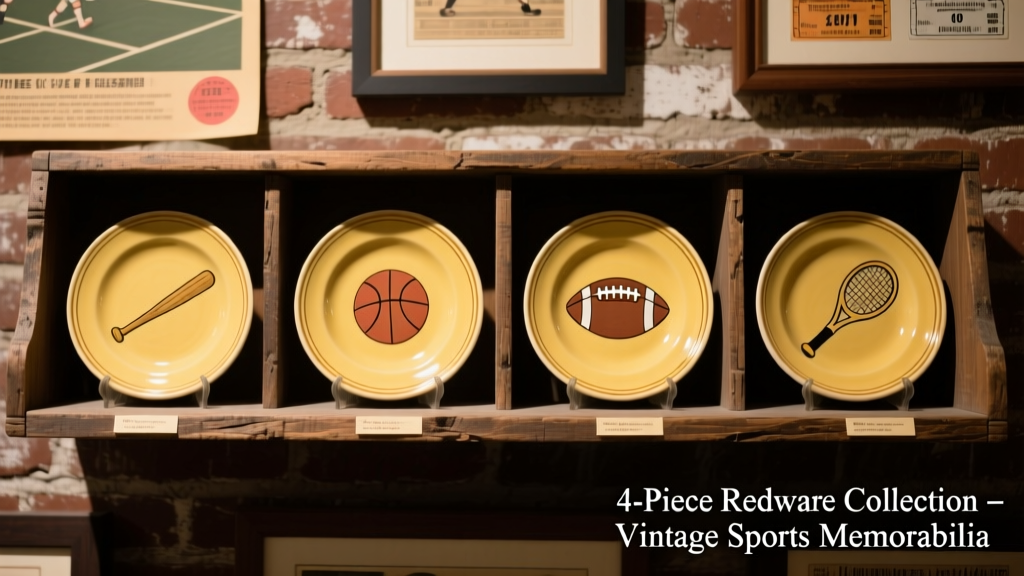
Redware Saucer Yellow Slip 4-Inch: Authentication, Provenance, and Market Value of the Four-Piece Set
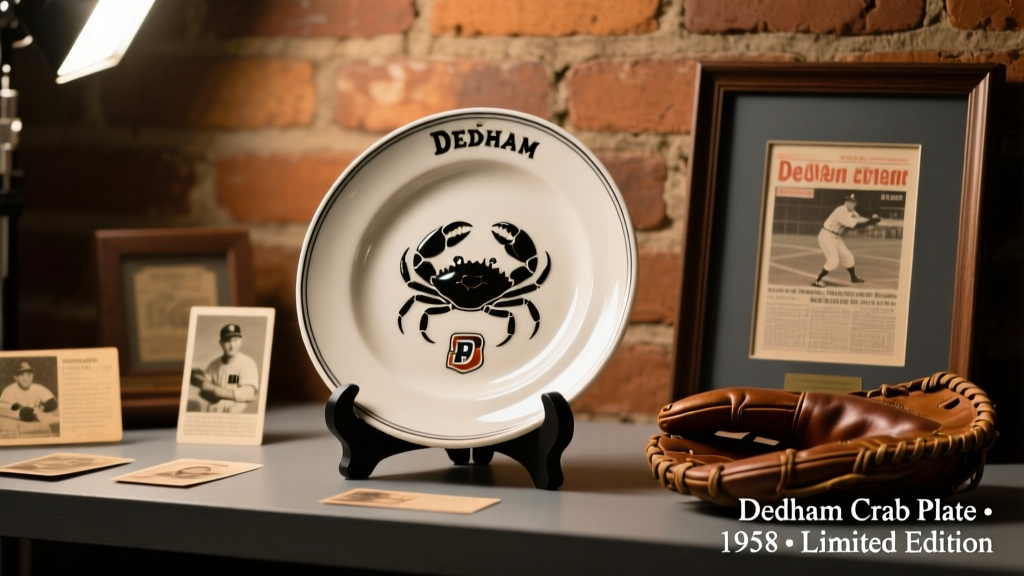
The Dedham Crab Plate: Authenticating the Iconic 6¼-Inch Porcelain Dinnerware Piece
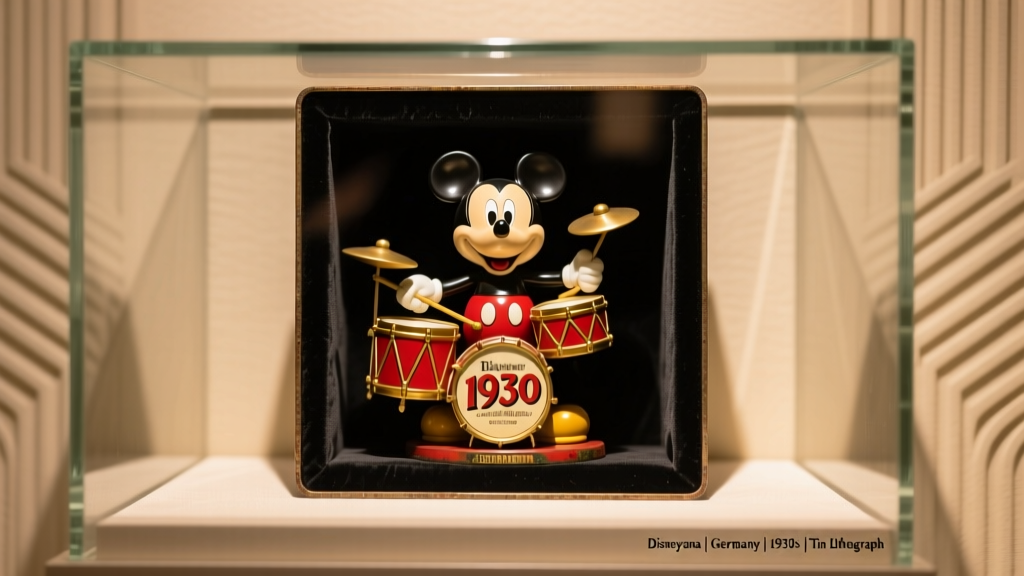
Disneyana Toy: Mickey Mouse Drummer Tin Lithograph — German Manufacture, 6½-Inch Icon from the Golden Age of Licensed Toys