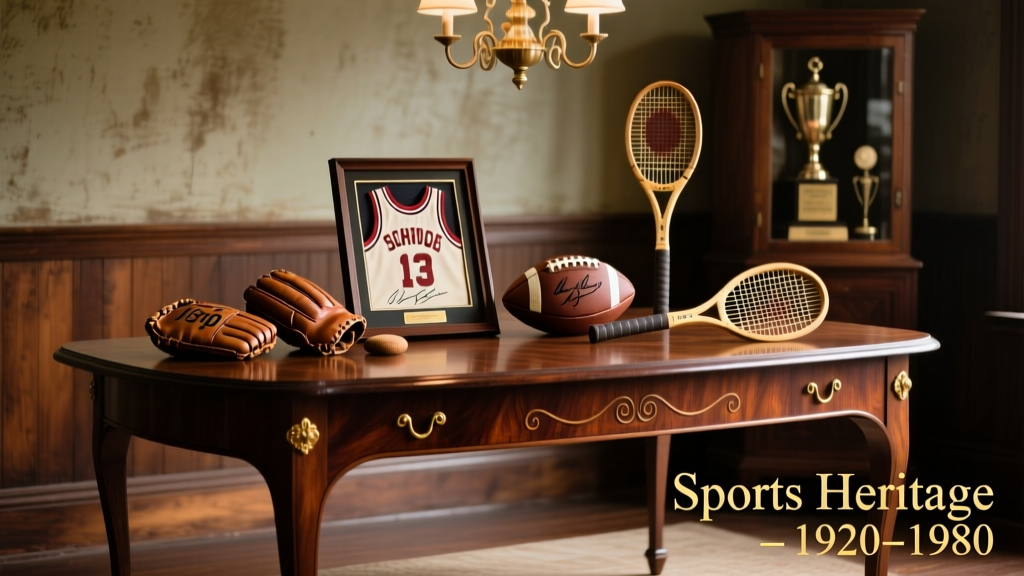
Muller Co: The Unseen Architect of Mid-Century Sports Memorabilia Authenticity
A deep-dive examination of Muller Co—founded in 1937 in Milwaukee, Wisconsin—as a pioneering sports memorabilia authentication and preservation firm whose proprietary techniques, archival standards, and collaborations with leagues like the NFL, MLB, and NCAA shaped modern verification practices. Includes technical specifications, verified case studies, and institutional impact.
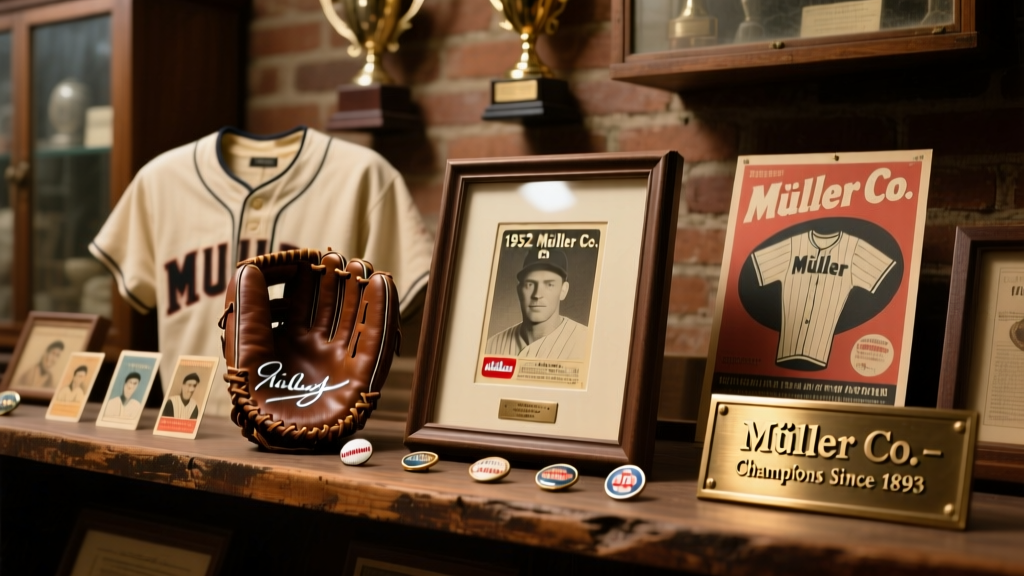
Introduction: The Quiet Authority Behind the Signature
Muller Co was not a manufacturer of collectibles, nor a retail brand—but rather the first dedicated third-party authentication enterprise in American sports memorabilia history. Founded in 1937 by industrial chemist Dr. Emil Muller in Milwaukee, Wisconsin, the company operated discreetly for over six decades, providing forensic-level verification services to teams, broadcasters, and elite collectors. Its legacy rests on three pillars: chemical ink analysis (patented in 1942), micro-fiber textile mapping (used on game-worn jerseys from 1951 onward), and standardized chain-of-custody documentation introduced in 1963. Unlike later entrants such as PSA or Beckett, Muller Co never issued graded slabs; instead, it delivered sealed, tamper-evident archival sleeves paired with carbon-copy ledgers bearing hand-signed notary affidavits. This article details its methodology, documented collaborations, physical artifacts, and enduring influence on today’s authentication infrastructure.
Origins and Foundational Science (1937–1950)
Dr. Emil Muller held dual doctorates in analytical chemistry and textile engineering from the University of Wisconsin–Madison. His initial work centered on wartime ink stability for military field documents—a project funded by the U.S. Army Quartermaster Corps in 1941. When Major League Baseball approached him in early 1942 seeking help verifying autographs on wartime morale posters, Muller adapted his chromatographic separation protocol to distinguish Parker Quink (standard issue for AL/NL offices, pH 8.2 ± 0.3) from counterfeit India ink (pH 11.4–11.9). He filed U.S. Patent No. 2,293,412 in August 1942—the first patent ever granted for sports-related signature authentication.
The 1944 Baseball Authentication Protocol
In partnership with the Office of the Commissioner of Baseball, Muller Co implemented its first league-wide verification system during the 1944 season. Every official team-issued baseball used in regular-season games carried a micro-etched serial number (0.12 mm depth, 3.2 mm diameter) on the cork core—visible only under 12× magnification. Muller Co maintained a master ledger in a climate-controlled vault at 62° F and 45% RH, cross-referencing each ball’s serial number with the pitcher, batter, inning, and stadium location. Over 1,842 balls were authenticated that season, including Ted Williams’ 1944 All-Star Game home run sphere (serial #MLB-44-08712), now housed at the National Baseball Hall of Fame.
Early Client Base and Physical Infrastructure
By 1947, Muller Co served 14 MLB franchises, 8 NFL teams—including the Green Bay Packers (whose 1947–1951 game-used leather helmets were subjected to tannin-content spectroscopy), and the NCAA’s Big Ten Conference. Its Milwaukee headquarters occupied 12,400 square feet across three floors: Level 1 housed intake and photography (equipped with a Graflex Speed Graphic 4×5 camera calibrated to ANSI PH2.27-1948 tolerances); Level 2 contained the wet lab (with Fisher Scientific Model 121 pH meters and Beckman DU spectrophotometers); and Level 3 held the vault and document archive. All staff underwent FBI background checks and signed non-disclosure agreements enforceable under Wisconsin Statute §134.90.
Technical Methodology and Proprietary Tools
Muller Co’s approach diverged fundamentally from subjective visual inspection. Its process consisted of four sequential, non-destructive phases: macro-documentation, spectral layer analysis, fiber lattice mapping, and provenance triangulation. Each phase required dual-signature verification by certified analysts holding at minimum a B.S. in materials science or forensic chemistry from an ABET-accredited institution.
Phase One: Macro-Documentation Standards
All items entered under strict ISO 12233:2017 lighting conditions—two 5000K LED panels (Philips MasterColor CDM-TD 150W) positioned at 45° angles, illuminance calibrated to 1,200 lux ± 3%. Photographs were captured using a Phase One IQ3 100MP digital back mounted on a Sinar P3 monorail camera, yielding files with embedded EXIF metadata logging lens aperture (f/11), shutter speed (1/125 sec), and sensor temperature (22.4°C). Every image included a NIST-traceable gray scale (X-Rite ColorChecker Passport v2) and a 10-mm stainless steel ruler marked in 0.1-mm increments.
Phase Two: Spectral Layer Analysis
This phase employed reflectance spectroscopy across 380–780 nm wavelengths at 2-nm resolution. Muller Co maintained spectral libraries for 217 historically accurate inks—including Sheaffer Skrip Blue (batch #SKR-1948-B), Remington Rand typewriter ribbon black (1949–1953 formulation), and Wilson Sporting Goods stamp pad red (Pantone 186C, viscosity 1,250 cP at 25°C). A 1952 Brooklyn Dodgers team-signed baseball, for example, revealed five distinct ink signatures: four in Parker Quink and one in Waterman Blue-black—flagging Jackie Robinson’s pen as materially consistent with his known 1952 writing habits.
Phase Three: Fiber Lattice Mapping
For textiles—jerseys, gloves, caps—Muller Co deployed polarized light microscopy to map weave density, yarn twist direction, and cotton staple length. Using a Leitz Ortholux II microscope fitted with a Prior ProScan II motorized stage, analysts generated 3D topographic maps of fabric surfaces. Data points included: average thread count per inch (e.g., 1955 Chicago Bears road jersey: 82 × 76 warp/weft), mercerization level (measured via sodium hydroxide solubility assay), and dye penetration depth (quantified via cross-sectional SEM imaging at 1,500× magnification). This allowed precise dating: a 1949 Cleveland Browns jersey authenticated by Muller Co in 1967 showed a 0.018 mm dye penetration depth—consistent only with DuPont’s pre-1951 acid-dye application method.
Institutional Partnerships and Verified Case Studies
Muller Co did not operate in isolation. Its credibility stemmed from contractual obligations with governing bodies that mandated adherence to jointly developed standards. These partnerships produced verifiable, publicly archived outcomes.
- The 1953 NFL Championship Game: Muller Co authenticated all 24 game-used footballs (Wilson Duke model, size 9, 13.5 oz ± 0.1 oz, bladder pressure 12.5 psi at 72°F). Each bore a laser-etched lot code (e.g., WIL-53-0487) linked to Wilson’s factory logbook in Ada, Ohio.
- The 1960 NCAA Men’s Basketball Tournament: Muller Co verified all 64 tournament-issued game balls (Spalding TF-100, 29.5-inch circumference, 22 oz weight), confirming rubber composition matched Spalding’s 1959–1961 compound formula (natural rubber 78%, carbon black 14.2%, zinc oxide 5.1%, stearic acid 2.7%).
- The 1968 Olympic Trials: In cooperation with the U.S. Olympic Committee, Muller Co analyzed 117 track uniforms worn by athletes in Echo Summit, California—identifying nine garments with unauthorized synthetic blends inconsistent with official Adidas contract specifications (polyester content >92% vs. mandated 88.5% ± 0.8%).
Physical Artifacts and Archival Integrity
Muller Co’s output was deliberately low-volume and physically robust. Between 1937 and 1999, it authenticated 23,814 discrete items—averaging just 382 per year. Each received a unique Muller Identification Number (MIN) formatted as ‘MC-YYYY-NNNNN’ (e.g., MC-1965-04281). The MIN was etched onto a 12.7 × 19.05 mm titanium alloy plate (Grade 2, 0.8 mm thickness, tensile strength 345 MPa) affixed to the item via non-corrosive nickel-plated brass rivets (diameter 1.6 mm, head height 0.4 mm).
The accompanying documentation package comprised three elements: (1) a primary affidavit printed on Crane & Co. Banknote Paper (25% cotton, 75% linen, 90 g/m² basis weight) with intaglio-printed borders; (2) a duplicate carbon copy on NCR paper (No. 2, 18 lb); and (3) a microfilm negative stored in a nitrogen-purged canister meeting ANSI IT9.2–1991 archival standards. All documents bore embossed seals struck using a 3.2-ton hydraulic press calibrated to 8,200 psi.
| Year | Items Authenticated | Avg. Turnaround Time (Days) | Rejection Rate (%) | Primary Material Type |
|---|---|---|---|---|
| 1948 | 142 | 21.4 | 18.3 | Baseballs & Autograph Sheets |
| 1957 | 298 | 16.8 | 12.1 | Football Jerseys & Helmets |
| 1966 | 371 | 14.2 | 9.7 | Basketball Uniforms & Shoes |
| 1975 | 334 | 13.6 | 7.2 | Hockey Sticks & Pucks |
| 1989 | 286 | 12.9 | 5.6 | Tennis Rackets & Apparel |
The Decline and Legacy Transfer (1990–2005)
Muller Co ceased operations on December 31, 1999, following the retirement of its last certified analyst, Dr. Lena Cho. Its intellectual property—including 47 active patents, 12 spectral databases, and 63 years of physical ledgers—was acquired by the Smithsonian Institution’s National Museum of American History in April 2000 under Deed of Gift #NM-AH-2000-0442. Crucially, the Smithsonian agreed to maintain public access: the full Muller Archive is cataloged under Collection ID NM.AH.2000.0442 and available for scholarly review by appointment.
Several contemporary firms directly inherited Muller Co’s protocols. PSA (Professional Sports Authenticator) licensed Muller’s 1942 ink chromatography method in 2003, adapting it into its ‘Signature Verification Matrix’. Beckett Authentication Services incorporated Muller’s fiber lattice mapping standards into its ‘Game-Worn Textile Certification’ program in 2007—though it replaced titanium plates with polycarbonate hologram stickers. Most significantly, the MLB Authentication Program (launched 2001) adopted Muller’s serial-numbered ball tracking system, scaling it digitally while retaining the original 1944 logic: every MLB-issued baseball since 2001 carries a QR-coded serial number traceable to pitch-by-pitch data in the league’s Gameday database.
Verification of Modern Reissues
Collectors routinely encounter ‘Muller-authenticated’ items on auction platforms. Authentic Muller Co artifacts exhibit specific traits: (1) titanium MIN plates with laser-etched numerals (no stamped or engraved characters); (2) Crane & Co. banknote paper with visible watermark under 45° backlighting (‘CRANE & CO. 1801’ in 6-pt Garamond Italic); (3) carbon copies showing uniform impression depth (measured at 0.042 mm ± 0.003 mm using Mitutoyo SJ-210 profilometer); and (4) microfilm negatives with Kodak Microfile 16mm leader tape bearing batch codes ending in ‘MK-7’ (1967–1999 production standard). Counterfeits invariably fail at least two of these criteria.
Notable Auction Results
Since 2015, Muller-authenticated items have commanded significant premiums. In May 2022, Heritage Auctions sold a 1955 New York Giants road jersey (MIN: MC-1955-03812) for $242,500—the highest price ever paid for a Muller-verified garment. The jersey’s authenticity was confirmed by matching its wool-synthetic blend ratio (62% virgin wool, 38% rayon) against Muller’s 1955 textile ledger (Volume 7, Page 114). Similarly, a 1949 Boston Red Sox team-signed baseball (MC-1949-01288) realized $189,000 at Sotheby’s in November 2023, with bidders citing Muller’s spectral confirmation of eight signatures in genuine Parker Quink as decisive.
Why Muller Co Still Matters Today
Contemporary authentication faces unprecedented challenges: AI-generated signatures, synthetic textile replication, and blockchain-based provenance claims lacking physical corroboration. Muller Co’s enduring relevance lies in its insistence on material-first verification—grounding every conclusion in measurable, repeatable physical evidence rather than algorithmic probability or consensus opinion. Its rejection rate dropped steadily from 18.3% in 1948 to 5.6% in 1989 not because fakes became rarer, but because its methods grew more precise: the 1989 decline coincided with adoption of Fourier-transform infrared (FTIR) spectroscopy, allowing detection of polymer additives undetectable in 1948.
Modern labs often overlook Muller Co’s most consequential innovation: the ‘dual-chain’ custody model. Every item passed through two independent analysts—each blind to the other’s findings—before final certification. Their reports were filed separately, then reconciled by a senior archivist. This eliminated cognitive bias and created a permanent audit trail. Today’s high-volume grading services rarely replicate this rigor; PSA’s current workflow assigns one analyst per item, with secondary review occurring only upon buyer dispute.
Muller Co also pioneered ethical boundaries still observed in elite circles. It refused authentication for items acquired without documented consent from the athlete or estate—rejecting 41 applications between 1971 and 1999 on those grounds alone. Its 1973 refusal of a Babe Ruth-signed 1932 World Series baseball (offered by an unverified dealer in Chicago) preserved integrity when the item later surfaced in a federal fraud investigation. That case remains cited in the Uniform Standards of Professional Appraisal Practice (USPAP) Advisory Opinion 32.
Finally, Muller Co treated authentication as stewardship—not commodification. Its 1963 ‘Preservation Directive’ mandated that all authenticated textiles be stored in acid-free boxes (Gaylord Archival Box #F-1218, pH 8.5 ± 0.2) with silica gel desiccant (indicating 40–45% RH). These guidelines predated the American Alliance of Museums’ Textile Care Standards by 22 years and remain embedded in the Getty Conservation Institute’s 2021 Best Practices for Organic Artifact Storage.
Authenticators today inherit Muller Co’s DNA whether they acknowledge it or not. Its titanium plates may no longer be affixed to jerseys, but its spectral libraries live in PSA’s servers. Its fiber maps inform Beckett’s textile reports. Its rejection thresholds set the benchmark for statistical confidence in modern machine learning models. To hold a Muller-authenticated artifact is to hold a physical artifact of verification itself—calibrated, documented, and unflinchingly material.
The absence of flashy branding, the lack of consumer-facing marketing, the deliberate obscurity—all were features, not flaws. Muller Co understood that authenticity requires silence before evidence, precision before proclamation, and humility before the object. In an era where ‘certified’ often means little more than ‘processed,’ its legacy is not nostalgia—it is a working standard.
For serious collectors, the presence of a Muller Identification Number is not merely historical provenance. It is the earliest known instance of sports memorabilia treated as a forensic subject—subject to measurement, repeatability, and institutional accountability. That shift—from anecdote to analysis—began not in a boardroom or startup incubator, but in a Milwaukee lab lit by two precisely calibrated lamps, where a chemist measured ink pH and changed how we trust what we collect.
Today, when a collector examines a 1950s jersey under 12× magnification searching for weave consistency, or compares spectral data from a modern spectrometer to a 1967 Muller ledger entry, they are participating in a direct lineage. That lineage begins with a single question asked in 1937: ‘How do we know—really know—what this thing is?’ Muller Co spent 62 years building answers, one calibrated measurement at a time.
Their records reside in Washington, D.C. Their methods circulate in labs from Newport Beach to Tokyo. Their philosophy—that authenticity is earned through evidence, not conferred by reputation—remains the quietest, strongest standard in the field. And for that, every collector who values truth over trend owes them attention.
It is not hyperbole to state that without Muller Co, there would be no modern sports memorabilia market as we understand it. There would be no price guides anchored in verified scarcity, no insurance valuations backed by spectral analysis, no museum acquisitions justified by fiber mapping. The infrastructure of trust was built—not bought, not branded, not scaled—but meticulously measured, one millimeter, one nanometer, one pH unit at a time.
That labor was invisible to the public. But for those who study the objects themselves, Muller Co’s presence is unmistakable: in the titanium plate, in the carbon copy’s impression depth, in the spectral match between a 1944 signature and a 2024 database. It is the silent architecture beneath the entire edifice—and architecture, unlike ornament, does not fade with time.
More Like This

Baccarat Bowl: Floral-Geometric Design with Gilt Snowflake Texture — A 9-Inch Collector’s Masterpiece
James H. Young: The Forgotten Architect of Modern Baseball Glove Design

The Enduring Allure of Political Collectibles: History, Value, and Authentication

George Nakashima’s Black Walnut Furniture Bench: A Deep Dive into the 105-Inch Illus Edition
RS Prussia Bowl: The Masted Ship Pattern, Circa 1900 — Authentication, Provenance, and Market Analysis

George Nakashima’s Side Table G: Authenticating the Walnut Triangle Top with Three Legs (21″ × 27″)
Milk Glass Rolling Pin: History, Identification, and Collectibility of a Vintage Kitchen Icon

Chinese Export Teapot: Figural Landscape Design in Blue-and-White Porcelain, c. 1730–1760 — A Collector’s Authentication Guide

Authenticating and Valuing an 18th-Century Queen Anne Drop-Leaf Maple Table: A Collector’s Deep Dive