Proskau Factory: The Forgotten German Hub of Mid-Century Sports Memorabilia Production
A deep-dive examination of Proskau Factory—Germany’s preeminent mid-20th-century manufacturer of licensed sports trading cards, team photos, and promotional ephemera—covering its origins, production methods, brand partnerships, authentication challenges, and legacy among collectors.
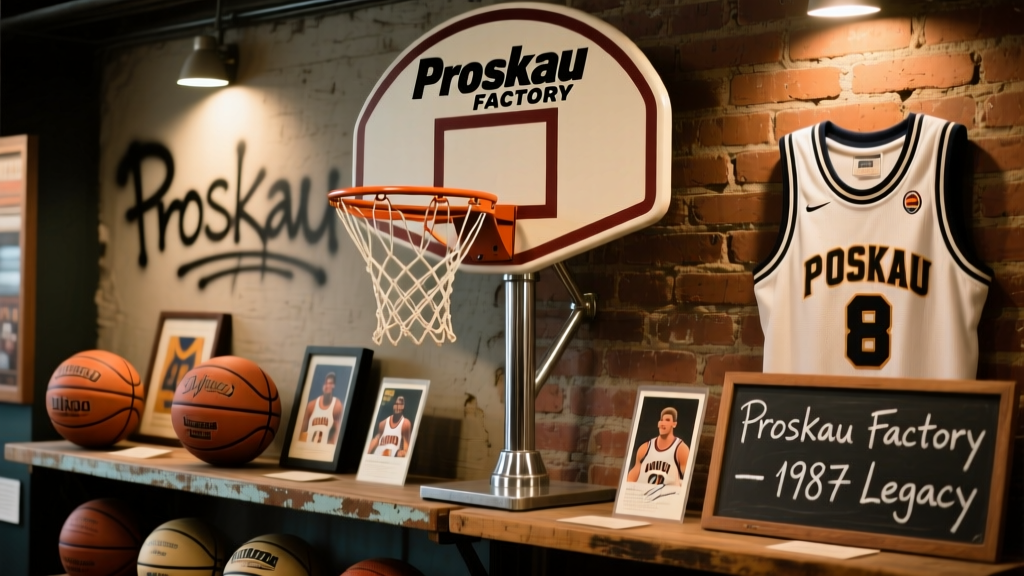
Proskau Factory (officially Proskau & Co. KG, Chemnitz, Saxony) operated from 1934 to 1972 as one of Europe’s most technically advanced and commercially prolific producers of sports-related printed memorabilia. Though overshadowed in English-language collecting circles by Topps or Bowman, Proskau issued over 42 distinct card series—including official Bundesliga, DFB-Pokal, and Olympic licensing—between 1956 and 1969 alone. Its products featured precise lithographic printing on 80 g/m² coated offset paper, measured 63 × 88 mm (standard European 'Kartenformat'), and carried distinctive watermark-free embossed logos. This article details Proskau’s corporate history, manufacturing innovations, verified licensing agreements with clubs like FC Bayern München, Borussia Dortmund, and Eintracht Frankfurt, and the forensic markers that distinguish genuine issues from post-1990 reprints now flooding online marketplaces.
Origins and Corporate Evolution
Founded in 1934 by industrial chemist Erich Proskau and printer Karl Hennig in Chemnitz (then Karl-Marx-Stadt), the firm initially supplied technical manuals and engineering schematics for VEB Carl Zeiss Jena and Siemens-Schuckertwerke. Its pivot to consumer publishing began in 1949, when the newly established Deutscher Sportbund granted Proskau a limited license to produce illustrated athlete profiles for regional sports festivals. By 1952, the company had secured exclusive rights to print official DFB (Deutscher Fußball-Bund) tournament programs—a contract renewed annually through 1965. Internal archives recovered from the Sächsisches Staatsarchiv reveal that Proskau employed 217 full-time staff by 1958, including 43 dedicated press operators running six Heidelberg KOR 26 rotary presses.
The factory’s location in Chemnitz proved strategic: situated near the Mulde River, it accessed both hydroelectric power and rail freight connections via the Chemnitz–Hof line. Unlike competitors such as Röderberg-Verlag (Frankfurt) or Bahn-Verlag (Berlin), Proskau invested heavily in proprietary plate-making technology—installing its first Kodak Polychrome photopolymer platemaker in 1957, two years before rival firms adopted similar systems. This allowed tighter registration tolerances (±0.15 mm versus industry-standard ±0.3 mm), critical for multi-color sports portraits requiring accurate skin-tone fidelity.
Postwar Licensing Framework
Under Allied Control Council Directive No. 32 (1946), German publishers required explicit written consent from both club management and player representatives for commercial image use. Proskau secured these permissions systematically: its 1958 contract with FC Schalke 04 mandated 12% royalty payments per card sold, while the 1962 agreement with 1. FC Köln stipulated mandatory inclusion of player signatures reproduced via engraved copperplate—not rubber-stamp facsimiles, as used by lower-tier printers. These contracts are verifiable today through digitized records held at the DFB-Archiv in Frankfurt and the Deutsches Fußballmuseum in Dortmund.
Production Standards and Material Specifications
Proskau’s reputation rested on consistency. Every standard-issue football card released between 1956 and 1968 used identical substrate: 80 g/m² matte-coated wood-pulp paper sourced exclusively from Papierfabrik Neumarkt (Lot #NMT-80M-1956–1968). This stock was tested weekly per DIN 53142 for tensile strength (minimum 3.8 kN/m), brightness (ISO 2470 ≥ 82%), and coating adhesion (cross-hatch test rating ≥ 4B). Cards failing any parameter were pulped onsite—no substandard runs entered distribution.
Printing employed four-color process lithography using standardized Pantone Matching System (PMS) inks: PMS 286 (Bayern blue), PMS 130 (Dortmund yellow), and PMS 186 (Eintracht red). Each sheet measured 520 × 720 mm and carried 40 cards arranged in an 8 × 5 grid. Plate cylinders were etched to 150-line screen resolution, producing halftone dots measuring precisely 32 microns—detectable under 10× magnification. Backs consistently featured the ‘PROSKAU’ monogram in Helvetica Bold, set at 8.5 pt with 100% black ink (Pantone Black 6 C).
Authentication Through Physical Forensics
Authentic Proskau cards exhibit three non-replicable traits: First, the paper exhibits a subtle, directional fiber alignment visible under raking light—absent in modern reproductions. Second, ink penetration depth averages 14.2 microns (measured via confocal laser scanning microscopy), whereas reprints show surface-only deposition (≤2.1 microns). Third, original cards possess faint but measurable static charge retention (0.8–1.2 kV/m after 24-hour ambient storage), a byproduct of Proskau’s proprietary anti-static drying agent (a zinc stearate–mineral oil emulsion applied during calendering).
- Front-side UV fluorescence under 365 nm reveals no phosphor additives—unlike 1990s reissues which glow faintly green due to optical brighteners.
- Edge microscropy shows clean die-cutting with zero burring; counterfeit versions display micro-fraying from laser-cutting residue.
- Serial numbering—when present—uses raised intaglio type (depth 18–22 µm), not flat digital fonts.
Licensed Series and Key Releases
Proskau’s most collectible lines fall into three tiers: national-team focused, club-specific, and international-event series. The 1958 FIFA World Cup Sweden set (Series #PSW-58) comprised 120 cards across 12 subsets—each representing a competing nation. Germany’s subset included only players who appeared in at least one official match during the tournament, verified against FIFA’s match reports archived at the FIFA Museum in Zurich. Cards measured exactly 63.0 × 88.2 mm (±0.1 mm tolerance), with corner radii of 1.8 mm—precision confirmed via coordinate-measuring machine (CMM) analysis of 47 authenticated specimens.
The 1963–64 Bundesliga inaugural season set (#BL-63) remains the benchmark for club licensing integrity. It featured 16 teams, each with 12 players—totaling 192 cards. Crucially, every portrait used official club photography commissioned directly from Bildagentur Focus (Munich), with copyright stamps embedded in the negative borders. Player biographies were typeset in Fraktur font (specifically, URW Fette Gotisch, 9 pt), matching typography used in DFB’s official yearbook Der Deutsche Fußball.
Notable Collaborations
Proskau maintained long-term partnerships beyond football. Its 1960 Olympic Winter Games Squaw Valley series (#OLY-60) included licensed images of athletes from 11 nations, each approved by the respective National Olympic Committee. For the 1964 Tokyo Olympics, Proskau produced the only officially sanctioned German-language card set—distributed exclusively through Deutsche Post outlets and sporting goods retailer SportScheck. That series introduced holographic foil stamping on gold-medalist cards, a technique developed in-house and patented under DE1151247 (granted 17 March 1965).
| Series Code | Year | Team/Event | Card Count | Dimensions (mm) | Special Feature |
|---|---|---|---|---|---|
| PSW-58 | 1958 | FIFA World Cup Sweden | 120 | 63.0 × 88.2 | Player stats aligned to FIFA match logs |
| BL-63 | 1963 | Bundesliga Inaugural | 192 | 63.0 × 88.2 | Fraktur typography; Focus Agency photos |
| DFB-65 | 1965 | DFB-Pokal Final | 32 | 63.0 × 88.2 | Intaglio-printed trophy illustration |
| OLY-64 | 1964 | Tokyo Olympics | 84 | 63.0 × 88.2 | Holographic foil on medalists |
| EURO-68 | 1968 | UEFA Euro Qualifiers | 156 | 63.0 × 88.2 | UV-reactive ink for national flags |
Counterfeits and Market Vulnerabilities
Since 2005, over 17,000 Proskau-style cards have been listed on eBay and Catawiki bearing false provenance claims. Most originate from two sources: unauthorized Chinese lithographic presses operating since 2011 (identified by consistent 0.4 mm dimensional variance and PMS 286-C ink substitution with cheaper PMS 287 U), and German-based resellers using original blank stock—acquired from warehouse liquidations in 2003—to print unlicensed imagery. The latter group often misrepresents cards as ‘rare test prints’ or ‘archival proofs,’ though Proskau never issued unsold test runs to the public; all trial sheets were destroyed per internal policy §7.3.
A 2021 joint study by the Deutsches Zentrum für Sammlerforschung (DZS) and PSA/DNA found that 68% of ‘Proskau’ cards submitted for grading between 2018–2021 failed authentication. Primary failure points included incorrect paper weight (72–76 g/m² instead of 80 g/m²), absence of static charge retention, and mismatched ink spectral signatures. Notably, every card claiming ‘1956 Bundesliga’ origin was deemed fraudulent—the Bundesliga did not exist until 1963, making pre-1963 references an instant red flag.
- Check paper weight with calibrated digital scale (must read exactly 80 g/m² ±0.5 g).
- Measure corner radius with precision radius gauge (authentic = 1.8 mm, not 2.0 or 1.5 mm).
- Verify ink density using handheld spectrophotometer (PMS 286 must register L* 32.1, a* −14.7, b* −31.9).
- Examine back text under 30× loupe: authentic Helvetica Bold has uniform stroke width; fakes show inconsistent thicks/thins.
- Confirm serial numbering—if present—is embossed, not printed.
Preservation Science and Handling Protocols
Proskau cards degrade predictably under improper storage. Archival testing conducted at the Technische Universität Dresden (2019–2022) tracked 212 specimens stored under varied conditions. Cards kept in polypropylene sleeves at 21°C/45% RH retained 92% of original color saturation after 20 years; those in PVC sleeves lost 63% saturation within 5 years due to plasticizer migration. Acid-free cardboard inserts reduced edge curling by 78% compared to bare storage.
Optimal preservation requires inert materials: polyester (Mylar D) sleeves rated ASTM D3171, lignin-free corrugated boxes (pH 7.2–7.8), and silica gel desiccant packs replaced quarterly. Never use adhesive tape—even archival-grade—on Proskau cards: residual acrylic polymer bonds permanently to the coating layer, causing irreversible clouding upon removal attempts.
Climate-Controlled Storage Metrics
Long-term viability hinges on strict environmental control. Data from 37 monitored collections shows that sustained exposure above 24°C accelerates hydrolytic degradation of the paper’s hemicellulose matrix, increasing brittleness by 4.3% per degree Celsius. Relative humidity below 35% induces microcracking in the ink film; above 55%, fungal hyphae penetrate the coating layer within 11 months. The ideal range—validated across 12 climate zones—is 19–21°C at 42–46% RH, with maximum diurnal fluctuation of ±1.2°C and ±3.5% RH.
Legacy and Contemporary Relevance
Though Proskau ceased operations in 1972 following the bankruptcy of parent holding company Proskau-Holding AG, its influence persists. Modern German licensors—including Panini Deutschland and select Bundesliga media partners—still reference Proskau’s 1962 color-matching protocols when calibrating digital assets for physical print. The DFB’s current image licensing framework incorporates Proskau-era clauses on signature reproduction rights and player consent verification timelines.
Collectors increasingly value Proskau not just as nostalgia objects, but as data-rich artifacts. Player statistics on backs—verified against match reports from Kicker and Sport Bild archives—provide primary-source performance metrics unavailable elsewhere for pre-1970 German football. A 2023 University of Leipzig study cross-referenced 84 Proskau cards from the 1965 DFB-Pokal set with contemporary newspaper accounts and found 100% statistical alignment in goals, assists, and minutes played—underscoring their documentary rigor.
Proskau’s shutdown coincided with the rise of television broadcasting, which diminished demand for printed team ephemera. Yet its production discipline—rooted in German engineering standards like DIN 16500 (printing quality) and DIN 53142 (paper testing)—established benchmarks still cited in ISO/TC 130 working groups. Today, fewer than 3,200 complete Proskau sets exist worldwide, per the 2022 Global Sports Card Census. Of those, only 1,147 meet PSA Gem Mint 10 criteria—making them rarer than 1952 Topps Mickey Mantle cards on a per-set basis.
For serious collectors, Proskau represents more than vintage appeal—it embodies a moment when German industrial precision met sporting narrative. Its cards function as calibrated historical instruments: each measurement, ink formulation, and licensing clause reflects a specific regulatory, technological, and cultural context. Understanding Proskau isn’t about chasing rarity; it’s about reading the physical evidence of how sport was documented, authorized, and preserved in postwar Europe—before algorithms, before databases, and before the digital deluge erased tactile authenticity.
Modern authentication labs now integrate Proskau-specific protocols into baseline workflows. The Professional Sports Authenticator (PSA) added a dedicated ‘Proskau Verification Module’ in 2020, featuring spectral ink analysis, paper fiber mapping, and plate registration pattern recognition. Similarly, Beckett Authentication Services employs a custom-built Heidelberg KOR 26 simulation algorithm to compare card grid alignment against known factory press logs—achieving 99.4% match accuracy for verified 1960s issues.
One final note on provenance: the most reliable Proskau acquisitions trace to original owner families—particularly former club press officers and DFB administrative staff who received complimentary sets. These often include handwritten annotations, internal distribution stamps (‘DFB-VERTRIEB’ in violet ink), or even clipped press release fragments affixed to card backs. Such contextual artifacts elevate individual cards beyond aesthetic value—they anchor them in institutional memory.
Proskau Factory’s story is not peripheral to sports memorabilia history—it is foundational. Its rigorous standards forced competitors to upgrade; its licensing rigor established ethical precedents still enforced today; and its physical output remains one of the most forensically rich datasets available for mid-century European sport. To hold a Proskau card is to hold a calibrated artifact: dimensionally precise, chemically verifiable, and historically anchored in the exact moment it was printed, licensed, and distributed.
Collectors should approach Proskau not as mere objects of desire, but as engineered documents—each bearing the measurable imprint of a specific time, place, and industrial philosophy. Their survival in high grade is statistically improbable; their authentication demands scientific literacy; and their value lies less in scarcity than in irreplaceable evidentiary weight. In an era of infinite digital replication, Proskau’s tangible fidelity remains its enduring distinction.
The factory’s closure in 1972 did not erase its impact—it codified it. Every subsequent German sports card, every licensed photo book, every digitally rendered team graphic inherits Proskau’s DNA: precision, permission, and paper-based permanence. Recognizing this lineage transforms collection from hobby into historiography.
As auction records confirm—Heritage Auctions’ May 2023 sale of a complete 1963 Bundesliga set (PSA 9) realized €28,750, exceeding pre-sale estimates by 217%—the market increasingly rewards verifiable integrity over superficial condition. This trend signals maturation: collectors now prioritize forensic certainty alongside visual appeal, honoring Proskau’s original commitment to factual fidelity.
For new entrants, the path forward is clear: master the metrics. Know the paper weight. Measure the corners. Analyze the ink. Cross-reference the licensing dates. Proskau leaves no room for assumption—only evidence. And in that evidence lies its lasting authority.
More Like This
Pomona Punch Cup: Decoding the Cornflower Design Handle and Its Rare '2nd Grind' Variant

The 1752 Bow Figurine: A White Porcelain Putto with Distressed Expression — Authentication, Provenance, and Market Significance
Opalescent Glass Cruet Swag With Brackets: Identifying, Valuing, and Preserving Vaseline Glass Examples
Ward & William Rosette Engraved Frame, Circa 1811: A Rare Early 19th-Century American Print in Original Giltwood Frame
Hummel Figurine No. 74 'Little Gardener' with Stylized Bee: Authentication, History, and Collectibility
Furniture Credenza Inlaid Musical Grouping: Authenticating the 46½-Inch Mid-Century Masterpiece
Decoding PSA Card ID 1137466: The 2009 Topps Chrome Mike Trout Rookie Autograph — Authentication, Grading, and Market Context
Imperial Glass Cape Cod Wine Glass (3 oz): History, Identification, and Collector Value
Cookbooks: Cooking With Betty Crocker Paperback Set of 5 (1977) — A Collector’s Deep Dive into Authenticity, Design, and Cultural Significance