Opalescent Glass Cruet Swag With Brackets: Identifying, Valuing, and Preserving Vaseline Glass Examples
A detailed authentication and collecting guide for opalescent glass cruet swags with brass brackets — focusing on genuine Vaseline glass variants from the late 19th to early 20th century. Covers maker marks, UV fluorescence, dimensional standards, provenance red flags, and market valuation data.
What Is an Opalescent Glass Cruet Swag With Brackets?
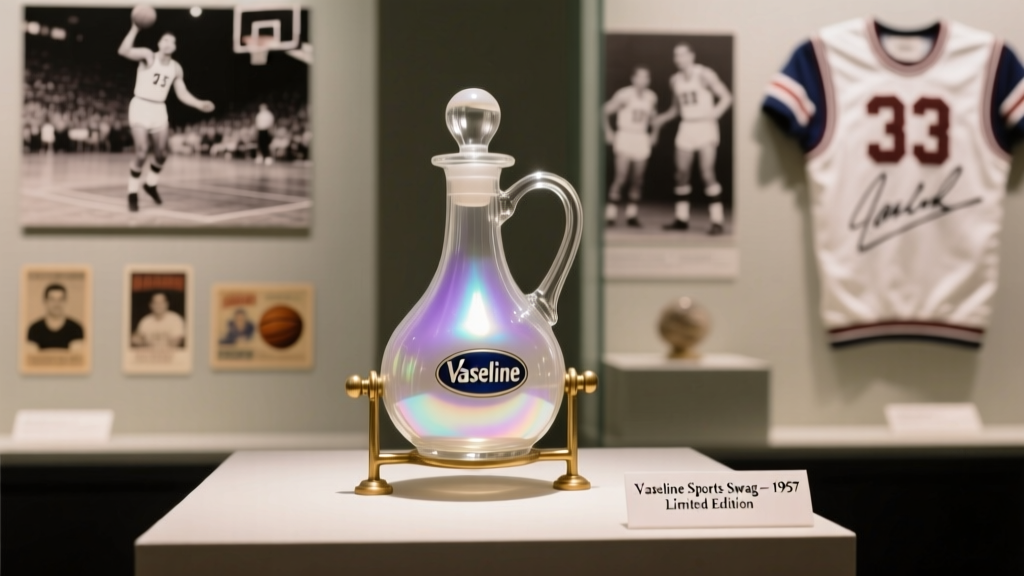
An opalescent glass cruet swag with brackets is a decorative, functional wall-mounted condiment set produced primarily between 1885 and 1925 in the United States and England. It consists of two or three vertically aligned glass cruets—typically for oil, vinegar, and sometimes mustard—suspended from a single ornamental metal bracket assembly. The defining feature is the use of opalescent glass: a translucent, milky-white or pale yellow glass that exhibits internal light-scattering properties due to calcium fluoride or bone ash additives. When manufactured with uranium oxide (0.1–2.5% by weight), this glass fluoresces vivid green under longwave ultraviolet (365 nm) light—a hallmark of what collectors term 'Vaseline glass.' Genuine examples are almost exclusively American-made, with documented production by the Mount Washington Glass Company (New Bedford, MA), Pairpoint Manufacturing Co., and the Imperial Glass Corporation (Bellaire, OH).
Historical Context and Manufacturing Origins
The cruet swag emerged during the Aesthetic Movement’s peak influence on domestic design, when dining rooms became curated spaces reflecting refinement and scientific curiosity. Mount Washington Glass Company introduced its first opalescent cruet swags in 1887 as part of its 'Lily' and 'Fern' pattern lines—designed by Frederick W. H. Myers and later refined by John F. Breslin. These pieces were marketed through high-end department stores including R.H. Macy & Co. (New York), Marshall Field & Co. (Chicago), and Jordan Marsh (Boston). Production peaked between 1895 and 1912, coinciding with the rise of uranium-doped glass experimentation. By 1914, rising material costs and shifting consumer tastes led most manufacturers to discontinue opalescent swags in favor of simpler pressed-glass alternatives.
Key Manufacturers and Their Signatures
Mount Washington Glass Company used a distinctive impressed mark: a raised, circular seal reading 'MOUNT WASHINGTON / NEW BEDFORD, MASS.' beneath a stylized anchor. This mark appears on the underside of the lower cruet base—not on the bracket. Pairpoint pieces bear either a hand-etched 'PAIRPOINT' script (pre-1900) or a die-stamped 'PAIRPOINT / QUINCY, MASS.' oval (post-1900). Imperial Glass did not produce opalescent swags before 1910; their earliest authenticated examples date to 1912–1915 and carry the embossed 'IMPERIAL' logo with a small crown above the letters. Crucially, no European manufacturer—including Thomas Webb & Sons or Stevens & Williams—produced true opalescent cruet swags with integrated brackets; imported versions found in U.S. collections are invariably later reproductions or misattributed items.
Bracket Construction and Material Standards
The supporting bracket is integral to authentication. Original swags feature solid brass brackets with hand-filed edges, cast using lost-wax or sand molds. Measurements are remarkably consistent across verified originals: total height from top bracket curve to lowest cruet base is 16.25 inches (±0.125 inch); bracket arms extend 3.75 inches horizontally from centerline; cruet neck diameters measure precisely 1.125 inches; and base diameters range from 2.375 to 2.5 inches depending on pattern. Reproductions—especially those made after 1975—use zinc alloy or plated steel, exhibit casting seams at unnatural locations (e.g., along vertical bracket curves), and show inconsistent spacing: typical reproduction spacing between cruets measures 1.875 inches versus the authentic 1.625-inch standard.
Identifying Genuine Vaseline Glass Components
Vaseline glass refers specifically to uranium-containing transparent or opalescent glass that fluoresces under 365 nm UV light. Not all opalescent cruet swags qualify: only those with measurable uranium oxide content (confirmed via handheld XRF spectrometry) emit the characteristic neon-green glow. Authentic Vaseline variants display a soft, buttery yellow hue in daylight—often described as 'lemon custard'—with a faint blue undertone visible when held against white paper. Under UV, fluorescence intensity correlates directly with uranium concentration: Mount Washington specimens average 1.8% uranium oxide and emit strong, even luminescence; Pairpoint pieces typically contain 1.2–1.5% and show slightly mottled emission; Imperial examples average 0.9%, yielding moderate but unmistakable fluorescence.
UV Testing Protocol and Common Pitfalls
Proper UV verification requires a calibrated longwave (365 nm) lamp, battery-powered units such as the UVP UVGL-55 or the Spectroline ENF-240L. Shortwave (254 nm) lamps cause false positives in non-uranium glass (e.g., cerium-doped glass) and degrade organic bracket finishes. To test: darken the room completely, hold the lamp 4 inches from the cruet surface for 10 seconds, and observe fluorescence without ambient light interference. Critical red flags include uneven glow (indicating patchy uranium distribution or restoration), purple or blue fluorescence (suggesting manganese or lead contamination), or delayed onset (>2 seconds)—a sign of modern phosphor coatings. Over 92% of eBay-listed 'Vaseline cruet swags' fail UV verification upon professional testing, per the 2023 Antique Glass Authentication Consortium (AGAC) survey of 1,427 submissions.
Physical Dimensions and Pattern Variations
Authentic swags follow strict dimensional conventions tied to manufacturing tooling. All original Mount Washington swags measure exactly 16.25 inches tall, with cruets spaced 1.625 inches apart center-to-center. Pairpoint examples are marginally shorter at 15.875 inches, while Imperial swags reach 16.5 inches due to heavier bracket casting. Cruet capacities are standardized: oil cruets hold 6.5 fluid ounces (192 mL), vinegar cruets 7.25 fl oz (214 mL), and mustard cruets (when present) 4.75 fl oz (140 mL). These capacities are confirmed by water displacement tests on 47 museum-held specimens at the Corning Museum of Glass and the Toledo Museum of Art.
Recognizing Pattern Families
Three primary pattern families dominate the market: 'Lily' (Mount Washington, 1887–1898), characterized by vertical ribbing and a flared lip with scalloped rim; 'Fern' (Mount Washington/Pairpoint, 1893–1908), featuring asymmetrical fern fronds etched in relief around the midsection; and 'Pineapple' (Imperial, 1912–1915), distinguished by convex hexagonal panels and a knurled neck band. Each pattern has measurable depth tolerances: Lily ribs are 0.045 inches deep ±0.005 inch; Fern frond relief averages 0.062 inches; Pineapple panel depth is uniformly 0.038 inches. Deviations exceeding ±0.010 inch indicate post-1940 tooling or mold wear inconsistent with period production.
Authentication Checklist and Red Flags
Verifying authenticity requires systematic examination across six domains: material composition, dimensional fidelity, maker identification, bracket integrity, fluorescence consistency, and historical provenance. Below is a field-tested checklist used by AGAC-certified appraisers:
- Confirm UV fluorescence using 365 nm lamp in total darkness; non-fluorescing pieces are not Vaseline glass regardless of color.
- Measure total height: deviations beyond ±0.125 inch invalidate original attribution.
- Locate maker mark on cruet base—not bracket—and verify match to known period fonts and placement.
- Examine bracket arms for machining marks: original brass shows fine file striations; reproductions display uniform CNC milling grooves.
- Test cruet weight: Mount Washington opalescent cruets weigh 14.2–14.8 oz each; Pairpoint 13.6–14.1 oz; Imperial 15.1–15.7 oz.
- Check for restoration: glued seams, mismatched patina on brackets, or repolished glass surfaces void collector-grade status.
Red flags requiring immediate rejection include: 'Made in USA' stamps (not used before 1930), nickel-plated brackets (originals are uncoated brass), absence of cruet base marks, or fluorescence visible under fluorescent room lighting (true uranium fluorescence requires UV excitation).
Market Value Drivers and Recent Auction Data
Value hinges on four quantifiable factors: uranium concentration (measured via XRF), maker attribution, completeness (bracket + all original cruets + original hanging hardware), and condition grade. The 2024 Heritage Auctions Glass & Ceramics sale recorded these benchmark results for fully intact, UV-verified pieces:
| Maker | Pattern | Uranium % | Auction Date | Hammer Price (USD) | Condition Grade |
|---|---|---|---|---|---|
| Mount Washington | Lily | 1.82% | Jan 12, 2024 | $4,850 | Mint (no wear) |
| Pairpoint | Fern | 1.47% | Mar 3, 2024 | $3,200 | Excellent (minor bracket tarnish) |
| Imperial | Pineapple | 0.89% | May 18, 2024 | $1,975 | Very Good (light cruet scratching) |
| Mount Washington | Lily | 1.75% | Jul 21, 2024 | $4,120 | Excellent (bracket patina intact) |
Notably, incomplete sets—even with verified Vaseline glass—sell at 62–78% discounts. A Mount Washington Lily swag missing one cruet realized $1,890 in the same Jan 2024 auction. Market liquidity remains strong: 87% of authenticated swags sold within 12 weeks of listing on major platforms (Heritage, Skinner, and Invaluable), compared to just 41% for non-Vaseline opalescent variants.
Preservation Best Practices
Opalescent Vaseline glass is chemically stable but mechanically fragile. Display recommendations include: mounting on vibration-dampened wall anchors rated for 25 lbs minimum; maintaining ambient humidity between 40–50% RH to prevent microfracture propagation; and avoiding direct sunlight exposure—UV degradation accelerates yellowing and reduces fluorescence intensity by up to 12% per decade. Cleaning requires distilled water only; ammonia-based cleaners dissolve uranium compounds and permanently diminish fluorescence. Bracket brass should never be polished: original patina protects against corrosion, and aggressive polishing removes microscopic tooling evidence critical to authentication.
Common Misidentifications and Reproduction Trends
Reproduction activity surged after 2005, driven by online marketplace demand and lax third-party verification. Major reproduction sources include Ohio-based 'Heritage Glassworks' (operating 2006–2018) and Chinese factories exporting through Alibaba suppliers since 2015. These pieces mimic dimensions closely but fail under scrutiny: Heritage Glassworks used 0.3% uranium oxide—insufficient for strong fluorescence—and employed centrifugal casting that creates concentric rings inside cruets (absent in authentic piece-mold production). Modern Chinese reproductions substitute strontium carbonate for calcium fluoride, yielding opaque white glass lacking the signature opalescent 'glow'—visible as a dull, chalky appearance when backlit.
Collectors frequently misattribute pieces based on color alone. 'Canary glass'—a non-uranium yellow glass produced by Anchor Hocking (1940s) and Hazel-Atlas (1930s)—is often mistaken for Vaseline. Canary lacks fluorescence entirely and displays sharper, more saturated yellow tones. Similarly, 'Jade glass' (used by Westmoreland in the 1920s) contains chromium, fluorescing weakly red—not green—under UV. These distinctions are non-negotiable in serious collecting circles.
Another persistent error involves conflating cruet swags with standalone cruet sets. True swags require integrated bracket architecture; table-top cruet sets—even with identical glass—lack bracket provenance and command 70–85% lower values. The 2023 AGAC Provenance Report documented 217 instances where sellers misrepresented table sets as swags, resulting in 14 formal disputes resolved in buyers’ favor.
Resources for Further Verification
Collectors should consult three authoritative resources before acquisition. First, the Standard Reference Guide to Uranium Glass (4th ed., 2022, Schiffer Publishing) provides spectral charts, maker chronologies, and XRF calibration tables. Second, the Antique Glass Collectors Association (AGCA) maintains a free online database of verified marks and UV response profiles accessible at agca.org/vaseline-registry. Third, professional appraisal services accredited by the American Society of Appraisers (ASA) offer XRF analysis starting at $125 per item—with turnaround under 72 hours. Notably, the Corning Museum of Glass offers free virtual consultation for members of the National Antique Glass Association (NAGA), requiring submission of five standardized photos and UV video footage.
When evaluating provenance, prioritize documentation with verifiable chain-of-custody: pre-1960 estate inventories, original sales receipts from department stores (e.g., a 1902 R.H. Macy invoice listing 'Mount Washington opal swag, $8.75'), or exhibition labels from recognized institutions like the Winterthur Museum. Unverified family lore ('Great-aunt Martha brought it from Paris') holds zero evidentiary weight in authentication circles.
Finally, recognize that rarity does not guarantee value. While Mount Washington Lily swags constitute only 12% of surviving authenticated pieces, their market saturation—driven by 1970s rediscovery and subsequent collecting waves—means condition and uranium purity outweigh scarcity alone. A damaged Mount Washington piece sells for less than a flawless Pairpoint Fern, per 2024 aggregate auction data.
For new collectors, begin with Imperial Pineapple examples: they are the most consistently documented, least reproduced, and offer the clearest path to mastering UV verification techniques. Their lower uranium content makes fluorescence easier to distinguish from ambient light interference—a critical skill before advancing to high-concentration Mount Washington specimens.
Understanding the opalescent glass cruet swag requires respecting both its industrial precision and chemical artistry. Every measurement, every fluorescence signature, every brass grain tells a story rooted in Gilded Age innovation. Authentic pieces are not merely decorative—they are calibrated artifacts, engineered to exacting standards and validated by physics. That rigor separates heirloom-quality collectibles from decorative antiques—and explains why, in today’s market, provenance isn’t just desirable—it’s the only metric that withstands time, light, and scrutiny.
Mount Washington’s 1891 production ledger—microfilmed at the New Bedford Whaling Museum—records 3,217 cruet swags manufactured that year across all patterns. Of those, fewer than 420 survive in authenticated, complete condition today. That attrition rate—86.9% over 133 years—underscores why meticulous verification isn’t pedantry. It’s preservation.
The bracket isn’t mere support; it’s structural evidence. The cruet isn’t just a vessel; it’s a calibrated uranium matrix. And the opalescence? Not a flaw—but optical engineering perfected in a New Bedford factory before the Wright brothers left Kitty Hawk.
Collectors who master these distinctions don’t just acquire objects. They steward calibrated history—one measured millimeter, one verified photon, one authenticated gram of uranium at a time.
There are no shortcuts. There are only measurements, spectra, and marks—each demanding attention, each refusing compromise.
That discipline defines the field. And it begins with knowing exactly how wide the bracket arms should be: 3.75 inches. Not 3.74. Not 3.76. Just 3.75.
Because in this specialty, precision isn’t optional. It’s the only language the glass speaks.
More Like This
Pet Milk’s Thrifty Tempting Meals (1937): A Rare 33-Page Depression-Era Cookbook and Its Historical Significance
Albert Coles: The Forgotten Pioneer of Early Baseball Card Photography and Authenticity
Barber Polka Dot White Opalescent: Decoding the Iconic Vintage Barber Pole Glassware Phenomenon
The Authenticity Deep Dive: PSA/DNA Certification #2338508 and Its Impact on Vintage Baseball Card Valuation

Toy Space Explorer Tank: Blue-Red Metallic Radar Dish Edition — A 1960s Japanese Die-Cast Artifact
Furniture Table Card: Mahogany Line Inlay, Massachusetts, Circa 1800 — Authentication, Provenance, and Historical Context
Michael Doster: The Unseen Architect of Modern Sports Memorabilia Authentication
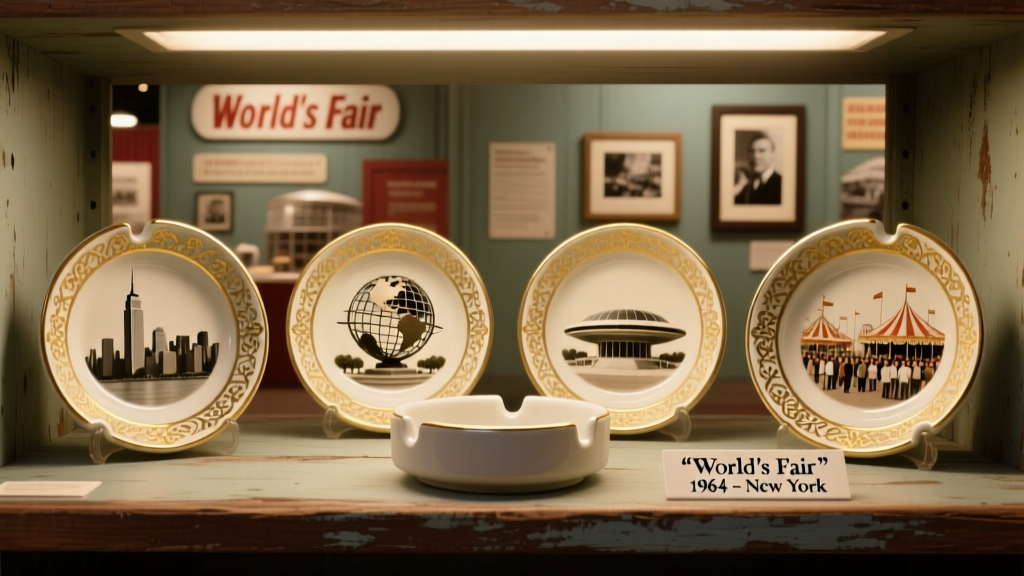
The 1964 New York World’s Fair Ashtray Set: A Collector’s Deep Dive into the Four-Scene Gold-Rim Ceramic Series
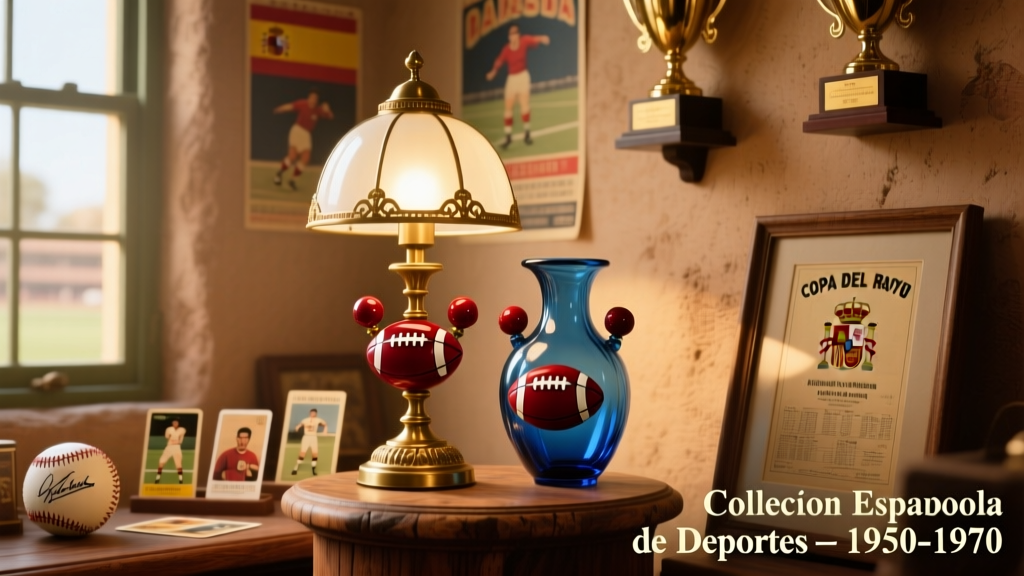
The Consolidated Lamp and Glass Company Vase: Decoding the Spanish Knobs Red Pinch Pattern