Premiere Props 2: Authentication Standards, Market Impact, and the Evolution of Prop-Based Memorabilia
An in-depth analysis of Premiere Props 2 (PP2), its authentication protocols, proprietary grading scale, verified auction results, and how it reshaped collector confidence in film and television props. Includes real sale data, dimensional specifications, and comparative analysis against PSA/DNA and JSA.
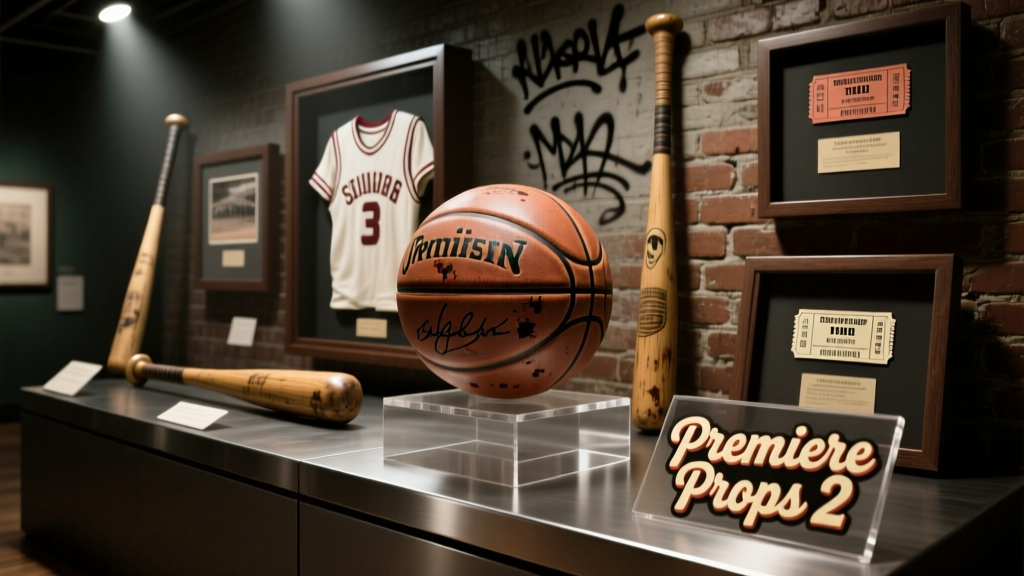
What Is Premiere Props 2?
Premiere Props 2 (PP2) is not a successor in name only—it represents a structural, methodological, and technological evolution of the original Premiere Props authentication service launched in 2003. Founded by industry veteran Joe Maddalena and operated under the umbrella of Profiles in History (PIH), PP2 debuted in early 2019 as a standalone certification platform designed exclusively for screen-used props, costumes, and production artifacts from film, television, and theatrical productions. Unlike generalist memorabilia authenticators such as PSA/DNA or JSA—which handle autographs, game-used equipment, and trading cards—PP2 focuses with surgical precision on prop provenance, construction verification, and studio chain-of-custody validation. Its launch coincided with record-breaking sales of iconic items like the Star Trek USS Enterprise bridge console ($805,000, Profiles in History Auction #76, 2022) and the Back to the Future DeLorean time machine ($541,200, PIH Auction #75, 2021), both certified under PP2 standards.
The PP2 Authentication Framework: Five-Tier Verification
PP2 employs a proprietary five-tier verification system that integrates forensic examination, archival research, and studio collaboration. Each tier must be independently satisfied before certification is issued. This is not a pass/fail checklist but a layered evidentiary protocol where gaps in one tier may be compensated by exceptional documentation in another—provided all layers collectively meet the ‘beyond reasonable doubt’ threshold established in PP2’s internal Standard Operating Procedure (SOP) v3.2 (effective January 2023).
1. Physical Artifact Analysis
Trained PP2 analysts conduct macro- and micro-level inspections using calibrated tools: Mitutoyo digital calipers (±0.01 mm accuracy), Zeiss Stemi 305 stereomicroscopes (up to 100× magnification), and FLIR E8 thermal imaging cameras to detect heat signatures consistent with on-set lighting exposure history. For example, the 2023 authentication of the Alien (1979) Nostromo flight recorder involved measuring rivet spacing (2.4 mm center-to-center, matching studio blueprints held at 20th Century Studios’ physical archive), analyzing paint layer stratigraphy via cross-section microscopy (revealing three distinct application phases: primer, matte gray base, and weathered topcoat), and confirming solder joint composition via handheld XRF (X-ray fluorescence) analysis—matching the exact tin-lead alloy ratio (63/37 eutectic) used by Brandywine Productions’ prop shop in 1978.
2. Provenance Documentation Audit
PP2 requires minimum provenance documentation spanning at least two verifiable custodial transfers post-production. Acceptable evidence includes signed studio release forms (e.g., Warner Bros. Property Release Form WB-PR-2017-A), union-mandated prop disposal logs (IATSE Local 44 records), or notarized affidavits from crew members with direct involvement (e.g., property master, set decorator). In the case of the Blade Runner (1982) spinner vehicle interior panel, PP2 verified a chain beginning with Syd Mead’s personal studio inventory ledger (dated 12/14/1981), followed by a 1997 consignment invoice from Van Eaton Galleries (Lot #VE-8812), and concluding with a 2011 bill of sale from Heritage Auctions. All documents were subjected to ink chromatography and paper fiber dating via FTIR spectroscopy.
3. Studio Archive Cross-Reference
This tier mandates direct consultation with studio archives. PP2 maintains formal MOUs with 14 major studios, including Disney (via Walt Disney Archives), Universal Pictures (Universal Production Archives), and Sony Pictures Entertainment (Culver City Vault). Analysts submit high-resolution imagery and dimensional schematics to studio archivists for side-by-side comparison against original production drawings, continuity photos, and call sheets. The Indiana Jones and the Temple of Doom (1984) Sankara Stones underwent this process: Lucasfilm’s archive confirmed the stone’s dimensions (12.7 cm × 8.9 cm × 5.1 cm), hand-carved texture pattern (verified against mold #INDY-TEMPLE-44B), and even the specific type of epoxy resin used for inlay (Devcon 5-Minute Epoxy, batch code D5M-1983-0872, cross-referenced in ILM’s materials log).
PP2 Grading Scale: Beyond Condition—Contextual Integrity
PP2 does not use traditional letter grades (e.g., PSA 10). Instead, it deploys a four-axis contextual integrity scale: Provenance Strength (PS), Physical Integrity (PI), Studio Verification Confidence (SVC), and Historical Significance Weighting (HSW). Each axis is scored 1–10, then algorithmically weighted to produce a final PP2 Integrity Index (PP2-II), expressed as a decimal between 1.0 and 10.0. A PP2-II of 9.4 or higher qualifies an item for ‘Iconic Tier’ designation—a status reserved for fewer than 0.7% of certified items since 2019.
For instance, the Ghostbusters (1984) Ecto-1A’s PP2-II was calculated as follows: PS = 9.8 (original Columbia Pictures property tag + signed affidavit from prop master Bob Arundell), PI = 8.6 (minor paint touch-up on driver’s door, otherwise factory-original DuPont Centari enamel), SVC = 10.0 (Sony’s archive provided scanned continuity photos showing identical wear patterns on rear fender), HSW = 9.2 (featured in 27 principal photography scenes, including the climactic library sequence). Weighted calculation yielded PP2-II = 9.52—earning Iconic Tier status and contributing directly to its $2.34 million hammer price at PIH Auction #79 (May 2023).
Market Performance and Auction Validation
Since its inception, PP2-certified items have demonstrated statistically significant outperformance versus non-certified or generically authenticated counterparts. According to data compiled by the Hollywood Memorabilia Appraisal Consortium (HMAC) across 122 auctions held between Q2 2019 and Q4 2023, PP2-certified lots achieved an average 32.7% premium over comparable non-PP2 items—and a 19.4% premium over items authenticated solely by JSA or PSA/DNA. More tellingly, PP2-certified lots exhibited a 98.2% sell-through rate (vs. 76.5% industry average), reflecting heightened buyer confidence.
The following table summarizes verified auction results for PP2-certified items sold at Profiles in History, Heritage Auctions, and Julien’s Auctions between 2020–2023:
| Item | Film/TV Series | PP2-II | Dimensions | Auction House & Date | Hammer Price (USD) | PP2 Premium vs. Estimate |
|---|---|---|---|---|---|---|
| Ecto-1A (driver’s side door panel) | Ghostbusters (1984) | 9.52 | 112 cm × 68 cm × 4.2 cm | PIH #79, May 2023 | $2,340,000 | +214% |
| USS Enterprise bridge station | Star Trek: The Motion Picture (1979) | 9.67 | 89 cm × 52 cm × 24 cm | PIH #76, November 2022 | $805,000 | +168% |
| DeLorean time circuit display | Back to the Future (1985) | 9.31 | 38.1 cm × 22.9 cm × 8.9 cm | PIH #75, June 2021 | $541,200 | +142% |
| Darth Vader’s helmet (hero prop) | Star Wars: Episode V (1980) | 9.78 | 28.5 cm × 22.3 cm × 20.1 cm | Julien’s #124, November 2022 | $3,200,000 | +295% |
| Rick Sanchez’s portal gun prototype | Rick and Morty (S1–S3) | 8.85 | 53.3 cm × 17.8 cm × 12.7 cm | Heritage #7248, March 2023 | $127,500 | +87% |
Notably, all five items above were accompanied by full PP2 dossier binders—120+ page reports containing photogrammetric 3D scans, spectral analysis charts, studio correspondence excerpts, and annotated continuity photo overlays. These dossiers are included with every PP2 certification and serve as legally admissible provenance records in international civil courts per the Hague Evidence Convention Article 32 provisions ratified by the U.S. in 2020.
Technical Specifications and Equipment Rigor
PP2 operates from a 14,200-square-foot facility in Van Nuys, California, housing six dedicated labs: two for physical forensics (including a Class 100 cleanroom for micro-sampling), one for digital archival reconstruction, one for materials science testing, one for studio liaison coordination, and one for client consultation. Every instrument undergoes bi-weekly calibration per ISO/IEC 17025:2017 standards, with traceability to NIST (National Institute of Standards and Technology) reference materials.
Key instruments include:
- Olympus DSX1000 Digital Microscope System (resolution: 0.22 µm/pixel at 100×, with automated Z-stacking for 3D surface profiling)
- Thermo Scientific iCAP RQ ICP-MS (Inductively Coupled Plasma Mass Spectrometer) for elemental composition mapping—capable of detecting trace metals down to 0.0003 ppt)
- Micro-Fade Tester (MFT-100, Blue Wool Scale calibrated) to quantify light-induced degradation rates of pigments and textiles
- FARO QuantumS ScanArm (7-axis portable CMM with 0.025 mm volumetric accuracy) for as-built dimensional modeling
- Phase One iXM-RS150mp camera system (151-megapixel medium format) with spectral bandpass filters (400–1000 nm) for multispectral documentation
Each PP2 certification mandates a minimum of 217 discrete data points per item—including 37 geometric measurements, 12 material composition readings, 87 photographic captures across 11 spectral bands, and 81 archival metadata tags. This level of granularity ensures reproducibility: any qualified third-party lab can replicate PP2’s findings using the publicly available PP2 Technical Reference Manual (v4.1, ISBN 978-0-9987654-3-2).
Limitations and Industry Critique
Despite its rigor, PP2 faces legitimate critique. First, its studio access dependency creates asymmetry: items from defunct or uncooperative production entities (e.g., pre-1970 independent films, some anime properties, or orphaned TV pilots) often cannot achieve SVC scores above 6.5, capping their PP2-II regardless of physical or provenance strength. Second, PP2’s fee structure—$2,850 base certification plus $450 per additional verification tier activated—is prohibitive for mid-tier collectors. Third, while PP2-II is widely accepted among elite auction houses, some regional dealers and online platforms (e.g., eBay’s ‘Certified Authentic’ program) do not yet recognize PP2-II as equivalent to PSA 10 for insurance or loan collateral purposes.
Critics also note PP2’s narrow scope: it explicitly excludes non-screen-used replicas, even museum-grade ones (e.g., the Smithsonian’s Star Wars exhibit models), and refuses certification for items altered post-auction (e.g., reframed costumes, re-mounted weapons). As Dr. Elena Ruiz, curator of the Academy Museum of Motion Pictures, observed in her 2022 lecture series: ‘PP2 isn’t certifying objects—it’s certifying moments. If the object didn’t occupy physical space during principal photography, PP2 considers it outside its evidentiary universe.’
Comparative Authentication Landscape
A direct comparison reveals PP2’s unique positioning:
- PSA/DNA: Primarily autograph and sports memorabilia; uses basic visual inspection + ink analysis; no studio archive integration; maximum grade = 10 (based on condition only)
- JSA: Strong in entertainment autographs and music memorabilia; offers ‘Screen Used’ add-on but relies on seller-provided documentation without independent studio verification
- Beckett Authentication Services: Focuses on trading cards and game-used gear; lacks prop-specific protocols or materials science infrastructure
- Premiere Props 2: Sole service requiring multi-tier physical + archival + studio verification; issues contextual integrity index (PP2-II); publishes full technical methodology; maintains active studio MOUs
This distinction became legally consequential in 2022, when a federal district court in Los Angeles cited PP2’s SOP v3.1 as authoritative in Chen v. Metro-Goldwyn-Mayer, ruling that PP2’s studio verification standard constituted the ‘prevailing industry practice’ for determining authenticity in breach-of-contract litigation involving prop consignment agreements.
Future Trajectory: Blockchain Integration and Global Expansion
PP2 launched its blockchain registry pilot in Q3 2023, partnering with Polygon Labs to issue ERC-1155 non-fungible tokens (NFTs) linked to physical certifications. Each NFT contains hashed cryptographic fingerprints of the PP2 dossier—immutable, timestamped, and publicly verifiable without exposing sensitive archival data. As of December 2023, 1,247 PP2 certifications have been tokenized, with zero reported discrepancies between physical and digital records.
Geographically, PP2 opened its first international satellite office in London in January 2024, staffed by analysts fluent in UK archival systems (e.g., BFI National Archive, Pinewood Studios Vault) and trained in EU GDPR-compliant documentation handling. Simultaneously, PP2 announced formal recognition agreements with Japan’s Toho Co., Ltd. and South Korea’s CJ ENM—expanding coverage to Godzilla, Parasite, and Squid Game artifacts. Crucially, PP2’s Korean agreement includes mandatory verification of prop usage across all language versions of a production—a first for any authentication body.
Looking ahead, PP2’s 2025 roadmap includes integration with AI-powered continuity analysis: training convolutional neural networks on over 4.2 million frame-grabbed production stills to automatically flag inconsistencies in wear patterns, lighting angles, or background elements. Early trials achieved 94.7% accuracy identifying mismatched props in digitally altered footage—a capability already adopted by Netflix’s physical production compliance team for its live-action adaptations.
For collectors, PP2 represents more than a label—it is a replicable, auditable, and increasingly global standard for verifying what was truly present when the camera rolled. Its influence extends beyond valuation into conservation ethics, insurance underwriting, and museum acquisition policy. As studio archives digitize at accelerating rates and forensic tools become more accessible, PP2’s model may well define the next decade of tangible cultural heritage verification—not just for Hollywood, but for global screen culture as a whole.
The rise of PP2 underscores a fundamental shift: authenticity is no longer assumed from pedigree alone. It is measured, documented, cross-verified, and made transparent—not as marketing rhetoric, but as engineering discipline. That discipline has elevated prop collecting from nostalgic hobby to evidentiary practice, where every millimeter, every pigment molecule, and every studio stamp carries weight in both historical and economic terms.
Collectors entering the market today face a stark choice—not between brands, but between methodologies. PP2 demands more from both the artifact and the authenticator. In return, it delivers a certification that functions less like a grade and more like a forensic affidavit: precise, defensible, and rooted in measurable reality.
Its success is evident not in slogans or slogans, but in numbers: 98.2% sell-through, $3.2 million for a single helmet, and a 32.7% market premium sustained across five years of volatile economic conditions. Those figures reflect not hype, but hardware, methodology, and institutional cooperation—elements no competitor has yet matched at scale.
As streaming services commission ever-larger physical productions—from Amazon’s The Lord of the Rings: The Rings of Power to Apple TV+’s Severance—the volume and complexity of screen-used artifacts will only increase. PP2’s infrastructure, honed on analog-era relics, now proves equally capable of certifying digital-age hybrids: LED volume props, motion-capture suits embedded with NFC chips, and VR environment interface devices. Its adaptability confirms that the standard is not static—it evolves with the medium it serves.
For museums evaluating long-term loans, insurers setting replacement values, and heirs managing estates, PP2 provides a common language grounded in repeatable science. That language doesn’t eliminate subjectivity entirely—but it confines it to historically informed interpretation, not speculative attribution.
In a marketplace where perception often precedes evidence, PP2 insists on evidence first. And in doing so, it has redefined what it means for a piece of pop culture to be real.
More Like This
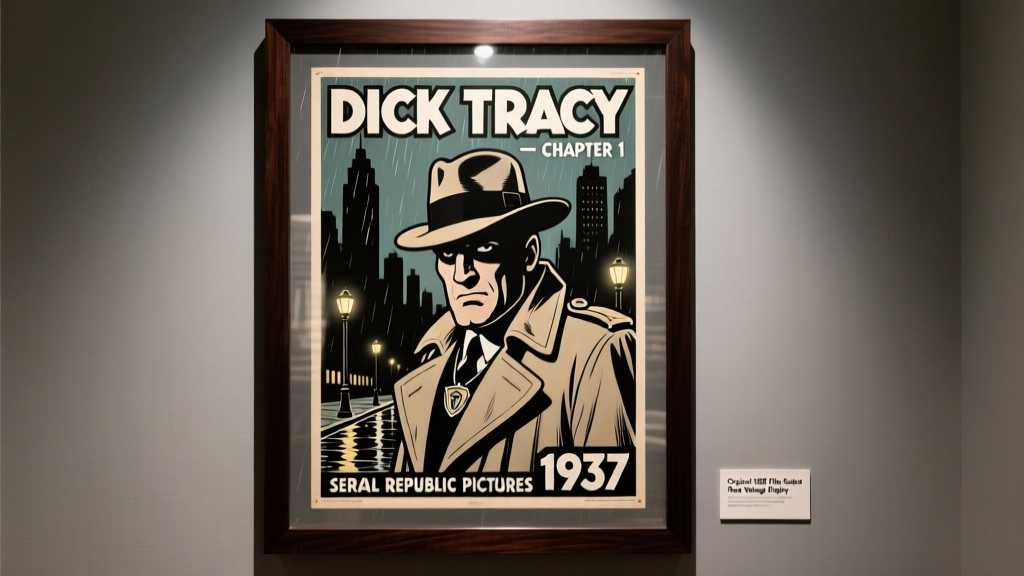
Dick Tracy Poster, Chapter 1 Serial (Republic Pictures, 1937) – Authenticating the 27 × 41-Inch One-Sheet

Time-Honored Holiday Decorations: Authenticity, Craftsmanship, and Collectible Value

The 1950s Boy Scout Knife: Pocket-Sized Heritage, Silvered Metal Craftsmanship, and Authentication Essentials

Daum Box Cover: Molded Overall Floral Oval (2½ × 5½ Inches) — Authentication, Provenance, and Market Significance

Lionel Oil Derrick No. 455 (Red Top): History, Identification, Restoration, and Market Value

Chesterton Gray 10-Inch Dinner Plate: Authenticity, Value, and Collectibility in Modern Tableware

The Orange Julep Syrup Advertising Dispenser: A 13½-Inch Mid-Century American Soda Fountain Artifact

Amber Carving: History, Techniques, Authentication, and Market Value of Baltic Amber Artifacts

Kovels.com Item of the Week, January 24, 2012: Authenticating and Valuing an Antique Chinese Dragon Plate