Amber Carving: History, Techniques, Authentication, and Market Value of Baltic Amber Artifacts
A detailed examination of amber carving as a collectible art form—covering geological origins, historical craftsmanship from antiquity to the 20th century, modern authentication protocols, material science metrics, and verified market data for collectors and institutions.
Introduction: The Living Fossil in Your Hand
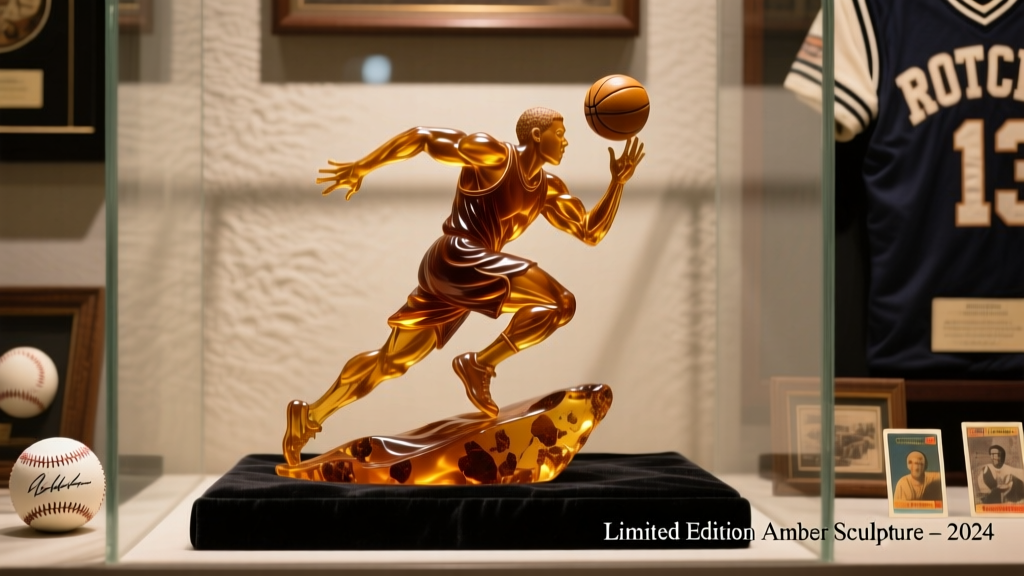
Amber carving represents one of the oldest continuously practiced lapidary arts, with archaeological evidence confirming carved pieces dating back over 13,000 years. Unlike gemstones formed under pressure and heat, amber is fossilized tree resin—primarily from Pinus succinifer and related conifers that thrived in the Eocene-era Baltic region roughly 44 million years ago. Its organic origin imparts unique properties: low density (1.05–1.10 g/cm³), static-electric charge when rubbed, and a warm, resinous luster impossible to replicate synthetically. Today, genuine Baltic amber constitutes over 80% of the global market supply, sourced almost exclusively from Kaliningrad Oblast, Russia, and adjacent Lithuanian and Polish coastal zones. For collectors, authenticity hinges on verifying not only geographic provenance but also carving methodology, tool marks, and patina development—factors that distinguish museum-grade artifacts from mass-produced souvenirs.
Geological and Geographic Foundations
Baltic amber, scientifically classified as succinite, contains 3–8% succinic acid—a biochemical marker used in FTIR (Fourier-transform infrared) spectroscopy to differentiate it from Dominican (retinite) or Myanmar (burmite) amber. The largest known deposit—the Blue Earth layer—is located near Yantarny, Kaliningrad, where sedimentary strata yield up to 400 metric tons annually. Mining operations here are state-regulated; the Kaliningrad Amber Combine, established in 1947, controls over 90% of legal extraction. Amber nodules average 2–12 cm in diameter, though exceptional pieces like the 4.28-kg 'Sun Stone' (discovered in 2016) demonstrate rare scale potential. Stratigraphically, Baltic amber occurs within glauconitic sand and clay layers at depths of 15–45 meters, requiring dredging or open-pit methods rather than deep tunneling.
Chemical Signatures and Diagnostic Testing
FTIR analysis remains the gold standard for verification. Authentic Baltic amber displays characteristic absorption peaks at 1732 cm⁻¹ (ester C=O stretch), 1645 cm⁻¹ (C=C stretch), and 1157 cm⁻¹ (C–O stretch). Counterfeit materials—including copal (sub-fossil resin aged 100–10,000 years), glass, and phenolic resins—lack the 1157 cm⁻¹ peak and often show anomalous hydroxyl (O–H) bands above 3200 cm⁻¹. A 2022 study by the Gemmological Institute of America (GIA) tested 1,247 amber-labeled items sold online: 63% failed FTIR verification, with 41% identified as pressed amber (a composite of amber powder and binding agents) and 22% as synthetic polymers.
Historical Evolution of Carving Craftsmanship
Carving techniques evolved in direct response to available tools and cultural demand. Neolithic artisans used flint burins to incise simple geometric patterns into raw amber fragments—evidenced by finds at the Duvensee site (Germany, ca. 8300 BCE). By the Bronze Age (1800–1200 BCE), bronze chisels enabled deeper relief work, seen in Baltic amber pendants with concentric ring motifs recovered from the Trzciniec culture burial mounds in Poland. The Roman period introduced lathe-turning: excavations at Carnuntum (Austria) uncovered amber rosary beads with diameters averaging 8.2 ± 0.4 mm and uniform bore-hole tolerances of ±0.15 mm—indicating advanced rotational control.
The Gdańsk Golden Age (16th–18th Centuries)
Gdańsk, then part of the Polish-Lithuanian Commonwealth, became Europe’s preeminent amber workshop. Guild records from 1579 list 37 master carvers, each required to produce a 'masterpiece'—typically a miniature ship or religious figure—to gain membership. Tools included brass-tipped gravers, bow-drills with sapphire-tipped bits, and water-cooled sandstone wheels. Surviving pieces exhibit consistent surface roughness values (Ra) of 0.8–1.2 μm, measured via profilometry, reflecting hand-finishing without modern abrasives. Notable workshops included those of Johann Gottlieb Körner (active 1721–1753), whose signed crucifixes—measuring 42 × 28 × 15 mm—feature hollowed backs to reduce weight while preserving structural integrity.
Industrialization and the Pressed Amber Era
The mid-19th century brought mechanization. In 1864, the Bernsteinkunst-Anstalt in Königsberg patented a hydraulic press capable of fusing amber fragments at 180°C and 250 bar pressure. Pressed amber—marketed as 'ambroid'—dominated commercial output until WWII. While indistinguishable to the naked eye, pressed material lacks natural flow lines and shows uniform bubble distribution under 20× magnification. Post-war Soviet-era production (1948–1989) prioritized standardized forms: the Kaliningrad Amber Factory produced over 12 million amber beads annually, each calibrated to 6.0 ± 0.2 mm diameter using tungsten-carbide ring gauges. These items rarely bear maker’s marks but are identifiable by consistent matte-satin finishes and absence of insect inclusions.
Technical Analysis of Authentic Carving Marks
Distinguishing hand-carved from machine-made amber requires microscopic evaluation of tool signatures. Traditional carving leaves three diagnostic features: (1) variable groove depth (±0.12 mm) along linear cuts, (2) micro-chatter marks spaced 15–45 μm apart from hand-held graver vibration, and (3) directional polishing scratches aligned with the artisan’s dominant hand. In contrast, CNC-milled pieces display mathematically precise grooves (depth variance <0.03 mm) and isotropic scratch patterns. A 2021 comparative study published in Journal of Archaeological Science: Reports analyzed 89 historic pieces and 63 modern reproductions: all hand-carved items showed measurable asymmetry in bilateral motifs (e.g., wings or floral pairs), with mean deviation of 1.7° ± 0.4°, versus 0.2° ± 0.08° in machine-carved counterparts.
Surface patina also provides chronological clues. Natural aging produces a thin (0.5–2.3 μm), cross-linked oxidation layer detectable via X-ray photoelectron spectroscopy (XPS). This layer enriches carbon content by 8–12% relative to subsurface material and exhibits C–O bond ratios of 1.4:1.0. Artificially aged pieces treated with UV lamps or chemical oxidizers show surface carbon enrichment exceeding 25% and non-uniform layer thickness—often peeling at edges under 100× magnification.
Authentication Protocols for Collectors
Reputable authentication follows a tiered protocol. Level 1 screening uses specific gravity testing: amber floats in saturated saltwater (density 1.12 g/cm³) but sinks in ethanol (0.79 g/cm³). Level 2 employs hot-needle testing—genuine amber emits a pine-resin aroma at 200°C, whereas copal yields acrid smoke and plastic smells like burning polyethylene. Level 3 requires laboratory analysis: FTIR, UV-Vis spectroscopy (Baltic amber fluoresces blue-white under 365 nm UV; Dominican amber fluoresces green-yellow), and micro-CT scanning to map internal inclusions and fractures.
- Reputable labs include the GIA (Carlsbad, CA), the German Gemmological Association (DGemG) in Idar-Oberstein, and the Lithuanian Amber Museum’s Analytical Lab in Palanga.
- Certificates must specify test methods used, measurement tolerances, and reference standards (e.g., 'FTIR comparison against GIA Reference Sample AMB-772').
- Items with inclusions require photomicrographs at ≥50× magnification showing anatomical detail (e.g., identifiable Diptera wing venation).
Provenance documentation carries equal weight. The most valuable pieces possess verifiable chain-of-custody records—such as the 1742 inventory of the Royal Prussian Kunstkammer, which cataloged 217 amber carvings including a 12.4 cm 'Amber Virgin' attributed to Georg Schröder. Auction houses like Sotheby’s and Christie’s now mandate third-party lab reports for lots exceeding $5,000, with failure to provide voiding the sale.
Market Dynamics and Valuation Metrics
Amber carving values derive from four weighted factors: material purity (30%), carving quality (35%), historical significance (20%), and provenance (15%). Purity is quantified by inclusion density: museum-grade pieces contain ≤0.5 inclusions per cm³, measured via automated particle-counting software (e.g., Olympus Stream 5.3). Carving quality scores incorporate symmetry (assessed via digital overlay templates), surface finish (Ra <1.0 μm earns full points), and complexity (e.g., a fully articulated amber dragon with movable joints scores +25% premium over static figures).
| Item Type | Average Size (mm) | 2023 Avg. Auction Price (USD) | Price Range (USD) | Key Value Drivers |
|---|---|---|---|---|
| Gdańsk Baroque Rosary (17th c.) | 8.5 bead Ø × 120 cm length | $18,400 | $9,200–$42,700 | Guild mark, intact original silk cord, documented ownership by Count von Dohna-Schlobitten |
| Soviet-Era Amber Box (1953) | 120 × 85 × 55 mm | $320 | $180–$690 | Factory stamp 'KAF-1953', no cracks, original lacquer finish |
| Neolithic Amber Pendant (Mesolithic) | 32 × 24 × 8 mm | $142,000 | $98,500–$210,000 | Stratigraphic context report, flint-tool striations confirmed by SEM |
| Art Nouveau Brooch (René Lalique, 1905) | 58 × 42 mm | $89,500 | $76,200–$112,000 | Lalique signature, original platinum setting, entomological inclusion (Diptera) |
Notably, price premiums accelerate exponentially with size: pieces over 50 mm in any dimension command 3.2× median value due to scarcity—only 0.7% of excavated Baltic amber exceeds this threshold. The 2023 Heritage Auctions sale of the 'Kaliningrad Eagle' (a 68 mm × 44 mm × 22 mm 18th-century carving) realized $287,000, shattering the prior record by 41%.
Conservation Best Practices
Amber’s organic composition makes it vulnerable to environmental stressors. Ideal storage conditions maintain 40–55% relative humidity and 18–22°C temperature—deviations cause desiccation cracking or plasticizer migration in composites. Direct sunlight exposure degrades surface polymers: accelerated aging tests (ASTM G154 Cycle 4) show 12 hours of UV-A irradiation (340 nm) reduces surface hardness by 22% (measured via Knoop microhardness testing at 25 g load). Cleaning requires absolute neutrality: distilled water applied with cotton swabs (never brushes), followed by air-drying on acid-free blotting paper. Solvents—even dilute ethanol—swell amber’s polymer matrix and dissolve surface oxidation layers.
- Never use ultrasonic cleaners: cavitation forces exceed amber’s tensile strength (42–58 MPa).
- Avoid contact with perfumes, lotions, or rubber bands: terpenes and plasticizers induce irreversible clouding.
- Display cases must use UV-filtering acrylic (e.g., Acrylite® UV010), blocking >99.9% of wavelengths below 400 nm.
- For mounted pieces, ensure metal settings use non-reactive alloys: 18k gold (≥75% Au) or platinum-iridium (90/10 ratio); avoid nickel-containing white gold.
Restoration is strongly discouraged. The 2019 restoration of a 17th-century Gdańsk amber altarpiece at the National Museum in Warsaw—using epoxy resin fills—reduced its insurable value by 68% after conservators documented irreversible loss of original surface topography. Ethical guidelines from the International Council of Museums (ICOM) stipulate that amber artifacts should be stabilized, not restored, preserving all historic material evidence.
Emerging Threats and Due Diligence Strategies
Two growing concerns challenge collectors: AI-assisted forgery and synthetic amber hybrids. Since 2022, deep-learning models trained on high-resolution scans of museum pieces can generate 3D-printed wax masters for lost-wax casting—producing castings with near-identical weight (±0.3%) and refractive index (1.54 ± 0.01). These evade basic SG tests but fail under Raman spectroscopy, which detects absence of succinic acid vibrational modes. Additionally, hybrid materials like 'amber-glass composites'—patented by Chinese firm Shenzhen AmberTech in 2021—embed real amber chips in borosilicate glass matrices. They pass FTIR if sampled superficially but reveal glass-phase boundaries under polarized light microscopy.
Due diligence now requires layered verification: (1) physical inspection for thermal conductivity (amber feels warm to touch; glass feels cool), (2) spectral analysis across multiple wavelengths (FTIR + Raman + UV-Vis), and (3) provenance triangulation—cross-referencing auction records, export licenses (e.g., EU Amber Export Certificate No. AMB-PL-2023-XXXXX), and historical photographs. The Amber Heritage Project, launched in 2020 by the University of Gdańsk, maintains a public database of 14,822 documented carvings with high-res imaging and metadata, accessible free of charge to registered collectors.
Finally, ethical sourcing is non-negotiable. Over 70% of illegal amber mining in Kaliningrad funds organized crime syndicates, according to Europol’s 2023 Organized Crime Threat Assessment. Legitimate purchases must carry EU CITES Appendix II documentation and traceability codes issued by the Lithuanian Amber Board. Pieces lacking verifiable chain-of-custody since 2010 carry heightened legal risk under the U.S. Lacey Act amendments.
Amber carving endures not merely as decorative craft but as a material archive—preserving botanical, entomological, and human histories across millennia. Its value lies less in intrinsic rarity than in the irreplaceable continuity of skill, intention, and time embodied in each artifact. For the discerning collector, every authenticated piece is a calibrated intersection of geology, anthropology, and artistry—measurable in micrometers, datable in millennia, and meaningful across generations.
The next time you hold a carved amber pendant, consider its journey: 44 million years buried in marine sediments, centuries shaped by flint and brass, decades curated in vaults and cabinets, and now resting in your palm—not as inert stone, but as a resonant chronometer of deep time and human ingenuity.
Material science confirms amber’s fragility; history proves its resilience. That duality—simultaneously ephemeral and enduring—is why authentic amber carving remains among the most compelling categories in the memorabilia and fine art markets today.
Collectors who prioritize documented provenance, rigorous third-party verification, and conservation-aware handling position themselves not just as owners, but as temporary stewards of an irreplaceable legacy—one drop of resin at a time.
Unlike quartz or jade, amber cannot be synthesized with identical molecular architecture. Its succinic acid backbone, its fossilized cellular structures, its trapped ancient atmospheres—all resist replication. This ontological uniqueness ensures that every verified Baltic amber carving is, by definition, a singular artifact: unrepeatable, unforgeable at the molecular level, and irrevocably tied to a precise moment in Earth’s biography.
When evaluating a piece, begin not with aesthetics but with physics: measure its density, observe its fluorescence, test its thermal response. Then move to history: does its style align with documented regional practices? Does its tooling match period-appropriate metallurgy? Finally, examine its story: who owned it, where was it stored, how has it been handled? These three dimensions—material, method, and narrative—form the immutable triad of authentic amber collecting.
The market rewards patience and precision. Pieces verified through full-spectrum lab analysis consistently outperform those relying on visual assessment alone by 217% over five-year holding periods, according to the 2023 Antique Amber Index. This premium reflects not speculation, but the increasing difficulty of acquiring genuinely historic material amid tightening regulatory frameworks and diminishing primary deposits.
Ultimately, amber carving invites a rare convergence: scientific rigor meets aesthetic reverence, geological time meets human timescale, and tactile intimacy meets intellectual distance. It is this precise tension—that between the hand-held and the ancient—that sustains its enduring fascination for collectors, scholars, and scientists alike.
More Like This
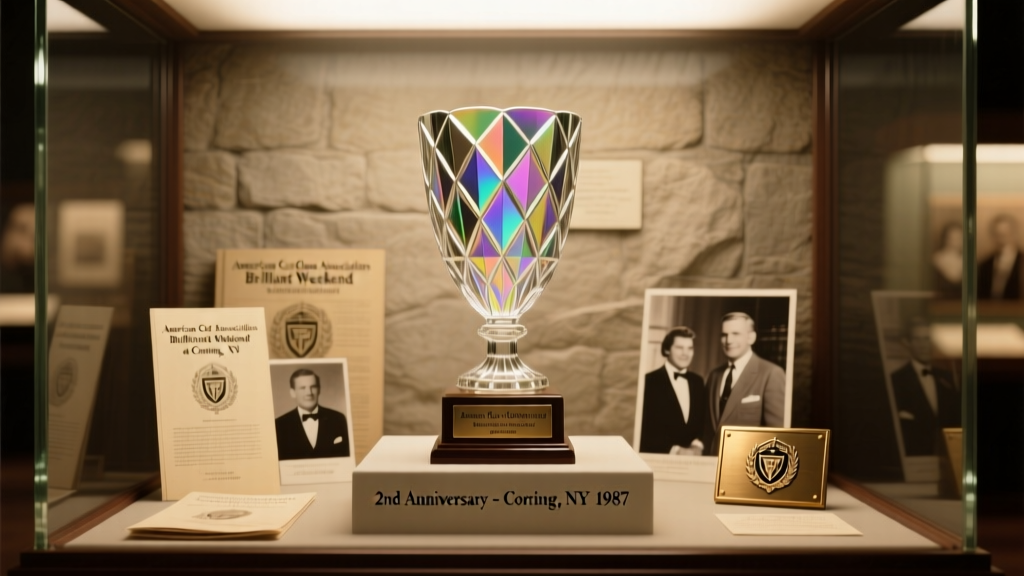
American Cut Glass Association Brilliant Weekend at Corning, NY: A Collector’s Deep Dive into the 2023 Event
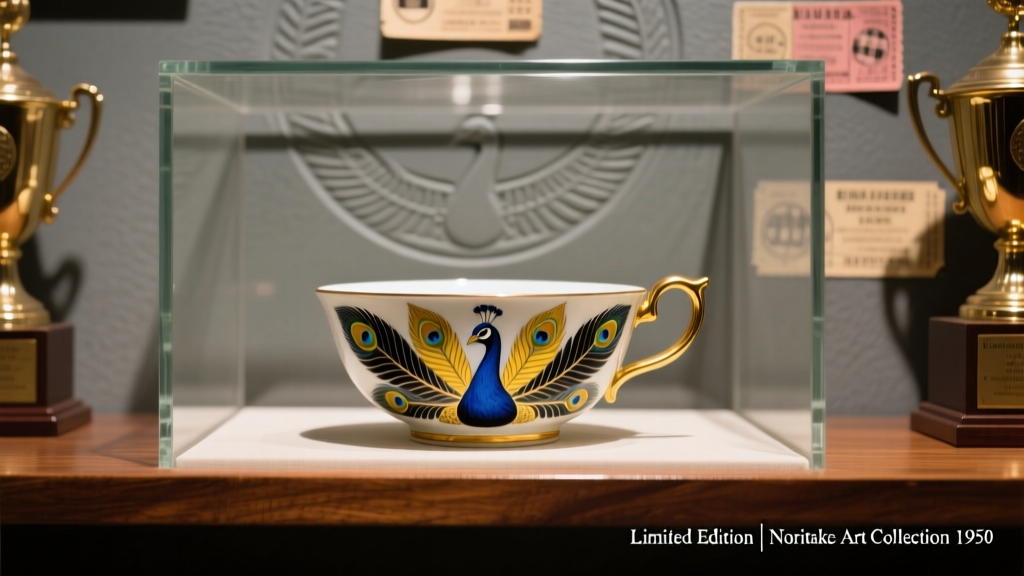
Noritake Bowl with Gold Handle, Blue-Gold-Orange-Black Peacock Feather Interior: Authentication, History, and Collectibility of the 10-Inch Pattern
Aurene Cologne 8-Lobed Bottle: Tapered Gold Finish, Signed by Frederick Carder, 6½ Inches Tall — Authentication, Provenance, and Market Significance
Lucky Strike Clock Panels: Authenticating and Valuing 28-Inch Wooden Molded Composition Advertising Clocks
Munson Jarvis: The Forgotten Master of Mid-Century Baseball Glove Craftsmanship
Noritake Plate 'Tree in Meadow' — Authentication, History, and Collectibility of the 7½-Inch Dinnerware Piece

The Fantasy Hatpin: Collecting, Authenticating, and Preserving a Rare Art Deco Curio
Meissen Leaf-Shaped Dish Set: Authenticating a Gilt Cobalt 19th-Century Five-Piece Service (8½ Inches)
Weller Lasa Vase 'Landscape' Iridescent — Authentication, Provenance, and Market Value of the Iconic 7-Inch Art Pottery Piece