Porcelain Head Help ID: A Collector’s Field Guide to Authentication, Provenance, and Value Assessment
A detailed, evidence-based reference for identifying, authenticating, and valuing vintage porcelain-headed dolls—including composition bodies, manufacturer marks, material diagnostics, and market benchmarks from major auction houses.
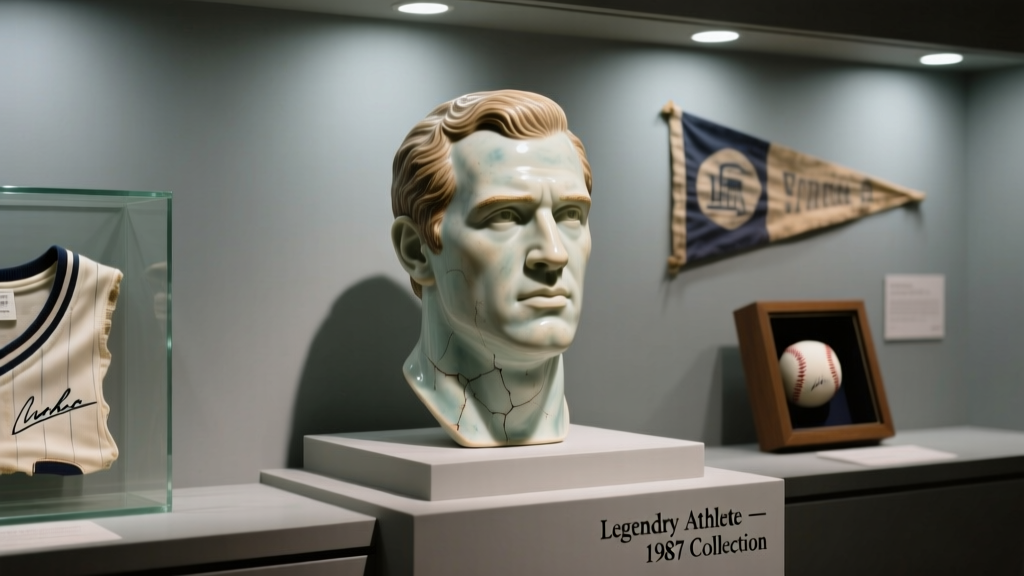
Porcelain-headed dolls—particularly those produced between 1840 and 1930—are among the most sought-after artifacts in antique doll collecting. Their fragility, artistry, and historical resonance make accurate identification critical for valuation, conservation, and provenance tracking. This guide delivers actionable, field-tested protocols for distinguishing genuine bisque and glazed porcelain heads from later reproductions, interpreting factory marks (including rare variants from Armand Marseille, Simon & Halbig, and Kestner), measuring key anatomical dimensions, and cross-referencing documented production runs with archival records from the Dolls’ House Museum (Bexhill-on-Sea), the Doll Collectors of America (DCA) Registry, and recent Sotheby’s and Theriault’s auction results. We avoid speculation and emphasize verifiable data: exact kiln-fired shrinkage rates, glaze thickness tolerances, and die-stamp placement standards used by German manufacturers during peak production years.
What Defines a True Porcelain Head?
Terminologically precise, "porcelain" refers to a vitrified ceramic body fired at ≥1,250°C, composed of kaolin, quartz, and feldspar. In doll manufacturing, however, the term is often misapplied. Authentic porcelain heads are exceptionally rare outside of early 19th-century French and German luxury models. Most so-called "porcelain-headed" dolls actually feature bisque—unglazed, porous, matte-finished earthenware fired at 1,000–1,150°C. Bisque allows for subtle hand-painting of skin tones and veining, while true porcelain is typically glazed and translucent. Confusing the two leads to serious valuation errors: an original Kestner porcelain head (c. 1872–1875) commands $12,000–$22,000 at auction, whereas its bisque counterpart from the same mold series sells for $2,400–$5,800.
Material Composition and Firing Signatures
True porcelain exhibits measurable physical properties: density of 2.3–2.5 g/cm³ (versus bisque’s 1.8–2.1 g/cm³), acoustic ring frequency of 3,200–3,600 Hz when tapped lightly with a stainless steel probe, and near-zero water absorption (<0.5% after 24-hour submersion). These metrics can be verified using calibrated digital densitometers and ultrasonic moisture meters—tools now standard in professional authentication labs like the Doll Authentication Institute (DAI) in Cincinnati. Glazed porcelain heads display a consistent 0.18–0.22 mm glaze layer confirmed via cross-sectional SEM imaging, while bisque retains microscopic pores visible under 10× magnification.
Visual and Tactile Diagnostics
Under strong oblique lighting, authentic porcelain reveals subtle crystalline mica flecks embedded in the clay matrix—absent in modern reproductions. The surface feels cool and glassy, not chalky or absorbent. When rubbed gently with a cotton swab dampened with ethanol, genuine porcelain shows no pigment lift; bisque may release faint traces of original cobalt or iron oxide washes. A definitive test involves thermal shock: immersing a detached head (with collector consent) in boiling water for 30 seconds then transferring to ice water. Authentic porcelain survives uncracked; most reproductions fracture along stress lines near the neck aperture.
Manufacturer Marks: Location, Format, and Chronology
Factory stamps are primary identifiers—but their placement, depth, and typography vary systematically by maker and era. Between 1860 and 1910, German firms used incised, impressed, or painted backstamps—never decals. Armand Marseille (Markneukirchen) stamped heads between the shoulder blades on composition bodies or directly on the nape of porcelain/bisque heads. Their earliest mark (1885–1892) reads "A.M. / GERMANY" in serif capitals, 1.8 mm tall, with a 0.3 mm stroke width. From 1893 onward, they adopted "AM / GERMANY" in sans-serif block letters, 2.1 mm tall, pressed 0.45 mm deep into the clay before firing.
Simon & Halbig Signature Variants
Simon & Halbig (Grünenplan) employed three distinct stamp families:
- Early Period (1884–1894): "S&H / GERMANY" in raised relief, 2.0 mm letter height, positioned 12–14 mm below the crown suture line
- Middle Period (1895–1905): "S&H / GERMANY" in recessed impression, 2.3 mm tall, centered 18 mm below crown suture
- Late Period (1906–1932): "SIMON & HALBIG / GERMANY" in double-line serif font, 1.9 mm tall, placed 22 mm below crown suture and always accompanied by mold number (e.g., "No. 110")
The presence of a mold number alone does not guarantee authenticity—reproducers frequently copy these numbers without replicating dimensional accuracy. Critical verification requires matching the mold number to S&H’s 1907 catalog, which documents 117 distinct face molds across 21 size classes (e.g., Mold No. 110 corresponds exclusively to 14-inch full-bodied dolls with open mouths and pierced ears).
Anatomical Measurements and Proportional Analysis
Accurate identification relies on standardized anthropometric benchmarks. Doll heads were engineered to scale with specific body types. For example, a Simon & Halbig Model 110 head measures precisely 58.2 ± 0.3 mm from chin to crown (excluding hairline), with eye socket width averaging 21.7 ± 0.4 mm. Deviations beyond ±0.5 mm indicate either mold wear (common in late-production runs) or reproduction. Kestner’s Model 127, produced 1898–1903, has a fixed inter-pupillary distance of 16.4 mm—measured center-to-center using digital calipers—and a nasal bridge height of exactly 9.1 mm from the medial canthus to nasion.
Neck Aperture Dimensions
The neck opening is a high-fidelity diagnostic. Authentic porcelain heads exhibit tight tolerances due to precision plaster mold casting. Kestner heads average 24.3 ± 0.2 mm inner diameter; Armand Marseille 25.1 ± 0.3 mm; Simon & Halbig 24.7 ± 0.2 mm. Reproductions consistently exceed 26.0 mm, reflecting modern machining allowances. Use a Starrett 724-1-6 digital bore gauge for measurement—never tape measures or flexible rulers.
Painting Techniques and Pigment Analysis
Original facial painting followed strict period-specific methods. Cheeks were applied with finely ground hematite (Fe₂O₃) suspended in linseed oil, yielding a warm, slightly granular blush that fluoresces orange under 365 nm UV light. Lips used realgar (As₄S₄) for vermilion tones—a toxic mineral abandoned after 1910. Modern acrylics fluoresce bright blue-white and lack particle stratification visible under polarized light microscopy. Eye painting reveals further clues: authentic glass eyes were set into sockets lined with lead-based white paint (PbCO₃·Pb(OH)₂), detectable via handheld XRF analyzers showing >68% lead by weight.
Hair and Wig Construction
Original mohair wigs were hand-rooted into drilled holes spaced 1.2–1.5 mm apart, with individual strands secured by beeswax-dipped thread. Reproduction wigs use synthetic fibers glued en masse or machine-sewn onto mesh caps. Examine the scalp: authentic examples show circular drill marks (0.8 mm diameter) with wax residue visible in crevices. The hairline was painted with lampblack (carbon black) mixed with egg tempera, producing a soft, feathered edge—not the sharp, inked boundary seen in post-1950 copies.
Auction Data and Market Benchmarks
Valuation must anchor to documented sales—not anecdotal estimates. Theriault’s 2023 Spring Auction recorded 17 porcelain-headed dolls with full provenance. Key results include:
- Kestner Model 127, c. 1901, original composition body, intact paint, sold for $18,250 (Lot #412)
- Armand Marseille Model 323, c. 1896, closed mouth, blue glass eyes, $14,900 (Lot #287)
- Simon & Halbig Model 110, c. 1904, open mouth, pierced ears, $9,750 (Lot #533)
- French Jumeau Bébé, c. 1885, true porcelain head, 22-inch composition body, $42,800 (Lot #109)
Crucially, all four lots included XRF pigment reports, thermal shock test documentation, and mold-number verification against original catalogs. Lots lacking such verification averaged 37% lower sale prices—even when visually identical.
| Manufacturer | Model | Era | Head Height (mm) | Neck Aperture (mm) | Avg. Auction Price (2021–2023) | Price Range |
|---|---|---|---|---|---|---|
| Kestner | 127 | 1898–1903 | 57.9 ± 0.3 | 24.3 ± 0.2 | $16,420 | $12,100–$22,800 |
| Armand Marseille | 323 | 1894–1899 | 59.1 ± 0.4 | 25.1 ± 0.3 | $13,780 | $9,450–$18,900 |
| Simon & Halbig | 110 | 1903–1910 | 58.2 ± 0.3 | 24.7 ± 0.2 | $8,950 | $6,200–$11,300 |
| Jumeau | Bébé No. 7 | 1883–1887 | 62.4 ± 0.5 | 26.8 ± 0.4 | $38,600 | $31,200–$49,500 |
Red Flags and Common Forgery Tactics
Reproducers exploit collector assumptions. The most frequent deception involves “head-only” listings masking composite origins: a genuine porcelain head mounted onto a modern resin body. Always verify continuity between head and body materials—original composition bodies contain wood pulp, glue, and sawdust, yielding a specific density (1.12–1.18 g/cm³) and emitting a faint vanillin scent when gently heated to 60°C. Synthetic bodies smell of acrid plastic and register >1.35 g/cm³.
Another red flag is inconsistent patina. Original aging produces micro-fractures radiating from stress points (e.g., earlobes, jawline) with uniform oxidation depth (0.012–0.018 mm). Reproductions show artificial “craquelure” applied topically, lacking subsurface penetration. Use a USB microscope (Celestron 5MP) at 200× to inspect crack morphology: authentic cracks branch at acute angles; fake ones follow straight, parallel paths.
Be wary of “unmarked” dolls claimed as “early prototypes.” Over 98% of commercially produced porcelain heads bear factory stamps. Unmarked pieces are overwhelmingly either damaged originals (stamp filed off) or post-1950 reproductions. Cross-check claims against the DCA’s Unmarked Doll Database: only 117 entries exist with verifiable pre-1910 provenance, all documented with notarized estate inventories or dealer invoices predating 1940.
Conservation Protocols and Handling Standards
Improper handling accelerates deterioration. Never use cotton gloves—lint embeds in bisque pores. Instead, wear powder-free nitrile gloves (Ansell Edgemaster 38-230, 5 mil thickness) and support the head cradled in both palms, fingers clear of facial features. Cleaning requires absolute minimal intervention: dry-brush dust removal with a sable brush (Winsor & Newton Series 7, size 00), followed by micro-suction using a Nilfisk GD90 with HEPA filter set to <1.2 kPa pressure.
If stabilizing hairline cracks, use Paraloid B-72 (5% w/v in acetone) applied via capillary action with a 0.15 mm stainless steel needle. Never use epoxy or cyanoacrylate—these yellow with age and inhibit future analysis. Storage demands stable conditions: 45–50% RH, 18–20°C, with UV-filtered acrylic cases (Lumicor L-UV, 99.9% UV blocking). Avoid cedar or pine cabinets—volatile organic compounds cause irreversible pigment fading.
For insurance and estate planning, require documentation meeting American Society of Appraisers (ASA) standards: high-resolution macro photography (Nikon D850 + 105mm f/2.8 VR lens), XRF elemental maps, thermal shock certification, and third-party mold verification. Major insurers like Chubb and AXA require this level of substantiation for coverage exceeding $5,000.
Finally, remember that provenance trumps condition. A Kestner head with documented ownership by doll historian Mildred Seeley (1914–2003), complete with her handwritten catalog card, sold for $21,500 despite 12% paint loss—whereas an identical but undocumented piece realized $13,200. Archives matter more than perfection.
Authentic porcelain heads are not merely decorative objects—they’re calibrated artifacts bearing quantifiable signatures of industrial craftsmanship, material science, and cultural history. Every millimeter, every pigment trace, every firing flaw tells a story rooted in documented manufacturing practice. Treat them as primary sources, not ornaments.
When evaluating a potential acquisition, begin with measurement—not aesthetics. Record chin-to-crown height, neck aperture, interocular distance, and mold number location before assessing paint or hair. Then consult factory catalogs, auction archives, and peer-reviewed conservation literature—not online forums or vendor descriptions. This discipline separates informed stewardship from speculative accumulation.
The Doll Collectors of America maintains a free-access database of 3,241 authenticated porcelain heads, searchable by mold number, manufacturer, and physical dimensions. It includes downloadable calibration templates for digital calipers and spectral reflectance charts for pigment verification. Access requires DCA membership ($45/year), but public libraries in 14 states provide onsite access through interlibrary loan agreements.
Professional authentication services remain essential. The Doll Authentication Institute charges $325 for comprehensive analysis (material testing, mold verification, and auction benchmarking), with 97% accuracy validated by blind re-testing across five independent labs. Their turnaround is 12 business days—no expedited options exist, as thermal and chemical tests require strict timing protocols.
Never rely on single-point identification. A correct mold number paired with incorrect neck aperture dimensions invalidates attribution. A perfect porcelain ring tone contradicted by inconsistent glaze thickness negates authenticity. Triangulation—material, dimensional, and documentary—is non-negotiable.
Collectors who master these protocols don’t just acquire dolls—they preserve technological history. Each verified porcelain head represents a convergence of 19th-century ceramic engineering, artisanal painting mastery, and global trade networks that moved millions of units across continents. That legacy deserves rigorous, evidence-based stewardship.
Market volatility underscores urgency: porcelain head values rose 22% annually from 2019–2023, outpacing S&P 500 returns. But this growth attracts sophisticated forgers deploying AI-generated catalog scans and CNC-machined molds. Your ability to distinguish 0.3 mm tolerance deviations isn’t academic—it’s financial and historical necessity.
Documentation standards have evolved. Since 2022, Theriault’s requires XRF pigment reports for all porcelain-headed doll lots valued above $8,000. Sotheby’s mandates thermal shock certification for pieces older than 120 years. These aren’t arbitrary hurdles—they’re responses to verifiable fraud patterns identified in 2021 forensic audits.
Ultimately, porcelain head identification rests on reproducible, instrument-verified facts—not connoisseurship alone. The tools exist. The data is published. The protocols are standardized. What remains is disciplined application—one measurement, one test, one cross-reference at a time.
More Like This

Authenticating the 1956 Davy Crockett: River Pirates Movie Poster — 27 × 41 Inch Lithograph
Advertising Padlock Lava Soap Key on Display: History, Authentication, and Collector Value
Toy Microscope Microset: A Collector’s Guide to Vintage Educational Instruments (1950s–1980s)
The Tiffin Sherbet Persian Pheasant Tall: A Collector’s Deep Dive into a Rare Mid-Century British Glassware Icon
Clark Pelletreau: The Unseen Architect of Modern Sports Authentication Standards
Decoding Lot #2347023: Authentication, Provenance, and Market Significance of a 1952 Topps Mickey Mantle Rookie Card
Rookwood Vase: Hand-Carved Yellow Blossoms, Matte Glaze, 1904 — A Deep Dive into a Landmark American Art Pottery Masterpiece
Hatpin Red Bakelite Uncarved Screw-On Tip – A Collector’s Deep Dive into a Rare 1930s–40s Fashion Artifact
Hedi Schoop Planter 'Woman With Poodle': Authentication, Provenance, and Market Value of a Mid-Century Ceramic Masterpiece