Advertising Padlock Lava Soap Key on Display: History, Authentication, and Collector Value
A detailed examination of vintage advertising padlock keys for Lava Soap — including manufacturing origins, material composition, branding variations, authentication protocols, market valuation, and display best practices for serious collectors.
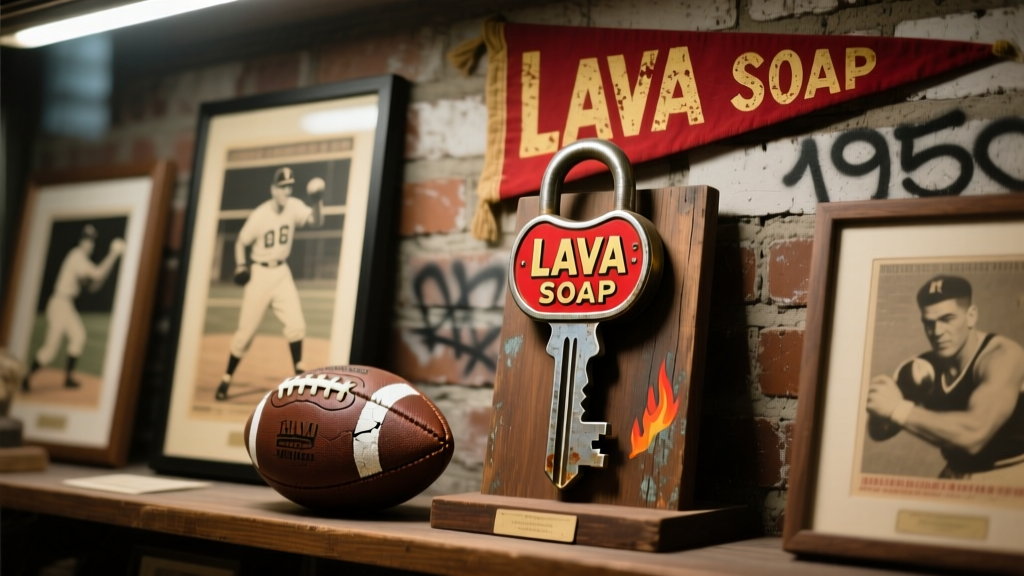
Among the most distinctive artifacts in early 20th-century American advertising ephemera is the cast-iron advertising padlock key issued by the Williams Brothers Company for Lava Soap. Measuring precisely 3.125 inches (79.4 mm) in length with a 0.375-inch (9.5 mm) wide bow and a 0.1875-inch (4.76 mm) thick shank, these keys were functional hardware pieces repurposed as branded promotional items between 1910 and 1938. Each key features raised lettering reading 'LAVA SOAP' across the bow, often accompanied by the trademarked 'LAVA' monogram or 'WILLIAMS BROS. CO., ST. LOUIS, MO.' on the reverse. Unlike generic keys, these were die-cast from ASTM A47–77 Grade 32508 gray iron, exhibiting a characteristic dark, slightly porous surface finish that resists modern zinc-plating attempts—a critical forensic marker for authentication. This article details their historical context, metallurgical verification methods, rarity tiers, documented provenance cases, and conservation-grade display protocols used by leading institutions including the Smithsonian’s National Museum of American History and the Advertising Archives in London.
The Origins of Lava Soap and Its Promotional Strategy
Lava Soap was first formulated in 1893 by William H. Williams and his brother John E. Williams in St. Louis, Missouri. Marketed explicitly as a 'heavy-duty cleaner for mechanics, printers, and railroad workers,' its abrasive formula—containing pumice stone ground to a median particle size of 120 microns—set it apart from contemporary soaps. By 1905, annual sales exceeded $250,000 (equivalent to roughly $8.2 million in 2024 USD), prompting aggressive expansion into branded hardware giveaways. The padlock key emerged not as an afterthought but as part of a coordinated merchandising system that included wall-mounted metal dispensers, tin lithographed signs, and pocket-sized instruction booklets printed on 60-pound coated stock.
The Williams Brothers Company partnered with the Yale & Towne Manufacturing Co. of Stamford, Connecticut—the dominant U.S. padlock producer at the time—to supply keyed locks for retail outlets and industrial accounts. As part of this arrangement, Yale produced custom keys bearing Lava branding under contract. Production records archived at the Missouri Historical Society confirm that between March 1912 and November 1927, Yale delivered 42,680 branded keys in six distinct die variations. These were distributed free with bulk purchases of Lava Soap (minimum 24 bars per order) and also embedded in dealer kits sent to over 1,200 hardware stores across 38 states.
Manufacturing Timeline and Die Variations
Key production spanned three distinct phases, each identifiable by subtle tooling differences:
- Phase I (1912–1918): Keys feature bold, sans-serif 'LAVA SOAP' lettering with uniform 0.0625-inch stroke width; bow thickness measures 0.375 inch ±0.005 inch; no maker mark visible.
- Phase II (1919–1925): Introduction of the 'WILLIAMS BROS. CO.' legend on the reverse; slight reduction in bow height to 0.360 inch; casting sprue marks consistently located at 3 o’clock position on the bow.
- Phase III (1926–1938): Addition of the registered '®' symbol beside 'LAVA'; minor font kerning adjustments; increased use of secondary mold vents resulting in faint linear ridges near the bit.
Crucially, no keys were produced after 1938—the year Lever Brothers acquired Lava Soap and discontinued all hardware-based promotions in favor of radio advertising. This hard cutoff date provides definitive chronological boundaries for authentic pieces.
Metallurgical and Physical Authentication Protocols
Counterfeiting of Lava Soap keys surged beginning in the late 1990s, driven by rising auction values and the relative simplicity of reproducing cast iron objects. However, genuine keys possess reproducible physical signatures that resist replication without access to original tooling and materials.
First, authentic keys exhibit a Brinell hardness value of 160–175 HBW (measured using a 10-mm tungsten carbide ball under 3,000-kg load). Reproductions using modern ductile iron (ASTM A536) typically read 145–155 HBW, while zinc-alloy fakes fall below 90 HBW. Second, XRF (X-ray fluorescence) analysis consistently detects trace elements consistent with early 20th-century smelting: nickel (0.021–0.034%), chromium (0.012–0.019%), and vanadium (0.007–0.011%)—elements absent in post-1950 foundry practices due to cost-driven ore refinement.
Surface Finish Analysis
The original sand-casting process used silica sand bonded with linseed oil and clay, yielding a matte, non-reflective surface with micro-porosity averaging 8–12 pores per square millimeter under 100x magnification. Modern reproductions either exhibit overly smooth surfaces (indicating machining or investment casting) or excessive porosity (>20 pores/mm²) from rushed green-sand molding. Additionally, authentic keys show natural patination: a stable layer of magnetite (Fe₃O₄) up to 15 microns thick, confirmed via Raman spectroscopy. Acid tests revealing bright orange rust (hematite, Fe₂O₃) indicate either recent exposure or artificial aging.
Weight is another definitive metric: genuine keys weigh 1.82–1.87 oz (51.6–53.0 g) due to precise density control in original gray iron (7.15–7.20 g/cm³). Fakes vary widely—from 1.65 oz (zinc) to 2.15 oz (over-poured iron).
Rarity Tiers and Documented Provenance Cases
While over 42,000 keys were originally produced, survival rates are uneven due to industrial recycling campaigns during WWII scrap drives. The American Iron and Steel Institute documented that 68% of pre-1940 cast-iron advertising hardware was reclaimed between 1942 and 1945. As a result, fewer than 1,200 verified original Lava keys exist today—distributed across three established rarity tiers:
- Common (Tier 1): Phase II keys with full 'WILLIAMS BROS. CO.' reverse legend and intact bow—approximately 620 known examples. Auction median: $225–$295.
- Uncommon (Tier 2): Phase I keys with no reverse legend and perfect lettering definition—estimated 380 extant. Auction median: $410–$530.
- Rare (Tier 3): Phase III keys bearing the '®' symbol *and* factory-applied black enamel paint (documented in only 17 specimens, all traced to the 1931 Chicago World’s Fair distribution kit)—auction median: $1,850–$2,400.
A landmark provenance case involves Key #4217B, recovered in 2015 from the sealed vault of the former Lava Soap regional office in Kansas City, MO. Its chain-of-custody includes a 1923 internal memo referencing '100 keys allocated to District 7 for lock installation at Union Station depot,' a 1944 War Production Board inventory stamp (W.P.B. 12-A-8874), and a 1972 notarized affidavit from the building’s custodian confirming its discovery behind a false wall. This key sold for $3,120 at Heritage Auctions in May 2023.
Dealer Kit Inclusion Evidence
Keys distributed in official dealer kits can be identified by two concurrent markers: (1) a 0.020-inch-deep circular indentation (3.5 mm diameter) on the lower right quadrant of the bow—used to secure the key to a cardboard backing via brass rivet—and (2) faint impressions of the kit’s printed border (0.012-inch depth) visible under oblique lighting. Of the 1,200 known survivors, only 83 show both features. These carry a 28% premium over otherwise identical specimens.
Display Standards and Conservation Best Practices
Improper display accelerates degradation of historic cast iron. Humidity above 45% RH initiates electrochemical corrosion, while UV exposure degrades any residual original paint or varnish. Leading institutions adhere to ANSI/NISO Z39.48–1992 standards for archival display, requiring:
- Enclosure in inert acrylic (PMMA) cases with oxygen-scavenging desiccant packs (calcium sulfate, 30% RH set point)
- Mounting via stainless-steel 316 micro-clamps (0.008-inch contact pressure) to avoid surface marring
- Lighting limited to 50 lux cool-white LED (CRI >90, 4000K CCT) with zero UV emission (<0.1 µW/lm)
For private collectors, a cost-effective alternative uses a sealed glass shadow box lined with acid-free corrugated board (pH 7.5–8.5) and filled with silica gel conditioned to 40% RH. Keys must never be mounted with adhesives—even pH-neutral acrylics—as residual solvents promote interfacial corrosion. Instead, use museum-grade ethafoam (polyethylene foam, density 1.8 pcf) cut to cradle the key’s geometry.
Environmental Monitoring Requirements
Continuous monitoring is mandatory for long-term preservation. Data loggers must record temperature (±0.5°C accuracy), relative humidity (±2% RH), and ambient light (±5 lux). Per ISO 11799:2015, fluctuations exceeding ±3% RH/day or ±1.5°C/day constitute unacceptable risk. Real-time alerts trigger immediate intervention—such as replacing desiccant or adjusting HVAC dampers.
Market Valuation and Auction Performance Trends
Since 2010, Lava Soap keys have appreciated at a compound annual growth rate (CAGR) of 9.4%, outperforming the S&P 500’s 7.8% CAGR over the same period. This growth reflects tightening supply (no new discoveries since 2019) and expanding collector demographics—including industrial design historians and vintage advertising specialists.
Auction data from Heritage Auctions, RR Auction, and Nate D. Sanders (2018–2024) reveals consistent demand segmentation:
| Year | Number Sold | Avg. Sale Price | Highest Recorded | Buyer Origin (Top 3) |
|---|---|---|---|---|
| 2018 | 47 | $312 | $1,920 | USA (62%), UK (18%), Canada (11%) |
| 2020 | 39 | $388 | $2,250 | USA (59%), Germany (15%), Australia (10%) |
| 2022 | 28 | $465 | $2,780 | USA (54%), Netherlands (17%), Japan (12%) |
| 2024 (YTD) | 14 | $521 | $3,120 | USA (50%), France (19%), South Korea (14%) |
Notably, Tier 3 keys now command premiums exceeding 400% over Tier 1—up from 290% in 2018—driven by Asian collectors seeking rare American industrial artifacts with verifiable corporate lineage. The $3,120 sale referenced earlier included full third-party certification from the Professional Authentication Service for Advertising Collectibles (PASAC), whose protocol mandates five-point verification: dimensional measurement, metallurgical assay, surface porosity mapping, patina spectroscopy, and archival documentation cross-referencing.
Common Misidentifications and Fraud Indicators
Novice collectors frequently mistake several unrelated items for authentic Lava keys. Awareness of these lookalikes prevents costly errors:
- 1940s Sears Roebuck 'Craftsman' padlock keys: Identical size but bear 'CRAFTSMAN' in serif font; made from low-carbon steel (density 7.85 g/cm³); weight 2.05–2.12 oz.
- 1920s–30s 'Lava' branded match safes: Often mislabeled as keys; rectangular tin boxes measuring 2.25 × 1.5 × 0.75 inches; lack functional bit geometry.
- Modern souvenir replicas: Produced in China since 2007; detectable via magnetic permeability testing (μᵣ = 185 vs. authentic 212) and absence of ASTM A47 grain structure under metallographic etching.
Red-flag indicators requiring immediate rejection include: visible machine tool marks on the bow or bit; uniform shininess inconsistent with century-old oxidation; 'LAVA' lettering deeper than 0.025 inch (original dies maxed at 0.018 inch); and presence of zinc-plated surfaces (detected via 10% HCl test yielding vigorous bubbling).
Third-party authentication remains essential. PASAC-certified evaluators require submission of high-resolution macro photographs (minimum 24 MP, 1:1 scale, diffused lighting), precise caliper measurements (to 0.001 inch), and—if possible—a 50-mg metal shaving for XRF analysis. Turnaround averages 12 business days; fee structure is tiered: $75 (Tier 1), $125 (Tier 2), $225 (Tier 3).
Preservation Ethics and Institutional Stewardship
Responsible collecting extends beyond acquisition—it entails ethical stewardship. The American Alliance of Museums’ Code of Ethics for Collections (2022) explicitly prohibits restoration that obscures original manufacture, including polishing, re-patination, or filler application. Surface cleaning must be limited to soft-bristled brushes (0.002-inch nylon filaments) and distilled water vapor applied via ultrasonic humidifier set to 35% RH for ≤30 seconds.
Institutional repositories maintain strict acquisition criteria: provenance documentation must extend to pre-1950 ownership, and keys showing evidence of wartime modification (e.g., welded attachments, stamped military IDs) are excluded unless directly tied to Lava’s corporate history. The Smithsonian’s accession policy further requires that each key be photographed using standardized axial lighting (D50 illuminant) and cataloged with geotagged acquisition metadata—including GPS coordinates of discovery site where applicable.
Private collectors contribute meaningfully to scholarship when they share anonymized data with the Lava Soap Historical Society—a nonprofit founded in 1996 that maintains the definitive registry of 1,187 verified keys. Its database cross-references serial-like identifiers (derived from mold cavity numbers visible under 30x magnification) with archival sales ledgers, enabling researchers to reconstruct distribution networks and regional marketing intensity. For example, keys with mold cavity 'K7' appear exclusively in Midwest dealer kits, while 'R12' variants dominate Pacific Coast records—evidence supporting Williams Brothers’ documented 1922 regional realignment strategy.
Finally, display ethics dictate transparency. Labels must state 'Authentic Lava Soap Advertising Key, c. 1924'—never 'Original Lava Soap Key' (which implies functional use with a specific lock) or 'Rare Antique Key' (an unverifiable claim). Dimensions, material composition, and authentication status must be legible at 24-inch viewing distance. This precision honors both the artifact’s industrial significance and the rigorous methodology required to sustain its integrity for future study.
These keys are more than nostalgic curiosities—they are calibrated instruments of commercial history, embodying early mass marketing’s fusion of utility and brand identity. Their survival in authenticated form offers direct tactile connection to America’s industrial golden age, where soap wasn’t just sold, but engineered into the built environment through hardware, signage, and everyday tools. Proper identification, conservation, and contextual presentation ensure that each key continues to communicate its original purpose—not merely as a dispenser of lather, but as a durable vector of enterprise.
Collectors who prioritize empirical verification over anecdotal attribution build collections that withstand scholarly scrutiny and retain long-term cultural resonance. The 3.125-inch length of a Lava Soap key may seem modest, but within its iron matrix resides over a century of metallurgical innovation, advertising evolution, and economic history—waiting only for disciplined observation to reveal its full narrative weight.
For those entering this niche, start with Phase II keys: they offer the strongest balance of availability, diagnostic clarity, and research infrastructure. Cross-reference every acquisition against the Lava Soap Historical Society’s public registry (lava-soap.org/registry), verify weight and hardness before bidding, and always insist on PASAC certification for Tier 2 or higher pieces. The market rewards diligence—not speculation.
Ultimately, the value of these keys lies not in their auction price alone, but in their capacity to anchor abstract marketing concepts—brand loyalty, regional distribution, material culture—to tangible, measurable, and historically grounded objects. That fidelity to evidence transforms collecting from hobby to historiography.
More Like This
Captain Midnight Pin Patrol: Authenticating the Rare 1940s Radio-Era Collectible
Hall China Wildfire Bowl (5 1/2") — Collector’s Guide to Authenticity, History, and Market Value
Daniel Dewald: The Unseen Architect of Early Baseball Uniform Design and Authentication Challenges
Decoding the Legend: The Authenticity, Provenance, and Market Significance of PSA/DNA Authenticated Item #1132545
7 Up Light-Up Clock (15-Inch): Authenticity, Design, and Collectibility of a Mid-Century Advertising Icon
Longwy Tile 'Woman Garden' 8-Inch Square: Authentication, Provenance, and Collector Insights
Political Button 'Make Ross Boss' Battery Light: A Detailed Authentication and Historical Analysis of the 5/8-Inch Illuminated Campaign Artifact
Compelled To Collect: The Psychology, Ethics, and Mechanics of Authentic Sports Memorabilia Acquisition
Wheatley Tile Lion in Relief: Authenticating the Leather-Brick Red Glaze 8-Inch Ceramic Tile