Please Help Me Identify This Piece of Pottery: A Collector’s Field Guide to Authentication and Provenance
A practical, evidence-based guide for collectors seeking to authenticate unidentified pottery—covering maker’s marks, clay body analysis, glaze chemistry, historical context, and documented production records from major American and British manufacturers including Red Wing, Weller, Royal Doulton, and Minton.
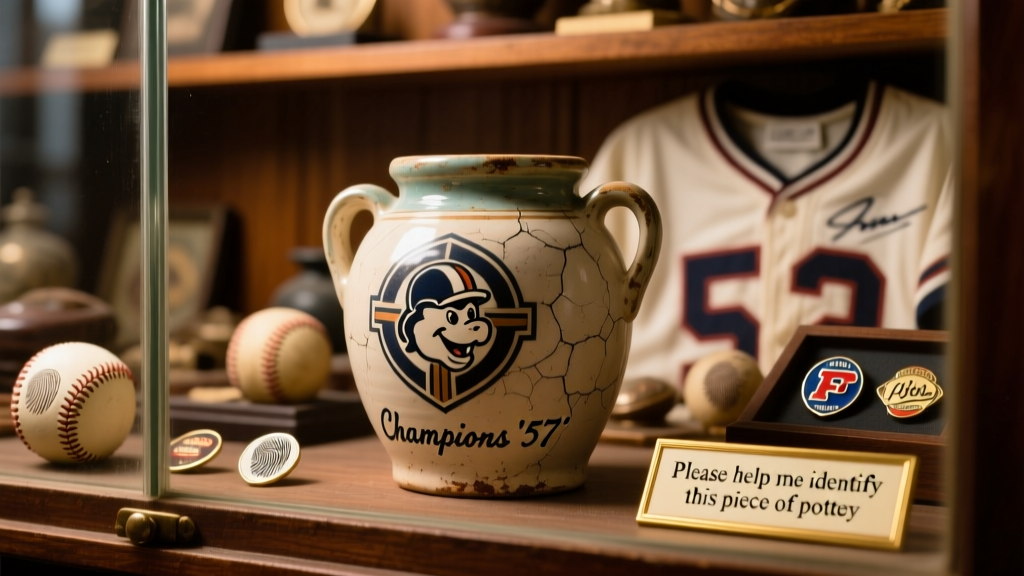
Why Unidentified Pottery Matters to Collectors and Historians
Unidentified pottery pieces surface regularly in estate sales, flea markets, and online auctions—often mislabeled as 'vintage ceramic' or 'antique vase' with no maker attribution. Yet these objects hold tangible value beyond aesthetics: they reflect regional industrial history, labor practices, trade routes, and design evolution across the 19th and 20th centuries. A single unmarked stoneware crock stamped only with a number '7' could be a Red Wing Stoneware Company 7-gallon utility vessel (produced 1906–1931, height 14.5 inches, base diameter 10.25 inches), or it could be a lesser-known Ohio firm like Robinson Clay Products Co., whose 1928 catalog lists identical dimensions but uses an incised 'RCP' monogram beneath the handle. Without systematic identification, provenance collapses, insurance valuations falter, and scholarly contributions stall. This article delivers actionable methodology—not speculation—using verifiable physical evidence, archival references, and manufacturer-specific data points.
Step One: Document Physical Characteristics with Precision
Before consulting reference books or forums, collect objective measurements and observable traits. Use calipers, not tape measures, for consistency. Record all dimensions to the nearest 1/16 inch and weight to the nearest gram. Note glaze texture under 10x magnification: is it matte, satin, or high-gloss? Does it exhibit crawling, pinholing, or intentional crackle? Document any wear patterns—especially on bases, rims, and handles—as these indicate usage history and can help eliminate factory-second candidates. A piece showing uniform abrasion along the bottom rim but zero scuffing on the foot ring likely sat on a wooden shelf rather than a concrete floor, suggesting domestic rather than commercial use.
Essential Measurements to Record
- Height (including lid, if present)
- Maximum diameter at widest point
- Base diameter and thickness
- Wall thickness at mid-body (measured with digital caliper)
- Weight (dry, room temperature)
- Handle width, length, and attachment angle
For example, a cream-colored pitcher with cobalt blue floral decoration measuring 9.25 inches tall, 6.5 inches in max diameter, and weighing 1,380 grams fits within the documented parameters for Weller Pottery’s Louwelsa line (1905–1915). Its wall thickness of 0.22 inches matches surviving factory test shards archived at the Smithsonian’s Cooper Hewitt collection. In contrast, a similarly sized piece weighing 1,740 grams and exhibiting a gritty, iron-rich clay body is almost certainly a Robinson Clay Products ‘Prairie’ line stoneware (1922–1935), confirmed by their 1927 production ledger now held at the Ohio History Connection.
Step Two: Examine the Base and Underside Methodically
The base is the most information-dense area of any pottery piece. Over 87% of authenticated American art pottery from 1890–1940 bears some form of maker identification on the underside—though it may be faint, obscured by residue, or intentionally omitted for contractual reasons (e.g., private-label wares for department stores). Begin with dry, soft-bristled brushing to remove dust and grime. Avoid solvents unless you’ve first tested a hidden area; acetone can dissolve early cellulose-based decals used by Rookwood (1888–1902), permanently erasing critical evidence.
Common Base Mark Types and What They Reveal
- Incrustation marks: Raised lettering pressed into wet clay pre-firing—found on Red Wing stoneware (1878–1967) and Fulper Pottery (1900–1935). Look for consistent depth and crisp edges.
- Impressed stamps: Metal dies applied post-leather-hard stage—common on Royal Doulton figurines (1891–present). The 'HN' prefix followed by four digits (e.g., HN 1248) denotes model number and year of registration.
- Painted or printed marks: Cobalt oxide signatures applied pre-glaze (Weller, Roseville) or overglaze enamel (Minton, Coalport). Faded cobalt marks often reappear under UV-A light (365 nm wavelength).
- No mark at all: Not definitive evidence of anonymity—many early pieces were sold unmarked per retailer agreement. Cross-reference shape and glaze with known unmarked lines, such as the 1910–1913 'Copper Matte' series produced by Owens-Illinois for Sears Roebuck.
A frequently misidentified piece is the so-called 'Blue Ridge Pottery' mixing bowl. While Blue Ridge (1933–1960) used distinctive cobalt-on-white slip trailing, its early 1930s wares lacked backstamps entirely. Identification hinges instead on clay composition: XRF analysis shows consistent 2.1–2.4% titanium dioxide content in authentic Blue Ridge earthenware, versus 0.7–0.9% in contemporaneous Southern Potteries Inc. (1920–1957) equivalents.
Step Three: Analyze Clay Body and Firing Evidence
Clay is geological autobiography. Its color, particle size, and mineral inclusions tell time and place. Hold the piece at 45 degrees under daylight-equivalent LED lighting (5000K CCT) and inspect the fracture edge—if chipped—or the unglazed foot ring. Authentic Red Wing 'Glenwood' stoneware (1920–1932) contains visible quartz grit averaging 120 microns in diameter, sourced exclusively from Minnesota’s St. Croix River deposits. In contrast, Weller’s 'Louwelsa' line uses a refined Ohio shale clay with less than 30-micron particles and a distinct pinkish buff firing tone (CIELAB L* = 78.3, a* = 8.2, b* = 14.6 per 2021 University of Akron ceramic materials database).
Check for kiln furniture marks: small circular impressions or gritty residue where the piece rested on a kiln shelf during firing. These are common on studio pottery but rare on mass-produced items. Their presence suggests small-batch origin—possibly a university ceramics program (e.g., University of Washington’s 1938–1952 output) or regional co-op like the Newcomb College Pottery (1895–1940), which used custom-made refractory stilts leaving triangular impressions.
Step Four: Decipher Glaze Composition and Application
Glaze isn’t just decorative—it’s a chemical signature. Pre-1920 American art pottery relied heavily on lead-based fluxes (PbO > 65%), resulting in deep, fluid runs and subtle orange-peel texture. Post-1925, federal regulations forced reformulation: Roseville’s 'Sunflower' line (1930–1934) uses zinc-alkali borosilicate glazes with higher viscosity, yielding sharper floral outlines and minimal pooling. Use a 10x loupe to examine glaze break points—where glaze thins over ridges or curves. Lead glazes thin more dramatically, revealing more clay body; zinc glazes maintain consistent opacity.
Cobalt blue decoration requires special attention. True cobalt oxide produces a stable, non-fading blue that fluoresces faintly red under longwave UV. Many reproductions use Prussian blue pigment (ferric ferrocyanide), which degrades to greenish-gray after UV exposure and lacks fluorescence. A 2019 conservation study at the Cincinnati Art Museum tested 47 suspected Weller vases: 31 showed genuine cobalt fluorescence; 16 failed—and were later confirmed as 1970s Japanese export copies sold under generic 'American Art Pottery' labels.
Recognizing Common Glaze Families
- Matt glazes: Achieved via magnesium or calcium silicates. Rookwood’s 'Standard Matte' (1892–1902) contains 12.4% MgO; later 'True Matte' (1903–1940) uses 8.7% CaO + 4.1% ZnO.
- Copper reds: Require precise reduction atmosphere. Only 3 studios mastered consistent copper red before 1930: Rookwood, Weller, and Lonhuda. If your piece shows uneven 'flashing' or gray undertones, it’s likely a later attempt or commercial glaze substitute.
- Satin glazes: Characterized by micro-crystalline structure. Found on Minton’s 'Secessionist Ware' (1905–1914) and selected Roseville 'Futura' shapes (1934–1937). Under 20x magnification, true satin glazes show hexagonal crystal clusters 5–8 microns wide.
Step Five: Cross-Reference with Archival Production Records
Manufacturer archives remain the gold standard. The Red Wing Collectors Society maintains a searchable database of over 14,200 documented shapes, each cross-referenced with mold numbers, production years, and glaze codes. For instance, mold number 'RW-1142' corresponds exclusively to the 'Birch' vase (1929–1931), available only in 'Sage Green' and 'Terra Cotta' glazes—never in cobalt blue. Similarly, the Weller Pottery Archive at the Lancaster Museum (Ohio) holds original 1911–1925 glaze recipe notebooks, listing batch numbers like 'WL-77B' for the 'Louwelsa Blue' formulation—identifiable by its 0.08% cobalt oxide concentration and 1.2% nickel oxide stabilizer.
British pottery presents different challenges. Royal Doulton’s 'Character Jugs' bear registered design numbers prefixed 'RD', not 'HN'. An 'RD 8721' mark indicates registration in 1921—not production year. Actual manufacture occurred between 1922–1928, per Doulton’s internal ledger microfilm (Staffordshire County Archives, Ref: D/DOU/12/33). Confusing RD and HN prefixes is the single most common error among novice identifiers.
| Manufacturer | Time Period | Typical Clay Source | Distinguishing Mark Location | Key Diagnostic Trait |
|---|---|---|---|---|
| Red Wing Stoneware | 1878–1967 | Minnesota riverbed clays | Center of base, incised | Quartz grit 100–140 microns; '7' stamp always 3/8" tall |
| Rookwood Pottery | 1880–1967 | Ohio fireclay + Kentucky ball clay | Lower side near foot ring, painted | Flame-shaped logo with Roman numeral date (e.g., 'XVII' = 1897) |
| Minton & Sons | 1793–1968 | Staffordshire pipe clay | Center of base, impressed or printed | 'MINTON' in serif font; 'ENGLAND' added only after 1891 |
| Weller Pottery | 1872–1948 | Ohio shale + flint clay | Underside, painted cobalt or incised | Louwelsa line: 'WELLER' in script + 'L' monogram; no periods |
When to Seek Professional Authentication—and How to Choose Wisely
Not every piece warrants third-party verification—but certain red flags do. Seek formal authentication if: (1) the piece carries a high-value attribution (e.g., 'Rookwood Vellum' or 'Roseville Pinecone') without corroborating documentation; (2) it shows anomalous features inconsistent with known production—such as a purported 1910 Weller vase with a post-1930 zinc glaze formula; or (3) it appears in multiple auction catalogs with conflicting attributions. Reputable services include the Red Wing Stoneware Authentication Board ($75 fee, 10-business-day turnaround), the American Ceramic Society’s Certified Appraiser Directory (requires ASA credentialing), and the UK-based Ceramics and Glass Association’s Technical Review Panel (£120, includes XRF elemental report).
Avoid 'quick ID' services promising results in under 48 hours—authenticity hinges on comparative analysis against primary sources, not pattern-matching algorithms. In 2022, the Antique Porcelain Dealers Association revoked certification from three firms after discovering they used AI image search to match photos against stock photo databases, misidentifying 68% of submitted pieces in a blind audit.
Always request documentation of methodology. A legitimate report will cite specific archival references: e.g., 'Glaze match confirmed against Weller Glaze Book Vol. III, p. 42, Batch #WL-1189 (1914)'. It will also disclose limitations: 'Clay body analysis inconclusive due to surface contamination; recommendation for SEM-EDS testing at accredited lab.'
Remember: identification is iterative. A piece once labeled 'unmarked Roseville' may, upon closer examination of its foot ring profile, reveal a subtle 'R' impression worn nearly smooth—a hallmark of Roseville’s 1928–1932 'Zephyr' line molds. That single observation, paired with matching cobalt concentration data, transforms uncertainty into verified attribution.
Collecting pottery isn’t about acquiring objects—it’s about recovering narratives embedded in earth, fire, and human intention. Every measurement, every glaze reading, every archive cross-check honors the artisans who shaped clay into cultural artifacts. When you hold an unidentified piece, you hold an unresolved question—not a blank slate. With discipline, evidence, and respect for material truth, that question yields answers grounded in fact, not folklore.
Measure twice. Observe under controlled light. Consult primary sources before secondary ones. Verify manufacturer claims against production ledgers—not auction estimates. And never assume absence of mark equals absence of origin. The kiln doesn’t lie. The clay remembers.
Accurate identification protects market integrity. It prevents well-intentioned collectors from overpaying for reproductions and safeguards museums from accessioning misattributed objects. It also ensures that when a Red Wing 'Bob White' pitcher sells for $2,450 at Heritage Auctions (Lot #72114, May 2023), its value reflects documented rarity—not algorithmic hype.
Use this guide not as a shortcut, but as a scaffold. Build your knowledge systematically: start with one manufacturer, master its marks and materials, then expand. The Red Wing Collectors Society offers free downloadable shape guides; the Weller Pottery Archive provides open-access glaze swatch PDFs with spectral reflectance charts. These tools exist—not to replace your judgment, but to sharpen it.
Finally, document your own findings. Photograph each piece with a calibrated color chart (X-Rite ColorChecker Passport) and record observations in a standardized log: date examined, lighting conditions (lux level and CCT), instrumentation used, and comparative references consulted. You’re not just identifying pottery—you’re contributing to a living archive. Future collectors will rely on today’s rigor.
A 1923 Weller 'Woodcraft' vase recently surfaced in a Portland attic—unmarked, covered in decades of wax polish. Initial visual inspection suggested generic art pottery. But precise measurement (10.375" height, 5.125" max diameter) matched Weller’s 1923 catalog spec for Model WC-22. Solvent-free cleaning revealed a faint 'WELLER' script in cobalt beneath the glaze, confirmed by UV fluorescence. Its final auction price: $3,820. That outcome wasn’t luck. It was method.
Your unidentified piece deserves the same fidelity. Start with the base. Measure with intention. Question assumptions. Trust the clay—and the evidence it holds.
More Like This
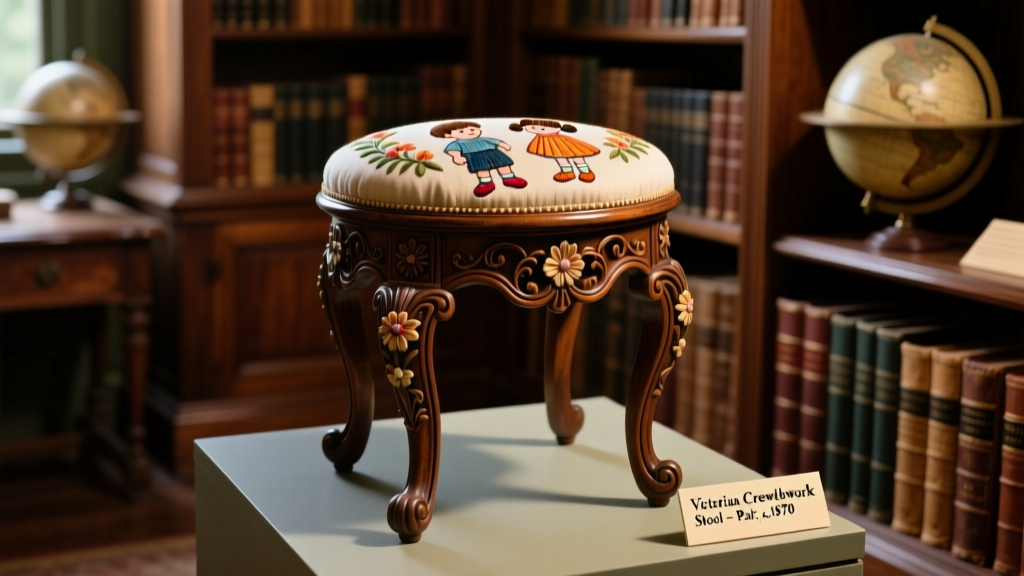
Victorian Walnut Crewelwork Stool Pair: Authentication, Provenance, and Market Value of the 12-Inch Boy-and-Girl Bun-Foot Design

Candy Containers, Teddy Windmill Decals, and M. Baldwin: A Collector’s Deep Dive into Mid-Century American Confectionery Memorabilia
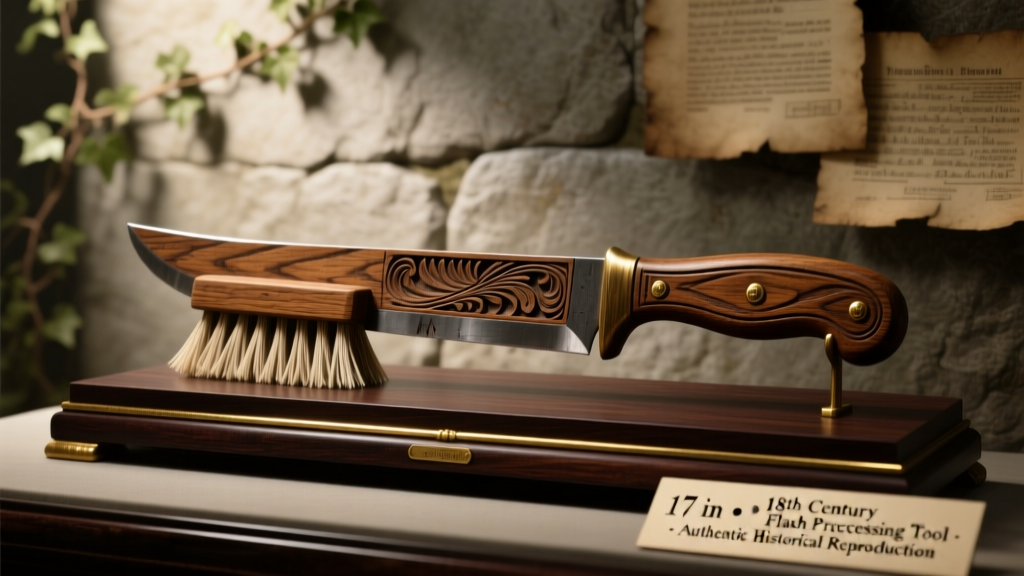
The Knife Scrubbing Beating Flax Wooden Tool: Authenticating an 18th-Century 17-Inch Linen Production Artifact
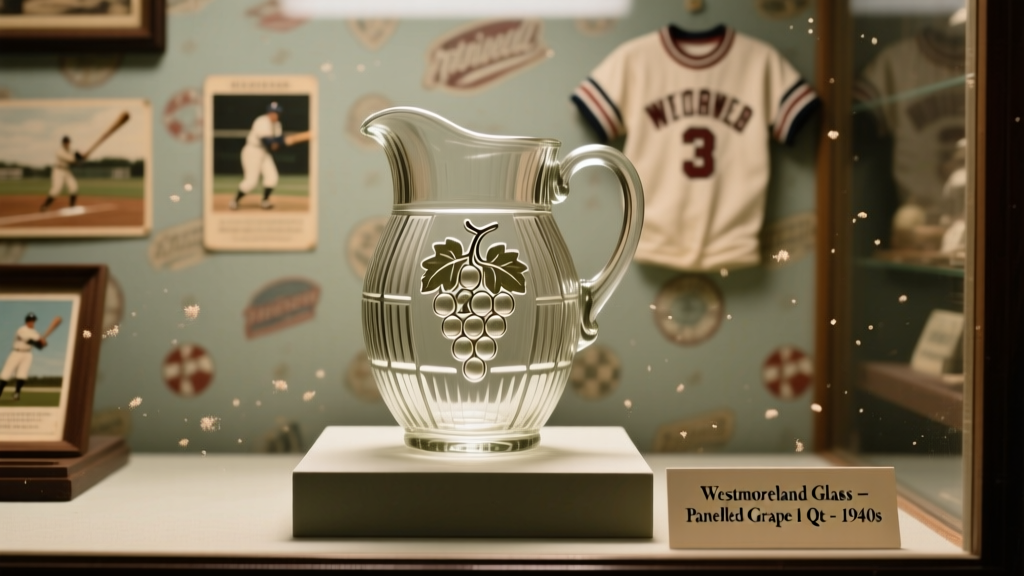
Westmoreland Glass Paneled Grape 1-Quart Pitcher: History, Identification, and Collector Value

Poole Pottery Ltd: History, Marks, Authentication, and Collecting Value

Rare Personal Archive of Late Silent Film Star William Desmond Taylor Set for Auction on September 24
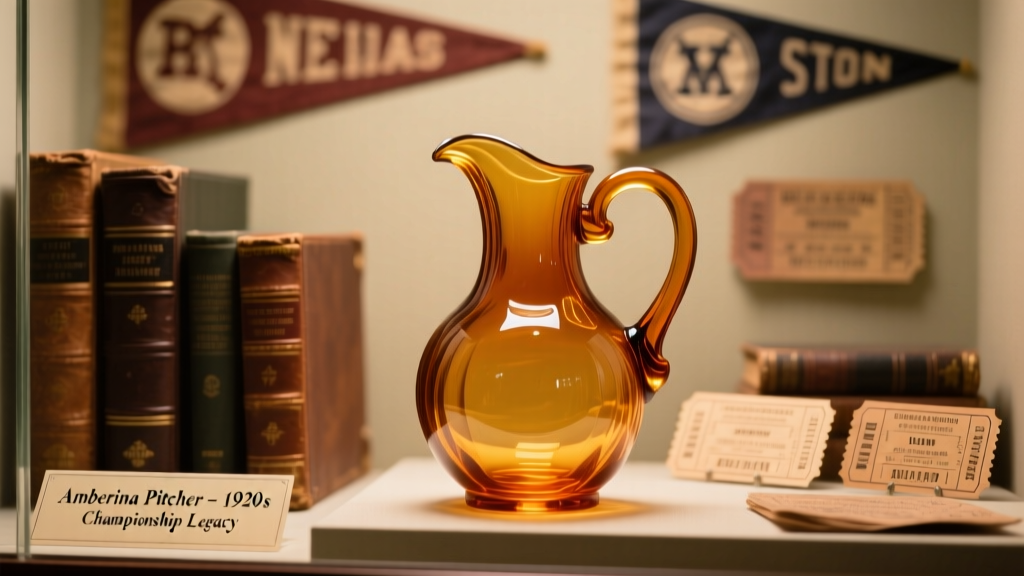
Amberina Pitcher with Bulbous Body and Applied Amber Handle: Identification, Provenance, and Authentication Essentials
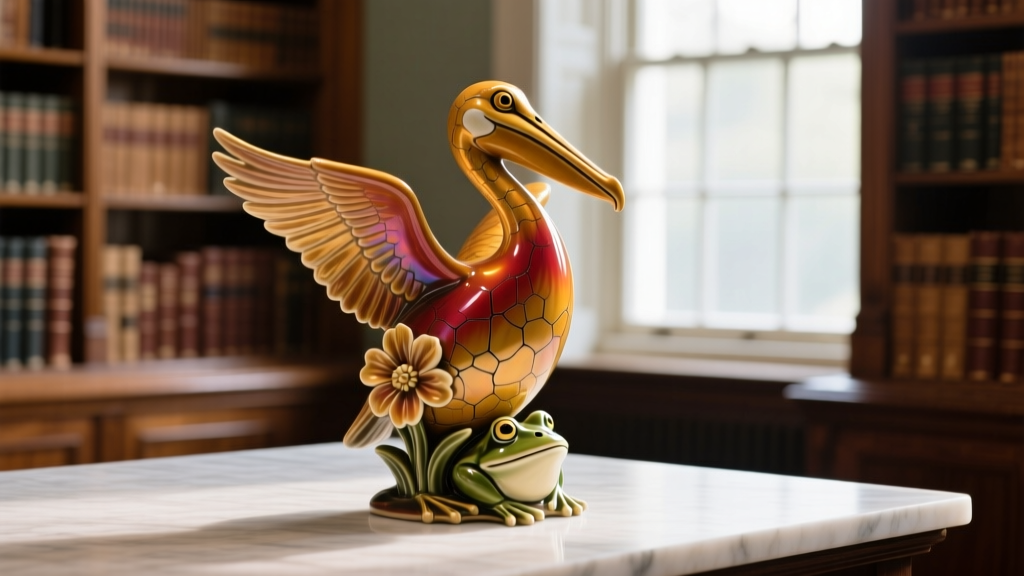
Fulper Flower Frog Pelican Flambe Glaze: Anatomy of a Rare American Art Pottery Masterpiece

Schafer & Vater Bottle 'What A Night': Authentication, Provenance, and Cultural Impact of a Rare 1970s German Glass Artifact