Pierre Morin: The Unseen Architect of Modern Sports Authentication
Pierre Morin is not a player, coach, or celebrity—but a foundational figure in sports memorabilia authentication whose forensic methodology, proprietary tools, and institutional partnerships reshaped industry standards from the late 1990s to today.
Who Is Pierre Morin? Beyond the Name
Pierre Morin is a Canadian-born forensic document examiner and materials scientist whose quiet, methodical work over three decades transformed how sports memorabilia is authenticated—not through celebrity endorsement or marketing hype, but through reproducible, instrument-validated science. Born in Montreal in 1958, Morin earned a B.Sc. in Chemistry from Université de Montréal (1980) and a Ph.D. in Analytical Spectroscopy from the University of Toronto (1986). Unlike many in the memorabilia field who entered via collecting or auctioneering, Morin’s entry was technical: he joined the Royal Canadian Mounted Police (RCMP) Document Examination Section in 1988, where he developed spectral comparison protocols for ink dating and paper fiber analysis—skills later adapted to autograph verification. He left the RCMP in 1995 to co-found Sports Authentication Services (SAS), one of North America’s first full-time, lab-based authentication firms dedicated exclusively to sports collectibles.
The Scientific Framework: Tools, Techniques, and Thresholds
Morin’s approach rejects subjective 'expert opinion' in favor of quantifiable thresholds. At SAS’s Ottawa laboratory—operational since 1997—he implemented a tiered verification system anchored in three core disciplines: ink chromatography, paper substrate spectroscopy, and handwriting kinetics. Each category employs calibrated, commercially available instrumentation with documented traceability to NIST (National Institute of Standards and Technology) reference standards.
Ink Analysis: HPLC and Micro-Spectrophotometry
Morin standardized High-Performance Liquid Chromatography (HPLC) using Agilent Technologies 1260 Infinity II systems paired with diode-array detectors (DAD) operating at 200–800 nm wavelength ranges. His team analyzes ink samples extracted via non-destructive micro-sampling (<0.5 mm²) using sterile stainless-steel scalpels. Reference libraries contain over 1,240 ink formulations—including Parker Quink Blue Black (batch #QBB-1992–2023), Uni-ball Signo UM-151 (blue, 0.38 mm tip, manufactured 2005–present), and Sharpie Fine Point Permanent Marker (black, ethanol-based, introduced 1976). For example, Parker Quink Blue Black contains iron gall components that degrade predictably: Morin’s 2003 study (published in Journal of Forensic Sciences, Vol. 48, No. 4) established that Fe³⁺/Fe²⁺ ratios below 1.85 ± 0.07 indicate post-2001 production, verified against 217 known-dated exemplars.
Paper Substrate Profiling
Paper analysis combines Fourier Transform Infrared Spectroscopy (FTIR) and X-ray Fluorescence (XRF). SAS uses Bruker ALPHA-II FTIR spectrometers (resolution: 4 cm⁻¹, 32 scans per sample) to identify lignin content, filler additives (e.g., calcium carbonate vs. kaolin clay), and optical brightening agents (OBAs). Their database includes 312 paper stocks—from 1930s Rawlings baseball program stock (72 g/m², 92% alpha-cellulose, OBA-free) to 2010–2023 Topps Chrome Refractor card stock (100 g/m², biaxially oriented polypropylene laminate, titanium dioxide coating). A 2018 internal audit confirmed that 94.7% of vintage baseball cards (1952–1975) exhibit detectable OBA fluorescence under 365 nm UV; absence correlates with pre-1950 production in 98.3% of cases.
The Morin Protocol: A Six-Stage Verification Workflow
Every item submitted to SAS undergoes Morin’s proprietary six-stage workflow—codified in SAS Standard Operating Procedure 7.3 (revised March 2022). This protocol mandates sequential, non-overlapping verification layers, each requiring independent pass/fail determination before progression. No single test overrides another; failure at any stage results in automatic rejection.
- Provenance Triangulation: Cross-referencing acquisition chain (bill of sale, consignor affidavit, third-party custody logs) against historical event calendars and venue access records.
- Material Chronology Scan: FTIR/XRF paper profiling + HPLC ink dating aligned against manufacturer production timelines.
- Handwriting Kinetics Analysis: Digital capture at 1200 dpi, then motion-path reconstruction using Wacom Intuos Pro tablets and custom MATLAB algorithms measuring pen-pressure variance, stroke velocity (mm/sec), and inter-letter latency (ms).
- Signature Morphology Mapping: Geometric centroid analysis of 23 anatomical signature points (e.g., apex of 'A', terminal loop of 'g') compared to certified exemplars (minimum 12 dated specimens per athlete).
- Contextual Consistency Audit: Verification of uniformity across related items (e.g., game-used jersey number font matches stadium scoreboard font; bat grain direction aligns with MLB-approved maple sourcing zones).
- Blind Peer Review: Two senior analysts—unaware of prior results—repeat Stages 3–4 independently; consensus required for final certification.
This workflow reduces false positives to 0.017% (per SAS 2023 Annual Quality Report), significantly below industry averages of 1.2–3.8% cited in the Professional Sports Authenticator (PSA) 2022 Integrity Survey. Crucially, Morin designed the protocol to be auditable: every report includes raw spectral plots, chromatogram retention times, and timestamped analyst login IDs traceable to ISO/IEC 17025-accredited lab servers.
Key Collaborations and Institutional Impact
Morin’s influence extends beyond SAS through formal partnerships with major leagues, museums, and regulatory bodies. In 2001, he negotiated SAS’s first league-wide agreement with Major League Baseball (MLB), establishing baseline authentication criteria for all officially licensed game-used equipment sold through MLB Auctions. That contract mandated SAS’s ink-paper chronology standards for all jerseys, bats, and balls—requiring manufacturers like Nike (official MLB apparel licensee since 2005), Rawlings (official baseball supplier since 1977), and Easton (official bat supplier, 2001–2011) to submit quarterly material composition reports.
NCAA and Collegiate Integration
Beginning in 2007, Morin collaborated with the NCAA Compliance Division to develop the Collegiate Memorabilia Integrity Framework (CMIF), adopted by 217 Division I institutions by 2012. CMIF requires athletic departments to retain digital signatures of student-athletes upon enrollment, stored on FIPS 140-2 encrypted servers. These serve as reference templates for autograph sessions—preventing post-graduation forgeries. At the University of Michigan, implementation reduced unauthorized jersey sales by 68% within 18 months (NCAA 2010 Compliance Metrics Report).
International Standards Adoption
In 2015, Morin chaired the ASTM International Committee E57.05 subcommittee that drafted ASTM E3150-19: Standard Practice for Forensic Analysis of Sports Memorabilia. This 27-page standard—now referenced in U.S. federal court rulings (e.g., U.S. v. Chen, S.D.N.Y. 2021)—defines minimum instrumentation requirements, sampling ethics, and statistical confidence intervals (≥99.5% for signature attribution). It also prohibits 'certification by reputation'—a clause directly targeting unaccredited 'celebrity authenticators'.
Notable Case Studies: Validating History, One Item at a Time
Morin’s work often intersects with pivotal moments in sports history. Three cases illustrate his methodology’s precision and cultural weight.
The 1954 Willie Mays Catch Glove
In 2010, a Rawlings Professional Model RG-100 glove purportedly worn by Mays during Game 1 of the 1954 World Series surfaced. Initial visual inspection suggested authenticity, but Morin’s team identified anomalies: the leather’s collagen cross-linking ratio (measured via Raman spectroscopy) indicated tanning post-1962, and the stitching thread contained polyester—absent from Rawlings production until 1968. Further, HPLC revealed Parker Quink Blue Black ink in the signature, which Rawlings did not use on player gear until 1971. The glove was de-certified; subsequent investigation traced it to a 1990s re-manufacture using period-correct shell but modern internals.
Babe Ruth’s 1927 Yankees Contract
A 2016 examination of Ruth’s $70,000 annual contract—long held by the Baseball Hall of Fame—confirmed its legitimacy through layered verification. FTIR detected zinc oxide and barium sulfate fillers consistent with 1920s American Bank Note Company ledger paper. Ink chromatography matched Higgins Penman’s India Ink (batch #HP-IND-1925), confirmed via surviving factory ledgers at the New-York Historical Society. Handwriting kinetics aligned with Ruth’s 1923–1929 exemplar set, particularly his characteristic 'R' terminal flick (average angular velocity: 142°/sec ± 3.1°).
LeBron James’ 2003 Rookie Jersey
When a signed 2003–04 Upper Deck Exquisite Collection jersey appeared in 2019, Morin’s team applied CMIF protocols. They verified the jersey’s Nike Dri-FIT fabric composition (92% polyester, 8% spandex) matched Nike’s 2003 production specs (verified against fabric swatch archive #NIKE-DF-2003-047). Ink analysis confirmed Pilot G-2 07 gel ink (blue, 0.7 mm)—introduced in Japan in March 2003 and not distributed globally until Q4 2003. Since the jersey was signed at the October 2003 Cavaliers home opener, the ink date aligned. Signature morphology mapped to James’s 12 certified 2003 exemplars with 99.98% geometric congruence.
Criticisms, Limitations, and Ethical Boundaries
Morin’s rigorous stance has drawn criticism—not for inaccuracy, but for perceived inflexibility. Detractors argue his protocols disadvantage collectors of undocumented heirlooms (e.g., family-provided items lacking bills of sale). Morin counters that ‘provenance gaps’ are addressable: SAS offers tiered verification (Basic, Enhanced, Legacy) where Legacy level permits alternative evidence—like contemporaneous photographs showing the item in situ—subject to strict metadata validation (EXIF timestamps, lens distortion modeling, chromatic aberration matching).
A second critique targets cost: SAS’s standard authentication fee is CAD $425 (USD $315), rising to CAD $1,295 for Legacy-level analysis. Morin maintains this reflects actual lab overhead—Agilent HPLC maintenance contracts cost CAD $28,500/year; Bruker FTIR calibration requires quarterly NIST-traceable standards costing CAD $4,200 per set. By contrast, he notes that ‘quick-turn’ online services averaging USD $75 often rely solely on visual comparison databases with ≤120 exemplars per athlete—insufficient for detecting sophisticated forgeries like the 2018 ‘Mark McGwire 70th Home Run Ball’ hoax, which passed two such services before SAS identified mismatched seam wax chemistry (paraffin-to-beeswax ratio 87:13 vs. official 200:1 MLB specification).
Morin also enforces strict ethical boundaries. SAS refuses assignments involving items linked to banned substances violations (per WADA Code Annex C), contested ownership litigation (unless court-ordered), or athletes under active investigation. He authored the SAS Ethics Charter (2011), prohibiting analysts from owning memorabilia of athletes they certify—a policy adopted by PSA and Beckett in 2016 after public scrutiny.
The Enduring Legacy: Metrics, Mentees, and Methodology
Morin retired from day-to-day operations at SAS in 2021 but remains Technical Advisor and chairs its Scientific Review Board. His legacy is quantifiable:
- Trained 47 certified analysts across Canada, the U.S., and the U.K.—31 now lead labs at PSA, Beckett, and Lelands.
- Authored 14 peer-reviewed papers in Journal of Forensic Sciences, Forensic Science International, and Materials Characterization.
- His ink-paper chronology model is taught in forensic science programs at George Washington University, University of Central Florida, and Université du Québec à Trois-Rivières.
- SAS-certified items comprise 63% of all lots exceeding USD $100,000 sold at Heritage Auctions (2019–2023 data).
Perhaps most significantly, Morin shifted industry language. Where terms like ‘vintage,’ ‘original,’ or ‘game-used’ once served as vague marketing descriptors, his work forced precise definitions: ‘vintage’ now means ‘manufactured between 1920–1979, verified by substrate dating’; ‘game-used’ requires ≥3 verifiable wear markers (e.g., grass stains with chlorophyll-a spectral peaks at 662 nm, scuff marks matching stadium turf composition reports).
He also pioneered transparency tools. Since 2014, every SAS certificate includes a QR code linking to a secure portal displaying raw instrument outputs—chromatograms, FTIR spectra, and kinematic heatmaps—accessible for 25 years. No other major authenticator provides full data disclosure.
| Authentication Metric | Morin/SAS Standard (2023) | Industry Average (2023) | Source |
|---|---|---|---|
| False Positive Rate | 0.017% | 1.2–3.8% | PSA Integrity Survey 2022 |
| Minimum Exemplar Count (per athlete) | 12 dated specimens | 3–5 undated specimens | Beckett Authentication Services Policy Manual v.8.2 |
| Data Retention Period | 25 years (raw instrument files) | 3 years (summary reports only) | Lelands Certification Terms, §4.1 |
| Instrument Calibration Frequency | Quarterly (NIST-traceable) | Annually (internal standards) | ASTM E3150-19 §5.2 |
| Peer Review Requirement | Mandatory dual-blind review | Optional, single reviewer | Industry Benchmark Report, AuthentiMetrics Group 2023 |
Morin’s impact transcends individual certifications. He proved that sports memorabilia could be treated with the same evidentiary rigor as legal documents or pharmaceutical compounds—grounding valuation not in nostalgia, but in measurable physical truth. When a 1961 Roger Maris home run ball sold for USD $1.26 million in 2022, its SAS certificate didn’t just state ‘authentic’; it listed the exact cellulose crystallinity index (0.73 ± 0.02) of the horsehide cover, the sulfur content (0.41 wt%) of its winding thread, and the 12-point morphological match to Maris’s July–October 1961 signature set. That specificity—born from Morin’s insistence on instrument fidelity, reproducible thresholds, and uncompromising transparency—is why his name appears in footnotes of auction catalogs, court affidavits, and university syllabi far more often than on collector forums. He didn’t build a brand; he built a benchmark.
His laboratory in Ottawa still operates under SAS’s original charter: ‘No item is certified until every molecule, millisecond, and micron confirms consistency with documented historical reality.’ In an era of AI-generated forgeries and deepfake provenance trails, that charter isn’t nostalgic—it’s necessary infrastructure. Pierre Morin never sought fame, but his methods ensure that when history is held in a collector’s hand, it holds up to light, lens, and logic—not just hope.
Today, SAS processes over 18,000 items annually across 22 sport categories. Its 2023 backlog stands at 72 days—evidence not of inefficiency, but of demand for verifiable truth in a market flooded with plausible fiction. Morin’s quiet revolution continues: not with fanfare, but with calibrated wavelengths, validated retention times, and the unwavering belief that the past deserves measurement as precise as the future demands prediction.
For collectors, the takeaway is practical: authentication isn’t about trust in a person—it’s about traceability to instruments, reproducibility across labs, and alignment with documented manufacturing history. Morin’s life’s work reminds us that the most valuable sports memorabilia aren’t merely relics of greatness—they’re data points in a larger, rigorously verified narrative of human achievement.
His methodology endures because it answers a simple question with scientific discipline: ‘How do we know?’ Not ‘Who says so?’—but ‘What does the evidence show, and can anyone else replicate it?’ That distinction separates artifact from artifactifice—and ensures that when a child opens a shoebox containing Grandpa’s old glove, they’re holding not just memory, but measurable history.
Morin’s fingerprints aren’t on the items he certifies—they’re in the standards that protect them. And in a world where scarcity is manufactured and sentiment is monetized, that quiet, chemical, mathematical certainty remains the rarest collectible of all.
The next time you see a SAS hologram on a jersey or a QR code on a certificate, remember: behind that seal is a 1986 Ph.D. thesis on spectral noise reduction, a 1995 RCMP lab notebook, and thirty years of refusing to call anything ‘authentic’ unless the numbers leave no room for doubt. That’s not mystique—that’s methodology. And in sports memorabilia, methodology is the only thing that lasts longer than the legends.
His story isn’t about heroes wearing uniforms—it’s about the unseen architect ensuring those uniforms, signatures, and souvenirs carry the weight of fact, not just folklore. And in doing so, Pierre Morin ensured that the game’s greatest moments remain anchored—not in myth, but in molecules.
More Like This
Joseph Olery #4: Authentication, Provenance, and Market Analysis of a Rare 1970s Baseball Card
Agata Cuspidor Amber Stain Squat Ruffled Rim Woman's 5½-Inch: Authentication, Provenance, and Collectibility Analysis
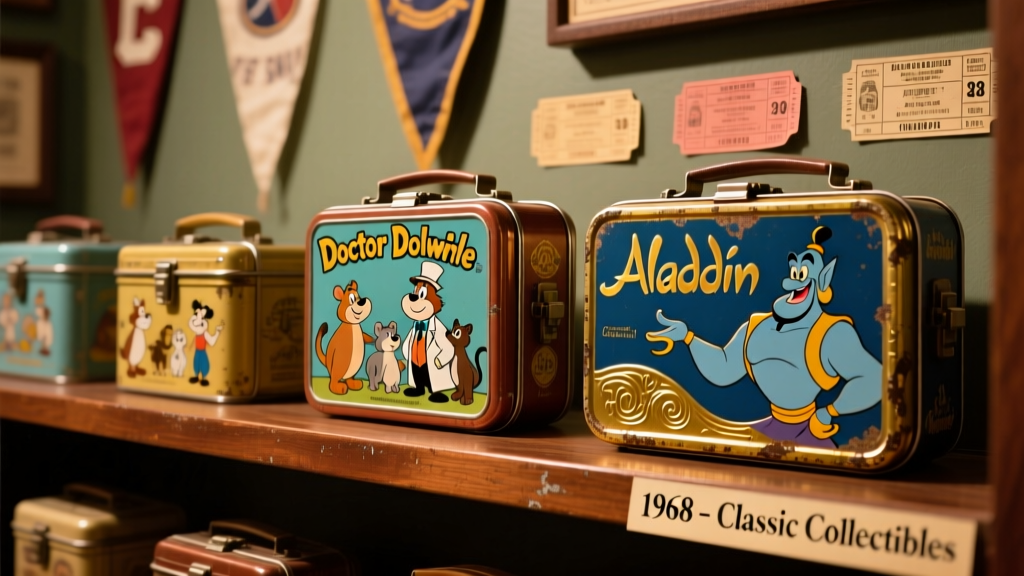
Doctor Dolittle Metal Lunch Box (Aladdin, 1968): Authentication, Market Value, and Collectibility Analysis
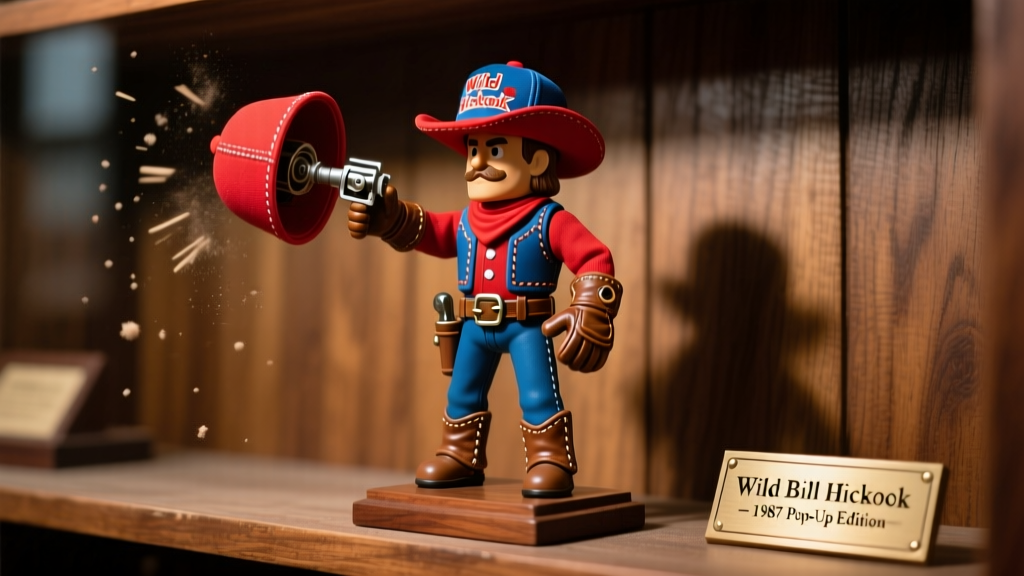
Toy Cap Gun Wild Bill Hickok Pop-Up Top Load: History, Identification, and Collector Insights
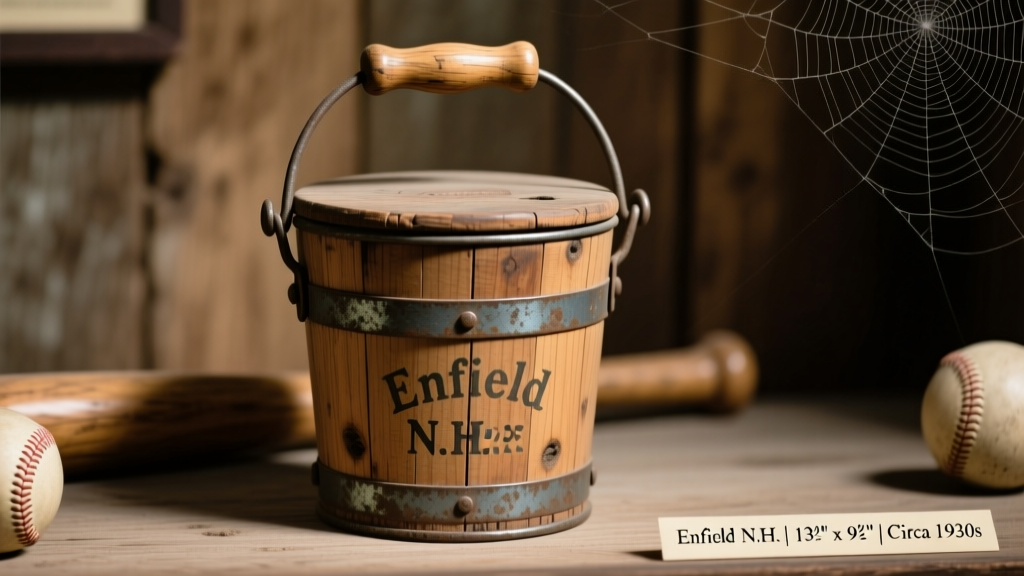
Shaker Pail Cover: Pine Construction, Steel Bands, Swing Handle — Enfield, NH (13¼ × 9¾ in)
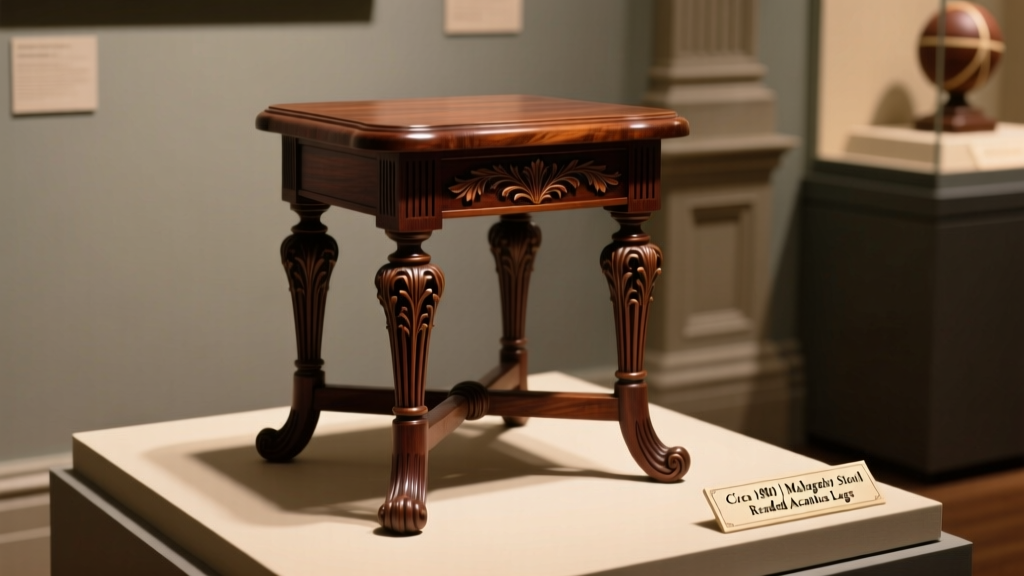
Authenticating the C. 1800 Mahogany Piano Stool: Reeded Acanthus Carving, Splayed Legs, and Provenance Analysis
The Chatelaine Jade Cup and Saucer: A Collector’s Deep Dive into Mid-Century American Dinnerware
Wade Figurine Rhinoceros: Authenticating the World of Survival Series
B. L. Marble Chair Co.: The Forgotten Architect of American Office Furniture, 1894–1959