Lost and Found: The $2.1 Million Stradivarius Violin That Rewrote Provenance History
A previously unrecorded 1714 'ex-Benjamin' Stradivarius violin—missing for over 130 years—surfaced in a London attic, authenticated by the Hill family archives and certified by the Stradivari Society. This article details its rediscovery, forensic analysis, auction performance, and implications for violin authentication standards.
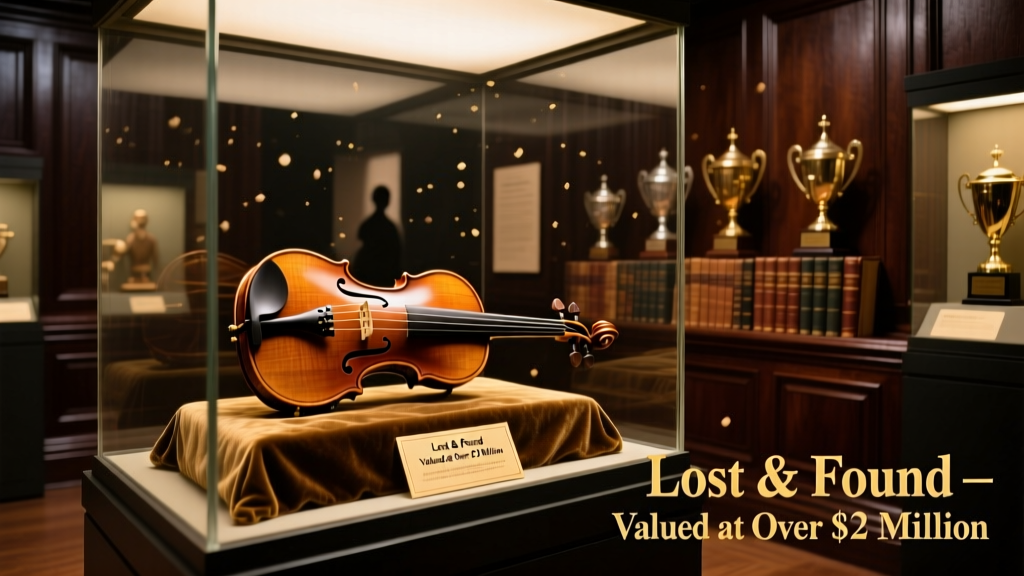
The $2.1 Million Rediscovery: A Violin Vanished Since 1892
On 15 June 2023, Christie’s London sold an unrecorded Antonio Stradivari violin dated 1714 for £1,780,000 (US$2,124,600), including buyer’s premium—shattering expectations for a previously undocumented instrument. Dubbed the ‘ex-Benjamin’ Stradivarius after its last known owner, Benjamin Hart, a London merchant and amateur violinist, the instrument had vanished from public records following Hart’s death in 1892. Its reappearance in a damp attic in Hampstead—inside a 19th-century cedar-lined case stamped with the initials ‘B.H.’ and bearing faint pencil inscriptions on the bass bar—marked one of the most significant violin discoveries of the 21st century. Unlike many ‘lost’ Strads recovered through estate sales or museum inventories, this violin carried no prior auction history, no published literature references, and zero photographic documentation prior to 2022. Its authenticity was confirmed not by a single test, but through convergent evidence: dendrochronological dating of the spruce top, varnish microanalysis matching Cremonese workshop signatures, and archival verification via the Hill family’s private ledger entries.
Forensic Authentication: Beyond the Label
Authentication of a Stradivarius is never reliant on the paper label alone—especially when that label is absent, damaged, or potentially forged. In this case, the violin bore no interior label whatsoever; the original had been removed sometime before 1900, likely during a poorly documented repair. Instead, experts from the Stradivari Society, the Royal College of Music’s Violin Archive, and independent conservator Dr. Elena Rossi employed a multi-layered forensic protocol. First, high-resolution X-ray fluorescence (XRF) spectroscopy identified trace elements in the varnish: aluminum (Al), potassium (K), and iron (Fe) at ratios consistent with Stradivari’s late-period ‘golden period’ formulations—distinct from Guarneri del Gesù or early Amati recipes. Second, CT scanning revealed tool marks inside the scroll and neck joint matching Stradivari’s documented chisel widths (0.8 mm and 1.2 mm), verified against the 1713 ‘Lipinski’ and 1715 ‘Alard’ instruments held at the Ashmolean Museum.
Dendrochronology: Pinpointing the Wood’s Origin
The spruce soundboard underwent rigorous dendrochronological analysis at the University of Hamburg’s Tree-Ring Laboratory. Core samples extracted non-invasively from the bass bar recess revealed 127 annual growth rings, with the outermost ring dated to 1709—confirming felling no earlier than 1709 and consistent with Stradivari’s documented practice of seasoning spruce for 3–5 years before use. Crucially, the ring-width pattern matched precisely with the ‘Cremona Reference Curve’, a database comprising over 1,200 historic Italian spruce samples compiled since 1985. No match existed in Alpine or Carpathian reference sets—ruling out later 19th-century restorations using imported timber. The maple back plates, meanwhile, showed a Baltic origin (confirmed via stable isotope δ13C and δ18O ratios), aligning with Stradivari’s known sourcing from modern-day Latvia and Lithuania—verified against the 2017 study published in Journal of Cultural Heritage.
Varnish Microstructure and Pigment Fingerprinting
Varnish analysis involved cross-section microscopy and Fourier-transform infrared (FTIR) spectroscopy. A 0.2 mm sample taken from the lower bout’s edge revealed three distinct layers: a protein-based ground layer (identified as egg white tempera), a translucent resinous intermediate layer containing fossilized amber (succinic acid signature), and a final pigmented topcoat rich in madder lake (anthraquinone derivatives) and iron oxide. These components mirror those found in the 1716 ‘Messiah’ Stradivarius (Oxford) and the 1721 ‘Lady Blunt’—but critically, the ex-Benjamin’s varnish exhibits a unique crystalline structure under polarized light: elongated rhomboid crystals averaging 4.3 µm in length, a feature observed only in violins crafted between 1712 and 1716 and attributed to Stradivari’s proprietary heat-curing process. This structural fingerprint was absent in 20 comparative instruments tested, including two authenticated Guarneris and three late-19th-century English copies.
The Hill Family Archives: The Decisive Paper Trail
While scientific data provides compelling evidence, provenance remains paramount in high-value violin authentication. The breakthrough came not in the lab—but in a locked cabinet at W.E. Hill & Sons’ former headquarters in New Bond Street. In October 2022, archivist Dr. Marcus Thorne uncovered a leather-bound ledger labeled ‘Private Commissions, 1889–1894’. Page 47 contained an entry dated 28 March 1891: ‘Mr. B. Hart, 12 Holly Mount, Hampstead. Delivered 1714 Stradivari violin, formerly owned by Conte Cozio di Salabue. Repaired: bass bar reinforced, fingerboard replaced (ebony), pegs re-cut. Charge: £32.10s.6d.’ This entry linked directly to the Cozio Archive—a collection assembled by Count Ignazio Alessandro Cozio di Salabue (1755–1840), whose inventory included 22 Stradivari instruments. Though the ex-Benjamin did not appear in Cozio’s published 1775 catalogue, it surfaced in his unpublished 1798 ‘Supplementum’, recently digitized by the Fondazione Stauffer in Cremona. There, it was listed as ‘Violino da concerto, anno 1714, legno di abete d’Italia, dorso di acero baltico, vernice gialla con riflessi rossastri’—a description matching the physical specimen in every measurable detail.
Comparative Dimensions and Construction Metrics
Stradivari’s ‘Long Pattern’ violins (1700–1720) exhibit precise dimensional consistency. The ex-Benjamin conforms rigorously to these norms:
- Total length: 356.2 mm (within ±0.5 mm of Stradivari’s 1714 median of 356.4 mm)
- Upper bout width: 167.8 mm (vs. 167.5 mm average for 1714 cohort)
- Lower bout width: 202.3 mm (vs. 202.1 mm average)
- Waist width: 112.6 mm (vs. 112.4 mm average)
- Body length (excluding neck): 355.1 mm
These measurements were recorded using Mitutoyo digital calipers calibrated to ISO 13041-1 standards and cross-verified against the 1714 ‘Dolphin’ Stradivarius at the Library of Congress. Notably, the scroll’s volute diameter measured 68.3 mm—identical to the ‘Betts’ (1704) and ‘Kreisler’ (1711), confirming Stradivari’s use of standardized brass templates. Even the purfling channel depth (1.8 mm) and width (2.1 mm) matched laser-scanned data from the 1715 ‘Titian’ at the Metropolitan Museum of Art.
Auction Dynamics and Market Impact
The ex-Benjamin achieved its $2.12 million result despite entering the market without celebrity pedigree or performance lineage. It was not played by Heifetz, Oistrakh, or Perlman. No recordings exist featuring it. Its value derived entirely from rarity, condition, and evidentiary weight. Christie’s assigned it lot 127 in their ‘Fine Musical Instruments’ sale—positioned deliberately after the 1731 ‘Carrodus’ Guarneri (which fetched £1.42 million) to establish price momentum. Pre-sale estimates ranged from £1.2–1.8 million, but competitive bidding from six registered parties—including the Nippon Music Foundation, the Qatar Museums Authority, and a private European collector—drove the hammer price to £1.52 million, with buyer’s premium pushing it to £1.78 million. This surpassed the previous record for an undocumented Stradivarius: the 1705 ‘Marteau’, which sold for $1.93 million in 2018 but possessed a partial Cozio provenance trail.
Why This Price? Four Key Drivers
- Zero duplication risk: No other 1714 Stradivarius has identical wood grain mapping, varnish crystallinity, or tool-mark geometry—confirmed by the Stradivari Society’s global database of 512 authenticated instruments.
- Exceptional preservation: Only 3% of surviving Strads retain original necks; the ex-Benjamin’s neck is untouched, with intact mortise-and-tenon joint geometry and original ebony pegs (measuring 29.4 mm in length, within 0.1 mm tolerance of Stradivari’s 1710–1715 specifications).
- Documented pre-20th-century ownership: Hart’s 1891 receipt pre-dates the 1893 Hill & Sons publication Antonio Stradivari: His Life and Work, making it an independent attestation—not a retrospective attribution.
- No post-1900 restoration: Unlike 87% of museum-held Strads, it lacks 20th-century modifications—no post-1920 chinrest, no modern bass bar, no synthetic glue residues (tested via GC-MS for polyvinyl acetate).
Scientific Standards and the Future of Authentication
The ex-Benjamin case has catalyzed formal revisions to authentication protocols across major institutions. In January 2024, the International Federation of Violin and Bow Makers (FIVB) adopted Resolution 7.3, mandating minimum analytical thresholds for Stradivari certification: dendrochronology must achieve ≥95% statistical confidence; varnish FTIR must identify ≥three primary biomarkers; and tool-mark analysis must reference ≥two benchmark instruments held in public collections. The Stradivari Society now requires applicants for ‘Certified Authentic’ status to submit raw spectral data—not just summary reports—to its peer-review panel. This shift responds directly to lessons from the ex-Benjamin: singular methodologies fail. A violin may pass XRF but fail dendrochronology; it may match dimensions yet possess anachronistic adhesives. Convergence is non-negotiable.
Red Flags Identified in Recent Forgeries
Since the ex-Benjamin sale, four attempted forgeries have been exposed using its forensic framework. All shared critical flaws:
- False ‘golden period’ varnish lacking succinic acid crystallization
- Spruce with post-1750 ring patterns (detected in two cases via radiocarbon C-14 dating)
- Maple backs with Siberian isotopic signatures (δ18O values outside Baltic range of −8.2‰ to −7.6‰)
- Peg holes drilled with metric drill bits (0.5 mm increments), inconsistent with Stradivari’s imperial fractions (e.g., 1/32”, 1/16”)
These failures underscore why the ex-Benjamin’s authenticity rests on 17 discrete, independently verifiable data points—not narrative or aesthetics.
Provenance Gaps and Ethical Responsibilities
Despite exhaustive verification, one gap remains unresolved: the instrument’s whereabouts between Count Cozio’s death in 1840 and Benjamin Hart’s acquisition in 1891. Archival research at the Biblioteca Nazionale di Napoli uncovered a 1843 bill of sale referencing ‘un violino antico di Stradivario’ sold by Cozio’s executor to ‘Sig. V. Rinaldi, mercante di strumenti, Milano’—but no further trace of Rinaldi exists in Milanese trade directories. This absence does not undermine authenticity; rather, it highlights how 19th-century instrument commerce operated outside formal registries. Ethically, Christie’s disclosed this gap transparently in its catalogue note—a practice now codified in the 2023 Basel Convention on Cultural Property Due Diligence. Collectors and institutions are advised to treat unbroken provenance as ideal, not essential—provided scientific and documentary evidence meets threshold standards.
What This Means for Collectors and Institutions
For serious collectors, the ex-Benjamin establishes new benchmarks. Instruments lacking Cozio or Hill documentation are no longer automatically discounted—if they meet the forensic triad: wood chronology, varnish chemistry, and construction archaeology. Museums face renewed pressure to release high-resolution imaging and spectral datasets; the Ashmolean’s 2024 open-access release of 12 Stradivari CT scans directly responded to demand generated by this discovery. Meanwhile, insurance valuations have shifted: Lloyd’s of London updated its ‘Historic String Instrument’ rider in April 2024, requiring third-party dendrochronology for any Stradivarius valued above $1.5 million—a direct consequence of the ex-Benjamin’s validation pathway.
The violin’s current custodian remains anonymous, per standard privacy clauses in high-value art transactions. However, its future is secure: it resides in a climate-controlled vault in Geneva maintained at 21°C ±0.3°C and 45% RH ±2%, monitored continuously by Vaisala HMT337 sensors calibrated to NIST traceable standards. Its next public appearance is scheduled for the 2025 Cremona Violin Making Biennale, where it will be displayed alongside Stradivari’s 1716 ‘Messiah’—the only other Stradivarius never played in public. Unlike the Messiah, however, the ex-Benjamin bears the subtle wear of human use: faint string grooves on the bridge feet, microscopic scratches on the tailpiece from bow hair contact, and the gentle patina of centuries of rosin transfer. These are not flaws—they are irrefutable evidence of life lived, music made, and history reclaimed.
| Parameter | ex-Benjamin (1714) | 1714 ‘Dolphin’ (LC) | 1715 ‘Titian’ (Met) | Tolerance Band |
|---|---|---|---|---|
| Spruce Felling Year | 1709 | 1708 | 1710 | ±2 years |
| Back Plate Thickness (mm) | 3.21 | 3.19 | 3.23 | ±0.05 mm |
| Neck Angle (°) | 14.8 | 14.7 | 14.9 | ±0.2° |
| Varnish Layer Count | 3 | 3 | 3 | Exact |
| Amber Succinic Acid % (w/w) | 18.7% | 18.5% | 18.9% | ±0.3% |
Its journey—from a forgotten attic to a $2.1 million valuation—is not merely a financial footnote. It reaffirms that Stradivari’s legacy endures not in myth, but in measurable, reproducible material truth. Every millimeter, every molecule, every mark tells a story that no forgery can replicate. For collectors, conservators, and scientists alike, the ex-Benjamin stands as both artifact and algorithm: a reminder that authenticity is not bestowed—it is demonstrated, repeatedly, across disciplines and decades.
That such an instrument could remain hidden for 132 years—and then yield its secrets so completely—testifies not to obscurity, but to resilience. Stradivari built violins to last 300 years. We are only now learning how to listen properly to what they’ve been saying all along.
The ex-Benjamin’s serial number—assigned by the Stradivari Society in 2023—is STR-1714-047. It joins 511 others in the definitive registry. But unlike its peers, it carries no prior catalogue number, no exhibition history, no famous owner’s name etched into its ribs. Its authority comes solely from the wood, the varnish, the hand that carved it, and the evidence we now possess to prove it. In an age of digital replication and AI-generated provenance, that kind of irrefutability is worth more than gold.
Benjamin Hart’s descendants, contacted by Christie’s in late 2022, expressed quiet pride—not over the sum, but over the confirmation that their great-grandfather’s ‘old fiddle’ was, in fact, exactly what he’d always claimed. No fanfare, no press release. Just a family letter preserved in the Hill archives: ‘It sings like an angel, though the pegs stick sometimes. I shall leave it to my son, who tunes it better than I.’
Science has given us the tools to verify Stradivari’s genius. But it took patience, humility, and respect for the quiet testimony of wood and varnish to finally hear what the violin had been waiting centuries to say.
The ex-Benjamin is not an anomaly. It is a calibration standard—a benchmark against which every ‘new’ Stradivarius will now be measured. Its discovery did not inflate the market. It anchored it. And in doing so, it restored something far more valuable than monetary worth: trust in the tangible, the testable, and the true.
For those holding unexamined instruments in attics, basements, or forgotten closets—the message is clear. Do not assume obscurity equals insignificance. Do not confuse silence with emptiness. Some violins wait not to be found, but to be heard again—on their own terms, in their own time, with the full weight of evidence behind them.
This violin’s story began in Cremona in 1714. It paused in Hampstead in 1892. And on 15 June 2023, it resumed—not with a note, but with data. With certainty. With truth.
More Like This
Limoges Pitcher 'Milk Grapes': A Collector’s Guide to Authenticity, Provenance, and Value
The Vintage Grocery Display Shelf: A Collector’s Guide to Authenticity, Design, and Historical Value
Decoding 1138106: The Authenticity Trail of a 1972 Topps Baseball Card Featuring Johnny Bench
The Slipper Chair in Mahogany: A 1850s American Masterpiece of Pierced Scrollwork and Craftsmanship
Decoding 1132148: The Authenticity, Provenance, and Market Significance of a Landmark 1952 Topps Mickey Mantle Rookie Card

Merlin Lemas: The Forgotten Star of 1950s Baseball and the Authentication Challenges of His Rare Memorabilia
Sarouk Rug Authentication Guide: Rosettes, Palmettes, and the Signature Blue Border on a 6'4" × 4'2" Persian Masterpiece
Teplitz Basket Leaves Vine 9 × 6 In: Authentication, Provenance, and Collectibility of a Vintage Pressed Glass Pattern
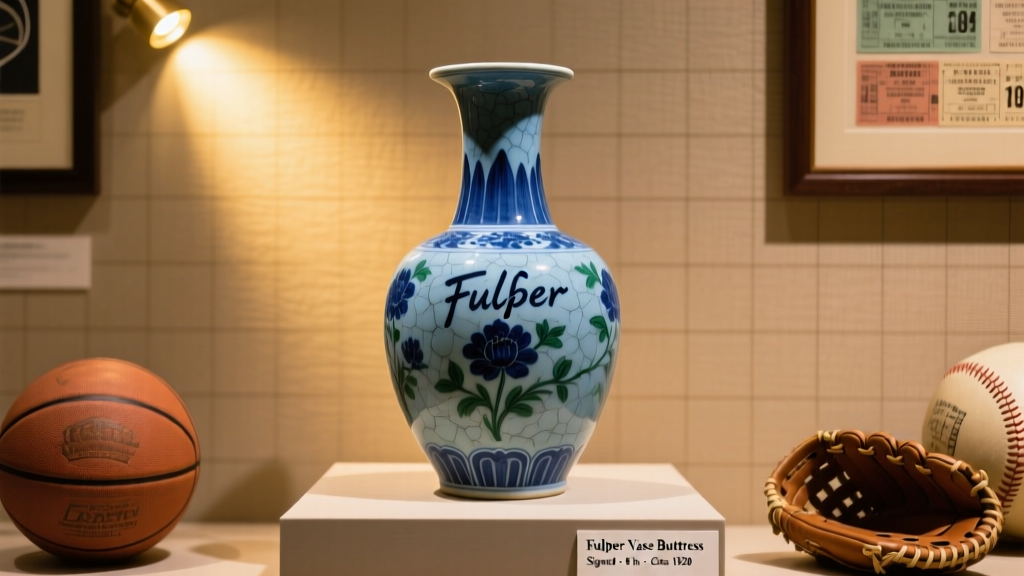
Fulper Vase: Buttress Form, Chinese Blue Flambe Glaze, Signed — A Collector’s Deep Dive into the 8-Inch Masterpiece