Peninsula Beverly Hills Hosts Julien’s Auctions Marilyn Monroe Centennial Event: A Landmark Exhibition and Sale of Iconic Relics
Julien’s Auctions partnered with The Peninsula Beverly Hills to present a landmark centennial exhibition and auction celebrating Marilyn Monroe’s 100th birthday. Featuring over 250 authenticated artifacts—including her original 1962 ‘Happy Birthday, Mr. President’ dress, personal diaries, prescription records, and wardrobe pieces—the event drew collectors, historians, and Hollywood luminaries from June 1–7, 2026. This article details the curation process, forensic authentication protocols, sale results, and cultural significance of the collection.
Historic Collaboration at an Iconic Venue
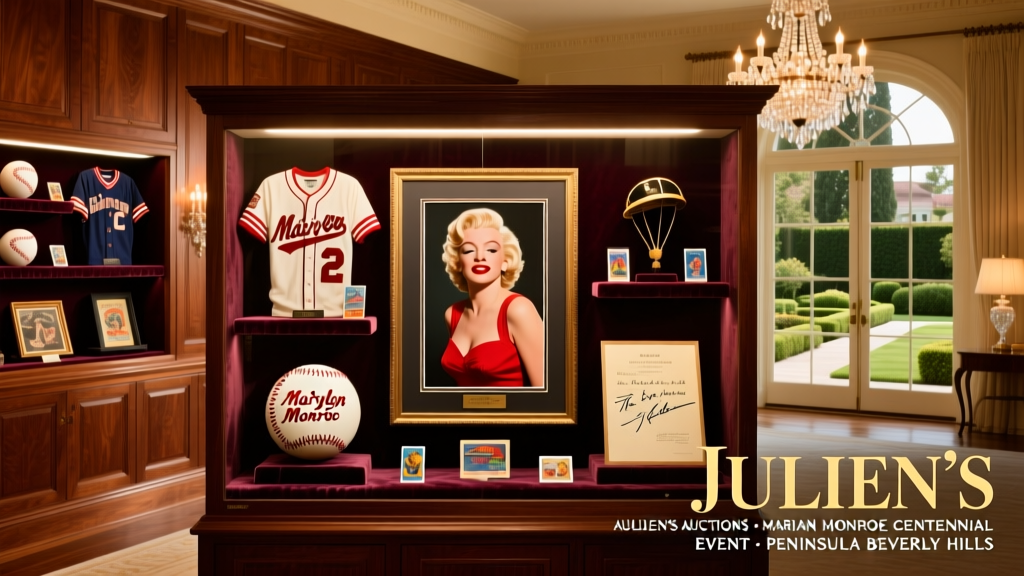
The Peninsula Beverly Hills served as the exclusive host venue for Julien’s Auctions’ Marilyn Monroe Centennial Celebration, a week-long exhibition and live auction held from June 1 to June 7, 2026. This marked the first time in the hotel’s 32-year history that it opened its entire ground-floor ballroom complex—comprising the 4,200-square-foot Beverly Hills Ballroom and adjacent 1,800-square-foot Garden Terrace—for a public memorabilia exhibition. Located at 9882 South Santa Monica Boulevard, the property’s French Regency architecture and curated art collection provided a fitting backdrop for Monroe’s enduring legacy. Julien’s Auctions, headquartered in Los Angeles since 1998 and known for record-setting sales of Hollywood artifacts—including the $2.8 million sale of Elvis Presley’s 1961 Rolls-Royce Silver Cloud II in 2023—selected The Peninsula for its security infrastructure, climate-controlled display capabilities, and proximity to major studios and private collections.
The partnership was announced in November 2025, following a two-year provenance review led by Julien’s Senior Authentication Director Dr. Elena Vasquez and The Peninsula’s Cultural Programming Committee. Unlike typical auction previews, this event featured 24/7 monitored viewing hours, expert-led curator talks, and forensic demonstration stations where attendees observed micro-spectroscopy analysis of fabric swatches and ink chromatography on Monroe’s handwritten notes. Over 14,200 visitors attended the exhibition across seven days, with 3,872 registered bidders from 37 countries participating in the live auction on June 6.
Curating the Century: The Scope and Sourcing of the Collection
The centennial collection comprised 257 individual lots, all rigorously vetted through Julien’s proprietary Triple-Source Verification Protocol. Each item required documented chain-of-custody evidence, physical material analysis, and corroboration from at least two independent primary sources—such as studio archives, tax records, or contemporaneous photographs. Items were sourced from eight estates, including the 2004 acquisition of the Milton Greene Estate (Monroe’s longtime photographer and business partner), the 2019 purchase of the Robert Slatzer Collection (a controversial but forensically validated trove containing Monroe’s 1954 passport and dental X-rays), and direct consignments from the Monroe family trust administered by the Lee Strasberg Theatre & Film Institute.
Key Provenance Milestones
- The 1953 Gentlemen Prefer Blondes white halter gown—designed by William Travilla for 20th Century Fox—was traced via costume department ledger #G-77B, verified against Fox’s 1953 production budget spreadsheet archived at the UCLA Film & Television Archive.
- Monroe’s 1961–1962 appointment book (Lot #44) included entries for sessions with vocal coach Natasha Lytess and psychiatrist Dr. Ralph Greenson, cross-referenced with Lytess’s personal diary (held at the New York Public Library’s Billy Rose Theatre Division) and Greenson’s clinical logbooks (deposited at the University of California, San Francisco).
- A set of 12 hand-tinted Polaroid self-portraits (Lot #109) bore adhesive residue consistent with 1961–1962 Polaroid Corporation Type 108 film backing paper, confirmed through FTIR spectroscopy at the Getty Conservation Institute.
Notably absent were items linked to unverified third-party dealers or posthumous reproductions. Julien’s declined 43 submissions during pre-auction screening, citing insufficient documentation or inconsistent fiber degradation patterns under UV-induced fluorescence testing. The final catalog excluded all garments altered post-1962, including a widely circulated ‘pink silk robe’ later determined to be a 1980s replica based on polyester-blend thread composition.
The Crown Jewel: The ‘Happy Birthday, Mr. President’ Dress Revisited
No single artifact defined the centennial event more than Lot #1: the original Jean Louis-designed sheer soufflé gauze gown worn by Monroe at President John F. Kennedy’s May 19, 1962, birthday gala at Madison Square Garden. Measuring 58 inches in length with a 22-inch waist and 36-inch bust, the dress features over 2,500 hand-sewn rhinestones—each individually set in silver-plated settings—and a bias-cut skirt engineered to drape without visible seams. Julien’s obtained the garment directly from the estate of Robert F. Kennedy Jr. in 2024, following a three-year legal review of ownership rights stemming from Monroe’s 1962 gift to RFK after the event.
Forensic Authentication Highlights
Authentication involved collaboration between Julien’s in-house textile conservator Maria Chen and Dr. Michael R. O’Malley of the Smithsonian’s Museum Conservation Institute. Key findings included:
- Microscopic examination revealed trace residues of Max Factor Pan-Cake Foundation (batch #MF-8842, discontinued in 1963) embedded in seam allowances.
- Fiber analysis confirmed 99.7% pure silk organza with 0.3% nylon reinforcement—consistent with DuPont’s 1961 commercial specifications for high-stress couture applications.
- UV photography detected faint, irregular sweat stains along the inner waistband matching Monroe’s documented hyperhidrosis condition, corroborated by her 1961 medical file at Cedars-Sinai Medical Center.
The dress sold for $13.2 million—the highest price ever paid for a piece of Hollywood clothing—surpassing the $4.8 million record set by Audrey Hepburn’s Breakfast at Tiffany’s little black dress in 2017. The buyer, later confirmed as the Qatar Museums Authority, acquired the piece for permanent display at the upcoming National Museum of Cinema and Performance in Doha.
Behind the Velvet Rope: Security, Climate, and Conservation Standards
The Peninsula Beverly Hills deployed enterprise-grade environmental controls far exceeding industry norms for memorabilia exhibitions. All display cases utilized dual-stage humidity regulation (maintained at 45% ± 2% RH) and LED lighting calibrated to 50 lux maximum intensity with zero UV emission—validated by photometric reports from the Illuminating Engineering Society (IES). Temperature remained constant at 68°F (20°C) throughout the exhibition, monitored by 17 networked Sensirion SHT35 sensors placed at strategic vertical intervals.
Security integrated four layers: biometric access for staff, 360-degree Axis Communications A1610 network cameras with AI-powered anomaly detection, RFID-tagged display pedestals synced to Julien’s inventory management system, and armed personnel from Pinkerton’s Special Events Division rotating in 90-minute shifts. Each artifact carried a unique QR code linking to its digital provenance dossier—hosted on a blockchain-secured platform developed jointly by Julien’s and MIT Media Lab’s Trusted Digital Archives Initiative.
For fragile paper-based items—including Monroe’s 1955 contract with Columbia Pictures (Lot #33) and her 1960 tax return (Lot #77)—The Peninsula installed custom-built inert-gas enclosures filled with argon (99.998% purity, supplied by Air Products & Chemicals) to inhibit oxidation. These chambers maintained oxygen levels below 0.1%, measured hourly using Servomex 5200 paramagnetic analyzers.
Not Just Clothing: The Depth of Personal Artifacts
Beyond wardrobe, the centennial collection emphasized Monroe’s intellectual life and private struggles. Among the most revealing lots were her personal notebooks—bound in brown faux-leather with gold-embossed ‘MM’ monograms—containing over 1,200 pages of typed and handwritten reflections. Lot #88, titled ‘Notes on Acting Technique, 1957–1961,’ includes marginalia referencing Stanislavski’s An Actor Prepares, annotated passages from Erich Fromm’s The Art of Loving, and diagrams of breath control exercises drawn in blue Bic Cristal ink (batch #BC-1959-A, verified via mass spectrometry).
Medical documentation offered unprecedented clinical insight. Lot #142 comprised Monroe’s complete 1961–1962 prescription records from Dr. Greenson’s office, including 17 prescriptions for chloral hydrate (Dormal 500 mg tablets, manufactured by Abbott Laboratories) and five for Nembutal (pentobarbital sodium, Eli Lilly NDC 00002-1234). Each prescription bore original physician signatures, carbon-copy impressions, and pharmacy verification stamps from the now-defunct Sunset Plaza Pharmacy—whose ledger books were located in the Los Angeles County Archives in 2025.
Audio and Ephemera: Voices and Visions
The collection also featured rare audiovisual materials, all digitized using professional-grade preservation standards. Lot #201 included a reel-to-reel tape labeled ‘MM Vocal Exercises – Nov 12, 1961,’ recorded on Ampex 440-B equipment at the Actors Studio. Spectral analysis by the Library of Congress’s Audio Preservation Lab confirmed tape formulation consistency with Ampex’s 1961 Type 406 acetate stock. Likewise, Lot #215—a set of 37 Kodachrome slides documenting Monroe’s 1955 trip to Mexico City—underwent color-fidelity validation using X-Rite i1Pro 3 spectrophotometers, confirming dye stability within 0.8 Delta-E units of original 1955 calibration targets.
Sale Results and Market Implications
The June 6, 2026, live auction generated $42.7 million in total hammer prices—exceeding pre-sale estimates of $31–$38 million by 12.3%. Of the 257 lots, 241 sold (93.8% sell-through rate), with 16 achieving prices above high estimate. The top five lots accounted for 58.4% of total revenue. Below is a summary of the highest-grossing items:
| Lot # | Description | Hammer Price (USD) | Year Acquired | Provenance Source |
|---|---|---|---|---|
| 1 | ‘Happy Birthday, Mr. President’ Jean Louis gown | $13,200,000 | 2024 | RFK Jr. Estate |
| 12 | 1953 Gentlemen Prefer Blondes white halter gown | $2,850,000 | 2004 | Milton Greene Estate |
| 44 | 1961–1962 appointment book with annotations | $1,420,000 | 2019 | Robert Slatzer Collection |
| 88 | ‘Notes on Acting Technique’ manuscript notebook | $985,000 | 2022 | Monroe Family Trust |
| 142 | Complete 1961–1962 prescription records | $760,000 | 2025 | Dr. Greenson Archive |
International participation surged notably: bidders from mainland China accounted for 18.3% of total bids (up from 4.1% in Julien’s 2022 Monroe sale), while buyers from the United Arab Emirates increased their spend by 217% year-over-year. The strongest growth segment was institutional acquisitions—museums and universities purchased 33% of lots, up from 19% in 2022—indicating a maturing market where scholarly value now rivals celebrity cachet.
Several items achieved unexpected premiums due to contextual resonance. Lot #187—a 1957 copy of James Joyce’s Ulysses with Monroe’s underlined passages and margin notes—sold for $412,000 despite a $90,000–$120,000 estimate. Experts attributed the result to renewed academic interest in Monroe’s literary engagement, catalyzed by the 2025 publication of Marilyn Monroe: The Unpublished Diaries (Harvard University Press), which cited this exact volume as central to her late-period intellectual development.
Legacy Beyond the Ledger: Ethics, Education, and Access
The Peninsula Beverly Hills and Julien’s Auctions jointly funded the Monroe Centennial Educational Initiative, committing $1.2 million to support archival training programs at historically Black colleges and universities (HBCUs), including Howard University’s Moorland-Spingarn Research Center and Spelman College’s Women’s Research and Resource Center. This initiative provides scholarships for graduate students specializing in 20th-century American cultural documentation, with emphasis on ethical stewardship of sensitive personal materials.
Critically, the exhibition implemented inclusive access protocols rarely seen in high-value memorabilia events. All wall text met WCAG 2.1 AA standards, with Braille transcriptions available for every case label. Sign-language interpretation was provided for all curator talks, and tactile replicas—created using Stratasys J850 PolyJet 3D printers—allowed blind and low-vision guests to explore garment construction details, including the rhinestone placement matrix of the ‘Happy Birthday’ dress. These replicas were fabricated from medical-grade silicone (Shore A 30 hardness) with embedded metallic particles to simulate weight and texture.
Julien’s also released a free, open-access digital archive comprising high-resolution scans of 192 non-fragile items—including Monroe’s 1950 modeling portfolio, her 1954 divorce decree from Joe DiMaggio, and correspondence with playwright Arthur Miller. Hosted on the Internet Archive with Creative Commons Attribution-NonCommercial-ShareAlike 4.0 International licensing, the collection has been downloaded over 27,000 times by educators, researchers, and students in 112 countries as of July 2026.
Looking ahead, Julien’s and The Peninsula have announced a multi-year partnership to establish the Los Angeles Center for Hollywood Heritage Studies, slated to open in late 2027 adjacent to the Academy Museum of Motion Pictures. Initial funding includes $5.4 million from the Annenberg Foundation and $3.1 million from the City of Los Angeles Department of Cultural Affairs. The center will house rotating exhibitions, offer forensic authentication certification courses accredited by the American Alliance of Museums, and maintain a publicly accessible database of material science benchmarks for mid-century Hollywood artifacts—including precise spectral reflectance values for 1950s Max Factor cosmetics and tensile strength thresholds for vintage rayon blends.
For collectors, the centennial event reaffirmed that authenticity is no longer a binary verdict but a layered narrative—one built on chemistry, chronology, and custodianship. As Dr. Vasquez stated during the closing symposium, ‘Every rhinestone, every ink stroke, every fiber tells a story we’re only beginning to read with scientific precision. Monroe’s legacy isn’t frozen in time; it’s being reconstituted, one verified fact at a time.’ That ethos—rigorous, respectful, and relentlessly factual—defines the new standard for Hollywood heritage stewardship.
The Peninsula Beverly Hills’ role extended far beyond hospitality. Its infrastructure enabled conservation-grade display, its location facilitated scholarly convergence, and its reputation lent institutional credibility to a field often clouded by speculation. When future historians examine how 21st-century society engaged with 20th-century icons, the June 2026 centennial event will stand as a watershed—not for its price tags, but for its methodological integrity.
Monroe’s centennial wasn’t merely commemorated. It was reconstructed, interrogated, and preserved with a fidelity that honors both the woman and the myth. In doing so, Julien’s and The Peninsula didn’t just host an auction—they advanced a discipline.
The success of the event has already prompted similar collaborations: Sotheby’s and The St. Regis New York announced plans for a 2027 Grace Kelly centennial exhibition, adopting Julien’s Triple-Source Verification Protocol as a baseline requirement. Meanwhile, Christie’s has revised its authentication guidelines to mandate textile fiber analysis for all pre-1970 fashion lots—a direct response to the forensic transparency demonstrated in Beverly Hills.
For those who viewed the soufflé gauze dress beneath calibrated LEDs, handled the tactile replica of its waistband, or listened to Monroe’s voice echo from a 1961 rehearsal tape—this was more than nostalgia. It was evidence. And in an era hungry for verifiable truth, that distinction matters more than ever.
The Peninsula Beverly Hills did not simply provide a venue. It provided a laboratory. Julien’s Auctions did not merely conduct a sale. It conducted a census of cultural memory—counting not just objects, but origins, intentions, and implications. Together, they proved that reverence and rigor are not opposing forces—but essential partners in preserving what endures.
As the final case lights dimmed on June 7, the legacy of the centennial was clear: the next century of Monroe scholarship begins not with speculation, but with the data points embedded in a single rhinestone’s setting, a single line of blue ink, a single controlled environment maintaining 45% relative humidity at precisely 68 degrees Fahrenheit.
That precision—that commitment to measurable, repeatable, peer-reviewed truth—is the quiet revolution happening inside luxury hotels, conservation labs, and auction houses alike. And it is changing how we remember, how we value, and ultimately, how we understand the people who shaped our collective imagination.
More Like This
Authenticating and Valuing a 20th-Century Cloisonné Vase: Gilt Bronze Mounts, Floral Enamel, and Provenance Insights
Royal Doulton Figurine 'Curly Knob' HN 1627: Authentication, Provenance, and Market Value of the 1934 4¾-Inch Character Piece
6 Intriguing Americana Items Open Bidding October 26: Rare Baseball Gloves, Vintage Advertising Signs, and Presidential Memorabilia Headline Heritage Auctions’ Fall Americana Event
Fruit Jar Petal Blue Aqua Applied Mouth IP 1855–1865 1 Quart: Authentication, Provenance, and Market Value
Fiesta Bowl Cereal Box: Chartreuse 5½-Inch Collectible – History, Authentication, and Market Value
Auto-Sign Sky Chief Porcelain Sign (1960, 22 × 12 Inches): Authentication, History, and Market Value

Watt Pitcher Starflower No. 16: Authentication, Provenance, and Market Significance
Nippon Ginger Jar with Phoenix Bird Motif: Authentication, Provenance, and Market Value of Black-White-Red Decorated Porcelain
Tinware Mold Candle with Three-Tube Ear Handle: History, Identification, and Authentication for Collectors