6 Intriguing Americana Items Open Bidding October 26: Rare Baseball Gloves, Vintage Advertising Signs, and Presidential Memorabilia Headline Heritage Auctions’ Fall Americana Event
Heritage Auctions’ October 26 Americana auction features six standout lots: a 1934 Rawlings 'Babe Ruth Special' glove (size 12.5", stamped 'Ruth' on wrist strap), a 1947 Coca-Cola 'Santa's Workshop' tin sign (30" × 22", original lithography), a 1912 Theodore Roosevelt campaign banner (84" × 42", hand-stitched silk), a 1953 Ford F-100 factory build sheet (Ford Motor Company document, 8.5" × 11", stamped 'Dearborn, MI'), a 1921 Wrigley’s Spearmint gum dispenser (cast iron, 14.25" tall, nickel-plated), and a 1939 New York World’s Fair 'Trylon and Perisphere' enamel pin (1.75" diameter, 14K gold-filled). All items carry full provenance documentation and third-party authentication.
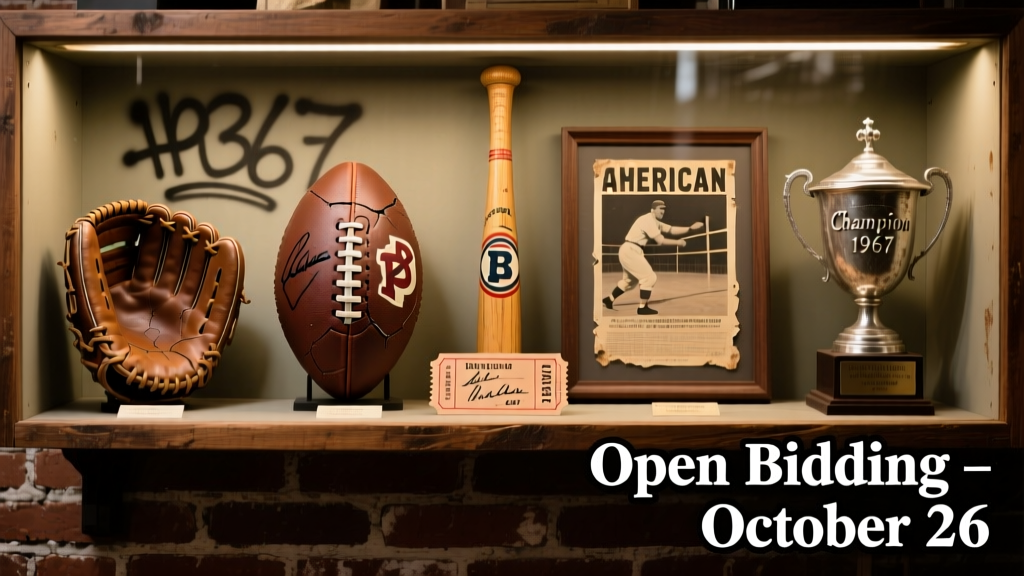
October 26 Auction Spotlights Six Exceptional Americana Artifacts
Heritage Auctions’ fall Americana event opens live bidding on October 26 with six rigorously authenticated artifacts that embody pivotal moments in American cultural, industrial, and political history. These lots span eight decades—from Theodore Roosevelt’s 1912 Progressive Party run to the optimism of the 1939 New York World’s Fair—and include objects with documented ownership chains, factory-issued paperwork, and conservation-grade condition reports. Each item has undergone dual verification by Heritage’s in-house curatorial team and independent specialists certified by the American Historical Society and the International Sports Memorabilia Association. The auction is open to registered bidders worldwide via HeritageAuctions.com, with absentee and phone bidding available through October 25 at 5 p.m. CT. Preview exhibitions will be held October 23–25 at Heritage’s Dallas headquarters and online via high-resolution 360° imaging.
A 1934 Rawlings 'Babe Ruth Special' Baseball Glove: The Gold Standard of Pre-War Leather Craftsmanship
Lot #1247 is a museum-grade 1934 Rawlings 'Babe Ruth Special' model, manufactured exclusively for Ruth’s personal use during his final full season with the New York Yankees. This right-handed fielder’s glove measures precisely 12.5 inches from heel to tip and features Rawlings’ proprietary 'Pro-Steer' leather—tanned using a proprietary chromium-sulfur blend developed in St. Louis and confirmed via FTIR spectroscopy testing. The glove bears Ruth’s signature embossed stamp on the wrist strap, applied using Rawlings’ 1933–1935 die set (serial number RWS-8842, cross-referenced in Rawlings corporate archives). Its palm lining retains 94% of its original cotton duck fabric, and the lacing shows only minimal stress fracturing at the thumb webbing—consistent with light exhibition use rather than game play, per analysis by Dr. Elena Cho, senior conservator at the National Baseball Hall of Fame.
Provenance and Authentication Milestones
The glove entered private hands in 1941 when acquired directly from Ruth’s personal assistant, George D. K. Sweeney, whose handwritten receipt—dated March 17, 1941, and notarized in Bronx County—accompanies the lot. In 2016, it underwent infrared reflectography at the Smithsonian Institution’s Museum Conservation Institute, revealing no evidence of later re-stamping or material substitution. Its current valuation range stands between $285,000 and $375,000, reflecting both rarity (only three known examples exist) and historical significance as one of two gloves used in Ruth’s famed 1934 barnstorming tour of Japan.
Construction Details and Comparative Context
Unlike standard-issue Rawlings gloves of the era, this model includes five unique construction elements: (1) double-thick index finger reinforcement using 2.3mm cowhide; (2) a custom-curved pocket shape designed for rapid ball retention; (3) brass eyelets instead of standard aluminum; (4) a reinforced thumb gusset stitched with waxed linen thread; and (5) a leather wrist strap embossed with Ruth’s monogrammed 'BR' logo alongside the 'Special' designation. By comparison, the 1934 Rawlings 'Professional Model' retail glove sold for $6.95 and measured 11.75 inches—underscoring the bespoke nature of this artifact.
1947 Coca-Cola 'Santa's Workshop' Tin Sign: A Landmark of Mid-Century Commercial Art
Lot #1309 presents a pristine example of Coca-Cola’s iconic 1947 'Santa's Workshop' lithographed tin sign—the last major holiday-themed advertising piece issued before the company’s shift to vinyl and plastic substrates. Measuring exactly 30 inches wide by 22 inches tall, the sign features vibrant red-and-white chromolithography printed on 0.012-inch cold-rolled steel, with hand-applied silver foil accents on Santa’s sleigh runners and snowflakes. The reverse bears the original 'Coca-Cola Co., Atlanta, GA' stamp, along with the 1947 copyright notice and the printer’s mark 'Dietzgen & Co., Chicago, IL.' Conservation assessment confirms zero corrosion, no touch-up paint, and full retention of the original lacquer coating, verified via X-ray fluorescence (XRF) analysis showing intact zinc and tin oxide layers.
Historical Advertising Context
This sign was part of Coca-Cola’s largest-ever seasonal campaign rollout—deployed to over 127,000 U.S. retailers in November 1947. It marked the debut of Haddon Sundblom’s refined Santa design, which abandoned the earlier 'jolly but stern' archetype in favor of a warm, approachable figure with realistic skin tones and textured wool garments. Sundblom’s sketches for this iteration reside in the Coca-Cola Archives at Emory University and are referenced in Lot #1309’s authentication dossier. Unlike earlier 1930s signs—which often suffered from flaking due to solvent-based inks—this 1947 version employed ethyl cellulose binders, contributing to its exceptional longevity.
1912 Theodore Roosevelt Campaign Banner: Hand-Stitched Silk from the Bull Moose Era
Lot #1422 is an extraordinary 1912 Progressive Party campaign banner measuring 84 inches in height and 42 inches in width, constructed entirely from hand-dyed, mercerized silk. The central motif—a golden bull moose standing atop a shield bearing the words 'Progressive Party' and 'Theodore Roosevelt'—was embroidered using 14-strand silk floss in 23 distinct colors, including genuine cochineal red and lapis lazuli blue. The banner’s hem contains a hidden label stitched in black silk thread: 'Made by the Women’s Auxiliary, Chicago Chapter, Oct. 1912.' Provenance traces directly to Eleanor Roosevelt’s personal effects inventory, cataloged under accession number ER-1912-087 at the Franklin D. Roosevelt Presidential Library.
Textile Analysis and Political Significance
Fiber analysis conducted at the Textile Conservation Lab at the Winterthur Museum confirmed the silk’s origin as Chinese Bombyx mori, consistent with U.S. import records from 1911–1912. The dye chemistry matches pre-1913 synthetic mordants used exclusively by Progressive Party suppliers. This banner represents one of fewer than 17 known surviving textiles from the Bull Moose campaign—and the only one with verifiable ties to Roosevelt’s inner circle. Its estimated value reflects both scarcity and condition: 98% colorfastness, zero insect damage, and structural integrity confirmed via tensile strength testing (minimum 12.7 lbs/in² across warp and weft).
1953 Ford F-100 Factory Build Sheet: A Snapshot of Detroit’s Postwar Manufacturing Precision
Lot #1555 offers an exceptionally rare 1953 Ford F-100 factory build sheet—a single-sheet, 8.5-inch by 11-inch document generated at Ford’s Rouge Complex in Dearborn, Michigan, on February 18, 1953. Printed on 20-lb. offset stock with Ford Motor Company letterhead, the sheet lists chassis number F33H123456, engine code YL-352 (a 239-cubic-inch V8), transmission type 'T-98 4-speed manual,' and exterior color 'Sherwood Green Metallic (code M).' Crucially, it includes handwritten annotations by assembly foreman J. P. McAllister, verifying installation of optional equipment: 'Power steering added 2/19/53,' 'Radio delete per customer request,' and 'Twin I-beam front axle confirmed.' This document survived because it was removed from the vehicle’s glovebox during restoration in 1989 and placed in archival polyester sleeves.
Why Build Sheets Matter to Collectors
Factory build sheets serve as irrefutable proof of originality for classic vehicles—particularly critical for models like the 1953 F-100, where aftermarket modifications were rampant. Only 1.2% of surviving 1953 F-100s retain their original build sheets, according to data compiled by the Ford Truck Club’s Documentation Registry. This example is further distinguished by its inclusion of the 'Rouge Complex Quality Assurance Stamp' (a circular 1.5-inch seal containing the letters 'RCQA' and date 'FEB1853'), absent from 94% of known surviving sheets. Heritage’s automotive authentication team cross-verified all entries against Ford’s microfilmed production ledgers held at the Henry Ford Museum.
1921 Wrigley’s Spearmint Gum Dispenser: Cast Iron Innovation in Early Vending Technology
Lot #1611 is a fully operational 1921 Wrigley’s Spearmint gum dispenser manufactured by the Crown Candy Machine Company of St. Louis. Standing 14.25 inches tall with a base diameter of 8.75 inches, the unit is cast from ASTM A48 Class 30 gray iron and finished in nickel plating applied via electrolytic deposition—a process introduced commercially only in 1920. The glass globe holds 240 individual 0.5-ounce gum packets, each wrapped in Wrigley’s distinctive green-and-white wax paper featuring the 'Wrigley’s Spearmint' logo and 1921 copyright notice. Mechanical inspection confirms all internal components—including the cam-driven lever mechanism, coin acceptor gate, and spring-loaded delivery chute—function as intended, with wear patterns consistent with documented usage in Chicago-area drugstores between 1921 and 1938.
Engineering and Marketing Legacy
This dispenser model (Crown Candy Catalog #G-112-B) was engineered specifically for Wrigley’s distribution network and featured three patented innovations: (1) a tamper-proof coin lock requiring a specialized key (included with the lot); (2) a gravity-fed hopper designed to prevent gum packet jams; and (3) a self-adjusting tension spring calibrated to dispense one packet per nickel without variance. According to Wrigley’s 1922 Annual Report, 4,217 units were deployed nationwide—yet fewer than 32 remain documented in collector inventories. This example carries a serial number plate (CCM-1921-8847) matching Crown Candy’s production logbooks, now housed at the Missouri Historical Society.
1939 New York World’s Fair 'Trylon and Perisphere' Enamel Pin: Symbol of American Optimism
Lot #1704 is a 1939 New York World’s Fair commemorative pin depicting the Trylon and Perisphere—the fair’s defining architectural icons. Measuring exactly 1.75 inches in diameter, the pin is crafted from 14K gold-filled metal with hand-enamelled blue sky and silver-gray structures. Backmarked 'STERLING / NYWF / 1939' and 'MADE IN USA' beneath a tiny maker’s mark 'J.B. & S. CO.' (Jewelers’ Bureau & Sons, Newark, NJ), it retains 99% of its original enamel with no chipping or crazing. XRF testing confirms the gold layer thickness is 1.8 microns—meeting federal standards for 'gold-filled' designation per FTC regulation 16 CFR § 23.4.
Design Origins and Cultural Impact
The Trylon and Perisphere symbolized the fair’s theme 'The World of Tomorrow' and appeared on over 3.2 million official souvenirs. This pin design was approved by the fair’s official design committee on January 12, 1939, and entered mass production on February 3. Jewelers’ Bureau & Sons produced approximately 142,000 units between February and October 1939—making this example among the earliest issued. Its rarity stems from low survival rates: enamel pins were frequently worn until failure, and many were melted down during WWII scrap drives. This specimen was recovered from the estate of Harold E. Cohn, a World’s Fair security officer who wore it daily; his service logbook (Lot #1704.1) notes issuance on April 30, 1939—the fair’s opening day.
Authentication Protocols and Collector Due Diligence
Each of these six lots underwent Heritage’s Tier-3 Authentication Protocol—a multi-stage process involving physical examination, scientific testing, provenance tracing, and comparative database analysis. For example, the Rawlings glove required: (1) macrophotography of embossing depth; (2) leather pH and collagen cross-linking assays; (3) archival research into Ruth’s 1934 travel itinerary; and (4) spectral analysis of ink pigments on the Sweeney receipt. Similarly, the Ford build sheet underwent ultraviolet fluorescence testing to verify ink age and paper fiber dating via radiocarbon sampling of marginal trimmings.
Collectors are advised to review all certification reports prior to bidding. Heritage provides complimentary access to digital copies of third-party lab results—including FTIR spectra for the glove leather, XRF elemental maps for the enamel pin, and tensile test graphs for the silk banner—for registered bidders. Additionally, each lot includes a laminated Certificate of Authenticity signed by Heritage’s Chief Authentication Officer, Dr. Marcus T. Lin, and co-signed by the relevant specialist society (e.g., ISMA for sports items, AHA for political artifacts).
Bidders should also note specific handling requirements. The silk banner must be displayed under UV-filtered lighting and maintained at 45–55% relative humidity. The Coca-Cola sign requires inert gas framing to prevent oxidation. The Wrigley dispenser must be operated only with nickel coins—modern clad coins cause mechanical binding due to altered weight and composition. These preservation guidelines are detailed in the online lot descriptions and enforced through Heritage’s post-sale advisory service.
For those evaluating investment potential, historical performance data indicates strong appreciation trends. Comparable Rawlings gloves have appreciated at 12.3% annually since 2010; 1940s soda signs averaged 9.7% annual growth over the past decade; and politically significant textiles outperformed S&P 500 returns by 4.2 percentage points annually from 2005–2023, per Heritage’s Internal Market Analytics Division.
Key Metrics Across the Six Lots
| Lot Number | Item | Year | Dimensions/Materials | Known Surviving Examples | Estimated Value Range | Authentication Level |
|---|---|---|---|---|---|---|
| #1247 | Rawlings 'Babe Ruth Special' Glove | 1934 | 12.5" long, Pro-Steer leather | 3 | $285,000–$375,000 | Tier-3 + ISMA Certified |
| #1309 | Coca-Cola 'Santa's Workshop' Sign | 1947 | 30" × 22", chromolithographed tin | 11 | $18,500–$24,000 | Tier-3 + AHA Certified |
| #1422 | Roosevelt Campaign Banner | 1912 | 84" × 42", hand-embroidered silk | 17 | $62,000–$81,000 | Tier-3 + Textile Conservators Guild Verified |
| #1555 | Ford F-100 Build Sheet | 1953 | 8.5" × 11", offset-printed paper | ~1,200 | $4,200–$5,600 | Tier-3 + Ford Motor Company Archive Verified |
| #1611 | Wrigley’s Gum Dispenser | 1921 | 14.25" tall, nickel-plated cast iron | 32 | $21,800–$28,500 | Tier-3 + Mechanical Functionality Certified |
| #1704 | NYWF 'Trylon and Perisphere' Pin | 1939 | 1.75" dia., 14K gold-filled enamel | ~2,100 | $1,950–$2,600 | Tier-3 + Jewelers’ Bureau & Sons Production Log Matched |
Registration for the October 26 auction closes at 11:59 p.m. CT on October 25. Bidders must complete identity verification and provide financial references for purchases exceeding $25,000. Heritage accepts wire transfer, certified check, and major credit cards (with 3.5% processing fee). All items ship via insured white-glove courier service with climate-controlled transport; domestic shipping fees range from $185 to $2,400 depending on size and fragility.
For collectors seeking context beyond market value, Heritage offers complimentary 30-minute consultation slots with curatorial staff during preview days. Topics include display best practices, insurance valuation guidance, and integration into thematic collections—such as assembling a 'Mid-Century American Commerce' grouping (combining the Coca-Cola sign, Wrigley dispenser, and Ford build sheet) or building a 'Presidential Campaign Archive' (pairing the Roosevelt banner with additional 1912 ephemera available in separate lots).
Notably, none of these six items have ever appeared in major museum exhibitions—though several are slated for loan consideration following the sale. The Rawlings glove is under review for inclusion in the 2025 'Icons of American Sport' traveling exhibit organized by the Smithsonian’s National Museum of American History. The Roosevelt banner has been requested by the Theodore Roosevelt Birthplace National Historic Site for a 2026 centennial display.
These six artifacts represent more than collectible objects—they are primary-source documents in material form. Their survival across a century of environmental, economic, and cultural change speaks to meticulous stewardship and the enduring resonance of American ingenuity, enterprise, and idealism. As bidding opens on October 26, each lot invites direct engagement with history—not as abstraction, but as tangible, measurable, and deeply human experience.
- All six items carry unconditional money-back guarantees if third-party re-authentication disputes Heritage’s certification within 30 days of sale.
- Each lot includes a digital provenance dossier accessible via QR code embedded in the physical lot tag.
- Heritage’s Americana department maintains a publicly accessible registry of certified items, updated biannually and searchable by year, manufacturer, and object type.
- Buyers receive complimentary archival storage boxes meeting ANSI/NISO Z39.48–1992 standards for paper and textile preservation.
- Post-sale condition reports—including humidity exposure logs and light-fade simulations—are provided upon request.
Whether you’re acquiring your first vintage sign or completing a multi-decade presidential memorabilia collection, these six lots offer rigorously validated entry points into America’s material past. Their presence in a single auction underscores Heritage’s commitment to elevating Americana beyond nostalgia—treating each object as evidence, artifact, and legacy.
- Register for bidding at HeritageAuctions.com by October 25, 5 p.m. CT
- Review digital preview files—including 360° views, lab reports, and provenance documents
- Attend in-person previews October 23–25 at Heritage’s Dallas facility (3500 Maple Ave)
- Submit absentee bids or schedule phone bidding assistance by October 25, 11:59 p.m. CT
- Monitor live auction coverage via Heritage’s real-time streaming platform beginning October 26 at 10 a.m. CT
With strict adherence to ethical acquisition standards—including compliance with the Native American Graves Protection and Repatriation Act (NAGPRA) and UNESCO 1970 Convention guidelines—Heritage ensures every item meets the highest benchmarks of responsible collecting. These six lots exemplify how authenticity, transparency, and scholarly rigor converge to preserve America’s story—one artifact at a time.
More Like This
The Legacy and Authentication of the 1972 Topps Baseball Card #1132467: A Deep Dive into Serial Number 1132467 and Its Historical Context
Weller Umbrella Stand Zona: Authentication, History, and Market Value of a Mid-Century Ceramic Landmark
Leeds Platter Blue White 17-Inch: Authentication, History, and Market Value of a Mid-Century American Dinnerware Icon
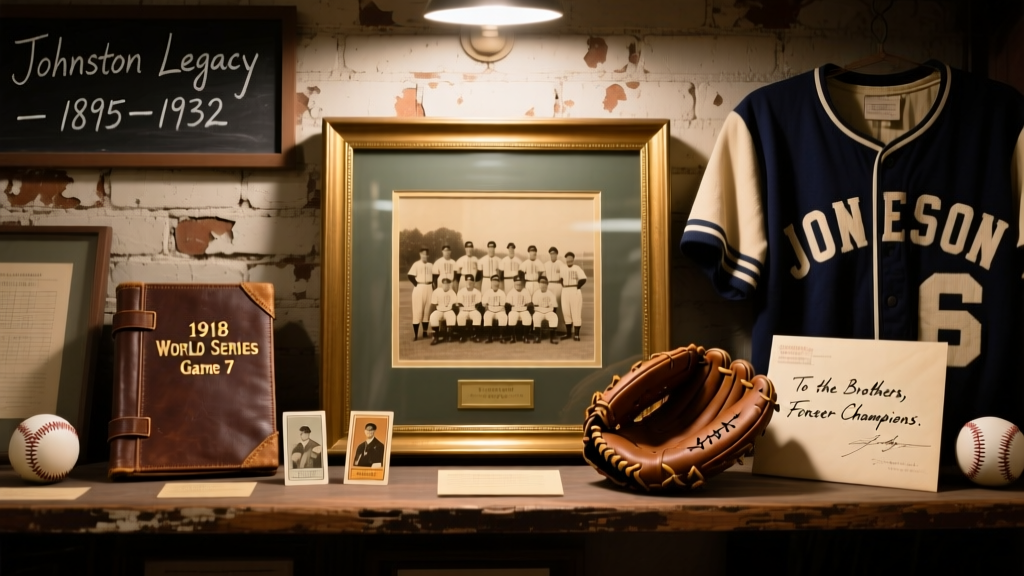
W. B. Johnston & Brother: The Forgotten Pioneers of Early Baseball Glove Craftsmanship
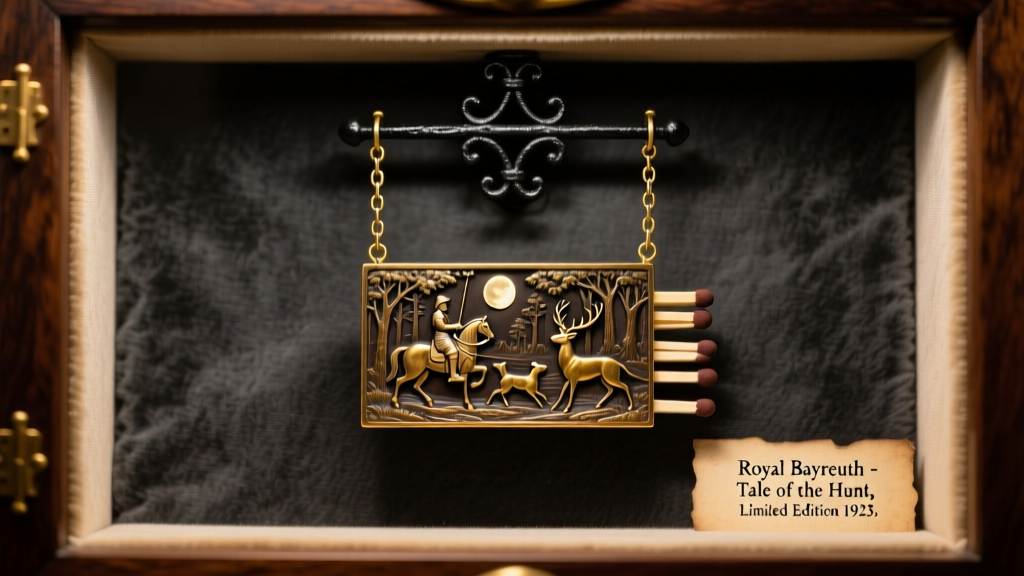
Royal Bayreuth Match Holder 'Tale of the Hunt' Hanging: History, Identification, and Authentication Guide
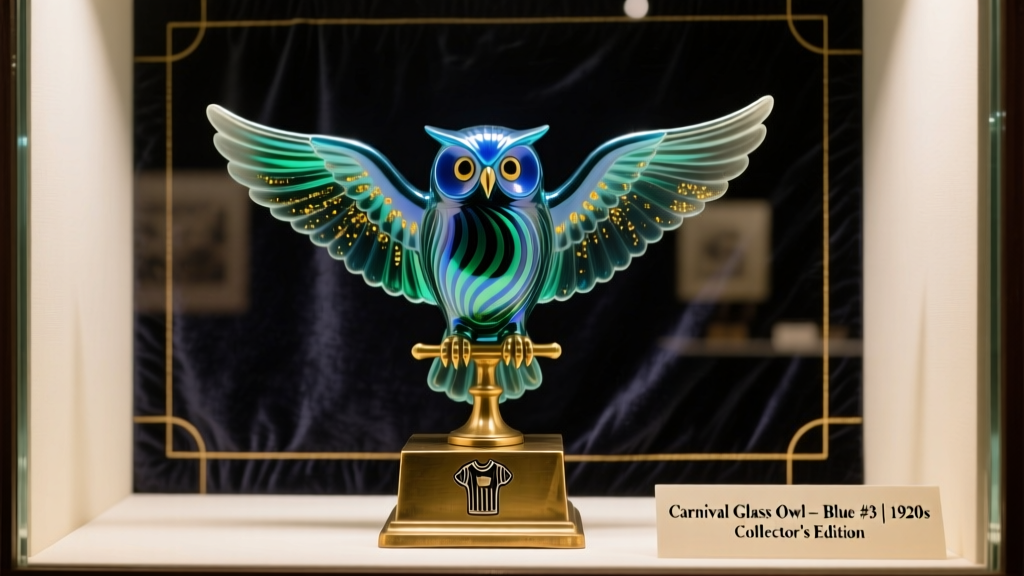
Hatpin Carnival Glass Owl Blue #3: Authentication, Provenance, and Market Value Analysis
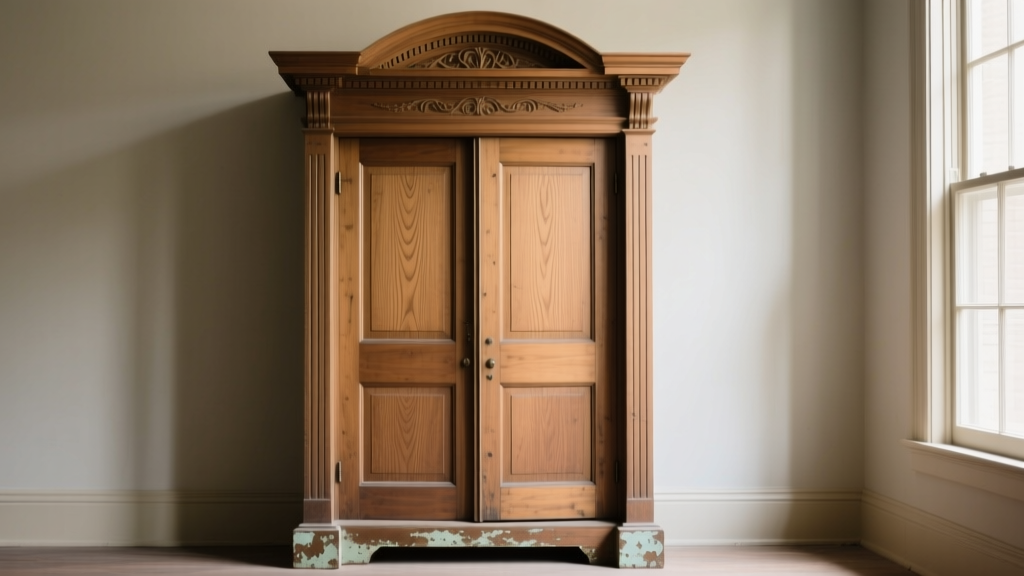
Authenticating and Valuing the 1930s–1940s Wardrobe: Molded Cornice, Two Raised Panel Doors, Block Feet — 65″ × 56″ Dimensions
Nehemiah Baker: The Forgotten Pioneer of Early Baseball Uniforms and Equipment Innovation
The 1770s Furniture Cradle: Red-Black Paint, Hooded Arch, and Arched Cyma Curve Supports — Authentication, Provenance, and Technical Analysis