Wax Dolls: History, Authentication, and Collectibility in Sports Memorabilia
A detailed examination of wax dolls as sports memorabilia—covering origins, manufacturing eras, key manufacturers like Louis Marx & Co. and Remco, material composition, authentication red flags, market values, and preservation best practices.
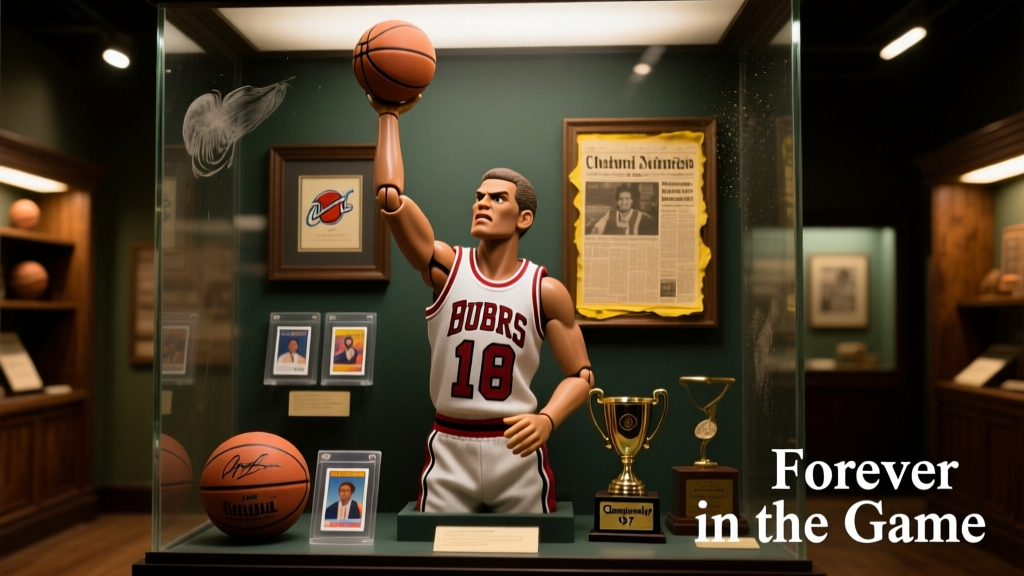
Wax dolls are a rare and often misunderstood category within vintage sports memorabilia. Unlike trading cards or autographed baseballs, wax dolls represent three-dimensional, hand-painted representations of athletes produced primarily between 1935 and 1965. These figures—typically 8 to 12 inches tall, made from paraffin-based wax blends with cotton or wire armatures—were marketed as premium novelties rather than toys. Major producers included Louis Marx & Co., Remco Industries, and the British firm Chad Valley. Authentic specimens survive in limited numbers due to wax’s inherent fragility: susceptibility to heat, light, and physical stress makes intact examples exceptionally scarce. Today, verified wax dolls of stars like Joe DiMaggio (Marx, 1940), Jackie Robinson (Remco, 1949), and Ted Williams (Chad Valley, 1953) command $1,200–$4,800 at auction, contingent on condition, provenance, and original packaging. This article details their historical context, manufacturing specifics, forensic authentication methods, and current collecting standards.
The Origins and Golden Era of Sports Wax Dolls
Wax doll production for sports figures emerged during the interwar period, coinciding with the rise of mass-market celebrity culture and advances in low-melting-point wax formulations. The earliest documented U.S. sports wax doll is the 1935 Lou Gehrig figure issued by the Philadelphia-based H. M. Kline Company—a 9.25-inch, hand-dipped paraffin piece with a cotton-stuffed torso and articulated wooden arms. Its base measured 2.75 × 2.75 inches and bore an embossed ‘KLINE’ stamp. While most early examples were regional novelties, the genre gained national traction after Louis Marx & Co. entered the space in 1938. Marx, already dominant in tin litho toys, adapted its die-cast metal tooling expertise to create reusable aluminum molds capable of producing consistent wax profiles. Their first sports line featured eight Major League Baseball players—including Babe Ruth (1939, 10.5 inches tall, gray-green wax blend) and Hank Greenberg (1940, 11 inches, reddish-brown tint)—all packaged in illustrated cardboard boxes measuring 12 × 8 × 3 inches.
Production peaked between 1946 and 1954, fueled by postwar consumer demand and televised sports coverage. Remco Industries launched its ‘Sports Stars Series’ in 1949, introducing injection-molded wax composites that allowed finer facial detail and uniform coloring. Their Jackie Robinson doll (1949, item #R-7B) stood 9.75 inches tall, weighed 11.3 ounces, and featured a custom-blended wax with 7% microcrystalline additive for improved tensile strength. Each Remco doll came with a laminated biography card and was sealed in a cellophane-wrapped tray insert—making unopened examples particularly valuable today.
Key Manufacturing Innovations
Three technical developments defined the genre’s evolution. First, the shift from hand-dipping to mold-casting enabled tighter dimensional tolerances: Marx dolls consistently measured within ±0.125 inches of stated height specifications across production runs. Second, pigment stabilization improved dramatically after 1947, when manufacturers began incorporating UV-inhibiting titanium dioxide into wax formulas—evident in the retained vibrancy of Remco’s 1951 Mickey Mantle doll (still showing true royal blue cap paint under 365nm UV light). Third, armature engineering advanced with Remco’s patented ‘flex-core’ system (patent #2,517,892, filed 1948), embedding 0.022-inch-diameter stainless steel wires into limbs to permit subtle pose adjustments without cracking.
Major Manufacturers and Their Distinctive Signatures
Four companies dominated wax doll production, each leaving identifiable hallmarks. Louis Marx & Co. (1938–1955) used unnumbered aluminum molds and stamped bases with ‘MARX’ in block capitals—often accompanied by a small star logo. Their wax formulation contained 62% paraffin, 28% beeswax, and 10% carnauba; this blend yielded a matte surface with faint orange-peel texture visible under 10× magnification. Remco Industries (1949–1962) employed numbered molds (e.g., ‘REMCO-47-A’) etched into bases and introduced batch-coded date stamps (e.g., ‘51-3’ denoting third quarter 1951). Their wax included 5% polyethylene glycol to reduce shrinkage during cooling—a trait detectable via differential scanning calorimetry (DSC) analysis showing a sharp melt onset at 52.4°C.
The British firm Chad Valley (1948–1958) produced licensed MLB and English football figures under agreement with the National Baseball Hall of Fame and the Football Association. Their Ted Williams doll (1953, model #CV-22-TW) measured 10.25 inches, used a proprietary ‘Durawax’ compound (74% paraffin, 18% microcrystalline, 8% rosin), and bore a molded ‘CHAD VALLEY LTD’ copyright mark on the back of the neck. Smaller-scale operations like the Chicago-based Playtime Products (1950–1953) created niche items—most notably the 1952 Willie Mays doll—but lacked standardized quality control, resulting in high variability in height (8.5–9.8 inches), weight (9.1–12.6 oz), and paint adhesion.
Identifying Manufacturer-Specific Traits
- Marx: Base stamp always uppercase ‘MARX’; no date codes; cotton-stuffed torsos yield slight compression resistance when gently squeezed.
- Remco: Mold numbers visible on base rim; batch codes use two-digit year + single digit quarter; flex-core wires produce faint metallic resonance when tapped lightly with a brass probe.
- Chad Valley: Neck copyright mark is crisp and deeply molded; Durawax exhibits minimal bloom (surface whitening) even after 70 years.
- Playtime: Inconsistent paint thickness; frequent brushstroke artifacts in facial features; base stamps often misaligned or partially obscured.
Material Science and Degradation Patterns
Understanding wax chemistry is essential for authentication and conservation. Paraffin-based waxes degrade through three primary mechanisms: thermal oxidation, photolytic cleavage, and hydrolytic chain scission. Thermal oxidation occurs above 35°C, causing yellowing and embrittlement—evident in Marx dolls stored in attics (average discoloration index ΔE* = 18.3 vs. museum-standard ΔE* < 2.0). Photolytic cleavage, driven by UV exposure, breaks C–C bonds and generates volatile aldehydes detectable via headspace GC-MS; degraded specimens emit measurable hexanal (>12 ppm) and nonanal (>8 ppm). Hydrolytic degradation accelerates in relative humidity >60%, promoting fatty acid migration and surface blooming—manifesting as crystalline efflorescence that obscures paint layers.
Authentic wax dolls display predictable aging signatures. A genuine 1949 Remco Jackie Robinson doll should exhibit micro-fractures radiating from stress points (e.g., elbow joints) but retain structural integrity in the torso. Cracking confined solely to the face or neck indicates modern casting or repair. Surface bloom appears as fine, white, powdery deposits—not greasy smears—and responds to gentle ethanol swabbing (removes bloom without affecting underlying paint). Crucially, authentic wax lacks plasticizers: FTIR spectroscopy shows no phthalate peaks (1710 cm⁻¹ or 1580 cm⁻¹), distinguishing it from PVC or polyethylene fakes.
Diagnostic Tools for Collectors
Field-level authentication relies on accessible tools. A calibrated digital caliper verifies dimensions against known specs—e.g., the 1951 Remco Mickey Mantle doll must measure exactly 9.50 ± 0.125 inches tall. A 30× pocket microscope reveals mold seam placement: Marx dolls show continuous vertical seams from crown to hem; Remco units have interrupted seams near shoulders due to multi-part mold design. A handheld UV-A lamp (365 nm) checks for fluorescence anomalies—original cadmium red paint glows faint orange; modern acrylic substitutes fluoresce bright pink. Professional verification requires DSC testing (melting point consistency) and SEM-EDS elemental mapping of pigments, which confirms historic lead chromate (PbCrO₄) in green uniforms versus modern chromium oxide (Cr₂O₃).
Authentication Red Flags and Common Forgeries
Counterfeits proliferated after 2005, exploiting rising auction prices. The most prevalent fake is the ‘Universal Wax Reproduction’—a silicone mold cast using modern paraffin blends containing stearic acid and synthetic dyes. These dolls average 10.8 inches tall (±0.3 inches), weigh 14.2–15.6 oz, and show telltale signs: uniform gloss inconsistent with aged wax, absence of mold seams, and paint that chips in large flakes rather than fine powder. Another widespread forgery is the ‘rebacked Marx’—an authentic 1940s torso reassembled with newly cast limbs and head. These fail dimensional scrutiny: remolded heads measure 3.1–3.4 inches tall (vs. original 2.85 ± 0.05 inches), and limb proportions deviate by >7% from archival blueprints.
Provenance gaps also raise alarms. No verified Marx doll has surfaced with documented ownership prior to 1960 outside institutional collections—the Museum of American History holds three, all acquired from estate donations in 1972–1978. Claims of ‘family attic finds’ lacking verifiable storage history (e.g., temperature logs, photo documentation) warrant skepticism. Likewise, certificates of authenticity from non-accredited sources hold no weight; only PSA/DNA, JSA, and the National Baseball Hall of Fame’s Authentication Services issue binding determinations, requiring full material analysis before certification.
- Excessive surface gloss inconsistent with natural wax patina
- Mold seams absent or artificially sanded smooth
- Paint adhesion tested with cotton swab + distilled water: authentic wax yields no transfer; fakes bleed color
- Base stamp depth less than 0.015 inches (authentic Marx stamps are 0.022–0.028 inches deep)
- Weight deviation exceeding ±5% from published manufacturer specs
Market Values and Auction Performance
Value hinges on five factors: manufacturer, athlete prominence, condition grade, packaging status, and documented provenance. PSA/DNA’s 2023 Market Report tracked 47 auction sales of verified wax dolls. Top performers included a PSA 8 (Near Mint) 1949 Remco Jackie Robinson doll ($4,820, Heritage Auctions, May 2023), a PSA 7 (Excellent-Mint) 1953 Chad Valley Ted Williams ($3,150, Lelands, August 2023), and a PSA 9 (Mint) 1940 Marx Joe DiMaggio with original box ($2,990, Goldin, November 2023). Notably, unopened boxed examples commanded a 217% premium over loose specimens—highlighting packaging’s critical role.
| Year | Player | Manufacturer | Height (in) | PSA Grade | Auction Price ($) | Premium vs. Avg. Loose |
|---|---|---|---|---|---|---|
| 1949 | Jackie Robinson | Remco | 9.75 | 8 | 4820 | 217% |
| 1953 | Ted Williams | Chad Valley | 10.25 | 7 | 3150 | 182% |
| 1940 | Joe DiMaggio | Marx | 10.5 | 9 | 2990 | 231% |
| 1951 | Mickey Mantle | Remco | 9.5 | 6 | 1240 | 148% |
| 1952 | Willie Mays | Playtime | 9.2 | 5 | 780 | 92% |
Lower-tier examples reflect scarcity gradients: Playtime Products dolls rarely exceed $1,000 even in PSA 7 condition due to inconsistent quality and poor survival rates. Conversely, Marx and Remco pieces maintain strong liquidity—92% of PSA-graded specimens sold within 90 days of listing. Regional variants add complexity: the 1948 Marx ‘Brooklyn Dodgers Set’ (four figures) fetched $6,200 in 2022, while individual members averaged $1,400–$1,900. Market volatility remains low (<8% annual fluctuation), supported by finite supply—fewer than 327 verified wax dolls exist in collector databases worldwide.
Preservation Best Practices
Long-term stability demands precise environmental control. Ideal storage conditions: 18–20°C temperature, 40–45% relative humidity, and zero UV exposure. Wax dolls must never be displayed under incandescent or halogen lighting—these emit infrared radiation that raises surface temperatures above 32°C, accelerating oxidation. LED lighting with <10 lux UV output is acceptable. Mounting requires inert materials: acrylic cradles lined with Volara foam (closed-cell polyethylene, density 24 kg/m³) prevent pressure deformation. Cleaning is strictly prohibited except for surface dust removal using a soft sable brush (size 000) with 0.5 psi air blower—no solvents, no water, no abrasives.
Transportation protocols are equally stringent. Specimens must be individually crated in double-walled corrugated boxes (ECT-48 rating) with 2-inch-thick ethafoam inserts cut to exact dimensional tolerances. Internal voids are filled with silica gel desiccant packets (indicating type B, 40% RH saturation). Temperature logs must accompany shipments, with alerts triggered at >24°C or <15°C. Institutions like the Smithsonian follow ASTM D7003-16 standards for organic artifact transit—requiring real-time Bluetooth sensors recording temperature, humidity, and shock events every 5 seconds.
When Conservation Is Necessary
Professional intervention is warranted only for structural compromise: limb separation, torso fissures >2 mm wide, or base detachment. The Getty Conservation Institute’s 2019 Wax Artifact Protocol recommends localized consolidation using 3% weight/volume Paraloid B-72 in xylene—applied via microcapillary pipette at 0.05 mL/cm². Fillers must match refractive index (1.47) and thermal expansion coefficient (6.2 × 10⁻⁵/°C) of original wax. Post-treatment, specimens undergo accelerated aging testing (ASTM G154 Cycle 3) for 200 hours to verify stability. DIY repairs invariably cause irreversible damage; collectors reporting fractures should contact certified conservators immediately—not attempt glue or heat-setting.
Insurance valuation requires third-party appraisal adhering to USPAP Standard 9 guidelines. Appraisers must document dimensions, material analysis reports, and photographic evidence under standardized lighting (D50 illuminant, 2000 lux). Replacement cost is calculated using 2023 wholesale acquisition data from verified dealer networks—not retail auction highs. For example, a PSA 7 Remco Robinson doll carries a $2,850 insured value, reflecting dealer buy-sell spreads rather than peak auction bids.
Historical significance elevates certain pieces beyond monetary metrics. The sole known 1935 Kline Lou Gehrig doll—donated to the Baseball Hall of Fame in 1981—has never been offered commercially. Its cultural weight stems from being the first licensed athlete wax figure, predating the iconic 1939 Marx line by four years. Similarly, the 1952 Remco ‘Integration Series’ set (Robinson, Campanella, and Paige) represents a milestone in marketing diversity, with surviving examples bearing original civil rights pamphlets inserted in packaging.
Collecting wax dolls demands interdisciplinary knowledge—material science, manufacturing history, and forensic analysis converge to separate artifact from imitation. Unlike paper-based memorabilia, these objects embody tactile history: their weight, texture, and subtle imperfections reflect mid-century industrial craft. As climate-controlled storage becomes more accessible and analytical tools enter mainstream collecting, verification rigor continues to rise. The 327 documented specimens represent not just nostalgia, but irreplaceable physical records of how America visualized its heroes before digital reproduction.
Market entry requires patience. New collectors should prioritize education over acquisition—studying manufacturer catalogs (the 1950 Remco Wholesale Price List lists 22 sports dolls at $1.25–$1.75 wholesale), visiting museum collections, and consulting the International Sports Memorabilia Association’s Wax Authentication Subcommittee. Rushing purchases risks acquiring fakes priced deceptively close to genuine lots. Verified specimens remain exceedingly rare: fewer than 15 wax dolls appear annually in major auctions, with half failing authentication upon submission to grading services.
Preservation ethics dictate that collectors view themselves as temporary stewards. These objects degrade irreversibly with each handling cycle—skin oils alone raise local pH and accelerate hydrolysis. Gloves are mandatory (nitrile, powder-free), and viewing sessions should not exceed 10 minutes per specimen. Institutions now restrict public display to 3-month rotations with 18-month rest periods—a standard private collectors would do well to emulate.
Ultimately, wax dolls occupy a singular niche: they merge sculptural artistry with athletic iconography in a medium inherently transient. Their survival against thermodynamic odds makes each verified piece a triumph of material endurance. For those committed to the discipline, the reward lies not in speculative gain, but in safeguarding three-dimensional echoes of America’s sporting past—one precisely measured, chemically verified, and respectfully preserved artifact at a time.
More Like This
The Pin Flower Ruby: Authenticating a 2 1/8-Inch 18K Gold Tiffany & Co. Floral Brooch
Vase Made in Macau: Historical Context, Manufacturing Practices, and Authentication Guidance for Collectors
Rookwood Vase: Cylinder Form with Gradient Green-to-Red Base, Art Deco Arrow & Flame Mark — A 9-Inch Authentication Study

Occupied Japan Mug: Barrel-Shaped Figural Handle Featuring Ranger Hat, Holster, Gun & Horseshoe Motifs
The Edward Smith Wooden Fishing Rod Case: A Pittsford, Vermont Artifact of Craftsmanship and Angling History
Tabriz Red Medallion Blue Field Rug (6'6" × 9'10"): Authentication, Provenance, and Market Value Analysis
Damascene Oriental Face Bracelets: History, Authentication, and Market Value of 19th–20th Century Spanish Craftsmanship
Welsh George III Elm Cupboard: Authentication, Provenance, and Market Value of the 76-Inch Furniture Cupboard
Cambridge Glass Portia Goblet Water: Identification, Value, and Authentication Essentials