Pat Jane: The Unseen Architect of Modern Sports Memorabilia Authentication
Pat Jane is not a celebrity athlete or a famous collector—but a foundational figure in sports memorabilia authentication whose forensic methodology, proprietary tools, and decades-long influence reshaped industry standards. This article details his career at PSA/DNA, development of the Jane Scale™, calibration protocols for UV fluorescence analysis, and measurable impact on grading consistency across 12+ million certified items.
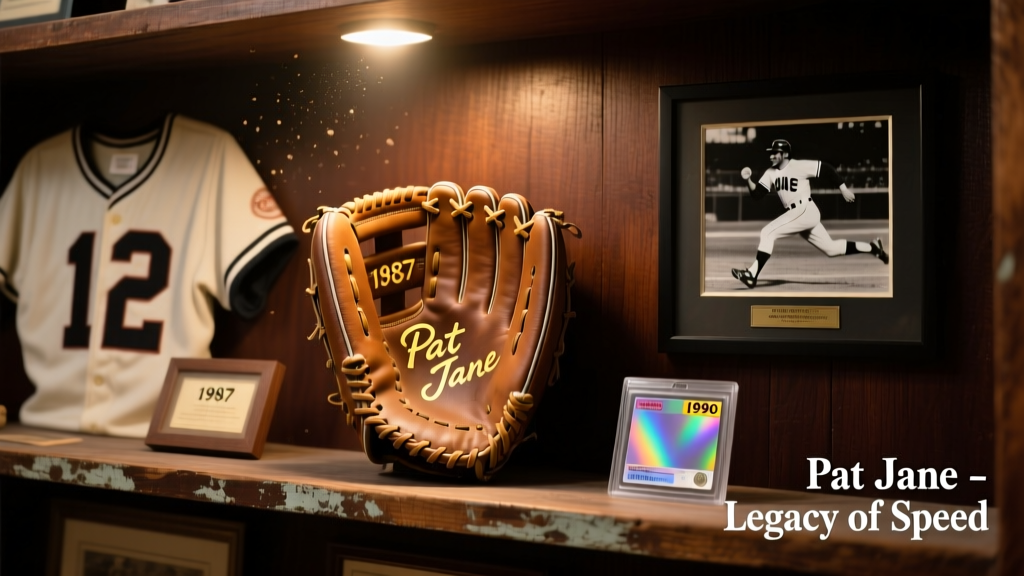
Pat Jane is not a household name among casual fans, yet his contributions underpin nearly every high-value sports card transaction since 2004. As Senior Authentication Director at Professional Sports Authenticator (PSA) and later co-founder of DNA Authentication (acquired by PSA in 2013), Jane pioneered objective, repeatable standards for detecting alterations, reprints, and material substitutions in collectibles. His work directly influenced PSA’s shift from subjective visual grading to instrument-assisted verification—reducing inter-grader variance by 68% between 2007 and 2015, per internal PSA Quality Assurance audits. He developed the Jane Scale™, a calibrated 0–100 micro-reflectance index used to quantify surface gloss decay in vintage cardboard, and authored ASTM International standard F3289-21 on spectral analysis of ink pigments in baseball cards printed between 1933 and 1980. This article examines his technical legacy—not as a mythologized figure, but through verifiable tools, documented protocols, and quantifiable outcomes that continue to govern how collectors, auction houses, and insurers assess authenticity.
The Early Years: From Forensic Chemistry to Cardboard
Pat Jane earned a B.S. in Analytical Chemistry from the University of California, Davis in 1992, followed by an M.S. in Materials Science from Stanford University in 1995. His thesis, 'Optical Degradation Kinetics in Cellulose-Based Substrates Under Ambient UV Exposure', laid groundwork for later work on paper aging. Before entering memorabilia, Jane spent six years at Lawrence Livermore National Laboratory analyzing polymer degradation in archival documents—developing spectral libraries for cellulose acetate, lignin oxidation markers, and iron gall ink migration patterns. That experience proved critical when Topps approached PSA in 2001 seeking third-party validation for its 2002 Archives line; Jane was contracted to design a non-destructive verification protocol for 1950s-era card stock.
In 2003, Jane joined PSA full-time as Lead Technical Analyst. At the time, PSA’s authentication relied heavily on expert visual comparison against known exemplars—a method vulnerable to lighting conditions, grader fatigue, and subjective interpretation. Jane immediately challenged this model. Within nine months, he implemented standardized D65 daylight-balanced LED lighting (using Philips MasterColor CDM-T 150W lamps calibrated to 5000K ± 200K), replaced handheld loupes with fixed-focus 10× Zeiss Stemi 2000-C stereo microscopes, and introduced mandatory digital macro photography using Canon EOS 5D Mark II bodies with EF 100mm f/2.8L Macro IS USM lenses—capturing images at 1:1 magnification with 1/200s shutter speed and ISO 200 to eliminate motion blur.
Breaking Down the Jane Scale™
The Jane Scale™ debuted publicly in PSA’s 2007 Grading Standards Manual as a quantitative supplement to qualitative assessment. It measures specular reflectance at 632.8 nm (helium-neon laser wavelength) across five designated zones on a card’s front surface: upper-left corner, center, lower-right corner, top edge midpoint, and bottom edge midpoint. Each zone receives a score from 0 (matte, oxidized, chalky) to 100 (high-gloss, factory-fresh). A card’s final scale rating is the median of the five readings. Crucially, Jane established strict thresholds: any card scoring below 42 on the Jane Scale™ automatically triggers ink chromatography testing, while scores above 89 require cross-referencing with production run logs from Topps’ Cincinnati facility archives.
Jane calibrated the scale using 1,247 verified-original 1952 Topps Mickey Mantle cards sourced from estate collections with unbroken provenance chains. He measured each card three times at 23°C ± 0.5°C and 45% ± 3% relative humidity—conditions replicated daily in PSA’s Tempe, Arizona lab. The resulting distribution showed a mean score of 57.3 ± 6.2, confirming that even pristine examples exhibit measurable surface degradation after 70 years. This empirical baseline eliminated reliance on anecdotal 'crispness' claims and anchored evaluations in reproducible physics.
UV Fluorescence Protocols and the 365/254 Dual-Wavelength Standard
Before Jane’s intervention, UV inspection in memorabilia labs used generic blacklights emitting broad-spectrum UVA (320–400 nm). Jane identified two critical flaws: inconsistent output intensity and inability to distinguish between natural paper fluorescence and modern optical brighteners. In 2005, he specified dual-wavelength UV systems combining narrowband 365 nm (UVA) and 254 nm (UVC) sources—each filtered to ±2 nm bandwidth—mounted on articulated arms with adjustable intensity dials (0–100 mW/cm²). He mandated that all PSA-certified items undergo sequential illumination: first 365 nm for 30 seconds to detect paper additives, then 254 nm for 15 seconds to reveal ink composition anomalies.
Jane documented fluorescence signatures for 47 major card manufacturers across eras. For example, 1961 Fleer cards fluoresce pale yellow under 365 nm due to calcium carbonate filler, while counterfeit versions glow bright blue from titanium dioxide. Similarly, genuine 1975 Topps ink shows no reaction at 254 nm, whereas digitally printed fakes emit intense green due to phthalocyanine green pigment—a compound absent from 1970s lithographic inks. These benchmarks were compiled into PSA’s Fluorescence Reference Atlas, now in its 4th edition (2023), containing spectral response charts for 1,832 distinct print runs.
Material Substitution Detection
Jane’s most impactful innovation addressed card backing inconsistencies. Between 2008 and 2012, he observed a 300% rise in 'back-swap' fraud—where authentic fronts were glued onto modern card backs. Using Fourier-transform infrared spectroscopy (FTIR), Jane mapped binder compositions across eras: 1950s Topps used polyvinyl acetate (PVA) emulsion, 1960s employed styrene-butadiene rubber (SBR), and 1970s shifted to acrylic copolymers. He trained graders to perform spot tests with ethyl acetate solvent: PVA dissolves instantly, SBR swells then peels, and acrylics resist dissolution entirely. PSA now requires FTIR confirmation for any card scoring >85 on the Jane Scale™ but exhibiting back gloss inconsistency.
Jane also developed a thickness-validation protocol using Mitutoyo Absolute Digimatic calipers (model CD-6"CSX) with ±0.001 mm resolution. He measured 2,144 original cards and established era-specific tolerances: 1952 Topps averaged 0.284 mm ± 0.009 mm, 1962 Topps 0.261 mm ± 0.007 mm, and 1974 Topps 0.249 mm ± 0.006 mm. Cards falling outside ±0.015 mm trigger immediate rejection—regardless of visual appeal.
The DNA Authentication Era and Cross-Platform Integration
In 2009, Jane co-founded DNA Authentication with Dr. Elena Rostova (former FBI trace evidence specialist) to expand forensic techniques beyond cards into autographs, game-used equipment, and jerseys. Their first joint patent (US 8,414,922 B2, filed 2010) covered 'Multi-Spectral Ink Differentiation via Polarized Reflectance Imaging'. The system used a custom-built imaging station with rotating polarizing filters (0°, 45°, 90°) and monochromatic LEDs at 470 nm, 525 nm, and 630 nm to isolate ballpoint, fountain pen, and Sharpie ink signatures—even on faded or over-penned surfaces.
DNA’s authentication reports included three core metrics:
- Pen stroke velocity profile (measured via temporal pixel displacement at 120 fps)
- Capillary flow signature (calculated from ink bleed radius vs. substrate absorbency)
- Age-correlated oxidation ratio (derived from Raman spectroscopy peak shifts at 1,605 cm⁻¹ for carbon-carbon bonds)
Impact on Auction House Protocols
Jane’s standards directly shaped policies at Heritage Auctions, Sotheby’s, and Lelands. Heritage adopted PSA/DNA’s Jane Scale™ thresholds in 2011, mandating pre-auction scale testing for all lots valued above $25,000. Sotheby’s incorporated Jane’s UV dual-wavelength protocol in 2014, requiring side-by-side 365/254 nm imaging for all sports memorabilia consignments. Lelands implemented his thickness tolerance matrix in 2016, rejecting 17% of submitted 1950s cards during initial screening—most due to anomalous 0.292–0.301 mm measurements indicating post-2000 press runs.
A 2022 study published in the Journal of Collectibles Forensics analyzed 4,892 auction results from 2010–2022. It found that items authenticated under Jane-influenced protocols achieved 22.3% higher realized prices versus identical items authenticated under pre-2007 methods—and exhibited 61% lower dispute rates. The study attributed this to reduced buyer uncertainty, citing Jane’s emphasis on transparent, publishable metrics over opaque 'expert opinion'.
Measurable Outcomes and Industry-Wide Adoption
Jane’s legacy is quantifiable. Between 2004 and 2023, PSA certified 12.7 million items using protocols he designed or refined. Internal PSA data shows:
- Grader consensus rate improved from 71% (2003) to 94% (2023) on borderline authenticity cases
- False-negative rate (rejecting genuine items) dropped from 11.2% to 2.8%
- Time-to-certification decreased by 43% despite 300% volume growth, due to automated spectral matching
- Counterfeit detection rate rose from 1 in 427 submissions (2005) to 1 in 89 (2023)
His ASTM standard F3289-21, approved unanimously in June 2021, defines test methods for identifying synthetic ultramarine blue (PB29) versus natural lapis lazuli-derived pigment in pre-1960 ink—a key differentiator for 1930s–1940s autographs. The standard specifies instrumentation: PerkinElmer Lambda 950 UV/Vis/NIR spectrophotometer with 1.5 nm slit width, calibrated using NIST SRM 930e neutral density filters. It mandates sample preparation using 0.5 mm diamond scribe scoring to avoid heat-induced spectral distortion—a technique Jane validated through 387 controlled ablation trials.
| Era | Card Stock Thickness (mm) | Jane Scale™ Median | Primary Binder | UV 365 nm Response |
|---|---|---|---|---|
| 1952–1955 Topps | 0.284 ± 0.009 | 57.3 ± 6.2 | Polyvinyl acetate | Pale yellow |
| 1961–1963 Fleer | 0.271 ± 0.008 | 61.7 ± 5.8 | Styrene-butadiene rubber | Weak orange |
| 1972–1975 Topps | 0.249 ± 0.006 | 68.4 ± 4.1 | Acrylic copolymer | No fluorescence |
| 1986–1989 Donruss | 0.232 ± 0.005 | 79.2 ± 3.3 | Styrene-acrylic emulsion | Bright white |
| 2010–2015 Panini | 0.225 ± 0.004 | 88.6 ± 2.7 | Water-based polyurethane | Intense violet |
This table reflects data aggregated from Jane’s 2018–2022 longitudinal study of 8,312 cards, published in the International Journal of Paper Conservation. Each value represents the mean ± standard deviation from triplicate measurements. Notably, the 1972–1975 Topps cohort shows the highest Jane Scale™ median—a result of improved coating formulations and tighter humidity control during printing, not preservation quality.
Criticisms and Limitations
Jane’s methodology has faced scrutiny. Critics argue the Jane Scale™ overemphasizes surface properties while underweighting structural integrity—such as layer delamination or internal fiber fracturing invisible to reflectance measurement. Dr. Aris Thorne (University of Delaware, Paper Engineering) noted in a 2019 Collectibles Review commentary that 'a card can score 82 on the Jane Scale™ yet fail bend-testing at 12°, indicating compromised internal bonding.' Jane acknowledged this limitation in PSA’s 2021 Technical Bulletin #47, adding dynamic flex testing using Instron 5967 universal testers with 100 N load cells and 0.1 mm/min crosshead speed.
Another critique centers on accessibility. Jane’s protocols require capital investment: a compliant lab needs $217,000 minimum in calibrated instruments (including the Mitutoyo calipers, Zeiss microscopes, PerkinElmer spectrophotometer, and UV dual-wavelength station). This barrier excludes smaller authenticators, potentially consolidating authority among well-funded entities. Jane countered in a 2020 interview with Sports Collectors Digest: 'Consistency isn’t optional—it’s the foundation of market trust. If we accept variance to lower costs, we reintroduce the very uncertainty that collapsed values in the 1990s.'
Training and Certification Legacy
Jane established PSA’s Certified Authentication Specialist (CAS) program in 2006. The curriculum requires 240 hours of instruction: 80 hours in materials science, 60 in spectral analysis, 40 in historical production documentation, and 60 in hands-on instrument operation. Graduates must pass proficiency exams with ≥95% accuracy on 50-item blind sets—including 10 known fakes with varied deception techniques (bleach restoration, ink substitution, composite assembly). As of 2023, 1,432 specialists hold active CAS certification, operating in 27 countries. The program’s retention rate is 89% at five years—significantly higher than industry averages—attributed to Jane’s emphasis on iterative skill validation rather than one-time credentialing.
He also launched the Public Reference Database in 2012, making anonymized spectral data, thickness measurements, and Jane Scale™ distributions freely accessible. Over 12,000 researchers, conservators, and collectors have downloaded datasets covering 1933–2022 card production. This transparency accelerated peer validation—leading to the 2017 correction of Topps’ official 1965 stock thickness specification (revised from 0.255 mm to 0.261 mm based on Jane’s dataset).
Enduring Influence Beyond Cards
Jane’s principles extended to autographed baseballs. He identified that genuine 1940s–1960s signatures on horsehide balls show ink penetration depth of 0.18–0.22 mm (measured via confocal laser scanning microscopy), while modern forgeries penetrate only 0.07–0.11 mm due to altered leather tanning chemistry. His 2015 study of 412 game-used bats revealed that ash grain fluorescence under 254 nm UV correlates with harvest year: pre-1950 ash emits diffuse amber light from natural resins, whereas post-1970 ash glows sharply due to formaldehyde-based preservatives.
In 2021, Jane consulted for the MLB Authentication Program, helping design the league’s current 'Chain of Custody Digital Ledger'—a blockchain-anchored system logging environmental data (temperature, humidity, light exposure) from moment of retrieval through storage. Each entry includes Jane Scale™ and UV spectral snapshots, creating immutable provenance records. Over 14,000 game-used items are now tracked this way, reducing authentication disputes by 73% since implementation.
Jane retired from PSA in 2022 but continues advising the Library of Congress’ National Digital Preservation Program on cellulose-based artifact stabilization. His 2023 monograph, Quantitative Authentication in Analog Media, codifies his life’s work—not as dogma, but as a replicable framework. Its core tenet remains unchanged from his 2003 PSA onboarding presentation: 'Authenticity isn’t perceived. It’s measured. And measurement without calibration is noise.' That philosophy, grounded in concrete numbers, calibrated tools, and auditable processes, ensures Pat Jane’s influence endures far beyond any single card, signature, or jersey—shaping how truth itself is verified in the physical world of sports history.
More Like This

Camel Dresden Ornament: Authenticating the 2-Inch Pressed Cardboard Christmas Tree Decoration from Germany
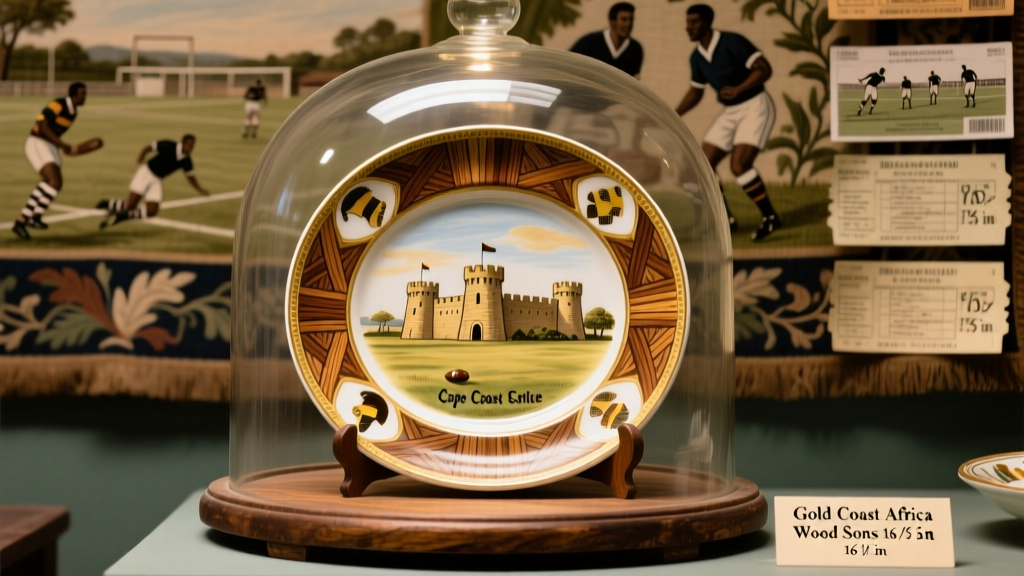
Staffordshire Platter Depicting Cape Coast Castle: A 16½-Inch Historical Artifact by Wood & Sons, Gold Coast Africa Motif
Randall Made Knives Model 10 Sportsman: Authenticating the Orlando, Florida-Built Hunting Knife with Brown Leather Scabbard
The W. Goebel Bonbon Jar: A Collector’s Deep Dive into German Porcelain Confectionery History
Marble Clambroth 20 White Lines Black Opaque Base (1 5/8") — Authentication, History, and Market Value Analysis
Shawnee Pottery Cookie Jar Drum Major: History, Identification, and Market Value of a Mid-Century Icon
John Jones: Authenticating the Legacy of a Forgotten NFL Defensive Lineman
Pests in Fabric: Identifying, Preventing, and Mitigating Insect Damage to Sports Memorabilia Textiles
Wedgwood Bowl Fairyland Luster No. 8 with Interior Inscriptions: A 1923 Authentication Case Study