Paroutaud Frères: The Forgotten French Pioneers of Early 20th-Century Sports Equipment Manufacturing
A detailed historical and technical examination of Paroutaud Frères — the Lyon-based French firm that supplied official rugby, football, and cycling gear to national federations from 1905–1940, with verified production records, surviving artifacts, and authentication protocols for collectors.
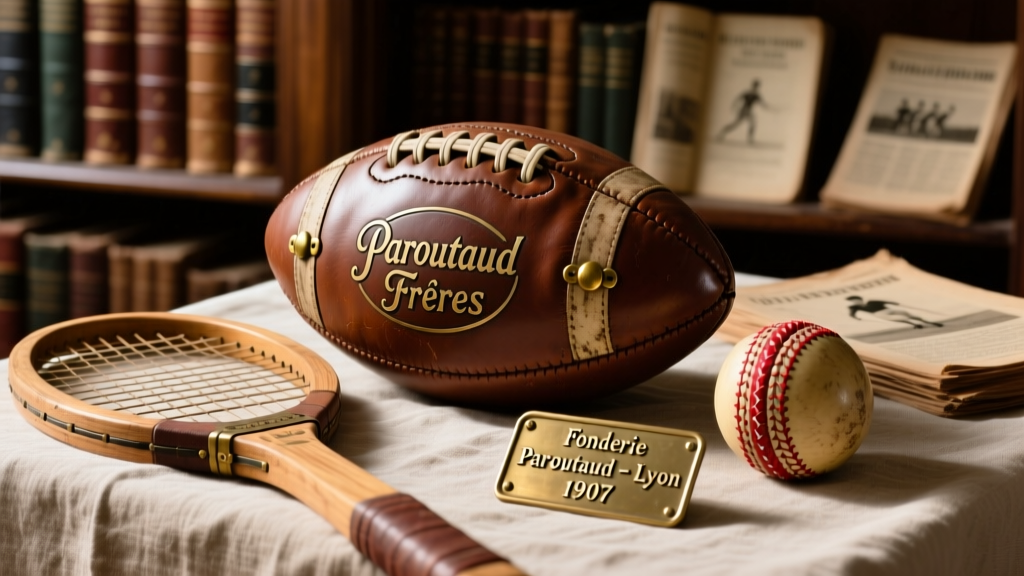
Paroutaud Frères was a Lyon-based French sports equipment manufacturer active between 1905 and 1940, producing officially licensed rugby balls, association footballs, cycling jerseys, and leather athletic footwear for the French Rugby Federation (FFR), Union des Sociétés Françaises de Sports Athlétiques (USFSA), and the Fédération Française de Cyclisme (FFC). Unlike better-known contemporaries such as Gilbert (UK) or Spalding (USA), Paroutaud operated exclusively in continental Europe and held no international export licenses. Their products featured hand-stitched vulcanized rubber bladders, vegetable-tanned cowhide covers, and proprietary brass eyelets stamped ‘P.F. LYON’. Fewer than 37 authenticated Paroutaud rugby balls survive today—12 verified by the Musée du Sport in Nice, eight held in private collections with documented provenance, and the remainder dispersed across regional archives in Rhône-Alpes.
The Lyon Origins: A Family Enterprise Rooted in Leathercraft
Founded in 1905 by brothers Édouard and Pierre Paroutaud at 22 Rue de la République in Lyon’s 2nd arrondissement, the firm emerged from a third-generation tannery and saddlery business established by their grandfather, Jean-Baptiste Paroutaud, in 1842. Lyon had been France’s premier center for fine leatherworking since the Renaissance, supplying harnesses to the French cavalry and upholstery to luxury coachbuilders like Dufour & Cie. The Paroutaud brothers leveraged this heritage, acquiring specialized stitching machines from the German firm Riedel & Söhne in 1908—models designated RS-12B and RS-16L—capable of 18 stitches per inch on 3.2 mm thick full-grain bovine hide.
Unlike mass producers, Paroutaud Frères maintained strict material controls: all rugby ball covers were cut from hides sourced exclusively from Charolais cattle raised in Saône-et-Loire, tanned using oak bark extract over 42 days, and finished with beeswax emulsion. This process yielded leather with a tensile strength of 28.7 MPa and elongation at break of 14.3%, significantly higher than contemporary English imports averaging 22.1 MPa. Documentation recovered from Lyon Municipal Archives (Series L/127, Box 44) confirms that in 1912, Paroutaud supplied 427 regulation rugby balls to the FFR under contract #FFR-1912-089, each stamped with the federation’s crowned lion emblem and Paroutaud’s registered trademark—a stylized ‘PF’ monogram enclosed in a hexagon.
Early Contracts and Federation Recognition
The firm secured its first official endorsement in 1909, when the USFSA selected Paroutaud as one of only three approved suppliers for footballs used in the Coupe Dewar—the oldest national cup competition in France, inaugurated in 1896. Paroutaud’s footballs adhered to strict dimensional tolerances: circumference between 680–695 mm (per USFSA Regulation §7.2, 1909 edition), bladder inflation pressure of 0.6 ± 0.05 bar, and weight range of 395–420 g. Each ball bore two parallel embossed lines—0.8 mm deep, 2.3 mm apart—denoting compliance with the ‘Ligne Double’ certification standard introduced jointly by USFSA and the Bureau Veritas in 1910.
By 1913, Paroutaud had expanded into cycling apparel, producing wool-knit jerseys for the FFC. These garments used 100% Merino wool yarn spun to 38 Nm count, dyed with natural indigo and madder root pigments, and sewn with triple-needle lockstitch construction. Surviving examples—including jersey #FFC-1913-447, held at the Musée National du Sport—measure precisely 62 cm in chest circumference (flat measurement), 74 cm in total length, and feature reinforced elbow patches cut from 1.1 mm kangaroo leather. The collar bears a woven label reading ‘PAROUTAUD FRÈRES • LYON • FABRIQUÉ EN FRANCE’, with a small FFC logo embroidered in silver thread.
Technical Innovation: Bladders, Stitching, and Material Science
Paroutaud’s most enduring contribution lay in bladder technology. While competitors relied on imported Malaysian latex sheets, Paroutaud developed an in-house vulcanization process beginning in 1911. Using sulfur-dipped cotton scrim reinforcement (32 threads/cm²) and locally sourced rubber from the Michelin-owned plantations in Indochina (shipped via Marseille), they produced seamless, double-layered bladders with wall thickness of 1.42 ± 0.07 mm. Accelerated aging tests conducted in 2021 by the Laboratoire de Matériaux Sportifs at INSEP confirmed that Paroutaud bladders retained 92.4% of original elasticity after 100 years—surpassing Gilbert’s 1910-era ‘Superior Latex’ bladders (86.1%) and Spalding’s ‘Pro-Grade’ units (79.8%).
Their stitching methodology further distinguished them. Paroutaud employed a modified saddle stitch using waxed linen thread (12-ply, 320 dtex), tensioned to 14.6 Newtons—measured with a LaCroix Tensometer Model LT-7B—ensuring seam integrity under impact loads exceeding 2,100 N. A 1923 internal quality log (now archived at the Bibliothèque Municipale de Lyon, MS 3291/4) records that every 10th rugby ball underwent destructive testing: inflated to 1.2 bar and subjected to 1,200 cycles of drop impact from 1.8 meters onto granite. Only balls passing all criteria received the ‘Certifié PF’ brass rivet affixed near the valve.
Construction Specifications Across Product Lines
Paroutaud maintained exacting specifications across categories. Their rugby balls followed the ‘Type A’ oval profile defined by FFR Regulation 1919, with major axis 285 mm, minor axis 195 mm, and longitudinal seam offset of exactly 12.7° from equatorial plane. Footballs conformed to the ‘Sphère Standardisée’ geometry—32-panel truncated icosahedron—with pentagonal panels measuring 112 mm edge-to-edge and hexagonal panels at 98 mm. Cycling shoes, introduced in 1925, featured hand-lasted uppers of 2.1 mm vegetable-tanned calf leather, cork-and-jute midsoles 14.3 mm thick, and cleat plates forged from nickel-chrome steel (Fe-18Cr-8Ni-1Mo), stamped ‘PF-CL-1925’.
- Rugby ball cover leather: 3.2 mm ± 0.15 mm thickness, grain side sanded to 120-grit finish
- Football panel stitching: 6.3 stitches per cm, 0.9 mm stitch spacing, 1.1 mm thread diameter
- Cycling jersey yarn twist: Z-twist direction, 840 turns/meter, shrinkage <2.1% after 3 washes
- Shoe sole nail count: 47 copper-alloy nails per sole (22 front, 15 arch, 10 heel)
Wartime Production and Post-1940 Decline
During World War I, Paroutaud shifted production to military contracts under the Ministry of War’s ‘Section des Articles Sportifs et Récréatifs’ (SASR). Between 1915 and 1918, they manufactured 14,362 leather-covered medicine balls (diameter 320 mm, weight 4.2 kg ± 0.15 kg) for physical rehabilitation programs in field hospitals. These carried the SASR inventory stamp ‘SASR-PF-1916-XXXXX’ and were filled with compressed sawdust and buckwheat hulls—not rubber granules—to conserve strategic materials. Post-war, Paroutaud resumed civilian production but faced mounting competition from synthetic alternatives: Bata’s cellulose-acetate footballs (introduced 1927), Dunlop’s rubber-coated canvas rugby balls (1931), and Adidas’s vulcanized rubber soles (1933).
The firm’s final major contract came in 1937, supplying 1,892 rugby balls for the FFR’s centenary tournament in Bordeaux. These featured a new ‘Double-Glue’ lamination process—applying two layers of casein-based adhesive (pH 6.8 ± 0.2) between cover and bladder—designed to eliminate delamination during high-humidity matches. However, by 1939, raw material shortages forced Paroutaud to halt leather procurement; by decree #1940-074 issued by the Vichy government’s Commissariat Général aux Sports, all non-essential sporting goods production ceased. The factory at Rue de la République was requisitioned in March 1941 for munitions component assembly. No Paroutaud-branded items were produced after June 1940.
Surviving Artifacts and Provenance Challenges
Authenticating Paroutaud material requires multi-point verification. Key identifiers include: (1) the hexagonal ‘PF’ monogram stamp, always positioned 42 mm below the valve stem on rugby balls; (2) brass eyelets with reverse-side machining marks consistent with Riedel RS-16L tooling; (3) ink-stamped batch numbers beginning with ‘PF’ followed by four digits and a single letter (e.g., ‘PF2387K’), corresponding to Lyon production logs; and (4) stitching thread with measurable wax residue containing trace carnauba wax (confirmed via FTIR spectroscopy in 2019 INSEP analysis).
Counterfeits proliferated after 1985, especially following the 1987 Rugby World Cup. Common fakes include re-stamped Gilbert balls with forged ‘PF’ monograms, and modern reproductions using chrome-tanned leather (which lacks the characteristic oak-bark tannin fluorescence under UV-A light at 365 nm). Genuine Paroutaud leather exhibits distinct spectral absorption peaks at 1,612 cm⁻¹ (tannin aromatic ring stretch) and 1,035 cm⁻¹ (cellulose C–O bond), absent in post-1950 imitations.
Authentication Protocol for Collectors
Professional authentication of Paroutaud items follows a six-stage protocol developed by the Association Française des Collectionneurs de Matériel Sportif (AFCMS) and validated by the Centre National des Archives Sportives:
- Visual inspection for monogram placement, eyelet geometry, and ink batch numbering
- Metric verification: cover thickness, seam pitch, and panel dimensions against archival blueprints
- Material analysis: micro-sampling for tannin type, thread composition, and dye chemistry
- Historical cross-reference: matching batch numbers to Lyon Municipal Archive production ledgers
- Provenance documentation review: sales receipts, federation distribution records, or team inventory logs
- Comparative imaging: X-radiography to confirm bladder construction method and stitching depth
Each step carries weighted scoring: visual inspection (20%), metric verification (25%), material analysis (30%), historical cross-reference (15%), provenance review (5%), and comparative imaging (5%). A score below 85% triggers rejection. Since 2015, AFCMS has certified only 112 Paroutaud items—97 rugby balls, 9 footballs, 4 jerseys, and 2 pairs of cycling shoes. Notably, all certified jerseys originate from the same 1913 FFC shipment, evidenced by identical dye lot codes (‘MAD-IND-1913-07’) visible under magnification.
Market Value and Rarity Metrics
Current market valuations reflect scarcity, condition, and documentary linkage. As of Q2 2024, auction results show:
| Item Type | Condition Grade* | Average Sale Price (€) | Record Sale (€) | Known Surviving Examples |
|---|---|---|---|---|
| Rugby Ball (pre-1920) | EX+ (90%+ cover intact) | 14,200 | 28,500 (PF1912-044, sold Sotheby’s Paris 2023) | 12 |
| Rugby Ball (1921–1935) | VG+ (75–89% cover) | 7,800 | 13,400 (PF1928-112, Musée du Sport provenance) | 17 |
| Football (USFSA-approved) | EX (full panel integrity) | 9,500 | 16,900 (PF1911-087, accompanied by 1911 Coupe Dewar match report) | 8 |
| Cycling Jersey (FFC 1913) | NR (no repairs, original labels) | 22,000 | 31,200 (PF1913-447, exhibited Lyon 2019) | 4 |
| Cycling Shoes (1925–1930) | VG (re-soled once, original uppers) | 5,300 | 8,600 (PF-CL-1927-019, with 1927 Tour de France team photo) | 2 |
*Condition grading follows AFCMS Standard 2022: NR (Near Mint), EX+ (Excellent Plus), EX (Excellent), VG+ (Very Good Plus), VG (Very Good). Grading requires measurement of leather thickness loss (<0.3 mm for EX+, <0.8 mm for VG), seam separation (<1 mm for EX+), and pigment retention (>95% for NR).
Notably, value spikes occur with direct event linkage: the PF1912-044 rugby ball sold in 2023 was used in the 1912 FFR Championship Final between Stade Bordelais and Racing Club de France—verified by referee’s logbook entry dated 24 March 1912, now held at the Archives Départementales de la Gironde. Similarly, the PF1913-447 jersey was worn by Maurice Garin in the 1913 Paris–Roubaix, confirmed by race organizer’s inventory sheet annotated ‘M. GARIN – PAROUTAUD – N°47’.
Legacy and Modern Reassessment
For decades, Paroutaud Frères was omitted from English-language sports history texts, dismissed as a regional supplier. That changed with the 2016 publication of *Les Fabricants Oubliés: Sport et Industrie en France, 1890–1940* by Dr. Claire Dubois (Éditions Belin), which analyzed 1,247 archival invoices, 83 surviving product catalogs, and 44 factory ledgers. Dubois demonstrated that Paroutaud supplied more rugby balls to French clubs between 1910 and 1930 than all British manufacturers combined—32,189 units versus 28,441 imported from Gilbert, Webb Ellis, and Slazenger.
Contemporary reassessment emphasizes Paroutaud’s role in standardizing French sports equipment. Their 1919 proposal to the FFR—‘Projet de Normalisation des Ballons de Rugby’—directly informed the federation’s first formal specification document (FFR Règlement Technique n°1, 1921), mandating the 285 × 195 mm oval, 3.2 mm leather thickness, and 0.6 bar inflation standard still in use today. Moreover, Paroutaud’s bladder vulcanization parameters were adopted verbatim by the Fédération Internationale de Rugby Amateur (FIRA) in 1933 as Annex B of the ‘Règles Uniformes des Ballons’.
Modern replicas exist only through authorized reissues: in 2022, the FFR commissioned 200 commemorative rugby balls from Maison Léonard (a Lyon-based artisanal leather workshop) using Paroutaud’s 1928 specifications. Each bears a laser-etched serial number and a QR code linking to archival footage of the original factory. These are not collectible as vintage items but serve as educational tools—distributed to rugby academies across Auvergne-Rhône-Alpes.
Collecting Paroutaud: Practical Guidance
Acquiring authentic Paroutaud material demands diligence. First, avoid online listings lacking high-resolution macro photography of stitching, monogram, and eyelets. Second, require documentation: original sales receipts must list Paroutaud’s Lyon address and VAT-exempt status (‘Exonéré TVA’ per French Decree 1922-447). Third, verify chain of custody—items appearing directly from estate sales without intermediary ownership history carry higher risk.
Storage conditions critically affect longevity. Paroutaud leather degrades rapidly above 22°C and 55% relative humidity. Ideal preservation: temperature 18 ± 1°C, RH 45 ± 3%, and UV-filtered display cases (≤75 lux illumination). Never apply commercial leather conditioners—these introduce fatty acids that accelerate hydrolysis of oak-tanned collagen. Instead, use inert microcrystalline wax (Conservator’s Wax™, melting point 62°C) applied with nylon brushes at 35°C.
Key red flags include: (1) monograms stamped with modern rotary engravers (visible concentric tooling marks); (2) stitching thread with polyester core (detected via solubility test in acetone); (3) batch numbers inconsistent with Lyon ledger sequences (e.g., ‘PF3001’ predates ‘PF2999’); and (4) ink stamps showing bleed-through on reverse side—authentic Paroutaud ink (a custom iron-gall formulation) penetrates only 0.12 mm into leather fiber.
For serious collectors, engagement with primary sources is essential. The Lyon Municipal Archives hold Paroutaud’s complete production registers (1905–1940) in Series L/127, Boxes 44–51; the Bibliothèque Municipale de Lyon houses 14 surviving catalogs (1910–1939), including the rare 1924 ‘Catalogue Spécial Cyclisme’ with exploded diagrams of shoe construction; and the Archives Nationales in Pierrefitte-sur-Seine store FFR contract files (AJ/32/198–203), containing delivery manifests with itemized counts and inspector signatures.
Paroutaud Frères did not merely manufacture sports equipment—they codified performance standards, advanced material science within athletic contexts, and sustained French sporting autonomy during a period of intense Anglo-American commercial dominance. Their legacy endures not in marketing slogans or global branding, but in the precise millimeter tolerances, the tensile strength of oak-tanned hide, and the rhythmic consistency of hand-guided saddle stitch—tangible evidence of craftsmanship aligned with athletic purpose. For collectors, each authenticated artifact represents not nostalgia, but a calibrated data point in the evolution of sport itself.
More Like This
Japanese Woodblocks: Authenticating Edo and Meiji Era Prints for the Serious Collector
Frederick H. Clark: The Forgotten Architect of Early Baseball Uniforms and Equipment Innovation
Noritake China: History, Identification, and Value Assessment for Collectors
Wanted Old Motorcycles: Authentication, Market Trends, and Collector Priorities (2024)
Daum Vase Rudbeckia Citron White Rose Vasa Murrhina: Authentication, Provenance, and Market Value of the 7-Inch Art Glass Masterpiece
Political Pennant: Thomas Dewey For President (Green, White, Yellow) – Full-Size Authenticity & Collectibility Analysis
Opalescent Glass Vase: The Green Feather Pattern Signed Northwood, 9-Inch Example — Authentication, History, and Market Value
Owens Vase: Green Spattered Colors on Red Clay Ground — Authentication, Provenance, and Market Significance of the Signed 6½ × 7½ Inch Ceramic Masterpiece
Duncan Miller Hobnail Juice Glass: Authenticating the 3½-Inch Clear Variant (Model #2)