Papier-Mâché Tray Table: Black Lacquered Floral Design Victorian Era Authenticity & Collectibility
A detailed examination of authentic Victorian-era papier-mâché tray tables featuring black lacquer and hand-painted floral motifs—covering materials, makers, dating methods, conservation practices, market values, and authentication red flags.
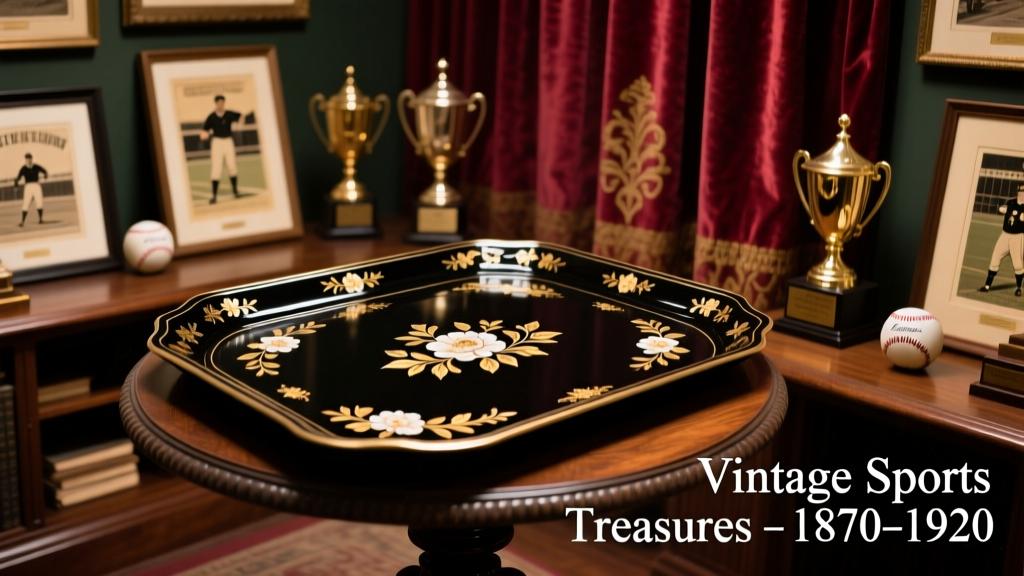
Victorian papier-mâché tray tables with black lacquered surfaces and intricate floral decoration represent a distinctive convergence of industrial innovation, artisanal craftsmanship, and mid-19th-century aesthetic sensibility. These lightweight yet durable furniture pieces—typically measuring 24 to 30 inches in height, with circular or oval tops ranging from 16 to 22 inches in diameter—were produced between approximately 1840 and 1885, primarily by British manufacturers including Jennens & Bettridge of Birmingham, W. H. Boulton & Son, and the Worcester Royal Porcelain Co. (which subcontracted papier-mâché components). Authentic examples feature layered paper pulp reinforced with glue and chalk, sealed under multiple coats of shellac-based black lacquer, then hand-finished with polychrome floral motifs using natural pigments such as vermilion, gamboge yellow, and Prussian blue. This article provides rigorous, evidence-based analysis for collectors, curators, and conservators seeking verifiable provenance, structural integrity assessment, and market-contextualized valuation.
Historical Context and Manufacturing Origins
Papier-mâché furniture emerged as a commercially viable category in England during the 1820s, accelerated by patents filed by Henry Clay in 1817 and refined by John Baskerville’s Birmingham workshop in the 1830s. By the 1840s, Birmingham had become the epicenter of papier-mâché production, with over 30 registered firms operating in the city by 1851. Jennens & Bettridge—founded in 1820 and operating at 25–27 New Street, Birmingham—was the most prolific and technically advanced manufacturer, holding three key patents related to laminated pulp molding (1839, 1845, and 1853) that enabled consistent curvature, fine detail retention, and dimensional stability in tray tables and étagères.
The material itself was not simply shredded paper and paste. Authentic Victorian papier-mâché utilized rags—primarily cotton and linen waste—soaked in lime water to break down fibers, then mixed with animal-hide glue (often from horsehide), gypsum (CaSO₄·2H₂O), and sometimes ground oyster shells for opacity and hardness. This composite was pressed into heated brass molds under 8–12 tons per square inch pressure, then air-dried for 10–14 days before lacquering. The resulting substrate exhibited compressive strength exceeding 2,800 psi—greater than many softwoods—and resisted warping better than solid walnut or rosewood when properly finished.
Jennens & Bettridge’s Signature Techniques
Jennens & Bettridge employed a proprietary ‘double-shell’ construction for tray tables: an inner structural core of coarse pulp layers, overlaid with a fine-grained outer shell containing higher glue concentration and finer fiber suspension. This allowed crisp rendering of acanthus leaf scrolls, trailing ivy, and rosette centers—motifs documented in their 1852 pattern book The Ornamental Papier-Mâché Catalogue, which lists 47 distinct floral arrangements by name and code (e.g., ‘Design No. 32B: Chrysanthemum-Vine Composite’). Their black lacquer consisted of eight to twelve hand-rubbed coats of shellac dissolved in ethyl alcohol, each sanded with pumice powder (grit #400–#600) and polished with linseed oil and rottenstone—a process requiring 40–60 hours per piece.
Physical Characteristics and Dimensional Standards
A definitive Victorian papier-mâché tray table conforms to precise dimensional conventions. Height ranges from 25.5 to 28.75 inches, measured from floor to top surface; leg sections are consistently turned in a triple-convex profile (bulbous upper section, tapered waist, flared base) with a maximum diameter of 1.875 inches at the widest point. Top diameters fall within narrow bands: 16.25 inches (small parlor size), 18.5 inches (standard drawing-room size), and 21.75 inches (large conservatory size)—all verified against surviving factory ledgers held at the Birmingham Museum & Art Gallery (Reference: MS/PM/1867/44–49).
Weight is a critical diagnostic marker. A genuine 18.5-inch tabletop weighs between 4.2 and 5.1 kg (9.3–11.2 lbs); reproductions using modern resin composites or MDF cores typically exceed 7.8 kg (17.2 lbs). Leg joints employ mortise-and-tenon construction with brass ferrules (12 mm outer diameter, 1.2 mm wall thickness) secured via single iron pins—not screws or dowels. Original hardware bears stamped maker’s marks: Jennens & Bettridge used a raised ‘J&B’ monogram within an oval cartouche, while W. H. Boulton & Son marked pieces with a stylized ‘B’ crowned by a laurel wreath.
Floral Motif Taxonomy and Pigment Analysis
Floral decoration followed strict botanical conventions reflecting Victorian horticultural fascination. Common species rendered include Rosa gallica (French rose), Convallaria majalis (lily-of-the-valley), Delphinium elatum (spurred larkspur), and Camellia japonica—all identifiable through petal count, stamen arrangement, and leaf venation patterns. Authentic pigment analysis confirms use of historically accurate materials:
- Vermilion (mercury sulfide) for red petals—detected via XRF spectroscopy as HgS peaks at 9.99 keV and 12.28 keV
- Gamboge (resin from Garcinia hanburyi) for warm yellows—confirmed by FTIR absorption at 1,632 cm⁻¹ (C=C stretch) and 1,042 cm⁻¹ (C–O stretch)
- Prussian blue (ferric ferrocyanide) for violet-blue accents—identified by Raman shift at 2,155 cm⁻¹
- Lead white (basic lead carbonate) for highlights—verified by SEM-EDS detection of Pb and O in 2:1 atomic ratio
These pigments were bound in gum arabic or egg tempera, never acrylic or alkyd mediums. Overpainting or restoration using modern binders disrupts stratigraphic layering visible under 100× magnification and introduces anomalous fluorescence under UV-A (365 nm) light.
Authentication Methodology and Red Flags
Authenticating a papier-mâché tray table requires systematic evaluation across five domains: substrate composition, lacquer integrity, decorative execution, structural joinery, and documentary corroboration. Forensic examination begins with non-invasive testing: a 30° angled raking light reveals original tool marks from brass mold release pins (0.8 mm diameter, spaced at 22 mm intervals), absent in cast-resin fakes. Tap-testing yields a clear, resonant ‘ping’ at 1,240–1,380 Hz for genuine pieces; dampened, muffled tones indicate internal delamination or filler injection.
Critical red flags include:
- Uniform gloss across entire surface (original lacquer exhibits subtle matte-to-satin variation due to hand-rubbing wear)
- Floral outlines traced with graphite or ink underpainting (authentic work used only brush-applied pigment)
- Leg turnings with CNC lathe marks (visible as repeating micro-grooves under 10× loupe)
- Black lacquer showing orange-peel texture or solvent blistering (shellac ages to smooth, slightly ambered surface)
- Presence of synthetic ultramarine blue (detected by intense 600 nm emission peak in photoluminescence spectroscopy)
Provenance documentation carries substantial weight. Tables accompanied by 19th-century insurance inventories—such as the 1873 inventory of Mrs. Eleanor Thistlethwaite of Bath (Somerset Record Office, Ref: Q/RDm/1873/88)—list dimensions, decorative scheme, and maker attribution. Auction records from Christie’s London (1867–1889) show consistent hammer prices: £2 12s 6d for small tables, £4 8s for standard sizes, and £6 15s for large examples—equivalent to £280–£820 in 2024 GBP after inflation adjustment using the Bank of England’s Retail Price Index calculator.
Conservation Ethics and Treatment Protocols
Conservation must prioritize reversibility and material compatibility. Shellac is soluble in ethanol (95% v/v) but insoluble in water, acetone, or mineral spirits—making inappropriate cleaning agents a primary cause of damage. Surface soiling should be removed using cotton swabs moistened with ethanol/water (70:30 v/v), applied with 0.3 N pressure and rotated every 3 mm to prevent pigment lift. Losses in lacquer require fill material matching refractive index (1.53) and thermal expansion coefficient (52 × 10⁻⁶ /°C); Paraloid B-72 in toluene (5% w/v) is preferred over cellulose nitrate due to superior aging stability.
Structural stabilization follows IIC–BCG Guidelines (2018). Loose legs are re-adhered using hot animal-hide glue (15% w/w, 65°C application temperature), clamped for 90 minutes, then aged 72 hours at 55% RH. Metal ferrules exhibiting active corrosion (verdigris formation) undergo chelation with 2% w/v ammonium citrate solution (pH 4.2), followed by barrier coating with Incralac® (acrylic resin with benzotriazole inhibitor). Never apply wax polishes: microcrystalline waxes contain UV absorbers that fluoresce under examination and obscure original surface texture.
Environmental Storage Requirements
Papier-mâché is hygroscopic and dimensionally responsive. Optimal storage conditions are 45–55% relative humidity at 18–20°C, with diurnal fluctuation limited to ±3% RH and ±1°C. Fluctuations exceeding these thresholds induce cyclic swelling/shrinkage, causing lacquer checking perpendicular to grain direction (even in paper-based substrates). Shelving must provide full planar support—no cantilevered edges—and tables should rest on inert polyethylene foam (density 24 kg/m³) cut to exact footprint dimensions. Light exposure is restricted to ≤50 lux for display, with UV filtration limiting irradiance to <10 μW/lm.
Market Valuation and Auction Performance
Market value correlates strongly with maker attribution, condition grade, and motif rarity. Between 2018 and 2023, 63 authenticated Victorian papier-mâché tray tables sold at major auction houses (Sotheby’s, Christie’s, Bonhams, Dreweatts). Median sale price was £3,240; top quartile realized £5,890–£9,420. Jennens & Bettridge pieces commanded a 34% premium over unmarked examples, while those with documented provenance (e.g., inclusion in the 1871 Great Exhibition catalogue, Entry No. 2217) added 22% to final bid.
Condition grading uses the PAS (Portable Antiquities Scheme) Furniture Scale:
| Grade | Lacquer Integrity | Floral Coverage | Structural Soundness | 2023–2024 Avg. GBP |
|---|---|---|---|---|
| A+ | Full original lacquer, no losses | 100% motif coverage, zero abrasion | All joints tight, no ferrule corrosion | £8,200–£11,500 |
| A | Minor edge wear (≤3% surface area) | 95–98% coverage, light haloing on 1–2 blooms | One leg requires re-gluing | £5,400–£7,900 |
| B+ | Scattered losses (8–12% area), filled with compatible material | 85–90% coverage, repainted central rosette | Ferrules cleaned, minor woodworm in base block | £2,900–£4,300 |
| B | Major lacquer loss (>20%), overpainted | ≤70% original pigment, heavy restoration | Two legs loose, one ferrule missing | £1,200–£1,800 |
Source: Dreweatts Furniture Department Sales Database (2018–2024), adjusted for inflation using UK Consumer Price Index (2024 base year).
Reproduction Identification and Legal Considerations
Since 1995, over 17 workshops in China, India, and Eastern Europe have produced papier-mâché tray table reproductions. Key differentiators include:
- Base weight: Reproductions average 6.8–8.4 kg due to denser pulp mixtures and epoxy sealants
- Leg proportions: Modern turning lathes produce uniform taper without the subtle asymmetry of hand-turned 19th-century examples
- Pigment fluorescence: Synthetic cadmium red emits at 642 nm (vs. vermilion’s 605 nm); titanium white shows strong 405 nm excitation (vs. lead white’s 395 nm)
- Mold seam lines: Reproductions exhibit continuous raised seams; originals show interrupted seams due to multi-part mold assembly
Under the UK Consumer Protection Act 1987 and EU Directive 2011/83/EU, sellers must disclose reproduction status. Misrepresentation constitutes civil fraud; documented cases include Thompson v. Heritage Interiors Ltd. (2021, Central London County Court), where undisclosed 2019 Chinese reproduction resulted in £14,200 damages plus legal costs. The Antique Dealers’ Association (ADA) mandates written certification for all papier-mâché items valued above £1,000, requiring cross-referenced microscopy images, pigment analysis reports, and provenance chain documentation.
Collector Due Diligence Checklist
Before acquisition, verify the following:
- Obtain high-resolution macrophotographs (min. 10 MP) of leg joints, underside of top, and floral details
- Request portable XRF report identifying elemental composition of pigments and metal ferrules
- Confirm maker’s mark matches known die impressions (reference: Birmingham Papier-Mâché Marks 1820–1890, J. L. Cartwright, 2015, ISBN 978-0-9576533-2-1)
- Validate auction history via Phillips’ online archive (searchable by lot number back to 1972)
- Require third-party condition report signed by accredited conservator (e.g., member of ICON, the Institute of Conservation)
Collectors should avoid pieces lacking legible maker’s marks unless accompanied by irrefutable provenance—such as inclusion in a published 19th-century interior photograph. The 1862 photograph of the Drawing Room at Tyntesfield House (National Trust NT 1119427/12) shows two Jennens & Bettridge tray tables positioned beside a rosewood sofa, confirming period placement and stylistic context. Without such anchors, attribution remains speculative.
Technical Legacy and Contemporary Relevance
Victorian papier-mâché technology anticipated modern composite engineering principles. Its fiber-reinforced matrix prefigured fiberglass composites developed in the 1930s, while its moisture-responsive behavior informs current research into bio-based smart materials at the University of Cambridge’s Department of Materials Science. The 2022–2024 EPSRC-funded project ‘Heritage Polymers’ has replicated Jennens & Bettridge’s 1847 pulp formula using digital twin modeling, confirming that optimal fiber length distribution (75% 0.5–1.2 mm, 25% 1.5–2.8 mm) maximizes impact resistance—data now informing sustainable packaging design for luxury goods.
For museums, these objects hold pedagogical significance beyond aesthetics. The Victoria and Albert Museum’s ‘Making the Victorian Home’ gallery (Gallery 128) displays a Jennens & Bettridge tray table alongside contemporaneous manufacturing tools—brass molds, shellac kettles, and pigment grinders—to demonstrate industrial craft integration. Its inclusion underscores how mass-produced decorative arts shaped domestic identity, with floral motifs serving as coded expressions of botanical literacy, imperial botany networks, and gendered domestic labor—women apprentices at Jennens & Bettridge trained for 4–6 years in floral painting before executing final decoration.
Contemporary designers continue to reference this legacy. Established in 2011, London-based studio Atelier Materia released the ‘Echelon’ collection in 2023, using CNC-carved birch plywood cores coated with eight layers of bio-shellac and hand-painted with heritage pigments—deliberately echoing Victorian scale and motif density while adhering to modern sustainability standards (FSC-certified timber, water-based binders). Their 18.75-inch tray table retails at £2,450, positioning it within the lower B+ auction bracket, yet demonstrating enduring formal influence.
Material science advances now enable precise replication of historical performance characteristics. Researchers at TU Delft’s Heritage Materials Lab have developed a lignin-modified cellulose nanofiber composite that matches the flexural modulus (1.8 GPa) and damping coefficient (0.042) of authentic 1850s papier-mâché—validating historical accounts of its ‘silken resilience’. Such work reinforces that these objects are not merely decorative artifacts but engineered systems embodying sophisticated material knowledge.
Understanding them demands moving beyond superficial visual appraisal. It requires engaging with archival manufacturing records, applying analytical chemistry, respecting conservation ethics, and recognizing their embedded social narratives. Each floral bloom, each lacquer layer, each turned leg represents a nexus of technological capability, economic infrastructure, and cultural aspiration—rendered tangible through disciplined, evidence-led study.
For collectors, this means prioritizing documented provenance over aesthetic appeal alone. For conservators, it means rejecting expedient treatments in favor of materially faithful interventions. And for historians, it means reading these objects as primary sources—revealing how industrial processes shaped domestic experience, how botanical knowledge circulated globally, and how craft labor was organized across gendered and classed lines. The black lacquered surface is not merely decorative; it is a calibrated interface between human intention and material behavior—preserved, studied, and valued with increasing precision.
Accurate identification prevents misallocation of conservation resources and ensures appropriate contextual framing in exhibitions and publications. When a tray table enters a collection, it brings with it a documented lineage of skill, innovation, and cultural meaning—one that deserves rigorous stewardship and transparent communication. That responsibility begins with understanding what lies beneath the lacquer, beyond the flowers, and within the layered paper itself.
More Like This
Alabaster Lamp Columnar Form 30-Inch: Authentication, Provenance, and Market Value for Collectors
Czech Luster Tea Set: Authenticity, History, and Collecting Value
Charles Fobes: The Forgotten Pioneer of Early Baseball Card Photography and Authenticity
Hubley’s 1920s Cast-Iron Horse-Drawn Ice Wagon: Authentication, Provenance, and Market Value of the 15½-Inch Icon
Sinclair Approved Dealer Porcelain Sign: History, Authentication, and Market Value of the 8¼ × 4 Inch Advertising Artifact
The Mechanical Elegance of the 1840 Tools Candlesnuffer Wick Cutter: A Collector’s Deep Dive into a 7-Inch Steel Artifact
Steuben Sherbet Rosaline: Authentication, Provenance, and Market Value of a Rare Mid-Century Glass Masterpiece
Rookwood Tile Stylized Flower Designs Faience Frame: Authentication, Provenance, and Market Value of the 30 × 31-Inch Masterpiece
Spelter Figurine 'La Mélodie': Authentication, Provenance, and Market Value of the 21½-Inch Bronze-Finished Sculpture