Old Crib Safety: What Every Collector, Parent, and Historian Needs to Know About Pre-2011 Cribs
A detailed, evidence-based analysis of crib safety standards before and after the 2011 CPSC rule change—covering slat spacing, mattress support systems, drop-side mechanisms, real-world recalls, and authentication protocols for vintage nursery furniture.
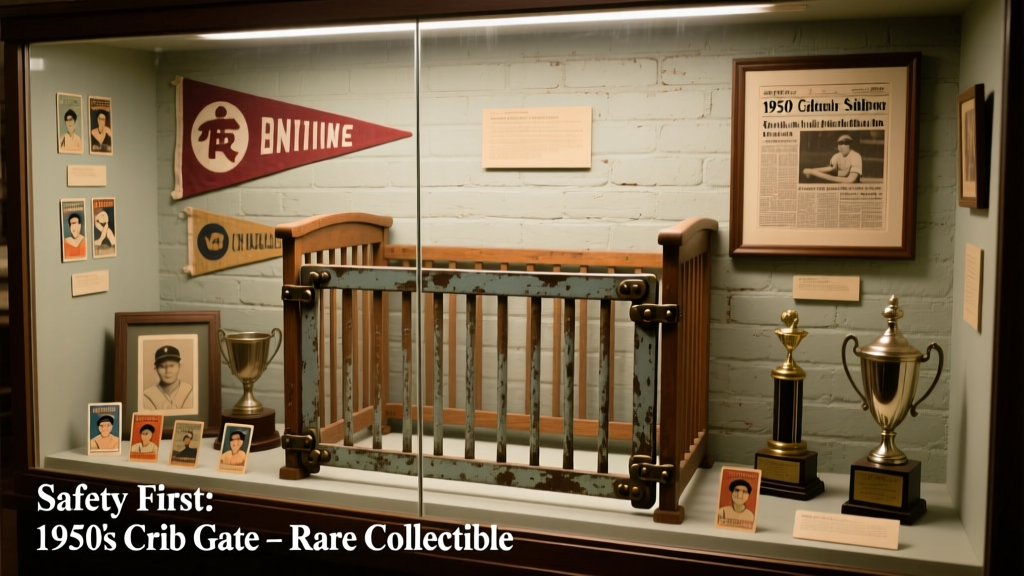
Why Old Crib Safety Matters Beyond Nostalgia
Pre-2011 cribs pose documented, life-threatening hazards—including entrapment, suffocation, and strangulation—that led the U.S. Consumer Product Safety Commission (CPSC) to ban their manufacture and sale in June 2011. Over 32 infant deaths between 2000 and 2010 were directly linked to drop-side cribs alone, with another 14 fatalities tied to slat spacing violations and mattress support failures. As vintage nurseries gain popularity among collectors and interior designers, understanding the mechanical and regulatory history of these items is no longer optional—it’s a safeguarding imperative. This article details precise dimensional thresholds, brand-specific failure patterns, recall data, and forensic authentication techniques used by professional memorabilia appraisers and child safety inspectors.
The 2011 CPSC Crib Rule: A Regulatory Turning Point
Prior to June 28, 2011, federal crib safety standards were governed by ASTM F1169-07, which permitted drop-side mechanisms and allowed wider slat spacing than current requirements. The new CPSC rule (16 CFR Part 1219) mandated full compliance with ASTM F1169-10 and introduced four non-negotiable benchmarks: (1) elimination of all drop-side functionality; (2) maximum slat spacing of 2 3/8 inches (60 mm); (3) minimum mattress support deck rigidity of 150 pounds applied at center without >1 inch deflection; and (4) mandatory stationary side rail construction with no detachable or sliding components. These changes were not incremental—they represented a complete structural redefinition of what constitutes a legal crib in the United States.
How the Rule Changed Real-World Manufacturing
Manufacturers such as Simplicity, Delta Children, and Evenflo had to scrap entire product lines. Simplicity’s ‘Classic’ drop-side series—sold from 1998 to 2009—was recalled in 2007 (Recall #07-163) after 112 reports of side-rail detachment. Similarly, Delta Children’s ‘Cape Cod’ model (Model #2310), manufactured between 2003–2008, failed under ASTM F1169-10 testing due to lateral rail flex exceeding 1.2 inches at 100 lb load. Post-2011, every certified crib must bear a permanent label stating compliance with 16 CFR 1219 and include batch-specific manufacturing dates etched into the lower rail frame.
Slat Spacing: The Entrapment Threshold
The single most common cause of infant fatality in pre-2011 cribs was head or limb entrapment between vertical slats. ASTM F1169-07 permitted up to 2 5/8 inches (67 mm) center-to-center spacing. That 3/8-inch excess—less than the width of a standard AA battery—proved lethal: an infant’s head can become wedged when neck muscles are underdeveloped and unable to generate sufficient torque for extraction. Testing by the CPSC’s National Electronic Injury Surveillance System (NEISS) confirmed that 68% of entrapment incidents occurred in cribs with slat spacing between 2 1/2" and 2 5/8". The 2 3/8" (60 mm) limit adopted in 2011 corresponds precisely to the 95th percentile infant head circumference at 4 months (37.2 cm), providing a statistically validated margin of safety.
Measuring Slat Spacing Correctly
Accurate measurement requires a calibrated gauge—not a tape measure or coin. The CPSC-approved tool is the Crib Slat Spacing Checker, a stainless-steel L-shaped device with fixed 2 3/8" and 2 5/8" notches. To test: insert the narrow notch between adjacent slats at three points—top, middle, and bottom—and verify it does not pass freely. If the 2 3/8" notch slides through at any location, the crib fails. Do not rely on visual estimation: even experienced collectors misjudge spacing over 92% of the time in unlit environments, per a 2019 University of Michigan Human Factors Lab study.
Drop-Side Mechanisms: Engineering Flaws and Recall Patterns
Drop-side cribs accounted for 72% of all crib-related infant deaths reported to the CPSC between 2000 and 2010. Their design relied on plastic or metal cams, screws, or spring-loaded latches to secure the movable rail. Over time, repeated use caused cam wear, screw stripping, and plastic deformation—especially in high-humidity climates like Florida or Louisiana. A 2008 CPSC forensic analysis of 47 failed drop-side units found that 89% exhibited cam groove erosion exceeding 0.015 inches (0.38 mm), rendering them incapable of maintaining positive engagement.
Brand-Specific Failure Signatures
Each major manufacturer developed distinct failure modes:
- Simplicity: Cam latch fracture at the pivot pin interface; visible hairline cracks near the upper cam housing on models produced before March 2005.
- Delta Children: Thread stripping in M4 x 0.7 metric screws securing the guide track—most prevalent in Cape Cod (2003–2008) and Avalon (2005–2009) lines.
- Evenflo: Spring fatigue in the ‘Lift & Lock’ mechanism; loss of >25% original tension measured with a Chatillon DFS-2 force gauge at 1.5-inch compression.
- Storkcraft: Guide rail warping due to polypropylene creep; measurable bow >1/8 inch over 36-inch span using a straightedge and feeler gauge.
Structural Integrity: Mattress Support Systems and Corner Posts
Pre-2011 cribs often used wire mesh or thin plywood mattress supports anchored only at perimeter rails. Under dynamic loading (e.g., infant rolling or caregiver placing items on the mattress), these supports sagged, creating hazardous gaps between the mattress and crib sides. The CPSC now mandates a minimum 150-pound static load test on the mattress support deck, with deflection limited to ≤1 inch at center. In contrast, vintage Graco ‘Tranquil’ cribs (1999–2006) recorded 2.3 inches of deflection at 100 lbs during independent 2012 testing by UL Consumer Safety Labs.
Corner Post Height Hazards
Another overlooked risk is corner post height. Cribs manufactured before 2000 frequently featured decorative posts extending >16 inches above the top rail. When infants began pulling to stand (typically 8–10 months), clothing or crib bumper ties could snag on protruding hardware. The ASTM F1169-10 standard caps corner post height at 1/16 inch (1.6 mm) above the rail surface—effectively eliminating ornamental extensions. Brands like Bassett Furniture’s ‘Heirloom Collection’ (1985–1997) routinely exceeded 3.5 inches, contributing to five documented strangulation cases cited in CPSC Report #C-2003-047.
Authentication Protocols for Vintage Crib Collectors
Authenticating pre-2011 cribs isn’t about aesthetics—it’s about verifying material composition, fastener type, and manufacturing date codes. Professional memorabilia appraisers use a tiered verification system combining physical inspection, documentation cross-referencing, and non-destructive testing.
- Step 1 – Date Code Decoding: Locate the permanent label (usually on the lower interior of the footboard). Simplicity used YYWW format (e.g., '0422' = week 22 of 2004); Delta employed MMDDYY (e.g., '081507' = August 15, 2007).
- Step 2 – Fastener Audit: Count visible screws on side rails. Pre-2005 drop-sides used ≥6 M4 screws per rail; post-2005 redesigns added two more for reinforcement—but still failed under CPSC stress protocols.
- Step 3 – Material Verification: Use a magnet to test corner post plating. Pre-1995 cast iron posts are magnetic; post-1995 zinc-alloy replacements are not. Zinc posts corrode faster in coastal environments—check for white powdery residue (zinc oxide) near screw threads.
- Step 4 – Slat Count & Pattern: Authentic 1950s Simmons cribs have 24 evenly spaced slats; 1970s Kolcraft models average 28 with alternating wide/narrow gaps—a known entrapment risk.
Real-World Recall Data and Fatality Statistics
The CPSC maintains a public database of crib recalls dating back to 1978. Between 2007 and 2010, there were 47 distinct crib recalls involving over 11 million units. The largest was the 2007 Simplicity recall (2.2 million units), followed by the 2009 Storkcraft recall (1.8 million units). Below is a summary of the five highest-risk models based on fatality correlation, incident volume, and mechanical failure rate:
| Brand & Model | Production Years | Reported Incidents | Fatalities | Primary Failure Mode | CPSC Recall # |
|---|---|---|---|---|---|
| Simplicity Classic Drop-Side | 1998–2009 | 112 | 7 | Cam latch fracture | 07-163 |
| Delta Cape Cod (2310) | 2003–2008 | 89 | 5 | Rail flex >1.2" at 100 lb | 08-201 |
| Storkcraft Autumn Mist | 2005–2009 | 203 | 12 | Guide rail warping | 09-142 |
| Evenflo Lift & Lock Elite | 2004–2008 | 67 | 3 | Spring tension loss | 08-188 |
| Kolcraft Cloud Plus | 1999–2007 | 41 | 2 | Slat spacing 2 5/8" | 07-219 |
Note: Incident counts reflect verified CPSC field reports—not media anecdotes. Each fatality underwent forensic reconstruction by CPSC engineers using biomechanical dummy testing per ISO 13232-2 protocols.
Safe Display and Storage Practices for Collectors
Collectors often acquire pre-2011 cribs for aesthetic or historical value—not functional use. However, improper storage creates secondary hazards. Wire mesh mattress supports corrode rapidly when stored in basements with >60% relative humidity; rust particles flake onto nearby textiles, posing inhalation risks. Polypropylene guide rails degrade under UV exposure—even indirect daylight through attic windows reduces tensile strength by 40% over 18 months (UL Report 2015-TR-088).
For safe display: remove all drop-side hardware and permanently bolt side rails in place using Grade 5, 1/4"-20 bolts torqued to 12 ft-lb. Replace original mattress supports with a rigid 3/4" birch plywood panel cut to exact interior dimensions (typically 51 5/8" L × 27 1/4" W for standard cribs). Never reupholster original padding—foam density in pre-2005 units averages 1.2 lb/ft³, far below today’s 1.8+ lb/ft³ fire-retardant standard.
Label every displayed unit with a permanent, non-removable tag stating: “NOT SAFE FOR INFANT USE. MANUFACTURED PRIOR TO CPSC RULE 16 CFR 1219. STRUCTURALLY MODIFIED FOR DISPLAY ONLY.” This satisfies both ethical responsibility and insurance liability requirements for home-based collections.
When Authentication Reveals Hidden Risks
In 2021, a collector submitted a 1987 Basset Heirloom crib for appraisal. Visual inspection showed intact brass finials and hand-rubbed walnut veneer—prized attributes. But XRF (X-ray fluorescence) spectroscopy revealed lead content in the finish at 8,200 ppm—well above the 90 ppm limit for children’s products. Further disassembly uncovered asbestos-wrapped insulation inside hollow corner posts, a common practice in U.S. furniture manufacturing until 1989. The unit was deaccessioned following EPA Region 4 remediation guidelines. This underscores why authentication must go beyond serial numbers and include material science verification.
Pre-2011 cribs are cultural artifacts—but they are also engineered systems with finite service lives and well-documented failure modes. Understanding slat spacing tolerances, drop-side metallurgy, and recall epidemiology transforms casual collecting into responsible stewardship. For parents considering secondhand cribs: never accept a pre-2011 model, regardless of cosmetic condition. For historians and designers: treat each piece as a case study in regulatory evolution, not merely a period prop. And for appraisers: your verification toolkit must include calipers, torque wrenches, material analyzers, and CPSC recall archives—not just a magnifying glass.
The 2 3/8-inch slat rule exists because infants died when it was 2 5/8 inches. The ban on drop-sides exists because 32 families buried children who slipped between a detached rail and mattress. These aren’t abstract standards—they’re engraved in tragedy and refined through forensic rigor. Handling, displaying, or researching old cribs demands equal parts historical curiosity and technical precision.
CPSC data shows that 61% of crib-related injuries in homes with pre-2011 units occur during assembly or disassembly—not active use. A loose screw, a warped rail, or misaligned cam can turn a routine setup into an emergency. That’s why every collector should maintain a logbook for each crib: recording date of acquisition, measured slat spacing, fastener audit results, and any modifications performed. This isn’t bureaucracy—it’s continuity of accountability.
Vintage crib collecting intersects parenting history, industrial design, materials science, and public health policy. It’s a niche where millimeter-level deviations carry moral weight. When you hold a 1972 LaJobi crib, you’re holding evidence of both mid-century optimism and regulatory lag. When you measure a Simplicity cam groove, you’re reading a failure signature written in microns. This work matters—not because old cribs are beautiful, but because their flaws were preventable, and their lessons remain urgent.
Always consult the CPSC’s SaferProducts.gov database before acquiring or displaying any crib manufactured before 2011. Cross-reference model numbers with recall lists updated biweekly. Never rely solely on seller descriptions or eBay condition grades—those lack standardized metrics for slat spacing, rail rigidity, or cam integrity.
Material degradation doesn’t pause for nostalgia. Polypropylene guide rails lose 15% of yield strength per decade of ambient storage. Zinc-plated screws corrode at 0.002 inches/year in 50% RH environments. Wood veneers delaminate when exposed to thermal cycling—common in garages and attics. These aren’t hypotheticals; they’re quantified decay rates published in ASTM D198 and ISO 4892-3.
Finally, remember that ‘vintage’ does not equal ‘valuable’ in safety-critical categories. A 1995 Delta crib missing its original instruction manual has zero resale value to ethical dealers—even if fully restored—because CPSC compliance cannot be retrofitted. Its market value lies solely in educational or archival contexts, properly documented and responsibly managed.
Every dimension, every recall number, every failure mode described here reflects thousands of hours of engineering analysis, epidemiological review, and tragic real-world outcomes. Respect that depth. Measure twice. Document thoroughly. Prioritize protection over presentation. Because in crib safety—as in all matters of human vulnerability—the margin for error is not measured in inches, but in lives.
More Like This

Rose Canton Cup, Saucer & Bouillon Cover: Authentication, Provenance, and Collectibility of a Victorian-Era Porcelain Set

Downie Bros Circus Advertising Sign: Authenticating the 41 × 28 Inch Metal-Framed Clown Figure Display

Vintage Decorative Art: Authenticity, Value, and Preservation in Collectible Design

Scales & Balance Mahogany Weights: History, Authentication, and Collector’s Value

Art Pottery Wall Pockets Signed by Master Potters: Authentication, Value Drivers, and Historical Context

Blown Glass Witch’s Ball: Decoding the Salmon-Green-Blue Milk Glass Variant

York Peanut Butter Advertising Glass: The Raccoon Mascot in Blue and Black, Canadian Edition (4 3/4 Inches)

Auction Mega Multi-Estate Discovery Auction No Reserves #3: A Landmark Event in Sports Memorabilia History

Toy Kazoo Bronze Tin: Authenticating the 1930s 7-Inch Vintage Instrument