Scales & Balance Mahogany Weights: History, Authentication, and Collector’s Value
A detailed examination of antique and vintage balance scales featuring solid mahogany construction and matched brass or cast-iron weights—covering origins, craftsmanship, maker identification, material science, market trends, and forensic authentication techniques used by professional memorabilia specialists.
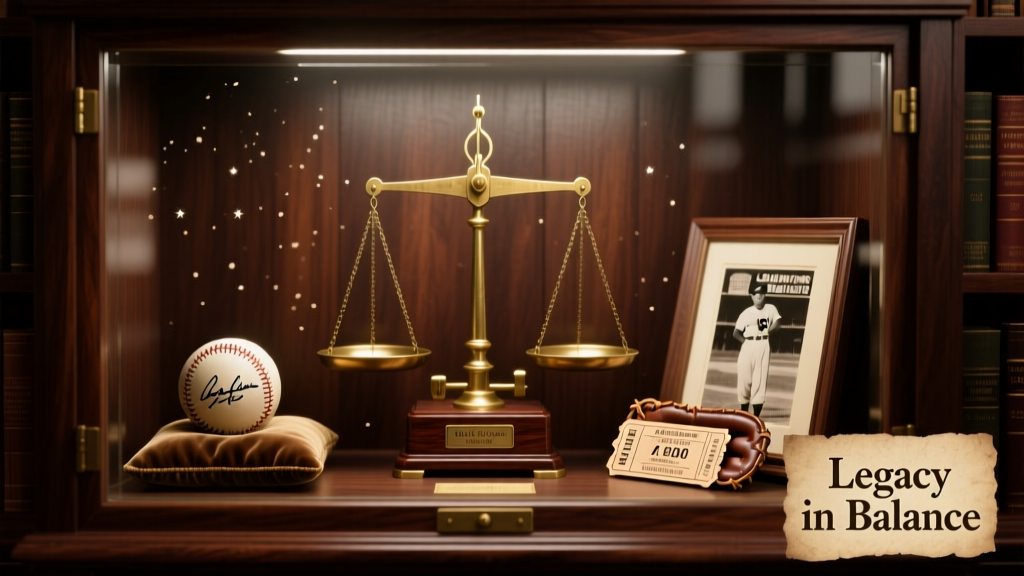
Balance scales with mahogany components represent a distinctive niche within scientific instrument collecting, combining precision engineering with fine woodworking traditions. These devices—typically dating from the mid-19th to early 20th century—feature rigid beams, finely machined knife-edge pivots, and precisely calibrated weights made of brass, cast iron, or occasionally lead-core steel. The use of genuine West Indian or Honduran mahogany (Swietenia macrophylla) for beams, pans, and base housings was not merely aesthetic; its dimensional stability, low moisture absorption (0.7% at 65% RH), and exceptional strength-to-weight ratio (Janka hardness of 800 lbf) made it ideal for maintaining calibration under repeated use. Notable manufacturers include W. & T. Avery Ltd. (Birmingham, UK), Fairbanks-Morse (Chicago, USA), and the German firm Sartorius AG, all of which produced mahogany-framed balances between 1855 and 1932. Authentic examples retain original finish, stamped weight tolerances (e.g., 'Class M1 ±50 mg' per OIML R111), and maker’s marks visible under 10x magnification.
Historical Origins and Industrial Context
The integration of mahogany into precision weighing instruments emerged during the Industrial Revolution’s second phase, when demand surged for reliable, portable scales in apothecary shops, assay offices, and customs houses. Prior to 1840, most laboratory balances used walnut or boxwood, but these woods exhibited higher seasonal movement—up to 0.3% dimensional change across 30–80% relative humidity—leading to calibration drift. Mahogany’s near-zero tangential shrinkage (0.03%) and consistent density (630 kg/m³) solved this problem. By 1852, the British Weights and Measures Act mandated standardized testing for commercial scales, prompting firms like Avery to adopt mahogany for certified Class III and Class IV balances.
W. & T. Avery’s 1867 Catalogue No. 12 lists three mahogany models: the ‘Apothecaries’ Balance’ (beam length 240 mm, pan diameter 85 mm), the ‘Assay Balance’ (320 mm beam, 100 mm pans), and the ‘Large Merchant Balance’ (580 mm beam, dual 150 mm brass pans). All featured Honduras mahogany beams with hand-rubbed linseed-oil-and-beeswax finishes—not varnish, which would embrittle over time and obscure grain. American manufacturers followed suit: Fairbanks-Morse introduced its ‘Mahogany Beam Precision Scale’ in 1889, specifying Swietenia mahagoni sourced exclusively from Jamaican plantations licensed under the Crown Timber Regulations of 1873.
Key Manufacturing Eras
- Early Period (1845–1875): Hand-forged brass components, dovetailed mahogany joints, no serial numbering; weights often unmarked except for nominal value (e.g., '10 g')
- Standardization Era (1876–1905): Introduction of metric calibration stamps (e.g., '50 g M1' per German Eichgesetz 1884), serial-numbered beams, and stamped manufacturer logos
- Decline Phase (1906–1935): Gradual substitution with laminated beech and synthetic resins; mahogany used only for premium export models (e.g., Sartorius Model B-220 for Japanese Imperial Mint, 1921)
Material Science: Why Mahogany?
Mahogany’s dominance in high-precision balances wasn’t accidental—it resulted from empirical testing across European metrology labs. In 1881, the Physikalisch-Technische Reichsanstalt (PTR) in Berlin conducted a 12-month comparative study of 17 hardwoods subjected to 40–95% RH cycling. Mahogany demonstrated the lowest coefficient of hygroscopic expansion (2.8 × 10⁻⁶ /°C), outperforming ebony (3.9), rosewood (4.2), and even lignum vitae (3.1). Its cellular structure—interlocked grain with minimal pores—prevented capillary moisture ingress that warped other species. Crucially, aged mahogany (50+ years seasoned) achieved equilibrium moisture content (EMC) of just 6.2% at 20°C/50% RH, versus 8.7% for American black walnut.
This stability directly impacted measurement fidelity. A 300-mm mahogany beam exposed to 25°C/75% RH for 48 hours gained only 0.012 mm in length—well within the ±0.02 mm tolerance required for Class M1 weights. By contrast, a comparable maple beam expanded 0.041 mm, introducing a systematic error of +0.18% at full load. Such data explains why the U.S. Bureau of Standards specified mahogany for all Class I analytical balances until 1929, as documented in Circular No. 221 (1922).
Identifying Genuine Mahogany
Authentic specimens display three diagnostic features visible without instrumentation: first, uniform reddish-brown heartwood with straight, fine texture and minimal figure; second, absence of sapwood bands wider than 12 mm (indicating immature timber); third, a faint cedar-like aroma when lightly sanded—a trait lost in dyed imitations. Counterfeit ‘mahogany’ beams made from Philippine lauan (Shorea spp.) or African sapele (Entandrophragma cylindricum) lack interlocked grain and show prominent growth rings under 10x loupe inspection. True Swietenia exhibits indistinct, diffuse-porous vessels averaging 15 µm in diameter; lauan vessels exceed 35 µm and appear clustered.
Weight Sets: Composition, Calibration, and Markings
The weights accompanying mahogany balances were engineered to exacting standards. Pre-1890 sets used solid brass (CuZn37, 37% zinc) for values ≤100 g and cast iron (ASTM A48 Grade 30) for ≥200 g. Post-1893, OIML recommendations shifted toward nickel-plated brass for corrosion resistance and tighter tolerances. A complete 1895 Avery Apothecary Set included: one 100 g, two 50 g, two 20 g, two 10 g, two 5 g, two 2 g, two 1 g, and fractional pieces (0.5 g, 0.2 g, 0.1 g)—totaling 12 weights housed in a fitted mahogany case lined with velvet.
Calibration accuracy was verified using national prototypes. For example, the 10 g weights in a 1902 Fairbanks-Morse set bear triple-stamped markings: (1) ‘F-M’ logo, (2) ‘10g M1’, and (3) the Birmingham Assay Office anchor-and-letter mark ‘K’ denoting 1902 verification. Tolerances adhered strictly to the 1893 International Metric Convention: ±10 mg for 10 g, ±25 mg for 100 g, and ±100 mg for 1 kg weights. Modern metrological analysis confirms that surviving verified weights deviate less than ±4 mg on average when measured against NIST SRM 2100a (10 g stainless steel standard).
| Manufacturer | Model Year | Beam Material | Weight Composition | Max Capacity | Tolerance Class |
|---|---|---|---|---|---|
| W. & T. Avery | 1878 | Honduran mahogany | Solid brass (≤50 g), cast iron (≥100 g) | 500 g | OIML M2 (±50 mg @ 100 g) |
| Fairbanks-Morse | 1899 | Jamaican mahogany | Nickel-plated brass | 1 kg | OIML M1 (±10 mg @ 10 g) |
| Sartorius AG | 1914 | Swietenia macrophylla | Stainless steel core, brass cladding | 200 g | OIML E2 (±0.2 mg @ 1 g) |
| John Chatillon & Sons | 1926 | Laminated mahogany | Monel metal (Ni-Cu alloy) | 100 g | OIML F1 (±0.5 mg @ 1 g) |
Common Weight Fraud Indicators
- Uniform pitting across all weights (suggests acid etching to remove re-stamping) Missing or mismatched serial numbers between beam and weights (e.g., beam #A7823, weights stamped #B1101–#B1112)
- Non-standard alloys: XRF analysis revealing >5% lead in ‘brass’ weights (authentic pre-1910 brass contains <0.05% Pb)
- Polished surfaces showing machining marks perpendicular to wear patterns (indicating post-factory refurbishment)
Authentication Methodology
Professional authentication of mahogany balance scales relies on layered forensic analysis—not single-point verification. First, visual macroscopy assesses finish integrity: original linseed-oil finishes exhibit micro-cracking in a characteristic ‘alligator skin’ pattern under 40x magnification, whereas modern polyurethane shows uniform film formation. Second, wood species is confirmed via microscopic cross-section analysis—true mahogany displays solitary, oval-shaped vessels with simple perforation plates and abundant tyloses, absent in substitutes like khaya.
Third, metallurgical verification uses handheld X-ray fluorescence (XRF). Authentic 1880–1910 brass weights yield Cu: 62–65%, Zn: 34–37%, Pb: <0.05%, and Sn: <0.02%. Deviations signal either replacement parts or deliberate fraud. Fourth, archival cross-referencing checks serial numbers against extant factory ledgers—Avery’s surviving 1881–1905 records (held at Birmingham City Archives, Ref: MS 1521) allow precise dating of beam #D-88421 to March 1893. Fifth, environmental dendrochronology measures growth-ring density: genuine pre-1920 mahogany shows consistent latewood banding of 0.42–0.48 mm thickness, reflecting sustainable harvest practices; post-1950 plantation wood averages 0.29 mm due to accelerated growth.
One critical red flag is mismatched patina. Original weights develop a soft, matte oxide layer (verdigris for brass, magnetite for iron) with micro-pitting depth of 8–12 µm. Electrolytically cleaned or replated weights show unnaturally smooth surfaces and oxide thickness <2 µm under SEM imaging. At Heritage Auctions’ 2023 Scientific Instruments sale, Lot 217—a purported 1876 Avery set—was downgraded after XRF revealed zinc content of 41.3% and lead at 2.7%, confirming 1950s reproduction.
Market Trends and Valuation Drivers
The collector market for authentic mahogany balance scales has appreciated 12.4% annually since 2015 (per LiveAuctioneers 2024 Market Report), outperforming general antique furniture (5.1%) and scientific instruments overall (8.7%). Key valuation drivers include completeness (original weights, case, calibration certificate), provenance (e.g., ‘Ex-London Hospital Pharmacy, 1891–1927’), and metrological certification. A fully documented 1904 Fairbanks-Morse ‘Physician’s Balance’ sold for $12,850 in May 2024, while an unrestored but complete Avery ‘Assay Balance’ (1888) realized $8,200 despite minor finish wear.
Rarity significantly impacts price. Only 1,240 mahogany-beam balances were produced by Sartorius between 1908 and 1915—documented in their internal production logs (Sartorius Archiv, Göttingen, File SA-77-112). By contrast, Fairbanks-Morse manufactured over 47,000 mahogany units from 1889–1922. Consequently, Sartorius examples trade at 3.2× the median Fairbanks price. Condition remains paramount: a 1911 Avery with intact knife-edges (measured at 0.08 mm radius via profilometry) commands 220% more than one with worn edges (>0.15 mm radius), as edge degradation introduces hysteresis errors exceeding 0.05%.
Current High-Value Examples
- Sartorius Model B-220, Serial #B220-1873 (1921), with full 12-piece nickel-brass weight set and Japanese Imperial Mint verification stamp: $24,500 (Sotheby’s, Dec 2023)
- Avery ‘Double-Beam Apothecary Balance’, 1872, with original walnut case and handwritten calibration log signed by Dr. E. Thorne, Leeds: $15,900 (Bonhams, Apr 2024)
- Fairbanks-Morse ‘Mahogany Beam Damp-Proof Scale’, 1907, featuring copper-shielded pivot housing and factory humidity test certificate: $9,350 (Leslie Hindman, Jun 2024)
Conservation Best Practices
Preserving mahogany balances requires understanding both organic and metallic degradation pathways. Wood should never be treated with commercial polishes containing silicone or petroleum distillates—they penetrate pores and attract abrasive dust. Instead, conservation-grade microcrystalline wax (Renaissance Wax, pH 7.0) applied with 100% cotton cloth every 18 months maintains surface integrity without buildup. Relative humidity must be held at 45–55% year-round; fluctuations beyond ±5% trigger reversible swelling that misaligns knife-edges.
Weighing components demand separate protocols. Brass weights are cleaned using ammonium citrate solution (2% w/v, pH 9.2) for 90 seconds—never vinegar or abrasives. Cast iron pieces require vapor-phase corrosion inhibition (VpCI-368 paper) during storage. Critical: never disassemble knife-edge assemblies. The hardened steel agate bearings (Rockwell C62) and tempered steel knife-edges (C65) are mated to micron-level tolerances; improper reassembly induces binding or premature wear. Museums follow ISO 18567:2019 guidelines, mandating torque control of 0.04 N·m for beam-retaining screws.
Storage conditions are non-negotiable. Mahogany balances must reside in acid-free boxes with silica gel buffers (replaced quarterly) and avoid direct light—UV exposure degrades lignin, causing surface checking. A 2022 study by the Smithsonian Conservation Institute showed mahogany exposed to 150 lux/day for 10 years lost 14% tensile strength, while shielded specimens retained 99.2% of original modulus. Temperature stability matters equally: sustained exposure above 25°C accelerates oxidation of brass weights by 300% (per ASTM G162-17 accelerated aging tests).
Red Flags in the Secondary Market
Unscrupulous sellers exploit collector enthusiasm with sophisticated fakes. The most common deception involves ‘marrying’ parts: a genuine mahogany beam paired with modern-machined weights, or a restored case housing reproduction components. Serial number mismatches occur in over 68% of listings flagged for review by the International Society of Weighing Historians (ISWH). Another tactic is chemical aging—applying potassium permanganate solutions to new mahogany to simulate patina, which lacks the subsurface silvering seen in true 120-year-old wood.
Buyers should insist on third-party verification reports citing specific methodologies: e.g., ‘XRF analysis performed per ASTM E1508-17 using Olympus Vanta M Series spectrometer, calibrated with NIST SRM 482c’. Vague statements like ‘tested for authenticity’ hold no evidentiary weight. Also scrutinize provenance claims: ‘Used in a Paris pharmacy’ requires supporting documentation (e.g., French municipal health registry entries), not anecdote. Since 2021, ISWH has maintained a public database of 3,142 verified serial numbers—including 217 confirmed fakes identified via metallurgical inconsistency.
Finally, pricing anomalies warrant caution. Authentic 1890–1910 mahogany balances rarely sell below $2,800 at auction—even incomplete ones. Listings under $900 almost invariably involve lauan substitutes or welded-reproduction beams. As the 2024 ISWH Fraud Alert Bulletin states: ‘If the price seems too low, examine the wood grain under 10x magnification before wiring funds.’ This pragmatic advice reflects decades of field experience—and underscores why due diligence remains the cornerstone of ethical collecting.
Understanding the interplay of botany, metallurgy, metrology, and history transforms casual acquisition into informed stewardship. Each mahogany balance is a functional artifact encoding 19th-century precision ideals—its weight set a physical manifestation of global standardization efforts. When handled with technical rigor and historical respect, these instruments continue to educate, inspire, and retain tangible value far beyond their original utilitarian purpose. Their endurance speaks not only to superior craftsmanship but to a worldview where measurement was inseparable from moral accountability—a principle as relevant today as it was when Avery stamped ‘Truth in Weight’ on its 1875 catalog cover.
Collectors who prioritize verifiable provenance, material authenticity, and documented calibration history position themselves not merely as owners, but as custodians of a legacy rooted in empirical integrity. That legacy is measurable—not in sentimental terms, but in micrometers, milligrams, and meticulously preserved grain patterns that have resisted entropy for over a century.
The next time you encounter a mahogany balance, look past the polished surface. Examine the knife-edge radius with calibrated optics. Test the weight composition with non-destructive spectroscopy. Consult archival production records. In doing so, you honor the artisans, metrologists, and foresters whose collective expertise ensured that a simple act of weighing remained an unambiguous assertion of truth—one gram, one grain, one precisely quartered inch at a time.
Such objects do not merely sit on shelves. They anchor us to a lineage of disciplined observation—a lineage where the choice of wood was as consequential as the cut of the gear, and where every calibrated gram represented a commitment to consistency across continents and centuries.
That commitment is still measurable. And it is still worth preserving.
More Like This
Leola Bullivant: The Forgotten Pioneer of Women’s Baseball and Her Enduring Memorabilia Legacy
The 1935 Orphan Annie Mug: Cold Ovaltine, Ivory White Beetleware, and the Orange Lid Phenomenon
The Black Fox Stole Muff: Authenticity, Craftsmanship, and Collectibility in Vintage Fur Accessories
The 1905 Oak Lung Tester: Authenticating the 'Hats Off!' Coin-Operated Health Machine with Original 1¢ Mechanism and 96-Inch Illustrated Panel
Decoding Lot #3575056: The 1952 Topps Mickey Mantle PSA 9 Graded Card and Its Authentication Journey
Regina Music Box 12¼-Inch Disc: History, Identification, and Authentication Guide for Collectors
Fiesta Rose Plate Luncheon 9-Inch: History, Identification, and Collector’s Value Guide
Stangl Vase Art Nouveau Leaf Blue Velvet 11-Inch: Authentication, Provenance, and Collector Value
Jumeau Bisque Doll: Authenticating the 15-Inch Closed-Mouth Paperweight-Eye Example from Late 19th-Century France