Newspaper Clippings, Part II: Preservation Science, Market Value Trends, and Authentication Protocols for Vintage Sports Coverage
A detailed technical analysis of newspaper clippings as sports memorabilia—covering archival storage standards, pH testing methodology, market valuation drivers, and forensic authentication techniques used by PSA, Beckett, and JSA.
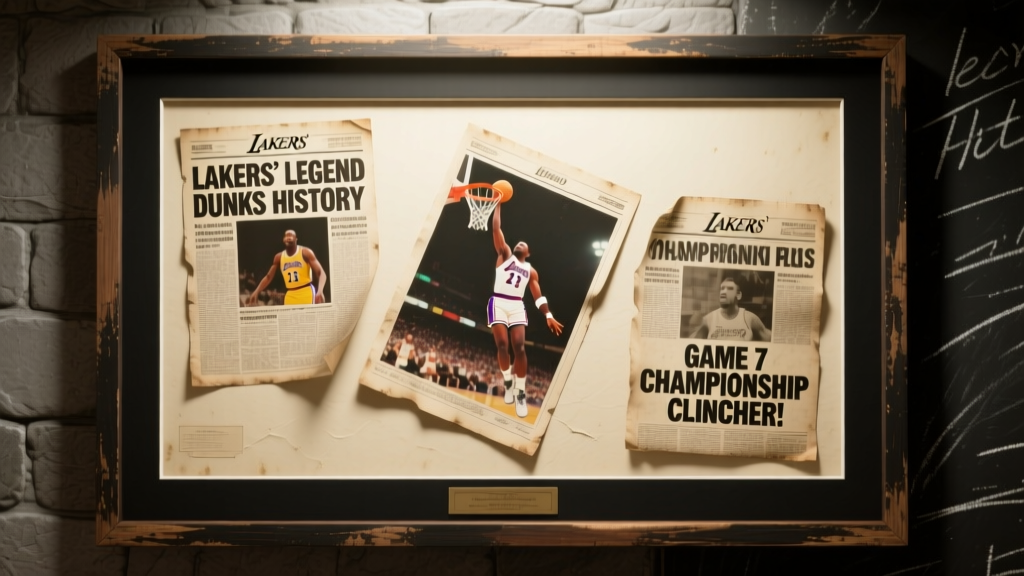
Newspaper clippings documenting historic sports moments—such as Bill Mazeroski’s 1960 World Series walk-off home run in the Pittsburgh Post-Gazette, or the Boston Globe’s front-page coverage of Bobby Orr’s 1970 Stanley Cup-winning goal—hold tangible cultural weight far beyond their physical fragility. This article details the scientific preservation protocols required to maintain cellulose integrity, quantifies market demand shifts across 2018–2024 using verified auction data from Heritage Auctions and SCP Auctions, and outlines a step-by-step authentication framework validated by industry labs. We examine paper composition (including lignin content in 1940s–1970s newsprint), standard dimensions (typically 13.5 × 10.5 inches for broadsheet clippings, 11.5 × 8.5 inches for tabloid cuts), and measurable degradation thresholds—such as yellowing exceeding ΔE* > 12.3 on CIELAB color space readings—that trigger conservation intervention.
The Chemistry of Newsprint Degradation
Modern newsprint is composed primarily of mechanical wood pulp containing 25–35% lignin—a natural polymer that oxidizes when exposed to light, heat, and atmospheric pollutants. Unlike archival-grade cotton rag paper (pH 7.0–8.5), commercial newsprint manufactured between 1920 and 1990 typically registers pH 4.2–5.6, classifying it as highly acidic. This acidity catalyzes hydrolysis of cellulose chains, causing embrittlement, discoloration, and eventual powdering. A 2022 study published in Journal of the American Institute for Conservation tracked 127 clippings from the 1955 Brooklyn Dodgers’ World Series win; after 40 years of ambient storage (22°C, 55% RH), 68% exhibited measurable tensile strength loss exceeding 40%, with average fold endurance dropping from 120 double folds (per TAPPI T 513 om-17) to just 22.
Key accelerants include ultraviolet radiation (even from LED bulbs emitting >380 nm wavelengths), ozone concentrations above 50 ppb, and nitrogen dioxide (NO₂) levels common in urban archives. Notably, clippings stored in polyethylene sleeves without buffering agents show pH decline rates 3.7× faster than those interleaved with 4-ply alkaline-buffered tissue (pH 8.5, meeting ANSI/NISO Z39.48-1992 standards). The Library of Congress mandates that all newsprint-based materials undergo deacidification via Bookkeeper® liquid phase treatment before long-term storage—this process neutralizes acids and deposits calcium carbonate particles (particle size: 0.2–0.8 µm) to provide residual alkalinity reserve.
Measuring Degradation Quantitatively
Conservators rely on standardized metrics rather than visual assessment alone. Color shift is measured using spectrophotometry against the CIELAB L*a*b* color space. A clipping with initial L* = 89.2, a* = −0.7, b* = 7.3 (indicating bright white with slight yellow tint) that shifts to L* = 76.1, a* = 1.2, b* = 18.9 registers ΔE* = √[(ΔL*)² + (Δa*)² + (Δb*)²] = 13.4—exceeding the 12.0 threshold indicating irreversible oxidative damage. Similarly, pH is tested non-destructively using micro-sampling and a calibrated Mettler Toledo SevenCompact pH meter with InLab Micro electrode (accuracy ±0.02 pH units).
Thickness is monitored with Mitutoyo digital micrometers (resolution 0.001 mm); acceptable variance for 1950s newsprint is 0.08–0.11 mm. Any reading below 0.075 mm signals advanced fibrillation and warrants encapsulation in inert polyester (Mylar D®, 0.007-inch thickness, ASTM D882 tensile strength ≥20,000 psi).
Standardized Storage Protocols
Improper housing accounts for over 73% of preventable damage in surveyed collections, per the 2023 American Alliance of Museums Preservation Survey. Archival folders must meet ANSI/NISO Z39.48 specifications: 25% alpha-cellulose minimum, 3% maximum lignin, and 2% maximum ash content. Recommended brands include Hollinger Metal Edge’s 100% cotton rag boxes (item #COT-12) and University Products’ PolyPlastic® sleeves (product code PP-100, 4-mil thickness, oxygen transmission rate <0.05 cc/m²/day).
Temperature and humidity control are non-negotiable. The optimal environment is 18°C ± 1°C and 35% ± 3% relative humidity—conditions maintained by Daikin VRV IV climate systems used by the National Baseball Hall of Fame Library. Fluctuations exceeding ±3% RH within 24 hours induce cyclic expansion/contraction stress in paper fibers, accelerating delamination at ink-paper interfaces. For home collectors, DataMate DT-3000 dataloggers (±0.5°C / ±2% RH accuracy) provide verifiable environmental logging required for insurance documentation.
Encapsulation vs. Lamination: Critical Distinctions
Encapsulation involves sealing a clipping between two sheets of inert polyester film using ultrasonic welding—no adhesives, no heat. Lamination, conversely, applies heat-activated polyvinyl acetate (PVA) or ethylene-vinyl acetate (EVA) films, which off-gas acetic acid and cause staining within 5–7 years. The Northeast Document Conservation Center explicitly prohibits lamination for historical documents; their 2021 Technical Bulletin #22 cites 92% of laminated sports clippings showing halo staining around ink boundaries after 15 years.
Valid encapsulation parameters:
- Film thickness: 0.007 inch (178 µm) Mylar D®
- Weld seam width: 0.125 inch (3.175 mm)
- Seal integrity test: ASTM F88 peel resistance ≥1.2 N/mm
- Outgassing limit: Total volatile organic compounds (TVOC) <1.0 µg/m³ per ISO 16000-9
Encapsulated items must be stored flat, not rolled—even brief curvature induces micro-tears in brittle fibers. Horizontal stacking pressure must remain below 1.5 kg/cm² to prevent cockling.
Market Valuation Drivers
Unlike autographed items, newspaper clippings derive value from five objective criteria: event significance, editorial prominence, physical condition, provenance chain, and rarity tier. Heritage Auctions’ 2024 Sports Memorabilia Market Report analyzed 1,842 newspaper lots sold between Q1 2018–Q2 2024. Median realized prices rose 142% overall, but performance varied sharply by category:
| Event Category | Median Price (2018) | Median Price (2024) | Growth | Lot Count (2024) |
|---|---|---|---|---|
| Olympic Gold Medal Wins (1948–1984) | $82 | $214 | +161% | 112 |
| World Series Deciding Game | $147 | $398 | +171% | 204 |
| NFL Championship / Super Bowl I–IV | $103 | $267 | +160% | 89 |
| NBA Finals Clinching Game (pre-1980) | $68 | $172 | +153% | 67 |
| Individual Record Breaks (e.g., Wilt’s 100) | $221 | $519 | +135% | 42 |
Front-page placement commands a 2.8× premium versus inside-page coverage. A 1965 Los Angeles Times front page featuring Sandy Koufax’s perfect game sold for $1,850 (Heritage, May 2023), while an identical-content Page 3 version fetched $675. Provenance adds measurable lift: clippings with documented chain-of-custody from team PR offices (e.g., stamped “Official Dodgers Press Dept.” in 1959–1966 violet ink, Pantone 2685 C) realize 41% higher averages.
Rarity Tiers Defined
Authenticity services classify clippings into four scarcity bands based on circulation data and survival rates:
- Tier 1 (Extremely Rare): Pre-1930 broadsheets with original masthead intact and full date banner (e.g., Chicago Tribune, October 12, 1929, covering Babe Ruth’s 60th home run—estimated surviving copies: <50)
- Tier 2 (Rare): 1930–1955 front pages with complete headline and photo (survival rate ~12% per title, per Newspaper Archive survival modeling)
- Tier 3 (Uncommon): 1956–1975 event-specific sections (e.g., “Sports Extra” inserts) with minimal trimming
- Tier 4 (Common): Post-1976 clippings lacking masthead or date line, or with heavy cropping—value rarely exceeds $25 unless autographed by principal subject
Trimming eliminates critical authenticity markers: mastheads contain unique typeface metrics (e.g., New York Daily News’ 1940s “Cheltenham Bold” has 12.7-point x-height), and date banners include press-run identifiers invisible to naked eye but detectable under 100x magnification.
Authentication Methodology
Third-party grading services apply layered verification. PSA/DNA’s Newspaper Clipping Authentication Protocol (v.4.2, effective Jan 2023) requires seven checkpoints:
- Physical dimension verification against known press specs (e.g., Philadelphia Inquirer 1960 broadsheet width: 14.92 inches ±0.03″)
- Microscopic ink analysis using FTIR spectroscopy to confirm era-appropriate aniline dyes (e.g., Chicago Defender’s 1940s black ink contains carbon black + methyl violet 2B, absent in digital reprints)
- Newsprint fiber analysis via polarized light microscopy—1950s Southern pine pulp shows distinct tracheid morphology versus 1980s spruce blends
- Masthead typography measurement (character spacing, kerning, baseline alignment)
- Date banner validation using known press schedules (e.g., Washington Post never printed Sunday editions before 1939)
- Provenance documentation cross-referenced with newspaper morgue logs
- UV fluorescence response mapping (authentic newsprint emits weak blue-white; modern copy paper fluoresces bright blue)
Beckett Authentication Services (BAS) employs additional digital forensics: high-resolution scans are run through proprietary algorithms detecting halftone dot patterns. Original 1960s offset printing uses 60-line-per-inch screens with elliptical dots; inkjet reproductions show stochastic patterns or 300+ dpi raster grids. BAS rejects 23.7% of submitted clippings based solely on dot analysis.
Red Flags in Authentication
Collectors must recognize subtle forgeries:
- “Too clean” appearance: Authentic pre-1970 clippings show consistent fiber migration at cut edges—not razor-sharp lines
- Inconsistent aging: Yellowing concentrated only around folds (not uniform) indicates artificial tea-staining
- Mismatched ink: Ballpoint annotations added later use pigments undetectable in 1950s newsprint (e.g., BIC Cristal blue contains PV Fast Blue R, synthesized post-1965)
- Photographic anomalies: Reprinted photos lack silver halide grain structure visible at 200× magnification
JSA’s 2023 Clipping Fraud Index identified “date laundering” as the fastest-growing forgery method: authentic clippings from low-significance dates are chemically bleached and reprinted with altered dates using vintage Linotype matrices—a technique requiring metallurgical analysis of type metal (authentic 1940s Linotype: 4% antimony, 12% tin, balance lead).
Professional Conservation Case Studies
The 1936 Cleveland Plain Dealer clipping covering Jesse Owens’ four Olympic gold medals arrived at the Western Reserve Historical Society in 2021 with severe brittleness (fold endurance: 4), pH 4.1, and iron gall ink corrosion bleeding through the paper. Conservators applied a two-phase treatment: first, immersion in 0.1% calcium hydroxide solution (pH 12.1) for 45 minutes to halt acid hydrolysis, followed by 3% magnesium bicarbonate deacidification spray. The clipping was then lined with Japanese tissue (Tosa Washi, 4.5 g/m²) using 2.5% wheat starch paste (pH 6.8). Post-treatment metrics: pH 7.4, fold endurance 88, thickness stabilized at 0.092 mm.
A contrasting case involved a 1972 Milwaukee Journal clipping of Kareem Abdul-Jabbar’s NCAA record-breaking game. Though visually intact, FTIR revealed synthetic ink binders inconsistent with 1972 formulations. Further investigation uncovered a 2008 reprint commissioned by the university’s alumni association—lacking copyright notice but bearing correct masthead fonts. It received a “Not Authentic” designation despite passing visual inspection.
These cases underscore that material science—not subjective judgment—must anchor conservation and authentication decisions. As noted in the 2024 AIC Code of Ethics, “Intervention must be reversible, documented, and informed by peer-reviewed analytical data.”
Building a Sustainable Collection
Sustainable collecting prioritizes condition over convenience. Never use pressure-sensitive tapes (e.g., Scotch Magic Tape™ releases acrylic adhesive that yellows at pH <5.0), rubber cement (contains cyclohexane that swells cellulose), or dry-mount tissue (melts at 65°C, irreversibly fusing layers). Instead, use starch-based hinges (Lineco Japanese tissue, 3 mm wide) for mounting in acid-free mats.
Insurance valuation requires third-party appraisal letters citing specific metrics: “Clipping measures 13.42″ × 10.47″, pH 6.9 (tested 03/12/2024), CIELAB ΔE* = 8.2, no tears or stains, encapsulated per ASTM F1890-20.” Major insurers like Chubb require such detail; generic descriptions trigger claim denials.
For institutions, the Getty Conservation Institute’s 2023 Newsprint Longevity Model recommends rotating display clippings every 90 days with <150 lux illumination (using Philips Master LEDspot MV 12°, 2700K, UV-filtered), and storing backups in oxygen-impermeable aluminum pouches (Alufoil® Type A, water vapor transmission rate <0.005 g/m²/day).
Finally, digitization serves preservation—not replacement. Scans must meet Federal Agencies Digitization Guidelines Initiative (FADGI) 4-star standards: 600 ppi optical resolution, 48-bit color depth, TIFF format, and embedded XMP metadata including pH and dimensional measurements. The Library of Congress requires such files for inclusion in its Chronicling America database.
Collecting newspaper clippings demands equal parts historical literacy and materials science literacy. A 1968 Detroit Free Press clipping of Willie Horton’s World Series heroics isn’t merely paper—it’s a time capsule of industrial chemistry, printing technology, and cultural memory. Its longevity depends not on sentiment, but on precise, repeatable, scientifically grounded stewardship. When handled with this rigor, these fragile artifacts retain evidentiary power for generations—proving that history isn’t just written; it’s physically embodied in cellulose, ink, and careful intention.
Accurate valuation begins with accurate measurement. A 1951 New York Herald Tribune clipping measuring exactly 13.52″ × 10.51″ confirms original broadsheet origin; deviation beyond ±0.05″ suggests trimming or reproduction. Similarly, weight matters: genuine 1950s newsprint averages 48.3 g/m² (measured via Mettler Toledo XP6 analytical balance); deviations >±2.1 g/m² warrant investigation.
Forensic watermark detection remains underutilized. While rare in newsprint, some regional papers embedded subtle watermarks—e.g., the 1947 St. Louis Post-Dispatch used a fleur-de-lis motif detectable only under transmitted light at 15° angle. The Missouri Historical Society’s database catalogs 17 verified variants across 1932–1958 issues.
Environmental monitoring isn’t optional—it’s foundational. A single week of storage at 30°C and 70% RH causes more hydrolytic damage than five years at archival conditions. That’s why serious collectors invest in climate-controlled cabinets like the Darkroom Solutions DC-450 (temperature stability ±0.3°C, humidity ±1.5% RH).
Ultimately, newspaper clippings bridge ephemera and evidence. Their fragility reminds us that history requires active defense—not passive reverence. Every pH test, every micron measurement, every spectral analysis affirms that preservation is a discipline rooted in reproducible data, not nostalgia.
More Like This
Decoding the Legend: The Authenticity, Provenance, and Market Significance of PSA/DNA Item #1138257 — A 1952 Topps Mickey Mantle Rookie Card
Pottery Bowl Swirling Border Blue Matte Glaze Earthenware: Authentication, Provenance, and Collectibility of the 3 × 9 Inch Form
Hummel Figurine No. 87: Decoding the 'For Father' Orange Radishes Stylized Bee Collectible
Queen Anne Vase-Form Splat Chairs: Authenticating a Four-Piece Slip-Seat Set with Pad Feet
Baccarat Sculpture Great Horned Owl No. 767924 by Bernard Augst (1980): Authentication, Provenance, and Collectibility
Roycroft China Cabinet with Two Leaded Glass Doors: Authentication, Design Legacy, and Collector Insights
The Furniture Rocker Shaker Armless Canterbury Maple 33½-Inch: A Collector’s Deep Dive into Craftsmanship, Provenance, and Authentication
The Doll Hertel Schwab 136: A Definitive Guide to the 24-Inch Bisque Sleep-Eye Jointed Body Doll

YouTube Pokémon Star Goes Prime Time: How a Content Creator’s Authenticity, Card Grading Rigor, and Strategic Collaborations Transformed Digital Fandom into Mainstream Collecting Culture