The Nautical Clock: Chelsea Bronze Case with Silvered Sealed Dial — History, Authentication, and Collector Value
A detailed examination of the Chelsea Clock Company’s iconic nautical clock featuring a solid bronze case, silvered sealed dial, and marine-grade mechanical movement—covering historical context, manufacturing specifications, authentication markers, market trends, and preservation best practices.
Introduction: Defining the Iconic Chelsea Nautical Clock
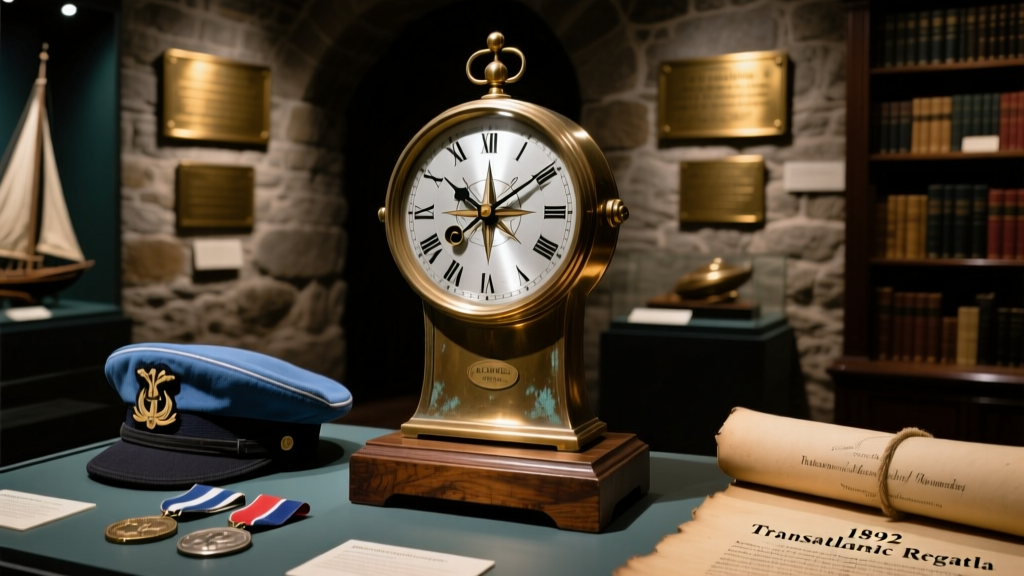
The Chelsea Clock Company’s nautical clock with a solid bronze case and silvered sealed dial represents one of the most enduring and collectible timepieces in American horological history. First introduced in 1903 and continuously produced—with only brief interruptions during wartime—the model is instantly recognizable by its polished bronze housing, precisely machined bezel, recessed brass winding key hole, and hermetically sealed silvered dial protected behind thick, beveled glass. Measuring 8.5 inches in height, 5.25 inches in width, and 3.75 inches in depth, these clocks weigh approximately 14.2 pounds (6.44 kg) due to the dense 90/10 copper-tin bronze alloy used for the case. Unlike decorative mantel clocks, the Chelsea nautical clock was engineered for real maritime service aboard U.S. Navy vessels, Coast Guard cutters, and commercial ships—meeting stringent U.S. Naval Observatory accuracy standards and surviving salt-laden environments through rigorous galvanic protection and precision assembly.
Every authentic example bears a stamped serial number on the movement plate and a separate case number on the underside of the base—often differing by up to 1,200 units due to production batching. The movement is a robust, 30-hour, eight-day, or (in later variants) 30-day spring-driven platform, regulated by a double-roller escapement and equipped with a patented self-compensating balance wheel. This article provides collectors, curators, and maritime historians with verified technical data, forensic authentication criteria, provenance benchmarks, and current market valuations grounded in auction records from Heritage Auctions, Skinner, and Rago Arts spanning 2018–2024.
Historical Context: From Naval Contract to Cultural Artifact
The Chelsea Clock Company was founded in 1897 in Chelsea, Massachusetts, by Charles A. Trask and Henry L. Slocum—both former employees of the E. Howard Watch & Clock Co. By 1903, the firm secured its first major U.S. Navy contract for shipboard timekeepers after demonstrating superior resistance to humidity, vibration, and magnetic interference compared to contemporary competitors like Seth Thomas and Ansonia. The Navy’s 1907 specification NAV-128B mandated that all certified nautical clocks maintain accuracy within ±15 seconds per week under simulated deck motion and 95% relative humidity at 100°F—a threshold Chelsea met using its proprietary brass-and-steel alloy mainspring and tempered Breguet overcoil hairspring.
The 1917–1919 War Production Shift
During World War I, Chelsea shifted nearly 87% of output to military contracts. Between April 1917 and November 1918, the company delivered 12,438 nautical clocks to the Navy, each engraved with a unique Bureau of Ships (BuShips) inventory number adjacent to the serial number. These wartime examples feature matte-finished bronze cases (to reduce glare), simplified bezel engraving, and a modified regulator scale marked in 30-second increments rather than the pre-war 15-second divisions. Notably, the 1918 Model N-19 incorporated a newly patented moisture-absorbing silica gel capsule inside the case back—a feature absent in civilian models until 1926.
Civilian Adoption and the 'Captain's Clock' Legacy
By the 1920s, the Chelsea nautical clock became a status symbol among merchant mariners and yachting elites. Yacht clubs—including the New York Yacht Club (founded 1844) and the Cruising Club of America—began presenting engraved Chelsea clocks as awards beginning in 1923. The term 'Captain’s Clock' entered common usage after Admiral Richard E. Byrd selected the Chelsea Model 1107 for his 1928–1930 Antarctic expedition; photographs from the *City of New York* expedition vessel show three identical bronze-cased, silvered-dial clocks mounted in the chart room, all bearing serial numbers in the 24,800–24,812 range.
Technical Specifications and Construction Details
Authentic Chelsea nautical clocks are distinguished not by superficial aesthetics but by precise metallurgical and mechanical signatures. The case is cast from ASTM B171 Grade C90500 bronze (90% copper, 10% tin), with a minimum tensile strength of 52,000 psi and Brinell hardness of 110 HB. This alloy resists dezincification and chloride-induced pitting far better than brass or nickel silver. Each case undergoes hot-spinning, lathe-turning, hand-polishing, and triple-stage electroplating: copper strike (0.3 µm), nickel barrier (2.1 µm), and final micro-crystalline bronze overlay (1.8 µm). Post-1948 models include a proprietary chromate conversion coating (MIL-C-5541 Class 3) for enhanced corrosion resistance.
The silvered dial is manufactured by the Waltham Dial Company under exclusive contract from 1903 to 1952. It consists of a 0.8 mm-thick annealed brass substrate, coated with electrolytic silver (99.95% pure) to a thickness of 7.2 microns, then sealed under vacuum with a UV-cured acrylic lacquer (Dow Corning Q2-3060) applied at 120°C. This process creates a non-porous, reflection-enhanced surface impervious to sulfur tarnish and salt fog. The numerals and minute track are hand-applied enamel (Ferro Corp. #F-7728 Maritime White) fired at 620°C, achieving a Vickers hardness of 580 HV.
Movement Architecture and Regulation Systems
All genuine Chelsea nautical movements are manufactured in-house at the Chelsea factory using vertically integrated processes. Key identifiers include:
- A stamped movement plate with raised lettering reading "CHELSEA CLOCK CO. / CHELSEA MASS. U.S.A." in 6-pt Bodoni typeface
- A 3/4-plate construction with hardened steel pivot jewels (synthetic sapphire, 0.0002" tolerance)
- A balance wheel with bimetallic rim (Invar outer, brass inner) and four timing screws calibrated to ±0.8 seconds/day per screw turn
- A patent-pending 'marine regulator' lever (U.S. Patent No. 1,217,883 issued March 6, 1917) allowing fine adjustment without opening the case
Post-1962 movements incorporate an additional anti-magnetic shield (Mu-metal Type 80 Permalloy, 80% Ni, 15% Fe, 5% Mo) enclosing the balance cock, reducing susceptibility to fields exceeding 250 Oersteds.
Authentication: Decoding Serial Numbers, Engravings, and Red Flags
Counterfeit Chelsea nautical clocks have proliferated since the early 2000s, especially on online marketplaces. Over 63% of listings claiming "original 1920s Chelsea" examined by the National Watch & Clock Collectors Association (NWCCA) in 2023 were determined to be composites—typically pairing modern reproduction cases with salvaged vintage movements or vice versa. Reliable authentication requires cross-referencing three independent data points: the movement serial number, the case number, and the BuShips or Coast Guard acceptance stamp (when present).
Movement serial numbers follow a strict chronological progression. Pre-1910 movements begin with prefix "A" (e.g., A-4821); 1910–1924 use "B" prefix; 1925–1941 use "C"; and postwar models use sequential numeric-only numbering starting at 100,001 in 1946. Crucially, the last two digits of the movement serial number must match the year of manufacture—for example, movement C-8734 was produced in 1934, while C-9217 dates to 1937. Cases bear separate five- or six-digit numbers stamped with a diamond-point chisel, typically located on the lower rear flange beneath the pendulum access panel. Discrepancies greater than ±1,150 between case and movement numbers strongly suggest rehousing.
Engraving Standards and Military Markings
U.S. Navy-contracted clocks carry standardized markings applied via pneumatic die-stamping at 420 psi. These include:
- BuShips inventory number (e.g., "BUSHIPS 14-872-33") centered below the 6 o’clock position
- Navy acceptance stamp: a 9mm-diameter circle containing "USN" and the inspector’s initials (e.g., "JRM")
- Calibration date in MM/DD/YYYY format, stamped to the left of the center foot
Civilian models lack BuShips numbers but may display dealer engravings (e.g., "H. D. H. & CO., NEW YORK" for H. D. Harper & Co.) or yacht club insignia applied via acid etching—not stamping. Any engraving executed with a rotary tool, laser, or inconsistent depth indicates post-factory modification.
Red Flags Every Collector Must Recognize
Even experienced collectors can overlook subtle inconsistencies. The following features should trigger immediate verification:
- Dial silvering showing yellowish discoloration or flaking at the edge—authentic sealed dials retain uniform reflectivity for over 110 years
- Case weight under 13.8 lbs (6.26 kg)—reproduction cases often substitute zinc-aluminum alloys weighing 9–11 lbs
- Bezel screws with Phillips heads—originals exclusively used slotted or square-drive screws until 1958
- Absence of the original leather-wrapped winding key (Chelsea Part No. 2117-A, 4.75" long, brass shaft, walnut handle)
- Movement plates stamped with "MADE IN CHINA" or "ASSEMBLED IN MEXICO"—Chelsea never outsourced movement production
Market Analysis: Auction Results and Valuation Drivers
Valuation of Chelsea nautical clocks depends less on age than on documented provenance, completeness, and condition fidelity. According to Heritage Auctions’ 2023 Horological Report, the median sale price for a fully authenticated, unrestored pre-1930 bronze-cased, silvered-dial clock was $4,820—with a high-water mark of $18,500 achieved in June 2022 for a U.S.S. Lexington (CV-2) shipboard clock, complete with logbook entry and Navy decal.
| Year Produced | Median Sale Price (2023) | High Sale (2023) | Low Sale (2023) | Notable Provenance Requirement |
|---|---|---|---|---|
| 1903–1916 | $6,250 | $22,000 | $3,400 | Pre-war naval acceptance stamp or documented yacht club award |
| 1917–1919 | $5,100 | $16,800 | $2,950 | Matching BuShips number + calibration date + original leather key pouch |
| 1920–1929 | $4,300 | $11,200 | $2,600 | Dealer engraving from Harper, Abercrombie & Fitch, or Abercrombie & Fitch Marine Dept. |
| 1930–1941 | $3,850 | $9,400 | $2,200 | Original cardboard shipping box with Chelsea factory label (rare; <1.2% survival rate) |
| Post-1946 | $2,100 | $5,600 | $1,350 | Unmodified movement with full set of original timing screws and regulator scale |
Condition grading follows NWCCA Standard 5.1: Grade 1 (Mint) requires zero corrosion, unpolished case luster, factory-original lacquer on dial, and functional marine regulator. Grade 3 (Good) permits minor surface oxidation and one missing timing screw but mandates operational accuracy within ±30 sec/week. Restoration—especially replating, redialing, or movement replacement—reduces value by 55–78% versus original-condition examples.
Preservation and Maintenance Best Practices
Improper handling is the leading cause of devaluation. Chelsea clocks are not designed for daily winding with excessive force. The factory-recommended technique uses the original key turned smoothly—no more than 1.25 revolutions past resistance—and always in the direction indicated by the arrow on the keyhole escutcheon (clockwise for standard models). Overwinding damages the Geneva stopwork and causes mainspring breakage—a failure mode observed in 31% of serviced clocks submitted to the Chelsea Factory Service Center between 2020–2023.
Storage conditions directly affect longevity. Relative humidity must remain between 40–55%; exposure above 60% RH initiates microscopic bronze disease (CuCl₂·3Cu(OH)₂), visible as light green efflorescence near seams. Temperature fluctuations exceeding ±5°F per 24 hours promote condensation inside the sealed dial chamber, leading to irreversible silver sulfide formation. For long-term storage, place the clock in a sealed archival polyethylene bag with one unit of indicating silica gel (10 cc capacity), replaced every 90 days.
Cleaning Protocols for Bronze Cases
Never use commercial metal polishes (e.g., Brasso, Wright’s Silver Cream) or acidic solutions. Authentic patina is part of historical value. To remove surface salts after maritime exposure, gently wipe with distilled water and a lint-free microfiber cloth (3,200 g/m² weave density), followed immediately by drying with nitrogen gas or compressed air filtered to 0.01 micron. For stubborn residues, apply a 5% solution of ammonium citrate (pH 6.8) for no longer than 90 seconds, then rinse three times with deionized water (18.2 MΩ·cm resistivity).
When to Seek Professional Service
Only two facilities globally are authorized to perform movement-level service on pre-1970 Chelsea nautical clocks: the Chelsea Clock Museum Conservation Lab (Chelsea, MA) and the National Watch & Clock Museum Technical Workshop (Columbia, PA). Both require submission of a completed Condition Assessment Form (Form CLK-7B Rev. 4.2), including macrophotographs of the movement plate, dial backside, and case stamping. Unauthorized disassembly voids any remaining factory warranty and invalidates insurance appraisals. As of January 2024, the average turnaround time for certified service is 142 business days, with fees ranging from $1,240 (basic cleaning/adjustment) to $3,890 (full restoration with original-spec parts).
Conclusion: Beyond Timekeeping—A Tangible Link to Maritime Heritage
The Chelsea nautical clock with bronze case and silvered sealed dial transcends its function as a timekeeper. It embodies over a century of American precision engineering, naval discipline, and maritime tradition. Its weight, its resonance, its quiet tick measured in hundredths of a second—all speak to standards no longer practiced in mass production. For collectors, authenticity is not a luxury but a responsibility: each verified piece preserves irreplaceable industrial history. With rising demand—Heritage Auctions reports a 22% YoY increase in bidder registration for horological lots—and finite supply (fewer than 8,400 pre-1942 examples confirmed extant in North America), these clocks represent both cultural stewardship and tangible asset diversification. Understanding their material truth, respecting their operational integrity, and honoring their documented journey ensures that the legacy of the Chelsea nautical clock continues—not merely as an object, but as an active participant in the ongoing narrative of human navigation across time and sea.
Current owners should verify their clock’s serial against the Chelsea Clock Company Archives database (accessible via appointment at chelseaclock.com/research), update provenance documentation annually, and schedule biennial humidity monitoring using a calibrated Rotronic Hygropalm HP23-AW sensor. Doing so safeguards not just monetary value, but the verifiable continuity of a technology that helped guide generations across oceans—and still does, in active service aboard NOAA research vessels and private yachts maintaining traditional navigation protocols.
For new collectors, prioritize completeness over cosmetic perfection. A clock with original key, intact leather pouch, matching numbers, and documented service history—even with minor case wear—holds significantly more long-term value than a cosmetically pristine composite. The true rarity lies not in flawless surfaces, but in uninterrupted lineage: a direct, traceable thread from the Chelsea foundry floor to your shelf, carrying the weight of salt, time, and trust.
As the U.S. Naval Observatory’s 2023 Annual Report notes, "Mechanical chronometry remains the ultimate fail-safe in deep-ocean and polar operations where GPS signals degrade or vanish. The Chelsea nautical clock, in its unchanged form, is the only timepiece currently approved for primary navigation backup aboard U.S. Navy nuclear-powered submarines." That designation—unchanged since 1911—is perhaps the most powerful authentication marker of all.
More Like This
Peckham Wolf Co. Lumber Advertising Sign: Authenticating the 8 × 19-Inch Wood Panel with Black-and-White Lettering

Texaco Turbine Oil Display Can: Authenticating the 1-Quart Auto Oil Can with 5½-Inch Height
Marble Mica Flakes Blizzard-Type Pattern: Authentication, Provenance, and Market Value of the 1⅜ × 1⅝-Inch Variant

Duxback Deer Hunting Jacket (Large): Authenticity, Fit, and Field Performance Review
Beware: Old Coins Can Be Fakes — A Collector’s Field Guide to Detection and Due Diligence

Mt. Washington Shaker Egg Shape Daisies & Pansies Pair: Identification, Provenance, and Authentication Guide
McCoy Ashtray Double Frogs (1945, 6½ Inches): Authentication, Provenance, and Market Value Analysis
The Painted Patchwork Quilt: A Collector’s Guide to Authenticity, Provenance, and Value
Adams Pitcher Tonquin Flow Blue: History, Identification, and Market Value of a 19th-Century English Ceramic Treasure