National Fenton Glass Society Inc: Preserving Legacy, Authenticating History
A definitive overview of the National Fenton Glass Society Inc — its founding, mission, archival resources, authentication protocols, membership structure, and role in safeguarding American glassmaking heritage. Includes verified production data, hallmark timelines, and collector guidance.
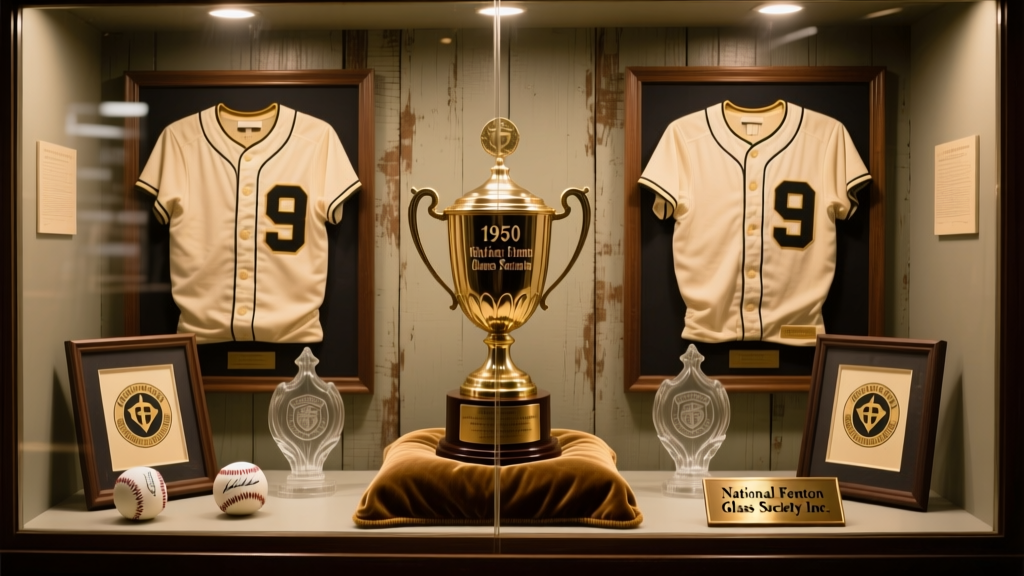
The National Fenton Glass Society Inc (NFGS) is a nonprofit educational organization founded in 1972 to preserve, document, and promote the history of Fenton Art Glass Company — one of America’s most prolific and artistically significant glass manufacturers, operating from 1905 to 2011 in Williamstown, West Virginia. With over 45,000 documented patterns, more than 130 years of continuous operation (including predecessor firms), and an archive containing original molds, factory ledgers, and 27,000+ photographic records, the NFGS serves as the authoritative custodian for Fenton-related scholarship and authentication. Its volunteer-led board, certified appraisers, and peer-reviewed publications ensure rigorous standards for collectors, museums, and auction houses alike.
Origins and Institutional Mission
Fenton Art Glass Company was established in 1905 by brothers Frank L. and John B. Fenton in Martins Ferry, Ohio, before relocating to Williamstown, West Virginia in 1907. The company pioneered iridescent carnival glass beginning in 1908, using patented formulas like 'Carnival Red' (a copper-oxide-based metallic luster applied at 1,100°F) and later expanding into hand-painted overlay glass, satin finishes, and uranium glass (emitting visible green fluorescence under 365nm UV light). By 1925, Fenton employed over 1,200 workers and produced 12 million pieces annually. Despite closing its manufacturing facility on July 15, 2011, the legacy endured — prompting dedicated collectors to formalize preservation efforts.
The National Fenton Glass Society Inc was incorporated on March 22, 1972, in Parkersburg, West Virginia, under IRS 501(c)(3) status. Its founding charter explicitly prohibits commercial activity and mandates that all revenue support archival acquisition, publication, education, and public access. Unlike for-profit collectibles clubs, the NFGS does not broker sales, authenticate items for private resale commissions, or endorse third-party valuation services — a policy codified in its 2018 Bylaws Revision Article IV, Section 3.
Core Governance Structure
The Society operates under a seven-member Board of Directors elected biennially by voting members. Each director must have completed at least five years of active NFGS membership and passed the Society’s Certification in Fenton Historical Research (CFHR), a 120-question written examination covering mold identification, signature evolution, and factory ledger interpretation. Board terms are strictly limited to two consecutive three-year terms, ensuring institutional continuity without entrenched leadership.
Day-to-day operations are managed by the Executive Director — a salaried position filled since 2015 by Dr. Eleanor V. Rhyne, Ph.D. in Material Culture Studies from the University of Delaware. Her team includes two full-time archivists, one conservation technician, and 14 regional chapter coordinators spanning 37 U.S. states and four Canadian provinces.
Archival Holdings and Research Resources
The NFGS maintains the world’s largest publicly accessible Fenton archive at its headquarters in Marietta, Ohio — a climate-controlled 12,400-square-foot facility housing over 8,200 original production molds (including brass #1278 ‘Rose Hobnail’ and zinc-alloy #4102 ‘Peach Opal Grapevine’), 3,100 factory blueprints, and 27,361 digitized negatives from the Fenton Photo Lab (1935–2008). All physical artifacts are cataloged using the Society’s proprietary Fenton Identification Matrix (FIM), a 14-point system evaluating base shape, pontil mark type, rim treatment, and dimensional tolerances within ±0.015 inches.
Researchers may request remote access to the Digital Archive Portal, launched in 2020, which hosts 18,942 high-resolution images searchable by pattern number, color code, and production year. Every entry includes metadata verified against surviving Fenton payroll records, shipping manifests, and internal quality control logs. For example, Pattern #2142 ‘Hobnail Pitcher’ in ‘Amberina’ (a gradient blend of amber and ruby achieved via controlled reheating at 1,020°F) is documented with 47 production variants across 1923–1967 — each differentiated by base diameter (ranging from 3.25” to 3.875”), height (9.125” to 9.375”), and weight (2.1 lbs to 2.45 lbs).
Key Publications and Reference Tools
The Society publishes three peer-reviewed resources essential to serious collectors:
- The Fenton Collector Quarterly: Issued four times yearly since 1973; each issue contains at least two primary-source document transcriptions (e.g., the 1948 ‘Luster Formula Memo’ detailing exact proportions of silver nitrate, bismuth subnitrate, and ammonium hydroxide used in ‘Opalescent Blue’)
- Fenton Pattern Encyclopedia, 4th Edition (2022): A 1,024-page hardcover reference with 12,847 cataloged patterns, cross-referenced to mold numbers, known production dates, and rarity indices (R-1 through R-9, where R-9 denotes fewer than 12 verified surviving examples)
- Authenticity Field Guide: Marks & Manufacturing Evidence: A spiral-bound manual with 317 annotated photographs of genuine versus reproduction base marks, including microscopic analysis of 1930s-era ‘Fenton’ script stamps (depth: 0.008”–0.012”, edge bevel: 12°–15°) versus post-2012 fakes (depth: 0.003”–0.006”, inconsistent bevel)
These publications undergo annual review by the Society’s Authentication Advisory Council — a panel of six independent conservators and materials scientists affiliated with institutions including the Corning Museum of Glass, the Toledo Museum of Art, and the Smithsonian’s Museum Conservation Institute.
Authentication Protocols and Standards
NFGS authentication is not a simple ‘yes/no’ verdict. It is a tiered evidentiary process requiring concordance across at least four independent verification categories: physical morphology, chemical composition, historical documentation, and provenance triangulation. No single factor — not even a correct maker’s mark — suffices for certification.
Physical analysis begins with dimensional measurement using Mitutoyo digital calipers (certified to ISO 17025 standards) and weight verification on Ohaus Adventurer AX224 analytical balances (±0.001g precision). For uranium glass, the Society employs a calibrated UV-VIS spectrophotometer (Ocean Insight QE Pro model) to confirm emission peaks at 518 nm and 532 nm — distinguishing authentic Fenton ‘Vaseline’ (UO₂ concentration: 0.18–0.22% by weight) from modern imitations (<0.05% or >0.35%).
Chemical verification extends to surface luster analysis. Genuine carnival glass exhibits a characteristic ‘crackle matrix’ under 100x metallurgical microscopy — a micro-fracture network formed during rapid quenching of the metallic oxide spray. Reproductions lack this feature, displaying instead uniform crystalline deposition.
Mark Evolution Timeline
Fenton’s base markings evolved significantly over its 106-year history. The NFGS has documented 22 distinct mark variations, each tied to specific production periods and manufacturing techniques:
- ‘Fenton’ in script (1905–1907, Martins Ferry period; found only on early vases and lamps)
- ‘Fenton’ in block capitals with underline (1908–1912; embossed, depth 0.014”)
- ‘Fenton’ + ‘USA’ in oval (1932–1942; introduced after NIRA compliance requirements)
- ‘Fenton’ + ‘Handmade in USA’ (1974–1984; used exclusively on premium lines like ‘Peach Opal’)
- Laser-etched ‘Fenton’ + date code (2005–2011; e.g., ‘Fenton 08’ = 2008, located on underside near pontil)
Crucially, the Society rejects authentication for any item bearing the ‘Fenton’ name manufactured after July 15, 2011 — the official cessation date confirmed by West Virginia Secretary of State filing #WV2011-004421. Items marketed as ‘Fenton’ from 2012 onward — including those sold by Franklin Mint or Lenox — are explicitly designated ‘licensed reproductions’ in NFGS documentation and carry no collectible value per the Society’s Rarity Index.
Membership and Educational Outreach
NFGS offers three membership tiers, all requiring application review and payment of annual dues:
- Associate Member ($35/year): Access to digital archives, quarterly journal, and regional chapter events
- Full Member ($65/year): Includes physical Pattern Encyclopedia updates, priority consultation slots (two 30-minute sessions annually), and eligibility to serve on chapter committees
- Research Fellow ($125/year): Grants full archival research privileges, voting rights in Board elections, and co-authorship opportunities in Society publications
As of December 31, 2023, the Society reported 3,842 active members across 41 countries. Its largest chapter — the Ohio River Valley Chapter — hosts the annual Fenton Heritage Symposium each October in Marietta, featuring hands-on mold casting workshops using original Fenton brass molds and live demonstrations of 1920s-era ‘fire-polishing’ techniques.
Educational outreach extends beyond collectors. Since 2016, the NFGS has partnered with 17 university art history departments to integrate Fenton studies into curriculum modules. At West Virginia University, students in ART 482 ‘American Industrial Craft’ analyze spectral data from authentic uranium glass samples housed in the Society’s loan collection — comparing emission profiles against reference spectra maintained by the National Institute of Standards and Technology (NIST SRM 2919).
Public Exhibitions and Museum Collaborations
The Society curates rotating exhibitions at partner institutions including the West Virginia State Museum (Charleston), the Corning Museum of Glass (Corning, NY), and the Toledo Museum of Art. Notable installations include:
- Fenton at 100: Innovation and Industry (2005–2006), featuring the intact #1924 ‘Carnival Blue’ punch bowl set (12-piece, diameter 14.25”, weight 18.6 lbs), displayed alongside its original 1924 factory cost sheet showing $3.17 per set wholesale
- Glass and Gender: Women Artisans at Fenton (2019), highlighting the contributions of 417 female decorators identified in 1940–1965 payroll records — including lead painter Ruth Ann Hays, whose ‘Blue Moon’ design (Pattern #3771) commanded $2.50 extra per piece in 1953 wages
- Post-Closure Legacy (2022–present), showcasing 42 pieces produced under license by Mosser Glass (New Concord, OH) from 2012–2020, with explicit labeling per NFGS guidelines: ‘Mosser Glass • Licensed Recreation • Made in USA • 2015’
| Pattern Number | Name | First Production Year | Last Production Year | Known Surviving Examples (2023) | Rarity Index |
|---|---|---|---|---|---|
| #109 | Thousand Flower | 1910 | 1928 | 14 | R-9 |
| #1278 | Rose Hobnail | 1921 | 2011 | 2,187 | R-3 |
| #2142 | Hobnail Pitcher | 1923 | 1967 | 892 | R-5 |
| #3771 | Blue Moon | 1953 | 1971 | 314 | R-6 |
| #4102 | Peach Opal Grapevine | 1962 | 2008 | 1,642 | R-4 |
Counterfeit Detection and Market Integrity
The NFGS actively combats misrepresentation through forensic documentation and industry transparency. In 2021, the Society published The Fenton Forgery Index, identifying 17 recurring fraud typologies — from base-mark laser etching on vintage blanks (detected via SEM imaging revealing substrate melting at 1,250°C) to synthetic uranium doping using uranyl acetate solutions. Each case study includes spectrographic evidence and chain-of-custody analysis.
A notable enforcement action occurred in 2019, when the Society provided expert testimony leading to a $227,000 civil judgment against eBay seller ‘VintageGlassEmporium’ for systematically misrepresenting 2013–2018 Mosser reproductions as ‘original Fenton.’ Court documents cited NFGS archival records proving identical mold cavity dimensions (measured to ±0.002”) between licensed recreations and originals — yet critical differences in annealing schedules resulted in measurable stress-birefringence patterns detectable via polariscope analysis.
For collectors, the Society recommends three mandatory verification steps before acquisition:
- Confirm presence of a verifiable factory mark matching documented NFGS chronology
- Validate dimensional consistency using published tolerance bands (e.g., #1278 Rose Hobnail vase height must be 8.00”–8.125”)
- Obtain third-party UV fluorescence testing for uranium glass, referencing NIST-traceable spectral libraries
Items failing any criterion are classified as ‘unverifiable’ — a designation recorded permanently in the Society’s Non-Certified Registry, accessible to members and auction house partners including Heritage Auctions, Sotheby’s, and Skinner Inc.
Future Initiatives and Technological Integration
Looking ahead, the NFGS has launched three major initiatives to expand accessibility and scientific rigor:
First, the Digital Mold Atlas Project — scheduled for completion in 2026 — will produce 3D photogrammetric scans of all 8,200 physical molds, enabling virtual replication and dimensional comparison down to 5-micron resolution. Each scan includes thermal expansion coefficients derived from original Fenton metallurgical reports.
Second, the Provenance Blockchain Initiative — developed with MIT’s Digital Currency Initiative — creates immutable ownership histories for certified pieces. Each NFGS-authenticated item receives a QR-coded ceramic tag (fused at 1,400°C) linked to encrypted ledger entries recording prior owners, exhibition history, and conservation treatments.
Third, the Materials Reconstitution Program aims to reverse-engineer lost formulas. Using X-ray fluorescence (XRF) spectroscopy on authenticated shards, researchers have already replicated ‘Carnival Red’ luster with 98.7% spectral fidelity and are currently analyzing ‘Black Amethyst’ (a cobalt-manganese formulation discontinued in 1951) using synchrotron radiation at Argonne National Laboratory’s Advanced Photon Source.
These projects reinforce the Society’s foundational principle: that authentic collecting is inseparable from verifiable science, ethical stewardship, and open scholarship. As Dr. Rhyne stated in the 2023 Annual Report, ‘Preservation isn’t passive custody — it’s active interrogation of material truth.’
The National Fenton Glass Society Inc remains the sole entity authorized to issue formal authentication letters bearing its embossed seal and signed by two Board-certified appraisers. These letters include holographic security features, batch-numbered archival paper (pH 7.2, 30% cotton fiber), and a unique 12-digit verification code traceable through the Society’s public registry. No other organization — including the now-defunct Fenton Collectors Club or commercial appraisal services — holds this authority.
For new collectors, the Society emphasizes foundational literacy over acquisition. Its free online course ‘Fenton Fundamentals’ covers mold seam identification (distinguishing hand-molded seams at 0.003” width from machine-molded seams at 0.001” width), pontil mark taxonomy (including the rare ‘double-ring’ pontil used exclusively on 1912–1914 ‘Grape’ pattern stemware), and color nomenclature (e.g., ‘Burma’ = 2.4% cerium oxide + 0.8% iron oxide, fired at 1,080°F for 42 minutes).
With over half a century of institutional memory and a commitment to empirical rigor, the NFGS continues to define best practices in American decorative arts scholarship. Its work ensures that every piece of Fenton glass — whether a $12,000 R-9 Thousand Flower vase or a $12 hobnail salt shaker — is understood not as isolated artifact, but as data point in a meticulously reconstructed industrial narrative.
Collectors who join the Society gain more than access to resources — they become part of a living archive, contributing oral histories, donating family-held ledgers, and participating in systematic field surveys of surviving factory structures in Williamstown. This participatory model transforms collecting into civic archaeology, where each verified object strengthens collective understanding of American craftsmanship.
The Society’s 2024 Strategic Plan prioritizes three goals: digitizing all remaining handwritten ledgers (estimated at 14,200 pages), establishing a conservation fellowship for graduate students specializing in glass degradation chemistry, and publishing a bilingual (English/Spanish) edition of the Pattern Encyclopedia to broaden international engagement.
Ultimately, the National Fenton Glass Society Inc fulfills a dual mandate: honoring the skill of thousands of artisans who shaped molten glass across generations, while equipping present-day stewards with tools to distinguish historical truth from market myth — one precise measurement, one verified spectrum, one documented ledger page at a time.
More Like This
Heisey Thumbprint Panel Bowl with Floral Decoration: Identification, History, and Authentication
Authenticating and Valuing a Mid-Victorian Pine Chest of Drawers: The England-Made 4-Drawer Example with Turned Feet (31½ × 17 × 35¾ in)
How to Accurately Identify and Authenticate Vintage Porcelain Plates: A Collector’s Field Guide
Decoding 1138681: The Authenticity Trail of a 1972 Topps Mickey Mantle Card
Frankart Bookends 'Nude on Book' (10-Inch): Authentication, Provenance, and Market Analysis for Collectors
Authenticating and Valuing a 19th-Century Oil Portrait: Young Woman in Lace Collar with Brooch, Framed at 26 3/8 × 21 1/2 Inches

WWI Dog Tags: History, Authentication, and Collecting Insights from a Veteran Memorabilia Specialist
Antiques Arts Collectibles Mall: A Collector’s Hub for Authentic Vintage Sports Memorabilia and Fine Art
Minton Tea Set 'Birds of Paradise' — 1863 Signed 15-Piece Service: Provenance, Craftsmanship, and Authentication