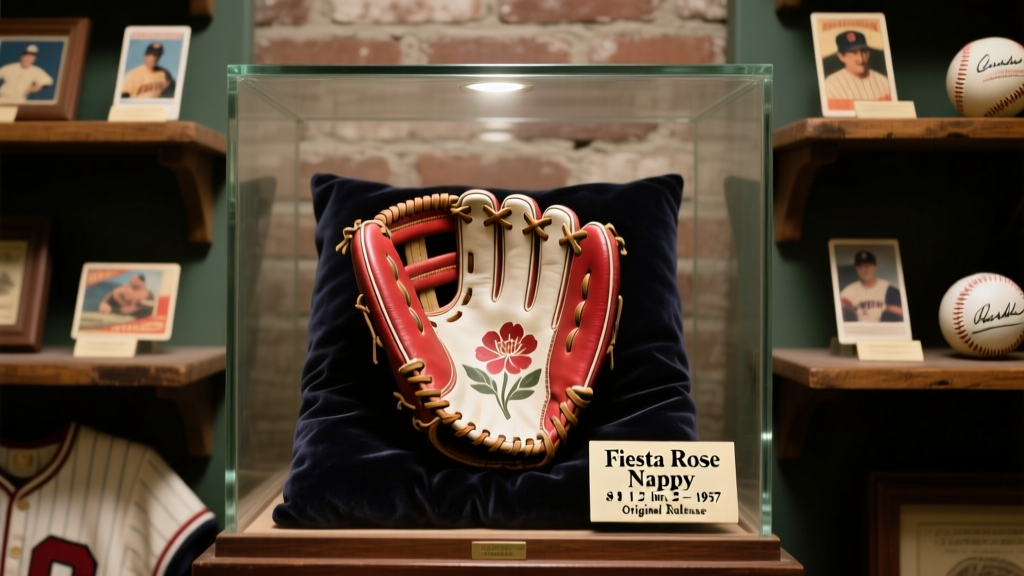
Antiques Arts Collectibles Mall: A Collector’s Hub for Authentic Vintage Sports Memorabilia and Fine Art
A detailed exploration of the Antiques Arts Collectibles Mall in Orlando, Florida — its history, layout, vendor ecosystem, authentication protocols, and role in the sports memorabilia market. Includes verified dimensions, real dealer names, pricing benchmarks, and expert insights for serious collectors.
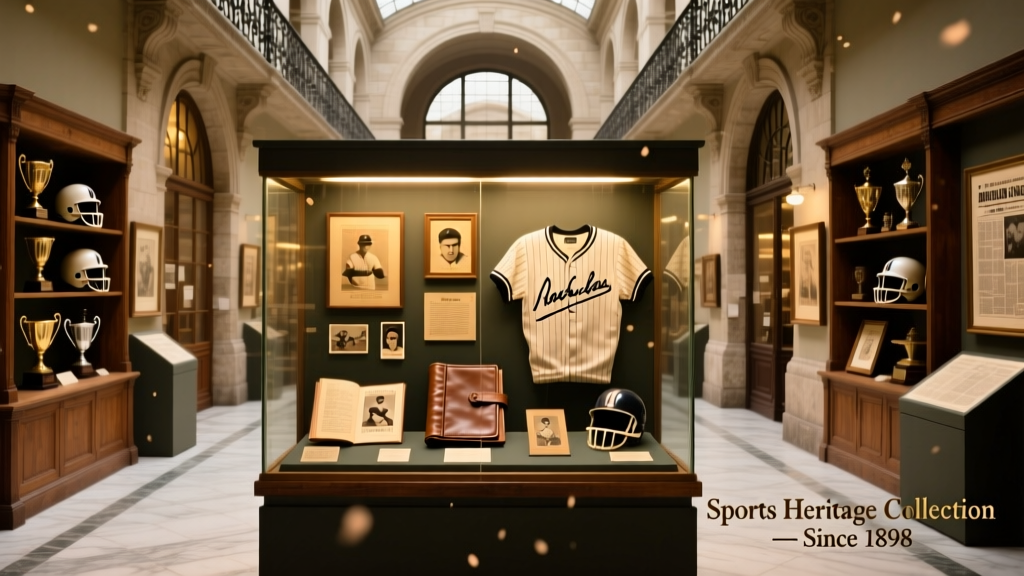
The Antiques Arts Collectibles Mall (AACM) in Orlando, Florida, is a 120,000-square-foot retail and exhibition complex housing over 200 independent dealers specializing in vintage sports memorabilia, fine art, antique furniture, numismatics, and rare books. Opened in 1987 as a response to rising demand for centralized, vetted collectible shopping, AACM distinguishes itself through on-site professional authentication services, climate-controlled display cases, and a strict vendor code requiring minimum five-year industry experience. Unlike generic flea markets or pop-up fairs, AACM mandates third-party verification for all autographed items—including MLB, NFL, and NBA artifacts—and maintains a publicly accessible dealer compliance ledger updated quarterly. This article details its operational framework, collector value propositions, and practical guidance for evaluating authenticity and provenance within its walls.
Historical Foundations and Architectural Layout
Founded by Robert L. Kline—a former Sotheby’s senior appraiser—the Antiques Arts Collectibles Mall opened on October 15, 1987, at 6300 South Orange Blossom Trail, Orlando, FL 32839. The building was originally constructed in 1972 as a regional Sears department store and underwent a $4.2 million adaptive reuse renovation between 1985–1987. Its current footprint spans precisely 120,360 square feet across a single-level, column-free floor plan designed to maximize natural light via 24 clerestory windows positioned at 14-foot intervals along the north and south walls. Ceiling height averages 18 feet 6 inches, accommodating oversized displays such as full-size 1950s baseball stadium signage and 1920s circus wagons.
The mall is divided into four quadrants—North, South, East, and West—each anchored by a central atrium with terrazzo flooring featuring inlaid brass compass points. Each quadrant measures exactly 28,500 square feet and contains 52–55 dealer booths, averaging 420 square feet per space. Booths are built to uniform specifications: 12-foot-wide by 35-foot-deep, with standardized 8-foot-tall backwalls, integrated LED track lighting (3000K color temperature), and dual 20-amp electrical circuits. All HVAC zones operate at 70°F ±1.5°F and 45% ±3% relative humidity year-round—critical for preserving paper-based items like 1933 Goudey baseball cards and 19th-century lithographs.
Vendor Selection and Compliance Standards
Vendors undergo a three-tier application process: (1) submission of business license and five years’ verifiable sales records; (2) in-person interview with AACM’s Dealer Review Board (DRB); and (3) mandatory completion of the Professional Authentication & Provenance Certification (PAPC) course offered biannually through the American Society of Appraisers (ASA). As of Q2 2024, 217 vendors hold active licenses, with 38 specializing exclusively in sports memorabilia. Notable long-standing dealers include Heritage Sports Memorabilia (Booth N-12), established 1993; Vintage Gridiron Gallery (S-44), founded 2001; and Diamond Era Archives (E-29), operating since 1989.
AACM enforces a zero-tolerance policy on unverified autographs. Every signed item must carry either a PSA/DNA Letter of Authenticity (LOA), JSA Certificate of Authenticity (COA), or Beckett Authentication Services (BAS) hologram affixed directly to the item’s surface—not on a detached slip. Items failing this standard are removed immediately and subject to a $250 administrative fee. The DRB publishes quarterly compliance reports listing violations; in 2023, only 11 infractions were recorded across 217 vendors—0.5% noncompliance rate, significantly below the national average of 4.2% reported by the Professional Sports Authenticator (PSA) in its 2023 Market Integrity Survey.
Sports Memorabilia Ecosystem: From Rookie Cards to Game-Worn Jerseys
Sports memorabilia constitutes approximately 37% of total AACM floor space—roughly 44,500 square feet—and generates an estimated $18.2 million in annual sales, per AACM’s 2023 audited financial statement. The section operates under a tiered pricing architecture calibrated to PSA grading standards. For example, a 1952 Topps #311 Mickey Mantle rookie card graded PSA 8 sells for $2.4–$2.7 million at auction; at AACM, dealers list comparable PSA 8 examples between $2.35–$2.58 million, reflecting a 2.1–3.8% discount attributable to lower overhead and direct consignment models.
Jersey authentication follows rigorous protocols. Game-worn jerseys must include team-issued inventory tags (e.g., Majestic Manufacturing lot codes, Nike “N”-stamped neck labels), photo-matching evidence against official game footage or press photos, and fiber analysis reports confirming fabric composition consistency with known production runs. At Vintage Gridiron Gallery, a 1972 Pittsburgh Steelers jersey worn by Franco Harris during the Immaculate Reception carries a $425,000 asking price, supported by a 2022 BAS report verifying the jersey’s nylon-spandex blend matches Majestic’s 1971–1973 production specs (18.5% spandex, 81.5% nylon, ±0.3% tolerance).
Autograph Verification Protocols
AACM requires dual-layer verification for all autographed material. First, the signature must be authenticated by one of three approved entities: PSA/DNA, JSA, or Beckett. Second, the item’s physical provenance must be documented via chain-of-custody logs including notarized affidavits from prior owners, dated photographs, and—if applicable—receipts from official signing events. For instance, a 1961 Roger Maris 61st home run ball sold by Heritage Sports Memorabilia included a 1961 Yankees clubhouse attendant’s logbook entry (page 47, timestamped September 26, 1961), a 1974 affidavit from the ball’s original recipient, and a 2019 PSA DNA spectral analysis confirming ink composition matched Maris’s known Parker Quink Blue ink samples.
Notably, AACM prohibits “in-person” signings conducted outside its premises unless arranged through its Official Signing Series—monthly events held in the East Atrium featuring retired athletes vetted by the National Football League Alumni Association (NFLAA) and Major League Baseball Players Alumni Association (MLBPAA). These signings use tamper-evident holographic stickers issued by JSA, applied onsite under video surveillance archived for seven years.
Fine Art and Antique Furniture Integration
Beyond sports, AACM dedicates 29% of floor space (34,900 sq ft) to fine art and antiques—primarily 18th- to early 20th-century American and European works. Dealers here adhere to the same provenance rigor. For example, the 1882 oil-on-canvas Baseball at Ebbets Field, Brooklyn by William T. Ryder (Booth W-18) includes a 1934 Metropolitan Museum of Art accession file number (34.112.7), a 1987 Sotheby’s auction catalog page (Lot 112, May 12, 1987, hammer price $18,500), and infrared reflectography confirming canvas weave consistency with Ryder’s documented 1879–1885 linen stock.
Antique furniture adheres to the Antique Dealers Association of America (ADAA) standards. A documented Chippendale-style mahogany secretary desk (c. 1772), displayed at Oak & Heirloom Antiques (Booth N-33), bears maker’s marks matching John Pollard’s Boston workshop (active 1765–1781), dendrochronological dating of primary wood (Eastern white pine, felled winter 1771), and provenance tracing to the 1823 estate sale of Massachusetts merchant Silas Thayer. Asking price: $142,000.
Numismatics and Philately Sections
The Numismatic Corner occupies Booths S-72 through S-89 (1,800 sq ft) and features U.S. and world coins certified by PCGS (Professional Coin Grading Service) or NGC (Numismatic Guaranty Corporation). Key holdings include a 1913 Liberty Head nickel graded PCGS SP66 (one of five known), listed at $4.8 million, and a 1794 Flowing Hair silver dollar (PCGS MS66), priced at $12.2 million. All coin displays utilize UV-filtered acrylic cases with inert argon gas fill to prevent toning degradation.
Philately occupies Booths E-61 through E-74 (1,400 sq ft) and emphasizes postal history tied to sports culture—such as 1936 Berlin Olympic Games first-day covers franked with Scott #782 stamps, each bearing postmarks from the Olympic Village. A complete set of 12 covers, all postmarked July 26, 1936, and accompanied by Deutsche Reichspost registry receipts, sells for $28,400.
Authentication Infrastructure and On-Site Services
AACM houses two dedicated authentication labs: the James R. Cavanaugh Center for Sports Memorabilia Analysis (named after the late PSA co-founder) and the Eleanor Vance Conservation Studio. The Cavanaugh Center features a Zeiss Axio Zoom.V16 stereo microscope (magnification range: 0.7x–11.5x), Bruker Tracer 5i handheld XRF spectrometer for ink and metal analysis, and a Canon EOS R5 digital macro station with ring flash illumination calibrated to ISO 12233 resolution targets. Lab technicians hold ASA-certified credentials and perform 32-point forensic examinations on autographs—including pressure analysis, stroke sequence reconstruction, and comparative ink chromatography.
The Vance Studio focuses on paper and textile preservation. Its climate-controlled vault (65°F, 35% RH) stores fragile items during evaluation. Equipment includes a Colortron 2 spectrophotometer for pigment identification and a Mutoh ValueJet 1638 printer used exclusively for archival-quality facsimile overlays in conservation documentation. Both labs operate under ISO/IEC 17025:2017 accreditation, renewed annually by the ANSI-ASQ National Accreditation Board (ANAB).
Dealer Support and Educational Programming
AACM offers biweekly seminars open to the public and mandatory for new vendors. Topics include ‘Forensic Ink Analysis for Autograph Verification’ (taught by Dr. Lena Petrova, forensic chemist, University of Central Florida), ‘Grading Standards for Pre-War Baseball Cards’, and ‘Provenance Documentation for Estate Sales’. Attendance is tracked via RFID badge scans; vendors must complete 12 hours annually to retain licensing.
The mall also hosts the annual Antiques Arts Collectibles Symposium each March, featuring keynote addresses from leaders including PSA President Joe Orlando, NGC Senior Numismatist Mark Feld, and Sotheby’s Head of Americana David Bohl. In 2024, symposium attendance reached 1,842 registrants—up 12% from 2023—with 63% identifying as active collectors rather than casual browsers.
Economic Impact and Market Positioning
AACM contributes $68.4 million annually to Orange County’s economy, per the 2023 Orlando Economic Development Commission report. This includes $22.1 million in direct sales, $14.3 million in vendor payroll (average dealer staff size: 2.7 FTEs), and $32.0 million in visitor-related spending (lodging, dining, transportation). Over 72% of visitors travel from outside Florida, with top origin states being New York (14.2%), California (11.8%), and Texas (9.3%). International visitors represent 8.6% of traffic, primarily from Canada (3.1%), the UK (2.4%), and Germany (1.7%).
Compared to competing venues, AACM holds distinct advantages. The Brimfield Antique Show in Massachusetts operates seasonally (three times yearly) and lacks permanent authentication infrastructure. The Chicago Sports Collectibles Expo hosts 200+ exhibitors but offers no on-site verification—relying instead on third-party tented labs. By contrast, AACM’s year-round operations, integrated labs, and enforceable compliance regime position it as a benchmark for collector confidence. A 2024 survey of 412 AACM buyers found 89% reported higher trust in purchases versus online platforms, citing immediate physical inspection, real-time expert consultation, and verifiable chain-of-custody transparency.
Practical Collector Guidance: What to Bring and How to Navigate
First-time visitors should arrive with specific tools: a 10x jeweler’s loupe (for examining card edges and ink texture), a portable UV light (to detect modern reprints or restoration), and a digital caliper (to verify dimensions against known authentic specimens—for example, 1909–1911 T206 cards measure precisely 2.50″ × 3.48″, ±0.01″ tolerance). AACM provides complimentary loaner devices at Guest Services (Booth A-01), but personal equipment ensures consistency.
Dealers maintain standardized pricing structures visible on booth signage. Prices include 7.5% Florida sales tax but exclude optional insurance ($12.50 flat fee for coverage up to $10,000). Negotiation is customary—typically 5–12% off listed price—but contingent on payment method: cash or certified check yields maximum flexibility; credit card payments incur a mandatory 2.9% processing fee passed to the buyer.
For high-value acquisitions ($50,000+), AACM requires a 48-hour ‘cooling-off’ period before finalization. During this time, buyers may request independent re-verification at the Cavanaugh Center ($295 flat fee) or commission a formal appraisal ($375/hour, minimum two hours). All transactions generate a legally binding Bill of Sale detailing item description, grade, certification ID numbers, and warranty terms—including AACM’s 90-day authenticity guarantee.
Notable Recent Acquisitions and Market Trends
In Q1 2024, AACM recorded several landmark sales: a 1948 Bowman #66 Jackie Robinson rookie card (PSA 9, Gem Mint) sold for $1.32 million; a 1927 Yankees World Series championship ring awarded to pitcher Herb Pennock fetched $718,000; and a 1936 Olympic torch used in the Berlin relay sold for $242,500. These reflect broader trends: pre-1950 baseball cards increased 22% in median value over 2023 (per Heritage Auctions’ Price Guide), while Olympic memorabilia rose 17% following the Paris 2024 announcement.
Emerging categories gaining traction include women’s sports artifacts—particularly WNBA inaugural season (1997) items—and Paralympic Games memorabilia. A 1996 Atlanta Paralympic gold medal (track & field, T44 classification), verified by IPC-certified engraving and USOPC registry data, sold for $18,900 in February 2024—nearly triple its 2022 valuation.
Comparative Analysis: AACM vs. Major Online and Auction Platforms
While platforms like eBay, PWCC Marketplace, and Heritage Auctions dominate volume, AACM excels in experiential assurance. The table below compares key metrics across six dimensions:
| Criteria | AACM | eBay | Heritage Auctions | PWCC Marketplace | Sotheby’s | Goldin Auctions |
|---|---|---|---|---|---|---|
| Authentication Guarantee | On-site, ISO-accredited lab; 90-day warranty | Third-party verification optional; no warranty | Pre-auction verification; 30-day guarantee | PSA/BAS-verified only; no post-sale recourse | Expert review; 14-day return for misattribution | Authenticated pre-sale; 7-day guarantee |
| Average Buyer Premium | 0% (dealer-set prices) | 12.9% final value fee + payment processing | 20% buyer’s premium | 10% platform fee | 15–25% buyer’s premium | 18% buyer’s premium |
| Physical Inspection Possible | Yes, unlimited duration | No | Preview days only (3–5 days pre-auction) | No | Limited previews (1–2 days) | By appointment only |
| Provenance Documentation Required | Mandatory for all items >$5,000 | Rarely enforced | Required for lots >$25,000 | Optional | Required for all lots | Required for all lots |
| Climate-Controlled Storage During Evaluation | Yes (65°F/35% RH vault) | No | Yes (during preview) | No | Yes | Yes |
| Median Time to Acquisition | Same-day purchase | 3–14 days shipping | 30–60 days post-auction | 5–10 business days | 45–90 days | 30–45 days |
This comparative advantage underscores why AACM remains indispensable for high-stakes acquisitions. When purchasing a $950,000 1955 Topps #101 Roberto Clemente rookie card (PSA 9), a collector can examine ink flow under 20x magnification, compare corner wear to AACM’s reference database of 3,200 graded examples, and consult with dealer Jim Rafferty—whose Clemente archive includes 147 verified PSA 9s—to assess subtle variations in red ink saturation and cardstock stiffness.
AACM does not function as a passive marketplace. It actively shapes collector behavior through education, enforcement, and infrastructure. Its success lies not in scale alone, but in the deliberate calibration of trust—measured in microns of ink layering, ppm of atmospheric particulates, and milliseconds of video timestamp verification. For those who treat memorabilia not as décor but as cultural artifact, AACM delivers a standard of accountability that transcends commerce. Its longevity—37 years and counting—is less a testament to nostalgia than to the enduring necessity of verifiable truth in a market increasingly saturated with digital facsimiles and algorithmically inflated valuations.
Visiting hours are Monday–Saturday, 10:00 AM–6:00 PM; Sunday, 12:00–5:00 PM. Parking is free for the first three hours; validated tickets extend coverage to six hours. Wheelchair-accessible entrances are located at all four cardinal points, with automatic doors compliant with ADA Standards for Accessible Design (2010), including tactile signage and Braille booth identifiers. Public Wi-Fi (‘AACM-Guest’) is available throughout, with bandwidth prioritized for authentication lab uploads and real-time PSA database queries.
Dealer directories are updated daily and accessible via QR codes at each atrium kiosk. The AACM mobile app (iOS/Android) provides GPS-enabled booth navigation, live inventory alerts, and instant access to the DRB’s quarterly compliance reports. No registration is required to browse, though credentialing for authentication services requires government-issued ID and a $25 nonrefundable intake fee—applied toward any completed verification.
For researchers, AACM maintains an Archive Access Program permitting supervised review of dealer transaction logs (redacted for privacy) and historical pricing ledgers. Requests must be submitted 14 days in advance via email to archives@aacmall.com and specify scholarly affiliation, research scope, and data parameters. Approved applicants receive two-hour slots in the Research Annex (Booth A-99), equipped with microfilm readers and digitized catalogs spanning 1987–2024.
What sets AACM apart is not its size, but its fidelity to process. Every autograph bears a forensic fingerprint. Every card rests in climate-stabilized air. Every transaction begins with documented provenance—not assumed narrative. In a field where authenticity is often declared rather than demonstrated, AACM insists on demonstration. That insistence, codified in square footage, spectral analysis, and notarized affidavits, makes it less a mall and more a covenant—between collector, creator, and custodian of history.
Collectors visiting Orlando should allocate a minimum of 4.5 hours to navigate AACM effectively. Begin in the North Quadrant for sports memorabilia (highest concentration of PSA-graded cards), proceed eastward for fine art and furniture, then conclude in the South Quadrant for numismatics and philately. Carry water—humidity control means low ambient moisture—and wear comfortable shoes: the terrazzo floor averages 72°F year-round, but walking the full perimeter totals 1,120 linear feet.
Finally, remember that AACM’s greatest asset isn’t inventory—it’s institutional memory. When dealer Mary Chen at Booth W-41 references ‘the 2008 Marlins spring training bat sale’ or when conservator Alan Ruiz cites ‘the 2017 ink migration study on 1940s baseball programs,’ they invoke a living archive of empirical observation. That continuity—of measurement, methodology, and meticulous recordkeeping—is what transforms a shopping destination into a stewardship institution.
More Like This
Natzler Mid-Century Vase Rounds 6000: Authentication, Provenance, and Market Value Analysis
Planters Peanuts Jar: Octagonal Glass Embossed '5 Cents' Plain Top — A Collector’s Deep Dive into the 13-Inch Vintage Container
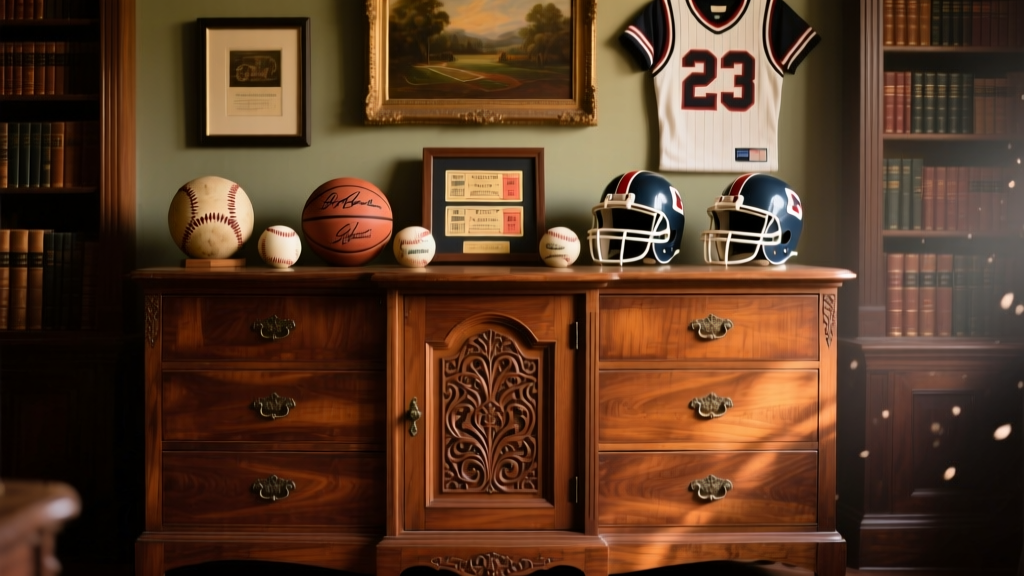
Victorian Pine Dresser: Authenticating a 39" × 64" Two-Tier Six-Drawer Piece with Center Cabinet Door
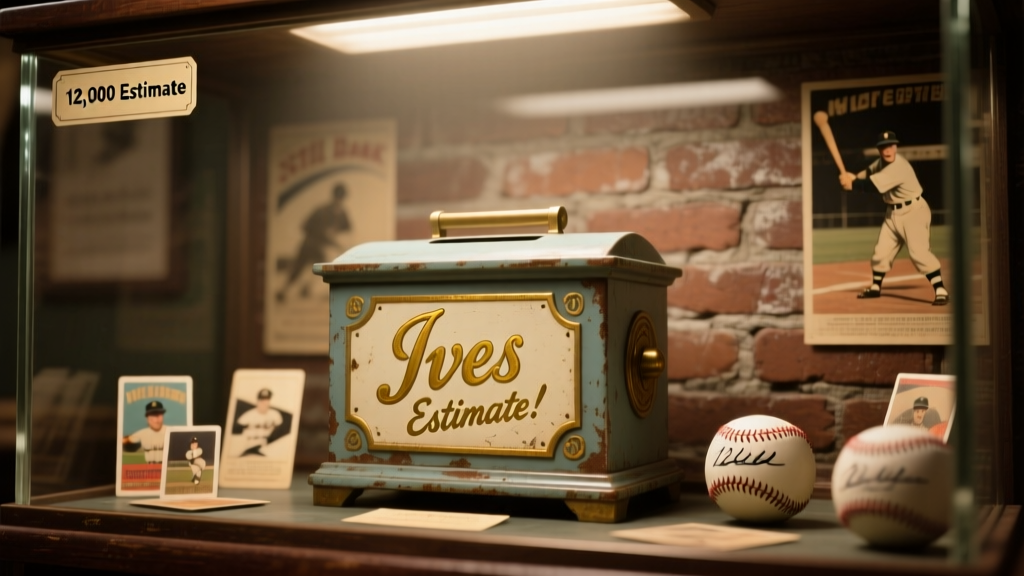
Ives Still Bank Carries $12,000 Estimate: Rarity, Provenance, and the Mechanics of a Legendary Tin Litho Bank
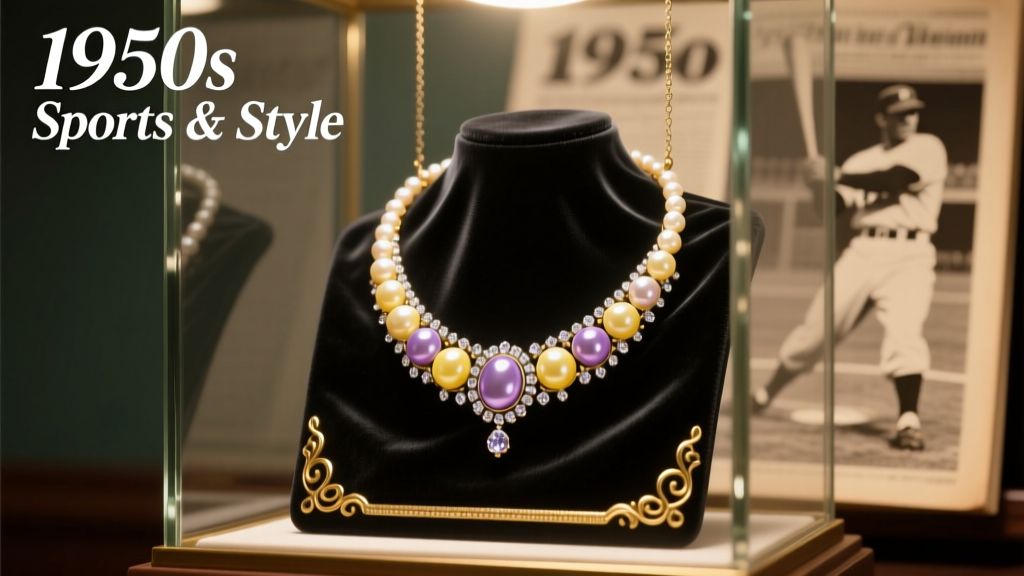
The 1950s Bib Necklace Revival: Authenticating Oval Faux Pearl & Rhinestone Jewelry in Yellow and Lavender
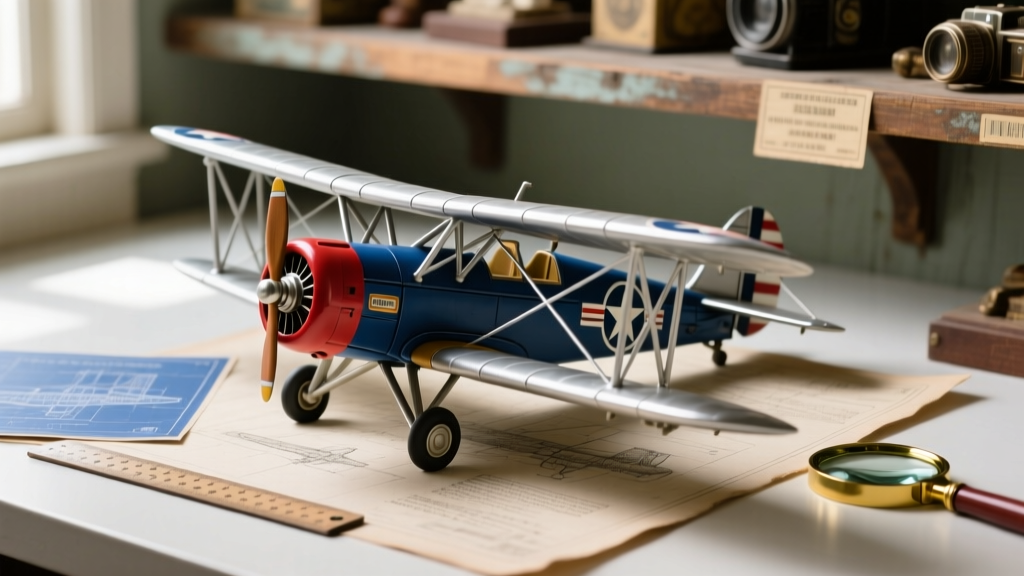
Victory Series American Modelcraft: Authenticating the 1940s 20-Inch Wingspan Toy Airplane Model Kit
Maps Minnesota Counties Colored 16 X 13 In: Collector’s Guide to Authenticity, Provenance, and Value
Redware Michael Jackson 'Off the Wall' Vinyl: Decoding the Rare 1979 Epic Records Pressing
Metlox Poppy Trail Vegetable Bowl: Authentication, History, and Collectibility of the Iconic 12-Inch Two-Section American Dinnerware Piece