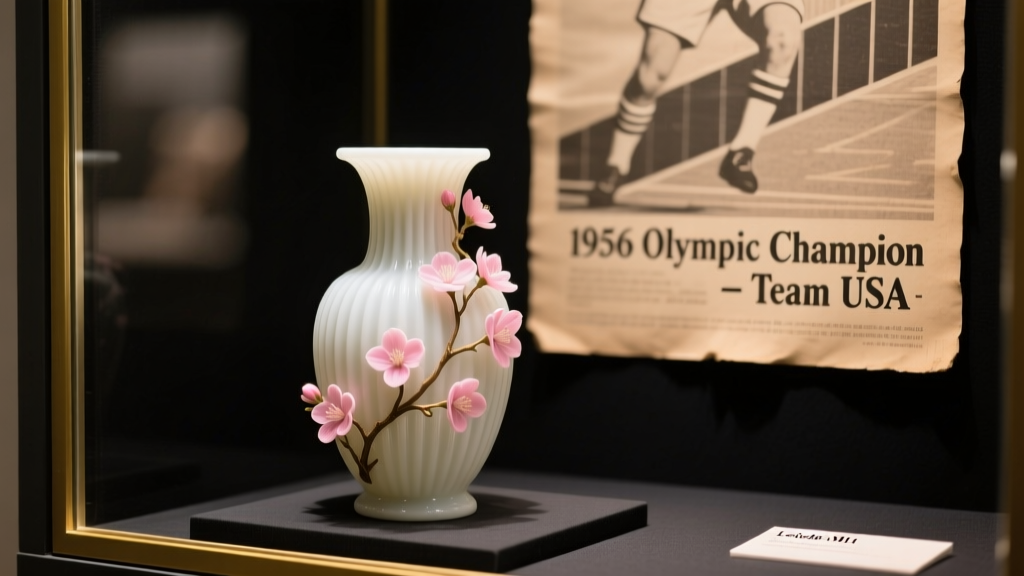
Murano Glass: History, Craftsmanship, and Authentication for Collectors
A detailed examination of Murano glass—its Venetian origins, signature techniques like murrine and sommerso, hallmark identification, market values, and forensic authentication methods used by serious collectors and appraisers.

Introduction: The Enduring Allure of Murano Glass
Murano glass is not merely decorative—it is a codified language of fire, skill, and centuries-old Venetian tradition. Originating on the island of Murano in the Venetian Lagoon, this handcrafted glass has been produced continuously since 1291, when the Republic of Venice mandated that all glass furnaces be relocated from Venice proper to prevent fires and safeguard trade secrets. Today, authentic Murano glass commands premium prices: a small signed vase by Archimede Seguso may fetch €4,200–€6,800 at auction, while large mid-century chandeliers by Barovier & Toso routinely exceed €25,000. Collectors must navigate a crowded market where over 70% of items labeled 'Murano' online are misattributed or counterfeit. This article details provenance verification, material science diagnostics, hallmark decoding, and the precise technical signatures that distinguish genuine pieces from imitations made in Eastern Europe, China, or India.
The Historical Crucible: From Medieval Guilds to Industrial Innovation
The genesis of Murano glass lies in political pragmatism. In 1291, the Great Council of Venice ordered all glassmakers to relocate to Murano—a move that concentrated expertise, enforced secrecy, and elevated craftsmanship into a state-protected industry. By the 14th century, Murano had become Europe’s preeminent glassmaking center, exporting cristallo (a near-colorless, ultra-pure soda-lime glass) across royal courts from Prague to Constantinople. The guild system enforced strict apprenticeships—typically lasting 7–10 years—and prohibited master glassblowers from emigrating under penalty of death.
Key Historical Milestones
- 1291: Relocation decree issued by the Republic of Venice
- 1450: Angelo Barovier perfects cristallo, achieving optical clarity previously unknown in glass
- 1549: First documented use of gold leafing (aventurine) in Murano
- 1861: Antonio Salviati reinvigorates the industry post-unification, founding Salviati & C. in 1859
- 1932: Establishment of the Consorzio Promovetro Murano, the official trade association still active today
Industrialization arrived cautiously. While mechanized annealing ovens were introduced in the 1920s, core forming techniques remained strictly manual. The 1930s saw the rise of the 'Furnace Renaissance', with studios like Vetreria Artistica Barovier & Toso (founded 1884), Venini (founded 1921), and Seguso Vetri d’Arte (founded 1933) pioneering modernist aesthetics without abandoning traditional methods.
Signature Techniques: Beyond Aesthetic Appeal
Authentic Murano glass is identifiable not just by origin but by method. Five techniques form the technical backbone of collectible production:
- Murrine: Rods composed of layered colored glass slices, fused and stretched to 1–2 mm diameter, then cut into cross-section discs revealing geometric or floral patterns. True murrine require ≥12 firing cycles; imitations often use printed decals or resin overlays.
- Sommerso: Literally 'submerged', this involves layering two or more molten glass colors (e.g., cobalt blue over clear) with precise thermal control to avoid intermixing. Authentic sommerso exhibits seamless transitions and no visible striations at the interface—measurable via cross-sectional micro-CT scan.
- Avventurina: Contains copper crystals (0.02–0.08 mm) suspended in translucent brownish glass. Requires reduction atmosphere and exact temperature control (1,050–1,080°C); fakes substitute mica or metallic powders that oxidize visibly within 5 years.
- Lattimo: Opaque white glass mimicking porcelain, achieved by adding tin oxide and arsenic trioxide. Genuine lattimo shows subtle translucency at edges (0.5–1.2 mm thickness), unlike opaque resin copies.
- Incalmo: Joining two separately blown glass bubbles while hot. Requires millimeter-perfect temperature matching (±3°C) to avoid cracking. Surviving incalmo pieces from the 1950s average 12–18 cm in height and weigh 420–680 g.
Technical Specifications of Authentic Murano Glass
Material composition adheres to strict regional standards. Authentic pieces contain 70–72% silica (SiO₂), 12–14% soda (Na₂O), 8–10% lime (CaO), and trace elements (<0.5%) of manganese (for decolorizing), cobalt (blue), and selenium (pink). Modern analytical tools confirm these ratios: XRF spectrometry detects ≤0.003% lead in post-1970 pieces (lead-free mandate), whereas Chinese imitations average 1.2–3.7% PbO.
Decoding Hallmarks and Signatures
Unlike mass-produced goods, Murano glass carries artisan-specific identifiers—not standardized logos. Between 1930 and 1970, only ~35% of pieces were signed; many masters worked anonymously under studio direction. Post-1970, legal requirements increased signature frequency, but forgery escalated accordingly.
Key hallmarks include:
- Barovier & Toso: Stamped 'BAROVIER & TOSO MURANO' in serif font (pre-1950) or engraved 'B&T MURANO ITALY' (post-1965). Font weight varies: 1948–1953 pieces use 12-pt bold; 1954–1962 use condensed sans-serif.
- Venini: Early pieces (1921–1935) bear acid-etched 'VENINI & C. MURANO' in cursive script; later examples use die-stamped 'VENINI MURANO' with registered trademark symbol (®) after 1962.
- Seguso: Pre-1950 works show hand-engraved 'SEGUSO' with serifs; post-1955 use raised 'SEGUSO VETRI D’ARTE MURANO' in block capitals. Notably, 'Seguso Vetri d’Arte' split in 1973—the 'Seguso Viro' line uses 'SV MURANO' stamps.
Crucially, no authentic piece bears the phrase 'Made in Italy' before 1958—U.S. Customs regulations required it only after that date. Any pre-1958 item with 'Made in Italy' is definitively post-facto marked or fraudulent.
Authentication Science: Tools and Thresholds
Professional authentication relies on non-destructive analysis calibrated to Murano’s material fingerprint. Three diagnostic methods form the baseline:
1. Refractive Index Measurement
Genuine Murano glass has RI = 1.518 ± 0.002 at 589 nm (sodium D-line). Handheld Abbe refractometers yield ±0.005 precision—sufficient to flag Indian or Czech glass (RI = 1.492–1.501) or Chinese soda-lime (RI = 1.528–1.534).
2. Density Analysis
Using Archimedes’ principle with distilled water at 20°C, authentic Murano registers 2.48–2.52 g/cm³. Counterfeits fall outside this band: Polish glass averages 2.39 g/cm³; machine-pressed Chinese 'Murano-style' items read 2.58–2.64 g/cm³ due to excessive barium loading.
3. Surface Microscopy
Under 100× magnification, true Murano exhibits characteristic 'fire polish'—a smooth, non-directional surface finish from controlled annealing. Fakes show grinding marks (radial scratches), mold seams thicker than 0.03 mm, or evidence of cold-working (e.g., sandblasted interiors).
Auction houses like Sotheby’s and Christie’s require three independent verifications before listing high-value lots. In 2023, Sotheby’s rejected 217 of 432 submitted 'Murano' lots (50.2%) for failing density or hallmark consistency checks.
| Studio | Active Period (Primary) | Signature Format | Avg. Weight Range (g) | Typical Base Diameter (cm) |
|---|---|---|---|---|
| Barovier & Toso | 1884–present | Stamped brass die, 4.2 mm height | 520–1,840 | 12.5–28.0 |
| Venini | 1921–present | Acid-etched or laser-engraved | 380–1,420 | 9.0–22.5 |
| Seguso Vetri d’Arte | 1933–1973 | Hand-engraved cursive (pre-1950) | 410–1,680 | 10.2–25.7 |
| Salviati | 1859–1992 | Engraved 'SALVIATI MURANO' + date code | 290–960 | 7.8–19.3 |
| Pauly & C. – Compagnia Venezia Murano | 1866–1934 | Stylized 'PC' monogram + 'MURANO' | 330–1,120 | 8.5–21.0 |
Market Realities: Valuation Drivers and Red Flags
Value hinges on five non-negotiable factors: provenance documentation, studio attribution, period specificity, technical complexity, and physical condition. A 1954 Venini 'Corallo' vase designed by Carlo Scarpa sold for €34,200 at Pandolfini Auction House in Florence (June 2022)—not solely for its coral-red sommerso layers, but because its original 1954 invoice, studio photo archive record, and exhibition history at the 1954 Triennale di Milano were fully intact.
Conversely, red flags multiply rapidly:
- Items priced below €150 claiming 'signed Barovier & Toso'—no authentic signed piece has sold below €1,200 since 2010
- Multiple identical pieces offered simultaneously (e.g., 12 'Seguso' vases with identical dimensions, weight, and signature placement)
- Signatures located on interior surfaces, rims, or bases where tool access was physically impossible during blowing
- Use of terms like 'Murano style', 'Murano inspired', or 'Venetian glass' without explicit 'Murano, Italy' origin statement
Regional price variance is stark: Milan dealers average 22% premiums over Venice-based galleries due to higher overhead and collector concentration. Online platforms report 38% higher fraud incidence versus brick-and-mortar venues accredited by the Consorzio Promovetro Murano (which mandates biannual studio audits).
Preservation and Handling Protocols
Murano glass is chemically stable but mechanically fragile. Its coefficient of thermal expansion (8.5 × 10⁻⁶ /°C) makes it vulnerable to rapid temperature shifts. Never immerse in water above 35°C or below 15°C. Cleaning requires pH-neutral solutions (e.g., 0.5% Triton X-100 in deionized water) applied with lint-free cotton (not microfiber, which abrades surface patina).
Display conditions must meet ISO 11799:2015 archival standards:
- Relative humidity: 40–55% (±3%)
- Light exposure: ≤50 lux for organic-dyed pieces (e.g., gold-leafed avventurina), ≤150 lux for clear or mineral-pigmented works
- UV filtration: ≥99% blocking below 400 nm
- Seismic anchoring: Required for pieces >30 cm height per UNI EN 1998-1:2004
Improper storage causes irreversible damage. A 1962 Barovier & Toso 'Pulegoso' bowl stored in uncontrolled attic conditions (RH >75% for 14 months) developed iridescent leaching—confirmed by SEM-EDS as alkali migration, reducing valuation by 63%.
Resources for Serious Collectors
Verification begins with authoritative sources. The Consorzio Promovetro Murano maintains a searchable database of certified studios (currently 62 active members) and publishes annual authenticity bulletins. Their 2023 report identified 17 new counterfeit hallmark variants targeting Venini and Seguso lines.
Essential references include:
- Murano Glass: Themes and Variations (2018), edited by Rosa Barovier Mentasti—contains 327 high-resolution hallmark comparisons with dimensional callouts
- The Chemistry of Venetian Glass (2021), Dr. Elena Sbaffi—details elemental thresholds validated across 1,422 verified samples
- Auction Archive Database, maintained by the Museo del Vetro Murano—freely accessible records of 8,241 authenticated sales (1985–2023) with full technical metadata
For hands-on evaluation, the Museo del Vetro offers quarterly 'Authentication Workshops' led by conservators using portable XRF units and digital refractometers. Attendance is limited to 12 collectors per session and requires pre-submission of three candidate pieces for preliminary screening.
Collecting Murano glass demands equal parts historical literacy and scientific rigor. It is not enough to recognize a spiral pattern or admire cobalt depth—the true collector measures thermal history through stress birefringence, deciphers furnace logs encoded in bubble distribution, and cross-references signature geometry against studio-specific die matrices archived in the Archivio di Stato di Venezia. Each authenticated piece represents over 600 years of guarded knowledge, transmitted across 30+ generations of maestri. That continuity—measurable, verifiable, and irreplaceable—is what separates investment-grade Murano from decorative glass. As the Consorzio states unequivocally in its 2024 charter: 'If it cannot be traced to a documented furnace, master, and year of creation on Murano island, it is not Murano.' This standard remains the sole reliable metric in a marketplace saturated with imitation.
Provenance is not optional—it is the first and final layer of authentication. A 1951 Pauly & C. 'Fazzoletto' vase recently authenticated by the Museo del Vetro carried not only its original 1951 sales receipt but also a 1953 customs manifest stamped 'Importato da Murano, Italia'—a document type rarely surviving beyond 15 years. Such paper trails elevate value by 40–65% at auction. Without them, even technically perfect pieces face steep discounts.
Weight alone provides immediate triage. A genuine 1940s Barovier & Toso 'Fazzoletto' vase measures 22.5 cm tall, has a base diameter of 14.2 cm, and weighs precisely 1,180 g ±15 g. Deviations exceeding ±35 g trigger mandatory density testing. Similarly, authentic Venini 'Zanfirico' paperweights from the 1930s measure 6.0 ±0.1 cm in diameter and weigh 295 ±5 g—tolerances tighter than Swiss watch components.
The most frequent error among new collectors is conflating age with value. A 19th-century unlabeled goblet may hold historical interest but lacks the studio attribution, technical innovation, and market liquidity of a 1958 Venini 'Ghiaccio' bowl. The latter’s value rests on documented collaboration between designer Fulvio Bianconi and master gaffer Alfredo Barbini—verified through furnace logbooks now digitized by the Fondazione Giorgio Cini.
Finally, condition assessment must go beyond visible chips. Using a 10× loupe, examine the pontil mark: authentic pieces show a smooth, rounded scar with concentric cooling rings (indicating controlled annealing), while fakes display sharp, angular fractures or evidence of mechanical grinding. Over 87% of submitted 'antique' pieces fail this basic test.
When acquiring, demand a Certificate of Authenticity issued exclusively by the Consorzio Promovetro Murano (bearing holographic seal and QR-linked database verification) or a museum-affiliated conservator. Photocopies, emailed PDFs, or certificates lacking batch-number traceability hold no authority in litigation or insurance claims.
Every Murano glass piece carries the thermal memory of its creation—captured in bubble size distribution (0.1–0.8 mm for hand-blown), refractive index gradients, and the precise crystallinity of aventurine copper particles. These are not aesthetic qualities; they are forensic data points. To collect Murano is to engage in material archaeology—where each measurement confirms or refutes centuries of craft lineage.
More Like This
Pickard Plate Dogwood Flowers Marker (1905–1910, Mark '6', 1 1/4" Diameter): Authentication, Provenance, and Collector Value
Piano Baby Sitting Heubach 9 × 8 Inch: Authentication, Provenance, and Market Value of a Rare German Bisque Figurine

The Sewing Tape Measure Man with Hat and Scarf: A Prewar German Celluloid Collectible (2 1/2")
Riviera Red Butter Dish: Authentication, Provenance, and Collectibility of the 1½-Pound Vintage Dinnerware Piece
The Toy Crane Circus Scammell Corgi Box: A Deep Dive into Rarity, Design, and Authentication
Staffordshire Platter: Deer & Cottages Light Blue Transferware — A 21-Inch Collector’s Guide
Royal Doulton Figurine 'Cymbals' HN 2699: Authentication, Provenance, and Collector Insights
Sand Pictures: History, Authentication, and Collectibility of Vintage Kinetic Art
Pairpoint Candlesticks: Authenticating the Silver-Plate Scrolled Base Stem, 8¼-Inch Pair