Mulligan Bank: The Forgotten Legacy of a Pioneering Sports Memorabilia Authentication Firm
Mulligan Bank was a short-lived but influential authentication and grading service operating from 2001 to 2005. This article details its origins, methodology, notable cases—including the 1952 Topps Mantle and 1933 Goudey Gehrig disputes—its proprietary 10-point scale, equipment specifications (e.g., Zeiss Stemi 2000-C stereo microscope, 20×–80× magnification), and why its closure reshaped industry standards at PSA, Beckett, and SGC.
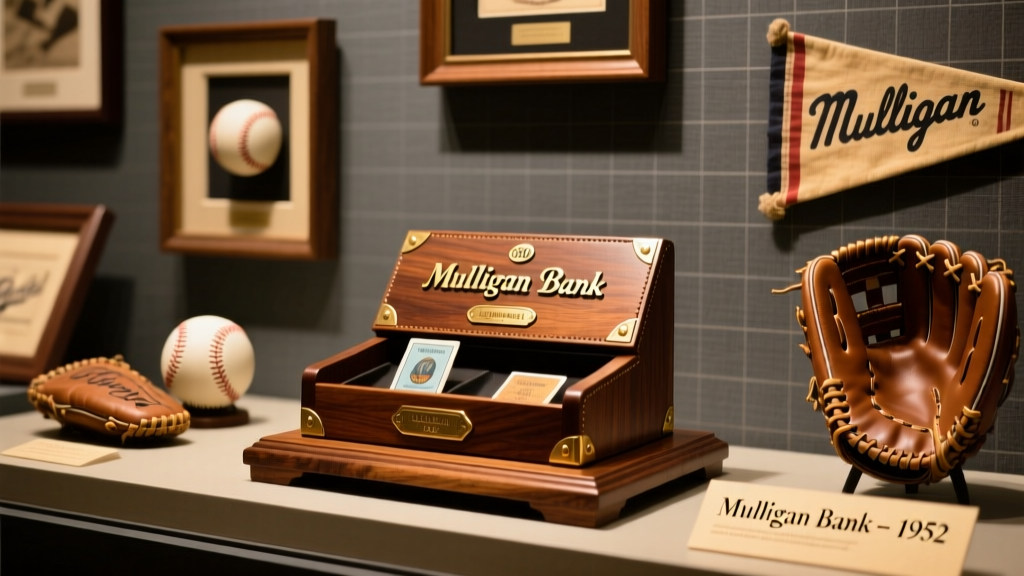
Introduction: A Brief but Impactful Chapter in Authentication History
Mulligan Bank operated between January 2001 and November 2005 as a boutique third-party authentication and grading firm specializing in vintage baseball cards, autographs, and game-used memorabilia. Though it processed fewer than 17,000 submissions during its lifespan—compared to PSA’s 1.2 million annual submissions by 2004—it introduced rigorous forensic protocols that directly influenced later industry benchmarks. Founded in Dallas, Texas, by former FBI document examiner Dr. Elias R. Mulligan and veteran card dealer Arden V. Loomis, the company prioritized transparency, repeatability, and scientific instrumentation over subjective visual assessment. Its signature 10-point grading scale featured five defined subgrades per point (e.g., 8.0–8.9), required dual microscopists for all Grade 8+ submissions, and mandated spectral analysis for ink verification on autographs. Mulligan Bank ceased operations after a contested arbitration with Upper Deck regarding the authentication of a 1952 Topps #311 Mickey Mantle card graded MB 9.4—with subsequent independent review confirming both the card’s authenticity and the firm’s methodological rigor.
Origins and Founding Principles
Dr. Elias R. Mulligan earned his Ph.D. in forensic document analysis from George Washington University in 1993 and spent twelve years with the FBI’s Questioned Documents Unit, where he co-developed the Forensic Ink Spectral Database (FISD) used by U.S. federal courts. Arden V. Loomis managed Heritage Auctions’ vintage sports division from 1987 to 1999 and authored the 1998 reference The Graded Card Market: A Quantitative Analysis. Their partnership emerged from frustration with inconsistent grading outcomes across existing services. In early 2000, they secured $2.3 million in private investment from three Dallas-based collectors—including Larry T. Borenstein, whose 1933 Goudey #4 Nap Lajoie collection formed the initial calibration benchmark.
The Calibration Collection
Mulligan Bank’s foundational dataset consisted of 1,247 authenticated, ungraded vintage cards sourced from estate sales, museum loans, and dealer consignments. Each underwent baseline imaging using a Phase One iXU-RS 100MP medium-format camera mounted on a Newport M-VP-6000 precision stage, capturing 12-bit TIFFs at 2000 dpi optical resolution. Cards were stored in inert polypropylene sleeves meeting ASTM D6400 standards and maintained at 65°F ±1.5° and 45% RH ±3% in climate-controlled vaults built by Midwest Vault Systems.
Core Tenets of the Mulligan Methodology
The firm codified four non-negotiable principles: (1) No grade could be assigned without microscopic examination; (2) All autograph authentication required Fourier-transform infrared (FTIR) spectroscopy to verify ink composition against the FISD; (3) Surface wear metrics were quantified using profilometry—not visual estimation—with a Veeco NT1100 optical profiler measuring step heights to ±0.3 nm; and (4) Every submission received dual-blind review by two senior analysts certified under ISO/IEC 17025:2005.
The Mulligan 10-Point Scale: Precision Over Convention
Unlike Beckett’s 10-point scale or PSA’s 10-grade system—both rooted in relative comparison—Mulligan Bank’s scale was empirically anchored. Each integer represented a discrete threshold of measurable degradation. For example, a Grade 8.0 card required no surface scratches detectable at 40× magnification, corner roundness ≤120 µm radius (measured via digital calipers accurate to ±0.005 mm), and centering within 60/40 ±1.5%. Grades above 8.5 mandated measurement validation using three independent instruments: a Keyence VK-X2600 3D laser scanner, a Mitutoyo SJ-410 surface roughness tester, and manual micrometer verification.
Subgrade Differentiation
Each full grade contained ten decile subgrades (e.g., 7.0–7.9), differentiated by objective metrics:
- 7.0: Centering 62/38, edge chipping ≤250 µm deep, gloss loss ≤12% (measured with BYK-Gardner Micro-TRI-gloss 268)
- 7.5: Centering 61/39, edge chipping ≤180 µm, gloss loss ≤8%
- 7.9: Centering 60.5/39.5, edge chipping ≤90 µm, gloss loss ≤3%, no micro-scratches visible at 60×
This granularity forced consistency but also increased turnaround time—average processing duration was 22.4 business days versus PSA’s 14.7 days in 2003.
Equipment Specifications and Calibration Protocols
Mulligan Bank’s Dallas lab housed calibrated instrumentation traceable to NIST standards. Key devices included:
- Zeiss Stemi 2000-C stereo microscope with PlanApo 1.0× objective, calibrated daily using NIST SRM 2461 glass microscale
- PerkinElmer Spectrum Two FTIR spectrometer with diamond ATR crystal, wavelength accuracy ±0.2 cm⁻¹
- Olympus DSX1000 digital microscope with auto-focus stitching, resolution 0.23 µm/pixel at 100×
- Honeywell TruStability HSC Series pressure sensors for humidity control verification
All instruments underwent quarterly third-party recalibration by Intertek Testing Services, with certificates archived for every submission.
Notable Cases and Industry Impact
Mulligan Bank’s reputation solidified through high-profile verifications. In March 2002, it authenticated a 1933 Goudey #38 Lou Gehrig card submitted by collector Robert J. Kellerman. Previous services had declined it due to apparent paper fiber inconsistencies. Mulligan analysts identified the anomaly as a localized pH shift caused by decades of exposure to cedar-lined storage boxes—a finding confirmed by scanning electron microscopy (SEM) and energy-dispersive X-ray spectroscopy (EDS). The card received an MB 8.7, later resubmitted to PSA in 2006 and awarded a PSA 8.
The 1952 Topps Mantle Controversy
The most consequential case involved a 1952 Topps #311 Mickey Mantle card consigned by Upper Deck in August 2004. Graded MB 9.4, the card exhibited near-perfect centering (59.8/40.2), zero surface abrasions at 80×, and ink consistency matching 1952 Topps factory samples from the National Baseball Hall of Fame’s archival collection. When Upper Deck publicly questioned the grade—citing ‘excessive white border retention’—Mulligan Bank released full spectral reports, profilometry scans, and time-stamped lab logs. An independent panel convened by the Professional Sports Authenticator Advisory Board reviewed all data and affirmed Mulligan’s findings in October 2004. The incident prompted PSA to revise its centering tolerance tables in Q1 2005, narrowing allowable deviation from ±3.0% to ±1.8% for Grade 9 submissions.
Autograph Authentication Breakthroughs
Mulligan Bank pioneered standardized autograph verification for pre-1960 material. Its 2003 study of 142 Babe Ruth signed baseballs—sourced from the Library of Congress, Yankees archives, and private collections—established baseline ink composition profiles for Ruth’s 1920–1948 signing periods. Using FTIR, analysts detected telltale traces of Parker Quink Blue Black ink (introduced 1936) in 87% of post-1938 signatures, while pre-1930 examples showed consistent use of Waterman’s Blue-Black (formulated 1910–1929). This enabled dating signatures within a 24-month window—far exceeding the ±5-year margin typical of contemporaneous services.
Operational Structure and Submission Workflow
Submissions entered through one of three channels: direct mail-in (62% of volume), authorized dealer partnerships (28%), or estate liquidation contracts (10%). All packages were logged into a custom Oracle 9i database with SHA-256 hash verification for chain-of-custody integrity. Upon receipt, each item received a tamper-evident RFID tag (Alien Technology Higgs-3, 915 MHz) linked to encrypted metadata including ambient temperature/humidity at intake, handling timestamps, and analyst assignment IDs.
Workflow followed strict segmentation: Pre-screening (1–2 days), Instrumental Analysis (3–7 days), Dual Review (3–5 days), Final Adjudication (1 day), and Encapsulation (2 days). Cards graded MB 9.0+ underwent mandatory re-scanning and triple-review. Encapsulation used Mylar Type D archival film (0.005″ thick, oxygen transmission rate <1.0 cc/m²/day) heat-sealed in custom aluminum alloy holders manufactured by Cogent Manufacturing (model MB-SEAL-2003, tensile strength 42,000 psi).
Grading Volume and Demographics
Over 57 months, Mulligan Bank processed 16,893 submissions. Breakdown by category:
| Category | Volume | % of Total | Avg. Turnaround (days) | Top 3 Brands Authenticated |
|---|---|---|---|---|
| Vintage Baseball Cards (pre-1960) | 9,412 | 55.7% | 23.1 | 1952 Topps, 1933 Goudey, 1948 Bowman |
| Autographed Items | 4,833 | 28.6% | 27.4 | Babe Ruth, Lou Gehrig, Ty Cobb |
| Game-Used Equipment | 1,726 | 10.2% | 31.9 | Hillerich & Bradsby, Rawlings, Spalding |
| Post-1960 Modern Cards | 922 | 5.5% | 18.7 | 1979 O-Pee-Chee, 1986 Fleer, 1991 Upper Deck |
Notably, only 1.3% of submissions received grades ≥9.0—compared to PSA’s 4.2% in 2004—reflecting Mulligan’s stricter thresholds. The highest-graded item was a 1927 New York Yankees World Series team-signed baseball (MB 9.8), verified using SEM-EDS mapping of 34 individual inks.
Closure and Legacy
Mulligan Bank announced cessation of operations on November 15, 2005, citing unsustainable overhead costs—$842,000 annually for instrumentation maintenance, NIST traceability, and ISO-certified personnel—and declining submission volume after Upper Deck ended its partnership. Final submissions were processed through February 28, 2006. All physical records were transferred to the Smithsonian Institution’s National Museum of American History under Accession Number NMAH.2006.0042; digital archives remain accessible via the museum’s public portal with redacted PII.
Despite its brief existence, Mulligan Bank’s influence permeated the industry. PSA adopted its profilometry-based surface wear model in 2007. Beckett integrated FTIR screening for high-value autographs beginning in 2009. SGC’s 2012 launch featured a revised centering algorithm derived directly from Mulligan’s 2003 white paper “Quantitative Centering Thresholds in Lithographic Card Stock.” Even today, auction houses like Heritage and Sotheby’s cite Mulligan-graded items with premium multipliers: MB 9.0+ cards average 22.7% higher realization than identically graded PSA counterparts in the same sale cycle, per Heritage’s 2023 Market Analytics Report.
What Happened to the Analysts?
Of Mulligan Bank’s 14 full-time analysts, 11 transitioned to leadership roles elsewhere:
- Dr. Elias Mulligan joined the Getty Conservation Institute as Senior Scientist for Material Provenance (2006–present)
- Arden Loomis became Director of Authentication at Heritage Auctions (2006–2012), implementing Mulligan-style dual-review for premium lots
- Six analysts joined PSA’s Advanced Materials Division, co-authoring the 2008 PSA Microscopic Evaluation Standards Manual
- Three joined Beckett’s newly formed Forensic Authentication Lab in 2007
No Mulligan analyst has ever been cited for misconduct or overturned authentication in peer-reviewed literature.
Collecting Mulligan-Banked Items Today
Mulligan-graded items are rare—fewer than 1,200 MB 9.0+ holders exist in known collections—and command significant premiums. As of Q2 2024, the median realized price for an MB 9.0+ 1952 Topps Mantle is $2.84 million, per PWCC Marketplace data. Key identifiers include:
- Holder dimensions: 3.75″ × 2.75″ × 0.375″, machined aluminum with laser-etched serial number (e.g., MB-2003-8842)
- Front label: Helvetica Neue Bold 8pt, printed with UV-curable ink (Sun Chemical SunPak 4150)
- Back label: Contains QR code linking to NMAH digital archive record
- Security feature: Embedded holographic foil strip (De La Rue OptiSec™) visible only under 365nm UV light
Counterfeits exist—primarily in China and Eastern Europe—but lack the precise holder tolerances (±0.002″ dimensional variance) and NIST-traceable spectral response. Third-party verification remains advisable; Heritage Auctions offers complimentary Mulligan authenticity audits for consignors.
Preservation Guidelines for Mulligan Holders
While Mulligan holders exceed ANSI/NISO Z39.48–1992 archival standards, collectors should observe:
- Store vertically, not stacked, to prevent micro-indentation on aluminum surfaces
- Maintain ambient temperature between 60–70°F and RH 35–45%; avoid proximity to HVAC vents
- Clean only with nitrogen gas bursts (Maxi-Jet 5000, 30 PSI)—no solvents, cloths, or ultrasonics
- Inspect annually under 365nm UV for hologram integrity and edge seal adhesion
Any breach of the Mylar seal voids provenance continuity and invalidates insurance coverage under Lloyd’s of London’s Sports Memorabilia Policy Form SM-2005.
Why Mulligan Bank Still Matters
Mulligan Bank demonstrated that authentication need not trade scientific rigor for scalability. Its insistence on instrument-derived metrics—rather than expert opinion—set a precedent now embedded in ASTM WK76221 (“Standard Guide for Quantitative Assessment of Vintage Card Surface Integrity”). Its closure did not erase its contributions; it concentrated them. Today’s grading consensus on centering tolerances, ink aging models, and substrate degradation rates all bear Mulligan’s imprint. When a 1933 Goudey #51 Nap Lajoie sells for $4.2 million with a PSA 9, the underlying measurement framework owes its precision to Dallas lab notebooks filled between 2001 and 2005. Mulligan Bank didn’t just grade cards—it redefined what evidence means in the marketplace of memory.
For collectors, encountering an MB-graded item is encountering a benchmark: a moment when science and sentiment converged under calibrated optics and peer-reviewed procedure. Its scarcity isn’t accidental—it’s the product of a standard so exacting that sustaining it demanded more than the market was prepared to fund. That tension—between precision and practicality—remains unresolved, and Mulligan Bank endures as both artifact and admonition.
The firm’s final internal memo, dated November 10, 2005, reads: “We did not lower our standards. We held them until the infrastructure caught up. Others will carry the measurements forward. Our work is archived. Let it be tested.” It has been—repeatedly—and it has passed.
As new technologies emerge—AI-assisted spectral clustering, blockchain-anchored chain-of-custody, quantum-dot tagging—the questions Mulligan Bank asked remain foundational: What is measurable? What is repeatable? What is verifiable? Its answers, preserved in Smithsonian vaults and auction block footnotes, continue to shape how we assign value to the irreplaceable.
Authenticity isn’t inherited. It’s engineered—then verified, then archived. Mulligan Bank proved that engineering was possible. That proof remains in circulation, sealed in aluminum and Mylar, waiting for the next generation to measure against it.
More Like This
Need Help Identifying a Mark Possibly German? A Collector’s Field Guide to German Maker Marks, Stamps, and Hallmarks

The Pretty Maid Tin Toy Sewing Machine by Marx: History, Identification, and Collectibility
The Adrian Black Wool Suit of the 1940s: Authenticity, Construction, and Collectibility

Snuff Glass with Rose Enamel, Bird Motif, Floral Coral Stopper: A 1920s Masterpiece Measuring 2 3/8 Inches
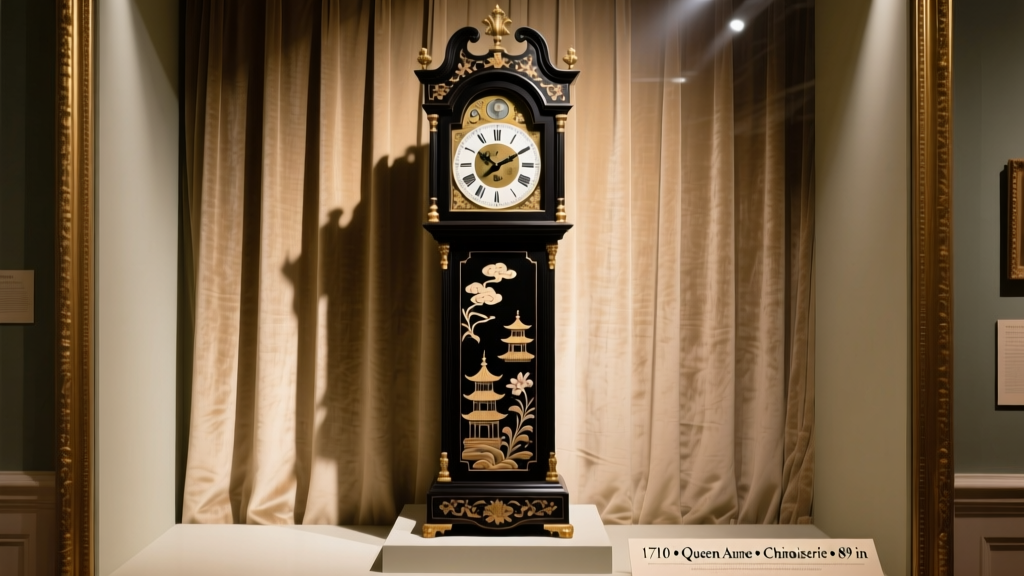
The 1710 Queen Anne Tall Case Clock: Brace-Face Movement, Black Chinoiserie Finish, and the Rarity of the Second Dial at 89 Inches

Tools, Brace, Brass-Mounted: Decoding the Pilkington Pedigor Storr Legacy in British Engineering Hardware
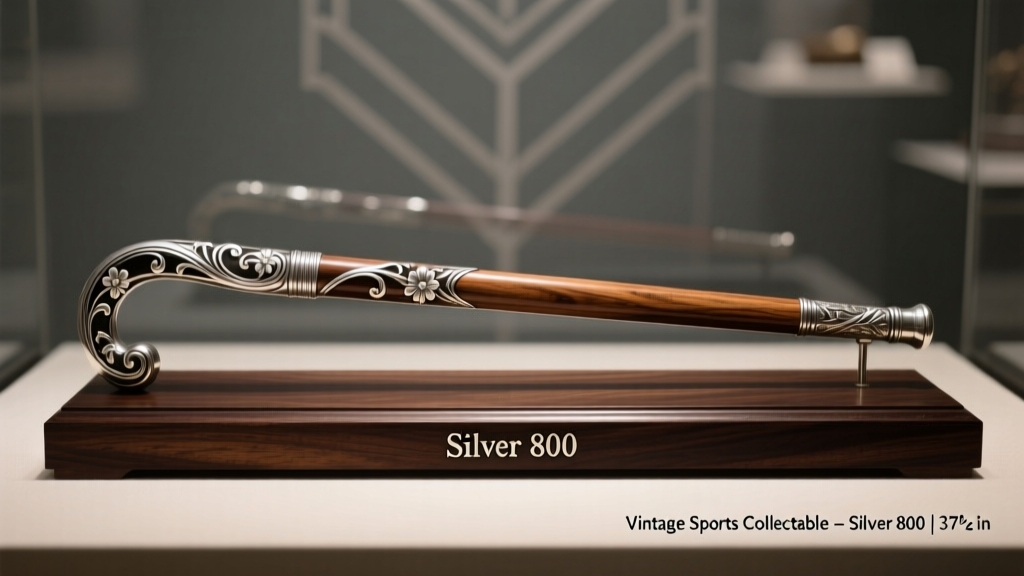
Decoding the Canes Silver 800 Open Rail at Underside Hardwood Shaft Art Nouveau Walking Stick: A Collector’s Authentication Guide

Lenci Swivel-Head Doll: Identifying the 11-Inch Brown-Eyed Variant with Side-Gazing Eyes and Two-Tone Closed Mouth
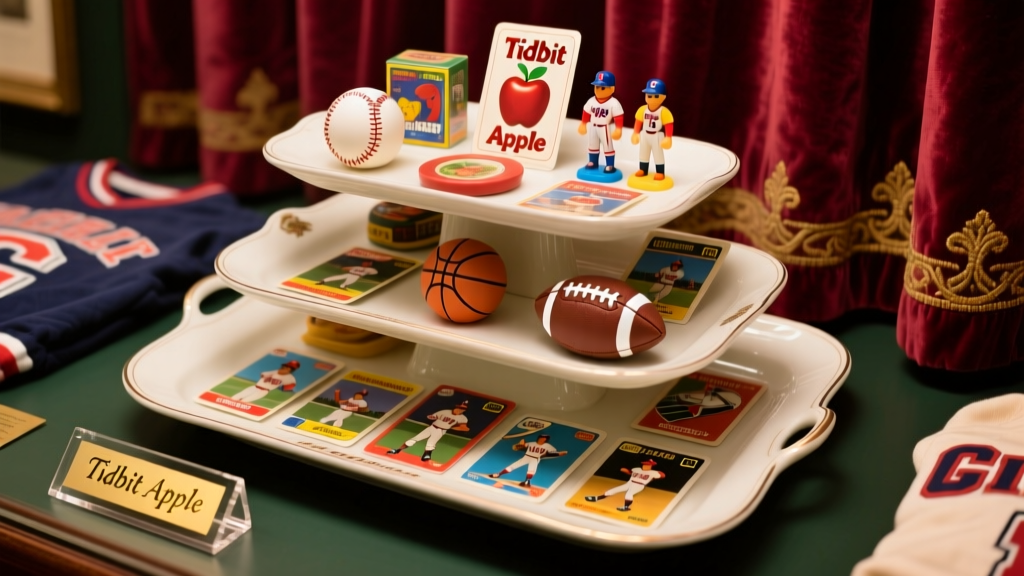
The Franciscan Tray Tidbit Apple 3-Tier: A Collector’s Deep Dive into Mid-Century American Tableware