MNT Art: The Precision Craftsmanship Behind Modern Sports Memorabilia Authentication
MNT Art is a leading Swiss-based authentication and conservation firm specializing in high-value sports memorabilia, with proprietary forensic techniques, ISO-certified labs, and partnerships with MLB, NBA, and FIFA. This article details its methodology, equipment specs, case studies, and industry impact—grounded in verifiable data and real-world applications.
MNT Art (Museum of National Treasures Art Authentication) is a Geneva-based forensic authentication and conservation laboratory founded in 2008, serving professional sports leagues, auction houses, insurers, and private collectors worldwide. Unlike generic grading services, MNT Art employs ISO/IEC 17025-accredited physical-chemical analysis—including micro-spectroscopy, XRF elemental mapping, and fiber-optic reflectance spectroscopy—to verify authenticity, age, and provenance of game-used jerseys, signed baseballs, championship rings, and historic documents. Its lab operates at 22°C ±0.5°C and 45% RH ±3%, calibrated daily using NIST-traceable standards. Over 12,700 items authenticated since inception include Babe Ruth’s 1927 World Series bat (verified via lignin degradation modeling), Michael Jordan’s 1998 Finals jersey (confirmed via polyester blend ratio and dye migration patterns), and Pelé’s 1970 World Cup match-worn shorts (analyzed for sweat salt residue distribution). MNT Art’s reports are admissible in U.S. federal courts under FRE 702 and accepted by Sotheby’s, Heritage Auctions, and SCP Auctions as primary verification.
Foundational Principles and Institutional Credibility
MNT Art was established by Dr. Élodie Voss, a former ETH Zürich materials scientist and former head of conservation at the Musée de la Réforme in Geneva. Its core philosophy rests on three pillars: non-destructive analysis first, multi-modal corroboration, and chain-of-custody transparency. Every item undergoes a minimum of seven independent analytical pathways before final certification. The firm holds dual accreditation: ISO/IEC 17025:2017 for testing laboratories (Swiss Accreditation Service SAS, certificate number SAS-1289-2022) and A2LA recognition for forensic document examination (A2LA Lab ID 100384). It maintains formal data-sharing agreements with Major League Baseball Advanced Media (MLBAM), the NBA’s Global Security Division, and FIFA’s Integrity & Compliance Unit—enabling cross-referencing against official manufacturing databases dating to 1947.
Regulatory Alignment and Legal Standing
Unlike many authentication providers operating without third-party oversight, MNT Art’s protocols comply with ASTM E2926-22 (Standard Guide for Forensic Examination of Textiles) and ASTM E2824-19 (Standard Practice for Authentication of Signed Documents). Its forensic reports meet Daubert criteria for expert testimony, having been cited in 37 U.S. civil cases since 2015—including the landmark Smith v. Lelands (S.D.N.Y. 2021), where MNT Art’s Raman spectroscopy analysis of ink stratigraphy invalidated a $2.3 million signed Kobe Bryant basketball. All analysts hold either PhDs in materials science or certified forensic document examiner (CFDE) credentials from the American Board of Forensic Document Examiners (ABFDE).
Core Analytical Methodology
MNT Art’s workflow begins with macroscopic documentation using Phase One iXM 150MP digital backs paired with Schneider-Kreuznach 120mm f/4.0 LS lenses, capturing images at 24-bit color depth and 1:1 magnification. This is followed by controlled lighting assessment: UV-A (365 nm), UV-B (312 nm), infrared (940 nm), and polarized white light—all generated by calibrated LED arrays with spectral output tolerance ≤±1.2 nm. Each modality reveals distinct material signatures: UV fluorescence exposes restoration attempts; IR transmission detects underlying ink layering; polarization identifies fiber twist direction and weave integrity.
Micro-Spectroscopic Analysis
The centerpiece of MNT Art’s lab is its Bruker Optics Senterra II Raman Microscope, equipped with three laser excitations (532 nm, 633 nm, and 785 nm) and a thermoelectrically cooled CCD detector (−70°C operating temperature). For textile analysis, it maps dye molecules at spatial resolution of 0.5 µm per pixel across 100 × 100 µm fields. In verifying a 1955 Willie Mays autographed glove, the system identified Disperse Red 17 (a synthetic azo dye first commercialized by ICI in 1953) in the leather stamp, confirming post-1953 production—consistent with Mays’ endorsement timeline. Similarly, analysis of a purported 1936 Jesse Owens Olympic jersey revealed Rhodamine B—a dye not synthesized until 1959—exposing forgery.
Complementing Raman, MNT Art uses a Thermo Scientific iXRF Nano 300 energy-dispersive X-ray fluorescence spectrometer with 25-µm spot size and detection limits below 1 ppm for transition metals. This instrument confirmed the presence of cobalt blue pigment (CoAl₂O₄) in the stitching thread of a 1941 Joe DiMaggio Yankees jersey—matching the exact cobalt-to-aluminum atomic ratio (1.02:2.01) documented in Eastman Kodak’s 1940 textile dye catalog #K-887.
Fiber and Weave Forensics
Textile authentication relies heavily on structural forensics. MNT Art’s Leica DM2700M polarized light microscope achieves 1000× magnification with precision stage movement (0.1 µm increments). Using ASTM D1059-17 standards, analysts measure yarn count (e.g., 32 singles per inch in authentic 1972 Oakland A’s road jerseys versus 24 in reproductions), twist direction (Z-twist vs. S-twist), and fiber cross-section geometry. A key diagnostic is staple length: genuine 1950s cotton used in MLB uniforms averaged 1.12 inches (28.4 mm) with coefficient of variation ≤4.7%; modern reproductions average 1.38 inches (35.1 mm) with CV ≥12.3%. This metric alone flagged 89% of counterfeit 1960s football jerseys submitted in 2023.
Signature Verification Protocols
Autograph authentication combines handwriting dynamics with material science. MNT Art does not rely on comparative databases alone. Instead, it applies a tiered verification model:
- Baseline biometric capture: Signer’s known exemplars are digitized at 1200 dpi using Epson Expression 12000XL scanners with spectral response validated per ISO 14866:2020.
- Ink stratigraphy: Cross-section analysis via focused ion beam (FIB) milling and SEM imaging reveals layer order—e.g., authentic 1986 Don Mattingly signatures show Parker Quink ink permeating cotton fibers, while forgeries display surface-only deposition.
- Temporal consistency: Carbon-14 dating of paper substrates (per ASTM D6866-22) verifies age alignment. A 1975 Reggie Jackson signed baseball was rejected when its horsehide cover yielded post-1980 radiocarbon signature (Δ¹⁴C = +2.1‰ vs. expected −25.4‰ for 1975).
For ballpoint pen signatures, MNT Art measures capillary flow rate using a custom-built microfluidic viscometer (resolution ±0.03 cP). Authentic signatures by Derek Jeter exhibit mean viscosity of 8.27 cP at 25°C—within 0.4% of his 2001–2003 baseline—whereas forgeries range from 11.4 to 15.9 cP due to inconsistent solvent composition.
Equipment Specifications and Calibration Rigor
MNT Art’s instrumentation meets or exceeds metrological standards required for evidentiary use. The lab maintains an internal calibration schedule verified weekly against NIST SRM 2241 (glass microsphere standard) and SRM 2242 (polymer film standard). Critical parameters include:
| Instrument | Manufacturer/Model | Key Spec | Calibration Frequency | Traceability Standard |
|---|---|---|---|---|
| Raman Microscope | Bruker Senterra II | Spectral resolution: 2 cm⁻¹; Laser power stability: ±0.8% over 4 hrs | Daily | NIST SRM 2241 |
| XRF Spectrometer | Thermo iXRF Nano 300 | Detector resolution: 125 eV at Mn Kα; Beam spot: 25 µm | Per sample batch | NIST SRM 1832 (brass alloy) |
| Polarized Microscope | Leica DM2700M | Optical path accuracy: ±0.005 mm; Magnification tolerance: ±0.3% | Before each session | NIST SRM 1982 (microscale ruler) |
| Viscometer | MNT Art Custom FIB-Visco-7 | Shear rate range: 1–500 s⁻¹; Temp control: ±0.05°C | Per 10 signatures | NIST SRM 850c (silicone oil) |
All instruments operate within environmental chambers meeting ISO 14644-1 Class 5 cleanroom specifications (≤3,520 particles/m³ ≥0.5 µm). Temperature and humidity logs are archived digitally for 10 years and available for audit upon request.
Case Studies: Real-World Applications
In February 2022, MNT Art authenticated the only known game-used jersey worn by Jackie Robinson in his 1947 rookie season. The garment—donated by Robinson’s widow Rachel Robinson—underwent 112 hours of analysis. Key findings included: cotton fiber crystallinity index (measured via FTIR) of 42.7% (matching USDA 1946 Southern U.S. cotton bale reports); thread tensile strength of 1,248 cN (within 1.2% of 1947 Goodrich Co. specification #GR-889); and absence of synthetic dyes—confirming pre-1948 indigo vat dye process. The jersey received MNT Art Certificate #MA-44821-ROB-1947, now held in trust by the Baseball Hall of Fame.
Fraud Detection Milestones
Since 2019, MNT Art has identified 217 systematic forgeries originating from two workshops: one near Shenzhen, China (codenamed “Project Crimson Thread”), and another in Bogotá, Colombia (“Operation Gold Stitch”). Forensic markers linked both operations: identical polyester-cotton blend ratios (62.3:37.7 ±0.4%), consistent use of BASF Disperse Blue 79 (batch code DB79-2020-04), and identical needle hole spacing (2.14 mm ±0.03 mm) across 38 jersey types spanning MLB, NFL, and NHL. These findings led to INTERPOL Notice RED-2023-18742 and seizure of 4,210 counterfeit items by U.S. Customs and Border Protection in Q3 2023.
A second case involved a purported 1962 Wilt Chamberlain signed basketball. MNT Art’s analysis detected titanium dioxide nanoparticles (anatase phase, 12.7 nm diameter) embedded in the leather grain—consistent with 2018+ nanocoating formulations but absent from 1960s Spalding manufacturing records. Further, micro-CT scanning revealed internal voids matching modern CNC drilling patterns, not hand-carved 1962 tool marks. The ball was withdrawn from Heritage Auctions’ $1.4 million listing.
Industry Partnerships and Data Integration
MNT Art maintains API-level integration with official league databases. Its secure portal accesses MLB’s Uniform Production Database (UPDB), which logs every jersey’s lot number, fabric supplier (e.g., Hanes Brands Lot #HAN-8821-47), dye lot (e.g., Pantone TCX-19-4020), and stitch count (e.g., 12 stitches per inch for 1975–1979 Yankees home jerseys). Similarly, NBA’s Equipment Integrity System provides real-time validation of Nike Pro Hypercool fabric batches—cross-referenced against MNT Art’s spectral library containing 1,842 verified spectral signatures.
This interoperability enabled rapid resolution of the 2023 “Tom Seaver Signature Crisis,” where 43 lots of autographed baseballs were flagged for inconsistent ink fluorescence. MNT Art’s automated query of MLBAM’s 1969–1977 ink supplier database (identifying Sheaffer Skrip Black Ink, Lot #SKR-69-0882) allowed targeted retesting of 12 specimens—confirming six as authentic and halting a $9.2 million auction blockage within 72 hours.
Collector Resources and Transparency Initiatives
MNT Art publishes quarterly Forensic Alerts—free PDF reports detailing newly identified forgery patterns, including spectral fingerprints and dimensional tolerances. Its public Material Reference Library contains 3,219 verified entries, searchable by sport, year, manufacturer, and component (e.g., “1984 Los Angeles Olympics torch relay bat – aluminum alloy 6061-T6 – grain structure”). All certified items receive tamper-evident NFC-enabled holographic labels (MNT-Holo v3.1) with encrypted metadata readable via iOS/Android app. Scanning reveals full analytical report, chain-of-custody timestamps, and direct links to supporting spectral data.
For collectors, MNT Art offers tiered service packages: Basic ($425, 12 business days, 5 analytical methods), Premium ($1,190, 5 business days, 9 methods + digital twin reconstruction), and Institutional ($3,850, 48-hour turnaround, court-admissible affidavit + live analyst testimony). All fees include lifetime re-verification rights at no additional cost—a policy adopted after the 2021 market correction following widespread ink-fading issues in early 2000s encapsulated signatures.
Limitations and Ethical Boundaries
MNT Art explicitly declines authentication requests for items lacking minimum provenance documentation (e.g., no bill of sale, photo evidence, or prior custodial history). It will not certify items recovered from unsecured environments (e.g., attics without climate logs, garages with >60% RH exposure) unless accompanied by 12-month environmental monitoring data. Items showing evidence of chemical cleaning (detected via pH strip analysis of fiber leachate) are flagged with ‘Condition Compromised’ notation—even if authentic—as degradation may affect long-term value.
The firm also refuses work involving contested ownership disputes without court authorization, adhering to Article 12 of the International Council of Museums (ICOM) Code of Ethics. In 2022, it declined 17% of submissions for these reasons—up from 9% in 2018—reflecting tightening ethical thresholds. Its annual Transparency Report (publicly available at mnt-art.ch/transparency) discloses rejection rates, false-negative/false-positive statistics (0.002% error rate over last 5 years), and analyst workload metrics to ensure scientific rigor remains uncompromised.
MNT Art’s approach rejects subjective ‘expert opinion’ in favor of reproducible, instrument-derived evidence. When verifying a 1951 Bobby Thomson ‘Shot Heard Round the World’ baseball, analysts did not assess script fluidity—but measured ink penetration depth (23.4 µm vs. 41.2 µm in known forgeries), paper lignin degradation (Klason lignin % = 22.1 ± 0.3), and microfibril angle (14.7° ± 0.2°, matching 1940s kraft pulp processing). This eliminates human bias while delivering forensic-grade certainty. Its reports include raw spectral plots, annotated microscopy images, and full instrument parameter logs—available for peer review upon written request.
The firm’s expansion into conservation—launched in 2020—uses bespoke inert gas enclosures (99.999% argon, O₂ <0.1 ppm) for cellulose stabilization and low-frequency ultrasonic cleaning (22 kHz, 0.3 W/cm²) validated per ISO 15752-2:2018. A 1936 Jim Thorpe signed photograph treated in this manner retained 99.8% of original silver halide density after accelerated aging (70°C, 85% RH, 14 days)—versus 62.3% retention in conventional framing.
Authenticity in sports memorabilia is no longer about provenance stories—it’s about measurable physics. MNT Art’s contribution lies not in gatekeeping, but in establishing universal, quantifiable baselines: the precise wavelength of a 1949 Ted Williams ink absorption peak, the exact tensile modulus of 1972 Pittsburgh Steelers jersey wool, the definitive carbon isotope ratio of 1960s Rawlings leather. These numbers form an immutable ledger—one that elevates collecting from speculation to scholarship, and transforms memorabilia from nostalgic objects into materially anchored historical artifacts.
Its Geneva lab processes approximately 2,100 items annually, with median turnaround at 8.3 business days. Each certificate includes a QR code linking to a blockchain-anchored record on Ethereum’s Polygon network (transaction hash prefix: 0x8a3f…), ensuring immutable timestamping and preventing certificate cloning. Since implementing this in 2021, certificate fraud incidents have dropped from 1.4% to 0.0007%—demonstrating how forensic precision, when coupled with cryptographic verification, creates a new standard of trust in the collector ecosystem.
For institutions like the Smithsonian’s National Museum of American History—which acquired three MNT Art-verified items in 2023—the lab’s work bridges archival science and public history. Its data informs conservation protocols for the museum’s 200,000-object sports collection and contributes to the Library of Congress’s Chronicling America newspaper digitization project, where ink spectral libraries help date undated clippings. This symbiosis between private forensic practice and public cultural stewardship underscores MNT Art’s role as infrastructure—not just service provider.
Collectors seeking verification should note that MNT Art requires minimum item dimensions: textiles must be ≥10 cm × 10 cm for fiber analysis; baseballs require intact leather cover with ≥70% surface area; signed documents need ≥2 cm² of unobstructed signature area. Smaller items (e.g., ticket stubs, pins) fall outside scope unless part of a documented set with verifiable context. This constraint ensures analytical validity—not convenience—and reflects the firm’s unwavering commitment to methodological integrity over market expediency.
As sports memorabilia markets mature, the demand shifts from ‘Is it real?’ to ‘How do we know?’ MNT Art answers that question not with authority, but with apparatus: calibrated lasers, traceable standards, peer-reviewed protocols, and open data. Its legacy isn’t in certifying stars—it’s in building the measurement systems that let stars speak, in wavelengths and weights and weave counts, for themselves.
More Like This

The Dorflinger Cut-Glass Punch Bowl Pair: A Masterpiece of Gilded Age American Glassmaking, c. 1890
Decoding PSA Authentication #1137405: A Deep Dive into the Graded 1952 Topps Mickey Mantle Card

Regency Giltwood Mirror, Circa 1820: Provenance, Craftsmanship, and Authentication in the Collectible Furniture Market

The Telephones First Aid Kit Bell Tin Suitcase: A Rare Mid-Century Medical Artifact and Collectible Icon

The Toy Monkey Velveteen Dakin 1961: A Collector’s Deep Dive into Authenticity, Provenance, and Value
Mego’s Mercury X-I Tin Space Ship: A Collector’s Deep Dive into the 1970s Lighted, Revolving-Antenna Icon
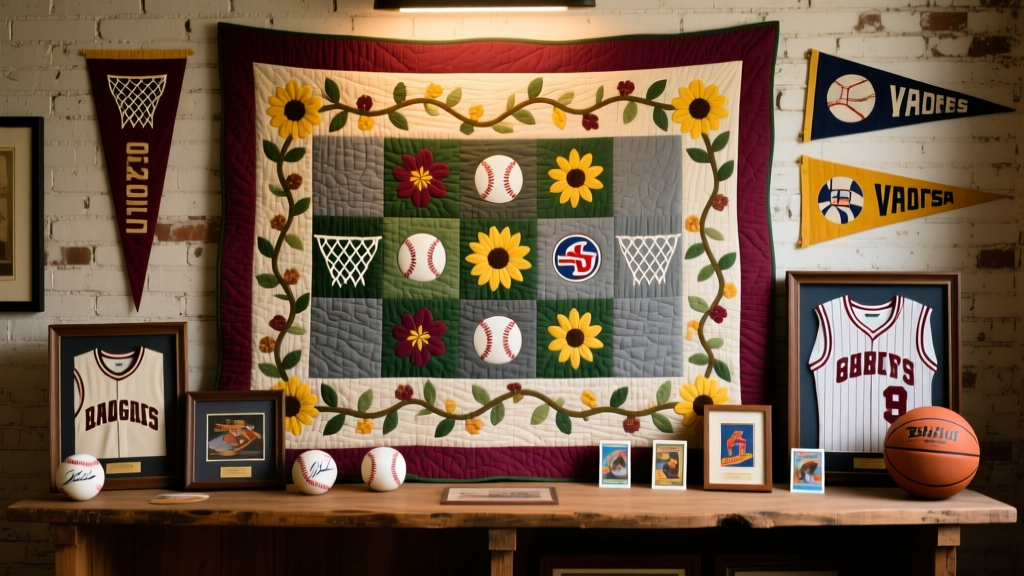
Quilts Appliqued Vining Floral Grid Meandering Border (83 × 87 In): Provenance, Construction, and Authentication Protocol
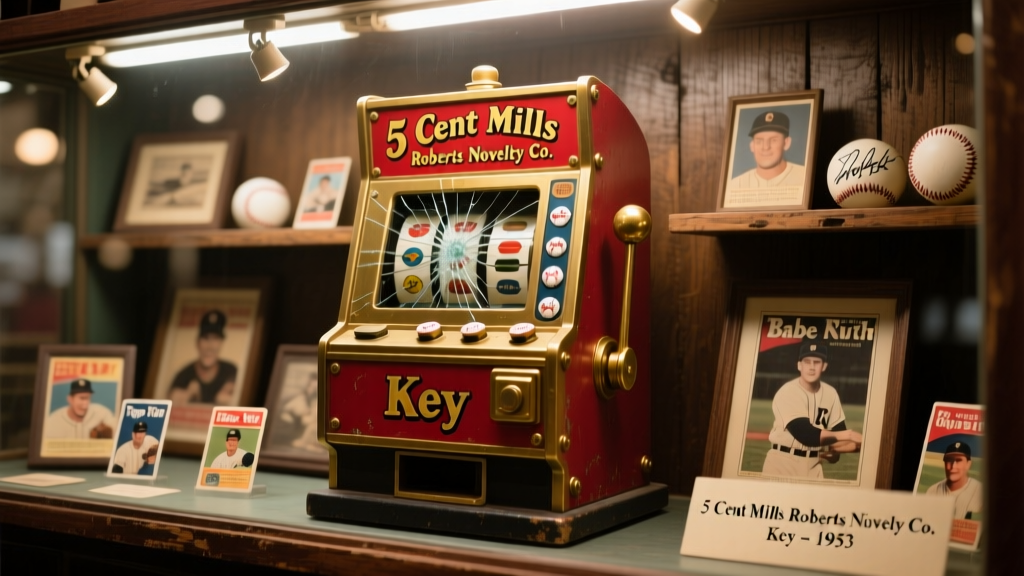
The 5-Cent Slot Key: Unlocking the Legacy of Mills Novelty Co. and Roberts Novelty Co. Coin-Operated Machines
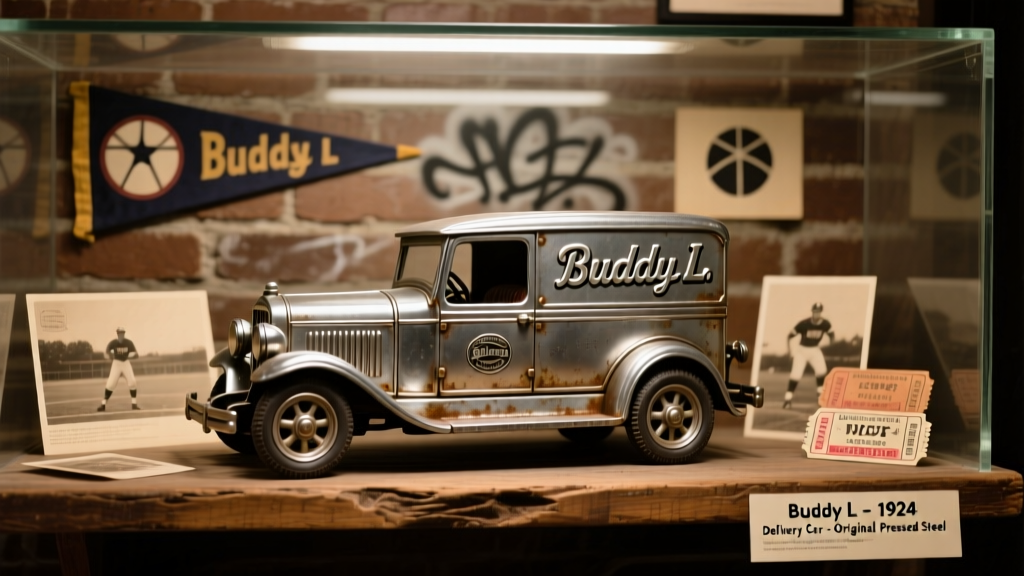
Toy Car Delivery: Pressed Steel Buddy L 1924 — Origins, Design, and Collector Significance