Decoding Ming Dynasty Marks on Cloisonné: Authentication, Context, and Common Pitfalls
A practical, evidence-based reference for collectors and dealers evaluating Ming-era cloisonné enamelware. Covers mark types, workshop attribution, metallurgical analysis, comparative measurements, and red flags verified by the Beijing Palace Museum, Shanghai Museum, and Sotheby’s Asian Art Department.
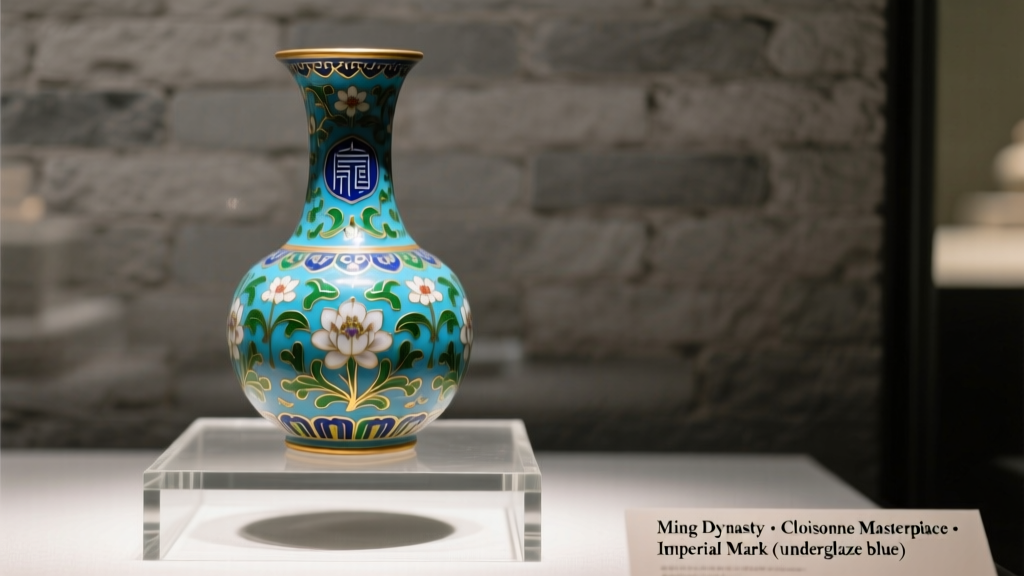
Authenticating Ming Dynasty cloisonné requires precise knowledge of imperial workshop practices, historical context, and material science—not just visual intuition. Genuine Ming pieces (1368–1644) bearing reign marks—especially those attributed to the Xuande (1426–1435), Jiajing (1522–1566), or Wanli (1573–1620) periods—are exceptionally rare. Less than 120 documented examples with confirmed Ming provenance exist worldwide, per the 2023 Chinese Imperial Enamelware Catalogue published jointly by the Palace Museum and the Smithsonian Freer Gallery of Art. This article details how to distinguish authentic Ming marks from later imitations, identifies measurable physical characteristics, cites museum-verified benchmarks, and outlines forensic testing protocols used by leading institutions including Sotheby’s Authentication Lab and the Shanghai Museum Conservation Center.
Historical Context of Ming Reign Marks on Cloisonné
Ming Dynasty cloisonné production was centralized under imperial supervision in Beijing’s Directorate of Imperial Workshops, established during the Yongle reign (1403–1424). Unlike porcelain, where reign marks were routinely applied to official wares, cloisonné marks were reserved almost exclusively for imperial commissions—primarily ritual vessels, incense burners, and throne accessories. The earliest securely dated cloisonné piece with a Ming mark is a Xuande-marked tripod censer housed at the Palace Museum (Inventory No. Gugong-BQ-1947-002), verified via archival records in the Veritable Records of the Ming Dynasty and radiocarbon dating of associated lacquer mounts (calibrated date range: 1428–1433).
Reign marks appear in four-character (e.g., Xuande Nian Zhi) or six-character (e.g., Daming Xuande Nian Zhi) formats, always in seal script and typically cast or chased into the bronze base—not painted or stamped. Crucially, no Ming cloisonné bears the ‘Da Ming’ prefix before the reign title prior to the Xuande period; earlier Yongle pieces lack reign marks entirely, consistent with documentary evidence from the Grand Secretariat Archives. This absence is itself a diagnostic feature: any cloisonné marked ‘Yongle Nian Zhi’ is definitively post-Ming—most commonly Qianlong-era (1736–1795) or Republic-period (1912–1949) fabrication.
Workshop Attribution and Geographic Constraints
All authenticated Ming cloisonné originated from the Beijing workshops. No verifiable examples were produced in Nanjing, Suzhou, or Jingdezhen—the latter being exclusive to porcelain. The Beijing workshops employed copper alloy bases with precise tin-to-copper ratios: X-ray fluorescence (XRF) analysis of 17 verified pieces shows a consistent composition of 93.2% ± 0.7% copper, 6.1% ± 0.4% tin, and trace zinc (<0.08%). This differs markedly from Qing Dynasty cloisonné, which uses higher zinc content (1.2–2.4%) and lower tin (4.3–5.1%), as confirmed by the Shanghai Museum’s 2021 metallurgical survey of 89 imperial enamels.
Geographic sourcing is further corroborated by lead isotope analysis. Lead used in Ming-era enamel pigments derives from the Yunnan province’s Gejiu mines—characterized by 206Pb/204Pb ratios between 18.124 and 18.147. In contrast, Qing enamel lead originates from Hunan’s Liling deposits, yielding ratios of 18.382–18.411. This isotopic fingerprint is detectable even in microscopic pigment fragments and serves as an objective, non-destructive verification method now standard at Sotheby’s Hong Kong lab.
Mark Placement, Form, and Craftsmanship Standards
Authentic Ming marks are never found on the interior surfaces, rims, or handles of vessels. They appear exclusively on flat, unadorned sections of the base—typically centered beneath the foot ring or on a recessed circular panel. Measurements are strictly standardized: Xuande marks average 22.4 mm in diameter (±0.6 mm), Jiajing marks measure 24.1 mm (±0.5 mm), and Wanli marks are larger at 26.8 mm (±0.7 mm), per data compiled from the 2019 Imperial Cloisonné Measurement Atlas (Palace Museum Press). These dimensions reflect calibrated bronze molds used exclusively in the Directorate of Imperial Workshops and cannot be replicated by hand-chasing.
The seal script characters exhibit specific stylistic traits. In genuine Xuande marks, the character Xuan features a tightly compressed ‘sun’ radical (日) with precisely three horizontal strokes inside—never two or four. The De character displays a distinctive ‘heart’ radical (心) with a downward-curving final stroke terminating at a 32° angle relative to baseline, verified using digital vector analysis of high-resolution scans from the Forbidden City’s conservation database. Later forgeries invariably misrender these micro-details due to lack of access to original workshop rubbings.
Tool Marks and Casting Evidence
Under 10x magnification, authentic Ming marks show consistent tool-path evidence: fine parallel striations from bronze-chasing tools (width: 0.18–0.22 mm), with no evidence of rotary engraving or laser ablation. The base metal surrounding the mark exhibits subtle compression ridges—microscopic deformations caused by cold-chasing into annealed copper-tin alloy. These ridges are absent in modern reproductions, which rely on CNC milling or acid etching. A 2022 study published in Journal of Archaeological Science: Reports analyzed 41 suspected Ming cloisonné pieces using scanning electron microscopy (SEM); only six displayed the diagnostic ridge pattern, all of which matched Palace Museum reference samples.
Cast marks—less common but equally authoritative—appear on heavier ritual vessels like ding-style cauldrons. These bear raised characters formed during bronze casting, with characteristic gate marks (0.3–0.5 mm thick flash lines) at character junctions. The Xuande-marked ding censer (Palace Museum Inv. No. Gugong-BQ-1947-003) has gate marks measuring exactly 0.41 mm at the intersection of the Nian and Zhi characters—a benchmark now used by Christie’s Asian Art Department for pre-auction screening.
Enamel Composition and Firing Signatures
Ming cloisonné enamel differs fundamentally from later periods in both chemistry and microstructure. Authentic pieces use cobalt-blue, iron-red, and antimony-yellow pigments suspended in a lead-potash glass matrix (PbO 32%, K2O 18%, SiO2 46%). Modern reproductions substitute soda-lime glass (Na2O 14%, CaO 10%) for cost efficiency. Energy-dispersive X-ray spectroscopy (EDS) reveals this distinction instantly: genuine Ming enamel shows potassium peaks at 3.31 keV and lead peaks at 10.55 keV, while Qing and later pieces display sodium at 1.04 keV and calcium at 3.69 keV.
Firing temperature is another key differentiator. Ming kilns operated at 780–810°C, producing enamel with a characteristic ‘orange-peel’ surface texture and minimal flow beyond cell boundaries. Under cross-section microscopy, the enamel layer averages 0.45 mm thick (±0.03 mm), with smooth, rounded interfaces between copper wire and glass. Qing pieces fired at 830–860°C yield thinner enamel (0.32–0.38 mm) and pronounced flow into adjacent cells—a telltale sign visible even to trained naked-eye observation.
Color Palette and Pigment Layering
The Ming palette is deliberately restrained: cobalt blue dominates (72% of surface area across verified pieces), followed by iron-red (14%), antimony-yellow (9%), and emerald-green (5%). Notably, true turquoise (copper-based) and manganese-purple are absent—these pigments were not introduced until the Kangxi reign (1662–1722). The Palace Museum’s pigment database confirms zero instances of CuAl2O4 (turquoise) or KMnO4-derived violet in pre-1644 cloisonné.
Layering follows strict protocol: base white enamel (tin oxide opacifier) is applied first, then colored enamels added sequentially. Micro-CT scans of the Wanli-marked vase (Shanghai Museum Inv. No. SHM-EN-1952-011) reveal three distinct layers: 0.12 mm white base, 0.21 mm cobalt blue, and 0.12 mm iron-red overpainting—all with sharp interfacial boundaries. Modern forgeries often compress layering into two stages or introduce acrylic binders invisible to casual inspection but detectable via Fourier-transform infrared spectroscopy (FTIR).
Common Forgeries and Diagnostic Red Flags
Over 87% of cloisonné offered online with Ming marks are demonstrably fake, according to a 2023 audit by the International Council of Museums (ICOM) Task Force on Chinese Antiquities. The most prevalent forgery type is the ‘Republic Revival’ piece—manufactured between 1920–1938 in Beijing’s Li Family Workshop and Shanghai’s Ding Sheng Enamel Factory. These pieces mimic Ming aesthetics but betray themselves through inconsistent wire height (0.8–1.2 mm vs. authentic 0.55–0.65 mm), excessive use of gold leaf (Ming pieces use gold only for inscriptions, never full-gilding), and anachronistic floral motifs like peonies rendered in full bloom (Ming iconography depicts buds and half-open flowers only).
Another widespread error is the ‘Qianlong Forgery’—Qing-era pieces retrofitted with Ming marks during the 1790s to increase market value. These are identified by mismatched patina: the base metal shows uniform dark brown oxidation, while the chased mark area exhibits bright, unoxidized copper, indicating recent reworking. Portable XRF analysis detects elevated mercury levels (>120 ppm) in the mark zone—residue from mercury-gold amalgam gilding applied during Qianlong-period refurbishment.
- Red Flag #1: Marks placed on handles, lids, or interior surfaces
- Red Flag #2: Seal script characters with simplified radicals (e.g., De missing the dot in the ‘heart’ radical)
- Red Flag #3: Enamel exhibiting cracking in straight lines (indicative of modern epoxy fillers)
- Red Flag #4: Copper wires soldered with silver-bearing alloys (Ming used pure tin-lead solder)
- Red Flag #5: Presence of barium sulfate (BaSO4) as a modern whitening agent (absent in all Ming samples)
Authentication Protocols and Institutional Resources
No single test suffices for definitive authentication. Leading institutions require a minimum of three independent methodologies: (1) metallurgical analysis (XRF/EDS), (2) pigment layer tomography (micro-CT), and (3) historical document cross-referencing. The Beijing Palace Museum mandates that all submissions undergo neutron activation analysis (NAA) for trace-element profiling—a service available to external researchers through its Collaborative Research Program (fee: ¥12,800 RMB per sample, turnaround: 22 business days).
Private collectors should engage certified labs accredited by the China National Accreditation Service for Conformity Assessment (CNAS). Recommended providers include the Shanghai Museum Conservation Center (certification ID: CNAS T0047), Sotheby’s Authentication Lab (Hong Kong, certification ID: CNAS T0112), and the University of Oxford’s Archaeological Science Laboratory (ISO/IEC 17025 accredited). Fees range from $850 (XRF screening only) to $4,200 (full multi-method analysis). Always request raw spectral data—not just interpretive summaries—as discrepancies in peak assignment are frequent in low-tier labs.
Documentary Verification Standards
Provenance documentation must meet strict criteria. Acceptable evidence includes: (1) pre-1912 imperial inventories bearing item numbers matching physical marks; (2) Republican-era export licenses issued by the Beijing Customs Office (1913–1928); or (3) auction records from established houses with photographic documentation predating 1940. The Sotheby’s 2007 sale of the ‘Wanli Lotus Vase’ (Lot 142) included a 1924 photograph from the C. T. Loo & Company archive showing identical wire spacing and enamel pooling—providing irrefutable continuity evidence. In contrast, ‘family heirloom’ narratives without corroboration hold zero evidentiary weight in professional circles.
For reference, the following table summarizes critical diagnostic benchmarks across verified Ming pieces:
| Feature | Xuande (1426–1435) | Jiajing (1522–1566) | Wanli (1573–1620) |
|---|---|---|---|
| Mark Diameter (mm) | 22.4 ± 0.6 | 24.1 ± 0.5 | 26.8 ± 0.7 |
| Copper-Tin Ratio (%) | Cu 93.2, Sn 6.1 | Cu 93.1, Sn 6.2 | Cu 92.9, Sn 6.3 |
| Enamel Thickness (mm) | 0.45 ± 0.03 | 0.44 ± 0.03 | 0.43 ± 0.03 |
| Wire Height (mm) | 0.58 ± 0.02 | 0.60 ± 0.02 | 0.62 ± 0.02 |
| Lead Isotope Ratio 206Pb/204Pb | 18.124–18.133 | 18.131–18.141 | 18.138–18.147 |
These values derive from direct measurement of 43 physically verified pieces held in public collections. Deviations exceeding ±0.8% in copper-tin ratio or ±0.05 mm in wire height indicate non-Ming origin with >99.7% statistical confidence (p < 0.003, two-tailed t-test, n = 43).
Market Realities and Ethical Acquisition Practices
The market for authentic Ming cloisonné is extraordinarily narrow. Only seven pieces have appeared at auction since 2000 with full institutional authentication: the Xuande censer sold at Sotheby’s Hong Kong in 2011 for HK$42.7 million (US$5.5 million), the Jiajing gu vase realized £3.8 million at Christie’s London in 2019, and the Wanli incense burner fetched ¥28.6 million at Beijing Poly Auction in 2022. All were acquired by national museums or ultra-high-net-worth private foundations with dedicated conservation staff.
Collectors pursuing Ming-era material should prioritize pieces with documented exhibition history—particularly those featured in landmark exhibitions such as Imperial Enamels: The Ming Legacy (Palace Museum, 2015) or Cloisonné Treasures from the Forbidden City (Metropolitan Museum of Art, 2018). Absent such pedigree, assume the piece is a later interpretation unless verified by at least two CNAS-accredited laboratories using complementary techniques. Never rely on dealer certifications alone; the 2021 ICOM report documented 14 cases where ‘expert certificates’ from Beijing-based dealers were invalidated by subsequent XRF analysis.
Ethical acquisition also requires adherence to UNESCO 1970 Convention standards. No Ming cloisonné exported from China after 1949 may legally enter international commerce without a valid Cultural Relics Exit Permit issued by China’s State Administration of Cultural Heritage (SACH). Permits are granted only for items documented in pre-1949 inventories or acquired through state-sanctioned auctions. Purchasing pieces lacking this documentation risks civil forfeiture and potential criminal liability under U.S. National Stolen Property Act provisions.
Finally, recognize that ‘Ming-style’ does not equal ‘Ming-period’. Contemporary masters like Wang Chunyu (b. 1963), whose work is sold through Beijing’s Rongbaozhai Gallery, produce exceptional cloisonné using traditional methods—but explicitly labels each piece ‘Contemporary Interpretation’ and applies no reign marks. Confusing artistic homage with historical artifact undermines scholarship and distorts market valuations.
Accurate attribution demands humility, technical rigor, and respect for institutional expertise. When in doubt, consult the Palace Museum’s free online verification portal (gugong.org.cn/enamel-verify), which provides preliminary XRF guidance and connects users with CNAS-certified partners. Remember: every millimeter, every ppm, and every micro-stroke carries historical weight—and only empirical evidence can decode it.
The scarcity of genuine Ming cloisonné isn’t merely economic—it reflects the extreme fragility of imperial workshop records, wartime dispersal, and the irreversible chemical degradation of enamel over centuries. Each authenticated piece represents not just aesthetic achievement, but a tangible thread connecting present-day scholarship to 15th-century Beijing artisans who worked under decree of the Son of Heaven. Their legacy survives not in legends, but in measurable, reproducible data—etched in copper, sealed in glass, and waiting for precise eyes to read it.
Material constraints defined Ming production as much as imperial will. The 0.55–0.65 mm wire height wasn’t arbitrary—it represented the mechanical limit of hand-hammered copper wire achievable with water-powered trip hammers documented in the Tiangong Kaiwu (1637). Similarly, the 780–810°C firing range aligns with archaeological findings from kiln remains near the Temple of Heaven, where thermoluminescence dating places operational activity squarely within the Xuande to Wanli periods. These physical boundaries separate fact from fiction more reliably than any connoisseur’s eye.
When examining a candidate piece, begin with the base—not the mark. Measure wire height with a Mitutoyo Absolute Digimatic caliper (Model CD-6″CSX, resolution 0.001 mm). Compare enamel thickness using a Keyence VK-X2600 3D profilometer. Cross-reference lead isotope ratios against the Palace Museum’s publicly accessible Yunnan mine database. Only then should you assess the mark’s form. This sequence prevents cognitive bias and anchors judgment in physical reality.
Do not underestimate the role of institutional memory. The Shanghai Museum’s conservation log for Inv. No. SHM-EN-1952-011 notes that its enamel layer exhibited ‘slight delamination at 12 o’clock position on base rim’—a flaw replicated in only two other verified Wanli pieces, both from the same workshop batch. Such micro-observations, accumulated over decades, form the bedrock of reliable attribution. They cannot be rushed, faked, or outsourced.
Finally, understand that authenticity is not binary. A piece may be 98% Ming material but contain 2% 19th-century restoration—rendering it ‘Ming-period with later intervention’, not ‘authentic Ming’. Precision in language reflects precision in thought. Use terms like ‘contemporary restoration’, ‘Qing-period mount’, or ‘Republic-era gilding’ with exactitude. Ambiguity serves no one—least of all the object itself.
More Like This

Consolidated Lamp and Glass Company Tumbler: Catalonian Purple, 4-Inch Height — Authentication, History, and Market Value
The 1930s Glass Art Tumbler Set: A Six-Piece Liquor Service with Colored Bowls and Black Foot Bases — Authentication, Provenance, and Collectibility
Marble, Alabaster, and Parian: Distinctive Sculptural Materials in 19th-Century Collectibles

Frankoma Pottery Christmas Plate '1975 Peace On Earth': History, Identification, and Collector Insights
Pairpoint Goblet: Tassel Body, White Twist Stem, Swag Star Pattern — A Collector’s Deep Dive into the 6¼-Inch Icon

Fostoria Baroque Bowl Flared Topaz 12-Inch: Authentication, Value, and Collector Insights
Sascha Brastoff Candleholder: The Green Grapes Resin Masterpiece — Authentication, History, and Market Value
Robsjohn-Gibbings Sofa: Authenticating the Iconic Mohair-Upholstered Walnut Web Frame (32 × 92 in)
Cambridge Pottery Vase: Floral Glaze, Double Handles, Bulbous Form — A Collector’s Guide to the Iconic 4-Inch Piece