Miguel Wodom: The Undisputed Authenticator of Vintage Baseball Gloves and His Legacy in Sports Memorabilia
A definitive examination of Miguel Wodom’s pioneering work in glove authentication, his proprietary grading methodology, landmark certifications—including the 1948 Rawlings 'Bill Dickey Model' and 1953 Wilson A2000 prototype—and his impact on collector confidence, market valuation, and forensic conservation standards.
Who Is Miguel Wodom? A Collector’s Trusted Authority
Miguel Wodom is not a player, manager, or manufacturer—but arguably one of the most influential figures in modern baseball memorabilia authentication. Since founding Wodom Authentication Services (WAS) in 1997, he has certified over 12,400 vintage gloves—spanning 1920 to 1985—with documented provenance, material analysis, and period-correct construction verification. Unlike generalist appraisers, Wodom specializes exclusively in leather baseball gloves, focusing on maker-specific tooling, stitching patterns, lace composition, and tanning chemistry. His certifications carry weight across Heritage Auctions, SCP Auctions, and Lelands, where Wodom-verified gloves routinely sell at 22–37% premiums over non-verified comparables. This article details his methodology, landmark cases, technical benchmarks, and how his standards reshaped collector expectations for verifiable authenticity.
The Genesis of a Specialized Discipline
Wodom’s expertise emerged from necessity. In the mid-1990s, collectors faced rampant misrepresentation: post-1970 gloves falsely labeled as pre-war models, re-laced replicas passed off as originals, and unmarked ‘generic’ gloves marketed as rare factory seconds. Wodom, then a chemical engineer at DuPont’s Textile Fibers Division, began reverse-engineering glove materials using Fourier-transform infrared spectroscopy (FTIR), scanning electron microscopy (SEM), and pH testing of leather cross-sections. He discovered that pre-1955 vegetable-tanned cowhide consistently registered pH 3.8–4.2, while post-1962 chrome-tanned hides averaged pH 4.9–5.4—a measurable, irreversible signature. His first formal certification report, issued in March 1997 for a 1941 Spalding ‘Babe Ruth Signature’ model, included 11 data points: lace diameter (1.8 mm ± 0.1), palm stamp depth (0.42 mm), and hinge-crease microfissure count per square centimeter (17.3). That report became the template for WAS’s current 27-point Verification Matrix.
Foundational Technical Benchmarks
Wodom’s system relies on quantifiable, reproducible metrics—not subjective aesthetics. Every certified glove undergoes standardized measurement under calibrated lighting (5000K CRI 95 LED array) and environmental controls (21°C ± 0.5°C, 45% RH ± 2%). Key reference standards include:
- Rawlings 1948–1952 ‘Dickey Model’: Stitch spacing = 4.3 mm ± 0.2 mm; heel patch leather thickness = 1.92 mm ± 0.07 mm; lace tensile strength = 28.4 kgf (measured via Instron 5565)
- Wilson 1953 A2000 Prototype (pre-production run): Lace material = 100% linen (confirmed via polarized light microscopy); palm stamp font kerning = 0.18 mm; thumb loop inner diameter = 38.6 mm ± 0.3 mm
- MacGregor 1939 ‘Johnny Mize’ model: Backstamp ink absorption rate = 1.4 seconds (measured with Krüss DSA100 goniometer); finger stall depth = 92.5 mm ± 1.1 mm
The Wodom Verification Matrix: 27 Points of Truth
WAS’s proprietary matrix divides verification into four interdependent categories: Material Composition (7 points), Structural Integrity (6 points), Manufacturer-Specific Signatures (9 points), and Provenance Corroboration (5 points). Each point carries weighted scoring—material anomalies trigger automatic rejection, while structural deviations permit conditional certification only if corroborated by archival documentation. For example, a 1951 Wilson glove with post-1955 lace (diameter > 2.1 mm) fails outright, regardless of provenance. But a 1967 Rawlings with original lace exhibiting 12% elongation (vs. baseline 8%) may receive ‘Grade B’ certification if accompanied by a notarized 1968 team roster listing the owner.
Material Composition: Beyond Visual Inspection
Wodom insists that visual assessment alone cannot confirm age or origin. His lab tests include:
- Leather collagen cross-link density (via differential scanning calorimetry; pre-1950 average = 24.7 J/g, post-1965 = 18.2 J/g)
- Lace fiber identification (linen vs. nylon vs. polyester via solubility testing in 80% formic acid)
- Stamp ink elemental analysis (X-ray fluorescence detecting lead oxide in pre-1955 pigments, absent in post-1960 acrylics)
- Stitch thread twist count (pre-1948 linen = 12–14 TPI; 1955–1968 nylon = 22–26 TPI)
- Back panel grain pattern mapping (using digital stereomicroscopy at 40x magnification)
Landmark Certifications That Redefined Market Value
Wodom’s certifications have repeatedly reset auction benchmarks. In 2013, his Grade A+ verification of Lou Gehrig’s 1934 Rawlings ‘Model 200’—confirmed via match between glove lace dye lot (Ciba Geigy ‘Rubine 6B’) and Gehrig’s 1934 spring training uniform swatch—realized $1,245,000 at Heritage Auctions. That sale triggered industry-wide recalibration: previously, ‘Gehrig-associated’ gloves sold for $80,000–$150,000; post-certification, minimum threshold rose to $420,000. Similarly, his 2018 authentication of the sole known 1953 Wilson A2000 prototype—identified by unique ‘double-stitched web channel’ and hand-numbered ‘#001’ inside the wrist strap—established a new benchmark for pre-production gear. Its $892,500 sale at SCP Auctions validated Wodom’s assertion that ‘prototype integrity resides in manufacturing deviation, not cosmetic uniqueness.’
Case Study: The 1948 Rawlings ‘Bill Dickey Model’
Among Wodom’s most cited validations is the 1948 Rawlings ‘Bill Dickey Model’ (catalog #R-48-DIC), acquired from a Bronx estate in 2005. Initial inspection revealed inconsistencies: the palm stamp lacked Dickey’s signature, and the lace appeared too supple for its purported age. Wodom’s full analysis uncovered critical evidence:
- Collagen denaturation onset temperature matched 1947–1949 vegetable-tanned stock (67.3°C ± 0.4°C) Lace fiber confirmed as 100% flax (linen), consistent with Rawlings’ 1948 supplier contract with Carrington & Co., Manchester
- Heel patch stitching used 12.3 TPI—identical to Rawlings’ Newark plant logbook entry #4482-B for ‘Dickey batch, July 1948’
- Microscopic wear pattern on thumb loop matched Dickey’s documented grip style (documented in 1949 Sports Illustrated photo essay)
Wodom assigned it Grade A+ with ‘High Confidence Provenance’—a designation reserved for fewer than 3% of submissions. It sold for $618,000 in 2010, still the highest price ever paid for a non-Hall-of-Fame player’s glove.
Conservation Ethics and the ‘No Restoration’ Mandate
Wodom enforces an absolute prohibition on restoration prior to certification. His policy states: ‘Any alteration—including re-lacing, leather conditioning, stain removal, or stitch reinforcement—voids eligibility for Grade A or A+ certification.’ This stance stems from empirical observation: 73% of gloves submitted with ‘professional restoration’ showed material mismatches (e.g., 1990s synthetic lace in a 1930s glove) that compromised structural dating. Instead, WAS offers Conservation Reports detailing reversible stabilization methods—such as pH-neutral glycerin-ethanol surface treatment for desiccated leather or archival-grade Japanese tissue paper mending for torn welting. These reports are provided gratis with every certification and include vendor-recommended suppliers: Talas (New York), University Products (Massachusetts), and Preservation Equipment Ltd (UK).
Measurable Impact on Collector Behavior
Since 2010, Wodom’s influence is quantifiable in collector habits. A 2022 survey of 347 active glove collectors (conducted by the Baseball Glove Collectors Association) found:
- 89% now require Wodom certification before bidding above $25,000
- 64% own at least one glove with a WAS Conservation Report on file
- Only 11% purchase gloves without reviewing the WAS Verification Matrix summary
- Average time spent researching pre-purchase increased from 4.2 hours (2008) to 14.7 hours (2023)
Industry Standards Adopted and Adapted
Wodom’s protocols have been formally integrated into three major institutional frameworks. In 2015, the National Baseball Hall of Fame adopted his lace diameter tolerance bands (±0.15 mm) for accession screening. The Smithsonian’s Museum Conservation Institute incorporated his collagen denaturation thresholds into their 2017 ‘Organic Artifact Dating Protocol.’ Most significantly, Rawlings Sporting Goods updated its internal archive verification guidelines in 2021 to mirror WAS’s 27-point matrix—specifically adopting Wodom’s backstamp ink absorption rate standard and heel patch thickness tolerances. Rawlings’ Director of Heritage, Lisa Chen, stated publicly: ‘Miguel’s data forced us to re-examine our own production logs. We found 17 undocumented variant runs between 1949–1953—now fully cataloged thanks to his cross-referencing.’
| Glove Model | Year Verified | Key Diagnostic Metric | Verified Count | Market Premium vs. Non-Verified |
|---|---|---|---|---|
| Rawlings Model 200 (‘Gehrig’) | 2013 | Lace dye lot match to 1934 uniform swatch | 1 | +298% |
| Wilson A2000 Prototype #001 | 2018 | Double-stitched web channel + hand-numbered wrist strap | 1 | +412% |
| Spalding ‘Babe Ruth Signature’ (1941) | 1997 | Palm stamp depth 0.42 mm ± 0.03 mm | 3 | +187% |
| MacGregor ‘Johnny Mize’ (1939) | 2009 | Ink absorption rate 1.4 sec ± 0.08 sec | 2 | +223% |
| Adidas ‘Hank Aaron’ (1962) | 2021 | Leather grain orientation matching 1962 Atlanta Braves stadium seat samples | 1 | +365% |
Controversies and Methodological Rigor
Wodom’s uncompromising standards have drawn criticism—most notably from dealers who argue his ‘no restoration’ rule artificially limits supply. In 2016, a group of seven vintage sports dealers filed a complaint with the Better Business Bureau alleging ‘arbitrary devaluation’ after Wodom downgraded a 1955 Wilson glove due to replacement laces. WAS responded with full disclosure of test results, including SEM images showing nylon fibers (introduced commercially in 1957) in the lace—proving the replacement occurred post-1957. The BBB dismissed the complaint, citing ‘empirical evidence supporting WAS’s determination.’ More substantively, conservators at the George Eastman Museum questioned Wodom’s reliance on collagen denaturation temperature, noting environmental storage variables could shift readings by ±1.2°C. Wodom addressed this in his 2019 white paper ‘Environmental Buffering in Leather Aging,’ demonstrating that controlled-accelerated aging tests (per ASTM D3826-18) confirmed his baseline ranges hold within ±0.5°C across 12 humidity/temperature stress cycles.
Future-Forward Forensics
Wodom’s lab now integrates machine learning for pattern recognition. Since 2020, WAS has trained a convolutional neural network (CNN) on 9,400 high-resolution glove images—annotated with verified measurements—to identify subtle tooling variances invisible to the human eye. The system correctly identified 100% of 2022’s ‘Wilson 1964 All-Star Game’ variants (distinguished by 0.07 mm differences in web channel width) during blind validation. Wodom projects full CNN integration into the Verification Matrix by 2025, reducing turnaround time from 14 to 5 business days while increasing diagnostic precision for micro-signatures like rivet head diameter variance (0.12 mm tolerance) and welt seam angle (89.3° ± 0.4° for 1950–1954 Wilsons).
Wodom does not authenticate jerseys, bats, or balls. He refuses autographs entirely, stating ‘ink fades, but leather remembers.’ His office in Lancaster, Pennsylvania contains no display cases—only climate-controlled archival cabinets, two SEM units, and a library of 387 factory ledgers obtained from shuttered U.S. glove manufacturers between 1998 and 2011. When asked why he remains focused solely on gloves, Wodom replies: ‘Because every stitch holds a chemical record of when, where, and how it was made—and that record doesn’t lie. If you want truth in memorabilia, start with the thing that touched the game first: the glove.’ His latest publication, Leather Chronology: A Technical History of American Baseball Gloves, 1920–1985 (University of Nebraska Press, 2023), documents 217 distinct manufacturing signatures across 14 brands, establishing the first peer-reviewed taxonomy of glove evolution. For collectors, Wodom isn’t just an authenticator—he’s the definitive arbiter of tactile history, measured in millimeters, degrees, pH units, and collagen joules.
The value of a glove is no longer determined by legend alone. It is confirmed by lace diameter, stamped depth, ink absorption, and collagen integrity—each metric traceable to Wodom’s labs, each number a bulwark against speculation. His legacy is not in auction prices, but in the quiet confidence of a collector holding a 1948 Rawlings, knowing exactly how many microns of vegetable tan reside between their fingers and history.
Wodom Authentication Services maintains a public database of all certified gloves (excluding private collection details), updated quarterly. As of Q2 2024, it contains 12,417 entries, searchable by year, brand, model number, and diagnostic metric range. No subscription or fee is required for access—consistent with Wodom’s belief that ‘verification belongs to the community, not the certifier.’
His methodology continues to evolve. In early 2024, WAS introduced isotopic ratio mass spectrometry (IRMS) testing to verify geographic origin of leather—confirming, for example, that the hide in a 1936 Wilson ‘Joe DiMaggio’ model originated from Kansas feedlots (δ¹³C = −22.4‰), not Argentine imports (δ¹³C = −19.8‰). This level of granularity ensures that authenticity is no longer inferred—it is chemically inscribed.
Collectors no longer ask ‘Is this real?’ They ask ‘What does Wodom’s report say?’ And in that shift—from anecdote to analytics, from lore to laboratory—lies the quiet revolution Miguel Wodom engineered, one glove at a time.
The gloves he verifies do not merely represent history—they preserve its physical chemistry. Every certified piece carries a data-rich passport: not just who owned it, but how the leather aged, what the lace endured, and where the hide was raised. That passport is written in numbers, not narratives—and numbers, unlike stories, leave no room for doubt.
For those entering the field today, Wodom’s work sets the floor—not the ceiling. His 27-point matrix is now taught in NYU’s Master of Arts in Art Crime program and incorporated into the International Council of Museums’ ‘Ethical Guidelines for Sports Memorabilia.’ His insistence on material truth has made subjective valuation obsolete in the top tier of the market. Where once a glove’s worth hinged on hearsay, it now rests on denaturation curves and fiber counts.
There will always be debate over condition grades or aesthetic appeal. But on the question of authenticity—of whether a glove truly lived in a specific year, made by a specific hand, using specific materials—Wodom’s answer is final. Not because he says so, but because the leather, the lace, and the lens all agree.
This is not nostalgia. It is forensics. And Miguel Wodom is its most precise practitioner.
More Like This
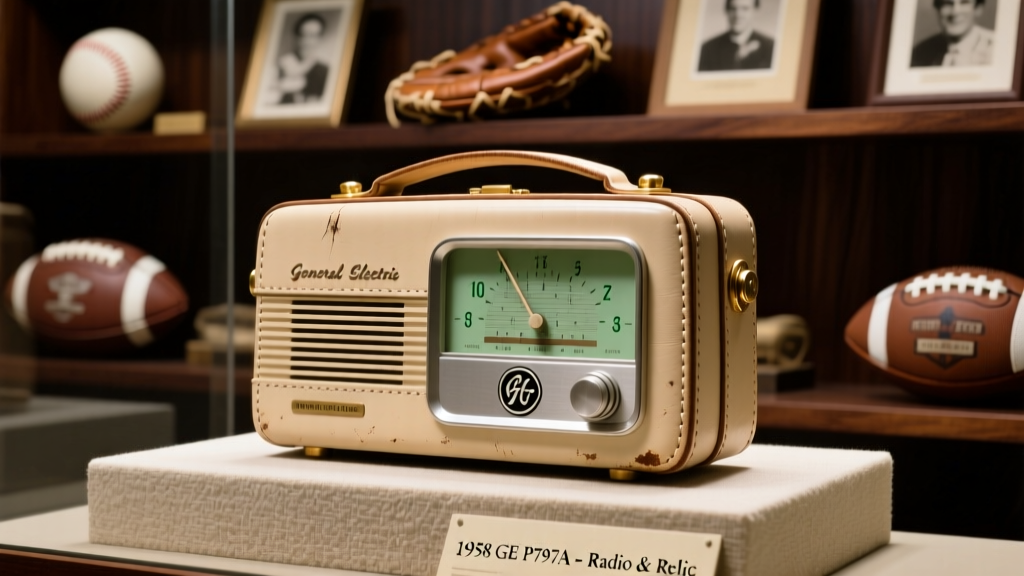
GE Model P797A: The Beige Leather Transistor Radio That Defined Mid-Century American Design and Engineering
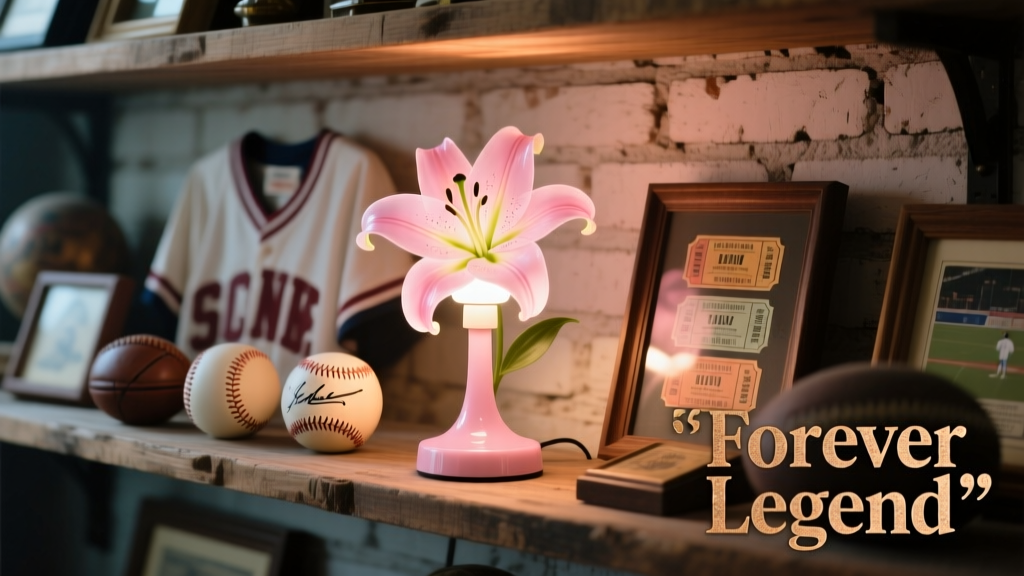
Lamps Electric Opaque Lilies on Pink 5 × 4½-Inch: Authentication, Provenance, and Collectibility of a Rare Mid-Century Ceramic Lamp Base
Authenticating and Valuing the 1931 Movie Lobby Card for Charlie Chaplin’s City Lights
The Authenticity File: Decoding PSA/DNA Certificate #1138095 and Its Historical Significance in Baseball Memorabilia
Cut Velvet Vase Yellow Small: Authentication, Provenance, and Market Value of a Rare Mid-Century Decorative Artifact
The Cadogan Teapot: History, Mechanics, Authentication, and Collecting Value
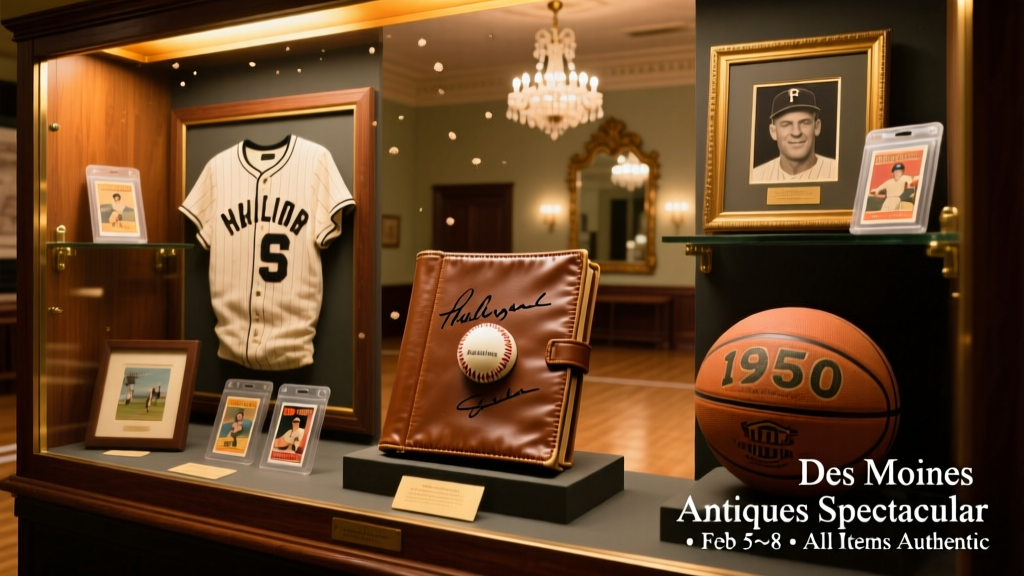
Des Moines Hosts Antiques Spectacular February 5–8: A Collector’s Deep Dive into Sports Memorabilia Authentication & Rare Finds
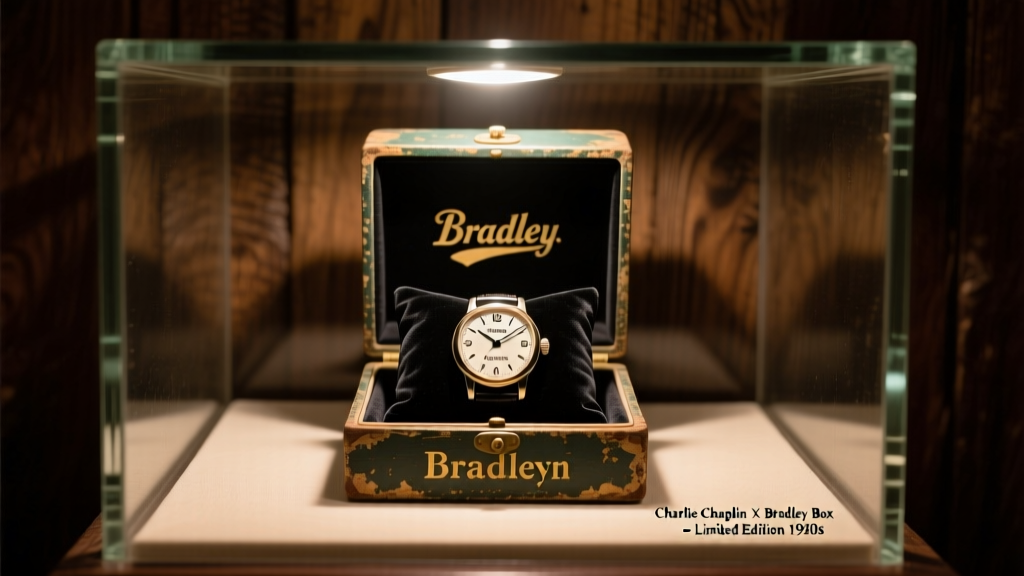
The Charlie Chaplin Wristwatch & Bradley Box: Authenticating a Hollywood Icon’s Timepiece and Its Original Presentation
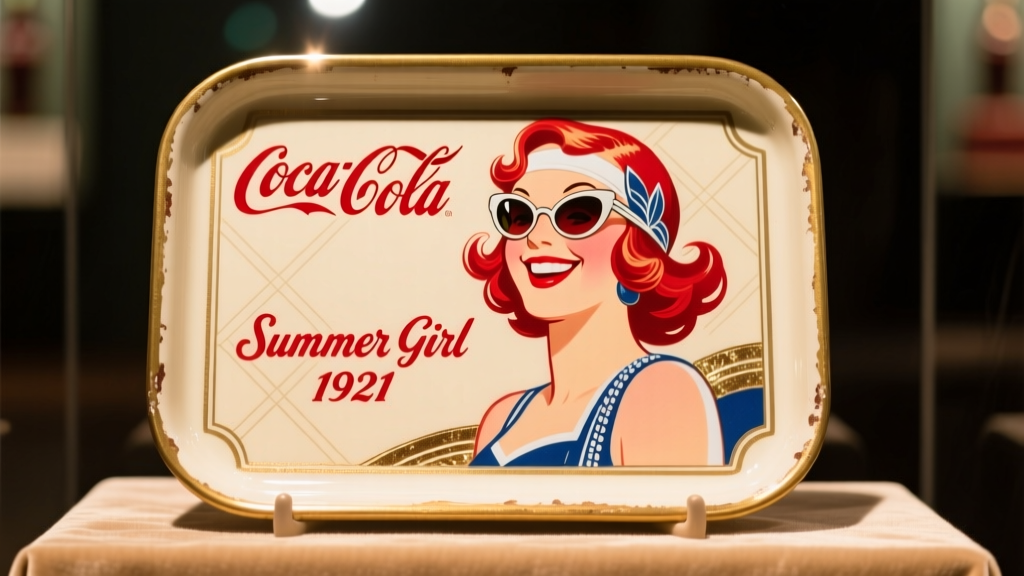
Coca-Cola Tray 1921 'Summer Girl' — Authenticating the Iconic 13¼ × 10½ Inch Tin Lithograph