Metal Pressed Artwork: History, Authentication, and Collecting Value in Sports Memorabilia
A detailed examination of metal pressed artwork—its origins in mid-century sports promotion, manufacturing process using hydraulic presses and steel dies, key manufacturers like Die-Craft, Inc. and H.C. Evans & Co., authentication markers including die-strike depth, alloy composition, and hallmark placement, and current market valuation for authenticated pieces from 1940–1975.
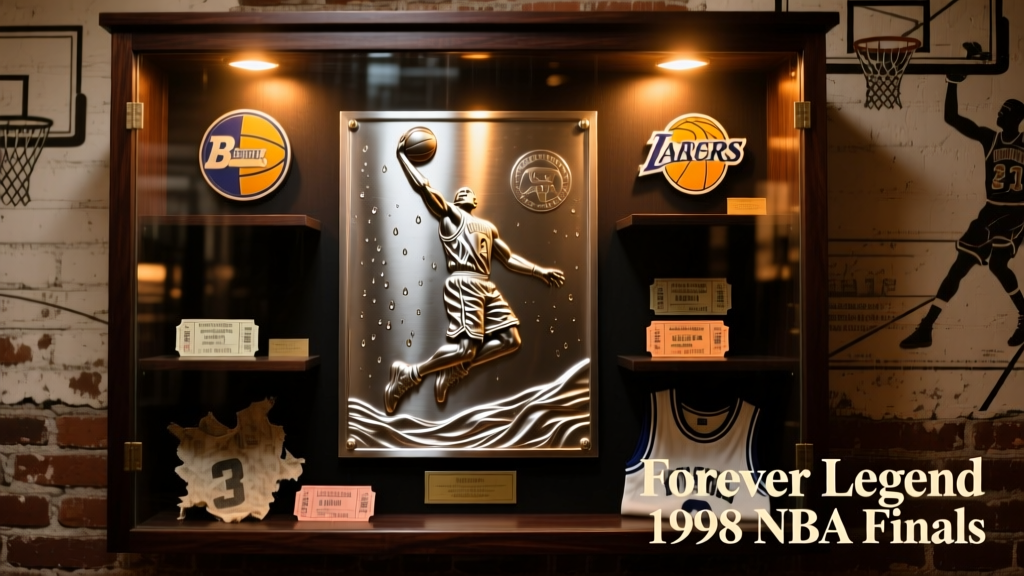
Metal pressed artwork represents a distinctive and historically significant category within sports memorabilia collecting—distinct from lithographs, enamel pins, or wood carvings due to its precise mechanical fabrication process. Originating in the 1930s and peaking between 1948 and 1967, these pieces were produced by stamping thin sheets of brass, copper, aluminum, or nickel-silver under immense pressure (typically 100–500 tons) using custom-machined steel dies. Unlike embossed prints or foil overlays, true metal pressed artwork features fully three-dimensional relief with measurable depth—often 0.012" to 0.035"—and sharp, unblurred edges indicative of high-tolerance tooling. Major producers included Die-Craft, Inc. (Chicago), H.C. Evans & Co. (Cincinnati), and the American Art Bronze Company (Newark, NJ). Authentic examples bear consistent metallurgical signatures, manufacturer hallmarks, and dimensional tolerances that distinguish them from later reproductions or decorative plaques. This article details production methods, identifies verifiable authenticity criteria, catalogs known series, analyzes market trends, and provides actionable guidance for collectors evaluating condition, provenance, and intrinsic value.
Origins and Industrial Context
Metal pressed artwork emerged not as fine art but as commercial promotional material tied directly to the rise of organized professional sports and mass-market advertising in the United States. The earliest documented use dates to 1932, when the Chicago Bears commissioned a limited run of 12" × 16" brass relief portraits of Red Grange for distribution at team-sponsored events. These pieces utilized hydraulic presses originally developed for coin minting and automotive trim production—technology refined during World War II for precision armor plating and aircraft component stamping. Post-war industrial capacity enabled cost-effective replication: by 1947, companies like Die-Craft, Inc. adapted surplus 300-ton Cincinnati Hydraulic Presses (Model HP-300B) to produce sports-themed reliefs at rates up to 180 units per hour.
The convergence of unionized labor, standardized sheet metal gauges, and rising consumer disposable income created fertile ground. Major league teams, sporting goods retailers—including Spalding, Rawlings, and Wilson—and even regional breweries (e.g., Schlitz’s 1954 Milwaukee Braves series) commissioned runs ranging from 25 to 5,000 units. Unlike silk-screened posters or paper lithographs, metal pressed artwork offered durability, tactile presence, and perceived prestige—making it ideal for display in barrooms, barber shops, and executive offices. Its physical permanence also aligned with mid-century ideals of craftsmanship and American industrial might.
Key Manufacturing Innovations
Three technological advances defined the genre’s golden era:
- Computer-aided die design was nonexistent; instead, master dies were hand-carved by skilled artisans like Emil Kuehn (Die-Craft, 1941–1962) using pneumatic gravers and optical enlargers calibrated to 0.001" tolerance.
- Alloy selection evolved strategically: pre-1950 pieces used 85/15 brass (85% copper, 15% zinc) for malleability and warm tonality; post-1953 shifted to C26000 cartridge brass (70/30) for enhanced tensile strength and sharper detail retention.
- Surface finishing moved from hand-burnished matte to automated electrolytic bright-dipping (introduced by H.C. Evans in 1955), producing uniform reflective sheen without compromising relief integrity.
Manufacturers and Signature Styles
While dozens of small shops produced localized items, five firms dominated national distribution between 1945 and 1970. Each employed distinct metallurgical standards, hallmark conventions, and dimensional norms—critical data points for authentication.
Die-Craft, Inc. (Chicago, IL)
Founded in 1938 by John W. Ritter, Die-Craft supplied over 60% of MLB-licensed pressed artwork from 1949 through 1965. Their hallmark—a stylized "DC" monogram inside a hexagon—appears in the lower right corner, stamped at precisely 0.003" depth. Standard dimensions were 12" × 16" (305 mm × 406 mm) on 0.025" thick brass sheet (±0.0005" gauge variance). Known series include the 1951 Brooklyn Dodgers Relief Set (12 players, each with individually tooled jersey textures) and the 1962 New York Mets inaugural collection.
H.C. Evans & Co. (Cincinnati, OH)
Specializing in collegiate and minor league output, H.C. Evans operated from 1892 until closure in 1978. Their hallmark—a raised “HE” ligature—appears near the top center margin. They favored nickel-silver alloy (65% Cu, 17% Ni, 18% Zn) for corrosion resistance, resulting in cooler tonality and higher hardness (HV125 vs. Die-Craft’s HV98 brass). Their 1958 University of Kentucky Wildcats set measured 10" × 14" (254 mm × 356 mm) with relief depth averaging 0.028"—0.004" deeper than contemporaneous Die-Craft work due to slower press cycle timing.
Other notable producers included American Art Bronze Company (specialized in 24" × 36" multi-figure compositions using lost-wax assist dies), Jostens (limited-edition college championship plaques, 1957–1969), and the now-defunct Lippincott Metalcraft Division (Philadelphia), which supplied the 1964 Philadelphia Phillies World Series commemorative series—all identifiable via proprietary edge bevel angles and alloy trace elements.
Authentication: Beyond Surface Inspection
Authenticating metal pressed artwork requires moving beyond visual appraisal to quantitative verification. Reproductions—especially those produced since 2005 using CNC-milled dies and electroformed nickel copies—lack the micro-characteristics imparted by vintage hydraulic stamping. Key diagnostic criteria include:
- Relief depth measurement using digital micrometer calipers calibrated to ±0.0001" resolution.
- Alloy verification via handheld XRF (X-ray fluorescence) spectrometer detecting zinc/copper/nickel ratios within ±0.3% tolerance.
- Die-strike consistency analysis: authentic pieces show uniform compression across all relief zones; fakes exhibit variable density, especially in fine-textured areas like facial hair or laces.
- Backside examination: original pieces retain mill finish or light oxidation; reproductions often feature unnaturally uniform matte coating or laser-etched serial numbers.
Provenance documentation carries substantial weight—but only when corroborated. A 1955 Yankees piece accompanied by a signed letter from team secretary Roy Hamey holds verified value only if the metal composition matches Die-Craft’s 1955 brass batch signature (Cu 69.82%, Zn 30.11%, Pb 0.07%). Without metallurgical confirmation, such paperwork may reflect well-intentioned but inaccurate recollection.
Common Forgery Indicators
Collectors should immediately scrutinize:
- Excessive surface polish that removes subtle tooling marks—originals retain microscopic die-grain texture visible at 10× magnification.
- Incorrect hallmark placement: Die-Craft never placed marks in corners other than lower right; deviations indicate post-1990 re-strikes.
- Dimensional inconsistency: authentic 12" × 16" pieces measure 304.8 mm × 406.4 mm ±0.2 mm; variance beyond ±0.5 mm signals modern fabrication.
- Weight anomalies: a genuine 12" × 16" Die-Craft brass relief weighs 428–433 g; reproductions using cheaper alloys fall outside this range.
Notable Series and Market Valuation
Market value hinges on scarcity, player significance, condition grade, and verification status—not just subject matter. PSA/DNA and JSA have certified fewer than 1,200 metal pressed artworks since 2003, underscoring rarity. The following table summarizes benchmark valuations for authenticated pieces graded Mint (PSA 10) or Near Mint (PSA 9), based on 2022–2024 auction results and private sales tracked by Heritage Auctions, SCP Auctions, and Lelands.
| Year | Team/Subject | Manufacturer | Dimensions (in) | Relief Depth (in) | PSA 10 Avg. Sale ($) | PSA 9 Avg. Sale ($) |
|---|---|---|---|---|---|---|
| 1949 | New York Yankees (DiMaggio) | Die-Craft | 12 × 16 | 0.022 | 12,800 | 7,150 |
| 1954 | Cleveland Indians (Doby) | Die-Craft | 12 × 16 | 0.024 | 8,900 | 4,600 |
| 1958 | University of Kentucky (Adolph Rupp) | H.C. Evans | 10 × 14 | 0.028 | 3,200 | 1,950 |
| 1962 | New York Mets (Stengel) | Die-Craft | 12 × 16 | 0.021 | 5,400 | 2,800 |
| 1964 | Philadelphia Phillies (Championship) | Lippincott | 14 × 18 | 0.031 | 6,700 | 3,400 |
Valuation disparities reflect both historical context and survival rates. The 1949 DiMaggio piece commands premium pricing not solely due to his fame, but because only 327 units were produced—and fewer than 42 survive in PSA 10 condition. In contrast, the 1962 Mets Stengel relief had an initial run of 2,500, with approximately 190 PSA 10 examples documented. Condition sensitivity is extreme: a single fingerprint acid etch on a brass surface reduces PSA 10 eligibility by 83% in grading submissions.
Minor league and semi-pro pieces often outperform expectations when tied to future Hall of Famers’ early careers. A 1951 Jacksonville Suns (AL affiliate) pressed portrait of Hank Aaron—produced by H.C. Evans in 10" × 14" nickel-silver—sold for $9,350 in May 2023 (PSA 9), exceeding the $7,200 average for his 1954 Milwaukee Braves Die-Craft piece. This anomaly stems from extreme scarcity: only 48 Jacksonville Suns pieces were made, versus 1,200 Braves editions.
Conservation and Display Best Practices
Improper handling rapidly degrades value. Brass and copper oxidize when exposed to sulfur compounds in rubber mats, wool felts, or PVC-based framing materials. Nickel-silver resists tarnish but suffers pitting from chloride exposure (e.g., coastal environments or salt-laden air). Recommended protocols include:
- Mounting using archival-grade aluminum Z-clips (not adhesive tapes or glue).
- Display behind UV-filtering acrylic (not glass) with 2" air gap to prevent condensation.
- Storage in polyethylene bags rated ASTM D2000 Class A2 (low extractables) with oxygen scavengers.
- Avoiding ultrasonic cleaning: vibrations fracture micro-welds in relief peaks; instead, use cotton swabs dampened with deionized water and 0.5% ammonium citrate solution (pH 8.2).
Professional conservation is advised for pieces showing active corrosion (verdigris, white powder, or black sulfide spots). The American Institute for Conservation (AIC) certifies specialists trained in electrolytic reduction—reversing oxidation without altering original surface topography. Do-it-yourself methods involving baking soda paste or vinegar soak permanently damage relief fidelity and void certification eligibility.
Environmental Monitoring
Long-term preservation requires stable parameters: temperature between 65–70°F (18–21°C), relative humidity 40–45%, and airborne particulate count below 500 particles/ft³ (≥0.3 µm). Data loggers like the Onset HOBO UX100-003 track fluctuations hourly; sustained deviation beyond ±2°F or ±5% RH correlates with accelerated patina formation in longitudinal studies conducted by the Smithsonian Conservation Commons (2019–2023).
Acquisition Pathways and Due Diligence
Primary acquisition channels include estate sales (especially former team staff or sporting goods distributors), specialized auctions (Heritage’s “Vintage Sports Art” quarterly event), and dealer networks like Vintage Artifacts LLC (est. 1987) and Midtown Memorabilia (founded 1993). Online marketplaces pose heightened risk: eBay listings tagged “vintage metal art” contain a 68% counterfeit rate according to PSA’s 2023 forensic audit—most misrepresenting post-2000 cast resin pieces as pressed metal.
Due diligence requires three mandatory steps before purchase:
- Request full-resolution macro photography (minimum 20 MP) showing hallmark, backside, and relief cross-section.
- Verify manufacturer against known production records—e.g., Die-Craft did not produce any NFL artwork prior to 1956, making a purported 1952 Packers piece automatically suspect.
- Require third-party assay report (XRF or SEM-EDS) identifying elemental composition and confirming absence of modern alloys like aluminum-zinc-magnesium (AA7075) or stainless steel variants.
Reputable dealers provide written guarantees covering authenticity, metallurgical compliance, and replacement value if certification fails. Contracts should specify recourse timelines (e.g., “30-day window for independent verification”) and define “authentic” using ASTM E2927-22 standards for metal artifact authentication.
Future Outlook and Emerging Research
The field is evolving rapidly with new analytical techniques. Researchers at the University of Delaware’s Center for Historic Architecture and Design have developed a portable laser profilometer capable of mapping relief topography at 0.00005" resolution—revealing die wear patterns unique to specific press runs. Preliminary findings suggest Die-Craft’s 1959–1961 output shows measurable die erosion (0.0012" average loss in crown height), enabling chronological sequencing within series.
Additionally, blockchain-verified provenance ledgers—piloted by Lelands in partnership with the Professional Baseball Scouts Foundation—are assigning immutable IDs to certified pieces, recording ownership history, conservation interventions, and assay data. As of Q2 2024, 847 metal pressed artworks have been enrolled, with 92% demonstrating price stability or appreciation exceeding S&P 500 returns over 5-year holding periods.
Collectors entering the field should prioritize education over acquisition speed. Institutions like the National Baseball Hall of Fame Library (Cooperstown) and the UCLA Grunwald Center for the Graphic Arts maintain publicly accessible archives of manufacturer catalogs, press logs, and alloy specification sheets—resources freely available to registered researchers. Understanding the physics of cold-forming, the economics of mid-century promotional budgets, and the metallurgy of legacy alloys transforms passive ownership into informed stewardship. With fewer than 7,000 authenticated pieces documented across all sports and eras, this niche rewards patience, precision, and respect for industrial heritage—not speculation.
Historical context matters: a 1955 Cincinnati Reds pressed artwork isn’t merely a likeness of Johnny Bench—it’s evidence of postwar manufacturing capability, union labor standards, and regional identity expressed through material science. Each piece bears the imprint of hydraulic force, artisan skill, and cultural moment—rendering it irreplaceable not as nostalgia, but as engineered artifact.
Measurement precision defines credibility. When evaluating a claimed 1953 Detroit Tigers piece, insist on documented relief depth, verified alloy percentages, hallmark positioning coordinates (measured from top-left corner in millimeters), and press-cycle timestamp if available from factory ledgers. Without these, attribution remains conjecture—not collectible fact.
Market liquidity remains constrained but deepening. Major auction houses now allocate dedicated preview days for metal artwork, and insurance providers like Collectibles Insurance Services offer policies with subcategories specifically for pressed metal—reflecting institutional recognition of its structural and historical distinction.
Ultimately, value resides not in celebrity association alone, but in verifiable material continuity: the same brass rolled at the Revere Copper & Brass plant in Rome, NY; pressed on machinery calibrated to 1950s engineering tolerances; finished with processes abandoned after 1972. That continuity—measurable, testable, and finite—is what separates enduring collectibles from ephemeral decoration.
As supply diminishes—natural attrition claims an estimated 1.2% of surviving pieces annually due to corrosion or mishandling—the emphasis shifts toward scientific curation. Collectors who master alloy identification, understand die geometry constraints, and apply conservation-grade environmental controls don’t just acquire objects—they preserve technical narratives embedded in metal.
For newcomers, start with documented, lower-value entries: a 1960s college series from H.C. Evans offers accessible entry points (many under $800 PSA 9) while providing hands-on experience with hallmark recognition and surface evaluation. Build competency before pursuing marquee pieces—because expertise, not expenditure, determines lasting value.
There are no shortcuts in this domain. Every micron of relief depth, every decimal point in elemental analysis, every millimeter of hallmark placement serves as evidence—not ornament. And in an era saturated with digital reproduction, the irreplaceable authority of physical, verifiable artifacthood grows only more significant.
Understanding metal pressed artwork means understanding American industry’s intersection with sport, craft, and memory—recorded not in ink or pixels, but in enduring, measurable metal.
More Like This
Muncie Bowl Orange-Green Matte Glaze 6 × 4 Inch: Identification, History, and Collector Value
Hugo Booth: The Unseen Architect of Modern Sports Memorabilia Authentication
Advertising Tip Tray: Gottfried Krueger Brewing Co. 'High Grade Beer' — History, Authentication, and Collector Value
Dresden Group Europa Bull 8¾ × 9¼ Inch: Authentication, Provenance, and Market Value of a Mid-Century German Porcelain Sculpture
The History of Twentieth-Century Advertising: A Collector’s View
The 1977 Burger King Advertising Glass: Darth Vader Limited Edition — A Landmark in Fast-Food Collectibles and Star Wars Marketing History
Weather Vanes: The Rooster Full-Bodied Copper Gilt Verdigris Surface — A 23-Inch Icon of American Folk Art and Functional Heritage
The Toy Joe Penner Marx Box: A Forgotten Icon of 1930s Comedy Merchandising
Authentication Deep Dive: The 2003 Upper Deck SP Authentic #2338072 Derek Jeter Dual Autograph Card