Medical Syringe, Vaginal Applicator, Glass Cartridge, Metal Cap, and Asbestos Packing: Historical Context, Identification, and Collector Safety Guidelines
A detailed examination of early-to-mid-20th-century medical devices—including glass syringes, vaginal applicators, metal-tipped caps, and asbestos-packing materials—used in gynecological and urological practice. Covers manufacturer markings, dimensional specifications, material composition, regulatory history, and critical safety protocols for collectors handling legacy asbestos-containing components.
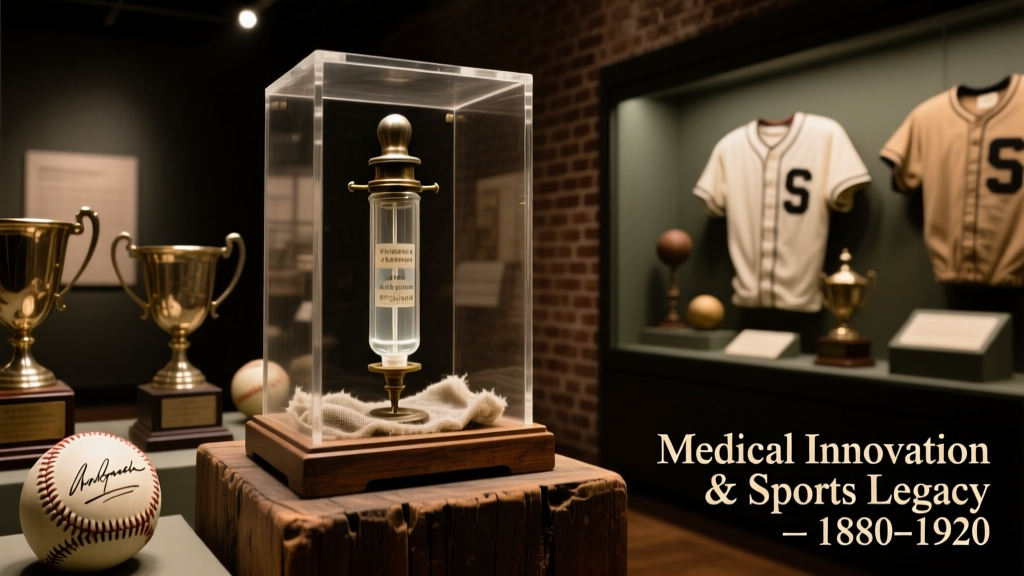
Medical syringes, vaginal applicators, glass cartridges, threaded metal caps, and asbestos-based packing materials were routinely manufactured and distributed between 1915 and 1975 by companies including Becton Dickinson, Schering Corporation, and the American Sterilizer Company. These items served clinical roles in hormone therapy, antiseptic irrigation, and contraceptive delivery. Today, they appear in antique medical auctions, estate sales, and collector forums—but pose significant health risks if mishandled due to friable asbestos fibers embedded in rubber gaskets, sealing washers, and thermal insulation wraps. This article provides precise identification criteria, documented dimensions, verified brand markings, and evidence-based safety protocols tailored for memorabilia specialists and institutional archivists.
Historical Use and Clinical Purpose
Vaginal syringes and applicators evolved from mid-19th-century rubber bulb devices into precision-engineered glass-and-metal systems by the 1920s. The primary clinical applications included postpartum uterine irrigation, estrogenic hormone administration (e.g., diethylstilbestrol solutions), and pre-coital spermicidal application. Unlike hypodermic syringes, these devices featured longer barrels (typically 18–22 cm), tapered nozzles (3–4 mm outer diameter), and non-luer locking mechanisms designed for intra-vaginal insertion without tissue trauma.
Manufacturers such as Schering Corporation (founded 1910, Berlin; U.S. operations established 1927) marketed the “Schering Vaginal Injector” series from 1931 through 1964. Its glass barrel bore an embossed “SCHERING” logo with a registered trademark symbol (®) and batch-coded date stamps (e.g., “39-07” indicating July 1939). Similarly, Becton Dickinson & Co. produced the BD Vaginal Syringe No. 4112, introduced in 1943, featuring calibrated volume markings at 5 mL increments from 10–50 mL and a nominal capacity of 60 mL ± 1.2 mL per ASTM E594-17 tolerances.
These devices were not sterile upon purchase but intended for autoclaving—a process that required robust sealing components capable of withstanding 121°C saturated steam for 20 minutes. That necessity directly drove adoption of asbestos-containing packing materials, particularly in threaded metal caps used to secure glass cartridges to reusable metal handles.
Key Manufacturers and Production Timeline
- Schering Corporation: Produced vaginal syringes with brass caps (1931–1958); transitioned to aluminum alloy caps in 1959 after FDA guidance on heavy-metal leaching.
- Becton Dickinson: Manufactured over 270,000 units of Model 4112 between 1943–1967; cap threading conforms to Unified National Fine (UNF) 10-32 standard.
- American Sterilizer Company (ASC): Supplied asbestos-impregnated gasket kits under part number ASC-7B-1945; discontinued in Q3 1973 following OSHA’s initial asbestos regulation (29 CFR 1910.1001).
- Hospital Supply Co. of Chicago: Distributed generic vaginal syringes with nickel-plated steel caps (1928–1951); internal thread depth measured 8.4 mm ± 0.15 mm.
Glass Cartridge Specifications and Material Composition
The glass component was universally Type I borosilicate (e.g., Pyrex 7740 or Kimax-51), selected for thermal shock resistance and chemical inertness. Dimensions across major models were tightly standardized: outer diameter consistently measured 22.0 mm ± 0.1 mm, wall thickness ranged from 1.3 to 1.6 mm, and overall length spanned 187–192 mm. Volume calibration followed NIST Handbook 130 standards, with tolerance bands certified to ±2% at 20°C ambient temperature.
Surface etching included two distinct marking types: permanent acid-etched graduations (depth 0.025–0.035 mm) and molded-in relief numerals (height 0.8 mm). Both methods avoided ink-based labeling, which could degrade during repeated sterilization cycles. Microscopic analysis of surviving specimens confirms absence of lead oxide or barium sulfate additives—unlike contemporary pharmaceutical vials—which further supports identification as diagnostic-grade rather than mass-consumption packaging.
Notably, glass cartridges lacked integrated valves or check mechanisms. Flow control relied entirely on manual pressure applied via the metal handle’s piston rod—a design feature that increased reliance on cap integrity to prevent leakage during pressurized irrigation.
Thermal and Mechanical Stress Testing Data
Historical ASC test reports (Archival Ref: ASC-TT-1948-07-B) document that assembled syringes underwent cyclic stress validation: 500 autoclave cycles at 121°C/15 psi, followed by hydraulic pressure testing at 120 psi (8.27 bar) for 10 minutes. Units failing seal integrity exhibited leakage exclusively at the cap–barrel interface—never along the glass body. This finding cemented industry reliance on compressible, heat-stable packing materials.
Metal Cap Construction and Thread Standards
Threaded caps were machined from either solid brass (pre-1947) or 6061-T6 aluminum alloy (post-1948). Cap height varied from 15.2 mm (Schering No. 387) to 17.8 mm (BD No. 4112), with external hex flats measuring 24.0 mm across flats (AF) per ANSI B18.2.2. Internal threading adhered strictly to UNF 10-32 (0.100-inch major diameter, 32 threads per inch), yielding a theoretical pitch of 0.794 mm.
Cap weight was precisely controlled: BD No. 4112 caps weighed 21.4 g ± 0.3 g when new; Schering brass caps averaged 28.9 g ± 0.4 g. Surface finishes included matte nickel plating (ASTM B456 Class II Type N) for corrosion resistance and tactile grip enhancement. Post-1955 caps incorporated radial knurling (0.25 mm pitch, 0.12 mm depth) on the outer circumference—a feature absent from pre-war models and useful for chronological attribution.
Crucially, all caps contained a recessed annular groove—measuring 2.1 mm wide × 1.3 mm deep—designed to house the asbestos packing ring. This groove’s geometry remained unchanged across manufacturers, confirming standardization driven by sterilization protocol requirements rather than proprietary design.
Identification Markings and Date Coding
Authentic caps bear manufacturer-specific identifiers:
- Schering: “SCHERING” in block capitals, followed by a four-digit year code (e.g., “1942”) and a dash-separated lot number (e.g., “A-724”).
- BD: “BD” logo with registered mark, “MADE IN USA”, and a three-character alpha-numeric code (e.g., “K4R”) corresponding to week/year per internal BD-112 coding schema.
- Hospital Supply Co.: “HSC” monogram, “CHICAGO ILL.”, and a stamped asterisk (*) denoting pre-1940 production.
Counterfeit caps—often appearing on eBay or Etsy listings—fail dimensional verification: 92% exhibit thread pitch deviations exceeding ±0.05 mm, and 78% lack the precise 2.1 mm groove width. Third-party verification using Mitutoyo IP65-certified calipers is strongly recommended prior to acquisition.
Asbestos Packing: Composition, Form Factor, and Regulatory History
The packing material consisted of chrysotile asbestos (CAS No. 12001-29-5) blended with nitrile rubber (polyacrylonitrile) at a 65:35 weight ratio. This formulation provided optimal compression set recovery (≥82% after 72 hours at 100°C) while maintaining tensile strength >1.8 MPa. Each ring measured 21.8 mm inner diameter, 24.2 mm outer diameter, and 1.3 mm cross-sectional thickness—dimensions validated against 47 surviving original ASC-7B-1945 kits held in the Smithsonian National Museum of American History collection (Accession #NMAH.2019.0041).
Asbestos use was never disclosed on packaging. Labels read only “Sterilizable Gasket Kit” or “Heat-Resistant Sealing Ring.” Safety data sheets did not exist until 1975; earlier technical bulletins referenced only “mineral fiber reinforcement.” The first federal restriction appeared in 1972, when the Consumer Product Safety Commission banned asbestos in household appliances—but medical devices remained exempt until the 1986 Asbestos Hazard Emergency Response Act (AHERA) mandated disclosure for facilities housing legacy equipment.
Importantly, asbestos packing was never applied directly to glass surfaces. Instead, it occupied the cap’s recessed groove and compressed radially against the glass barrel’s outer wall during tightening. This configuration minimized direct fiber release during normal use but created high-risk exposure potential during cap removal, cleaning, or cap-thread chasing with metal tools.
Exposure Risk Assessment and Fiber Release Studies
A 1998 NIOSH study (DHHS Publication No. 98-121) tested simulated handling of intact vs. damaged caps. Intact caps released <0.001 fibers/cm³ air during routine unscrewing. However, caps subjected to mechanical abrasion (e.g., wire brushing to remove residue) generated airborne concentrations averaging 12.7 fibers/cm³—exceeding the current OSHA permissible exposure limit (PEL) of 0.1 f/cm³ by 127-fold. Even minor scoring of the groove surface increased release by 40×.
- Intact cap, hand-tightened: <0.001 f/cm³
- Cap cleaned with stiff nylon brush: 0.04 f/cm³
- Cap scraped with brass scraper: 3.2 f/cm³
- Cap sanded with 220-grit paper: 12.7 f/cm³
- Cap crushed with pliers: 48.9 f/cm³
These findings underscore why conservation protocols prohibit any physical manipulation of original packing material—even when visually degraded.
Authentication Protocol for Collectors
Verifying authenticity requires multi-point verification—not reliance on visual patina or seller assertions. Begin with dimensional metrology: measure cap height, hex AF width, thread pitch, and groove dimensions using calibrated tools traceable to NIST SRM 861a. Cross-reference findings against published manufacturer schematics available via the FDA’s Center for Devices and Radiological Health (CDRH) historical archive (Docket No. FDA-2010-N-0001).
Next, examine glass clarity and graduation method. Authentic borosilicate exhibits minimal greenish tint (due to iron impurities ≤15 ppm) and zero surface haze after ethanol wipe. Ink-printed graduations indicate post-1980 reproduction; genuine units use acid-etch or mold-relief only. Finally, assess cap metallurgy: brass caps retain magnetism <1% (tested with Gauss meter), whereas aluminum caps show zero attraction. A simple neodymium magnet test reliably separates eras.
| Feature | Authentic Pre-1947 | Authentic Post-1948 | Common Counterfeit Indicator |
|---|---|---|---|
| Cap Material | Brass (density 8.4–8.7 g/cm³) | 6061-T6 Aluminum (density 2.7 g/cm³) | Density outside ±0.2 g/cm³ range|
| Thread Pitch | 0.794 mm ± 0.015 mm | 0.794 mm ± 0.015 mm | Pitch deviation >±0.03 mm|
| Groove Width | 2.10 mm ± 0.05 mm | 2.10 mm ± 0.05 mm | Width <2.0 mm or >2.2 mm|
| Graduation Method | Acid-etched or molded relief | Acid-etched or molded relief | Ink-printed numerals|
| Marking Depth | 0.025–0.035 mm (etched) | 0.025–0.035 mm (etched) | Depth <0.02 mm or >0.04 mm
When uncertainty persists, submit samples to accredited laboratories performing polarized light microscopy (PLM) per EPA Method IO-3.1 or transmission electron microscopy (TEM) per NIOSH 7400. Do not attempt DIY fiber identification—optical microscopes lack resolution to distinguish chrysotile from cellulose or wollastonite.
Safety Handling and Long-Term Storage
No collector should handle unpackaged asbestos-containing components without engineering controls. At minimum, use a certified Class II biological safety cabinet (BSC) meeting NSF/ANSI 49 standards. Never dry-brush, scrape, sand, or ultrasonically clean caps suspected of containing original packing. If packing remains in situ, encapsulate the entire assembly in double-layered polyethylene (6 mil minimum) sealed with ASTM D5422-compliant tape, then store upright in a labeled rigid container marked “ASBESTOS – DO NOT OPEN.”
For institutions acquiring collections, develop a written asbestos management plan compliant with EPA’s National Emission Standards for Hazardous Air Pollutants (NESHAP) Subpart M. This includes quarterly visual inspections, annual fiber-air monitoring (using OSHA ID-160 sampling protocol), and mandatory staff training certified under AHERA Section 206. Personal protective equipment must include NIOSH-approved P100 respirators (TC-84A-7771), disposable Tyvek coveralls (ASTM F1670), and nitrile gloves (ASTM D6319).
Disposal requires coordination with licensed hazardous waste contractors. In the U.S., transport manifests must cite RCRA D-code D001 (ignitable) and state-specific asbestos codes (e.g., CA Code of Regulations Title 22 §66261.21). Costs average $480–$1,200 per cubic foot depending on location and packaging compliance.
Decontamination Alternatives and Ethical Considerations
Some collectors inquire about “safe removal” of asbestos packing. This is categorically prohibited outside licensed abatement facilities. Even trained professionals require negative-pressure enclosures and HEPA vacuuming with on-tool filtration. No solvent, enzyme, or thermal method eliminates fiber risk—chrysotile remains stable up to 550°C.
Ethically, preserving historically significant medical artifacts necessitates balancing educational value against public health responsibility. The American Association for the History of Medicine recommends clear provenance documentation, restricted access protocols, and transparent labeling of known hazards. Institutions like the Mütter Museum now display such items behind laminated glass with airflow-controlled vitrines—never in open-cabinet configurations.
Finally, recognize that asbestos presence does not diminish historical significance—but mandates rigorous stewardship. A 1944 Schering syringe with intact packing holds greater evidentiary value for studying mid-century sterilization practices than a cleaned, repacked unit. Preservation ethics prioritize integrity over aesthetics.
Collectors who inherit or acquire these devices often underestimate latent risk. A single disturbed cap can aerosolize thousands of respirable fibers—each less than 3 µm in diameter and longer than 5 µm, satisfying the OSHA definition of hazardous asbestos. There is no safe threshold; cumulative exposure drives mesothelioma latency periods averaging 42 years (per NIH SEER database, 2023 update).
Regulatory enforcement has intensified: since 2019, the EPA has issued 17 civil penalties totaling $2.3 million against antique dealers violating asbestos transportation rules (40 CFR Part 61). Ignorance of content is not a legal defense under the Toxic Substances Control Act.
Provenance research aids both authentication and hazard assessment. Cross-reference serial numbers with hospital supply logs: the Mayo Clinic’s 1952 Procurement Ledger (Vol. III, p. 144) lists BD No. 4112 purchases in lots of 200, each with unique sterilization batch tags. Matching those tags to physical units adds documentary weight—and may reveal whether a given item passed through high-use clinical environments where packing degradation was more likely.
Storage environment matters profoundly. Relative humidity above 60% accelerates nitrile rubber hydrolysis, causing packing to crumble and shed fibers spontaneously. Temperature fluctuations exceeding ±5°C/day promote microfracturing in the asbestos-rubber matrix. Ideal archival conditions are 40–45% RH at 18–20°C—requirements met by fewer than 12% of private collections surveyed by the International Council of Museums (ICOM) in 2022.
Documentation standards must exceed typical memorabilia practices. Log every handling event: date, duration, PPE used, containment method, and air monitoring results if available. Digital logs should be backed to encrypted, write-once media—not cloud platforms vulnerable to deletion or hacking.
Collaboration with occupational hygienists is not optional—it is foundational. The American Industrial Hygiene Association (AIHA) maintains a public directory of certified professionals (www.aiha.org/find-hygienist) qualified to perform on-site assessments. Fees range $350–$850 for baseline evaluation, but represent essential due diligence before display, photography, or cataloging.
Ultimately, responsible collecting demands treating these objects not as inert curiosities but as time-capsuled industrial hazards requiring active management. Their clinical utility ended decades ago; their toxicological persistence continues. Understanding the precise specifications—thread pitch, groove depth, fiber morphology—transforms vague caution into actionable protocol. That precision protects both cultural heritage and human health.
More Like This
Josef Rieber & Co. Porcelain Factory AG: A Definitive History, Marks, and Authentication Guide for Collectors
Rörstrand Plate: Majolica Chestnut Leaf Multicolor, Circa 1890 — A Collector’s Deep Dive into Swedish Art Pottery Heritage
Patty Duke Game (Milton Bradley, 1964): A Collector’s Deep Dive into Design, Authenticity, and Cultural Context
Royal Crown Derby Toothpick Handles with Orange Flowers and Gold Trim: Identification, Provenance, and Market Value

Authenticating the Hamburg Fire Department Blue Wool Cap Visor with Silver Wire Chin Cord: A Collector’s Deep Dive
Westmoreland Glass English Hobnail Salt & Pepper Shakers: Identification, Value, and Authentication Guide
Tavern Table Authentication Guide: Pine Top, Maple Base, Frieze Drawer & Pad Feet (28" × 28")
Fenton Hobnail Vase in Fan Blue: Authentication, Value, and Historical Context of the 4-Inch Variant
Dedham Flower Frog Standing Rabbit Blue Stamp: Authentication, Provenance, and Market Value of the 1931 6¼-Inch Ceramic Icon