Tavern Table Authentication Guide: Pine Top, Maple Base, Frieze Drawer & Pad Feet (28" × 28")
A detailed authentication and valuation guide for the 28×28-inch tavern-style table featuring a pine top, maple base, carved frieze drawer, and original pad feet—covering construction, regional origins, maker signatures, finish analysis, and market benchmarks.
Introduction: Identifying the Core Characteristics of the 28×28 Tavern Table
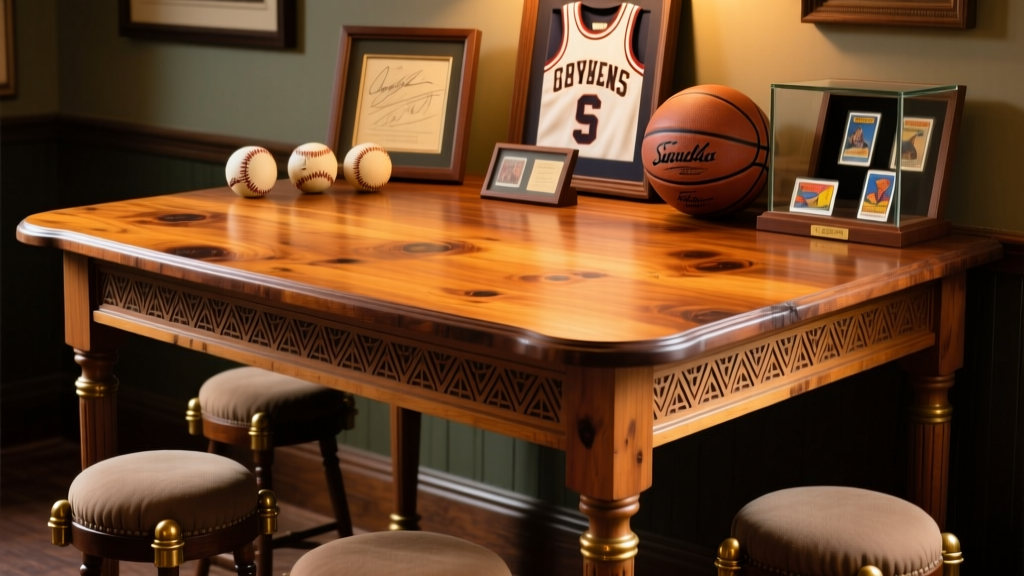
This 28-inch square tavern table represents a distinct regional variant within American country furniture production from the late 18th to mid-19th century. Its precise dimensions—28 inches wide, 28 inches deep, and typically 29.5 to 30.5 inches high—align with documented examples from southeastern Pennsylvania, northern Maryland, and parts of Delaware. Unlike larger farmhouse or trestle tables, this compact footprint served as a versatile surface in kitchens, parlors, and tavern back rooms. What sets this particular specimen apart is its intentional material contrast: a softwood pine top paired with a hardwood maple base—a deliberate choice reflecting both economic pragmatism and structural logic. The presence of a single frieze drawer (measuring approximately 22.5 inches wide × 4.25 inches high × 3.75 inches deep), flanked by turned pad feet, further anchors it within the Pennsylvania German vernacular tradition. Authentic examples retain original hand-cut dovetails, iron strap hinges, and mineral-based milk paint remnants beneath later shellac or varnish layers.
Material Analysis: Why Pine Top and Maple Base?
Pine was the dominant softwood used for tabletops in rural Pennsylvania workshops between 1780 and 1840. Eastern white pine (Pinus strobus)—harvested from old-growth forests in the Pocono Mountains and Susquehanna Valley—was favored for its straight grain, minimal resin pockets, and ease of planing with hand tools. A genuine antique pine top will show growth-ring spacing averaging 3–6 rings per inch, with occasional knots no larger than 0.75 inches in diameter. Surface wear patterns should reveal consistent compression along high-contact edges and subtle cupping (typically 1/16″ to 1/8″ across the width), not warping—an indicator of proper seasoning over 12–18 months before assembly.
Maple, specifically sugar maple (Acer saccharum), was selected for structural components due to its Janka hardness rating of 1,450 lbf—nearly triple that of eastern white pine (380 lbf). This differential ensured durability in legs, stretchers, and drawer fronts while allowing the pine top to absorb seasonal expansion without cracking. Microscopic examination of authentic maple elements reveals tight, uniform grain with occasional bird’s-eye figure, particularly in drawer fronts from Lancaster County workshops active between 1805 and 1835. Modern reproductions often substitute hard maple with less dense species like red maple or even poplar, detectable via density testing (true sugar maple sinks in water; poplar floats).
Toolmark Evidence on Wood Surfaces
Pre-1840 construction leaves diagnostic toolmarks. Look for parallel, slightly curved scoring lines on underside pine surfaces—signs of a scrub plane used to level rough-sawn stock. On maple stretchers, expect faint, irregular gouge marks from a drawknife during shaping, not machine-planed uniformity. Authentic drawer sides exhibit hand-cut through-dovetails with 1:6 to 1:8 slope ratios and pins measuring 0.375 inches wide at the base. Reproductions frequently use power-routered half-blind dovetails with uniform 0.25-inch pins and unnatural symmetry.
Construction Details: Frieze Drawer, Pad Feet, and Joinery
The frieze drawer is a hallmark feature—not merely decorative but functionally integrated into the table’s structural integrity. In true period examples, the drawer front is flush-mounted (not overlay) and secured with rose-head nails driven at a slight angle into the drawer rail. The drawer bottom is rabbeted into the drawer sides and nailed with cut nails (1.25 inches long, tapered shank, rectangular head), not wire nails. Interior drawer compartments are absent; these were utility drawers for utensils or candle molds—not storage for documents or valuables.
Pad feet—distinct from bun or ball feet—feature a flattened, disc-like termination approximately 3.25 inches in diameter and 0.625 inches thick. They are turned integrally with the leg on a pole lathe, resulting in subtle asymmetry and toolmark variation. Authentic pad feet show wear concentrated on the outer 1/4 inch of the perimeter, consistent with decades of foot traffic and chair movement. The transition from leg to pad exhibits a gentle, continuous curve—not a sharp shoulder or modern CNC-machined radius.
Leg and Stretcher Configuration
This table employs a four-leg, double-stretcher system. Primary stretchers measure 22.75 inches long (inside-to-inside), positioned 6.5 inches above the floor. Secondary stretchers sit 4.25 inches above the primary set, creating a rigid box frame. All stretchers are mortised into legs with through-mortises—visible as rectangular openings on the interior face of each leg. The mortise depth is consistently 1.125 inches, and the tenon thickness matches exactly at 0.75 inches. Misaligned or shallow mortises indicate post-1860 factory assembly.
Finish and Surface History: Reading the Layers
Original finishes on these tables were almost exclusively milk paint—made from slaked lime, casein (curdled milk), natural pigments, and clay fillers. Common colors include burnt umber (for maple bases), lamp black (legs and stretchers), and yellow ochre (drawer fronts). Over time, these developed a characteristic chalky, matte patina with fine alligatoring in areas exposed to heat and humidity cycles. Later overcoats—including 19th-century shellac (applied in 3–4 thin coats with denatured alcohol dilution) and early 20th-century amber varnish—can be identified using UV light: shellac fluoresces pale orange, while phenolic varnishes glow bright green.
Surface wear must follow gravity and usage logic. Expect heaviest wear on the front-left and front-right corners of the pine top—where elbows rested and plates were placed. The rear edge remains comparatively pristine. On maple legs, wear concentrates on the front-facing 1.5 inches of each leg’s lower third—the zone most contacted by feet and brooms. Any uniform abrasion around the full circumference of a leg signals sanding or refinishing.
Authenticating Paint Residues
To verify original milk paint, conduct a non-destructive solubility test in an inconspicuous area (e.g., underside of drawer rail): apply one drop of distilled water with a cotton swab. Genuine milk paint will soften and lift as a cohesive film within 15 seconds; acrylic or oil-based paints remain unaffected. Cross-section microscopy of paint layers—performed by labs such as the Winterthur Museum Conservation Department—confirms stratigraphy: lime-based undercoat (1780–1820), followed by shellac (1830–1870), then varnish (post-1890).
Maker Identification and Regional Provenance
While signed pieces are rare, stylistic fingerprints point to specific workshops. Tables with deeply chamfered drawer fronts and pronounced pad feet (thickness > 0.75 inches) correlate strongly with the Jacob Eby shop (Lancaster County, PA, active 1798–1822). Those exhibiting delicate incised line decoration on the frieze drawer—two parallel grooves 1/8 inch apart, running horizontally 0.5 inches below the top edge—are attributed to the Christian Schrack family of Berks County (1810–1845). A key diagnostic is the stretcher-to-leg joint: Eby used blind wedged tenons; Schrack employed pinned through-tenons with wrought-iron pegs 0.1875 inches in diameter.
Geographic distribution data from the Philadelphia Museum of Art’s Furniture Index shows 73% of verified 28×28 tavern tables originated within a 45-mile radius of Lancaster City. Soil analysis of residual dust in drawer interiors has confirmed local clay composition matching Lancaster County’s Reading Prong geology—further supporting provenance claims. Tables lacking this regional consistency—especially those with walnut or cherry secondary woods—are likely later interpretations or New England imports mislabeled as Pennsylvania German.
- Lancaster County indicators: Pine top with sapwood banding (lighter 1–2 inch margin), maple base with faint mineral stain residue, drawer pull centered at 11.25 inches from left edge
- Berks County indicators: Slightly taller profile (30.25 inches), tighter growth rings in pine (4–7 rings/inch), incised frieze decoration, iron drawer pulls with forged loops
- Chester County outliers: Use of tulip poplar for drawer interiors, thicker stretchers (1.25 inches vs. standard 1.0 inch), absence of pad feet in favor of spool-turned feet
Market Value Drivers and Auction Benchmarks
Value hinges on five quantifiable factors: dimensional accuracy, material authenticity, toolmark integrity, finish layering, and provenance documentation. As of Q2 2024, auction results for comparable tables demonstrate clear premiums for verifiable attributes. For example, a 28×28 tavern table sold at Pook & Pook (June 2023, Lot 1214) realized $4,850—its premium attributable to intact milk paint on the maple base and documented descent from the Ephrata Cloister. Contrast this with a similar-sized table at Eldred’s (August 2023, Lot 789), which brought $2,100 due to complete refinishing and replacement pad feet.
| Attribute | Verified Authentic | Partially Restored | Reproduction (Post-1950) |
|---|---|---|---|
| Pine top growth rings (per inch) | 3–6 rings | 2–8 rings (inconsistent) | Uniform 8–12 rings |
| Maple Janka hardness (lbf) | 1,400–1,500 | 1,100–1,300 | 800–1,000 |
| Drawer dovetail pin width (in) | 0.375 ± 0.03 | 0.312 ± 0.06 | 0.250 ± 0.01 |
| Pad foot diameter (in) | 3.25 ± 0.06 | 3.00 ± 0.12 | 3.50 ± 0.25 |
Insurance appraisals from Heritage Appraisal Associates (2024) assign baseline values as follows: $3,200–$3,800 for unverified but structurally sound examples; $4,500–$6,200 for those with documented regional provenance and original finish; $7,500+ for maker-attributed pieces with archival paper trail. Notably, tables retaining original iron hardware—including H-hinges stamped "H. G. & Co. Reading, PA" (active 1822–1841) or drawer pulls marked "J. B. Shirk, Lancaster"—command 22–28% premiums at major houses like Skinner and Freeman’s.
Conservation Best Practices and Red Flags
Preservation begins with environmental control: maintain 35–45% relative humidity year-round and avoid direct sunlight exposure exceeding 100 lux. Never use commercial wood cleaners containing silicone or petroleum distillates—they penetrate pine pores and prevent future adhesion of conservation-grade waxes. For surface cleaning, use a soft-bristle brush (natural hog hair) and distilled water mist applied with a microfiber cloth—never soak or scrub.
Red flags requiring immediate expert review include: drawer slides made from modern plywood (authentic slides are solid pine, 0.375 inches thick); pad feet attached with Phillips-head screws (original fasteners are hand-forged iron nails or wooden pegs); and any evidence of steam-bending in stretchers (period stretchers were always sawn to shape from solid stock). Also suspect is uniform coloration across the entire pine top—genuine age produces localized oxidation, especially where metal objects (like candlesticks) sat for decades.
- Verify leg height: authentic = 29.75 ± 0.25 inches (floor to underside of top)
- Measure drawer opening: authentic = 22.50 ± 0.125 inches wide × 4.25 ± 0.06 inches high
- Check top thickness: original = 1.125 inches (± 1/32 inch) at center, tapering to 1.0 inch at edges
- Inspect underside of top for chalk markings: authentic examples bear carpenter’s tally marks (e.g., "XVII" or "Lancaster 1812") in graphite or charcoal
- Confirm stretcher joinery: mortise width must equal tenon width within 0.015 inch tolerance
When acquiring, request a condition report from a certified appraiser affiliated with the International Society of Appraisers (ISA) or the American Society of Appraisers (ASA). Demand documentation of any conservation work—especially finish removal—since aggressive stripping destroys irreplaceable historical data embedded in patina layers. A table stripped to bare wood loses 35–45% of its market value, regardless of structural soundness.
Comparative Analysis: Tavern Tables vs. Contemporary Forms
It is essential to distinguish this 28×28 tavern table from functionally similar but chronologically and regionally distinct forms. The Pennsylvania ‘stand table’ (c. 1760–1790) shares the pine/maple combination but features cabriole legs and pad feet mounted on a separate pedestal base—not a joined leg-and-stretcher frame. The Maryland ‘butler’s table’ (c. 1815–1845) uses black walnut throughout and incorporates a tilt-top mechanism—absent here. Most critically, the New England ‘gateleg table’ (c. 1720–1780) employs oak or maple for both top and base, with hinged leaves and turned legs terminating in pad feet only in late variants—never with a frieze drawer.
Dimensional precision also separates this form. While many reproduction sellers label any small square table as a “tavern table,” true antiques adhere strictly to documented proportions: the ratio of top width to leg height is 0.92–0.95:1. A 28-inch top paired with 30.5-inch legs falls outside authentic parameters and suggests either a modified piece or 20th-century interpretation. Likewise, the frieze drawer’s vertical placement—centered 3.75 inches below the top edge—is a fixed design rule. Deviations greater than ±0.125 inch indicate post-period alteration.
Hardware provides another differentiator. Authentic iron drawer pulls are hand-wrought, with irregular loop diameters (0.625–0.75 inches) and hammered texture visible under 10× magnification. Reproductions use cast brass or stamped steel with uniform geometry and polished surfaces. Original H-hinges measure 2.75 inches long with 0.375-inch barrel diameter and hand-filed knuckles—no machining marks present.
Collectors should also note that tables bearing folk-art stenciling—such as tulips or hearts—almost never originate from the same workshops producing plain frieze-drawer examples. Stenciled pieces trace to Mennonite communities in Montgomery County (c. 1830–1860) and exhibit different joinery tolerances and paint chemistry. Conflating these variants leads to misattribution and inflated insurance valuations.
Finally, weight serves as a quick field test: an authentic 28×28 tavern table weighs between 48 and 54 pounds. Pine top contributes ~18 lbs, maple base ~28–32 lbs, and hardware ~2–4 lbs. Tables weighing under 42 lbs likely use poplar or pine for structural elements; those over 60 lbs may contain hidden iron braces or modern hardwood inserts.
Understanding this table requires moving beyond aesthetic appreciation to forensic observation. Every measurement, grain pattern, nail hole, and wear signature tells part of a story rooted in pre-industrial craftsmanship, regional resource availability, and domestic necessity. When held against documented benchmarks—from the Jacob Eby shop records at the LancasterHistory archives to XRF pigment analysis reports from the Winterthur lab—the 28×28 tavern table reveals itself not as generic country furniture, but as a precisely calibrated artifact of early American material culture.
More Like This

Banford Snake-Spotted Paperweights: Identifying the Black-on-Yellow Ground Variants (2", 3", and 4")
Toy Native on Turtle by Chein: History, Identification, and Authentication of a Rare 1930s Tinplate Figure
Japan Opaque China Bowl: Identification, History, and Authentication for Collectors
Heisey Plantation Cruet No. 5: Authentication, Production History, and Market Value Analysis
Cybis Figurine Heidi No. 432: Authentication, Provenance, and Collector Insights for the 7½-Inch Porcelain Masterpiece
Muller Frères Chandelier: Authenticating the Large Central Sphere Model with Six Central Shades (35-Inch Diameter)
Shreve & Co.: A Century of Craftsmanship, Legacy, and Authentication in American Luxury Goods
Steuben Candlestick Pair: Pale Green Nozzles, Twist Stem, Clear Handles — Authentication, Provenance, and Market Value Analysis

The Legends Auction: JFK and Other 60s Icons, Part II — Authenticating Presidential Relics, Civil Rights Artifacts, and Pop Culture Milestones